Feeds:
Posts
Comments

Archive for the ‘Postmoderism’ Category

SOUNDTRACK: BIG BLACK-Kerosene [live] (1990).

It never occurs to me to go looking for live versions of songs online, even though there are clearly  thousands of songs I would like. So, I wait for them to come to me.  My friend Andrew posted a video of this song.  And it’s the first time I’ve seen Big Black live.

I’ve liked Big Black for a while (I got into them after they broke up). It’s not pleasant music by anyone’s standards, but there’s something visceral and unsettling about the lyrics and about Steve Albini’s guitar sound that I really enjoy.

I’ve seen pictures of Albini before, but I’ve never seen him in action, and I have to say, I can’t believe a guy as skinny and frankly, nerdy, as him is making sounds like this (although I can see someone like him being this angry).  Watching him in this video is pretty great.  He’s got huge glasses, his t-shirt is tucked into his pants–no that’s not right, it’s tucked into his guitar strap…how is he holding his guitar up??– and then he plays this guitar that sounds like, what…glass, needles, pins, shards of something, certainly.

And just when you think that the song is only noise, this fantastic bassline kicks in.  The riff is outstanding: it’s heavy and propulsive and balances the sharpness of the guitar perfectly.  In this version, about midway through the song he seems to be walking out into the crowd, and they sort of hold him up or push him back on stage, while he’s playing.  And at the end, of course, he destroys the guitar.

Lyrically, it’s as disturbing as anything Albini has written, but man is it cathartic.   And this live version is even more stark and brutal than the studio version.

[READ: June 2010 & October 12, 2010] “Extreme Solitude”

After reading “The Oracular Vulva,” I decided to re-read this, his recently published story.  When this story came out in June, I heard that to some readers the main character reminded them of David Foster Wallace, and they speculated about whether or not this story was inspired by or a tribute to him.  Unfortunately, I read that analysis before I read the story and it automatically influenced my reading (which if you haven’t read it I have now done to you, sorry).

I’m not in any way convinced that it is about him, although there are many similarities–size, athleticism, chewing tobacco, intelligence, semiotics.  But since I know nothing about DFW personally and I don’t know if Eugenides does either, I won’t pursue that line any further.  I will say that I didn’t find that train of thought terribly distracting while reading, though.

Anyhow, this story is about a senior in college named Madeline.  Madeline was a good student and a good girl.  She had dated some, but never had any crazy affairs (and was a bit uncomfortable when her roommate proudly wore (or displayed) her diaphragm–the joke about wearing it to an event is particularly funny).

By her senior year, after breaking of a long relationship with Barry, Madeleine was prepared to settle into her major: English.  She was excited to read and to read a lot (it was her passion as well as her major).  She also decided to sign up for a Semiotics class, which is where she met Leonard.

The description of the semiotics class is wonderful, from the pretentious students to the insanity of the class assignments–from Lyotard to Derrida and everyone in between, authors that I loved in college but since leaving academia I find so convoluted as to be kind of silly. I adored the sentence: “(Could “the access to pluridimensionality and to a delinearized temporality” really be a subject [of a sentence]?)” (more…)

Read Full Post »

SOUNDTRACK: THERAPY?: Music Through a Cheap Transistor: The BBC Sessions (2007).
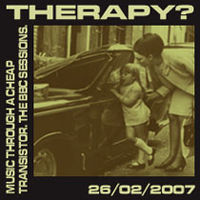
I enjoy the title of this disc quite a bit.  Fortunately, I also enjoy the music quite a bit.  This is a collection of BBC recordings from Therapy?

It’s a strange collection in that they recorded songs on five separate occasions and yet there is a lot of duplication of tracks (the liner notes deal with this issue).

John Peel Sessions (and there’s much made in the liner notes about the fact that they thought they’d be meeting Peel himself when they went in, when in fact it was just a random engineer) are essentially live recordings done in the studio.  They tend to be slightly more experimental (done after a band has toured and messed around with the songs some) and for some bands (like Therapy?) they tend to be more raucous.

This collection was recorded from 1991-1995 with a final show in 1998.  Obviously the band isn’t thinking about the future CD release of the sessions when they recorded these sessions, so it probably didn’t seem strange to record “Totally Random Man” 3 times.  But it does seem strange to listen to it like that.

The songs are definitely rawer than the studio versions.  Even their more poppy tracks from 1998 are a bit harsher.  However, their first EPs were really raw, so these songs sound much better (much cleaner).  They also include a lot of fun/weird unreleased tracks and covers.

My only complaint is that neither version of  “Teethgrinder” features that awesome drum sound that is my favorite part of the track.  Otherwise, it’s a great collection.

[READ: June 1, 2010] Lost in the Funhouse

I checked out this book so I could read the title story.  I enjoyed that one quite a bit so I decided to read the whole collection.  The Author’s Note says, “while some of these pieces were composed expressly for print, others were not. For instance: “‘Glossolalia” will make no sense unless heard in live or recorded voices, male and female, or read as if so heard.”  Um, yeah.

The first story: “Frame-Tale” consists entirely of this: “Cut on dotted line, twist end once and fasten AB to ab, CD to cd.” The cut part is a strip of paper that reads: “Once Upon a Time There/Was a Story That Began.”  It’s cute.

The next story, “Night-Sea Journey” is a proper story of a night sea journey. The secret to the story is gradually revealed, and is rather amusing. (more…)

Read Full Post »

SOUNDTRACK: THE BEATLES-Beatles for Sale (1964).

After the riotous fun of A Hard Day’s Night, I expected that this disc would not only continue the fun, but also be full of songs that I’d heard all the time on the radio.

But wow, this disc is kind of a downer.  “I’m a Loser.”  Really? It’s catchy as all get out but what happened to these guys in this last year?  “Baby’s in Black.”  Wow, these guys are serious now.  The opener, “No Reply” is all about getting rejected.  And “I’ll Follow the Sun” is about leaving and losing a friend.

But there are some good times as well. The cover of “Rock n Roll Music” is a little too stiff for such a rollicking song (kind of like how “Roll Over Beethoven was a little too stiff previously).  But “Eight Days a Week” is a rocking good time.  Fun for all and the first sign that the fun Beatles haven’t grown up completely.

The second half of the disc I barely recognized at all.  One or two songs were kind of familiar, but I wasn’t singing along with abandon.

Yet despite my unfamiliarity, the disc shows remarkable progression in songwriting, in structure (and even recording techniques–again, the liner notes were really informative about the technology they used).  I doubt many people consider this their favorite Beatles disc, but I think it’s a fine transition into what’s to come.

It’s also quite surprising to see how much their hair has grown in a year.

[READ: May 16, 2010] “Lost in the Funhouse”

I read this short story because it is something of the foundation of David Foster Wallace’s story “Westward the Course of Empire Takes Its Way.”  This story is part of Barth’s larger collection also called Lost in the Funhouse.  And, based on this story, I’m looking forward to reading the rest of the collection.  But this story works in an of itself and, since it forms the backbone of the other story I’m going to mention it by itself.

This story is written in a thoroughly postmodern way.  As the story opens, with the enigmatic line, “For whom is the funhouse fun?,” we are introduced to Ambrose.  Ambrose has come with his family to the shore for “the holiday, the occasion of their visit is Independence Day, the most important secular holiday of the United States of America.”

Shortly after this italicized part, the story interrupts itself with this:

Italics are also employed, in fiction stories especially, for “outside,” intrusive, or artificial voices, such as radio announcements, the texts of telegrams and newspaper articles, et cetera. They should be used sparingly.

And so it goes with the rest of the story.  The author (one assumes) interrupts the flow of the narrative, letting the reader know that there is far more at foot here than just the story of Ambrose at the beach.

The story eventually gets back to the matter at hand: Ambrose, his brother Peter and Peter’s girlfriend Magda are driving with Ambrose’ parents to Ocean City.  This trip is made three times a year but this is the first time that Magda has come with them.  They play car games (spot the towers), and generally act like a family on a long car trip.

At this point the author interrupts again to note that:

So far there’s been no real dialogue, very little sensory detail, and nothing in the way of a theme. And a long time has gone by already without anything happening; it makes a person wonder.

Oh, and all along it is quite apparent that Ambrose is, as the title suggests, lost in the funhouse at the beach.

When they finally arrive at the beach, there has been an oil spill and no one wants to swim, so they stay on the boardwalk (not under the boardwalk).  Then the family decides to go for a swim in the pool.  At which point the author jumps in again and stops the meandering:

There’s no point in going farther; this isn’t getting anybody anywhere; they haven’t even come to the funhouse yet. Ambrose is off the track, in some new or old part of the place that’s not supposed to be used; he strayed into it by some one-in-a-million chance….

When the funhouse is finally mentioned as an activity, there is general hilarity and nudging and winking about what happens in funhouses (which Ambrose is too young to understand).  At this point, it’s worth noting that Ambrose has a pretty big crush on Magda.  He has spent many an afternoon with her while the three of them were playing (although she clearly thinks nothing of it).  When he suggests that he and Magda go in the funhouse together, everyone wonders what he’s thinking, but no one says anything (again, he’s too young).

Ultimately, the three kids make it to the funhouse, the entrance of which blows girls’ skirts up (and then Ambrose realizes the point of the funhouse!).  And he realizes that the funhouse is not meant for him.  And then he gets lost.

From there the story turns into fantasy, imagination and future possibilities.

It’s a fascinating piece of work.  I certainly wouldn’t want all of my stories to be constructed in this way, but I really appreciate this point of view and the, in my opinion, funny intrusions that break the fourth wall.

For reasons I’m not entirely clear about, the whole story is available here as a Word doc.

Read Full Post »

SOUNDTRACK: THERAPY?-High Anxiety (2003).

I hadn’t listened to this disc in a long  time, and I was delighted by how much I remembered (and liked) it.  This was the last Therapy? album that received a release in the U.S.  And it is a solid collection of heavy alternative metal with some seriously catchy bits thrown in for good measure.

“If It Kills Me” could have been a huge hit with a killer chorus and amazing hooks.  As could “My Voodoo Doll” (an outrageously poppy song).  Even the penultimate song “Last Blast” starts out with a low rumbling bassline, but when the chorus comes in it’s warm and catchy (even if again it’s lyrically not warm).

But what’s amazing is how good the whole disc is.  Their previous disc was something of a muddle of styles and textures.  It was an interesting but not entirely successful experiment.  But High Anxiety returns to what Therapy? does best: raw, and noisy alt-metal with really catchy melodies.  Most of the time I don’t even care what Andy Cairns is singing about (it’s usually pretty dark) because regardless, it’s sure fun to sing along.

The final track is a 9 minute crazy mess.  It opens with Cairn’s Tom Waits-ian vocals and a pounding guitar line.  It stops after a few minutes and then picks up again with that pounding guitar line (repeating a little much, honestly, but it is a cool riff).  Then after 7 minutes there’s a new bonus track which is practically like Green Day, it’s so poppy.

This is definitely one of their best discs.

[READ: April 25, 2010] “The TV”

This (very) short story begins with a wonderful concept: a man wakes up one day and calls in sick from work.  He turns on the TV and sees himself, his actual self, finishing his actual job.

The man is transfixed, obviously.  I mean who wouldn’t be?  He tunes in the next day and watches himself drive to work, sit down and begin doing his job–more efficiently than he himself had been doing it!  The credits even indicate that yes, the man is the man.  Amazing. (more…)

Read Full Post »

17Many many years ago, I discovered Might magazine.  It was a funny, silly magazine that spoofed everything (but had a serious backbone, too).  (You can order back issues here).  And so, I subscribed around issue 13.  When the magazine folded (with issue 16–and you can read a little bit about that in the intro to Shiny Adidas Track Suits) it somehow morphed into McSweeney‘s, and much of the creative team behind Might went with them.

The early volumes (1-5 are reviewed in these pages, and the rest will come one of these days) are a more literary enterprise than Might was.  There’s still a lot of the same humor (and a lot of silliness), but there are also lengthy non-fiction pieces.  The big difference is that McSweeney’s was bound as a softcover book rather than as a magazine. And, I guess technically it is called Timothy McSweeney’s Quarterly Concern as opposed to Timothy McSweeney’s Internet Tendency. (more…)

Read Full Post »

actsSOUNDTRACKTINDERSTICKS-What is a Man (2000).

manThis is a soundtrack to a TV mini-series called The Sins (which I know nothing about).  The song (for there is only one) is a cover of a Four Tops song (which I do not know).  The “B-side” is an instrumental version of said song.

And, sadly, that’s all that comes on this disc.  It’s a good song, yes, but at a combined total of about 5 minutes, it’s rather skimpy as a disc (Hey that’s what singles used to be back in the day).  Normally I don’t encourage the downloading of tracks (I’m more of a physical medium kind of guy), but I think if you’re looking for this for this particular song, you’re much better off just downloading it.  I don’t think it’s available on any other discs.

[READ: October 24, 2009] “The Balloon”

[UPDATE: November 25, 2009]  For the new review of the story, click here.

I just received a copy of Unspeakable Practices, Unnatural Acts and have learned that the version of “The Balloon” that I read and which I linked to below is NOT the entire story.

Aside from a couple of inexplicable word changes (!) the version online leaves out the final four paragraphs.  And, with Barthelme’s prose being so dense, that’s quite a lot of information.

This changes my reading of the story quite a lot as there is now a DIFFERENT ENDING!  So I have to more or less disown this review.  But I will leave it up for posterity.  I’ll include a new review when I finish the short story collection.

[original review commences here]

David Foster Wallace in a Salon.com interview, said that this was “which is the first story I ever read that made me want to be a writer.”  I have recently read a few Barthelme pieces (that were in Harper’s) and I found them to be weird, kind of interesting, but nothing inspirational.

But, heck, why not see what got DFW going?

So this story was, in fact, very cool. It was written before the pieces that were in Harper’s, and, as with most artists who end up in a weird and out-there place, he started off in a reasonably normal place.  In other words, this story is actually something of a story with a beginning and sort of an end.  There’s no plot, per se, but the story does lead somewhere. (more…)

Read Full Post »

createdSOUNDTRACK: ONE RING ZERO-As Smart as We Are (2004).

orzI had this CD sitting around my house for about 4 years.  I had received it as a promo disc from Soft Skull Press (along with several other books on CD) and I just never put it on.  Then one day I was going through all these promos to see if any were books I wanted to listen to.  It was then that I actually read the disc label and saw that it was a band with lyrics written by some of my favorite authors.

I liked the disc so much I wound up buying it because the packaging is truly cool.  It’s a little booklet and it features an interview with the band and some really cool insights into how the songs came about, how they got the writers to submit lyrics, and the cool fact that One Ring Zero became McSweeney’s house band, accompanying writers during their weekly readings.

One Ring Zero is comprised of two guys (and guests).  And for this disc they split the tracks in half and one of them wrote melodies for 8 songs and the other guy wrote melodies for the other 8.  I’m not sure that I could tell the song writers apart by their styles, though.

But sure, the lyrics are probably great, but what does the band sound like?  Well, in the introduction, they are described as specializing “in the sort of 19th century, gypsy-klezmer, circus-flea-cartoon music you mainly hear in your dreams.” And, yep, that is a good summary of things.  The band uses water pipes, claviola, slide whistle and a theremin (among other homemade instruments).

And so, as with other McSweeney’s things, I’m going to list all of the lyricists with their titles.  But lyrically it’s an interesting concoction.  The authors were asked to write lyrics, but not necessarily songs.  So some pieces don’t have choruses.  Some pieces are just silly, and some pieces work quite nicely.  But most of them are really poems (and I can’t really review poems).  They’re fun to read, and it is fun to see what these authors made of this assignment.

PAUL AUSTER-“Natty Man Blues”
A rollicking opening that lopes around with the nonsensical lyrics, “There ain’t no sin in Cincinnati.” This one feels like a twisted Western.

DANIEL HANDLER-“Radio”
A supremely catchy (and rather vulgar) song that gets stuck in my head for days.  “Fucking good, fucking good, fucking good…”

DARIN STRAUSS-“We Both Have a Feeling That You Still Want Me”
A Dark and somewhat disturbing song that is also quite fun.

RICK MOODY-“Kiss Me, You Brat”
A delicate twinkly piece sung byguest vocalist Allysa Lamb *the first female vocalist to appear) .  Once the chorus breaks in, it has an almost carnivalesque tone to it.  This is the only song whose lyrics were written after the music.

LAWRENCE KRAUSER-“Deposition Disposition”
A twisted song that works as a call and response with delightful theremin sounds.  It has a very noir feel.

CLAY McLEOD CHAPMAN-“Half and Half”
This is a sort of comic torchy ballad.  Lyrically, it’ a bout being a hermaphrodite (and it’s dirty too).  Vocals by Hanna Cheek.

DAVE EGGERS-“The Ghost of Rita Gonzalo”
This has a sort of Beach Boys-y folky sound (albeit totally underproduced).  But that theremin is certainly back.

MARGARET ATWOOD-“Frankenstein Monster Song”
This song begins simply with some keyboard notes but it breaks into a very creepy middle section.  It’s fun to think of Margaret Atwood working on this piece.

AARON NAPARSTEK-“Honku”
This song’s only about 20 seconds long.  It is one of a series of haikus about cars, hence honku.

DENIS JOHNSON-“Blessing”
The most folk-sounding of all the tracks (acoustic guitar & tambourine).  It reminds me of Negativland, somehow.  It is also either religious or blasphemous.  I can’t quite be sure which.

NEIL GAIMAN-“On the Wall”
A tender piano ballad.  The chorus gets more sinister, although it retains that simple ballad feel throughout.  It’s probably the least catchy of all the songs.  But lyrically it’s quite sharp.

AMY FUSSELMAN-“All About House Plants”
An absurdist accordion-driven march.  This is probably the most TMBG-like of the bunch (especially when the background vocals kick in).

MYLA GOLDBERG-“Golem”
This song opens (appropriately) with a very Jewish-sounding vibe (especially the clarinet).  But once that intro is over, the song turns into a sinister, spare piece.

A.M. HOMES-“Snow”
This song opens as a sort of indie guitar rock song.  It slowly builds, but just as it reached a full sound, it quickly ends.  The song’s lyrics totally about twenty words.

BEN GREENMAN-“Nothing Else is Happening”
This song has more of that sinister carnivalesque feel to it (especially when the spooky background vocals and the accordion kick in).  The epilogue of a sample from a carnival ride doesn’t hurt either.

JONATHAN AMES-“The Story of the Hairy Call”
This song has a great lo-fi guitar sound (accented with what sounds like who knows what: an electronic thumb piano?).  It rages with a crazily catchy chorus, especially given the raging absurdity of the lyrics.

JONATHAN LETHEM-“Water”
This track is especially interesting. The two writers each wrote melodies for these lyrics.  So, rather than picking one, they simply merged them. It sounds schizophrenic, but is really quite wonderful.  The two melodies sound nothing alike, yet the work together quite well.

[READ: Some time in 2004 & Summer 2009] Created in Darkness by Troubled Americans

This was the first collection of McSweeney’s humorous stories/pieces/lists whatever you call them.  Some of the pieces came from McSweeney’s issues, but most of them came from McSweeney’s Internet Tendency.

The humor spans a great deal of categories, there’s some literary, some absurd, some nonsensical and, most amusingly, lists.  The back of the book has an entire selection of lists, but there are also some scattered throughout the book as well (I don’t know what criteria was used to allow some lists to be in the “main” part).

As with the other McSweeney’s collections, I’m only writing a line or two about each piece.  For the lists, I’m including a representative sample (not necessarily the best one, though!)

Overall, I enjoyed the book quite a lot (which is why I re-read it this year).  There are puns, there are twisted takes on pop culture, there are literary amusements (Ezra Pound features prominently, which seems odd).  It spans the spectrum of humor.  You may not like every piece, but there’s bound to be many things that make you laugh. (more…)

Read Full Post »

harper novSOUNDTRACK: JILL SOBULE-California Years (2009).

caliSo Jill Sobule had the first hit single called “I Kissed a Girl” (that was sung by a woman).  And it was sort of a novelty hit, which is the kiss of death for any songwriter.  After most people forgot about her, I followed her career for a while.  And I found her follow up to “I Kissed a Girl,” Happy Town, to be a superb album and the follow up to that one, Pink Pearl ,was also really good.  And then she fell off my radar.
California Years is the first album that she self-released (and self-financed).  And it finds Sobule in find voice.  Her voice still sounds fantastic: strong and dusky, with a sly wink. When I first listened to the disc, I enjoyed it immensely.  Further listenings have revealed some flaws to me, which have lessened my enjoyment somewhat.  But before I nitpick, I’ll mention the highlights.

The first three songs are just top of the line.  “Palm Springs” opens the disc with a wonderful air of freedom.  “San Francisco” is another cool folky song, typical Jill.  These two are followed by one of Sobule’s excellent rocking/sarcastic/snotty songs, “Nothin’ to Prove” (catchy and snarky!).

After a few tracks, “Wendell Lee” resumes the fun with a list of all the people she’s dated and what they’re up to now.  “Mexican Pharmacy” & “Spiderman” are two fun/funny songs that close the disc nicely.  The final track is a list of all the people who gave her money to make the record.  It’s a catchy little tune even if you’ll never even try to remember the lyrics.

But there are a few clunkers on the disc. “Where is Bobbie Gentry,” when I first heard it, it was fun to guess that Bobbie had written “Ode to Billie Joe” (I didn’t know she had written it).  And this sort of update to that song (which I actually don’t like that much anyhow) sounded like a good idea, but on repeated listens it seems forced and rather silly (especially the “I was the baby…”) line.

There’s another weird song in the middle section: “Empty Glass.”  What’s weird about it is that Sobule doesn’t normally hold notes for very long, she’s more of a quick singer.  And I think her voice doesn’t really hold up to the chorus of “empty glass.”  My final gripe is with “Bloody Valentine” which begins with the exact same chord structure and vocal melody line as the first song on the disc.  Whenever it comes on I start singing “Palm Springs.”  It also ends with a weird little “rocking” section which simply doesn’t suit the disc.

So, overall it’s something of a mixed bag.  But the highs outnumber the lows by a long shot, and the highs are quite high.

[READ: October 13, 2009] “Among the Beanwoods,” “Heather,” “Pandemonium”

I’ve had these stories lying around for quite some time.  When I first saved them it was because I had just read McSweeney’s #24 which had a Donald Barthelme section in it.  I had read these short pieces then, but they didn’t leave that much of an impact on me, so I decided to re-read them now.

“Among the Beanwoods” & “Heather” are from the 1970s.  And “Pandemonium” was written just before his death in 1989.

And it’s here that I admit that I really don’t know all that much about Barthelme (even having read the McSweeney’s issue).   And I can also admit that I don’t really “get ” him. (more…)

Read Full Post »

sinclairSOUNDTRACK: JARVIS COCKER-Further Complications (2009).

cockerI really enjoyed Pulp’s Different Class album when it came out.  In fact, I liked it so much I made sure to get This is Hardcore and even the one before the got big, His n Hers.  I felt like the earlier stuff was just okay.  So either they hit their stride or they got lucky just before they broke up.
Going back now, I don’t like those discs as much as I did then (maybe it was burnout), but I retained a fondness for Jarvis Cocker and his zany exploits. And yet, I wasn’t really all that interested in his solo output.

But there were several excellent reviews of this disc and I figured I’d check it out.  And it was totally worth it.  This disc is a fascinating collection of seemingly every musical style that Cocker has ever heard.  Each song is laden with his (often caustic) wit and clever word play.  And it rocks really hard.  It was produced by Steve Albini (!).

Musically, there’s not a terrible amount of originality, but that almost seems the point.  Cocker is trying on differnt styles, writing archetypical or over-the-top verses for these songs.  “”Further Complications.”” opens the disc in what could be described as a Pulp-style rocker (But, and this is consistent throughout the disc, with much harder guitars).  “Angela” is a dopey hard rocker ala the Stooges, while “Pilchard” is a fantastic near-instrumental with great breaks and stops.

The disc slows down on “Leftovers” which reminds me of a Nick Cave type ballad (although it is much funnier).  “I Never Said I Was Deep” is, as the title suggests, a wonderfully self deprecating ballad.  Funny and catchy with the delightful chorus, “I never said I was deep, but I am profoundly shallow.”

“Homewrecker!” is another great rocker (this one horn-filled).  And “Fuckingsong” is a noise-filled, riff-fired rocker that seems totally out of character for Jarvis and yet works perfectly.

The last two songs take up a lot of time on the disc.  “Slush” is another delicate ballad that kind of overstays its welcome at 6 and a half minutes (lop off a minute or so and it would be very tidy).  But despite being too long, the song itself is really great.

And the final song “You’re in My Eyes (Discosong)” is, indeed a very disco-y tune.  It fits in thematically with the rest of the disc somehow (probably because of how seedy it sounds).  And it works very well as a disc track.  But it also suffers from disco excess, in that at nearly 9 minutes it is too long by half.  Especially since the last three minutes are (my personal pet peeve) just a repeat and fade/final note to the end.  It ‘s the kind of thing that makes me not want to hit play immediately again because it really bugs me when a great album like this slowly fades away for three minutes.  But then I remember that the rest of the disc is pretty fantastic, and I give it another whirl.

Good for you Jarvis, welcome back.

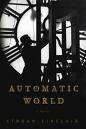
[READ: October 3, 2009] Automatic World

This is one of the first books I’ve read in a long time really just didn’t click for me.  I picked up this book because of this fantastic review at The Walrus.  The book wasn’t (and still isn’t) available in the States (although you can get a used copy from Amazon for $10), so I ordered in from amazon.ca.  And the fact that I actually ordered it from Canada (and paid the shipping) is the major reason why I read through to the end.

But here’s the thing.  Sections of the book are fantastic and totally gripping.  But other sections are nebulous and confounding.  And you get the real sense that the four (or more) stories are related, they really aren’t (as far as I can see).  Now, I am fully willing to admit that I simply didn’t get this book.  I’ve just come off reading (and putting a ton of effort into) Infinite Jest.  I deliberately didn’t read Automatic World at the same time as IJ because I knew it was supposed to be a difficult read.  So, it’s entirely possible that I was simply burnt out to really appreciate what was going on here.

When I just re-read the review at the Walrus, it once again really made me want to read the book (the review suggests that the book lets you know that the four stories are not connected, but I don’t think it does).

But let’s see what the book is about. (more…)

Read Full Post »

coprseSOUNDTRACK: ERIC CHENAUX-Sloppy Ground [CST052] (2008).

sloppy

It took several listens before I fully enjoyed this disc.  There’s something about Chenaux’s voice that is very calming, almost soporific.  And, since his general songwriting style is kind of ambient and almost formless–with no real choruses or even rhythms, the disc tends to get lost in the ether.  There’s also some unusual instrumentation (electric harp & guitarjo (!)) too, which continues the otherworldly feel of the disc.

What really hooked me into the disc though was the three “funk marches” that distinguish themselves from the rest of the disc.  “Have I Lost My Eyes” comes in like a raging gust of fresh air after the first three drifting tracks.  It’s got a strong melody and raw drums that propel this fantastic track.  “Boon Harp” & “Old Peculiar” have a similar strong vibe.  And they are really the anchors of this disc.

The rest of the album isn’t bad, I just find it hard to listen to in one lengthy sitting.  The opening three songs tend to drift a round a little too much.  But one at a time, these songs are pretty cool.

[READ: Last Week of September 2009] The Fifth Column & The Flexicon

These two pieces were part of the list of uncollected David Foster Wallace publications.  The difference with thee two pieces is that he plays a small role along with several other authors.  Both of these pieces are sort of a exquisite corpse idea. Although unlike a true exquisite corpse, (in which the author sees only a little of the end of the previous author’s work) it’s pretty clear that the authors had access to the entire work.  The quotes in bold are from The Howling Fantods.

For a delightful exquisite corpse piece that I authored see the untitled comic strip on my website.  About ten years ago I started an exquisite corpse comic strip and sent it to a number of people who all had a lot of fun continuing the story.  I have finally put it online at paulswalls.com/comic.  (See, artists, I told you I’d do something with the cartoons some day!) (more…)

Read Full Post »

« Newer Posts - Older Posts »