Feeds:
Posts
Comments

Archive for the ‘Oddities’ Category

SOUNDTRACK: QUEENSRŸCHE-The Warning (1984).

Queensrÿche fulfilled the promise of their debut EP with this album.  It takes the blueprint of the EP and expands it wonderfully.  They introduce some cool low vocal chants to compliment Tate’s soaring alto (like on “En Force”), they also introduce some wonderful effects and riffs and scales (also on “En Force”).

There’s also some really great, odd “keyboard” bits thrown in as kind of sound effects or jarring moments (“Deliverance”).  “Deliverance” also has great backing vocals, and I love the way the “Deliver Us” part of the song is quite different from the soaring of the rest of the vocals.  The back and forth of “No Sanctuary” also showcases the bands skills very well.

The band even shows signs that they’re not sticking to standard heavy metal.  On “N.M. 156” there’s some sci-fi chanting and the really cool section of the song in which Tate sings “Forgotten…Lost…Memories” and the “Lost” part is a completely unexpected note.   They were taking chances from the beginning.

“The Lady Wore Black” is updated with the stunning “Take Hold of the Flame,” a slightly more progressive version of that first song.  “Before the Storm” was the first song I heard from this album and it has always been my favorite on the record (this is one of those few albums where the better songs aren’t front loaded).  “We watch the sun rise and hope it won’t be our last” (they were always happy guys).

“Child of Fire” opens with a wonderful riff and the compelling, “the souls that are damned by the pain that you bring send you higher.”  The song settles down into a slow part and Tate growls “Damn you and the pain they must feel” and you can tell he means it (whatever else the song is about).

All this time I don’t think I ever realized that “Roads to Madness” was nine minutes long.  It is definitely foreshadowing the kind of epic work they would do later.  And it closes out the album in a cathartic blast.  It’s wonderfully pure metal from the mid-80s.

[READ: October 20, 2011] Celebrations of Curious Characters

I had never heard of Ricky Jay before getting this book, but apparently he is a reasonably well know radio personality (on KCRW), he is also an actor on Deadwood, and he’s a magician.  This book is a collection of his KCRW radio show broadcasts along with accompanying pictures from his vast collection of obscure ephemera.
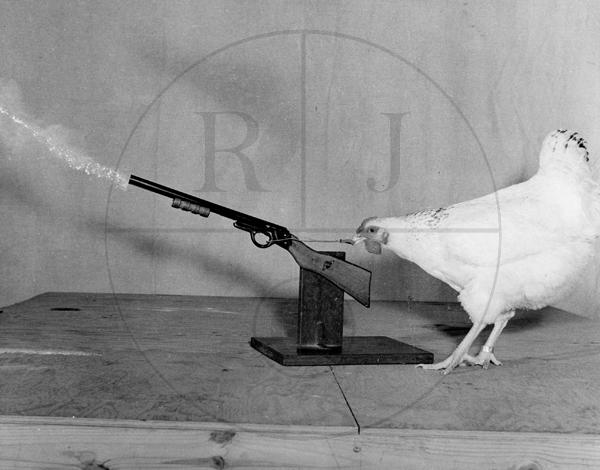
There are forty-five entries in the book–each one is a page long (it’s an oversized book and they are two columns each).  Each essay is Jay’s take on a particular subject or, as the title says, curious character.  Jay is a collector of esoteric information, especially that related to magic and, for lack of a better word, freakish behavior.   One of the most enjoyable parts of the book are the pictures that accompany each entry.  The pictures come from Jay’s collection and each picture’s provenance is given in the back of the book.  So we get pictures like “The little Count Boruwlaski, engraving by A. van Assed ([London]) Borowlaski [sic], 1788). or Lithograph of Chung Ling Soo (Birmingham: J. Upton, c. 1912) or Frontispiece portrait from George Devol, Forty Years a Gambler on the Mississippi (Cincinnati: Devol & Haines, 1887).  Some of these photos you can see on his website.  Or you can enjoy this picture of a chicken firing a gun that is not in the book (it comes from his site). (more…)

Read Full Post »

SOUNDTRACK: KISS-Rock and Roll Over (1976).

After Alive!, Kiss released what I think of as the cartoon albums.  These next three discs all had cartoon covers, which also coincides with their huge ascent into fame.  I tend to think of Destroyer and Love Gun more than this one (maybe full-bodied pictures are more memorable than just their faces), even though this one has a huge share of important Kiss songs like “I Want You” (which has an amazingly long version on Alive II). 

I never really liked “Take Me,” there’s something about the chanting backing vocals that irks me (although “Put your hand in my pocket, grab onto my rocket” is one of my favorite Kiss couplets).  But “Calling Dr. Love” is a wonderful twisted song (the falsetto backing vocals are so doo wop, it’s funny to contemplate the band’s musical direction at this point).  I loved this song so much it even features in one of my first short stories

As an eight year old, I could never figure out what Gene would be doing in the “Ladies Room”–since he was a boy and all.  Naiveté is a wonderful thing to have as a young person listening to Kiss–I had no idea what was going on in most of the songs–I wonder if my parents bothered to listen to the lyrics at all.

I also never really liked “Baby Driver” all that much–I don’t know if it’s Peter’s voice, or that I can’t figure out what the hell this song is about but it’s still just okay to me–although I like the guitars at the end.   I love the solo in “Love ‘Em Leave ‘Em”–although the sentiment is not the best.  Of course, the sentiment in “Mr. Speed” cracks me up: “I’m so fast, that’s why the ladies call me Mr. Speed.”  Did that mean something different in 1976?

“See You in Your Dreams” was covered by Gene on his solo album, and I think I like that version better (it’s more theatrical).  Although this one has very interesting use of Beatlesesque harmonies.  “Hard Luck Woman” is wonderful song, and I do like Peter’s voice here, yes.  But who the hell is Rhett?  “Making Love” ends the disc.  I like the break in the middle and the awesome guitar solo.  Also, Paul’s vocals have some cool effects on them. 

This is a fun album.  Even the songs I don’t love are still songs that I like quite a bit.  It’s a nice contrast from the bombast of Destroyer.  The amazing thing is that both this album and Destroyer are barely over 30 minutes long.  Were they making albums so frequently that they didn’t have any more songs, or were they just following the Beatles model: make an album every 7 months to stay in the public’s eye?

[READ: October 2, 2011] Dogwalker

I can’t believe how quickly I read this book.  I wasn’t even planning on reading the whole thing just yet, but I started the first story and it was so quick to read and so enjoyable that I couldn’t stop.  I finished the whole book in a couple of hours (it helps that a number of stories are barely 4 pages and that it’s barely 150 pages).  The title of the book is something of a mystery as there are a lot of dogs in the stories, but walking is about the furthest thing from what happens to them.  I was also somewhat surprised to see how many of these pieces I had already read (Bradford was in five of the first six McSweeney’s issues). 

This collection is certainly not for everyone.  In fact when I recounted the story “Dogs,” Sarah was disgusted and said she would never read the story.  Bradford definitely pushes some boundaries, but they’re mostly in an attempt to find humor, so I think that’s cool. Sarah even admitted that the end of “Dogs” sounded funny (although she was still disgusted).  The two things I found odd about the stories were that two of them featured a three-legged dog, which seems a little lazy to me–although I don’t know what the dog might signify.  And two of them featured someone or something singing unexpectedly and the narrator getting a tape recorder to surreptitiously save this special recording.  Again, it’s a really unusual thing to happen at all, but to have that happen in two stories?

Aside from those little complaints, the stories were fun, funny and certainly weird. (more…)

Read Full Post »

SOUNDTRACK: MOGWAI: GovernmentCommissions: BBC Sessions 1996-2003 (2005).

It’s unlikely that Mogwai will ever release a greatest hits (well, someone probably will, but the band themselves don’t seem likely to do so).  As such, this compilation of BBC Recordings will certainly work well as one.

As I’ve mentioned many times, the BBC recordings are universally superb.  The quality of the recordings is unmatched.  And, typically the band takes the sessions very seriously.  The major different between these sessions and the official studio release is that the band is playing these songs live.  They are mixed well and sound great but they are live, so you can catch occasional subtle differences.

Mogwai, despite their seemingly improvised sound (all those noises and such) can recreate everything they do perfectly, and their live shows are tight and deliberate (except for the occasional moments where they really let loose).

The ten songs here span their career and are not played in chronological order.  This allows all of these wonderful songs to play off the tensions of each other.  And it shows that their later songs, which are less intense than their earlier ones, are still quite awesome and in a live setting don’t really lack for intensity after all.

The highlight of this disc is the scorching eighteen minute version of “Like Herod.”  The original is intense and amazing, and this live version allows them to play with the original in small ways, including allowing the quietness to really stretch out before they blow the speakers off the wall with the noise section of the track.

Even though I’m a fan of Mogwai, I don’t hear a radical difference between these versions and the originals.  Or should I say, it’s obvious which song they are playing.  There are some obvious subtleties and differences as befitting a live album, but unlike some live discs you don’t immediately notice that this version is “live.”

And that works well for both fans of the band (because as you listen and you hear the subtleties) and for newcomers–(because you’re not listening to weird, poorly recorded versions or versions that are for fans only).  And so, you get ten great Mogwai tracks.  Just enough to make you want to get some more.

[READ: June 11, 2011] The Burned Children of America

I found this book when I was looking for other publications by Zadie Smith.  This book kept cropping up in searches, but I could never really narrow down exactly what it was.  As best as I can tell, it is a British version of a collection of American authors that was originally published in Italy (!).  Editors Marco Cassini and Martina Testa work for minimum fax, an Italian independent publisher.  In 2001, they somehow managed to collect stories from these young, fresh American authors into an Italian anthology (I can’t tell if the stories were translated into Italian or not).

Then, Hamish Hamilton (publisher of Five Dials) decided to release a British version of the book.  They got Zadie Smith to write the introduction (and apparently appended a story by Jonathan Safran Foer (which was not in the original, but which is in the Italian re-publication).  This led to the new rather unwieldy title.  It was not published in America, (all of the stories have appeared in some form–magazine or anthology–in America), but it’s cool to have them all in one place.

The title must come from the David Foster Wallace story contained within: “Incarnations of Burned Children,” which is one of his most horrific stories, but it sets a kind of tone for the work that’s included within (something which Zadie addresses in her introduction): why are these young successful American writers so sad?  So be prepared, this is not a feel good anthology (although the stories are very good).
Oh, and if you care about this kind of thing, the male to female ratio is actually quite good (for an anthology like this): 11 men and 8 women.

ZADIE SMITH-Introduction
Zadie Smith was a fan of David Foster Wallace (she wrote a  lengthy review of the ten-year anniversary of Brief Interviews with Hideous Men which is republished in her book Changing My Mind), so she is an ideal choice to introduce this book.  Especially when she provides a quote from DFW’s interview in 1995 about how living in America in the late 90s has a kind of “lostness” to it.  With this in mind, she sets out the concerns of this collection of great stories: fear of death and advertising.

Zadie gives some wonderful insight into each of these stories. The introduction was designed to be read after the book, and I’m glad I waited because while she doesn’t exactly spoil anything, she provides a wonderful perspective on each piece and also offers some ideas about the stories that I hadn’t considered.  And it’s funny, too. (more…)

Read Full Post »

SOUNDTRACK: WU MAN-Tiny Desk Concert #124 (April 27, 2011).

Wu Man is considered the master of the pipa. If that sentence was complete gibberish, the pipa is a 4 stringed lute-like instrument and Wu Man is a Chinese virtuosi of the instrument.  This Tiny Desk Concert shows Wu Man playing three songs, solo.

The songs are, if not traditional Chinese songs, then at least traditional in style.  Needless to say they are not for everyone (and really, they’re not even my cup of tea–I’m not downloading it, just watching it), but watching her fingers move on this instrument and really paying attention to the kind of things she’s doing with four strings, it’s quite an impressive feat.

She doesn’t sing, and the songs do not follow western musical structure at all.  But it’s an interesting look into Chinese musical culture.

Even if you only watch the first song, it’s worth the time.

[READ: April 29, 2011] The Pale King

[Note: this review is pretty much free from spoilers–some details are given but I don;t think they ruin anything–but it is full of speculation and imaginings of what could have been]

I finished The Pale King today.  It took about a month, but that was because I only read it at lunch hour.  And I was surprised to find that, unlike with other books, I didn’t always feel up to pushing my lunch hour a few extra minutes to get some extra pages in.  Not because I didn’t like the book, but I think it was just really dense and often quite intense.

I’ll also state that I hadn’t been making any kind of notations when I started.  Then, a bit of the way through, when I realized there were a lot of characters, I started jotting down some names and characteristics.  But then I stopped again, because it was interfering with my absorption of the story as a story (such as it is).  So, this review is based on an initial read (yes, I’ll be reading it again in the not too distant future, that’s for sure), without any real note taking.

Is note taking necessary?  Well, yes, at least to keep the characters straight.  There are many many characters and most of them do not interact (or at least not explicitly) so it’s not always easy to know who is who or which person’s weird characteristics are showing up in any given chapter.  Plus, there are dozens of chapters in which unnamed people are described.  It’s hard to know how deliberate that was or how much of it is just the fact that book was unfinished.

The other thing is the ending, of course.  DFW fiction is notorious for its “lack” of endings.  Broom of the System ends mid-sentence, Infinite Jest ends in the middle of a scene, so who can imagine what The Pale King would have ended.  As such, we have only to go by editor Michael Pietsch’s placement of chapters.

So, in many respects, this book is very much Pietsch’s project.  Sure, DFW wrote all the words, but it was Pietsch’s job to piece them together.  Who is to say that DFW would have wanted §50 to end the book?  Pietsch also includes about ten pages of notes at the end of the book all showing ideas that DFW had asked himself about the nature of the finished product.  Some of these questions are minor, but others are quite significant, and would effect not only connections in the novel, but also the overall shape of the book.  It also implies that there could have been as much as another 500 pages coming.

The book feels like a kind of culmination of all of the things that he has been putting into his work for the past few collections.  There are character sketches based on interviews (Brief Interviews), there are lengthy sections of bureaucratic minutiae, lovingly rendered (“Mr Squishy”), there are scenes of conformist office work (“The Soul is Not a Smithy”) and there is redemption in the everyday (“This is Water”).  The mind reels at what this could have been had it been finished.

So this book is obviously, radically unfinished (and yet it’s still over 500 pages long).  So, why bother reading it?

(Here’s where the review really starts).

Because what is here is amazing. (more…)

Read Full Post »

SOUNDTRACK: RHEOSTATICS-Night of the Shooting Stars (2001).

This was the first CD by The Rheostatics that I bought as it was released.  I had gotten into them in 1999 or so, and I remember being very excited that this disc was coming out.  I ordered mine from Maple Music (and it was even autographed!) and I recall the evening it came in the mail and I sat in my kitchen rocking out to it.  Night is probably their most accessible disc. There’s a bunch of tracks from Tim Vesely, (who writes the sweet melodies) and although Martin Tielli’s wonderful weirdness is present, it’s more weirdness within conventional songs rather than unconventional song structures.

The disc also features a lot of heavy guitar work.  The disc opens with a heavy guitar riff which morphs into an upbeat poppy number.  Of course, how many pop numbers are titled “These Days Are Good for the Canadian Conservative Youth Party Alliance,”  (Tielli, of course).  There’s a catchy repeated bridge “these days are good for us now” even if the chorus (chorus?) features the bizarre line: “I chipped my eyetooth on the back of a urinal.”

It’s followed by two of the catchiest, poppiest, most wonderful songs the Rheos have done “Mumbletypeg” a delightful ditty sung by Dave Bidini with (again) a wonderful chorus.  And, “P.I.N.”, (Tielli) too catchy by half, and featuring the wonderfully weird lyrics, (in a great descending melody): “You’ve got the key to my heart; you’ve got the P.I.N. to my guts”

“Superdifficult” is sung by Tim Vesely, and sounds a lot like the kind of songs he would later writer for The Violet Archers (he has the most delicate pop sensibility in the band).  Tim also sings “We Went West.”  It kind of slows the pace of the record down, but it is a beautiful song (done with different guitars in each headphone).

“The Fire” is a charming ditty sung by Tielli.  It continues the mellowness of “We Went West” and runs with it until Bidini takes over vocals and adds some heavy guitars.  They end the song with some beautiful harmonies and some screaming guitars.

The next two songs, Vesely’s “In It Now” and Bidinis’ “Here to There to You” are slight songs which are more charming than catchy.  They’re followed by the last three tracks which end the disc with a bang.

“The Reward” has a cool slinky riff and great vocals for Tielli. It’s also sprinkled with some heavy guitar pyrotechnics late in the song.  “Remain Calm” is a calming song from Vesely.  It seems perfectly located between the craziness of “The Reward and the wonderful rocking nonsense of “Satan is the Whistler.”

I always think that “Satan is the Whistler” is a much longer song (it’s six minutes) because there are two official parts to it.  The first 3 minutes are slow and moody, then half way through it bursts into a tremendously heavy riff (complete with whistles!).  It’s a great ending to the disc.

There are also two previously recorded tracks here in new form: “Song of the Garden” is from The Story of Harmelodia, done in a slightly more rocking version here.  And “Junction Foil Ball” (Tielli) was on their odd Nightlines Sessions release.  It opens with some odd effects and guitars and evolves into an incredibly, incredibly catchy riff.  The version here is not vastly different, but it’s a bit cleaner.

I’ve really loved this disc.  And even if the middle is a bit slow, it still rocks.

[READ: March 11, 2011] “Barnyard Desires”

This was a surprisingly odd and twisted story.  And for The Walrus, it was quite long, as well.

It opens with Leona hearing noises in her ceiling.  She suspects that the noises are from rats.  She has called the landlord out several times, but he hasn’t seen any rats.  In fact, he has stopped coming out because he thinks she’s crazy.  She imagines what the rats are up to up there: procreating mostly.  Eventually, she notices a kind of brown stain on the ceiling, which she is convinced is the rats mating and urinating.  The stain grows larger and larger, and it is right above her bed.  She also believes it is taking vaguely human shape.

Meanwhile, we learn about her upstairs neighbor.   The first time they met was in their building’s elevator.  He proudly (and very closely) admittedly that he was recently born again.  She made a quiet comment, turned away and hadn’t really spoken to him since. (more…)

Read Full Post »

SOUNDTRACK: FLEET FOXES-Live at The Black Cat, Washington, DC, July 7, 2008 (2008).

I still love the Fleet Foxes debut album, and I listen to it quite often.  One of the most impressive aspects of the band is their amazing harmonies.  So how does a band that is so vocal-centric perform live?

In an interview included with the concert, Bob Boilen asks that question.  They explain that the bigger venues are a bit harder because they have to crank up their monitors.  They also try to stay close to each other to be able to hear the harmonies clearly.  Well, they did something right because the harmonies sound very impressive here.

The main problem comes because lead singer Robin Pecknold is sick.  As in, just getting over a major cold, sick. As in, he admits that their last few shows were something of a rip off for the attendees.  Tonight’s show, he says is half a ripoff.  And that is most evident in my favorite Fleet Foxes song, “Mykonos” in which Pecknold’s voice cracks with abandon.  I would feel bad for the audience if the band wasn’t so personable and friendly and generally cool.  They make the best of a rough situation, and again, the backing vocals sound fantastic.

There are also a ton of delays in this show.  Most of them seem technical, although there seems to be a lot of tending to Pecknold’s voice, too.  But as I said, the band is engaged with the audience, telling stories (someone in the band is from DC and he asks if anyone went to high school there), and generally keeping everyone entertained.  It’s probably not their best show ever, but it still sounds great.  You can listen and download at NPR.

[READ: March 27, 2011] Miss Peregrine’s Home for Peculiar Children

Quirk Books, publishers of mash-ups like Pride & Prejudice & Zombies (as well as many other, well, quirky, titles) has published this fantastically exciting novel.

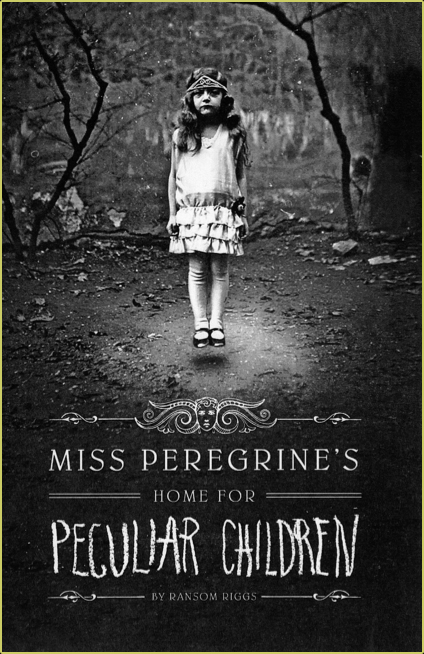
The cover depicts a creepy girl who is hovering off the ground.  But the girl herself is SO creepy that I didn’t even notice the hovering part.  She is just one of the peculiar children within the book.  And this picture is one of 50 included within the book (I’m only bummed that two pictures were not available in my copy).

So the story opens with Jacob Portman talking about his grandfather.  His grandfather (Abe) was a young boy in Poland during the 1940s.  When the Nazi’s invaded, his family was killed and he was sent to Wales, to the titular Miss Peregrine’s Orphanage (not widely known as a home for peculiar children).  But as details emerge from his grandfather’s version of the tale, things seem not right.

Abe talks about the monsters that chased him out of Poland–but he wasn’t describing Nazis, he was describing actual monsters, with multiple tongues and horrifying faces.  They followed him to Wales and were actually chasing him to that very day, in America.  And when he talked about Miss Peregrine’s house, he talked about the special kids who live there: the girl who could call forth fire out of thin air, the girl who could levitate, and the boy who had bees living inside of him.

Of course, that was all nonsense, just post traumatic stress from being attacked by Nazis, right?

That explanation works until the night that Abe is murdered.  He calls Jacob for help (they think he is going senile).  When Jacob gets to his house, he finds the screen door torn open and Abe missing.  The follow a trail and find Abe, bleeding in the woods.  Jacob thinks he can see the same kind of monster that Abe had always described lurking right nearby in the woods.  Although Jacob’s friend (who drove them to Abe’s house), didn’t see anything.

And now, Jacob’s dreams are plagued by scary monsters.  And he can’t get his grandfather’s cryptic last words out of his head.  Time to see a therapist, obviously. (more…)

Read Full Post »

SOUNDTRACK: BLACK FLAG-Damaged (1981).

I’ve liked Black Flag since I bought Loose Nut on vinyl way back when (1985, the year punk broke for me).  And those four bars were iconic to me even before I had heard a note (although I just learned they are supposed to represent a flag waving).

And this is where their legend really took off.  So a few things I never knew about this album until I looked them up recently.  1) That’s Rollins on the cover punching the mirror.  2) He didn’t really punch the mirror (it was smashed prior and the blood is fake).  3) I knew that Black Flag existed for a while before Rollins’ arrival and that they’d had a series of singers before him.  But I didn’t realize what a their first EP (Nervous Breakdown–Keith Morris on vocals) came out in 1978, their second EP (Jealous Again–Ron Reyes on vocals–credited as Chavo Pederast (he left the band in the middle of a live show, so they changed his name to that rather offensive one)) came out in 1980.  Their third EP (Six Pack –Dez Cadena on vocals) came out in 1981.  Rollins joined a few months after that and Damaged–their first full length–came out in December 1981.

“Rise Above” is a wonderfully angry song.  The gang vocals of pure empowerment work so well with the chords.  It’s still effective thirty years later.  “Spray Paint” goes in the other direction: rather than an uplifting, catchy chorus, it’s a deliberately angular chorus that’s hard to sing along to (even for Rollins).

“Six Pack” represents the more “popular” side of the band.  And it is a wonderfully funny single.  I just can’t decide if it’s serious or ironic (see also “TV Party”).  These two dopey songs are great to sing along to and are simply awesome.  (Fridays!)

The rest of the album turns away from the lighthearted tracks.  “What I See” is a really dark moment on this album.  And the negativity is unusual especially given Rollins’ later penchant for lyrics about fighting back.  True, Rollins didn’t write these lyrics.

“Thirsty and Miserable” is a blast of noise with some of Ginn’s first real guitar solos (which Guitar World says is as one of the worst guitar solos in history…and I say really? that’s the solo they pick?  Ginn has done some pretty outlandishly bad solos over the years…of course the whole list is questionable at best).  “Police Story” is a simple but effective description of the punks vs cops scene at the time.

“Gimme Gimme Gimme” seems childish, but that’s clearly the point.  “Depression” is a super fast track.  (Trouser Press considered Black Flag America’s first hardcore band).  “Room 13” is an odd musical track, with pretty much no bass.  It’s just some roaring guitars and drums and Rollins’s screams.  This track stands out because Chuck Dukowski’s bass propels most of the songs here.

“No More” sounds “typically” hardcore: very fast with the chanted chorus of “No More No More No More No More.”  “Padded Cell” is also fast (and is pretty hard to understand) except for the “Manic” chant, but the following track “Life of Pain” features what would become a signature Greg Ginn sound…angular guitars playing a riff that seems slightly off somehow.  Compelling in a way that’s hard to explain.

It’s funny that a band that plays as fast as they did also released some pretty long songs. “Damaged II” is almost 3 and a half minutes long.  It has several different parts (and a pretty catchy chorus).  And the final song “Damaged I” is a kind of crazed rant from Rollins;  It’s one of his scariest vocal performances; he sounds really deranged.  Especially when it sounds like he just cant think of anything else to say so he just screams maniacally.  But his vocals are mixed behind the music as if he’s trying really hard to get heard.  There’s very little else on record like it.

It’s a wonderful end to an intense disc, and the beginning of a brief but powerful career.

[READ: March 25, 2011] The Life of Polycrates

I’ve been reading Connell for a few years now.  In fact, the first time I posted about his work came with a blistering dismissal of his story “The Life of Captain Gareth Caernarvon” in McSweeney’s 19.  That story is included here, and upon rereading it, I learned two things:

  • One: context is everything.
  • Two: I was totally and completely wrong in that original review, and I take it back.

But before I explain further, some background about this book.  This is a collection of eleven stories, eight of which have appeared elsewhere.  Unfortunately there’s no dates of publication included so I don’t know how old any of these stories are.

The other thing I’m fascinated about is Connell himself.  I’m not the kind of reader who wants to know a ton of details about the author, but I like a little bit of bio (or a photo) when I read someone.  The only bio that is consistently presented about Connell is that he was born in Santa Fe, New Mexico.  I’m fascinated by this because so many of his stories are set in Europe.  So I have concocted a master biography about Connell’s life and how he has lived and toured extensively in Europe, studied theology (and found it wanting) and investigated all of the world’s darker corners.

It’s this latter aspect that really altered my perception of Connell’s writing.  I’ve liked the last few things that he’s written, but I fear that I was not looking at him through the proper lens.  And this relates back to bullet point one above.

Connell writes in a world not unlike H.P. Lovecraft–a world that is unconventional, dark and more than a little twisted.  And yet, unlike Lovecraft, there is very little of the fantastical in his stories.  Rather, his characters reside in our own world (with a little chymical help from time to time), but they are all real.  They’re just not characters most of us choose to associate with.  So, reading that first story in McSweeney’s, where it was so different from all those others, I found it really distasteful.  In retrospect, I’m not going to say that it is meant to be distasteful, although some of his stories are, but it was certainly not a pleasant story by any means.

The other fascinating thing to note about this book is that all of the stories are written in short, Roman Numeraled segments.  So the title story has 35 segments.  But even some of the shorter ones has twelve or thirteen segments (sometimes a segment is just a few lines long).    I actually enjoy this style (especially when the segments introduce something totally new into the story–which many of these do). (more…)

Read Full Post »

Beloved Canadians The Kids in the Hall who were hilarious for five years on their skit show (and who ended their reign while still being very funny) have returned to TV after a sixteen year hiatus (not including their underrated movie Brain Candy and their awesome live tours, naturally).

I was beside myself with excitement when I found out about this show (and I’m rather vexed that I didn’t hear about it until it showed up on IFC recently.  Although I suppose if I had known about it sooner, there’s no way I could have watched it anyhow).   I was also kind of surprised at how little I knew about the show before it started.  How many episodes were there for instance?

So, the details (now that the show has finished its run on IFC, with repeats to come, no doubt): It is an 8 episode mini-series.  All of the Kids are in the show, and they each play multiple roles (although the opening credits and promo stuff suggest that they each play one character).  They play:

Bruce:  Mayor Bowman, “Big City” Lawyer (one of my favorites on the show), and Ricky (an obese man).
Dave: Mrs Bowman, Levon Blanchard (news producer), Dr Porterhouse (The town abortionist), and a wonderfully ambiguously accented, where-the-hell-is-she-from? nurse (my favorite minor character by far).
Kevin: Marnie (a forgetful, middle aged woman), Shaye (the news teams’ sound guy and hipster) and Sam Murray (depressed cat loving DA).
Scott: Crim Hollingsworth (1/16th Native and a great performance by Scott), Heather Weather (the TV weather woman), and Dusty Diamond (town coroner).
Mark: Corrinda Gablechuck (anchorwoman), The Judge, and the titular Death.
Bruce & Mark also play cops, like in the old series.

There are also other actors in the series, and (according to post show interviews) a lot of the locals from Shuckton, Ontario (which is really North Bay) were used as extras.

I admit that I was a little disappointed in the first episode. After the non-stop hilarity of the skit show, this one took some time to get going.  Exposition is a bitch.  But there’s enough humor (the opening with Bruce’s CGI bid for the 2028 Olympics, Death’s arrival on a kids’ bicycle (with a motor), and Dave as the drunken mayor’s wife) to keep the show interesting.

Once the exposition is out of the way though, the story is just fantastic and very funny. (more…)

Read Full Post »

SOUNDTRACK: THERAPY?-Never Apologise Never Explain (2004).
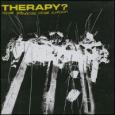
This album is the prior release to One Cure Fits All. It’s not true that Therapy? works on a harsh release/melodic release kind of schedule, although judging by these two discs it sure seems that way.  Never Apologise begins with a blistering, noisy “Rise Up.”  The really notable difference with this disc and other Therapy? releases is the amount of noise in the track. One of Therapy?’s most notable sounds has been a guitar that is so clean it sounds almost unreal.

This disc is far more sludgy (and seems even more angry), witness: “Die Like a Motherfucker.”

The whole disc is fairly short (under 40 minutes), very fast, and in relative Therapy? terms, lyrically not very interesting.  Consider this a solid rawk album.  And, again, one that is not available in the States.

[READ: April 29, 2010] Metrophilias

Brendan Connell’s new book is a short story collection.  And the short stories are indeed very short.  The longest one is 4 pages; most are 2.  There are 36 stories in all and each is named after a city.

I love the title of the book.  Metrophilias.  Technically, what? City love?  Love in a major city?  [Of course the prefix metro- means “mother” so I guess the title is literally motherlove, but that’s not how it’s intended].  And so each short story shows a snapshot of an individual in love in that city.

Each city is represented by at least a small nod that locates it, whether it is a street name or a building, or as in many cases, by an entire culture coming to the fore.  As such, some cities are far more identifiable as cities, and yet the content of the stories is so individualized that the city itself is (in many cases) irrelevant.  Of course, some of them could only be set where they are.  But before I get too obsessed with that aspect of the stories, I should move on to the people on the stories. (more…)

Read Full Post »

SOUNDTRACK: FUGAZI-13 Songs (1990).

I was so blown away by that first Fugazi disc that I immediately ran out and got this collection of their first two EPs.

The strange thing to me is that even though I enjoy the disc, nothing on it really stands out as all that memorable.  I feel like Repeater was such a strong release that these earlier tracks pale somewhat.

I’ve listened to this disc a number of times over the last few days and nothing really stands up and grabs me like Repeater still does.

I wound up buying two more Fugazi discs after this, but I’m pretty sure the reason I stopped buying their music was from this same feeling: the songs were all good, rocking, indie music, but there was nothing terribly memorable about them.

[READ: April 15, 2010] Stephen Fry in America

I first heard about this book when Stephen Fry appeared on The Late Late Show.  This book was very casually plugged as Fry’s attempt to visit every State in the U.S.  It turns out that this book is the companion piece to a six part BBC TV series of the same title (which I have not seen).  Although the TV series makes the existence of this document much more understandable.  Because although everyone wants to travel to every state in the union, the only way it would ever be accomplished in the fashion is for a TV show (even a book wouldn’t get quite this treatment if there were no TV show).

Stephen Fry was almost born in America (in New Jersey, in fact, where he believes he would have been Steve, rather than Stephen).  And he has always felt a connection to the States.  So, Stephen Fry, (in my head the quintessential Brit) brings a film crew and his classic British Big Black Taxi to see all of the States.  He begins in Maine and travels in an interesting manner, zig-zagging across the country.   He tends to visit the places/events/sites that each state is known for.  And, like any good TV show, he participates in the activities (he lobsters, he rides horses, his deals blackjack) and makes a tit of himself. (more…)

Read Full Post »

« Newer Posts - Older Posts »