Feeds:
Posts
Comments

Archive for the ‘Tiny Desk (Home) Concerts’ Category

SOUNDTRACK: YASSER TEJEDA & PALOTRÉ-Tiny Desk (Home) Concert Meets SXSW #188 (April 6, 2021).

Every year, NPR Music participates in the SXSW music festival, whether it’s curating a stage or simply attending hundreds of shows at the annual event in Austin, Texas. Last year, the festival was canceled due to the pandemic, but it returned this March as an online festival. We programmed a ‘stage’ of Tiny Desk (home) concerts and presented them on the final day of the festival. Now, we present to you Tiny Desk Meets SXSW: four videos filmed in various locations, all of them full of surprises.

Yasser Tejeda, a New York-based guitarist from the Dominican Republic, started his musical career on the Dominican cuatro (a folkloric guitar-like instrument) and has incorporated guitar stylings that have made him a “go-to guy” for Dominican artists looking for passionate elegance in their sound.

They play three songs in fifteen minutes.  And as with much music from this part of the world, the drums (Victor Otoniel Vargas) and percussion (Jonathan “Jblak” Troncoso) are unstoppable.

Yasser Tejeda and his band Palotré begin their set behind a home desk with “Amor Arrayano,” weaving a vaguely Caribbean feel with a killer R&B hook.

“Amor Arrayano” is a smooth love song gently echoing guitars and a smooth grooving bass.

After a brief introduction of his bandmates Tejeda launches into “La Culebra,” the track that caught my attention from their album Kijombo. Palotré is a powerful groove machine behind Tejeda’s virtuosic guitar playing and his playful dance moves.

“La Culebra” (The Snake) opens with percussive rattlesnake sounds from “Jblak.”   Kyle Miles plays a bouncy bass while Tejeda plays a cool virtuosic lead.  This (mostly) instrumental rocks on in various tempos for the duration of the song.

Tejeda has stated one of the goals of this project is to explore the crossroads between Afro-Dominican musical traditions with anything else that pops onto their radar. Their final song here,”Nuestras Raices,” [Our Roots] has become one of my favorites because I hear the essence of Africa mixed with jazz and maybe a hint of heavy metal, as Tejeda steps on his distortion pedal to kick the band into overdrive with guest tenor saxophonist Mario Castro in tow.

“Nuestras Raices,” opens with a ton of drums and Castro playing the intro melody on the sax.  The songs shifts gears to a quiet verse and then Tejeda stomps the distortion pedal for a brief foray into ripping guitar before pulling back for another quiet verse.  After some faster sections, the song slows down to a kind of moshing feel with all kinds of wild time changes, jazzy sax and heavy metal chords.

It’s pretty fantastic.

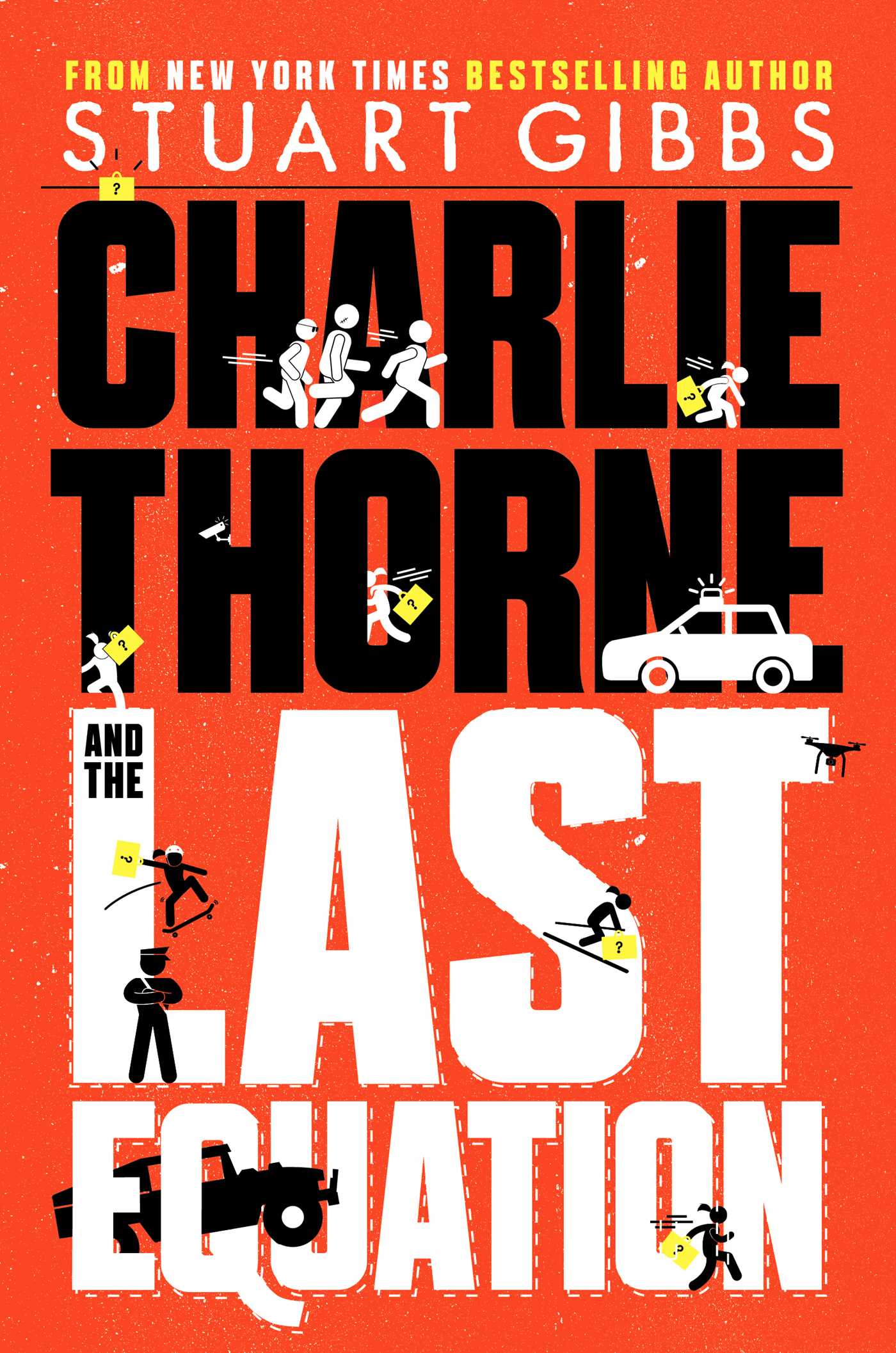
[READ: March 30, 2021] Charlie Thorne and the Lost Island

This is the first book in the Charlie Thorne series. I read the second one last month.  I don’t like to read things out of sequence, but it didn’t really impact this story all that much.  The only thing that I “knew” was that Charlie escaped at the end of the story.  But that’s pretty obvious since there was a second book.

This book was also good for some of the background information I was seeking.  Although, it turns out that Gibbs didn’t include a ton of background info on Charlie.  We learn just enough to understand how she is the way she is without getting bogged own in details.

The story starts with a Prologue set in Princeton, NJ in 1955.  It’s the evening of Einstein’s death and after being given some (unwanted) painkillers, he starts muttering something.  By the end of the night the secret service are all over his small house trying to uncover whatever it was he muttered (in German) about.

The book properly starts at CIA Headquarters as Dante Garcia is heading a team.  He is insisting that they call in the help of Charlie Thorne, a super-smart 12-year old girl with a potential criminal past.  His boss is skeptical but trusts Dante, so she agrees.  he also says he wants to work with Milana Moon, one of the best agents in the force.

Cut to a ski slope in Colorado where we are introduced to Charlie and her amazing mathematical mind.  She is able to picture the angles and speed she needs to conquer Deadman’s Drop.

The way she does it is pretty cool and it also sets up the first exciting chase.  She recognizes Dante and his partner as agents.  She doesn’t know why they are here but she knows she needs to evade them.  This leads to the first of many exciting chase scenes. (more…)

Read Full Post »

SOUNDTRACK: KACY & CLAYTON-Tiny Desk (Home) Concert #186 (March 29, 2021).

Kacy & Clayton had been generating some buzz around here just as the pandemic hit.  I hadn’t heard any of their songs, but their names kept cropping up.  And the one constant note was that they were cousins.

I don’t know who Marlon Williams is, or if he sings with them much (you’d think their name would be different) but he features prominently in these songs.

Across hemispheres, despite a nearly 8,000-mile separation, the Saskatoon, Canada duo of cousins Kacy & Clayton and New Zealand’s Marlon Williams manage to create harmony and intimacy. The Tiny Desk (home) concert, on the surface, is joyful and playful with animated illustrations by Daniel Syrnick.

They start with “I Wonder Why.”  Marlon sings lead and plays backing guitar on this one. Then Clayton play a quite electric lead guitar before Kacy kicks in with some really nice backing harmonies.  She sings in a striking country style although this song has a kind of old school country rock and roll feel.

Marlon’s Roy Orbison-like voice conjure a 1950s rock and roll sound that’s a surprisingly perfect match for Kacy’s serene voice.

A careful listen to “Plastic Bouquet,” the title track to the 2020 collaboration between Kacy Lee Anderson, Clayton Linthicum, and Marlon Williams, reveals a depth of storytelling more familiar in murder ballads than the trio’s upbeat Americana sound.

Kacy sings,

When a small four-door car was severed in two
Three girls were killed by a boy they all knew
Out for a party, they’d never attend
Pockets with money they never would spend

The devastatingly sad tale is met with smiles across hemispheres while an animated teacup pops on screen for Kacy to sip.

Kacy’s banter between songs seems really stiff for some reason.  But Marlon seems to be enjoying himself.

The “Arahura” has an old West/Americana feel despite the fact that the river is in New Zealand.  The yodeling vocals do work well together along with Clayton’s guitar licks.

Kacy stiffly says, “Wow that is a fun one.  It’s fun but it’s sad.”

“Isn’t It” has a very cool guitar riff and is a bit more uptempo.

It’s a magic collaboration of the very far north meeting the very deep south. The wizardry of technology reminds me of the wondrous world we often share these days, from a distance.

Before the final song, “Devil’s Daughter” comes the most awkward banter I have ever seen.

Marlon: It’s nice to be able to play these songs.
Kacy: It IS nice.  It’s nice because we know them.  [WTF?]
Marlon: I know, imagine if we didn’t
Kacy: Yes it’s be hard.  {WTF]

“Devil’s Daughter” is a pretty song with some nice guitar work from Clayton.

[READ: April 30, 2020] “Feel and Hold”

I’ve said before and this confirms my opinion that Diane Williams writes amazing sentences.  But cockamamie stories.

The Rotches went out for food in the morning.  But the meat didn’t look appetizing so they didn’t buy any.

This despite or because of the fact that the butchers hands were more expressive than their own–“those vendor’s hands could hold and feel at the same time.  When we hold a thing–I am not so sure we feel it.”

After a few paragraphs the story interrupts itself

Rotsch was–did I tell you this?–my friend Rotsch became quite a problem in the end and he fled to some remote part of the country.  I enjoy weird interruptions like that, but this story seems to be all interruption. (more…)

Read Full Post »

SOUNDTRACK: LIAM BAILEY-Tiny Desk (Home) Concert #184 (March 23, 2021).

I had heard of Liam bailey but I didn’t really know anything about him.  I’m fascinated by his voice because his British accent comes through as he sings (in the way that Billy Bragg’s accent is quite audible).

For this performance, Bailey teeters between belting and crooning, with emotions that ignite the screen from the top of “Fight” to the closing notes of “Paper Tiger.”

“Fight” is a short song that is primarily made of percussive chords and slaps on the guitar.  For most of the songs, he is playing the chords and you can hear them change but there’s no ringing notes, just muted chords.  Until the very last lines when the music resumes and he sings powerfully.

So it’s all about his voice.

Wiping the sweat from his brow between songs, he exclaims, “We don’t normally have these glaring lights in my living room.  This is my front room by the way welcome. We’re not doing no studio productions. We’re keeping it real. Keeping it raw.”

I don’t know what “Vixit” means.  He says he wrote this and the next song in upstate New York.  The music is a little darker. Trying to figure out he lyrics:

I still have my memories I still hear your song. They were always so vindictive, you always got me wrong. I cherish every day now I’m happy to be alone.  I get every thing I want and I still get stoned.  I’m out of love, I’m out of love never seemed to make sense.

If only I had realized the other side was fine.  If only I had realized.

“Paper Tiger” is another powerful song and once again, the guitar is the vehicle for his voice and lyrics.  Which is not to say the song isn’t good, just that the melody is not as important as the words.

Perched atop an amplifier in front the peeling walls of his living room, he presents three selections from his latest album, Ekundayo, accompanied by one acoustic guitar. Ekundayo, which means “sorrows become joy” in Yoruba, fittingly describes the Nottingham, England, native’s music industry journey thus far. After various projects and record deals, he found it impossible to operate under the confines of a major label. He finally found the liberation he yearned for on Leon Michels’s Big Crown Records, which released Ekundayo last November.

This set is not even ten minutes long, but it’s really solid.

[READ: April 12, 2021] Parable of the Talents [2033]

2033 is a brutal year for Acorn and Earthseed.  The end of the section was really hard to read.

As the year opens, our narrator, who we later learn is named Larkin Beryl Ife Olamina Bankole says that her mother should have left Acorn and gone to Halstead like Bankole asked.  It makes it seem as though perhaps Bankole went without her, but he did not.

“Larkin” is a derivative of Lauren and from the Greek Laurel ,  “Beryl” was his mother–emerald is type of beryl.  “Ife” is the Yoruba word for “Love”

Olamina dna Bankole had actually stayed in Halstead for a short time.  A family was moving from Halstead to Siberia (!) for a better life.  The election of Jarret was the last straw for them.  Bankole is amazed:

If [when I was a boy] anyone had said that Americans would be giving up thier homes and their citizenship and going to make new lives in Siberia, the rest of us would have looked around for a straightjacket for him (130).

Olamina and Bankole stayed in the family’s house while Bankole was trying to decide if he should move there.  Well, he knew he should, he was trying to convince his wife.  She doesn’t want to move but says it was a good trip for her.  Living in a modern house with plumbing.  Being so close to the Ocean.  She could see the appeal.

Bankole had told people that they were leaving.  Or, more specifically, Marc was telling people they were leaving and the faithful were understandably freaked out.  But she convinced them, and herself, that she wasn’t leaving.

When I started this year I was taking notes on things that interested me, but after having finished it and reading all the horrors, it seems bizarre to include little observations about things that made me smile.  But I get to throw this one in because I am a cataloger for a library.

Olimani and Channa have been sorting and cataloging books for their library and Olamina hated to be interrupted, but not too much: “Still, cataloging is tedious” (137).

The first bad news comes from Marc.  After he had been rescued by Olimani and taken in by  Acorn, he decided that he wanted to preach his own Christian beliefs to the people.  He was going to do it without asking his suiter, but Olamina found out and told him to preach at their next Gatehring.  She warned him that he would be questioned about what he said and he was cocksure enough to go on with it. (more…)

Read Full Post »

SOUNDTRACK: BUCK MEEK-Tiny Desk (Home) Concert #185 (March 25, 2021).

Buck Meek is the guitarist for Big Thief.  I loved the first Big Thief album, but have found the newer ones to be a little too soft for my liking.

Initially I would have thought that Buck Meek would be a harder guitarist.  But I don’t really know that much about his contributions to the band, so it should probably come as no surprise that he writes folky songs.  Although even Bob Boilen seems a bit surprised.

The back of a van on a sunny day holding an acoustic guitar is a far cry from the usual setting where I’d see Buck Meek. More likely, I’d be in a dark club; Buck’s intense electric guitar and backing vocals are a part of what makes up my favorite rock band these days, Big Thief. But here, home is Buck’s Toyota Land Cruiser in Topanga Canyon, Calif.

Buck plays a pretty acoustic guitar and his voice is soft and gentle.  He reminds me a lot of Nick Drake.  He plays three songs from his 2021 album, Two Saviors.

“Pareidolia” is, as Buck Meek explains, “this human instinct to put symbol to stimulus.” He says, “I’ve been spending this time of solitude in the canyon here spending a lot of time observing the clouds and things” — in other words, finding shapes and objects in clouds and objects where none intended to exist and perhaps turning them into stories or songs or just letting your mind wander.

He follows that with the title track “Two Saviors” and “Halo Light,” two more songs that continue the soft and gentle style.

The Texas native has a tender voice with a bit of a yodel and a resplendent way with words. After three songs from Two Saviors, Buck treats us to a new song written in quarantine titled “The Undae Dunes,” once again drawing pictures in the sky, this time of rockets and perhaps an astronaut and a love, all from the back of a Cruiser.

He says that “The Undae Dunes,” is dedicated to the woman he loves who may be an astronaut.  She’s applying to the space program.  That’s pretty fascinating in and of itself.

I enjoyed this chill Tiny Desk/Van set.

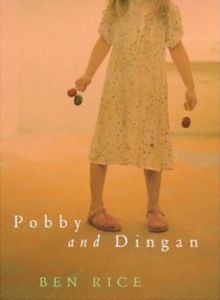
[READ: April 10, 2021] Pobby and Dingan

I had never heard of Ben Rice or this story until one of his other stories was in a New Yorker issue from 2001.  I enjoyed that story and when I looked him up, I saw that he had written this story. And nothing else!

Which is weird because this story

was joint winner of the 2001 Somerset Maugham Award and shortlisted for the John Llewellyn Rhys Prize. It has been made into the 2006 film Opal Dream, a 2010 play for children by Catherine Wheels Theatre Company and a 2012 play The Mysterious Vanishment Of Pobby & Dingan for Bristol theatre company Travelling Light.

Perhaps he decided to leave on a high note.

The book is a novella (about 90 easy-to-read pages) set in the opal mining community of Lightning Ridge in New South Wales.  That’s over 400 miles from the nearest big city (Brisbane).  So while I don’t know if it’s in “the bush,” it’s certainly not suburban.

Lightning Ridge is apparently the opal capital of Australia.  Much like during the American gold rush, prospectors flocked to Lighting Ridge to try to get rich.  This story is about one such family.  The dad, Rex, is the prospector, the mom has followed him here from England.  She clearly misses her old life (they refer to her as Pom and her mother as Granny Pom).

The narrator is Ashmol Williamson, a ten or so year old boy.  But the story is about his sister Kellyanne.

He thinks that his sister is a fruit loop.  Because she is old enough to be going to school but she refuses to admit that her imaginary friends Pobby and Dingan are imaginary.  She talks to them constantly.  It drives Ashmol mental. (more…)

Read Full Post »

SOUNDTRACKJUSTIN BEIBER-Tiny Desk (Home) Concert #182 (March 17, 2021).

When Taylor Swift did a Tiny Desk Concert it was HUGE news–the biggest pop star in the world at the Tiny Desk?

I assume at one point Justin Beiber would have made a similar big deal (even if this one is a home show and just a stream like any other). I didn’t even know he was still making music.  So imagine my surprise to hear that the album that these songs come from went to number 1 and that he is the youngest artist to have 8 number one records.  Who is buying Justin Beiber records?   I have no idea.

Especially now that he’s all tattooed up and sleazy looking.

Of course, it’s very likely that I don’t know anything he has done, because I really didn’t know what he sounded like.  He plays four songs here.

“Holy,” another song from Justice, opens this set without the presence of guest Chance the Rapper.

“Holy” is a slow acoustic song (the acoustic guitar from Julian McGuire sounds great).  His musicians are from We the Band.  This is a catchy pop song for sure–the holy holy holy, hold me hold me hold me part is a nice touch.  I like the addition of the record scotching from DJ Tay James in the middle.

But why is he always grabbing his crotch?  Especially the way he grabs it, like he has to pee.  It’s really disconcerting and seems like an unconscious reflex at his point.  It looks particularly weird with his big baggy clothes on.

For “Peaches” he heads over to the keyboard.  Julian McGuire picks up the electric guitar and shows how good he is.  The opening piano melody is slow and pretty.  I really like this song except that the lyrics are so unnecessarily crass.  Why have such a pretty song and yet have your call and response lyrics be so rude

I got my peaches out in Georgia (oh, yeah, shit)
I get my weed from California (that’s that shit)
I took my chick up to the North, yeah (badass bitch)
I get my light right from the source, yeah (yeah, that’s it)

And good lord he repeats the chorus so many times.

Bieber plays the slow piano solo as the scotching begins and then keyboardists O’Neil “Doctor O” Palmer takes over and plays a really groovy melody as the outro to the song.

“Peaches” will exist in a significantly different form when Bieber drops his new album, Justice, on Friday — the track will feature guest vocals from GIVEŌN and Daniel Caesar

For “Hold On” he moves away from the keys.  I prefer him standing in front of the keys because he looks so awkward when he’s just standing there, hunched over and crouching.

The song has pretty echoing electric guitar (Mcguire again).  This song starts out quietly but when it kicks in, what a super catchy song!   It’s got a killer bass sound from Harv and is just  full on bouncer.  This should be huge.   In the middle of the song the band take a verse or two to totally rock out with crashing drums from Robert Taylor as well as ripping guitars and bass.

“Anyone” ends the set as a big old ballad with satisfyingly quiet synths and backing vocals.  This is a really pretty song, but it would work so much better if he didn’t look so scuzzy.  But once again the band totally rocks the end–a big jam that is really awesome once JB stops singing,  McGuire get a ripping solo and the band turns the song into a funk jam with some cool bass and drums and the samples kicking in.

[READ: March 31, 2021] “Seventy-Two Virgins”

Comedy pieces are often funny when they are timely.  I’m not sure what was going on in 2007 that Steve Martin wanted to make a joke about Muslim martyrs enjoying 72 Virgins.  I do recall hearing about that closer to 9/11, but maybe something else new had happened?

I’m not willing to look this up.  How does one even searching for 72 virgins?  But the context is that it was widely believed that Muslim ‘martyrs’ enjoyed rich sensual rewards on reaching paradise.

So without having 72 virgins in the zeitgeist, what’s it like to read this?

Well, this is basically a kind of play with every virgin getting a line.

(more…)

Read Full Post »

SOUNDTRACK: STING-Tiny Desk (Home) Concert #183 (March 22, 2021).

Sting starts this Tiny Desk Concert with a duet on “Englishman/African in New York” which is exactly how he started his previous Tiny desk Concert back in 2019.  In fact, since this is a duet, I wondered if I had accidentally cliked on the wrong concert.

But the previous Concert was a duet with shaggy and this one is a duet with Shirazee.

During the pandemic, Beninese pop star Shirazee adapted his own rendition of Sting’s classic “Englishman in New York” into “African in New York.” His version made its way to Sting, who loved it so much that he asked Shirazee to lend his voice to his Tiny Desk (home) concert and record for his new Duets album.

I never loved this song, but I’ve always liked it.  But I really like the way it has taken on a life of its own with these new duets.  And the “African in New York” parts shine a new light on the song and show its universality.

Shot in a lounge in NYC where Sting’s presently recording another album, these two gentlemen share a touching moment between songs, expressing their mutual admiration and discussing the sheer joy about a simple concept – performing in a room together after 12 long months of isolation and virtual collaborations.

Sting comments about how the song has had multiple lives: a Jamaican in New York, a Somalian in New York and now a Benin man.  Shirazee says, “Benin man in New York, I should have said that why didn’t I say that?”  When Shirazee thanks Sting, he replies, I’m always delighted when artists take the template I’ve written and make it better made it different.  Shirazee thanks him again and then says, and now I can’t wait to get a free Sting concert.

Sting jumps into a stunning acoustic performance of “If I Ever Lose My Faith in You,” another one of his many classics. The timbre of his voice conjures a sense of carefree familiarity, reminiscent of times with more levity and peace.

He sounds really good and definitely has fun vamping at the end of the song.

His finale, “Sister Moon,” is a gem from his 1987 solo album, Nothing Like the Sun, that rarely gets performed live.

I don’t know this song, but it sounds really good, just his voice and his resonating guitar.

[READ: March 31, 2021] “Tasteless”

The September 3, 2007 issue of the New Yorker contained several essays by their writers about the subject “Family Dinner.”

This is one of David Sedaris’ really funny essays.  There’s so many great lines.

He starts by saying that he was promised that when he quit smoking his sense of taste would remarkably improve–like putting on a pair of glasses that are your prescription.

But after six months he’s having no luck.  However, he was never an attentive eater.  He’d thank his mom for the fried fish and she’d say it was chicken or even veal.

She might as well have done away with names and identified our meals by color: “Golden brown.” “Red.” “Beige with some pink in it.”

In addition to not tasting things, he says he is a shoveller.  As if he were a prisoner, encircling his plate to fend off the others. (more…)

Read Full Post »

SOUNDTRACK-XAVIER OMÄR-Tiny Desk (Home) Concert #181 (March 15, 2021).

Xavier Omär has a fantastic voice–one that I thought was rather unexpected given his appearance.  He’s a pretty big guy and seems like he’d have a deep resonant voice, but his voice is really soft and high.  And powerful.

He’s also had a pretty interesting career.

Omär’s career began in Christian music under the moniker SPZRKT, before he moved into secular R&B and hip-hop. Through his first couple of projects and work with Seattle DJ and producer, Sango, the 27-year-old singer’s heart-on-sleeve approach quickly created a buzz.

He says that the whole band is from San Antonio Texas.

Xavier Omär decided to turn his Tiny Desk home concert into a whole Texas affair. Initially, Omär wanted to recreate the look of the Desk: “I wanted to kind of bring the feeling of Tiny Desk back, so I had booked a library,” he said. Ultimately the library didn’t work out, but Rosella Coffee and Wine in his home base of San Antonio proved to be a great match for his sound–spacious and airy.

“Like I Feel” opens with some grooving bass from Korey Davison and wailing sax from Kevin Davison.  Josh Greene adds some big drums fills and guitarist Billy Ray Blunt Jr. plays some wailing leads.  Xavier trades off lead vocals duties with Talyce Hays whose voice is also terrific.

During “Blind Man” he throws in some rapping–a softer cadence, but to good effect.  There’s some response backing vocals from Jay Wile while Alana Holmes and Hays fill in the backing vocals.   Lyrically the song is kinda lame (sweet, but lame), but there’s some cool musical moments–splashes of four notes and more than a few tempo changes.

For good measure, he plays the song that put him on the map, 2016’s “Blind Man.” This is undoubtedly Xavier Omär’s best live performance on record.

I had no idea that this was his breakthrough song.

He tells a quick story (it’s amusing) about how he wishes he was at the beach.  But even if he can’t get there he can think of the the rhythm of the waves and the “SURF.”  He says he could enjoy the surf because his woman has that “splah” (?).  Its’s a pretty ripping song with, again, surprising tempo changes.  The song has moments that I would say come from Frank Zappa’s oddball melodies.  Ands once again, the drums are massive.

He says “So Much More” is the wedding song of the year.  It features Justin Crawford on keys and is a much more mellow song than the other.  It also allows Xavier to really show off his voice.

The Alamo City resident and his cohorts orchestrated a charismatic and vocally rich show. The set list perfectly depicts the emotional arch of if You Feel. He’s on a clear path to greatness in R&B music.

It was probably a smart move to go secular.

[READ: March 31, 2021] “A Man in the Kitchen”

The September 3, 2007 issue of the New Yorker contained several essays by their writers about the subject “Family Dinner.”

Donald Antrim starts this rather sad memory with an amusing story.

His father learned how to cook when his mother served “hot tuna-and-mayonnaise casserole with potato chops as a decorative garnish.”

This story had become Received History in the family: “Baked mayonnaise! I had to take action!”

Soon cooking had become his father’s second full time job.  He taught literature at the University of Virginia and then he would drive around buying all of the food stuffs for their meals.  He would travel to different markets for different foods and he was an early adopter of the Cuisinart. (more…)

Read Full Post »

SOUNDTRACK: BLACK COFFEE-Tiny Desk (Home) Concert #180 (March 11, 2021).

Black Coffee is such an excellent name.  And yet the music he creates is nothing like what I was expecting.

Born in Durban and raised in the Eastern Cape in Mthatha, Black Coffee’s subculture of soulful … house music has always been about love. It’s a form of sonic escapism that provides a sanctuary for all beings, regardless of race, age, or gender. Therefore, it’s only fitting that Black Coffee rocks a tee embossed with “I Heart You” across his chest.

Black Coffee stands behind a big mixing board as he generates most of the sounds.  Although next to him is Pansula on the drums.  And Pansula is possibly the real star of this set, with his persistent and powerful rhythms.

Black Coffee, a figurehead of the global South African dance movement, is known for his undeniable DJ sets and AfroHouse anthems that (under normal circumstances) light up dancefloors around the world. He brings that same feeling to his Tiny Desk (home) concert, but with a unique configuration: live instrumentation.

Kicking off the set is “You Rock My World” featuring Soulstar, a classic dance joint from his Africa Rising album whose convergence of pulsating percussion, a calming melody, and the sultry vibes of Soulstar’s voice feels like a spiritual palette cleanser.

It starts with drums and drums and more drums from Pansula.  Black Coffee’s samples provide most of the music with some fleshing out from Nduduzo on the keys.  Then Godfrey Mntambo plays some sultry sax as the lead melody.

The backing singers (Musa Nhlapho, Sandisiwe Sishuba and Bonokuhle Nkala-Mtsweni) start cooing and then lead singer Soulstar sings.

“Flava” is up next with lead vocals from Una Rams and Tellaman.  My favorite part comes at the end of each verse as Black Coffee thumps the bass and Pansula echoes with cymbals.  The gentle keys on this track provide some nice high end amid all the bass.

“Flava” and “Wish You Were Here” come from his new LP, Subconsciously, whose litany of special guests — include Diplo and Pharrell.

“Wish You Were Here” is a bit more mellow and includes a much wider array of samples–guitars, flutes and crashing sounds.  Singer Msaki has an Annie Lennox vibe and sounds really great.  Nduduzo plays a jazzy piano solo as the song nears the end, which adds a fun new component to this house song.

[READ: March 31, 2021] “Real Food”

The September 3, 2007 issue of the New Yorker contained several essays by their writers about the subject “Family Dinner.”

Chimamanda Ngozi Adichie explains that when she was little she hated garri, a food served for lunch every day except Sunday in her house.  Her mother was concerned that she was not eating at all and sat with her to watch her eat the garri.

It was made in various ways, with different ingredients (primarily yams) but was always cooked, stirred or pounded in a mortar until it became a soft mash: “it was jokingly called ‘swallow,’ because one swallowed the morsels without chewing.” (more…)

Read Full Post »

SOUNDTRACK: COMING 2 AMERICA, SOUNDS OF ZAMUNDA-Tiny Desk (Home) Concert #179 (March 10, 2021).

I thought that this name meant that it was the soundtrack for the movie.  But no, this release highlights

the new compilation Rhythms of Zamunda: Music Inspired By Coming 2 America.

Tenuous connection to the movie, perhaps, but the results are great:

six artists representing four countries in Africa perform a megamix of selections from the project. Each performance from the pan-African project bridges the distance between the countries and cultures.

The songs jump back and forth to different locations

In addition to the sweeping range of the showings, the look of each set is stunning: vibrant, opulent colors; meticulous Tiny Desk shelf recreations; gorgeous African artifacts; and a few nuggets dedicated to King Akeem of Coming 2 America.

The majority of the songs are filmed in South Africa.

South Africa’s Nasty C — who’s arguably the biggest rapper on the continent — opens the set and trades verses with Tiny Desk alumni Ari Lennox on “Black and White.”

The set looks like the original Tiny Desk Room with cluttered bookshelves.  I like the lines where Nasty C pauses before saying the last word.  Ari Lennox’s vocals are really great.  Fundile “FD” Dlamini plays drums while Christer Kobedi and Vaughan Fourie play keys.

He then sends us over to Cameroon for some Afrobeats flavor, courtesy of Locko and his stripped-down version of “Magnet.”

His book-filled room is also a nice backdrop.  I enjoyed this song more than the previous because of all the instrumentation–drums (Marc Nzana), guitar (Benjamin Mouangue Bossamo), cool bass (Joel Parfait Ondigui) and even a violin (Martien Oyono).  Brice Essomba fleshes out the songs on the keys.

We then circle back around to South Africa to hear from R&B newcomer Ricky Tyler.

It’s the same set as Nasty C, but this time with a full band.  There’s deep bass from Tendai “Shoxx” Shoko and soft guitars from Innocent Mzizi.  The keys from Zādok float throughout grounded by drums from Tino “Beatboy” Damba.

From there, we head north to Nigeria to do the “Jiggy Bop” with Alpha P.

Alpha P is lounging on a zebra bean bag chair.  Then his hype man (David Osang?) gets everyone going and then comes a seriously funky bass from Ayodele Agbabiaka Oluwasegun.  Rocking guitars from Best Amakhian and rocking drums from Ebenezer Olayinka really power this fun dancey jam.  Olabiyi Julius sprinkles melodies from the keyboards throughout.  The backing vocalists (Agu Chinyere Gift, Tosin “SDK” Tade, Femi Jacobs) keep the song flowing nicely.

Then it’s back to that original set as

we take one last trip to South Africa for award-winning dance DJ and producer Prince Kaybee’s “Fetch Your Life,” featuring Msaki.

I haven’t heard of Msaki but her voice is really beautiful.  Prince Kaybee lays down a thumping ground track (while wearing one glove to twist the knows).  There’s a cool guitar solo from Zādok (who returns to show off his multi-instrumental skills) and gentle keys from Fundile “FD” Dlamini.  Like with the other songs, the thumping bass, this time from Katleho Motlatla really grounds the song.

Finally, Togo duo Toofan dares us not to dance to “Yé Mama.”

This song has a great island feel with lots of percussion (Therence Egue), grooving bass (Martin Lawson) and vocals from Barabas and Masta Just in French.  When Lionel Adjovi plays his guitar licks you can really hear where Paul Simon got the tunes for Graceland.  Paul Akakpo keeps the sound full on the keys while Sylvie Akpedjo and Lamabara Paul provide backing vocals.

This is a pretty great introduction to music from all over Africa.

[READ: March 31, 2021] “Choke”

The September 3, 2007 issue of the New Yorker contained several essays by their writers about the subject “Family Dinner.”

Anthony Lane was in France on a student exchange program.  The family he stayed with was wonderful.  Until they dropped an artichoke on his plate.  It steamed with the promise of pure malice.

Can you imagine a food less appetizing than one that possessed: “bristles, bottom and choke.”

The family watched him in bemused delight as he tried not to look like a an irredeemable hick–not knowing what to do with this hand grenade

He watched Madame rip off a spiky leaf, dip it into butter and then eat the inside.  He followed suit and felt like Tigger eating one of Eeyore’s thistles. (more…)

Read Full Post »

SOUNDTRACKSAMPA THE GREAT-Tiny Desk (Home) Concert #173 (February 23, 2021).

I thought that Sampa was actually Sammus, the indie rapper named after the character in Metroid.  So I was a little bummed to find out I had the wrong Sam… rapper.  But I quickly came over to Sampa’s style.

Sampa Tembo is better known as Sampa The Great, an understated title. In her Tiny Desk (home) concert, the poet, rapper and singer-songwriter delivers evidence that it’s more like Sampa the Greatest.  Initially raised in Botswana, Sampa moved to Australia as a young adult and established herself in Sydney’s hip-hop scene. There, she released two mixtapes, 2015’s The Great Mixtape and 2017’s award-winning Birds and the BEE9, all the while generating buzz. She had been based in Melbourne for the last four years, but the next chapter of her musical journey will find her at home in Zambia.

She plays four tracks and her live band is really solid.  She opens with “Rhymes To The East” which features a nice guitar riff by Samuel Masta.  I like the way the backing singers (l-r: Joy Tusankine Namwila, Mwanje Tembo, Tio Nason) sing the end of the rapped lines.

When Sampa really starts flowing her voice is great–a rough gravelly cadence with a Southern African/Australian accent.  It’s especially cool when she introduces the third verse with a snarl

Rhymes beast mother fucker
Tembo from the east put the beast in a trucker
Timbuktu, as I question all the loyalty
Build a big wall when you stole all of the royalties

The end of the song is really catchy, too.

The next three are from her 2019 album The Return.

“Mwana” opens with a drum solo Kasonde “Tek1” Sunkutu.  The song is mostly sung by the backing singers.  Then Sampa starts her flow.  Musically this song is much more spare with gentle keyboards Lazarus “Lalo” Zulu playing around the drums.

As she introduces the band, they jam, with some funky bass from Mapalo “Mapskeys” Mapalo which leads into an improv  that sounds like an island fun.

“Freedom” is up next.

Sampa Tembo is in Lusaka, Zambia, her landlocked African home country.  [She says] “Freedom is what we feel when we perform. And freedom is what the world is in need of right now. In this pandemic it feels like we all need a sense of freedom.”

“Freedom” features some terrific backing vocals. The end has a rocking jam as the singers all give up whooos and Masta plays a ripping solo.

When the camera is in full frame you can see that Sampa’s dress has a really long train which covers almost the entire floor (no wonder she sits through the whole set).

The set ends with “Final Form,” my favorite song of the set.  It’s got a big, heavy noisy riff with thumping bass and wailing guitars.  Her delivery is raw and raspy and really affecting.

The end is particularly cool as the band rocks out punctuating along and singing “Black power!” “Louder!” “Black power!”

Sampa is pretty great, indeed.

[READ: April 12, 2021] Parable of the Talents [2032]

Parable of the Sower ended on a vaguely optimistic note:  Lauren felt that they were ready to set up Acorn, the home of her Earthseed community.  Bankole thought there was no chance it would work.  But this is Lauren’s story, so we’ll assume that the story is tipped in her favor somewhat.

Plus, there’s a sequel, so things must work out reasonably well, right?

Well, surprise!

Parable of the Talents opens up with the news that Lauren is dead.

She is mostly called Olamina during this book because Bankole “doesn’t like my first name, so he ignores it.  That’s fair.  I didn’t like his first name either. It’s Taylor, by the way and I ignore it” (122).

This book is narrated by Olamina and Bankole’s child–unspecified gender and age in the Prologue, although by the end of this week’s reading we can assume the writer is their daughter [Bankole wants her named Beryl and Olamina wants her named almost anything that isn’t Beryl–“such an old fashioned name” (122).  The narrator later says something about high school, so it must be around 2050.

The child shares Olamina’s diary entries, but her basic attitude is that she hates her mother and thinks well of her father and wishes she knew him.

The book opens with this narrator saying “they’ll make a god of her” and the continues with something surprising about that

I think that would please her, if she could know about it.  In spite of all her protests and denials she’s always needed devoted, obedient follower–disciples–who would listen to her and believe everything she told them.  and she needed large events to manipulate.  All gods seem to need these things.  (7)

I never got the sense that Lauren wanted to be a god.  But maybe Olamina does.

She also tells us that Lauren’s middle name “Oya” is the name of a Nigerian Orisha–goddess f the Yoruba people (goddes of the wind, fire, and death, more bringers of great change (50).

Butler wrote this book five years after the Sower.  As I read Talent, I wondered what the intent of this story was. Had she planned all along to have a follower (child or otherwise) criticize Earthseed?  Had five years of thinking about Earthseed made her question the validity of Lauren’s ideas?  I don’t know anything about Butler, about whether she “agreed” with Lauren’s ideas or not.  I don’t have anything besides textual evidence to know how she felt about religion in general.  So was this book a commentary on her own ideas/ideals from five years earlier?  Or is this just interesting storytelling by having a new protagonist dispute the doctrine of the previous protagonist.  Especially if the bulk of this book is made up of Olamina’s diary entries (just like the first book was).

That’s right, even though the book is set after Olamina has died, the book so far is primarily her own diary entries from 2032, By the end of 2032, she is pregnant with, presumably, the person who is narrating this book and criticizing Olamina’s ideas. (more…)

Read Full Post »

« Newer Posts - Older Posts »