Feeds:
Posts
Comments

Archive for the ‘NPR/PRI/PBS’ Category

SOUNDTRACK: LINIKER E OS CARAMELOWS-Tiny Desk Concert #800 (October 29, 2018).
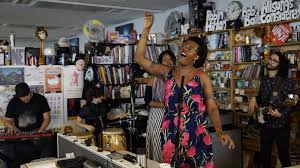
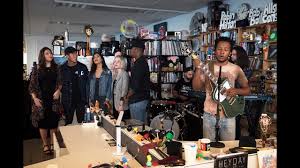
I listened to this Tiny Desk Concert for a few minutes before watching it and when I clicked over to it, I was quite surprised to see Liniker, whose voice is quite deep, look so feminine.  It was also confusing because as I clicked over one of the backing singers was singing in quite a high register so I honestly wasn’t sure who was who.

I also love that the NPR doesn’t address this at all.

Watching this performance is to witness a spell being cast, note-by-note. Liniker e os Caramelows (Liniker and the Caramelows) are from Brazil but steeped in the tradition of soul from here in the U.S. They started their turn behind the desk with the ballad “Calmô,” a testament to the power of slow songs dripping with soulful emotion. It was a bold statement of just who they are as a band and what they stand for.

As for Liniker’s look, the second paragraph uses the feminine pronoun (although Liniker’s [Google-translated] Wikipedia page uses a male pronoun, saying Liniker:

began to invest in an androgynous visual identity. As an artist, his vision began to mix turban, skirt, lipstick and mustache in his musical performances that incorporate scenic elements into his voice “sometimes hoarse and grave, sometimes clean and sharp, which forms a Brazilian black music, but stuffed with pop elements “, according to O Tempo.

The Tiny Desk blurb is certainly more current and more reliable:

Lead vocalist Liniker Barros has obviously done her share of listening to soul singers and she effortlessly slides from lower registers to an emotional falsetto.

They play three songs which cover a lot of styles and sounds.  “Calmô” is a  light jazzy number with some gentle guitar pieces and twinkly keys.  The percussion is notable for the shakers and drums, giving it a cool Brazilian feel.

It’s also fun to listen to Liniker speak.  He sings in Portuguese, although his English is excellent, except for some of those fun words like “percoosion” and “fell-ix” (referring to Felix Contreras).

You have to go back to the co-mingling of jazz and Brazilian music in the late 1950s to appreciate the affinity our two countries have had for each other musically.

“Tua” is a great song that  sounds like it could be a Tindersticks song–jazzy and noir, except that Liniker voice ventures high instead of low like the Tindersticks.  The second half of the song adds a great 70s keyboard riff to and some “ohh ah ahs” (and a deep sax solo).  It s a fun example of

Brazilian funk … complete with a mid-song, church-revival breakdown, featuring tenor sax.

It’s hard to pick a favorite song although “Remonta” the final song might be it.  It covers multiple genres in its five minutes and Liniker is smiling throughout.  The band moves:

from ballad to a reggae bridge, eventually exploding into a majestic African-based Candomblé rhythmic finish.

The end is a great with lots of percussion, great 70 keys, and a robust, but not wild, fuzzy guitar solo.  The band’s joy at the end is infectious.

[READ: January 24, 2018] “My Fanon Project”.

This is an excerpt from his Wideman’s novel Fanon.  In this excerpt he is writing to Frantz Fanon, who fought for Algerian independence and then died in 1961.  This project has been on his mind for over forty years, since he read The Wretched of the Earth. [That part is all real].

After reading this book he wanted to be like you, Fanon, a writer committed to telling the truth amid racism and oppression.  He couldn’t live up to that so the project shifted to writing about disappointment with “myself and my country.”  He had published many books over the years hoping to at least never dishonor Fanon.

Then he changed the project, instead of living Fanon’s life maybe he could write it

Okay, so far so good. (more…)

Read Full Post »

SOUNDTRACK: JIM JAMES-Tiny Desk Concert #799 (October 26, 2018).

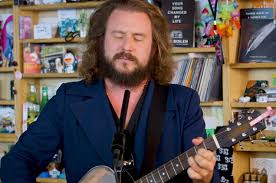
Jim James is the singer of My Morning Jacket.  And I think he’s pretty great.

Although I like his band work more than his solo work, i was happy to see him in this Tiny Desk Concert.

Especially since he started with “I’m Amazed,” the terrific song from MMJ’s Evil Urges.  I think what’s most striking about this version is how stripped down the music is.  The song has become mostly about the words.  And, reading the blurb, that seems to be the point lately for James.

A single voice can send a powerful message – and that’s just what Jim James did at the Tiny Desk, with just his voice and an acoustic guitar. His lead-off song, “I’m Amazed,” comes from My Morning Jacket’s 2008 album Evil Urges. It’s a prophetic song in many ways – it speaks not only of a divided nation and the need for justice but also to the beauty in the life and plight of others. It’s something Jim James would find greater appreciation for after he fell from a stage at a My Morning Jacket concert, just three days before Evil Urges was to be released, sustaining life-threatening injuries. It would be a life-changing event and the inspiration for his first solo album years later, in 2013, Regions of Light and Sound of God.

Jim James’ second song at the Tiny Desk, “Same Old Lie,” comes from an album he released just days before the 2016 Presidential election.

This is a much darker song musically and lyrically.  Once again the (fingerpicked) guitar is lovely, almost all the higher strings.  But the lyrics are pointed:

The lyrics take on a deeper meaning now, just days before the 2018 elections. “It’s the same old lie you been reading about / Bleeding out – now who’s getting cheated out? / You best believe it’s the silent majority / If you don’t vote it’s on you, not me.”

James’ voice sounds a little off.  Not terribly, but perhaps it’s a little strained (these early morning shows are tough for musicians).  He also doesn’t say anything.  He’s just right there to start the third song, the strummed “Over and Over”

We fight the same fights / we drop the same bombs / put up the same walls, over and over again.

His closing tune, in what I think of as a purposeful trilogy for these political times, is from two albums he’s released this year, Uniform Distortion and Uniform Clarity. The albums contain the same songs, performed with his blistering electric guitar on one and on the other, as here, acoustically.

It’s a message of exasperation and hope, all set to a pretty melody.

After 20-some odd years of putting out music, Jim James is full of fervor and compassion for others as he sings, “How can we make / The same mistakes / and still carry on / Living the same we did yesterday / Have we learned nothing at all?”

[READ: January 12, 2017] “Tiny Man”

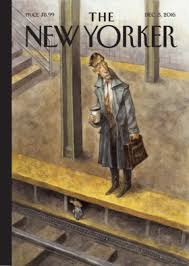
I have really been enjoying the Sam Shepard stories in the New Yorker.  They are surprisingly raw and gritty and feel a bit like a throwback (Shepard is 73 after all) to a more blunt storytelling style.

This one has two main sections, the Tiny Man part and the Felicity part.

The Tiny Man sections start like this: They deliver my father’s corpse in the trunk of a ’49 Mercury coupe.  His body is wrapped up tight in see-through plastic…   He’s become very small in the course of things–maybe eight inches tall.  In fact, I’m holding him now, in the palm of my hand.

Woah, what’s going on there? (more…)

Read Full Post »

SOUNDTRACK: CAUTIOUS CLAY-Tiny Desk Concert #798 (October 24, 2018).

Cautious Clay has a wonderful name.  And that’s really all I knew about him.

He came to the Tiny Desk with friends, a lot of friends. In fact, Josh Karpeh, best known in the music world as Cautious Clay, put together a backing vocal ensemble of friends he’s known since his days as a music student at The George Washington University here in D.C. And so, with five singers – Sanna Taskinen, , Sam East, Claire Miller and Michael Ferrier – along with a drummer, keyboardist and a bassist – Cautious Clay brought a warm, thoughtful and chill vibe to the Tiny Desk.

Clay sings three songs and he shows off a lot of musical skill as well as a delightfully chill voice.

 Here at the Tiny Desk, Cautious Clay opens with “Cold War,” a song that I interpret to be about commitments within relationships. The line, “In it for the monetary growth and power / But we divided at the bottom of this whiskey sour” shows the humor and insight that I love in his lyrics.

Eric Lane (Keyboard/keybass), plays a cool riff on the keybass (an instrument I’d never heard of before), but I’m more interested in the cool sounds he’s getting out of the other keyboard.  Clay gets some nice falsetto notes as the backing singers join him.  The big surprise for me was when Clay pulled out a saxophone and played a tidy little solo.  I’m not sure it works with the music, but it sounds fine.

For the second song “Call Me,” Clay grabs a (tiny seeming) guitar and plays left-handed. It’s mostly delicate chords high up on the neck.  Midway through this song, Clay picked up a flute and played an all too brief solo.  It was a real highlight for me since I’ve been really enjoying the flute lately.  Chris Kyle switched from guitar to bass for this song, but he’s back on guitar for the final song.

The only person who doesn’t get to really shine is drummer Francesco Alessi.  The drums are pretty quiet and pretty uneventful for most of the show, but I guess they get the job done.

For the final song, “Stolen Moments,” the singers depart, leaving only the four piece.  There’s some pretty. simple guitar and another sax solo.

All three songs are a little too soft rock for me, but it’s clear that Cautious Clay has a lot of talent.

[READ: November 21, 2018] “The Dog”

The sign on the gate says “Chien méchant,” and the dog is certainly méchant.

Every day she walks past the dog and it hurls itself at her, snarling and ferocious.  She knows it is not personal–it hates everyone.

But she wonders how deep is that hatred.  She doesn’t know but she feels the dog gets satisfaction from the encounter–from being feared.

She knows that St. Augustine says that we are base animals because we can’t control  our fears and our bodies: (more…)

Read Full Post »

SOUNDTRACKALFREDO-RODRÍGUEZ-Tiny Desk Concert #796 (October 18, 2018).

As this Tiny Desk Concert started,  I was sure the main musician was the bassist.  Given his fascinating outfit and his amazing bass playing, I was sure it was all about him.  I was still more impressed with the bass even after learning that:

Cuban pianist Alfredo Rodríguez gave our office audience a very quick lesson on why pianists from that island nation are so impressive: they treat the piano as the percussion instrument it is. Rodríguez immediately let fly with an intense flurry of notes that were as melodic as they were rhythmic.

But really, once Rodríguez starts playing you can tell that he is the composer and creator, even if guitarist/ bassist Munir Hossn is the exciting splash on the music.  I didn’t mention that Hossn also plays guitar.  It’s on a stand which he walks over to play in between amazing bass runs.

“Dawn” opens with some singing and a very simple rocking kind of feel.  Then Hossn plays some wonderful guitar soloing notes while Rodríguez plays his complicated main lines.  Meanwhile, Hossn has switched back to bass and is playing some amazing jazzy lines–fast, furious and at times really high notes.  It’s pretty cool.

There’s a lengthy guitar solo (with Rodríguez clapping) before the main song resumes with two very distinctive styles of music.

The mash up of European lyricism and Afro-Cuban percussion is at the heart of the Cuban piano tradition and it is very present in the first song. It wasn’t long before Rodríguez dug deep into rapid-fire syncopation along with drummer Michael Olivera.

Listen to the expansive and lyrical exploration of the second song in this Tiny Desk set, “Bloom.”

It opens with a lovely piano melody twinkling along the keys.  But it’s that great low-end and the simple drums (check out Olivera’s jacket) that takes it beyond “European lyricism.”  There’s some wonderful interplay between the musicians and some great effects from Hossn on bass (how does he get those super high notes?).

The final song is called “Yemaya.”  It opens quietly with Rodríguez singing before turning into a frenetic piano melody with Hossn’s intricate guitar pyrotechnics.  The song is eight minutes long and features many components including a lengthy, beautiful (and impressive), piano-only section.  But I still love watching Hossn (as he hat falls off) the most.

West Africa-based Yoruba spiritual tradition, commonly known as Santeria, infuses so much of Cuban daily life in music and Rodríguez closes with his take on the music dedicated to the Orisha Yemaya, the goddess of the ocean and all waters. The song’s melody is a derivation of the song associated to Yemaya and the Tiny Desk trio explores the rhythms of the melody, up to and including the sing-along at the end.

Every exposure to Cuban music presents an opportunity to walk alongside historical music figures and Santeria spirits alike.

Especially when it ends with an engaging sing along like this one does.

Actually they seem to be having so much fun that they refuse to end the set by playing one more wild coda to top everything off.

[READ: November 28, 2018] “Children are Bored on Sunday”

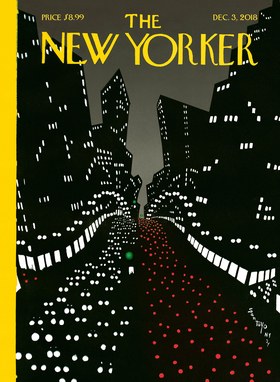
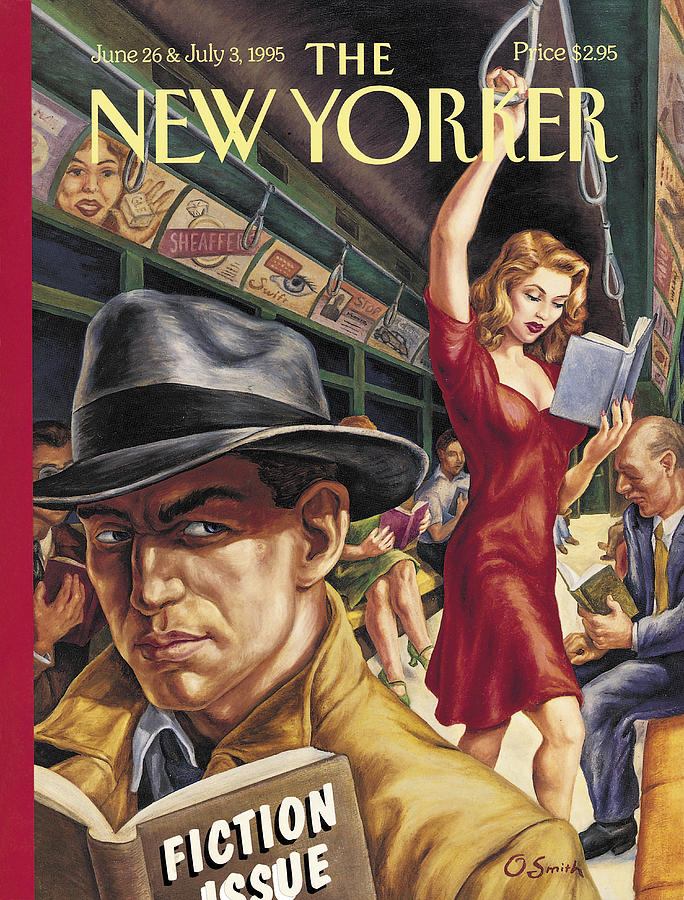
The December 3, 2018 issue of the New Yorker was an archival issue, meaning that every story was taken from an earlier issue.  The range is something like 1975-2006, which is odd since the New Yorker dates back so much longer.  Although the fiction pieces are at least from the 1940s and 1950s.

This story was written in 1948 and it is certainly of a certain time and place–specifically The Metropolitan Museum of Art in 1948.

Emma is a young, single woman browsing the art gallery.  She is excited to see a Botticelli, but as she nears the room, Alfred Eisenburg is standing there right in front of “The Three Miracles of Zenobius.”  She liked Alfred and even flirted with him at a party “in some other year.”

At most other times she would have been pleased to see him, but she turned quickly back the way she had come. (more…)

Read Full Post »

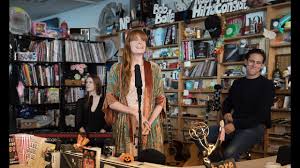
SOUNDTRACK: FLORENCE + THE MACHINE-Tiny Desk Concert #795 (October 16, 2018).

Florence + the Machine has slowly won me over.  When I first heard their (her) songs, I wasn’t impressed.  I felt there was something missing.

I don’t know if I changed my mind on those early songs, or if she did something more in her layering but I suddenly found her songs intense and really powerful.

Florence Welch and her band play three songs at the Tiny Desk.  I have so much grown to love the full production that I wasn’t sure I would enjoy it as much when stripped down.  For the Tiny Desk it’s just her on vocals, with a guitars a synth an d a harp!  And man her voice has just become a force unto itself–she could sing a capella and it would be great.  But the backing vocals add an amazing and unexpected punch.

She starts the show with the lovely “June.”  It begins with her voice and some harp notes.

Florence performed with her eyes closed.  Within seconds of hearing her first note, the raw power of her un-amplified voice was chilling.

Then the guitar joins in and the lovely “oh ooh, oh ooh, woah” fill in the gaps perfectly.  Even something as simple as Florence’s hand clap add an interesting percussive element to the climax of the song.

It’s impossible to talk about Florence without her backing band. Tom Monger adds exquisite ethereal textures to the songs with his stunning mastery of the pedal harp. Hazel Mill’s backing vocals and anthemic power chords on the keys accentuate the poignancy of the lyrics at just the right moments. And Robert Ackroyd’s rhythmic, steady acoustic guitar drives the music forward.

The second song “Patricia” builds slowly over its time.  The harp plays a kind of haunting melody that is accentuated by two almost sinister deep notes.  The song feels like it’s heading to an end after about three minutes, but that’s just the middle section.  After a big smile, the hand claps continue as the song grows louder and louder as they sing “it’s such a wonderful thing to love.”

The intensity of the musicality is almost secondary to the message in her lyrics. Ear-worm melodies coupled with repetitive phrases create universal, awe-inspiring anthems.

Her nervousness was palpable and stood in stark contrast to her fully produced stage show. “I’m sorry I’m shy,” Florence Welch told the crowd of NPR family and friends gathered for her Tiny Desk performance. “If this was a big gig, I’d probably be climbing all over here and running around.”

The final song is the one that won me over, “Ship to Wreck.”  She reveals her humorous side when she says, “We haven’t practiced this.  It could be terrible.  Especially for you.”

I love the hugeness of the recorded version of the song.  This version replaces some of the power with more interesting subtleties in the harmonies and the lovely melodies.  It’s a striking version of the song.

[READ: November 28, 2018] “A Diamond to Cut New York”

The December 3, 2018 issue of the New Yorker was an archival issue, meaning that every story was taken from an earlier issue.  The range is something like 1975-2006, which is odd since the New Yorker dates back so much longer.  Although the fiction pieces are at least from the 1940s and 1950s.

This particular piece is a collection of vignettes from Dawn Powell’s diaries which range from 1933 to 1963 (she died in 1965).

I have wanted to read Dawn Powell for years and yet I keep finding other books that jump in front of me first.  As I read this I wondered if maybe Powell isn’t for me, as I really didn’t know what in the world she was talking about for many of these entries.  but there were many glimmers of the wit that Powell is known for poking through.

There’s also the problem of context.  I have virtually none for most of these entries, so even if there are clever comments, I probably have no idea. (more…)

Read Full Post »

SOUNDTRACK: GORDI-“Can We Work It Out” (Night Owl, November 20, 2018).

I wanted to finish out November with one more live recording.  Turns out NPR was there to help out.  They have a new feature called Night Owl.

Every so often, late at night over the past couple years, a team of NPR Music video producers has been toting approximately 80 pounds of audio/video equipment and a statue of a golden owl to the far reaches of American cities. The owl is our Night Owl, and it’s the totem that has presided over nearly every episode of a show that goes by the same name. Night Owl is our chance to get out into the field, put some of our musicians somewhere unexpected and see what magic may arise.

They have released a bunch of these videos on YouTube.

I picked one from an artist I didn’t know yet, Gordi.

I’ve heard of her, of course, but I think this was my first exposure to her.  She has a lovely (slightly rough) voice as she sits at the piano singing this pretty, ache-filled song.

[READ: February 8, 2018] “Wars in Distant Lands”

This story was translated from the Arabic by Raymond Stock.

At first I really enjoyed this, it felt very contemporary and compelling.   And then it just got weird and war-based.

The narrator pulled Teresa’s postcard from the mailbox.  She was arriving on a train at 7PM on June 16.  The end said, this is being mailed from Havana and will probably arrive the same day as her, which it did. (more…)

Read Full Post »

SOUNDTRACK: PHILIP GLASS FLASH CHOIR-“The New Rule” (Field Recordings, July 10, 2012).

One of the first Field Recordings I posted about was with Philip Glass.  So I thought it would be fun to complete the Field Recordings (this is the last one)  with Philip Glass as well [A ‘Flash Choir’ Sings Philip Glass In Times Square].

This is one of those super-fun, public Field Recordings.  And it’s more public than most.

To honor Philip Glass’ 75th birthday this year, we here at NPR Music commissioned Glass to create a short work that would be great fun for amateur and professional singers alike.  So Glass took a work he had first written for soprano and instruments as part of his 1997 3-D “digital opera” Monsters of Grace, and arranged it for soloist and eight-part chorus. And were very lucky indeed to team up with the Make Music NY Festival, member station WQXR and the Times Square Alliance to realize this project at one of the world’s most iconic spots, the Crossroads of the World, Times Square.

As with the Red Baraat Make Music NY Festival, this is a wonderful public event where all manner of people came out to sing along.

A big part of what we do is to try to make all kinds of music engaging and accessible — and wouldn’t it be great to invite anyone who wanted to come and sing in a world premiere by one of the most celebrated composers of our time? About 200 singers gathered to sing with the ebullient Kent Tritle, one of America’s most accomplished and beloved choral conductors, and soprano soloist Rachel Rosales. (And a handful of singers were folks who had simply been walking by and were swept up in the moment.)

Before the song begins you can hear someone say, has anyone rehearsed this?  And the response is no, I think that’s the point.  And indeed, 200 voices joined together, even if some are imperfect (and who knows if anyone is) sound fantastic.

On this sweltering day, the singers’ mindful intention to gather in Times Square and its visceral result — all breath and sweat and palpable effort in the middle of glossy Times Square, with stifling heat, noise and a zillion blinking distractions — was just amazing and honestly quite moving.

The chorus sings with typical Glassian aplomb (repeating doo doo notes) while Rachel Rosales sings the lyrics.  I love hearing the bass voices do their part, it’s otherworldly.

For his text, Glass selected words from the medieval Sufi Muslim poet Jalaluddin Rumi, as translated by Coleman Barks. In his poetry, Rumi urges the reader to break free of the constraints of daily life — to upend expectations and jettison traditional thinking in an unending quest to unite with the divine. “Here’s the new rule,” Rumi wrote. “Break the wineglass, and fall towards the glassblower’s breath.” And somehow — beautifully, magically and only briefly — this fleeting chorus became the heartbeat of Times Square

It sounds great and rally captivated everyone.  And that’s why I love the Field Recordings and hope they bring them back.

[READ: February 4, 2018] “In Dreams I Kiss Your Hand, Madam”

This is from a 1947 manuscript published in 2008 in Ninth Letter.  Gaddis used some of this material in his book The Recognitions.

The story is set in a lush apartment.  The host is a man named Alex P_____.  He had recently published a book, an anthology called In Dreams I Kiss Your Hand, Madam, “a collection of imaginative love stories, stories of beauty and devotion, tales of passion and gallantry…from writers of seventeen countries n the past seven centuries.”

It was dedicated to Christine Ludington.  She had just referred to Alex as a pig because of what he said about the wife of young writer he has just published.  Then she changed the subject to say she could not imagine the satisfaction in breeding basset hounds.

Alex muttered that it was because she had never been a basset hound. (more…)

Read Full Post »

SOUNDTRACK: ALLEN STONE-“Sleep” (Field Recordings, November 1, 2012).

I read this performer’s name as Alien Stone and was kind of excited.  Far more than when I realized his name was just Allen Stone.

This [Allen Stone: A Rollicking Moment, Performed On The Wind] is the final Field Recording set backstage at the Sasquatch Festival.

It amused me as the song started that they start singing “Danger Zone”  And the opening moment where:

“I feel like Zeus,” Allen Stone announces with a laugh as gusts of wind whip his long hair in dramatic fashion. With a mountainous vista behind him, he’s found himself in the kind of majestic rock ‘n’ roll moment that requires a callout to Kenny Loggins’ “Danger Zone.”

I was thinking that Stone sounded a bit like Stevie Wonder as he sang (which the blurb agrees with), but I also sensed a bit of Jamiroquai.

I thought the song was kind of dull, but maybe that’s because it is normally much bigger.

Usually, Stone performs his bluesy soul with the aid of a crack band, but here, we got the 25-year-old belter to perform his single “Sleep” — usually a big, rollicking rave-up — with just a guitarist (Trevor Larkin, performing unplugged) to supplement Stone’s voice. Channeling Stevie Wonder in all but appearance, Stone demonstrates here that his sound can withstand just about anything, even as it’s stripped down to its skeleton and performed on the wind.

I’ve not heard of him since this, so I don’t know what happened to him, but I’m not really that curious to find out.

[READ: January 11, 2017] “The Hanging of the Schoolmarm”

This is a short, simple story in which the title pretty much tells the whole thing.

But Coover has some fun as it gets there.

The story opens with the schoolmarm playing poker in the town saloon.  At stake is the saloon itself.  The men are awed by her refined and lofty character–they cuss a lot, but never around her. (more…)

Read Full Post »

SOUNDTRACK: CARLA MORRISON-“Falta De Respeto” (Field Recordings, October 18, 2012)

This Field Recording [Carla Morrison: Out Of The Past, Into The City] is set in a New York City park, my idea of a Field Recording.  She has an audience (who are appreciative at the end) and everything.

The opening is so beautiful–the ooohs just soar and the accompaniment of guitarist Andres Landon (who has excellent harmony vocals) and percussionist Miguel Sandoval fill this out perfectly.

“Eres tan moderno, que mis caricias ya son anticuadas,” Mexican singer Carla Morrison croons to an indifferent lover in “Falta De Respeto” (“Disrespect”). That beautiful line — which translates as “You are so modern that my caresses are antiquated” — captures Morrison’s essence. Part tragic heroine, part bold feminist, she’s always a pining romantic, yet she won’t sit pretty in a corner and wait to be swept off her feet. She’ll get in your face and tell you just how much she loves you.

It’s an absolutely lovely song even if you don;t know what the words mean.

[READ: November 27, 2017] “The Lost Troop”

This is the second military story from Mackin in 2017.  While the previous story had some interesting aspects to it, this one painted a bad portrait of the soldiers and wasn’t really all that interesting.

It was December in Logar.  And it was slow.  It was like peace had broken out and no one had told them.  But they knew the war wasn’t over.

So instead they keep themselves busy.  They think back to the graveyard that looked like a used car lot.  One of them thinks they need to go back there because it might have been fake.   They take helicopters only to discover that there is nothing there. (more…)

Read Full Post »

SOUNDTRACK: MICACHU & THE SHAPES-“Love or Leave” (Field Recordings, September 19, 2012).

This Field Recording [Micachu & The Shapes: Weeds In The Forest] gets back to the style of the ones I first saw–a band wandering through the woods.  In this case, the three members of Micachu & The Shapes plod through the woods to sit on a tree stump.

Mica plays a very simple melody on a very simple (but surprisingly loud) guitar (held around her neck with a piece of rope tied around the body of the guitar).  I love that she is able to bend a note during his chord (not hard, but cool).

As it opens, backing singer Raisa Khan says “I saw a deer.” Mica asks, “Did you?”

The three of them sing so wonderfully together–the ahhs and oohs fill in the music perfectly with her voice.  The middle section is also a lot of fun when they all sing together in almost deadpan British accent “Cannot wait for my holiday / I’ve had my work cut out for me.”

Why have I never heard of Micachu before?  I don’t know.

Experimental musician Mica Levi, a.k.a. Micachu, doesn’t exactly fit comfortably into her surroundings: She cuts a vaguely otherworldly, not-so-vaguely androgynous figure, and sings strangely pretty, jagged little songs with the aid of odd tunings and a tiny guitar, which dangles from crudely tied twine. She identifies herself as a pop singer, but while her songs are catchy enough, they’re no one’s idea of pop-radio fodder.

But I love this song and I need to hear more.

Taking Micachu on a hike into the sun-dappled woods of Washington, D.C.’s Rock Creek Park makes as much sense as it would to surround her with modern everyday life. So we sat her on a log in the open air, where she sang “Holiday” — from her new album Never — while flanked by Raisa Khan and Marc Pell from her band The Shapes. Together, the three musicians complement the majesty of their surroundings with everything that makes their music work: disarmingly plainspoken charm, ragged beauty, and uniqueness that blooms as naturally as the trees themselves.

I can’t wait to lean more about her.

[READ: November 20, 2018] “The Frog King”

The previous story I read by Greenwell was also about an American teacher living in Sofia, Bulgaria.  That story also dealt with the difficulty of being homosexual, or at least the perception of it in this country.

In this one, however, there is at least some consummation.

This story is quite simple in terms of plot.  In fact, there really isn’t much of one.  Rather, this is a story all about passion and the intensity of first love.

The narrator, an American teacher, has been living with a student, R., for a couple of weeks during the holiday break.  It’s unclear if they are teacher and student themselves or not, but that’s not relevant. (more…)

Read Full Post »

« Newer Posts - Older Posts »