Feeds:
Posts
Comments

Archive for the ‘NPR/PRI/PBS’ Category

SOUNDTRACK: PALBERTA-Tiny Desk (Home) Concert #210 (May 18, 2021).

Palberta has a great name (even if they are not from Alberta).  They are an underground Philly band.  I saw them a few years ago, and this attitude of relaxed yet frenetic fun was evident then as well.

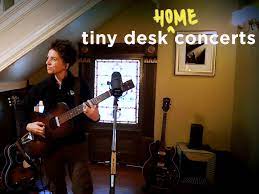
While many of us have gotten better at using technology to feel close to our friends and collaborators over the past year, there’s still no replacement for being in the same room as someone who you swear can read your mind. That’s what it feels like to watch punk band Palberta, whose music makes magic out of repeated phrases sung in tight harmony and charmingly zany pop hooks. For its Tiny Desk (home) concert, shot on a MiniDV and a Hi8, the band crams into Nina’s Philly basement for a set that’s a testament to the group’s tight-knit collaboration and playful exuberance.

The band plays six songs in fifteen minutes (including the time it takes to switch instruments).  Five songs are off of their new album Palberta5000.

The guitar-bass-drums trio is made up of Ani Ivry-Block, Nina Ryser and Lily Konigsberg, and each member sings and plays each instrument. Here, they trade places every couple of songs.  The songs aren’t over-complicated but still manage to surprise at every turn – a true Palberta specialty.

The “frenzied opener” “Eggs n’ Bac'” has a wild instrumental opening which jumps into a faster indie punk sound for most of the song.  All squeezed into less than 2 minutes.  For this song Nina is on bass, Lily on guitar and Ani on drums.  Their sound reminds me of early Dead Milkmen.  Is this a Philly thing?

For “No Way” Nina stays on bass, Lily switches to drums and Ani takes the guitar.  Nina sings lead with the other two giving great tight harmonies.  For these songs the bass lays down the main melody and the guitars play a lot of single note melodies that run counter to the bass.

For the “queasy-yet-sentimental” “The Cow” it’s the same lineup but Lily sings lead on the first verse and Ani sings leads on the second verse.  The staccato guitar style on this song is so unusual.

For the “anxious and melodic” “Big Bad Want” Lily stays on drums and sings lead, Ani switches to bass and Nina gets the guitar.  Ani plays some chords on the bass and you can really see how the guitar plays a repeated pattern while the bass takes more of a lead role.  The call and response for this chorus is really tight.  Nina even plays a guitar solo.

“Sound of the Beat” (from 2018’s Roach Goin’ Down) is “a sweet testament to grooving” and gets a full lineup switch.  Nina sits behind the kit, Ani is back on guitar and Lily is on bass.  This song is really catchy–surely the catchiest thing in this set.  It has a feeling like early Sleater-Kinney.  All three sing harmony lead.

They end with “Before I Got Here” with same line up.  It’s one of their longer songs at over three minutes.  Ani and Lily switch off lead vocals for the fast verses.  After a minute or so, the tempo shifts and the last two minutes are a slow instrumental jam with Ani playing a guitar solo while Lily keeps the melody on bass.

It’s tempting to try to see if one of them is “better” at one instrument or another, but they are all clearly very comfortable on each instrument.  This leads to endless possibilities for songs.

[READ: May 1, 2021] Weird Women

“Introduction” by Lisa Morton and Leslie S. Klinger

Why summarize when they say what this book is about so well

Any student of the literary history of the weird or horror story can hardly be faulted for expecting to find a genre bereft of female writers, at least in its first two centuries. …

Yet there were women writing early terror tales—in fact, there were a lot of them. During the second half of the nineteenth century, when printing technologies enabled the mass production of cheap newspapers and magazines that needed a steady supply of material, many of the writers supplying that work were women. The middle classes were demanding reading material, and the plethora of magazines, newspapers, and cheap books meant a robust marketplace for authors. Women had limited career opportunities, and writing was probably more appealing than some of the other avenues open to them. Though the publishing world was male-dominated, writing anonymously or using masculine-sounding names (such as “M.E. Braddon”) gave women a chance to break into the market. It was also still a time when writers were freer than today’s writers to write work in a variety of both styles and what we now call genres. A prolific writer might pen adventure stories, romantic tales, domestic stories, mystery or detective fiction, stories of the supernatural—there were really no limits.

Spiritualism—the belief that spirit communication could be conducted by a medium at a séance, and could be scientifically proven (despite continued evidence to the contrary)—was widely popular, and so one might expect to find that many writers of this period were producing ghost stories. But ghost stories were just one type of supernatural story produced by women writers at this time. Women were also writing stories of mummies, werewolves, mad scientists, ancient curses, and banshees. They were writing tales of cosmic horror half a century before Lovecraft ever put pen to paper, and crafting weird westerns, dark metaphorical fables, and those delicious, dread-inducing gems that are simply unclassifiable.

ELIZABETH GASKELL-“The Old Nurse’s Story” (1852)
Gaskell wrote primarily about social realism, but she also wrote this creepy story.  The set up of this story is fascinating. A nursemaid is telling a story to her new charges.  The story is about their mother–from when the nursemaid used to watch her.  The story seems like one of simple haunting–strange things are afoot at this mansion.  But there’s a lot more going on.  I love the way everyone is so calm about the broken pipe organ playing music day and night.  Way back then, the children’s mother saw a girl outside and went to play with her.  But it was winter and when they found the child, alone, under a tree, there was no evidence of anyone else being there with her.  That’s when we learn the history of this house and the way the owner treated his daughters.  The ending gets a little confusing, but when you unpack it, there’s some wonderful deviance at hand. (more…)

Read Full Post »

SOUNDTRACK: SARA WATKINS-Tiny Desk (Home) Concert #209 (May 13, 2021).

You never really know what you’ll get with Sara Watkins.  Well, that’s not true, you know you’ll get wonderful music in some variant of folk.  Whether she’s playing with Nickel Creek or her brother in Watkins Family Hour, there’s going to be harmonies and wonderful violin.  The big surprise for me for this concert was that she opened with “Tumbling Tumbleweeds.”  Yes, “Tumbling Tumbleweeds” by Sons of the Pioneers.  The trio of Sara Watkins, Alan Hampton and Davíd Garza’s voices sound fantastic together.

This is so enchanting. The painted scrim, the scenery trees are not only a setting for Sara Watkins and her bandmates, but we also discover a “magic desk.” And as Sara lifts the desk’s top, we hear a guitar playing an alluring melody; in fact, it’s Harry Nilsson’s dreamy song “Blanket For a Sail.”

Davíd Garza, [what’s he been up to?] plays the melody and then the rest join in, with Sara playing the violin like a guitar.  Then when Sara puts bow to violin she and Garza share some fun soloing.  Hampton’s upright bass is a perfect low end for these songs.

These songs are surprising to me, but I guess they shouldn’t.

The songs are from her new album, Under the Pepper Tree.  It’s a children’s record, largely inspired by thinking back on the music that meant so much to me as a kid,” she says. “I’ve got a daughter now, and so much of the music that I heard as a kid has stayed with me and served me well.”

One of music’s magical properties for Sara is the way it can ease transitions. Maybe it’s from childhood to adolescence, or falling in and out of love, or simply getting your child to sleep. For this Tiny Desk, we hear old cowboy tunes via the Sons of the Pioneers or Rogers and Hammerstein’s “You’ll Never Walk Alone.”

The album is called “Under the Pepper Tree” because she has had a pepper tree in every house she’s lived in in Southern California {I’ve never heard of pepper trees]. They have a lacey canopy like a willow tree like a fort.  The song is a delightful instrumental.

“You’ll Never Walk Alone” is an old standard and Sara sounds really impressive hitting those high notes at the end.

“Night Singing” is a song she wrote to her daughter, but she realized it was a song she needed to hear as well.  It’s for anyone who needs to feel that they are cared for.  It’s a beautiful lullaby.

A lot of musicians make children’s records after they become parents, and that’s no bad thing.

[READ: June 5, 2021] Have You Seen the Dublin Vampire?

I don’t post about children’s books very often.  But since this came across my desk at work (an even more rare occurrence!), I thought it would be fun to read it.

I’m not familiar with Úna Woods.  This is a rhyming picture book with really fun illustrations–I’m assuming assembled on Photoshop.  The lines are very smooth and consistent and the leaves are all the same with just different colors.

I don’t know if the Dublin Vampire is a thing.  Although Ireland is famous for its vampire creators.

Bram Stoker creator of the world’s most important male vampire in the world (Dracula) was born in Clontarf. Sheridan Le Fanu, creator of the pre-eminent female vampire (Carmilla), was born on Dominick Street.  [Thanks to Supernatural Dublin].

I don’t know Dublin well enough to know if there is a “moon-shaped park with a creepy old tree,” but that’s where the Dublin Vampire lives.

He rides a ghost bus (I’m ALMOST positive there isn’t such a bus in Dublin). (more…)

Read Full Post »

SOUNDTRACK: ANI DIFRANCO-Tiny Desk (Home) Concert #208 (May 10, 2021).

I was a huge fan of Ani DiFranco when she came out.  I loved her indie style and her cool percussive acoustic guitar playing.  I stopped listening to her when she turned more jazzy/soulful.  Given her vast output, I’ve probably missed about fifteen albums.  Actually, when I looked her up, I see that she has slowed down on her studio output (so it’s only about 9 albums that i haven’t heard).

I thought that perhaps I would enjoy her newer stuff is it was played acoustically lie this.  And I realized I really liked this first song, which I assumed was new.  But, in fact it’s from an album I have.

Ani opened her set with “Everest” from the 1999 album, Up Up Up Up Up Up, a song that for me is about viewing life through different lenses and finding beauty.

I probably haven’t listened to this album in a decade, but this reminded me of why I liked her so much back then.  The melody and her guitar picking style is so expressive and her lyrics, as always are thoughtful.  I love the sound she gets from her guitar too, so rich, with a great low end.

I was actually a little surprised that she played these older songs, because her new album is getting some airplay (around here at least).  But “Not a Pretty Girl” is such an iconic feminist song that it’s always great to hear.

Next, she sings the title track to her 1995 album, Not a Pretty Girl, which shakes the shackles of stereotypes.

She switches to a hollow-bodied electric guitar for this song (with some interesting tuning, I’m guessing).  Again, terrific sound.  What’s interesting is that when she first sang this song, she sang with bite in her voice.  Now, all these years later, the song still resonates, but her delivery is now from a different perspective–she’s seen it all, for far too long and she knows that we all know it.

Ani DiFranco has always done things her way, and for this Tiny Desk (home) concert, she’s a one-woman team, filming and recording herself in the front hall of her New Orleans home and studio, Big Blue. The not-so-tiny desk you see in the hallway was her great grandfather’s. Other personal items seen as we scan her home include a purple painting of a tree by her cousin Jim Mott and a portrait of a woman and ghostly girl by a painter named Renata. At the time of this recording, Ani was planning to move after more than 10 years at Big Blue, so this concert is likely one of the last performances to take place in that space.

She does play a new song, though.

 Her final song for this (home) concert is from her 22nd album and her latest release, Revolutionary Love. The song brings compassion to troubled times by dismissing hatred — or in her words, “To forgive but not forget.” It’s a message that shows the beauty and power of this artist, and her heart.

“Revolutionary Love” brings in guitar number 3, an acoustic guitar with a different sound than the first one.   The song has a great melody and sounds very different from the recorded version.  I much prefer this acoustic version than the produced version that has horns and keys.  I really love the way she plays–using her thumb and fingers in a very distinctive playing style.  Her voice sounds fantastic throughout–with clarity and power

[READ: June 1, 2021] “Commando”

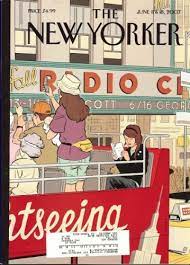
The June 11 issue of the new Yorker had several essays under the heading “Summer Movies.”   Each one is a short piece in which the author (many of whom I probably didn’t know in 2007 but do know now) reflects on, well, summer movies.

Interestingly, this essay is not actually about the movie Commando, but about movies like it.  It’s about when he and his friends would imitate the movies and play “commando” in the woods–they were no doubt validated when Commando was released.

They had the perfect location.

Because, yes the woods behind our house do look like a Central American jungle.  And of course it was the perfect place to reenact scenes from First Blood or Raiders of the Lost Ark–of hunting and being hunted.

Within hours of leaving the theatre, we would put on our fatigues (we called them camos) throw our weapons and accessories in our backpacks, get on our bikes, and ride down to the ravines by the beach.

[I can recall doing just what he says (although not in such a dangerous way)–replicating what we saw in the movies]. (more…)

Read Full Post »

SOUNDTRACK: MOSES BOYD-Tiny Desk (Home) Concert #207 (May 7, 2021).

Moses Boyd is a jazz (primarily) drummer from England.

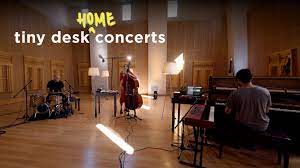
The Church Studios in North London is an institution, home to some of the most iconic records of the last three decades…. From the hallowed Neve Room, Moses Boyd and his band remind us that the U.K. jazz scene still bangs. They also remind us that COVID-19 regulations are much stricter across the pond: physical distancing is the name of the game in this at home concert.

The set begins with “Stranger Than Fiction,” a bouncy grime tune that features saxophonist Quinn Oulton, whose pedals lend his horn a dark and haunting quality.

The song starts with Moses playing some fabulous rhythms.  Renato Paris plays a choppy but funky bass line that melds into a groove while there’s some lead sax soloing from Quinn Oulton.  Later in the song both Paris and Oulton play the same melody giving it a really big sound.  The guitar goes almost unnoticed until nearly four minutes in when Artie Zaitz gets a cool solo.

Boyd humbly introduces the band and slips right into “2 Far Gone,” and we get a chance to sink our teeth into his virtuosic drumming. Dynamic, at times explosive, and always tasteful, he lays down a bed of rhythm that gives keyboardist Renato Paris and guitarist Artie Zaitz plenty of room to shine. T

It’s fun to watch Moses play from over his shoulder from where you can see all of the interesting things he’s doing including rim shits, paradiddles and even a drum stick flip that appears more functional than fancy.  It’s a pretty lengthy intro before the keys and sax come in, sounding echoing and far away.  Paris’s solo has a total space synth vibe—it’s great and feels very proggy to me.

“BTB” is a funky Afrobeat tune with an infectious melody that serves as the perfect closer.

Zaitz plays a looping guitar melody while the bass note pulses.  Then the sax comes in and takes over the main melody while Zaitz plays filigrees between.  And of course, all the while, Boyd’s drumming is fantastic.  Although, focusing on him while Zaitz is playing some cool solos is a bit uncool.  But I love the wall of sound the band generates by the end.

[READ: June 1, 2021] “Immortality”

The June 11 issue of the new Yorker had several essays under the heading “Summer Movies.”   Each one is a short piece in which the author (many of whom I probably didn’t know in 2007 but do know now) reflects on, well, summer movies.

Gary Shteyngart became a man in 1985 (according to Jewish tradition) while he was summering in the Catskills.

During the work week the cabins were inhabited by grandmas and their charges.  An unhappy local middle aged woman would shout “Bread! Cakes!” and the week old raspberry Danish on sale for a quarter tasted as good as anything he had ever known.

His grandmother has always been tough

women who had come of age under Stalin, whose entire lives in the USSR had been devoted to crisis management, to making sure the arbitrary world around them would treat their children better than it had treated them.

His father was at the apex of middle age and loved to fish.  Each year he caught hundreds if not thousands of fish out of streams, lakes and oceans with a three dollar bamboo fishing rod and a chilling competence. (more…)

Read Full Post »

SOUNDTRACK: NEGATIVLAND-Tiny Desk (Home) Concert #206 (May 6, 2021).

I’ve been a fan of Negativland since 1987 when I discovered Escape From Noise.  I even saw them live back in 2000–a very unusual concert, indeed.  I should have known that Bob Boilen knew of Negativland–he knows everything–but it’s always a surprise when someone has heard of them.

It may at first seem that Negativland’s sound collage is an unlikely candidate for a Tiny Desk concert, but honestly, how many bands can you think of making music since the late 1970s while sitting pretty much at their desks? Formed in the Bay Area, Negativland are proud subverters of culture, causing trouble while having fun.

Negativland are provocateurs, taking aim at the media and how technology alters our perception of the world. You can hear that on their 2020 album, The World Will Decide. This Tiny Desk (home) concert looks frightfully similar to the way many of us work these days — on video conference calls, reacting in real-time to our colleagues, dissecting our interactions … but also occasionally having fun.

Negativland create four tracks in 18 minutes–it’s samples and original music looped and repeated.

The found sounds of Negativland come from original members David Wills, Mark Hosler, and Jon Leidecker (from left to right on the bottom of the screen), with visuals by Kevin Slagle [digital images] and Sue Slagle [print images–you can see her hands] (top of the screen).

I don’t know if these songs come from an album or if they were made just for this Concert.  The first track “It’s Normal” opens with a sample saying “It’s normal for something to come to your attention/you’re watching live music online/the national anthem is being sung to a click track that you can’t hear.” And another saying “It’s Ok, ask me if it’s gong to be okay.”

Then a beat starts and all five start waving their finger to the beat.  Holser was wearing a pug mask.  When he takes it off he is wearing a Coronavirus mask, but he takes that off too–but all you can see is his gear.  Davd Willis (The Weatherman) has one of the more notable recorded voices in “music.”  I’m delighted to hear him speak, although he doesn’t just yet.  To start with he’s just playing with a mirror.

Then Jon asks what year is that Booper from?  Willis answers “2010 it never leaves Seattle.”  “It never leaves Seattle?” “Damn right.”

Samples continue, “we’re goin to verify every single experience.  Of course you can’t record everything that happens.”

The noise segues into “No Brain” with a sample “the simple fact is the world is trillions of times more complicated than we experience it.”  Samples of “meaningless data” and David playing with a remote that’s making buzzing sounds.  David: “my favorite remote control.”

The sample says “the world turns to meet your gaze” as it segues into “Reality Game.”   The sample: “we’re going to verify every single experience.”  And “You don’t have to pay people to participate.  Participation is its own reward.”

Throghout the clips there’s been all kinds of visuals floating around.  Scenes from movies and random patterns, as well as words that float around on pieces of paper.  Then comes a clip of whales floating in space.

Sample: “Patterns.  We think that they mean something.  Transparent bowling balls with monkeys inside them hooked up to the biometric monitors floating in outerspace.”

A new sample, “What does subaltern mean?”  (Willis laughs… “angry guinea pigs, hee hee”.  “You will have no idea who else is playing the game” (“I don’t give a damn”)  “Got it?” (Nope).

Then Jon asks David, are you in the mood for singing?  I might be.  Yea ,I’m getting a bit more excited.  I feel like I might want to sing.”  This is all intro to “I’m Going To Sing Now.”  of course his singing is just mumbling incoherent nonsense and making silly noises, including “I’m singing at the Tiny Desk.  I have no idea what that means but I’m doing it.”  I alwyas wondered if The Weatherman was crazy.  This des not help in my decision.

The song ends with the sample, “So this person can in fact sing.”

After some silence, David asks, “Is that it?” and then someone triggers the sample: “Shop as usual…. and avoid panic buying” (as heard on Escape from Noise).

O doubt this Concert gained them any new fans, but it’s always great to see them doing stuff.

[READ: June 1, 2021] “Atlanta”

The June 11 issue of the New Yorker had several essays under the heading “Summer Movies.”   Each one is a short piece in which the author (many of whom I probably didn’t know in 2007 but do know now) reflects on, well, summer movies.

The title of Miranda July’s essay is not about a feature film, but about a short film that she made.

When she moved into a new apartment, she found a copy of the Thunderball soundtrack wedged in a drawer.

Great, she decided, this would be the soundtrack to her movie (which she hadn’t made yet).

Her movie was inspired by the 1996 summer Olympics (it was 1996). The movie was an interview with a 12 year old Olympic swimmer and her overbearing mother.  Miranda played both roles.  She set some scenes at the YMCA–but no swimming scenes because she didn’t swim. (more…)

Read Full Post »

SOUNDTRACK: CANDE Y PAULO-Tiny Desk (Home) Concert #205 (May 5, 2021).

I chuckled to myself when I saw how skinny Cande Buasso was.  She plays the upright bass, one of the largest, shapeliest instruments.  And there’s Cande, rail thin, probably weighing half as much and  easily hidden behind this mammoth thing, but still playing deep effective notes.

Vocalist and upright bassist Cande Buasso and keyboardist Paulo Carrizo are from San Juan, Argentina, a very small town nestled by the Andes close to Chile. I like to imagine that the secluded location contributes to the magic and nuance of the very personal musical language the two have developed since forming the duo in 2017.

Things kick off with the magic turned up to 11 with Leonard Cohen’s “Treaty.”

The duo has a light jazzy feel, with Cande’s voice coming in delicately but passionately as she plays the gentle melody.  She’s yet another person who sings Leonard Cohen songs better than Cohen.  Paulo starts playing the piano while muting the strings with his left hand before opening up the piano fully.  Santiago Molina adds very tasteful drums.

The duo’s introduction to the world was a heartbreaking YouTube performance of “Barro Tal Vez” by the Argentine rocker and songwriter Luis Alberto Spinetta, and their performance of it here is no less haunting and captivating.

Paulo plays a kind of slinky organ sound as Cande sings in Spanish.   Midway through she starts bowing the bass while “ooohing,” which creates a haunting moment.  The beautiful theater in San Juan is way too bright for a torch song like this.

“Limite En Tu Amor,” a cover of Feist’s “Limit To Your Love,” is a preview of one of the tracks that will be included on their upcoming album of covers, produced by Grammy-winning producer Larry Klein.

This song is really fun to watch as Cande plays upright bass chords and then a slow, funky riff while Paulo plays some muted piano chords.  As the song starts properly, he switches to the organ while Cande plays a lead bass line.  Her voice sounds so sultry through this song.

And they seal the deal with “Tuyo,” a nod to one of the most unheralded singer-songwriters in Latin America, Rodrigo Amarante of Brazil. Tuyo translates to “yours” and it’s a fitting close to the briefest of introductions, but one strong enough to make Cande y Paulo one of our favorite discoveries of 2021.

This song feel the jazziest of the set.  You can practically smell the cigarettes as Cande sings and the bass rumbles while Paulo plays a lovely jazzy piano.  The wonderful difference between this and an old school jazz club is that Cande is not only singing she’s playing the bass too.

[READ: June 1, 2021] “Summer of ’42”

The June 11 issue of the New Yorker had several essays under the heading “Summer Movies.”   Each one is a short piece in which the author (many of whom I probably didn’t know in 2007 but do know now) reflects on, well, summer movies.

Of all the writers of these Summer Movie essays, Charles D’Ambrosio was the one I didn’t know.  But he made me laugh with his opening.

He says that he rarely went to the movies as a kid, but he did see the movie Summer of ’42 which looked back–way back–to the summer of 1942.  He says

I believe the movie is famous for a funny scene about buying condoms, but perhaps all summer movies feature some amusing scene with condoms I wouldn’t know.

He grew up in a family of seven where making plans took as much time as executing them and no plan pleased everybody.  It was exhausting enough to eat dinner together every night and to get to church on Sundays. (more…)

Read Full Post »

SOUNDTRACK: NENNYTiny Desk Meets AFROPUNK: #202/196 (May 1, 2021).

Tiny Desk Meets AFROPUNK was the opening event of AFROPUNK’s “Black Spring” festival. The virtual celebration, hosted by Jorge “Gitoo” Wright, highlighted outstanding talent in Afro-Latin and Afro-Caribbean music across the globe. Our showcase featured four artists who honored their homes and celebrated the art their heritage has inspired.

With warm maroon box braids nearly sweeping the floor and glitter adorning her eyes, NENNY’s presence demands full attention before she even opens her mouth. Dressed in a flowy, all-white outfit accented with a pastel checker pattern and surrounded by a matching four-piece band, the 18-year-old Portuguese singer-songwriter and rapper appears otherworldly, almost heavenly, as she harmonizes with electric guitar and jumps across the room, dancing with her entire body. NENNY first appeared on heads’ radar in 2019 with her single “Sushi.” She’s continued to impress with several more singles and the release of her debut project, 2020’s Aura.

I love that her band is all dressed with the same fabric–pants on the guitarist, shirt on the bass player and sash on the drummer.  They play three songs.  I have no idea what she’s rapping about, but the flow in Portuguese is pretty great.

Jonatas gets some really great guitar sounds in the solo of “Bússola” and I love the deep bass that Peterson gets.

When she talks you can tell just how young she is.  She’s full of energy!

“Wave” opens with sampled acoustic guitar as Nenny sings this ballad.  I like that she switches from rapping to singing and her singing voice is really good.

Keyboardist Gui Salgueiro starts “Tequila” with an acoustic guitar sample and Ariel plays some cool percussive sounds while a spoken word (in English) interview plays.  When the song kicks in she’s rapping in Portuguese again and the electric guitar plays leads while the acoustic is still looping.

She really does seem to float around the room in this high energy Concert.

[READ: June 1, 2021] “Walkabout”

The June 11 issue of the new Yorker had several essays under the heading “Summer Movies.”   Each one is a short piece in which the author (many of whom I probably didn’t know in 2007 but do know now) reflects on, well, summer movies.

It’s interesting to me that Roger Agnell wrote about Quest for Fire, a small French Canadian production (with full nudity) and Jeffrey Eugenides writes about Walkabout a small Australian movie (with full nudity).

[This movie is permanently lodged in my own consciousness because I was living in Boston when it came out and it screened at the Brattle Theater for seemingly ever.  I often thought about seeing it, but never did].

Eugenides says that he saw it at his family’s yacht club (!).  His father and brother were sailing so he and his mother went to this movie that they knew nothing about.

He summarizes the little I know about it.  A father drives his children–a teenage daughter and young son–into the outback.  He then sets the car and himself on fire. (more…)

Read Full Post »

SOUNDTRACK: ROD WAVE-Tiny Desk (Home) Concert #201 (April 29, 2021).

I was shocked when this show open and Rod Wave started singing because his voice was terrible!

He couldn’t hit the notes and he’s straining all over the place.  So I was rns out shocked to read

 It’s been said that Rod Wave could be an R&B or blues singer in another era. With this Tiny Desk concert, anchored by the interplay of flute, piano, bass and drums, he seems to suggest: Why not this one?

What?  The rest of the blurb gives some context, I think.

The first song Rod Wave performs in his Tiny Desk concert comes with a bit of a wink. The St. Petersburg, Fla., rapper interpolates Drake’s “Over My Dead Body,” the delicate intro to Take Care. Like Drake, Rod Wave makes sad, melodic rap music.

The rest of “OMDB” is rapped and his rapping is pretty solid, but man, when he sings, it’s so awkward.

He talks about his new album after the song and I honestly didn’t understand a word he said the first time.  How can a decent rapper be such a bad speaker?

I like the music on “his 2020 hit record ‘Rags2Riches.'”   Live flute always sounds great and it sounds especially good here when Tomoka Nomura-Jarvis plays against the slow bass from Franckelson Brunot.

I’m always surprised when I find out someone I have never even heard of is huge: “he’s quite clearly one of the biggest rappers in the country right now.”  So obviously I don’t know anything.

“Street Runner” starts with a sampled female voice–I assume that’s what the (“featuring Ruth B.”) refers to–and piano from Gil Smith.  Drummer Hosny Franck mixes organic and electronic drums to good effect on this ballad.  But I swear he is flat when he sings “higher and higher.”

The set ends with “Don’t Forget.”  Tomoka Nomura-Jarvis switches to saxophone (which I like a lot less than the flute).  Although the end of the song features an instrumental jam that I quite like.  Especially the drum flourishes from Franck.

[READ: June 1, 2021] “Ice Cream and Ashes”

The June 11 issue of the New Yorker had several essays under the heading “Summer Movies.”   Each one is a short piece in which the author (many of whom I probably didn’t know in 2007 but do know now) reflects on, well, summer movies.

Roger Agnell says that summer movies don’t have to be about summer [true] and don’t have to open in the summer [um…].

He argues that summer movie are movies that come up with friends on a long drive or hanging out or just before bed: “What was the name of the movie where the cow falls down a well and everybody’s looking for that famous old Irish tenor?”  Of course now we would just look it up, but in 2007 we had to … no wait, in 2007 we could look it up, too.

Some summer movies are counter-classics.  1940’s Remember the Night which isn’t Double Indemnity, or Tremors the Kevin Bacon vs underground-monster-worms movie that made sequels and has ended up on TV at all hours. He even mentions Trees Lounge, which opened and disappeared in a nanosecond [but which I really liked].  Steve Buscemi directed, wrote and starred.

But the bulk of the essay is about Quest for Fire, a movie that I have seen maybe way back in 1982.  I think of it (or the title at least) fairly often, but I don’t remember much about the movie.  His summary makes it sound pretty good. (more…)

Read Full Post »

SOUNDTRACKSHELLEY [fka D.R.A.M.]-Tiny Desk (Home) Concert #198 (April 26, 2021).

I’m always puzzled by the FKA in a singer’s name.  Is it part of the singer’s name? Is this singer’s official name Shelley FKA D.R.A.M.?  I don’t think so, I think it’s just for us to know who Shelley used to be.

When D.R.A.M. played the Tiny Desk back in 2017, he made a couple of things clear to us: His playfully dynamic personality was primed for the spotlight, and beneath the catchy hooks, there’s a real singer waiting to come out. For his Tiny Desk (home) concert, he does a complete 180. “It’s like a new beginning. Full circle. So this time, call me Shelley.” he says, following the opening track, “Exposure.” Everything is new. Silk pajamas and slippers replace the trench coat and plush beanie, and thanks to lifestyle changes, he’s slimmed down quite a bit and goes by his government name now: Shelley.

I enjoyed D.R.A.M and his vulgar silliness.  But Shelley is one of those singers who intends to hit every note every time he holds a long note.  He whines up and down the octaves constantly and I hate it.  I know that there are listeners who love this as the blurb admires

The shift from lighthearted melodic hip-hop to full-on R&B crooner shouldn’t come as a surprise to anyone who’s seen him perform live. It feels like it’s his way of saying, “Now that I have your attention, allow me to introduce myself.” We still get glimpses of the “Big Baby” here and there — the charm, a little bit of silliness, and the million-dollar grin — but other than that, it’s grown folks business and vocally flawless performance.

For the Shelley Show, he gathers a groovy band in front of a massive bookshelf and runs through selections, including the premiere of “Rich & Famous” from his upcoming self-titled project, due out on April 29, his late mother’s birthday. If D.R.A.M. was the ploy to break into the music industry, then Shelley is the longevity play.

“Exposure” and “The Lay Down” really accentuate his new vocal style.  But I liked the music of “Cooking With Grease.”  The simple drum beat from Keith “KJ” Glover and then the live viola from Yuli (a highlight throughout).  Sensei Bueno follows the melody on guitar and the song grows from there.

Of the four songs, I liked “Rich & Famous” best.  Trey Mitchell plays a grooving bass line, the backing singers Crystal Carr and David Fuller are ah ha-ing.  Sensei Bueno is wah wahing the  guitar and SlimWav is floating the keys around.  Shelley’s voice stayed low and less whiny.  Is he really going to try to make it with the name Shelley?

[READ: May 10, 2021]  “The Way We Are”

Reading this essay in 2021 was a really uncomfortable experience.  David Sedaris is not afraid of saying a risqué thing or three. But it’s amazing how much things seem to have changed in 13 years.

This essay begins in Normandy with David saying that the city shuts off the water without any warning.  Usually it’s a construction project or something.  It usually happens when David gets up around 10:30, which is practically the middle of the day for Hugh and the neighbors.

What they do at 6AM is anyone’s guess, I only know that they’re incredibly self righteous about it, and talk about the dawn as if it’s a personal reward bestowed on account of their great virtue.

The last time the water went off, David had a coffee problem. In order to think straight, he needed caffeine.  In order to make this happen he needed to think straight.  One time he made it with Perrier which sounds plausible but isn’t.  He tried leftover tea which might have worked if the tea weren’t green.  This time he decided to use the water in a vase of wildflowers that Hugh had picked. (more…)

Read Full Post »

SOUNDTRACK: LAKE STREET DIVE-Tiny Desk (Home) Concert #199 (April 27, 2021)

I feel like I was meant to like Lake Street Dive.  They seemed to get heavily promoted in the same breath as bands that I like.  And yet I really don’t like them.  I particularly don’t like this deep dive into “blue-eyed soul” as they call it.

Having said that, though the first song, “Hypothetically” is a very catchy song.  The blurb mentions the addition of the new keyboardist and I was going go say that his keyboard solo is the one thing I don’t like in the song.

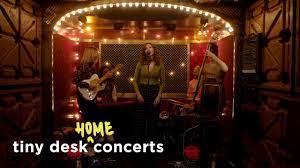
Lake Street Dive filmed its Tiny Desk (home) concert where the band is most at home: on stage at the “biggest little venue in NYC,” Pete’s Candy Store. All five band members managed to squeeze onto a stage no larger than the actual Tiny Desk to shine a spotlight on the Save Our Stages Act. Congress passed the $15 billion grant program last December as part of the $900 billion coronavirus relief bill.

I was starting to like “Same Old News” until the new guy started singing.  So that’s two strikes against keyboard and vocalist Akie Bermiss.   Although the keyboard sound he picked for the solo in this song is much better–and his backing vocals are a nice addition.

In the middle of the home concert, bassist Bridget Kearney recalls driving to the Williamsburg neighborhood of Brooklyn for a gig at Pete’s, then driving back to Boston the very same night, long before they ever sold out Radio City Music Hall on the other side of the East River.

I don’t really care for Rachel Price’s voice either, but I really like Kearney’s speaking voice.  She plays a great upright bass, but I think I might like them if she sang instead.

“Anymore” is slow just keys and rim shots from Mike Calabrese to open.  I’m quite intrigued by guitarist Mike “McDuck” Olson who stands there quietly playing and looking at his guitar neck the whole show.

“Making Do” ends the set and I found that I liked it best.  It’s a little faster, more upbeat and while I don’t like the verses that much I like the way the song bounces into the chorus melody which is pretty tasty,

So I guess there will be a few songs from them that I like.  And that’s okay.

[READ: February 15, 2021] Rickety Stitch and the Gelatinous Goo

I didn’t love Book 1 of this series, but I had Book 2 already.  And when I heard it’s supposed to be a trilogy, I figured, oh why not finish it.

The first book doesn’t really come into play so much–mostly via some amusing cameos.  Rather, our heroes are on the road, continuing their quest for Epoli and Rickety’s identity.  But as it starts out we see them caught in a tree trap, hanging upside down. How does a goo get caught in a rope trap?  No idea.

They fail to escape and then the Bogril junkman from book one happens upon them.  Rickety is excited, but the Bogril doesn’t remember them at all.  Nonetheless he is wiling to trade for their freedom.  They try to follow him, but he is too fast and soon Rickety is captured by The Kobold Witch of Murbletoad Marsh.

She wants to use parts of him to bring her beloved pet back to life.  But Shnookles comes back as a much bigger and scarier creature than she intended.  And now he speaks for the Gloom King, telling Rickety that the Gloom King will come for him soon enough.

Since Rickety was taken apart, he attached other bones that were lying around to himself.  Turns out the arm he attached is a master digger. This comes in handy in a few places later. (more…)

Read Full Post »

« Newer Posts - Older Posts »