Feeds:
Posts
Comments

Archive for the ‘All Songs Considered’ Category

dreadSOUNDTRACK: PIÑATA PROTEST-El Valiente (2013).

elvaliente-frontrgbOn the Pogues album If I Should Fall from Grace with God, they sing a song called “Fiesta” that is more or less a punk Spanish song which, while very Spanish sounding, still retains a feeling of Irishness.  Piñata Protest, a band from San Antonio who sing in Spanish and English, sounds like a similar mix of Mexico, Ireland and punk (especially on the second track, “Vato Perron”).  I feel like the Ireland comes from the accordion (one of the primary instruments on the disc), while the punk lasts throughout (the whole album is 9 songs in 20 minutes).

The band plays loud guitars at a fast pace.  And it’s amazing how well the accordion brings it all together.

The band sings a few really fast songs and a couple slower ones.  Interestingly, the slower songs (“Tomorrow Today” and “Guadalupe”) are probably the most conventional and, consequentially, of the least interesting songs on the album.  They sound like pretty typical punk pop, albeit with touches of accordion.  It’s the more fast songs like “Vato Perron” and “Life on the Border” (with the great lead accordion and the fun “Hey!” refrain) which really stand out.

“Volver Volver” is a traditional song which starts out slowly (with big guitars) and after a few verses and a very long held note, the punk can’t be contained any longer and the song ends in a blur.  The title track is a great rocker with some interesting guitar sounds an a cool accordion solo.  Then there;s the rocking (and amusing) cover of “La Cucaracha.”  It starts out as a blistering punk song with no real connection to the original until about mid way through when a lone trumpet begins laying the familiar melody.  It’s only a minute long and so is the final cut “Que Pedo” which is just a blistering punk song with lots of screaming.

And with that album is done.  It’s a fun an unexpected treat of an album, and if you like your punk musically diverse, it’s worth checking out (NPR is streaming it this week).

[READ: May 11, 2013] Dread & Superficiality

Sarah got me this book for my birthday.  If you have ever seen Annie Hall (and if you haven’t, go watch it now), you’ve seen Woody-as-cartoon.  Hample is the person who created the cartoon for the movie.  Around the time that that happened, Hample was pushing Woody to have a comic strip based around him (Hample had a moderately successful strip at the time already) and also convincing newspapers that this was a good idea.  All parties agreed and Inside Woody Allen ran from 1976 to 1984.  1984!  I can’t believe I never saw this in a newspaper.  My parents were daily subscribers to two newspapers and I know I read the comics.  Of course, I didn’t care about Woody Allen until I went to college, so maybe I did see it but ignored it.

Anyhow, this book collects a bunch of those strips (I have no idea how many but I would venture around 200–which is a far cry from the nearly 3,000 that would have been produced over those years.  But hey since there’s no other place to see these strips (there were three books published but they are all long out of print), this is a good place to start and a nice collection.  But more than just the strips, most of the book collects the original proofs of the strips, so you can see Hample’s lines and notes (there are several pieces that deal with his color choices and notes on the same).

The book is broken down into subjects and is in no way chronological.  This makes sense as it’s good to see him dealing with the same topic in different ways, but it makes for weird continuity issues (something that will obviously occur when you only select random strips).  Woody is with various women over the strip and it’s hard to know if he was after Laura for a few months or the duration of the strip.  Of course, the sections aren’t really all that different–they all deal with Allen’s philosophical attitude, his attempts to woo women, his therapist and his parents.  However, the breakdowns, while somewhat arbitrary are enjoyable. (more…)

Read Full Post »

walrusmaySOUNDTRACK: SAVAGES-“She Will” (2013).

I fsavages-2013-382952pc8ound this song in heavy rotation on NPR.  I had never heard of Savages before (this is from their debut album coming out this week), but they seemed interesting.  And the description was intriguing–saying they sounded like Siouxsie and the Banshees.  And that is right on, from the shimmery 80s punk guitars that open the song to that strange goth-y wail that Siouxsie possessed, to the rumbling basslines, this song hearkens back to a darker, wonderful era.

It’s a really great sound–evocative without mimicking.  It’s certainly an uncool sound that Savages are pulling for (in the 2010s) and I like them all the more because of it.  I’m curious to hear what else they do.

And that ending note is a killer.  I want to hear this whole album.

[READ: April 30, 2013] “Oh, My Darling”

The “teaser” for this short story says “I am so close you could touch me.”  And with this piece of information in mind, this story is dark and creepy right from the start.

The story begins as a letter: “Hello, Vanessa.”  And the letter continues to compliment Vanessa on her name, those three satiny syllables (the letter writer won’t deign to use that silly “Nessa” that others do).

The narrator pushes back to some months ago when Vanessa’s husband says he believes that he has Aboriginal bloodlines (despite his blue eyes and Scandinavian features).  Vanessa knew immediately it was because of the case he was working on—an Aboriginal case, obviously—with… Connie, a student of Haida birth.  She replies to it with a funny (to me) comment: “What part do you think is Aboriginal? I hope it’s something simple, like your foot.”  This comment from Vanessa’s husband, intimating infidelity is compounded by their daughter’s insolence: “You are a cruel fucking cow.”  (Vanessa has weight issues which makes this hurt even more).  Vanessa knows this is just how teenagers are, but it still hurts. (more…)

Read Full Post »

bartelbySOUNDTRACKOS MUTANTES-” Picadilly Willie” (2013).

Iosmut enjoyed this album so much (thanks NPR for the stream) that I had to talk about this song and how radically different it was from yesterday’s track.  “Picadilly Willie” is this wonderful old-sounding rock song.  It’s got a very classic rock riff, but there’s something slightly off-kilter which makes it sounds more like Frank Zappa classic than radio classic.  And when the vocals come in (with a sinister laugh) it sounds more like Mr Bungle than anything else (I wouldn’t be surprised if Mike Patton was a fan of Os Mutantes).

The song ends with what sounds to me like Middle Eastern sitar music and echoed chants of “Bra-zil!”

And these are just two of the styles of music on this wonderfully wild and diverse CD.  I can’t wait for its release.

[READ: April 22, 2013] Bartelby & Co.

I read about this book in the Bolaño interview book.  Vila-Matas was one of many authors that Bolaño highly recommended–this book in particular.  And, it was one of the few books on that extensive list that has been translated into English.

This book follows in the rich tradition of books that are more or less lists about people and not really novels at all. (This seems like a peculiarly Latin American pastime, at least in my experience, as there are nearly a half dozen books that seem to do this, including several by Bolaño).

The key to this book is in the title: Bartelby.  The narrator is a hunchbacked loner, and he decides to catalog all of the instances of writers who have in the grand tradition of Herman Melville’s Bartelby the Scrivener said “no, I would prefer not to” write anymore.  And so this book becomes a series of notes without a text.  The glorious list includes many famous and not so famous writers (the most famous being Salinger) who whether famous or not, decided to write no more.  And thus we have 86 “sections” in which the narrator writes about writers who stopped writing.  For most of the he gives their reason for no longer writing, for others he simply likes talking about how they stopped writing or what their circumstances were before they stopped. (more…)

Read Full Post »

bolano

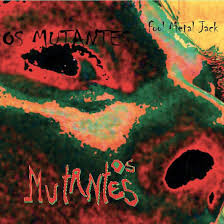
SOUNDTRACK: OS MUTANTES-“Fool Metal Jack” (2013).

Iosmut have known about Os Mutantes for years.  I never knew anything about them (and never really understood their name–although now that I have been working with Brazilian books at work I realize that their name is Portuguese for The Mutants (it was the Os that always threw me off).  I had no idea that a) they’d been around since the 60s and were part of the psychedelic scene or b) that they were still around (after some breakups and with a largely new lineup) or c) that they sang in English (which they do on several songs on this album) or d) that their new album kicked so much ass.

The album is called Fool Metal Jack and it is a fantastic mixture of fast heavy rock, Brazilian traditional sounds, what I assume are Native Brazilian chants and a heavy dose of weirdness.  All wrapped up in an anti-war stance, like on this track “Fool Metal Jack.”

A creepy, distorted  bassline introduces this song which sounds like the guy from Gogol Bordello singing a Tom Waits march.  It’s about a soldier in the middle of a war.  The bridge means more voices come in, bringing in an even more disorienting sound.  And the chorus chanted “Yes.  No More War” completes the song.  By the time the wailing guitar solo comes in the chants of “This is the war of hell” have even more impact.

This stomping song was a great introduction to this band who I now need to explore further.

[READ: April 18. 2013] The Last Interview

I enjoyed Kurt Vonnegut’s “Last Interview” and since I had always intended to read Bolaño’s I was delighted to see that our library had it.  Bolaño is a fascinating interview subject because you never really know what he is going to say.  There are even serious questions about the veracity of his life story which many people believe he fabricated for more dramatic effect.

But the one thing that is absolutely consistent about Bolaño is that he always praises writers whom he respects (and will trash those he doesn’t, although that seems to come more from the interviewer’s  instigation (not that he needs a lot).    So the last interview that he did is the one from Mexican Playboy which has been collected in Between Parentheses.  But the other three are earlier and, it seems, a little more “truthful” or at least less naughty-seeming.

What’s fascinating about this book is that the introduction by Marcela Valdes (“Alone Among the Ghosts”) is over 30 pages long!  The article originally appeared in The Nation on Dec 8, 2008 (read it here).  As such it’s not an introduction to this book, it’s introduction for English readers to Bolaño circa 2666.  And it’s a great read.  It is primarily about 2666, which Valdes has read many times.  She goes into interesting depth about the story but mostly she relates it to Bolaño’s own experiences while writing the book.  It focuses especially on his research about the real murders.  His interest was genuine and he sought help from a reporter who was doing genuinely decent work (ie. not accepting the word of the state about what was going on).

Bolaño has said he wished he was a detective rather than a writer, which explains The Savage Detectives and Woes of the True Policeman.  But Valdes also points out how almost all of his shorter novels have some kind of detective work involved–seeking someone who is lost or hiding.  The article was really great and is worth a read for anyone interested in Bolaño, whether you have read him or not. (more…)

Read Full Post »

vormSOUNDTRACK: DEAD CAN DANCE-“Children of the Sun” (Live at KCRW, April 24, 2013).

deadcandanceDead Can Dance are timeless.  Their music sounds ancient and modern at the same time.  And Brendan Perry’s voice has an unearthly majesty to it that never seems to age.

I’ve known the band for decades (during which time they have broken up and reunited and broken up and reunited).  And in all that time, while their sound has changed in subtle ways, the band is instantly recognizable.  I’ve never really thought of them as a live entity–they just seem like such a creation of the studio that it would be impossible to do justice to their wash of music live.  Of course that was truer three decades ago before it was easy to fit an entire orchestra on an iPod.

You can watch this song on NPR.  It’s fun to watch a band with two keyboardists (and Lisa Gerrard on…autoharp?) and see all of them making very different sounds.  The only disappointing thing about watching this is that they have so many cool instruments strewn about which do not get used on this song (you can see the whole show here and watch him bust out that bouzouki).

This song is a new one and it doesn’t have quite the ponderous nature as their older material.  Which is a bit of a shame, as they were so over the top it was fabulous, but maybe they’re just settling into New Old Age.

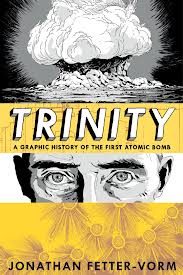
[READ: April 20, 2013] Trinity

Sarah brought this book home because it was on YALSA Hub Reading Challenge for 2013. I’m unlikely to do the challenge as I have so many other books to read, but I have already read 5 of the required 25.  Not too bad, although since the challenge is from Feb to June and I read a couple last year, I don’t even qualify for some of the ones I DID read.  Anyhow, she told me I’d like this and she was right (as usual).

Trinity is the story of the development of the atomic bomb done as a graphic novel.

It outlines how we came to develop and test the bomb and of course, the aftermath of its use.  What I liked about the story is that leading up to the detonation of the bomb, the quest for its discovery is presented in a fairly neutral way.  Essentially, once it was discovered that we could split the atom, it was deemed inevitable that someone would make a bomb out of it.  It stood to reason that if Hitler or the Japanese figured it out before us they would use it on us (since we were at war with them).  The intention was that America would be decent and not use it with impunity (which is not to say we wouldn’t use it at all).  The book presents that American can do spirit that the forties seem to be all about–a sort of gee whiz, let’s figure this out mentality.

I knew some of the history of the bomb, but there was a lot here that I didn’t know: that thousands of people moved to New Mexico to work on the bomb—housing was put up and families moved in, some 80,000 people in all.  And most of the people had no idea what they were working on.  It’s hard to fathom that there were thousands of people whose work helped to create a nuclear bomb and yet they can feel neither pride nor shame because they had no idea that’s what they were doing.  Weird. (more…)

Read Full Post »

between heaven SOUNDTRACK: ALTAR OF PLAGUES-“Scald Scar of Water” (2013).

aopI never think of death metal coming from Ireland.  I think of punk and metal and obviously the Pogues, but noise metal?  Unlikely.   And yet here is some.  And why shouldn’t Ireland produce music like this?  There are fans everywhere.

I heard this from good old Lars at NPR.  I’ve come to expect the unexpected from Lars’ picks.  And this is no exception.  The song is six minutes long.  It has some traditional death metal stuff–growling vocals, incessant drumming and lots of noise.  But there’s a lot more going on here.  It opens with electronic noise and thudding drums.  The drums are punctuated by alternating abrasive guitar riffs.  The song meanders along until it settles down to some heavy heavy verses (I have no idea what the man is screaming about).  After returning to the buzzsaw riffs, and repeating the verse, the song suddenly stops.

At 4 minutes the whole thing stops.  There’s some scratchy noises and then some slow pulsing bass and suddenly the whole song turns into  kind of alternative metal song, complete with chanting.  It’s pretty unexpected.  I can’t imagine what the rest of the album is like.

[READ: April 17, 2013] Between Heaven and Here

This was another book that I did not like in the beginning. Well, that’s not exactly true, I enjoyed the beginning but I really didn’t like the middle and really wanted it to end soon.  Not a good way to feel about a book. The reason I didn’t stop is because it was so short.  It turns out that an excerpt from this book was in a McSweeney’s issue that I recently read (and which I haven’t posted yet).  I didn’t “get” the excerpt then, and while it makes more sense in context I still felt the section was really hard to follow.

And so was much of the book.

This is the story of Rio Seco, an area of California, and the citizens who live there.  As the story opens we learn that Glorette Picard is dead.  Glorette was a crack whore, the kind of girl who would get killed and no one would miss her.  Except that people would miss her.  She had a lot of friends and relatives who cared about her.  She even had a son, Victor, who is 17 and studying his ass off to be able to go to college.  When a boy in town finds Glorette’s body dumped in a shopping cart, he feels compelled to move her, to bring her to her Uncle Enrique because he knows that the police won’t care if some crack whore was killed.  So he moves the body and that sets in place the rest of the story.

What was confusing to me was that the novel was constructed like a series of short episodes–different people and how they knew Glorette and how Glorette affected them.  That’s not a problem, except that there’s very little indication that that’s what was happening.  It felt increasingly difficult to know who was the main character was in each section, especially since so many characters overlapped.  Which again wouldn’t have been a problem except that I really couldn’t tell which person was the narrator or at least focus of each section.  Sometimes they were never identified, other times only after several pages.  The chapter that was excerpted in McSweeney’s has virtually no names in it, it is just dialogue.  And sure the dialogue was interesting and with the novel’s context made some sense, but I’m still not sure who was in the conversation. (more…)

Read Full Post »

heartSOUNDTRACK: CHELSEA LIGHT MOVING-“The Ecstasy” (2013).

clmWhen Chelsea Light Moving played at KEXP, they went out for a break before playing live on air.  One of the DJs had a chocolate bar.  And Thurston was inspired.  According to the NPR [page:

The Sonic Youth veteran and his bandmates in Chelsea Light Moving had been jamming off-air in the KEXP studios. When they stepped outside to get some fresh air, KEXP’s DJ Sharlese followed, offering them some of her chocolate bar. At first, Moore politely declined, but as the candy got eaten away, piece by piece, a poem (John Donne’s “The Ecstasy”) was revealed underneath, printed on the candy wrapper.

“Can I have that?” he asked, and the next thing we knew, he was sprinting back into the studio, taping the tattered wrapper to a mic stand, and belting out his own version of the poem against discordant guitar chords.

The music is great.  It works perfectly with the meter of Donne’s poem and, the way Thurston delivers it, it sounds like he could have written it.  There’s some great screaming guitars, a very cool discordant chord or two and wailing solo.  I really enjoyed that Thurston doesn’t play guitar through much of the song (he leaves that to the other guitarist), he just comes in when some wildness is needed.  Awesome.

It’s a great song and hard to believe it was tossed off so easily.

Check it out here.

The lyrics are indeed from Donne’s poem, which begins:

WHERE, like a pillow on a bed,
A pregnant bank swell’d up, to rest
The violet’s reclining head,
Sat we two, one another’s best.

[You can read the rest here].

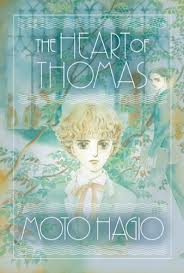
[READ: April 14, 2013] The Heart of Thomas

I brought this home from work because Sarah loves boarding school books.  But this is a manga book, and it is set up to be read right to left.  Sarah admitted that she can’t easily get her mind to work that way.  Which I understand. So I gave it a go.  I found it rough going, but after about 20 pages it became pretty natural.

The Heart of Thomas is an early example of Shōjo manga (少女漫画) which is manga marketed to a female audience roughly between the ages of 10 and 18. The name romanizes the Japanese 少女 (shōjo), literally “little female”. Shōjo manga covers many subjects with a strong focus on human and romantic relationships and emotions.   Shōjo manga does not comprise a style or a genre per se, but rather indicates a target demographic.  shōnen-ai.  The stories were published mostly in magazines targeted at girls–which had a huge audience.  And that is where The Heart of Thomas was originally published in 1974.

The Heart of Thomas is a fascinating story—it’s set in a German boys boarding school (written by a Japanese woman!). The story opens with the death of a character named Thomas.  He falls off a bridge and the story is predicated upon wondering whether he jumped or he fell.  There are a lot of clues that he committed suicide because of his unrequited love for Juli, the prefect of boys at the school.  Juli is quite different from the other boys, he has dark hair and Greek features, he is not golden haired and blue eyed like so many of the other boys.  This makes him stand out.  Indeed, he even stands out in his own home, where he lives with his mother and grandmother.  His grandmother is disgusted by his coloring and believes him to have impure genes (yikes!).  She even tells him as much!  But Juli is a serious student and a hard worker, with no time for nonsense from his grandmother or his classmates.  He also has no time for farce.

The farce refers to a game that Thomas and Ante created in which they would both vie for Juli’s love.  Thomas pursued this heavily but was never successful.  And that may be why he killed himself (if indeed he did). (more…)

Read Full Post »

loveindeSOUNDTRACK: KURT VILE-“Wakin on a Pretty Day” (2013).

Kurt Vile_CVR-31981badf76ce6680de293138b7fbf1807fe323f-s1I don’t really know that much about Kurt Vile.  I’ve been hearing about him for a while. I assumed his name was a kind of joke–like he was a comical metal guy, maybe like Alice Cooper.   That appears to be far from the truth.  I also wasn’t sure if he was well-known outside of the Philly area, but I do know that NPR has championed him for a while.

Well, he has a new album out and since NPR was streaming it, what better time to hear what the long- haired dude is all about.

There is much talk bout his voice (NPR says: There’s something about Kurt Vile’s voice that transcends whatever comes out of his mouth.).  But the whole time I listened to this song (which was a while, as it is over 9 minutes long), I kept thinking that he sounds just like the guy from House of Love, an underrated band here in the States. (He sounds even more like him in Kv Crimes”) It’s not necessarily a bad thing to sound like someone else (often times it can’t be helped I suppose), but it is a little distracting to me.

So this song is kind of groovy.  I like it musically more than vocally (there’s so many “Yeah…yeah yeah yeahs” that I lost the point of the song).  But the music is really good, including Vile’s lengthy guitar solos.  Interestingly, I was kind of bored by the song after about 45 seconds, but by 8 minutes I was really grooving it.  Subsequent listens have made me like it more, it has a kind of Neil Young or maybe Meat Puppets vibe.

My head says there’s really nothing special about this guy and yet after more and more listens, there’s something that draws me to him.  Weird.

[READ: April 2, 2013] Love, An Index

The back of Lindenberg’s book explains that the man she loved, poet Craig Arnold, disappeared in a volcano while traveling in Japan.  For such a very specific kind of event, I don’t think I would have gotten anything quite like that from these poems.  Indeed, for a book that is so specifically created about this man, there’s very little sense of the exact nature of the loss.  In some ways that’s good, it could have been a very maudlin, ungraceful collection of poems if she explicitly talked about volcanoes, but at the same time, the feeling of loss that comes across is less about death and more about abandonment (I would have presumed that the guy had left her).

I really enjoyed these poems even though I have a  really hard time accepting the bulk of these, in particular the thirty-four page title poem, as poetry.

“Love, An Index” is thirty-four pages and it is an index.  Literally, she lists words alphabetically and writes a little “definition” for each one.  There are arbitrary line breaks in the definitions but in no way does it feel like a poem.  Even the individual entries are not very poetic.  Like “Compromise, I will get up early with you/so long as you’ve made coffee.”  Okay, so that’s funny/sweet, but it’s not a poem.  But then what it is?  Yes, it is part of a greater whole and removing part of it diminishes that whole.  But again, what is the whole?  Genre defying I suppose.  Which is cool.  And despite my criticism, I really enjoyed this index.  There were personal notes that I would have no idea about, there were commonplace ideas that are familiar to all.  There’s also a ton of quotes from other poets.  And it all works together to create a beautiful portrait of a relationship. (more…)

Read Full Post »

fragile SOUNDTRACK: ATOMS FOR PEACE-“What the Eyeballs Did” (2013)

afpThis is a secret track that you can download from the Atoms for Peace website (well some people can, I don’t seem to be able to) or you can listen to it on NPR.

Atoms for Peace is Thom York’s band (with Flea from RHCP on bass). This song sounds a lot like Radiohead.  So much so that it could easily be a Radiohead song (one of those newer more electronic ones).  The bass is cool and while Flea does a great job playing it, it sees like it should be a little dull for him to play a rather repetitive bit over and over.

And yet the song works very well in the electronic, claustrophobic way that Yorke has.

I love just about anything that Yorke and Co do, and I like this as well, it just doesn’t seem all that much different–why not use Flea for all of his manic intensity?

[READ: April 1, 2013] Fragile Acts

After yesterday’s poetry book, I wasn’t quite prepared for this one.  Zubair Ahmed is a young writer (a wunderkind as he is described).  Allan Peterson is a much older writer.  He is retired and has clearly had a lot more experiences from which to draw.  I also found his poems to be much more profound and lyrical, much more beautiful and evocative.

Yes, it could be because his poems are longer (that’s a terrible quality to judge a poem by, and it’s certainly not always true, but those shorty ones do tend to lack a bit of substance).  Of course, the poems that were really long (he had three that were multi-part and multi-page) didn’t hold together all that well for me.  So length doesn’t have much to do with it.

Many of these poems were amazing and they really reminded me of what good poetry can do.  Poetry that is not just a sentence with line breaks, poetry that doesn’t call out to be read in a sing-song voice.  To the point: poetry that sings on its own. (more…)

Read Full Post »

2003_12_15_p139SOUNDTRACK: TELEKINESIS-“Ghosts and Creatures” (Live at SXSW, March 21, 2013).

telekinesis

Telekinesis is, as far as I can tell, the brainchild of one guy (NPR points out twice in three paragraphs that the singer/songwriter is a drummer).  He has some special guests playing with him in this set (although nobody terribly famous–the keyboardist from Wild Flag (the only one in the band who I can never remember).

In a typical Telekinesis show the drums are up at the front of the stage.  That’s true here, too.  In this case the singer is standing, just playing maracas (and presumably the bass drum) for the first 2/3 of the song.  But by the end he sits down and starts pounding along with the song.

This song is a an interesting mix of dark (the keyboard’s minor chords) and bright (the guitar picking).  I enjoyed the way the song built over the course of its four minutes (including a cool break where it was just the keyboard).  At first I didn’t think there was much to the song, but after three listens I really got into it.  The harmonies were really good and there was some cool intricacy going on. I think watching the video helped as well (the bass player is really into it).

You too can watch it here.

[READ: March 26, 2013] “Recuperation”

This is the final uncollected story that I read from Roddy Doyle (okay, that Wikipedia list is clearly old as I see that both this and “Teaching” have since been collected in Bullfighting).  Oh well, that’s alright, then.

In this story, an old man goes for a walk.

And that’s it.

coolockWell, not entirely of course.  The man was told to go for walks by his doctor.  He needs the exercise and as he doesn’t golf or go to golf clubs or join groups, the doctor says he should go for a walk.  So the man walks around a nearby neighborhood, knowing that no one will stop and talk to him. And Doyle knows his area of Dublin, so we get a very detailed walkabout as the man traipses around Coolock in Dublin (by the Cadbury’s and the Classic Furniture). (more…)

Read Full Post »

« Newer Posts - Older Posts »