Feeds:
Posts
Comments

Archive for the ‘All Songs Considered’ Category

corin SOUNDTRACK: THE DISMEMBERMENT PLAN-“No One’s Saying Nothing” (2013).

IDismembermentPlan_CVR-a71cdf7d3b8dde6270c3a01bb56278949eddb5fa-s1 thought I knew The Dismemberment Plan, but I must have them confused with someone else, because this song doesn’t sound anything like what a band called The Dismemberment Plan ought to sound like (which is noisy and chaotic and probably death metal).  This song has big vocals, organ and piano.  Nevertheless, it is rather raucous and is quite fun (and has what sounds like a drill sound effect in the beginning and middle).
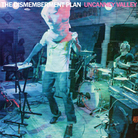
Lyrically, the song is odd–“If you press the space bar enough, cocaine comes out.  I really like this computer.”

But it has a very fun devil-may-care, throw in everything attitude that I really like it.  The entire album was streaming on NPR, and I’m looking forward to hearing more from them–including their back catalog work, to see if they ever sounded like what I thought they sounded like.

[READ: October 1, 2013] One Hundred Apocalypses and Other Apocalypses

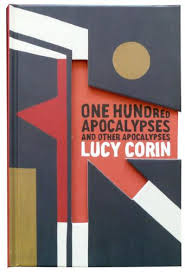
I was excited to get this book because I thought the title was quite intriguing (and the crazy way the cover is cut out was also interesting).

There are four “stories” in the book.  The first three are about twenty pages each while the fourth is over 100 and is comprised of the titular 100 apocalypses (I didn’t count them).

“Eyes of Dogs”
This story contained marginalia (which is sort of like footnotes but not attached to anything specific). In this story a solider meets a witch and she tells him how to get money—climb down a hole and encounter three dogs.  He must wink at the first, blink at the second and hold his eyes closed for the third.  The story seems to be going along sensibly like a fairy tale but then it grows introspective and stops.  I was disappointed in this one.

“Madmen”
This story was utterly bizarre and yet by the middle of the story the bizarreness was explained and by the end I enjoyed it very much.  The premise of this story is that when children grow old they are given a madman to take care of (it is told matter of factly which makes you have to wonder if madman is code for something else.  When boys reach a certain age and when girl;s have their first period (which is an unfair division of genders) they get to go to the asylum and pick which madman (or woman) they want to bring home and care for.  The bulk of the story is at the asylum with the girl “interviewing” the candidates and her mother being mad at her choices.  Ultimately the story turns onto a nice moment between the girl and her dad, who may or may not have married his own madman.  As I said very weird, but satisfying.

“Godzilla versus the Smog Monster”
This was the most “real” of the four stories and it was my favorite.  A fourteen year old boy is watching “Godzilla vs the Smog Monster.”  He found the unlabelled video of it in his father’s sweatshirt drawer and assumed it was porn.  He’s bummed that it turns out to be this Godzilla movie.  In a parallel story, when the boy goes to school his class is watching live footage of California burning—and this burning is uncontainable.  The whole state is slowly engulfed in flames.  This fire, which seems to be some kind of attack obviously changes the minds of everyone in the story, including Sara, a girl who Peter thinks is pretty but who never talks to him.  But when she crashes her car in front of his house, he helps her and they go for a ride to a cave.  Images of the smog monster crop up in interesting ways.  Things get weird and less tangible, but because the beginning was so real it made the ending okay.

“A Hundred Apocalypses”
So this selection disappointed me because it proved to be 100 (I assume) flash fiction pieces.  And I have more or less come down against flash fiction these days.  Especially the kinds of stories that make an interesting “sketch” but aren’t really stories The other problem is that all 100 seemed to be about “apocalypses” which is a useless words when tossed around so much and which loses all meaning when there are 100 that seem to be about actual apocalypses.  Or something.  I also just learned that apocalypse means un-covering or revelation, not really the end of the world, but whatever.

There were probably 6 out of the hundred that I really enjoyed.  Sadly, I didn’t mark them and I don’t remember which ones they were.  The rest were okay or worse.

I am ready for flash fiction to go away.  And I fear that my beloved McSweeney’s is one of the prime generators of the genre, so perhaps they could knock it off for a bit.

Read Full Post »

 harper juneSOUNDTRACK: FUZZ-“Sleigh Ride” (2013).

fuzzHow can some 3 minute songs seem like they take a long time and others feel like they are about a minute long.  “Sleigh Rode” is one of those songs that is over before you know it.  With a big old fuzzy guitar riff opening the song it sounds straight out of classic rock.  Then the verses come in with faster riffing (like a less heavy Black Sabbath) and a sleazy kind of vocal.  It reminds me of a more garage band/sloppy Queens of the Stone Age.

This is (yet another) band from Ty Segall. Robin Hilton from NPR says that Segall had put out some 6 solo albums and is in a half a dozen bands as well (and he’s only 26).  he normally sings and plays guitar, but he plays drums in this band.

While I don’t actually know anything else by him, I really enjoy this piece of fuzzy distorted sleaze pop. and may need to see what he is other releases are like.

[READ: September 20, 2013] “Living Deluxe”

Diane Williams wrote Vicky Swanky is a Beauty which I did not really like.  It was experimental and flash fiction which I am growing to like less and less.  This short piece (which is actually longer than anything in Vicky Swanky, I believe), is from a collection in progress.  I’m not sure if that means that this is finished or not (it’s hard to tell with her).

This story deals with a woman who has taken money from her mother (and sister and brother) because her mother “knew I needed to be a person with flair” (I liked that line).

The thing about the rest of the story is that the narrator acts like a five year old telling a story.  The details that are added are not necessarily relevant to the story.  So we get two paragraphs on a man sneezing, a few paragraphs on her cat, and a couple of paragraphs about Leonard da Vinci.  These details might be relevant to the story.  But interspersed with these details are things that impact the taking-money storyline—that her sister took something that was hers (the Da Vinci bit is about a present she gave to her sister). (more…)

Read Full Post »

[WATCHED: October 11, 2013] Pearl Jam interviews

lightning bowlToday is the release date for Pearl jam’s new album, Lightning Bolt. I have heard two songs from it (the fast and furious “Mind Your Manners” and the gorgeous “Sirens”) and I’m quite excited to hear the whole thing.  For the release of the album, Pearl Jam has decided to do some interviews.  But not with the usual suspects.  Rather, they have done four exclusive interviews with surfer Mark Richards, NFL player Steve Gleason, all around awesome lady Carrie Brownstein and director Judd Apatow.

The Mark Richards interview is available in excerpted form here.  I’m not sure how long the whole interview is.  But from the edited down video, we see that he interviewed all five of them for a bit (and then Stone, Jeff and Mike) and then Eddie.  A surfer seems like a reasonable person t ask them about their music and they clearly feel very comfortable with him.  (The video above is about 5 minutes). (more…)

Read Full Post »

harper juneSOUNDTRACK: JOHN ZORN-“The Dream Machine” (2013).

dreamThis is the title track to the third installment of instrumental albums by composer Zorn (as opposed to wild sax-player Zorn).  The new album is called Dreammachines.  Evidently this trilogy is somehow related to William S. Burroughs (sure, why not).  The first was called Interzone (and was three 15 minute-plus suites), the second was Nova Express (which was shorter pieces) and now Dreammachines (which is also shorter pieces).

It’s impossible to know what Zorn will throw at us next, but this song proves to be a beautiful jazz piece with the quartet of pianist John Medeski, bassist Trevor Dunn, vibraphonist Kenny Wollesen, and drummer Joey Baron.  It opens with a quick but pretty vibraphone melody.  The melody shifts keys but stays in the same pattern until the main melody kicks in.

Variations on the theme continue until about 2 minutes in when Medeski gets a big piano solo and this sounds more like traditional jazz than most Zorn pieces.  Then there’s a very cool vibes solo.  It’s pretty standard jazz and it’s really quite beautiful.

[READ: September 20, 2013] 2 book reviews

Bissell reviews two books this month.

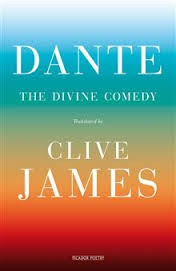
danteThe first is Dante’s Divine Comedy as translated by Clive James.  James has decided that since Italian is so easy to rhyme “For an Italian poet it’s not rhyming that’s hard,” rather than following Dante’s linked terza rima rhyme scheme, he chose the rhyming quatrain.  Bissell expects that academics and traditionalists will be very suspicious of the book because of that, but he says that for the average person (the average person who wants to read Dante, of course), it will be more fun and enjoyable.  Especially, James popularizes the book.  I have always resisted The Divine Comedy but this one sounds like it might be a bit more fun, and isn’t that what reading is all about?

magicalThe second book is The Magical Stranger by Stephen Rodrick.  When Rodrick was 13 his father died in a military plane crash.  His carrier was en route home when it was told to reroute to help with the hostage crisis in Tehran.  But his plane was destroyed.  The hardest part for Stephen was when he read that the accident was deemed “pilot error.”

This book is Stephen’s attempt to learn more about his father.  Through the course of the book, he discovers more and more unpleasant facts about his father—from the lies his father told his mother to a pilot who knew his father who calls his an asshole.  Bissell finds this part of the book very moving but not quite warranting a novel length treatment.

But there is a secondary story about the man who now commands his father’s squadron James Hunter “Tupper” Ware.  Bissell says that this part of the story is far more engaging (Stephen is a journalist and this section is more investigative).  Stephen more or less tries to live his father’s life through Ware, a man who finds the same level of difficulties in his job and his life as Rodrick’s father did.

This is definitely not the kind of book I would read, but for those with an interest in the military and pilots its sound like a good warts-and-all investigation.

Read Full Post »

harper septSOUNDTRACK: LINDA THOMPSON-“Love’s for Babies and Fools” (2013).

lindaAfter two pop songs, here’s a major bummer from Linda Thompson.  Thompson is a fascinating figure.  She was married to Richard Thompson and made many albums with him.  They split very acrimoniously and them Linda suffered from psychogenic dysphonia, which rendered her incapable of singing.  She stopped singing for 11 years.  Now with botox injections into her throat she can sing again, but cannot perform live. She released an album n 2002 (Richard played guitar on a track) and another album in 2007.  Now’s she’s back and Richard plays on this song as well.

In the grand tradition of folk music, Linda’s lyrics are achingly straightforward and powerful:

My father is a traveler, he has a cuckold’s luck,  my mother is a queen but her hands are tied with blood. I’ve a brother in the graveyard, my sister has the blues.  I care only for myself.  Love’s for babies and fools.

The guitar work is beautiful, the song itself is beautiful and depressing at the same time.

Linda’s voice has always been unique—almost otherworldly and yet ordinary at the same time.  It’s strange and mesmerizing.  Welcome back Linda.

[READ: October 1, 2013] “A Different Kind of Father”

This is an excerpt from a new book by Franzen. The book itself is fascinating.  It is a translation of a “Nestroy and Posterity” a somewhat obscure essay from 1912 by the Austrian satirist Karl Kraus.  Franzen’s book is called The Kraus Project and in addition to the translation, Franzen includes a ton of footnotes that are all personal, like this one.  The book is 300 some pages and it sounds like the majority of it is footnotes.  [For those who like to keep track of Franzen’s connections to David Foster Wallace, of course this collection with footnotes does make one think of DFW.  Interestingly, Franzen talks about a book he was writing in 1981 (long before he met DFW which had a main character whose name was Wallace Wallace Wallace].

This footnote (no context is given) is all about the concept of thriving as a man by surpassing your father.  Be that literal or figurative (or literary).  In the case of Kraus, Franzen says, he is denying false paternity.  It was believed that Kraus was the literary son of Heinrich Heine, but Kraus tries to annihilate Heine by dismissing his successes and impugning his character.  However, Johann Nestroy was also a precursor to Kraus but Nestroy was a somewhat neglected and undervalued one, and so Kraus seeks to place Nestroy as his surrogate father. (more…)

Read Full Post »

ifonlySOUNDTRACK: THE BLOW-“Make It Up” (2013).

blow2This song from The Blow is what Bob Boilen played the other day on NPR.  He had just seen them live and liked the show so much that he listened to the whole album three times in a row on the way home.  He said the live show was amazing—Khaela Maricich is on stage singing and talking to the audience all by herself.  He thought that the music was all backing tapes, but then he realized that her partner was back at the soundboard—creating the music and doing the lights at the same time.

Yesterday I said that The Blow’s “Parentheses” was the perfect pop confection.  “Make It Up” is far more complicated anc more challenging.  It has many elements of pop perfection but it is nowhere near as immediate as “Parentheses.”

The song, despite its simplicity, has many complicated elements—the opening drum sequence is elaborate with all kinds of rhythms and sounds.  But when the verse starts, the vocals are delicate and simple and the keyboards are single notes.  Until the chorus when the complexity jumps in again—in addition to the drums, we get several versions of Maricich‘s voice doing background vocals, singing leads, making sound effects and then they disappearing again.  The third part introduces a new, simple, very pretty melody with beautiful voices playing counterpoint to each other.

The song feels so busy but it is really just a few simple elements piled on top of each other.  It’s simultaneously pretty and mind-boggling.  More pop songs should do that.

[READ: September 25, 2013] If Only

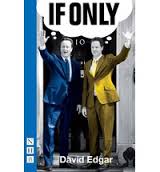
You shouldn’t judge a book by its cover, but sometimes a cover grabs you.  I have no idea what it was about this cover that made me look at this book twice, but I did.  And when I investigated the author, I discovered that Edgar is a prolific playwright and that this play is a contemporary political story set in current and future England.

What struck me immediately was this disclaimer at the bottom of the character page:  “The second half of the play concerns the future of the coalition government.  This text went to press before the end of rehearsals and so may differ considerably from the play as performed.”  How interesting is that?  First that they would do that and second that it might actually be a different play that I have read.

The opening of the play takes place in the spring of 2010, right after the eruption of the Icelandic volcano which grounded European air traffic to a halt.  In the airport are three politicos: Peter, who works for the Conservatives, Jo, who works for the Liberal Democrats and Sam, who works for Labour.  They are all fairly high up in the party (but not name recognized). They are stuck because of the volcano and are seeking any way to get back home as the general election is but a few weeks away.  I really enjoyed the continual jokes about charges for their phones and devices.

Most of the first act concerns their attempts to get back home and their discussions about the upcoming election.  Thy can’t get back home despite their various clever ideas, until they learn that they can by a car for a few hundred pounds and can all drive together back home.

The political discussion is far more complicated—and it certainly helps if you know more about British politics than I did [I had no idea what UKID was or who Clegg was, for instance]. (more…)

Read Full Post »

ailisSOUNDTRACK: THE BLOW-“Parentheses” (2006).

blow1I learned about The Blow from NPR Music.  The lads played a new song by them, but this song, which is also available on NPR, is from 2006.  I don’t know anything else about The Blow.  But I do know that “Parentheses” is a delightful little pop confection (with enough elements of weirdness that explain why it was never a hit).

“Parentheses” immediately sounds like something I’ve heard before.  That chorus is just so perfect—“when you’re holding me, we make a pair of parentheses” that I can’t believe no one has thought of it before.  Of course, the bit in the verses about the deli aisle is certainly unexpected.

I normally don’t like the bap bap // bap drum beat, but it’s perfect here.  The stripped down nature of the music (simple chords on a few different keyboard sounds) accompanies this perfectly.  It’s sung with Khaela Maricich’s sweet and almost fragile (but not) voice.

It is so catchy I have now listened to it three times in a row.  And that little guitar tail at the end is very inviting as well.  I can’t believe this song wasn’t huge.

[READ: September 26, 2013] Desolate Heaven

I read this play because of my friend Ailish—I’ve never seen anyone with a name almost like hers—Ailís—before.  And, given the Irish name it is no surprise that the story is set in Ireland.  But rather than Dublin, it is set on a desolate beach.  We see two young girls: Orlaith (13) and Sive (12) messing about.  They are acting like adults—complaining about the beach and “the kids” and how everything is awful.  Despite some tensions, the girls bond over their difficult lives.  Each lives with a single parent and in each case, the parent is an invalid.  Each girl has to do everything for her parent in addition to going to school.  And in the next few scenes we see just how desperate their situations are: Sive’s mother has broken her pelvis (and has been unable to move for two years) and Orlaith’s father didn’t get up at all today because he didn’t feel he was able to.

In the next scene, we see the girls acting out a plan—to meet at the beach with as much money as they can grab.  And just like that, they are off on a road trip. (more…)

Read Full Post »

aug2013SOUNDTRACK: KEVIN DEVINE & THE GODDAMN BAND-“Nobel Prize” (2013).

PrintI’d never heard of Kevin Devine before (he apparently has 7 solo albums out).  This track is his first single with his new (radio friendly it seems) band called The Goddamn Band.  Interestingly, the album is called “Bubblegum” and it’s that sentiment that sticks out with this song.

Over buzzy guitars and pounding drums, a screamed (but not unpleasant) voice comes piercing through the fuzz.  And once the guitars come in, it’s all bubblegum pop (fuzzy and distorted absolutely, but pure bubblegum chord structures).  The song (including the voice) remind me a lot of Cheap trick–simple, catchy melodies with vocals that are urgent and intense.  Even the quieter spoken word section sounds like Cheap Trick.  The very mellow bridge or chorus or whatever it is mixes things up when it brings in picked strings and a gentle vocal.

It’s catchy as hell and could fit into a lot of playlists of poppy rock.  At only 2 and a half minutes it’s a pop gem.  Too bad no DJ would ever say the band’s name.

You can hear it an NPR.

[READ: September 19, 2013] “The Way Things Are Going”

As the story opens we read the Gwen had insisted that “Ma and I” move to America (from South Africa). Gwen wanted them to move because “sooner or later…it would happen again.”  The narrator says that what had happened was actually her fault.  But really what difference did it make whose fault it was—once they were tying you up.  She only let them in the first place because she was trying to be mannerly.

The story flashes back to what happened. The narrator had been struck across the head with a gun, praying that the men would leave her alone—just take their few valuables and go.  And then she had to worry about her mother, who was upstairs by herself.  It was only the phone call (and the answering machine) which saved them from further damage because a neighbor said she’d be right over. (more…)

Read Full Post »

almostsilentSOUNDTRACK: DELTRON 3030-“The Return” (2013).

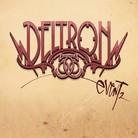
Deltron3030-EventII-caa19c164f9e01c2441aab420c0b54356b261e87-s1After thirteen years, alternative rap supergroup Deltron 3030 is back.  If you’ve forgotten, Deltron 3030 is comprised of Dan the Automator, Del the Funky Homosapien and DJ Kid Koala.  Evidently the album is chock full of guest stars (which I usually dislike, but the guest stars are a weirdly unexpected bunch–David Cross, Amber Tamblyn, chef David Chang?–so I’m curious to hear what they are going to add to the sound.

Okay even I admit I don’t really remember what the first Deltron album sounded like, but if memory serves this seems to be picking up in that same spacey vibe that made Deltron so weird and fun.

There’s a story going on here, told in Del’s awesome rapping style–mellow and trippy with big words and convoluted phrasings.  Of course, this is only track 2 on the record so I don’t know exactly what the story is about.  But I know that Deltron 0 is back and I’m pretty excited to hear the whole thing.

You can hear this track on NPR and you can watch the intro track (featuring Joseph Gordon-Levitt) here:

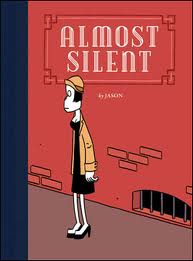
[READ: September 20, 2013] Almost Silent

This book collects four of Jason’s previous books “Meow, Baby,” “Tell Me Something,” “You Can’t Get There from Here” and “The Living and the Dead.”

“Meow, Baby” (2006) is a collection of  “short stories” from Jason.  They feature the same (looking) cast of characters as most of the other Jason books I’ve read (anthropomorphic animals), but there’s a few additions: a mummy, a zombie,a  skeleton and a vampire.  None of the pieces are titled and the only way to know when each is done is when you see his signature.  This is just to note that if there is a mummy in two stories, it’s good to know he’s not necessarily the same mummy.

The stories are quite funny with variations on mummy stories (wrapping your head in a bandage after you are hurt, getting an erection(!)), and vampire stories (the same looking guy is always following him with a stake) and some very amusing domestic scenes with skeletons.  I enjoyed the one where the mummy comes out of the sarcophagus, looks at a newspaper and then walks back into the sarcophagus with a look of despair on his face (his face is still covered in bandages—Jason has an amazing way of expression even with people who have no faces). There’s also a whole series of skeletons who climb out of their graves and go about mundane tasks .  There’s even a guy dressed like the Terminator who has some funny moments where he misses the opportunity to say his trademark lines.

The last few pages are three panel strips—like daily cartoons .  Were they ever shown in newspapers?  These show that Jason is also very funny at punchlines, not just dark stories and black humor.  True, all of these three panel comic are black humor (with the same cast of zombies, vampires, mummies and skeletons), but he really makes some funny and unexpected strips here. (more…)

Read Full Post »

catSOUNDTRACK: LORDE-“Royals” (Live on KCRW, August 2013).

lordeLorde is evidently a huge hit in her native New Zealand.  Not bad for a sixteen year old.  And, indeed, her voice is not bad at all for a sixteen year old–she sounds much older (and perhaps it’s not even worth mentioning her age, but KCRW did, so I will too).  She has a deep and sophisticated voice (in the way that young Fiona Apple blew me away with the intensity of her voice on her debut).

The song itself is quite plain (as are all of the songs on her entire KCRW performance).  There’s primarily percussion (some really interesting choices there), simple keyboard notes or washes and (quite often) multi-layered voices–all prerecorded).  And she sings over the sparseness with her powerful throaty voice.

Interestingly, for being a popular success, her songs aren’t all that poppy.  They are certainly not bubblegum and some of the tracks are quite dark.  (Although lines like, “let’s go down to the tennis court, talk it up like yeah” certainly don’t speak to any depth).  And yet the songs are “topical” according to Lorde herself.

“Royals” might be the least interesting of the tracks during the set, and while I like it, I’m not sure why it became so huge.  But fair play to her.

[READ: August 8, 2013] “Four O’Clock”

This book is a collection of H.P. Lovecraft works and items associated with him.  Like this story from his wife Sonia H. Greene.  In theory Lovecraft did not edit this piece (I venture no opinion) and so it stands as her own story.

It is a very simple story.  Indeed, there is hardly any plot and only one character.

In this story the narrator (never identified as man or woman) says that at about 2 in the morning she knew it was coming.  And it is coming at, yes, four o’clock.  The narrator is terrified of what is coming and for much of the story, we don’t learn a thing about what it is.  We just know through ever escalating fear, that it is coming.

At four o’clock. (more…)

Read Full Post »

« Newer Posts - Older Posts »