Feeds:
Posts
Comments

Archive for the ‘Nostalgia’ Category

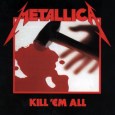
SOUNDTRACK: METALLICA-Kill ‘Em All (1983).

Although I don’t think I remember exactly when this disc came out, I was pretty big into heavy metal (the heavier the better) back in 1983.  I can remember this was my freshman year of high school, and I’m fairly certain I bought this LP pretty soon after it came out (thanks to the awesome radio show mu-mu-mu-mu-mu-metal shop).

Kill ‘Em All has always been a touchstone for thrash metal.  And listening to it now, it’s hard to believe that the Metallica of 2010 is the same band.  Or, more to the point that this bunch of kids would have grown into this same bunch of adults.

Kill ‘Em All is raw. Really raw.  And yet it sounds (even at this stage) well mixed and very professional (no mean feat given the rather silly cover art).  The guitars, even though the distortion is cranked up, do not sound muddy.   The vocals are mixed perfectly so you can actually understand (most of) the growly lyrics (this is before James Hetfield learned how to sing).  The drums are really fast (possibly one of the fastest bpm at the time).  And of course, Cliff Burton kept wonderful rhythm while Kirk Hammett was soloing all over the place.  And while “Anesthesia–Pulling Teeth” is kind of a silly addition on a thrash album, it does showcase Cliff’s bass work.

The amazing thing is that this twenty-seven year old album still sounds relevant in the metal world.  And no doubt it will continue to influence young metal bands in the future.  And for a fantastic review of this disc (and an awesome selection of best-of-1983 releases), check out wallnernotweller.  This is what my site would look like if it were only about music.

[READ: April 22, 2010] “Edgemont Drive”

I haven’t read much E.L. Doctorow, but I’ve liked what I read.  And it was nice to read someone who writes so differently from the kind of things I’ve been reading lately (Bolaño etc).  It was especially nice because I was fairly certain where I the story was going to go and it didn’t go anywhere near where I expected. (more…)

Read Full Post »

SOUNDTRACK: FUGAZI-13 Songs (1990).

I was so blown away by that first Fugazi disc that I immediately ran out and got this collection of their first two EPs.

The strange thing to me is that even though I enjoy the disc, nothing on it really stands out as all that memorable.  I feel like Repeater was such a strong release that these earlier tracks pale somewhat.

I’ve listened to this disc a number of times over the last few days and nothing really stands up and grabs me like Repeater still does.

I wound up buying two more Fugazi discs after this, but I’m pretty sure the reason I stopped buying their music was from this same feeling: the songs were all good, rocking, indie music, but there was nothing terribly memorable about them.

[READ: April 15, 2010] Stephen Fry in America

I first heard about this book when Stephen Fry appeared on The Late Late Show.  This book was very casually plugged as Fry’s attempt to visit every State in the U.S.  It turns out that this book is the companion piece to a six part BBC TV series of the same title (which I have not seen).  Although the TV series makes the existence of this document much more understandable.  Because although everyone wants to travel to every state in the union, the only way it would ever be accomplished in the fashion is for a TV show (even a book wouldn’t get quite this treatment if there were no TV show).

Stephen Fry was almost born in America (in New Jersey, in fact, where he believes he would have been Steve, rather than Stephen).  And he has always felt a connection to the States.  So, Stephen Fry, (in my head the quintessential Brit) brings a film crew and his classic British Big Black Taxi to see all of the States.  He begins in Maine and travels in an interesting manner, zig-zagging across the country.   He tends to visit the places/events/sites that each state is known for.  And, like any good TV show, he participates in the activities (he lobsters, he rides horses, his deals blackjack) and makes a tit of himself. (more…)

Read Full Post »

SOUNDTRACK: BLUE ÖYSTER CULT-compilations and live releases (1978-2010).

For a band that had basically two hits (“Don’t Fear the Reaper” and “Burnin’ for You”) and maybe a half a dozen other songs that people might have heard of, BOC has an astonishing number of “greatest hits” collections.

Starting in 1987 we got Career of Evil: The Metal Years (1987), Don’t Fear the Reaper (1989), On Flame with Rock n’ Roll (1990), Cult Classic (which is actually the band re-recording their old tracks (!)) (1994), and the two cd collection Workshop of the Telescopes (1995).  There’s even Singles Collection, (2005) which is a collection of their European singles & Bsides.

This doesn’t include any of the “budget price” collections: E.T.I. Revisited, Tattoo Vampire, Super Hits, Then and Now, The Essential, Are You Ready To Rock?, Shooting Shark, Best of, and the 2010 release: Playlist: The Very Best of).

The lesson is that you evidently won’t lose money making a BOC collection.

I don’t know that any of these collections are any better than the others.

The 2 CD one is for completists, but for the most part you’re going to get the same basic tracks on all of them.

And, although none of them have “Monsters” for the average person looking for some BOC, any disc is a good one.

Regardless of the number of hits they had, BOC was tremendous live.  And, as a result, there have also been a ton of live records released.  Initially the band (like Rush) released a live album after every three studio albums. On Your Feet or On Your Knees (1975) Some Enchanted Evening (1978) and Extraterrestrial Live (1982) were the “real releases.”

Then, in 1994 we got Live 1976 as both CD and DVD (which spares us nothing, including Eric Bloom’s lengthy harangue about the unfairness of…the speed limit).  It’s the most raw and unpolished on live sets.  2002 saw the release of A Long Day’s Night, a recording of a 2002 concert (also on DVD) which had Eric Bloom, Buck Dharma an Allan Lanier reunited.

They also have a number of might-be real live releases (fans debate the legitimacy of many of these).  Picking a concert disc is tough if only because it depends on the era you like.  ETLive is regarded as the best “real” live disc, although the reissued double disc set of Some Enchanted Evening is hard to pass up.  Likewise, the 2002 recording is a good overview of their career, and includes some of their more recent work.

If you consider live albums best of’s (which many people do) I think it’s far to say that BOC has more best of’s than original discs.  Fascinating.  Many BOC fans believe that if they buy all the best of discs, it will convince Columbia to finally reissue the rest of the original discs (and there are a number of worthy contenders!) in deluxe packages.  I don’t know if it will work, but I applaud the effort.

[READ: October 2009-February 2010] State By State

This is a big book. And, since it’s a collection essays, it’s not really the kind of big book that you read straight through.  It’s a perfect dip in book.  And that’s why it took me so long to get through.

I would love to spend a huge amount of time devoting a post to each essay in the book.  But, well, there’s 51 (including D.C.) and quite a few of them I read so long ago I couldn’t say anything meaningful about.  But I will summarize or at least give a sentence about each essay, because they’re all so different.

I’ll also say that I read the Introduction and Preface last (which may have been a mistake, but whatever).  The Preface reveals that what I took to be a flaw in the book was actually intentional.  But let me back up and set up the book better.

The catalyst for the book is the WPA American Guide Series and sort of Steinbeck’s Travels with Charley.  The WPA Guides were written in the 1930s as part of the Works Progress Administration.  48 guide books were written, one for each state.  Some famous writers wrote the books, but they were ultimately edited (and many say watered down) by a committee.  I haven’t read any of them, but am quite interested in them (and am looking to get the New Jersey one).  Each guide was multiple hundreds of pages (the New Jersey one is over 800).

State By State is written in the spirit of that series, except the whole book is 500 pages (which is about 10 pages per state, give or take).  And, once again, famous writers were asked to contribute (no committee edited this book, though).  I’ve included the entire list of authors at the end of the post, for quick access.

So I started the book with New Jersey, of course.  I didn’t realize who Anthony Bourdain was until I looked him up in the contributor’s list (I’m sure he is thrilled to hear that).  And his contribution was simultaneously exciting and disappointing,.  Exciting because he and I had quite similar upbringings: he grew up in North Jersey (although in the wealitheir county next to mine) and had similar (although, again, more wealthy) experiences. The disappointing thing for me was that Bourdain fled the state  for New York City (and, as I now know, untold wealth and fame (except by me))  I felt that his fleeing the state, while something many people aspire to, is not really representative of the residents of the state as a whole.

And that dissatisfaction is what I thought of as the flaw of the book (until I read the Preface).  In the Preface, Matt Weiland explains that they asked all different authors to write about states.  They asked some natives, they asked some moved-ins, they asked some temporary residents and they asked a couple of people to go to a state for the first time.  In reality, this decision makes for a very diverse and highly entertaining reading.  In my idealized world, I feel like it’s disingenuous to have people who just stop in to give their impression of an area.  But hey, that’s not the kind of book they wanted to compile, and I did enjoy what they gave us, so idealism be damned.

For most of the book, whenever I read an essay by someone who wasn’t a native or a resident of a state, I assumed that there weren’t any famous writers from that state.  I’ve no idea if that played into anything or not.  From what I gather, they had a list of authors, and a list of states (I was delighted to read that three people wanted to write about New Jersey-if the other two writers ever decided to put 1,000 words  to paper, I’d love to read them (hey editors, how about State by State Bonus Features online, including any extra essays that people may have wanted to write).

From New Jersey, I proceeded alphabetically.  And, I have to say that I’m a little glad I did.  I say this because the first few states in the book come across as rather negative and kind of unpleasant.  Alabama (written by George Packer) comes across as downtrodden, like a place you’d really have to love to live there.  Even Alaska, which ended up being a very cool story, felt like a veil of oppression resided over the state (or at  least the part of the state that Paul Greenberg wrote bout.)  But what I liked about this essay and the book in general was that the authors often focused on unexpected or little known aspects of each state.  So the Alaska essay focused on Native fisherman and the salmon industry.  Obviously it doesn’t do justice to the rest of that enormous state,  but that’s not what the book is about.

The book is meant to be a personal account of the author’s experiences in the state. (more…)

Read Full Post »

SOUNDTRACK: KATHLEEN EDWARDS-Failer (2003).

I really enjoyed Edwards’ Asking for Flowers.  So much so that I decided I had to track down her earlier discs, too.  This is her debut album (aside from a self released demo type EP that I don’t think is available anymore).  And, no doubt, it will get re-released one of these days making the 500 holders of that first EP very cross indeed.

I’m very torn as to whether Edwards is a country singer or not.  My gut says no, because I like her so much.  And yet, there are many country tinges that sprinkle this disc.

But that’s really irrelevant, especially if you like the disc, which I do. The amazing thing about Edwards is that it’s hard to tell what disc her songs come from.  She has a singular style of writing and singing that makes her songs timeless.  This is not to say that she’s stuck in a rut by any means, because nothing sounds tired.

Edwards is a wonderfully talented songwriter, with a gift for storytelling and a wonderful twist of wordplay: “One more song the radio won’t like”; “And if you weren’t so old I’d probably keep you / If you weren’t so old I’d tell my friends / But I don’t think your wife would like my friends.”  And beyond that there are simply great songs: “Hockey Skates” is a wonderful metaphor (and a damn catchy song).  “National Steel” has a wonderful hook.

I really can’t get enough of this disc.  Or her follow-up either.

[READ: January 20, 2010] “A Death in Kitchawank”

My recent comment about T.C Boyle’s named being shortened from Coraghessan must have been an editorial choice by Harper‘s because here it is in full splendor in the New Yorker. I also find it odd when the same writer appears in two locations very close together. Is it like when an actor has a big movie out and appears in several periodicals in a month?  I suppose Boyle has a book coming out?

Whatever the case, I enjoyed this Boyle story quite a lot too. And, once again, it undermined my expectations of what he writes (so I guess my expectations should change by now, huh?).

This story is set in a lake community in Kitchawank, NY.   When the story opens we see a woman tanning herself to a golden brown (this is the first clue that it’s set in the 70s. Which it is).  We watch as the woman, Miriam, relishes her family’s life and their friends in their close-knit, Jewish, lakefront community. (more…)

Read Full Post »

SOUNDTRACK: LATER WITH JOOLS HOLLAND (Ovation TV) (2010–but obviously not really).

I’ve known about Jools Holland for years, and even knew about Later… from some other source (maybe it was on BBC America?).  But anyhow it is now being broadcast on Ovation TV (and what is that?  I’d never have heard of it except that TiVo found a Flaming Lips show for me).
The premise of Later is that there is one center stage, and encircling it are five or so bands.  The bands all face the center (where the camera is) so they get to watch the other bands, too.   Each band plays a song or two or three (depending on popularity I guess).  And it’s live and fun and generally a good time.

This episode, as I said, had the Flaming Lips on it.  I noted that the TiVo info said 2010, but the Lips played songs from At War with the Mystics, so it was more likely 2006.  Also on the bill were The Divine Comedy (and I was very excited when it said 2010, because I thought that DC had a new disc out, sigh).  The Strokes, Cat Power and a couple other folks rounded out the bill.

It was quite a show, and felt like they packed in a lot more than an hour’s worth of music.  The Lips especially pulled of an amazing three song set (scattered throughout the program, by the way) with a ton of scaled back, but still fun live gadgets (oversized hands, confetti etc).  And, they did a rocking cover of Black Sabbath’s “War Pigs.”

I asked TiVo to tape more Later.  If the diversity of artists here is any indication, I assume you;’e bound to get at least one band you like on every show.  Cool.

[READ: January 19, 2010] “The Dime Store Floor”

I don’t often review Personal Histories from The New Yorker, but every once in a while one grabs me.  And this is one of them.

I have to assume that everyone feels that smells are highly evocative, so I’m not unique in feeling that scent is super powerful.  And yet, I think I tend to overlook smells in my daily life, even though I’m always secretly hoping for one to whack me up the side of the head and say, hey remember this!

And this piece is all about revisiting scents: both intentionally and accidentally.

I really enjoyed the closing where he opens the Old Spice deodorant and flashes back to his father.  However, I had one major question/quibble with the author.  Well, two actually.

The first was this: “A few years ago, an online store I’d been using ran out of my regular brand of deodorant, and, because I was unable to think of anything else, I switched to Old Spice, the kind my father used.”  Okay, that, wait what?  You buy your deodorant online?  You couldn’t go to any store anywhere and just buy another roll-on?  What kind of unique deodorant could this possibly be and conversely how could Old Spice possibly compare?

The second, a little further down: “…went to a local drug store to buy replacement [toiletries].  There I saw that Old Spice deodorant comes in more strength, formulations and scents than I had thought and realized that the one I’d been using High Endurance Pure Sport couldn’t have been my father’s.”  Where exactly does David Owen live that he didn’t know Old Spice had a huge line of deodorants out?  Go to any store in America, heck open a magazine, you can’t miss it! I myself am monogamous to Tom’s of Maine, and even I know there’s like a half dozen Secret containers on the shelf!

Owen clearly has the internet, so it’s not like he’s unaware of the outside world, and the whole story is about interacting with others, so he’s not a recluse.  I’m just baffled by all this.  (And Sarah and I had a good laugh too). (more…)

Read Full Post »

SOUNDTRACK: BLACK SABBATH-Sabbath Bloody Sabbath (1974).
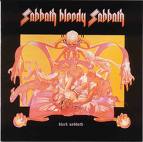
Henry Rollins, on Think Tank talks about the “el niño” storms from several years back.  And he says that el niño means “little boy,” but the damage the storms did means they should have called it something scary and powerful like “The First Four Black Sabbath Albums.”  I have to say that leaving out this fifth album is a great disservice to the power of Sabbath Bloody Sabbath.

“Sabbath Bloody Sabbath” opens the disc kicking and screaming with a wonderfully raw guitar riff.  Strangely, for such a powerful opening, it then segues into a very gentle almost loungey section (which hilariously, is the section where he screams “You bastard!”).  But when we hit three minutes, the song really catches fire.  The heavy pounding riff, the screaming vocals, the end of this song is astounding.  And it explains why this song is covered so much (Anthrax, The Cardiagns).

“A National Acrobat” follows with another great riff.  As the song progresses, the bridge section, rather than going more ballady turns a bit more psychedelic with some cool effects on the guitars, yet it maintains the heaviness of that great riff.  It ends with a rip-roaring guitar solo and speeding end.

“Fluff” has always been one of my favorite acoustic numbers.  It’s a very delicate acoustic guitar picking piece that builds in complexity as pianos are added over it.

“Sabbra Cadabra” is another great, fast rocker with a clever name.  This one is a love song, which seems weird, but it works.  Of course, here’s where the real weirdness kicks in: Rick Wakeman (yes, that Rick Wakeman) plays synths and pianos in the middle section.  What is totally fascinating about this, though, is that this keyboard-heavy section is not a ballad, it’s heavy guitar with a piano solo or psychedelic-wash feel.  It doesn’t detract from the heaviness of the song, but it introduces a weird almost Jethro Tull element to the proceedings.  It’s pretty cool.

The second side sees the band experimenting even more.

“Killing Yourself to Live” is  decent B-side rocker, that’s mostly a chance for Tony Iommi to play some wicked solos.  It also has several different parts to it (Sabbath is totally a prog rock band, eh?) and ends with a heavy boogie rock section.

After the fierce ending of “Killing,” we get another cameo from Rick Wakeman, who plays the bizarro-wah-wah’d keyboard intro of “Who Are You?”  This is probably the closest to a ballad that this album produces.  It’s slow, is propelled entirely by keyboards, features virtually no guitar or bass and has a delightfully pompous middle section with martial drumming and piano.  But the keybaords are thankfully weird enough to prevent this from turning into another crossover attempt.  And the lyrics are kind of dark and twisted .

“Looking for Today” brings the guitars back with what is probably a classic Sabbath sounding track.  It’s not amazing, but it’s a solid rocker that drifts into a crazy middle section chock full of acoustic guitars and, wait for it, flutes!  It ends with an upbeat coda that sounds not unlike some of the songs Ozzy would make on his later solo records.

“Spiral Architect” is a string laden track that gets a little  bogged down by the strings towards the end.  It has a cool weird riff that opens the song but by the end it’s almost entirely strings (and the heaviness is pretty much gone).  I’ve always liked this album so this doesn’t detract from my enjoyment of the song, but I have to assume that metal fans were a bit disappointed by this.

So Black Sabbath, despite being the godfathers of heavy metal were actually quite experimental in their day.  Even if the cover depicts a writhing figure on a bed that is labeled 666!

[READ: December 7, 2009] “All That”

I was delighted to get the email from The New Yorker today which notified me that this new issue had fiction from DFW!  What a nice surprise.  The problem is that it’s going to be maddening deciding whether this is an excerpt from The Pale King or some other unfinished piece or what.  [UPDATE: This did not make it into The Pale King].

I’ve learned from previous DFW pieces in The New Yorker not to assume that this is a short story.  Which is good.  Because as a short story it doesn’t have a very solid resolution.  However, I think it is one of his best pieces of (short) fiction in quite a while.

I don’t want to spend time speculating about where this piece belongs or even comparing it to the other excerpts from The Pale King.  But I can certainly see this character fitting in to a much longer narrative (and I rather hope that he is in The Pale King).

But enough of that. (more…)

Read Full Post »

[WRITTEN: October 2000] “Just Like Gene”

Back in June of 2008, I posted a short story that I wrote about 8 years ago.  As it’s the holiday season it seemed like a good time to post another of my old stories.  I’ve got about a dozen more stories stashed away on a disc somewhere.  And I’ll likely post them in the near future too.

So, here’s my second published online story called “Just Like Gene.” (more…)

Read Full Post »

socSOUNDTRACK: TINDERSTICKS-The Hungry Saw [CST055] (2008).

hungryIt was the releases of this Tindersticks disc (their first in 5 years) on the venerable Constellation Records (in North America) that inspired my trip through their back catalog. I was completely surprised to see them released on Constellation, as the band doesn’t exactly fit with the label’s stereotypical style (although, realistically with the last dozen or so releases, Constellation has really expanded the kind of music they release).

And this is a fantastic Tindersticks release!  There’s not a bad song on the disc. And, even though nothing is as immediately gripping as say “Can We Start Again,” the disc contains some of the band’s strongest songs.  “The Hungry Saw” is simply amazing, both lyrically and in its catchy (yet creepy) chorus.  But the highlight is probably “Boobar, Come Back to Me,” a song that begins slowly and builds gloriously, including a call and response segment that makes this song really swagger.

“Mother Dear” features a strangely comical musical episode.  In an otherwise very mellow piano based track, right in the middle of the song, come slashing, somewhat atonal guitar chords.  It’s as if a more rocking song is trying to overtake the mellow track.  (The coup is rebuffed, though).

The biggest thing to note about the disc is that longtime co-songwriter Dickon has left the band.  And so, some of the co-writing duties have been taken up by David Boulter.  While it is obviously sad that Dickon has left, Staples seems revitalized on this disc, and Boulter’s additions (especially his quirky instrumentals) bring a new point of view to the proceedings.  Also of note is something of a return to the orchestral style (albeit a much more understated version).  However, different songs emphasize different aspects: horns on one, strings on another, but always underscored by the ubiquitous Hammond organ.

It’s not a radical departure or anything like that.  It’s more of a continuation after a well earned vacation.  And it’s certainly their strongest release since their first four.

[READ & WATCHED: October 2009] Souvenir of Canada, Souvenir of Canada 2 & Souvenir of Canada (the movie)

I got the first Souvenir of Canada when it came out.  (I was on a big Coupland kick and may have even bought it in Montreal).  I didn’t get #2 when it came out, probably because I didn’t really invest a lot of effort into the first one.  But after recently reading City of Glass, I wanted to get a little more involved in Coupland’s visual art.  So, I picked up #2 and, while investigating this second book, I discovered that he had made a film of the books, too.

Coupland explains in the introduction that this book is his personal vision of what Canada is like. It is designed for Canadians as something of a nostalgia trip, but it is also something of an introduction to unseen Canada for non-Canadians.  And so, what you don’t get is pictures of mounties and Tim Hortons and other things that fit the stereotypical Canadian bill. Rather, you get things that are significant to Coupland (and maybe the average Canadian born on the West Coast in the 60s). (more…)

Read Full Post »

prospectSOUNDTRACK: TINDERSTICKS-can our love… (2001).

loveAfter Simple Pleasure, Tindersticks continued in this looser, less chamber-pop vein.  This disc features more organ fueled songs.  And– in something of a departure–they made many of the songs quite long (two are over seven minutes, one is almost nine!).  You could almost say these are jams, but that would give the wrong impression.

The band still sounds like Tindersticks (there’s no mistaking that voice), but they feel looser, less intense.  Yet they’re still passionate.  In fact, “People Keep Coming Round” and “Can Our Love” are two of their best tracks.  “People” has this really long keyboard section that my wife said sounded like the Doors, and she’s quite right about that.  But it’s more than just a Doors-keyboard solo.  It’s a catchy yet haunting single.

It’s easy to be feel disappointed about the latter Tindertsicks discs because they don’t rival the crazed intensity of their earlier ones.  And yet, Tindersticks is now a different band, playing a different kind of music.  It’s still beautiful, still affecting, it’s just different.

“No Man of the World,” the second to last song is a slow, meandering, deceptively simple song.  It features spoken lyrics and gently sung backing vocals.  And on first listen it’s nothing special, but the more you listen, the more elements you notice: strings, horns, sadness.  It’s really quite moving.

The disc ends with “Chiletime” another deceptively simple song that begins with an organ drone and simple strings.  Staples whispers his way through the first few bars.  But then the track builds to a full band with gorgeous vocals.  Then it slows down as if coming to and end, but it builds once more, this time to a beautiful finish.  It’s a perfect ending to this disc.

[READ: November 3, 2009] “The Girt Pike”

De Bernières wrote Captain Corelli’s Mandolin (which I’ve neither read nor seen the film).  In fact, this is the first story by him that I’ve read, and I’m fascinated by his style.  I don’t know if his other works are like this but I’m rather intrigued by this one.

This is a fairly simply story of a boy going fishing.  (I don’t fish myself, and I don’t really care all that much about fishing, but I’ve gotten a great deal of pleasure out of fishing stories (Paul Quarrington’s Fishing with My Old Guy was a surprise treat)).

The story opens with an endearing style that I would consider almost fairy-tale-like.  (The second sentence does indeed open with “Once upon a time”).  But the words are not of fairy-tales, rather, they reflect a somewhat nostalgic past: when boys fished in ponds with sticks and then threw the sticks to their dogs who splashed in the ponds.  Such an idyllic set up is altered somewhat once the “action” starts with the sentence: “On the morning that concerns us, however….” (more…)

Read Full Post »

« Newer Posts