Feeds:
Posts
Comments

Archive for the ‘XTC’ Category

SOUNDTRACK: BIDINIBAND-Call the Office, London, ON (April 18, 2008).

Dave Bidini played some solo shows in 2007 but by 2008 he had cobbled together a band: Bidiniband.  The band includes Dave, Paul Linklater, on lead guitar, former Rheo Don Kerr on drums and Doug Friesen on bass.

I’m not sure when they started playing together, but this is the first live show at Rheostatics Live.  The set list hasn’t changed much since his solo shows, but the songs sound really different with the full band.

Some of Dave’s solo work is about telling real life stories of unsung people.  They

re usually really interesting the first one or two times you hear them, but they kind of lose their power after multiple listens.  So “Zeke Roberts” and “The Land is Wild” (except for the fantastic chorus) wear out their welcome a bit.  But again, it’s a nice change to hear them with the full band.

“Fat” is interesting to hear with other musicians.  The ending isn’t quite as wild as with the band but these guys chant the “everyone’s a robot” with great energy.  After the song Dave says “Good  night everybody” to much laughter.  For the next song he says, “This is basically the same song but with a more ironic joke.  The irony is not in the tuning or lack thereof.”

Someone says, “You guys and your new strings. I haven’t changed my strings in like two years.”  “I thought t would be cool, you know, on a new tour.”

“This Song Ain’t Any Good” has a very different delivery than the folksier style that I’m used to.  He asks the band, “You want to do it sad, what did you mean?” They do the chorus in a kind of repeated downbeat “singalong.”

Thanks to Andy and The Two Minute Miracles for playing tonight.  We’re gonna do another song based in our country: “The Moncton Hellraisers.”  It has a rather country flair to it.

Someone shouts, “Do a hockey song.”  Dave says, “I think you’re out of luck tonight  Oh, no there’s a longer one later tonight….we’re making you wait for it.”

I love the jazzy opening of “Memorial Day.”  But even better is the full band rock of “Terrorize Me Now.”  Who ever in the band is screaming “And then we killed again,” is totally intense.

Dave asks, “Could anyone deliver a water to the stage, or I could put my guitar down…  From off stage: “only whiskey and cold coffee!”  “cold cuts?”

This next song is gonna feature Dog Paul’s on double bass for a song about cannibalism and Canadian rock.  “Desert Island Poem” features the line   “Rheostatics eat their drummer who would cook and season the body?”

Dave once described the song: “Yeah, and that’s sort of a true story in a way. I mean not the cannibalism part. But one time the Rheos were stranded in Drumheller [Alberta] and we were listening to the radio and we heard this story about that plane that crashed in Alaska. And we began to wonder what would happen to us if we never got out of Drumheller.”

For “The List”, the replaced Zack Warner with Sass Jordan (a Canadian singer) which features the line “you say I suck but it’s that suckdom of which I’m proud.”  Some one shouts, “that’s a fucking song that needed to be written.”  Dave says he has one more verse but he can’t remember who its about.

“The Continuing Story of Canadiana and Canadiandy” has a cool slide guitar solo in the middle of the folk.  Dave, “That’s from back in the day where all the Canadian folk singers looked like Jesus.  Those nice sweaters on, a nice beard.”  Mitsou?  “When I think of Canadian folk I think of Mitsou too, ironically.”

Someone in the band proposes the “Top five Canadian folk albums: Summer Side of Life, Old Dan’s Records,”  Dave notes: “That’s two from Gordon Lightfoot are you allowed to pick two from the same artist?” “And The Way I Feel.” Dave: “You’re just doing Gordon Lightfoot.”  “That’s what I’m trying to say, dude. “I’m getting your drift that you like the Gord.”  “Gordon never looked like Jesus did.” “No, he looked more like Bruno Gerussi.”

“Is everybody ready for a long death ballad?  You look like the kind of crowd who would like a long death ballad.”  Someone in the crowd shouts: “kill us, kill us Dave.”

We haven’t performed this song successfully ever life.  “Zeke” sounds better with the guitar sliding up and down and in the middle when there’s a few complex moments  and the band really takes off.  But there’s all kinds of flubs at the end.  Dave says, “you’re too kind.  That was the best first half we’ve done for sure.”

They play “My First Rock Show” at a slower pace.  “A bit of banjo for this, Paul?”  After the swan dive, there’s some crazy feedback and effects manipulation and then Dave starts singing “Happy Jack.”

They finish “Rock Show” and then begin with “Won’t Get Fooled Again,” and then Slade’s “Run Run Away.” (did that song have a chorus?).  And then it shifts to Bidini’s “Pornography.”

“Rock Intro?  Is it a rock intro nigh?” “Progtro.”  Someone says something about YouTube.  Dave says “Whats YouTube. They’re an Irish rock band, right?”  There’s great noisy opening to “The Land is Wild.”  It quiets down but sounds great with the full band.  I like the lead guitar line that runs through the song.  During the slow part, the person who mentioned Gordon Lightfoot sings “Ode to Big Blue” as the song gets bigger and noisier.

It segues into a really fast version of Rheostatics’ “Earth.”  Its rocks.  “Don Kerr on the drums everybody.”  And then a romping “Horses.”  Midway through the song he starts reciting the lines to “Once in a Lifetime” by Talking Heads and then some of “Another Brick in the Wall. Pt 2.”  He also throws n the “facts” portion of Talking Heads’ “Cross-eyed and Painless.”

This all segues into a stomping, guitar-light version of “Life During Wartime.”  Dave starts singing lines from “One Thing Leads to Another” (“one gun leads to another”), “Relax Don’t Do It”  then “When Two Tribes go to war, war is something you can’t ignore.”

As the song ends Dave thanks everyone for coming: “a small but mighty crowd for a small but mighty band.”  Then he introduces the band: Douglas Friesen from Manitoba, Paul Linklater from Manitoba, Dave born and raised in Etobicoke, Ontario.  Donald S. Kerr from Mississauga, Ontario.

As they finish, the crowd is screaming screaming for an encore with one guy even telling him not to put their instruments down.  But there is no encore.

[READ: April 15, 2017] Writing Gordon Lightfoot

The title of this book is unusual–it’s hard to even figure out what it means (until you read the book), but it’s also deceptive.

The title means writing to Gordon Lightfoot.  Bidini is basically writing Lightfoot a series of letters. But it is far more than that.  In fact the scope of the book is really the Mariposa musical festival that took place in Toronto in 1972.  Lightfoot appeared (along with many other folk luminaries).  Interspersed with his documentation oft he festival (he was too young to go so it’s all research) are his letters to Lightfoot.

The reason he is writing letters to Lightfoot in a book is because Bidini believes that Lightfoot won’t speak to him.

His band Rheostatics, recorded a cover of his “Wreck of the Edmund Fitzgerald.”  It was one of their big songs when they were first starting out.  And then, as a brash young kid, Bidini once said that it was actually based on an old Irish melody and that it really wasn’t Lightfoot’s song anyway.  Yipes.

So, assuming that Lightfoot will never talk to him (I wonder if he actually tried), he decides to write letters.  But the letters aren’t “hi how are you” letters, they are a biography of Lightfoot’s life as written by a fellow musician.  He bases most of his notes on things that were in other biographies and he says he makes a lot of it up too.

So it’s an unusual book in many ways. (more…)

Read Full Post »

[ATTENDED: October 26, 20162016-10-26-19-47-23] The Monkees

Like most people of my age I used to watch The Monkees on TV.  I was never a huge fan, but I liked the show a bunch and used to sing the theme (and pretend to be The Monkees when at the beach).  But I never really gave them much thought as a musical act (especially when I got older and learned that *gasp* they didn’t even play on the songs!).

Then I learned that there are some people who really really like The Monkees.  My college roommate was a huge fan, and a fellow I’ve met through another friend is an even bigger one–Craig, good luck on that book, man!  I also found out that Sarah and her fried Joanna used to watch the show all the time and were mega Monkees fans (without the album buying).

So when the band announced their 50th (FIFTIETH!) Anniversary tour, I thought it would be fun to go and thought Sarah would really enjoy it.  Sarah saw them on a previous anniversary tour (25, maybe?), where Peter, Micky and Davy were presence (Mike doesn’t typically do this sort of thing).  Of course, with Davy passed on, we wondered just how much of a Monkees show this would be.

Well, I never realized that Mickey sang most of the songs.  It makes sense now that I think of it, he is the voice of the Monkees after all, but I’d assumed it was a bit more democratic.  So as long as Mickey’s there it is still a Monkees gig.  Having Peter there lends it some credibility (Mike did perform a couple of shows when the tour went through California). (more…)

Read Full Post »

basoonSOUNDTRACK: THE MUSIC TAPES-Tiny Desk Concert #182 (December 20, 2011).

musictaopesJulian Koster released an album in 2008 called The Singing Saw at Christmastime.  It was a complete CD of Christmas songs played on the saw.  That should tell you that Koster is an unusual fellow. But that doesn’t prepare you for what he unleashes during his Tiny Desk Concert with The Music Tapes.

Koster has a very high-pitched voice (I have a recording of him doing “I’ve Got My Love to Keep me Warm,” which is almost unbearable.  His singing is really close to the fine line of unique and bad (and I imagine for many it crosses the line). He’s also got a fascinating way of looking at things and of storytelling.  So this Tiny Desk show winds up being quite long (20 minutes) with quite a lot of different things going on.

First he tells a lengthy story about his great grandpa.  And how his great grandpa told him that baby trees can walk.  But they are tethered to the ground by an umbilical cord. And when we cut them down, we sever the cord.  And a Christmas tree is adorned and worshiped for two weeks and then set free to roam the earth.  It is a warm and strange and delightful.

Then he and a second member of the group play “The First Noel” on two saws.  It’s weird ad wonderful.  At the end of the song he has his saw bow, and Bob says he didn’t know a saw could bow.  Julian says they do and in fact that singing saws sing by themselves but we encourage them by petting them and placing them in our laps.

I don’t enjoy everything Koster does, so the second song “Freeing Song For Reindeer,” a banjo based piece about a tired old reindeer transporting Santa is slow and kind of sad and not my thing.

But then he tells a story of growing up with all kinds of culture and Holiday traditions which leads into a version of Gavin Bryars’ “Jesus Blood.”  I enjoy the original and didn’t know what to expect here.  They begin with a tape loop of an old man singing the song (possibly the one Bryars used, but I don’t know).  And then Koster starts playing the banjo with a bow.  And then a second guy does the same. Then the percussionist stars playing the toy piano and the noises build.  He switches from piano to trumpet and plays along.  Meanwhile the second banjo player switches back to the saw for the end. It’s really quite a lovely performance.

“Takeshi And Elijah” is another slow and keening banjo based song.  It’s pretty long, I don’t really like it, but by the end, as it builds with trumpet and toy piano, he ends the song sith a puppet Santa doing a tap dance as percussion.  It’s a great ending to an okay song.

The final song is “Zat You, Santa Claus?”  It’s played on bowed banjo and sousaphone.  It’s a fun and crazy rendition.   It’s one of the weirdest Tiny Desk shows and certainly the weirdest Christmas set.

[READ: December 5, 2015] The Bassoon King

I really liked Rain Wilson in The Office, but I haven’t seen him in much else (I forgot he was in Six Feet Under and Galaxy Quest) . I wanted to like Backstrom, but it got cancelled before we even watched an episode.

So why did I check out this memoir of an actor I like a little bit?  Well, primarily for the title.  The Bassoon King had an absurd ring that I really gravitated towards.  When I saw there was an introduction by Dwight Kurt Schrute, I knew this would be a good book.

The introduction (by Dwight) is very funny.  I love Dwight and I love thinking to myself “FALSE!” whenever I disagree with someone.  Dwight wondered why anyone would read a biography of a young semi-famous actor.  “Fact. NO. ONE. CARES.”  But then says he doesn’t care either because he is making a lot of dollars per word for this thing.

Rainn begins his memoir by making fun of his big head (especially when he was a baby).  It’s pretty funny.  And then he describes his hippie family and his weird name.  His mom changed her named from Patricia to Shay in 1965.  She wanted to name Rainn “Thucydides.”  But his dad always liked Rainer Maria Rilke.  Now, they lived pretty close to Mt Rainier, so they went for Rainn (“Tack an extra letter on there for no apparent reason”). (more…)

Read Full Post »

modernSOUNDTRACK: RHEOSTATICS-The Media Club, Vancouver, BC (October 22, 2004).

media clubEvery year, the Rheostatics would perform what they called Green Sprouts Week in Toronto.  In 2004 they did a West Coast version. Five nights in a row at The Media Club.  This recording is from the fourth night.

Once again, the recording quality isn’t great (although it’s better than the previous night’s).  And once again the show is edited down (it’s barely 90 minutes–just long enough for a cassette).

It feels like perhaps Martin’s voice was hurting by this night.  As an introduction he says, “I’m going to try to sing a song called ‘P.I.N.'”  Even though most of the banter has been removed, there is a funny part with Dave talking via the cymbals (being very silly indeed).

They play the first version I’ve heard of “Here Comes the Image” with a very long synth solo.

They cover XTC’s “Radios in Motion” with vocals by local musician Paul Myers.  They also play The Clash’s “London Calling” and while Myers vocals are great, Tim can’t seem to get the notes on the bass right.

Strangely, for an edited show, it accidentally repeats “Aliens” twice and leaves off “Fan Letter.”

The intro to “Stolen Car” gives Dave a chance to throw in an “obligatory Beatles reference” when he starts singing the words to “Norwegian Wood.”  And the end is scorchingly good.

The final song is a fun version of “Legal Age Life.”  It starts with him asking someone to blow into his beer bottle for notes.  The song ends with a twist contest.  And the prize is the new Sting CD, which they love mocking.  They even joke that Sting has a song called “Stolen Car” but it has a parenthetical “(Take Me Dancing)” which makes it an entirely different song.

It’s another great fun night of Rheos music

[READ: July 14, 2015] Modern Romance

I was really excited to see this book in the bookstore.  Although I like to keep up with new books, I had no idea Aziz had a book out.  And since he is hilarious and other recent Parks and Rec folks have had hilarious books out I was prepared for a lot of laughing.

Well, it turns out that this book isn’t exactly funny. I mean it’s funny because Aziz wrote it, but it’s actually a sociological book about modern romance.  Really.  He has enlisted the help of NYU sociologist Eric Klinenberg and they have compiled and studied all sorts of data.  They have sponsored panels and had discussions and really tried to discover how romance has changed in the last 50 or so years.

It sounds like it might be dry, but again, Aziz throws his snark and wit all over it so just as you get a little tired of statistics, there’s a funny joke about a rapper or some such. I mean any book that opens with “OH Shit!  Thanks for buying my book!” has got to be funny right? (especially if you imagine Aziz saying it). (more…)

Read Full Post »

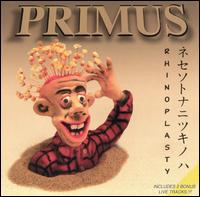
oct13SOUNDTRACK: PRIMUS-Rhinoplasty (1998).

Rhinoplasty_primusThis is a kind of follow-up EP to Miscellaneous Debris–a covers and live song compilation EP that runs 48 minutes.

While there are some of the same artists covered, there are also a few surprises.

XTC-“Scissor Man.”  I didn’t know the original of this song, but I like the cool bass and the chorus’ da da da da nyow”  They tack on about a minute and a half of extra nonsense at the end, but it’s a still a fun cover.  The original is quite similar (Primus should be commended for getting more people into XTC, although it’s a small shame that this song is on the same album a “Making Plans for Nigel”).  See the original:

Peter Gabriel-“The Family and the Fishing Net” is next and fortunately this song is off a different Peter Gabriel album (although it is also called Peter Gabriel)  The original of this song is 7 minutes long (Primus lops off 30 seconds).  The Primus version is quite faithful (which shows just how odd the PG version is).  You can compare here:

The first surprise (sort of) is their cover of Stanley Clarke’s “Silly Putty.” It’s obvious that Claypool is a huge fan of Stanley Clarke, it’s just an unusual sound to hear from Primus.  There’s some turntable scratching by Disk from the Invisibl Skratch Piklz.  The song is quite faithful to the original spirit (although the original had horns).

The next surprise is “Amos Moses” as done by Jerry Reed, a honky-stomping song if ever there was.  And their version is honky-stompin and pretty much right on to the original–a huge surprise to me.

The Police-“Behind My Camel” is an unusual choice –a Police song with no words?  It’s one of their weirder songs too, and Primus does it perfectly. (If not a bit heavier with more popping bass).

“Too Many Puppies” is the first song the Les ever wrote.  I believe that this is how it was originally written, although it is listed as a remix.  It sounds quite different–watery bass instead of popping bass and no I don’t like it as much.

Metallica-“The Thing That Should Not Be” is quite faithful to the original, even down to Les’ growly singing.  He says in the Primus book that he wished he had sung it more like himself and I kind of do too–I’d have liked to hear a bit more “Primus” in the version as well.  But it’s fun to hear them do other people’s songs reverentially.

There are two live bonus tracks.

“Tommy the Cat” is a fun wild live version–it has changed somewhat over the years–a little faster and Les’ singing is rather different.  This version is 9 minutes long.  The first part is the song proper (I love that Ler plays the same wild guitar sounds perfectly and Brain is perfect with the drums).  But this song also features a bass solo at around 3:31 (which is primarily Claypool playing the song “The Awakening” from his Holy Mackerel album (it’s a cover from the Reddings) and a drum solo at 5:30 (which is okay, nothing special).  By 7:30 the song more or less resumes till the end.

It blends right into a live version of “Bob’s Party Time Lounge” (from The Brown Album).  It’s one of my favorite recent songs from them  and the live version is quite good.

As with Debris, this is a really enjoyable stopgap–one that shows how normal the band can sound, but which also lets you see just what formed Primus.

[READ: January 12, 2015] “Amazing Proposal Stories”

In this one page story, Simon Rich gives us three “amazing” proposal stories.

The first one comes from Alice.

On Valentine’s Day her boyfriend did something really special, which involves a ship, the US Embassy and, uh, hostages.

The second one comes from Kayla. (more…)

Read Full Post »

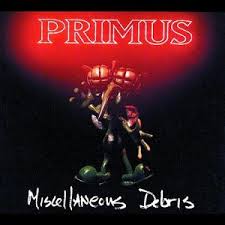
824SOUNDTRACK: PRIMUS-Miscellaneous Debris (1992).

debrsiAfter the success of Sailing the Seas of Cheese, Primus created this five song EP of covers.  Les had just gotten a new Carl Thompson “rainbow bass” and he used the EP as a way to try it out.

This EP is, interestingly, their most listener friendly release thus far.  In part because they are playing more conventional songs (even if in an unconventional way).  Although they are not the most obvious covers:

Peter Gabriel-“Intruder.”  This is an earlier Peter Gabriel song (when he was still kind of weird).  The Primus version is suitably spooky and weird, but it is a great version.  It sounds a lot like the original, which is creepier than you might expect from Gabriel–but he was a weirdo before he became an adult contempo sweetheart.

XTC-“Making Plans for Nigel”  One of XTC’s more popular songs, this version is faster than the original, but right on and quite fun.

The Residents-“Sinister Exaggerator”  The Residents are quite weird (and may be the one band that is closest in spirit to Primus). This version is indeed pretty close to the original (although you can hear the lyrics better on the original!).

The Meters-“Tippi Toes”  The Meters area n old school funk band.  This is a song with no lyrics.  The Primus version sounds more full than the original (which incorporates Tiptoe Thru the Tulips”)  but it is quite faithful otherwise.

Pink Floyd-“Have a Cigar”  This is clearly the most popular original on the disc.  But Primus do a great job with it (Les is under the impression that Roger Waters didn’t like their version–but what do you expect?). They have a lot of fun with this song–keeping it close to the original (except for Ler’s guitar, mostly) and the twisted lyrics that say “who the hell’s this guy they call Bob Cock?”

So while this is a great introduction to Primus, it is not entirely representative of their sound. And yet, it sort of is as well.  Hence the title.

[READ: January 6, 2015] “One Saturday Morning”

Tessa Hadley continues to impress me with her beautiful stories in which really nothing happens.  It opens with a girl practicing her piano and ends with her and her brother looking at a bug.  And in between something almost happens, but not quite.

Set in the 1960s, Carrie is a ten-year old girl practicing her piano.  Her brother is outside playing cricket and her parents are out shopping for their party that evening.  Carrie hates practicing the piano–the music just doesn’t speak o her.  She also fears that her piano tutor is mad at her because of a childish letter she wrote and may have left at her tutor’s house.

While she is thinking about this, the doorbell rings.  She doesn’t recognize the man right away but she quickly realizes that it his her parents’ old friend Dom.  Dom is a big man, somewhat intimidating but affable. Carrie is intimidated by him though, especially since her parents aren’t around.  He hasn’t been around since he moved a way a few years ago.  But he says he is in town and wanted to visit friends.  She assures him that her parents will be home shortly and invites him in.  But rather than entertain him, she runs upstairs to hide. (more…)

Read Full Post »

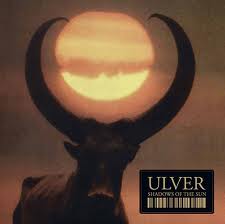
SOUNDTRACK: ULVER-Shadows of the Sun (2007).

I really wanted to like this album because of the cover–which is striking.  I know, I know, never judge…  My initial reaction to the disc was kind of poor.  I’ve followed Ulver’s progress through their many incarnations, and it’s not entirely surprising that they should make an entirely ambient record.  It just strikes me as an odd release–mellow and almost lullaby-ish but also a little creepy (the voice mostly).

But at the same time, musically it’s quite pretty.  And while it wasn’t a very good listen for a car trip to work, it was actually really perfect for listening to at work–where headphones allowed for hearing so many nuances.

There’s not much point in a song by song listing, as the songs are similar–washes of music with slightly distorted, deep vocals.   But there are some interesting musical choices that make each song unique, and consequently better than a lot of ambient in which all of the songs use the same musical palette.  “All the Love” employs piano and come cool electronic sounds near the end.

“Let the Children Go” is a much darker song (with drums!).  “Solitude” is the most melodic song of the bunch.  It reminds me of Black Sabbath’s “War Pigs” (which should tell you something about the overall tone of the album).  It has a noticeable vocal line (and really audible lyrics, which are quite melancholy and more emotional that I would have expected: “You just left when I begged you to stay.  I’ve not stopped crying since you went away.”

Another observation.  At times when he actually sings, the vocals sound a bit like XTC–“Shadows of the Sun” in particular.  And since that song has pianos it’s not inconceivable that this could sound like XTC (although not really).

With the right atmosphere, this record proves to be a very impressive listen.  Kristoffer Rygg’s vocals really suit the mood and, all in all, it does reflect the album cover rather more than I initially thought.

[READ: March 18, 2012] The Marriage Plot

I had put this book on hold a few months ago.  And I was ninety-something on the list, so I didn’t think too much about it.  I looked the other day and I was 10.  Yipes.  How was I going to read this 400 page book  in three weeks while also reading Gravity’s Rainbow??

Well, amazingly, The Marriage Plot worked as a nice foil to GR. It is a supremely easy read.  It is completely uncomplicated.  And, it actually has some unexpected parallels to GR–specifically, two of the characters travel to Europe, one on a pilgrimage the other on a honeymoon, and they travel to Paris, Geneva, Spain, Zürich, and even Nice.  There is literally no connection between these two books (although Mitchell does bring Pynchon’s V along with him), but it was fun to see new people go to the cities that Slothrop has been traveling to for very different reasons.

I powered through the book, reading large chunks and staying up way too late both because I liked the book and because I wanted to get it back on time (beware the library police!).  And there really is something about finishing a book quickly, it really keeps the story and characters fresh and makes the experience more enjoyable.

But on to the book.

This book centers around three people in a kind of lover’s triangle.  The woman at the center is Madeleine (and yes there are wonderful tie-ins to Madeline the children’s book series). The two men are Leonard and Mitchell.  All three of them are graduating from Brown in the mid 80s.

I identified with the book immediately because Madeleine is an English major (as was I).  She studies the Victorian era [and I had just read the piece by Franzen about Edith Wharton] and is on track to write her thesis on this era.  The title of the book comes from this section–novels written at that time were especially focused on marriage–if a woman did not marry, she was more or less doomed, and so the plots centered around her quest to find a suitable mate.  As Franzen noted in the above article, Wharton and some of her predecessors sounded the death knell for the “marriage plot” and Madeleine was going to do her thesis on that.

As the pieces of the triangle fall into place we learn (skeletal at first with much detail added later) that Madeleine and Mitchell were very good friends initially.  So good, in fact, that she invited him back to her parents house for a vacation.  He was head over heels in love with; however, out of fear (mostly) he never acted on the opportunities she gave him, and she thought that he wasn’t interested in anything more than friendship.  Basically, he blew it (although he doesn’t learn this until much later–I can relate to this all too well). As the story opens, she has just woken up, hungover, smelling of a party, with a mysterious stain on her dress.  She knows she did something with someone last night but she’s not sure what.  Not atypical college behavior.  But the kicker is that it is graduation morning and her parents are ringing the doorbell of her dorm right now. (more…)

Read Full Post »

SOUNDTRACK: THE DUCKWORTH-LEWIS METHOD-The Duckworth Lewis Method (2009).

This is a CD released by the combined forces of Neil Hannon of The Divine Comedy and Thomas Walsh of Pugwash.  And if that weren’t enough of a sales pitch, the title of the band is a method of calculating cricket scores!  And even more…in concordance with that, this CD is largely about cricket.  Huzzah!  Buncha sellouts.

I don’t know a thing about cricket, but I know about great orchestral pop, and this disc has it in spades.  Some of the more obvious cricket songs are even understandable to non cricketers (the themes of “Jiggery Pokery” are familiar to anyone who has failed in a sport–and musically it sounds like a silent film soundtrack).

“The Age of Revolution” begins with an olde-fashioned soundtrack as well (jazz swing, including tap dancing) but quickly jumps into a dancey discoey verse (the two soundtracks blend surprisingly well in the chorus).  And the revolution?  Well, it has something to do with cricket.  Next, “Gentlemen and Players” is a wonderfully Divine Comedy-esque track complete with harpsichords.

“The Sweet Spot” is another discoey dancey track with some funky bass work (and innuendo whispered vocals).  And “Rain Stops Play” is a fun musical interlude.

“Mason on the Boundary” is the first track that seems distinctly Pugwash-y.  Hannon and Walsh have similar singing styles, and I find it hard to know who is who sometimes.  But this track is clearly Walsh’s and it’s very nice indeed.  Similarly, “Flatten the Hay” has that distinct Pugwash XTC/Beach Boys vibe and it’s quite good.

“The Nighwatchman” is also a very DC type song (it even sounds a bit like “The Frog Princess” but pulls away before being a repeat of that great single by introducing some very 70s sounding strings).  The rest of the disc follows in this same wonderfully orchestrated pop feel.  This a great record that, as far as obscure bands that get no statewide attention go, is top notch.

Oh, an it’s even more fun with headphones!

[READ: October 9, 2010] Skippy Dies

Wow, there’s a lot going on in this book.  It’s exhausting just trying to think of all the topics covered: boarding school life, failed romance (two big ones), life as a teacher, the appeal of pop singer Bethani, the Catholic priest sex scandal, drugs of all kinds, sneaking into a girls’ school, World War I, institutional cover ups, M-theory–which is pretty much the entire universe, and donuts.

But let’s start at the beginning.  Yes.  Skippy dies.  In the first couple of pages.  And what’s fascinating about this is that we don’t care.  I mean, in the scene where he dies, he’s not even the major character.  But then Skippy turns out to be more or less the glue of the book once the story proper begins.

Skippy resides at Seabrook school in Dublin (the best, most prestigious Christian academy in the country–sorry Gonzaga).   His roommate is Ruprecht (perhaps the strangest major character name I’ve read in a long time).  Ruprecht is a large boy who is incredibly smart (he will single-handedly raise the school’s average on the year’s final exams).  He is a computer geek who is obsessed with aliens and SETI.  And he hopes to be able to communicate with the other world by using techniques suggested in M-Theory.  The book does an admirable job explaining M-theory and string theory.  I’m not going to take up space here, but there’s a fine description at Wikipedia (or, if you don’t like Wikipedia, here’s an academic explanation that is written for the lay person).

Anyhow, Skippy and Ruprecht are two of a few dozen boys who reside full time at the school.  (Most of the other kids are day students).  And they have a cadre of half a dozen friends that they hang out with who make jokes at each other’s expense.  It’s a very realistically written entourage.  Mario is Italian and claims to have had sex with many many women (thanks to his lucky condom which he has had for three years).  Dennis is the ballbreaker.  He’s the abusive one (but by most standards, he’s not a bad guy).  And a few other hangers on.

This story of dorm life is a good one.  The boys are funny, their stories believable, even if they are all eccentric in their own way.  And then, one day, Skippy sees a girl playing frisbee at the girls’ school across the way (Ruprecht has a telescope which he uses for the stars, while eveyrone else uses it for the girls’ school).  And Skippy winds up becoming rather obsessed with the unknown “frisbee girl.”

This girls’ school plays a part in the story in another way too.  Carl and Barry are the Seabrook’s thugs.  When Barry hits upon the idea of selling ADD meds to the locals (as diet pills), it’s the girls’ school that he mostly preys on.  For yes, this story is also about drugs. (more…)

Read Full Post »

SOUNDTRACKPUGWASH-Giddy (2009).

I found this CD through a connection to The Divine Comedy (Neil Hannon plays on a few of their tracks).  Pugwash (what a crazy name–it comes from a series of children’s books (and a TV show) called Captain Pugwash) is an Irish band with four CDs (and this collection).  And man, it’s hard to find their stuff over here (although their website has a wonderful collection of videos and such).

Giddy is a collection of songs from all of their albums.  Their first album is represented by two songs here “The Finer Things in Life” and “Two Wrongs.”  These two songs sound, with no disrespect intended, like great Oasis ballads.  Say what you will about Oasis’ originality, they wrote some great songs, and these two sound like the best Oasis songs you’ve never heard.

Their other three albums sound far less like Oasis and far more like XTC.  In fact, the XTC comparisons are well-founded as Andy Partridge eventually co-wrote a song with them and eventually signed them to Partridge’s Ape House records (which is how this collection was released in the U.S.).

The XTC comparison is unavoidable on a few tracks.  The opening of “Song for You” (the “when we die” part) sounds like an uncanny XTC outtake, but when the chorus kicks in it sounds nothing like them and moves into more of the gorgeous orchestral pop that overflows on this disc.  And the Partridge co-written “My Genius” is also a wonderful near-XTC outtake, clever, witty, and perfect.

And the song “It’s Nice to Be Nice” is just a wonderful cheery pop ditty.  It sounds retro and charming; if the simple lyrics (and gorgeous harmonies) don’t bring a smile to your face you must be made of stone.

Although the album is primarily orchestral pop, there’s a wonderful array of styles on here.  “Anyone Who Asks” has chipper keyboard bits in the verses, but the chorus is a wonderful mix of dark minor chords.  And then, the absolutely bizarrely wonderful “Monorail” sounds like a fantastic Beck song (with lyrics that are as decidedly unusual as anything Beck himself might write).   It even opens and closes with wonderful circa 1920s banjo.

Despite the obvious nod to XTC, Pugwash does something that XTC doesn’t.  XTC is a very mannered band.  They always seemed very rigid and formal (and were wonderful because of it).  Pugwash uses XTC as a springboard, but Thomas Walsh seems like a guy who likes to let loose with unchecked silliness, so he can move past the strictures of XTC (and sound like Beck!)

And the packaging is just wonderful. The carnivalesque appearance of the cardboard case is enhanced by not just a cardboard sleeve but also by a second cardboard half-sleeve that you slide on top.  Depending on which way you slide it on, it creates a different set of pictures.  It’s a little thing but it’s a nice nod to the fun of non-digital products.

This is certainly one of my favorite albums this year (even if it came out last year).

[READ: September 21, 2010] One False Note

I enjoyed the first book of the series so much, I couldn’t wait to get to Book Two.  In particular, I was interested to see if Gordon Korman’s writing style would differ much from Rick Riordan’s.  As I said last time, I hadn’t read Riordan before, (although I have read a few by Korman) and while I wasn’t expecting them to write in the same manner, I wondered if they would try to keep the style the same (or if it would be really obvious that they were different writers).

I have to say that I didn’t notice the difference between the two.  Korman’s seems a bit faster paced (but he had no exposition to deal with), and it’s possible that he made things seems a bit more scary/dangerous than Riordan, but not much.

The question I have with the series is three-part: Is the basic plot given to each new writer–like the writer is told what the 39 Clues are–or, possibility two, are they told very specifically, the clue is this and it is here and the writer has to figure out how to get the kids there, or possibility number three, they are free to do whatever they want.

Either way, this is an exciting series, and I’m looking forward to Book Three.

So in Book Two, Amy and Dan continue their adventure.  This time, they go to Saltzburg and Venice.  The Saltzburg trip leads them to the Mozart house.  There’s a wonderful sorta subplot about Mozart’s sister, Nannerl (real name Maria Anna), who was also a great pianist and harpsichordist, oftentimes getting top billing when they played together.  I’s never heard of her, and didn’t know of her talent, and that’s the point of the subplot–how Nannerl had to put her musical skills to the side because she was a woman.   This works nicely with the pairing of Dan and Amy and how they are both good at different things and are both very useful on the quest. (more…)

Read Full Post »

« Newer Posts