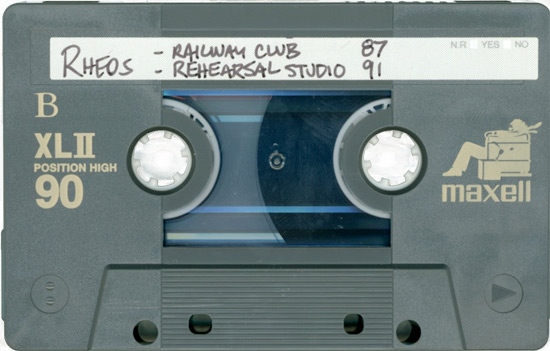
SOUNDTRACK: RHEOSTATICS-Railway Club, Vancouver, BC (November 1987).
It’s pretty impressive that this show (ostensibly from the same month as the previous show) has such a different setlist. Between the two shows they play 22 songs and only four are repeated. And this time five of the songs come from their debut album, Greatest Hits.
This tape begins with a recording of “Indian Arrow” by the 13 Engines. It sounds very different from the other songs on the tape–the audience is very loud and you can hear a woman say “I wanna sing this one” (!). I know this song from a Martin Tielli solo tour (and indeed, he sounds pretty much solo here–although there is a piano, too).
The rest of the tape all has the same audio quality but sounds different from the first song. “Crescent Moon” begins mid-song (as if it was recorded over by “Indian Arrow”). “Sad Sad World” is more upbeat than the title suggests with a “vocal solo” introduced with Dave and Tim chanting M-R-T-I-N in time with the music. An upbeat “Ditch Pigs” leads to some silly banter during the guitar solo. “Churches and Schools” sounds a lot like Talking Heads. “Bridge Came Tumbling Down” is a Stompin’ Tom Connors song–they really had been playing him since forever. Then they play a good version of “Higher and Higher” (from Greatest Hits).
It’s their last night in Vancouver, apparently which leads to a lengthy talk about he next song–a funky version of “Good on the Uptake” with lots of screaming at the end (from Tim).
The band plays the full version of “The Ballad of Wendell Clark” (with a some jokes about “Joel” whoever that is). It’s rollicking and stomping and Martin starts playing “O Canada” as part of the solo. Bidini stops the song and asks him to play it again, so Martin plays it on a good echoed effect (and Dave Clark shouts “alright Joel!”) There’s some inappropriate jokes before Martin launches into a delicate version of The Beatles’ “Across the Universe-“-not the best version I’ve heard but still nice.
The final song is a romping stompin “PROD”–the only song The Rheostatics play in G#. It has a fun shambolic end and it ends the set with them saying they’ll be back to play some Menudo tunes after a short break (which we never do hear).
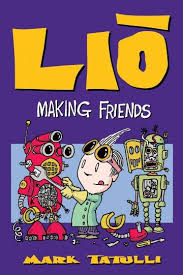
[READ: January 15, 2016] Making Friends
It’s unsettling to me that the Liō books come in different shapes. This one is even hardcover! The contents of these stories are not unsettling to me though, even if they are to some readers (looking online, you can find gripes).
Liō continues to be a strange kid who loves zombies and squids and spiders and playing pranks. This is his latest book (and I just confirmed to see that he is still publishing daily, so a new book must be coming soon, right?).
Tatulli still has some great gags. And this format book has some of the strips in color. (more…)
SOUNDTRACK: THE MUSIC TAPES-Tiny Desk Concert #182 (December 20, 2011).
Julian Koster released an album in 2008 called The Singing Saw at Christmastime. It was a complete CD of Christmas songs played on the saw. That should tell you that Koster is an unusual fellow. But that doesn’t prepare you for what he unleashes during his Tiny Desk Concert with The Music Tapes.
Koster has a very high-pitched voice (I have a recording of him doing “I’ve Got My Love to Keep me Warm,” which is almost unbearable. His singing is really close to the fine line of unique and bad (and I imagine for many it crosses the line). He’s also got a fascinating way of looking at things and of storytelling. So this Tiny Desk show winds up being quite long (20 minutes) with quite a lot of different things going on.
First he tells a lengthy story about his great grandpa. And how his great grandpa told him that baby trees can walk. But they are tethered to the ground by an umbilical cord. And when we cut them down, we sever the cord. And a Christmas tree is adorned and worshiped for two weeks and then set free to roam the earth. It is a warm and strange and delightful.
Then he and a second member of the group play “The First Noel” on two saws. It’s weird ad wonderful. At the end of the song he has his saw bow, and Bob says he didn’t know a saw could bow. Julian says they do and in fact that singing saws sing by themselves but we encourage them by petting them and placing them in our laps.
I don’t enjoy everything Koster does, so the second song “Freeing Song For Reindeer,” a banjo based piece about a tired old reindeer transporting Santa is slow and kind of sad and not my thing.
But then he tells a story of growing up with all kinds of culture and Holiday traditions which leads into a version of Gavin Bryars’ “Jesus Blood.” I enjoy the original and didn’t know what to expect here. They begin with a tape loop of an old man singing the song (possibly the one Bryars used, but I don’t know). And then Koster starts playing the banjo with a bow. And then a second guy does the same. Then the percussionist stars playing the toy piano and the noises build. He switches from piano to trumpet and plays along. Meanwhile the second banjo player switches back to the saw for the end. It’s really quite a lovely performance.
“Takeshi And Elijah” is another slow and keening banjo based song. It’s pretty long, I don’t really like it, but by the end, as it builds with trumpet and toy piano, he ends the song sith a puppet Santa doing a tap dance as percussion. It’s a great ending to an okay song.
The final song is “Zat You, Santa Claus?” It’s played on bowed banjo and sousaphone. It’s a fun and crazy rendition. It’s one of the weirdest Tiny Desk shows and certainly the weirdest Christmas set.
[READ: December 5, 2015] The Bassoon King
I really liked Rain Wilson in The Office, but I haven’t seen him in much else (I forgot he was in Six Feet Under and Galaxy Quest) . I wanted to like Backstrom, but it got cancelled before we even watched an episode.
So why did I check out this memoir of an actor I like a little bit? Well, primarily for the title. The Bassoon King had an absurd ring that I really gravitated towards. When I saw there was an introduction by Dwight Kurt Schrute, I knew this would be a good book.
The introduction (by Dwight) is very funny. I love Dwight and I love thinking to myself “FALSE!” whenever I disagree with someone. Dwight wondered why anyone would read a biography of a young semi-famous actor. “Fact. NO. ONE. CARES.” But then says he doesn’t care either because he is making a lot of dollars per word for this thing.
Rainn begins his memoir by making fun of his big head (especially when he was a baby). It’s pretty funny. And then he describes his hippie family and his weird name. His mom changed her named from Patricia to Shay in 1965. She wanted to name Rainn “Thucydides.” But his dad always liked Rainer Maria Rilke. Now, they lived pretty close to Mt Rainier, so they went for Rainn (“Tack an extra letter on there for no apparent reason”). (more…)
SOUNDTRACK: TOM TOM CLUB-Tiny Desk Concert #82 (October 6, 2010).
Tom Tom Club were a side project of the rhythm section of the Talking Heads. They had a hit with their song “Genius of Love” (you’d know the melody instantly). I’ll be honest–I thought they only had one album out, but I see they had quite a few out and had recently re-formed and put out new records.
This set contains three songs. “Wordy Rappington” which was on their debut, but which I’d never heard of. I am shocked to see that it was a double A side with “Genius of Love.” The song is a kind of amusing rap with a chorus of the children’s song “A Ram Sam Sam.” It is very kid friendly.
I will also be honest that I didn’t like The Tom Tom Club when they came out. So even though I know the melody of “Genius of Love” I don’t know the song very well. It’s kind of amusing though in that it name checks all kinds of musicians. At one point they repeat “James Brown” over and over and then climax with “hit me!”
The music is surprisingly spare: an acoustic guitar or two, some bongos and an accordion (which plays the “Genius of Love” melody).
“Only the Strong Survive” is a cover of song by zydeco band The Franks. Lead vocals and washboard are supplied by Mystic Bowie.
The band is having a ton of fun. Considering Talking Heads were always kind of serious it’s nice to see Chris and Tina being silly..
[READ: September 29, 2015] The Complete Peanuts 1959-1960
This book marks more or less the ten-year anniversary of the first Peanuts strip. Even though Patty (not Peppermint Patty) is on the cover, she gets very little time in the book.
The big news in this book is the arrival of Charlie’s little sister Sally! In May of 1959 Charlie’s mom goes to the hospital for a few days. And then Charlie is a proud big brother. For a time, Snoopy is jealous and acts like a “fuzzy baby.” However much Charlie talks about Sally, we don’t actually see her until August! On a random Sunday Charlie is seen pushing her in her stroller (and missing out on baseball because of it). There’s no really babyness for Sally. She has a bottle, but while we saw a lot of baby time for Linus, there’s hardly any for Sally. In fact, in October Snoopy gets her to dance. And much later she gives Schroeder a hard time when he won’t play a lullaby for her.
She doesn’t really come into the picture all that much. But by August of 1960, Sally thinks (still no speaking) that Linus is the cutest thing and has hearts floating around her when she sees him. Charlie even has to wonder what’s going on here. But Linus says, “I’m almost five years older than she.” (more…)
SOUNDTRACK: MARTIN TIELLI-Jane Bond, Waterloo, Ontario (September 29 2001).
The second Martin Tielli solo show on Rheostaticslive comes two years after the first one. It’s a new band and Martin’s debut solo album We Didn’t Even Suspect He Was the Poppy Salesman is due out soon (or just came out, it’s hard to be sure). Although interestingly, he plays some songs that will wind up on his next solo album (which is years away). The show is at Jane Bond in Waterloo, and unlike the previous show, this one has massive audio problems. There are 4 songs that are nearly inaudible and the whole set is recorded very low. Which is a bummer because the set is very good.
As seems to happen a lot to Martin, he is having all kinds of technical troubles and he gets shocked a number of times during the set (I don’ think I’ve ever heard of this happening to people before, but it seems to happen to him a lot.) He also asks the crowd quite often if they can hear okay.
The show opens with the backing music of Talking Heads (which is quite loud). And then Martin and company open the show with the slow Scott Walker song “Farmer in the City.” Then they play a Nick Buzz song, “Love Steams” and Martin gets shocked so bad that he takes a break. He re-starts the song and it sounds really good.
Then inexplicably, Martin’s voice drops out and the bass gets really loud. And the next four songs are really hard to enjoy. You can also hear the crowd really loud. (Did Martin almost fall or something? there’s a big gasp from the audience at one point. You can also hear someone loudly ask “You want a beer?”).
The audio slowly starts to improve from there. By “She Said ‘We’re on Our Way Down'” it’s quiet but it’s very good otherwise.
Then Chris Gardiner comes out to help on “Waterstriders,” which is bit louder. By the time “My Sweet Relief” comes in, the sound has gotten better (probably because it is a full rocking song) with a very country/twangy feel). He tells a little story about the history of “That’s How They Do It in Warsaw” which is for Kasia (she recites the Polish on the album). He tells a funny story about how she went to Warsaw and developed feelings for her cousin).
There’s a lot of funny banter in this set. Martin talks about a movie he was watching in a bar. It was presumably on Show Case, and he described a woman being tied up and a man masturbating and then someone collects something in a syringe (presumably semen) and injects it into a vagina. What could it possibly have been? It sounds like someone might have given him the answer, but we can’t hear it–so we’ll never know! One of the band members shouts out that it was “Who’s the Boss.”
They play a great version of “Digital Beach” and “Shaved Head.” “How Can you Sleep” has a great solo.
Also at the end of “Sgt Kraulis” (which is from the next album) they say it is last call (for everyone who is not on the stage). There’s a funny comment where someone says, Watch how this law gets broken. And they all order rye and cokes. “Sgt Kraulis” has a funky opening (they play some of Abba’s “Mama Mia”).
The set ends with a nice version of “Take Me in Your Hand.” And then a surprise (to me) of “Blue Hysteria.” Then he plays the second part of “Wet Brain/Your War” (just the “Your War” part).
And he ends with a great version of “Record Body Count” and “a stolen song from borrowed tune,” the opener of the next album: “Beauty On.”
There’s so much great music here, it’s a bummer the quality isn’t better.
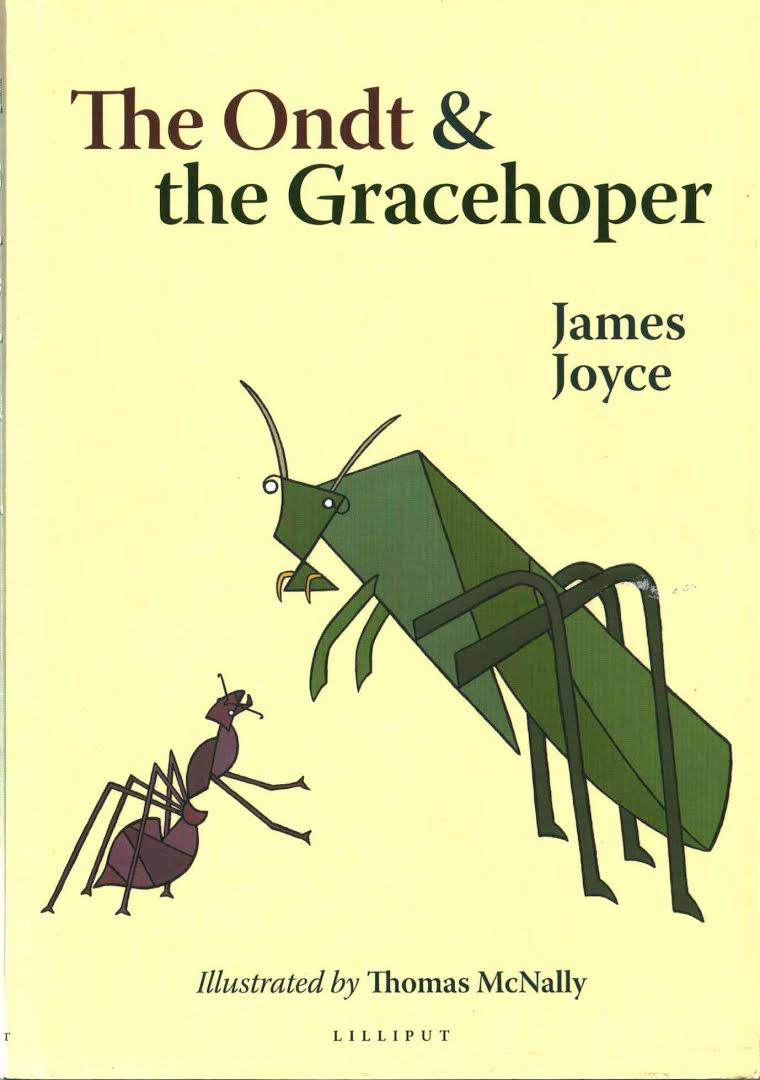
[READ: June 13, 2015] The Ondt & The Gracehoper
This fascinating book is an excerpt from Finnegans Wake (Book III Chapter I). Thomas McNally has taken one of the fables in Joyce’s Wake and has illustrated it. The book includes a few essays about the Wake and about expressionism and why McNally illustrated the book the way he did.
I have never read Finnegans Wake. And I am fairly certain I never will. I feel like this is a minor failing on my part, and yet it’s not pushing me to read this largely incomprehensible book. So I was excited to see this weird little excerpt of the fabled difficult book (with pictures!)
In the introduction, McNally explains that despite everything we’ve heard about the Wake, it was, in fact, meant to be read and it is indeed, quite funny. Joyce is playing around with language in incredible ways–throwing in multiple meanings in different languages in all kinds of words. He says that for a first read, one should just read it–preferably aloud–and not worry about the various meanings that you are undoubtedly missing. (more…)
SOUNDTRACK: RHEOSTATICS–The Media Club, Vancouver, BC, (October 21, 2004).
Every year, the Rheostatics would perform what they called Green Sprouts Week in Toronto. In 2004 they did a West Coast version. Five nights in a row at The Media Club (with each show being crazier than the last). There aren’t always recording available for these shows, but on this leg there are recordings from the third, fourth and fifth nights.
This recording is about 90 minutes and I assume is edited (most of their GSMW shows are quite long and there’s no banter). There’s also crazy static on a certain instrument, which mars the quality somewhat.
The band has added keyboards, although I’m not sure who is playing them. Morgan from The Buttless Chaps guests on a nice rendition of “Claire.” They play a great version of “Jesus Was Once a teenager Too” with a folky breakdown in the middle. “Take Me in Your Hand” is slow but really good.
There’s goofing on “Song of Flight” with them ending the song quickly and booing and yelling “stinky” I wonder what happened). “Marginalized” is blistering and “Record Body Count” is a little goofy. Perhaps the highlight of the night is “Horses” which is an amazing rendition and ends with a few lines and acoustic guitars from “When Winter Comes”
The encore starts with “Pornography” a song later recorded by Bidiniband. Then there’s some great harmonies on “Dope Fiends and Boozehounds.”
They do a rocking version of Talking Heads’ “Life During Wartime” which is musically spot on, even though no one really knows the words. The last few songs are more covers. A very fast version of Jane Siberry’s “One More Colour,” and then a perfect version of “Takin’ Care of Business” (the guitar and vocals sound right on) which segues into a sloppy/fun “My Generation.”
The Green Sprouts shows often allow the band to mess around a bit which is great for fans.
[READ: July 21, 2015] “The Duniazát”
I generally like Rushdie’s work. This story is told in the style of a 1001 Arabian Nights tale and consequently I didn’t enjoy it that much. Although I was interested to find out some details about those stories. There was originally a Persian book called “One Thousand Stories” which had been translated into Arabic. In the Arabic version there were fewer than a thousand stories but the action was spread over a thousand nights, or, because round numbers are considered ugly, a thousand nights and one night more. Huh.
The stories featured a beautiful storyteller knows as Sheherazade, who told her tales to a murderous husband in order to keep him from executing her.
Anyone, in this story, Rushdie tells a similar type tale.
Set in the year 1195, the great philosopher Ibn Rushd (I enjoyed the play on his own name there) was a physician to the Caliph. But when he started espousing liberal views, he was discredited (sound familiar?). He wound up living in a village where Jews were forced to convert to Islam and could not speak of Judaism. So he felt right at home as an outcast. (more…)
Karl Ove mentions many bands in this book, but the deLillos are the only Norwegian band that he plays. They sing in Norwegian and play sprightly, jangly guitar pop–they would fit in very well with some of the lighter alt bands from the late 80s and early 90s.
I have no idea what they’re singing about (well, the title translates to “love” so I guess I know what they are singing about.
The singer has a high, delicate voice and there’s some interesting harmonies. I really like the way the song transitions from verse to chorus with the picked guitar notes–very catchy.
It comes from their second album, Før var det morsomt med sne (Beforeit was funin the snow), which along with their first was quite popular and was reissued with a bonus disc in the 90s. Having said that I see that Amazon has one copy of the disc and no album cover listed. Worse yet, I can’t find many other songs online (Spotify lists the album, but I can’t get it to play).
Sorry, deLillos (even searching for you gives us more Don DeLillo than you guys).
[READ: June 24, 2014] My Struggle Book Four
I started including the British edition page numbers because at my work we received both editions of the book, and I received the British one first so I grabbed it and started reading. I noticed the page numbers were quite different (the British book is taller and the print is quite bigger, although this doesn’t explain why the previous books have fewer pages).
I had been interested in the differences between editions from the get go. I had enjoyed the American editions, but I enjoyed reading this British edition more (bigger print?). But when I noticed on one of the pages that the word “realise” was spelled as I typed it, it made me wonder if the American edition changed that to the American spelling. [Actually, I see that Don Bartlett lives in Virginia, so perhaps he translates it into American first]. While I wasn’t about to go into a deep inspection of the topic, when I saw the American edition on a shelf at work, I had to do a little comparison.
And what I found out was that even though Don Bartlett is the (amazing) translator for both editions, someone (perhaps Bartlett himself?) is translating the American into British (or vice versa). I looked at a couple of pages and noticed these changes from British to American:
BRITISH EDITION = AMERICAN EDITION
Pack it in, now = Give it up, now
roll-up = rollie [about hand rolled cigarettes]
looked daggers at = gave her a dirty look
a complete prat = completely useless
is that possible? = really?
to cook and wash up = cooking and doing the dishes
I had got = I’d gotten
had penned = had written
and yes, realised = realized.
Other than select phrases, every word is exactly the same. So somebody goes through the books and changes them to British english idioms and spellings. That’s fascinating.
I also see that this is the first book I had not read an excerpt from first. Not that it would have made any difference as to whether I read the fourth one. I couldn’t wait to get my hands on it.
So book four is set in Håfjord, a town in Northern Norway near Finnsnes (a five hour flight away–okay I had no idea Norway was so big!). Karl Ove is 18 and has decided to become a grade school teacher there for one year. The tax breaks are great if you teach, and he plans to teach and write his masterpieces and then get out. He has no interest in teaching, but the town is small (most grades are 3-7 students), so he figures it can’t be too hard.
As in most of Karl Ove’s books, the stories jump around and flash back and do not stay all in this one time, but it is largely set in this locale.
My first thought was that I have never read a story with as much semen (both nocturnal emission and premature ejaculation) in my life. It is a strange take away from the book, but there it is. Karl Ove is 18 and really wants to have sex for the first time. About 3/4 of the way through the book he reveals that he never masturbated (it just never occurred to him, apparently, and at 18 he’s too old to start–what!?). As such, he seems to have wet dreams every night. And every time he gets near a woman, he has an orgasm too soon. He is horny all the time–it’s a bit disconcerting.
And since I mentioned that, I don’t know if Karl Ove’s life is typical of Norway, but I am shocked by the number of women who take their clothes off around him (he may have never had sex, but he was about to on at least a half-dozen occasions). And he says that all through school (from around age 13 and up) it was common place for the boys to lift up the girls’ shirts and kiss and or fondle their breasts. It is mind-boggling to me. And the 16 year olds all seem to be having sex all the time–this may be skewed from Karl Ove’s perspective, but that’s what I now believe happens in Norway.
But while sex is the main theme of the book–sex, sex sex, there is more to it.
Karl Ove’s parents have split up and his father has started drinking in earnest. The dad has remarried and has just had a baby. Incidentally, I was also shocked to read that Karl Ove’s father, who is an abusive stodgy old man who is cranky and mean and abusive and all the stuff that we read about in the other volumes was only 43 at the time that Karl Ove was 18. So the old man who I pictured as a gray-haired curmudgeon in this book is actually younger than me. Great.
In Håfjord, Karl Ove is teaching kids who range from age 13 to 16. It’s disconcerting to read about him thinking lustful thoughts about his students, until he reminds us that for most of the students, he is only 2 years older than them. I am pleased to say that he behaves himself (except in his mind) with all of the students. There’s even a really interesting flash forward to eleven years later when he runs into two of them again.
He proves to be a pretty decent teacher it seems. The kids mostly like him (the girls all think he is hot) and he is young and tries to make it fun (he himself hated school and everything about it). He even seems to help out an awkward boy (although that is never resolved). We see him teaching, trying to interact with the kids and generally being a pretty good guy.
Until the booze comes out.
For in addition to semen, this book is chock full of alcohol. Before graduating from gymnas (high school), Karl Ove basically stopped caring about anything. He spent most of his time drunk. It is astonishing the amount of drinking he does–it’s practically like an Amish Rumspringa how crazy he goes. But even in this retrospective look, he talks about how much he likes it, how it loosens him up and makes him less nervous.
But really he just spends most of his time drunk, hungover or sick. He even got into the hash scene for a while. He was living with his mom at the time and she was appalled at the way he acted–especially when he threw a party which trashed their house. She even kicked him out for a time.
He seemed to be over the drink in Håfjord, but it turns out that there’s precious little else to do except drink up there, especially when it grows dark for most of the day. So there is much drinking–he only misses class once or twice because of it but he comes very close a lot.
The irony that he is appalled at his father’s drinking, while drinking so much himself, is apparently lost on him.
The other main preoccupation with Karl Ove is music. He talks a lot about his great taste in music (he reminds me of me–a little insufferable). Back when he was in gymnas, he spent a lot of time discussing his favorite bands and favorite songs. He got a job (at 16) writing reviews for a local paper (holy crap, jealous!) and then later gets a job writing a column for another paper. For the previous book I listed a lot of the bands he mentioned, and I wish I had written them down for this one. U2 features prominently (this is 1987, so I’m guessing Joshua Tree), but also Talking Heads, a Scottish post-punk/new wave band The Associates and their album Sulk which he describes as “an utterly insane LP.” he and his brother really like The Church and Simple Minds (before they got so commercial). He also has a whole thread in which he makes connections with albums:
Briano Eno, for example, started in Roxy Music, released solo records, produced U2 and worked with Jon Hassell, David Byrne, David Bowie, and Robert Fripp; Robert Fripp played on Bowie’s Scary Monsters; Bowie produced Lou Reed, who came from Velvet Underground, and Iggy Pop, who came from the Stooges, while David Byrne was in Talking Heads, who on their best record, Remain in Light, used the guitarist Adrian Belew, who in turn played on several of Bowie’s records and was his favorite live guitarist for years. (64).
He also specifically raves about “The Great Curve” from the Talking Heads album, and of course, he raves about the first Led Zeppelin album as well.
Music is a huge part of his life (and he dresses accordingly too). It’s unclear whether the kids think this is awesome or not, but he may be a bit too much for some of the locals. The locals are mostly fishermen (which makes sense), and Karl Ove is a bit intimidated that he is so wimpy compared to them–one of the women even teases him about his tiny arms.
But his main focus is writing. He writes a few shorts stories (to my knowledge he has never published any of them). We see some excerpts and they seem fine–he fancies himself Hemingway. But he also mentions a bunch of Norwegian authors (I love when he does that). Sadly again, not too many of them have been translated into English. [I really hope that some mega fan creates a database of all of the bands and authors he mentions]. He also talks briefly about his first novel which alludes to his time teaching here. I happened to read a small summary of said novel (Out of the World) and feared that it spoiled what was going to happen. But, in fact there does appear to be a difference between his fiction and non-fiction.
The book moves very quickly–from party to party, from failed sexual attempt to the next, even from his staying up all night long trying to write. And most of the time he comes off as kind of a dick–he is also very self-critical, which somehow tempers that dickishness.
As with the other books I cannot figure out exactly why I am so addicted to his writing. I brought the book home on Thursday night and finished it (all 548 pages of it) Monday night. This really completes the picture of himself as he moved from childhood to adulthood and really lays the foundation for whatever is to come next. Early in the book he talks about the books that he loved at that age, books that talk about the move from childhood to adulthood. And thus, this book becomes something of a bildungsroman as well. Although whether or not Karl Ove actually grew up at the end of this book will have to wait until volume 5 (which I have to assume is still another year away as there is no information about it online at all!).
For ease of searching, I include: Hafjord, For var det morsomt med sne.
SOUNDTRACK: RHEOSTATICS-Commodore Ballroom, Vancouver, BC (August 18, 2000).
The band went back to the West Coast again (man, they’re everywhere). They must have played a few shows out there, but this is the only one we’ve got. It’s over two hours and the sound is amazing (thanks so much for soundboard recordings).
Michael Phillip Wojewoda is with them on this leg, playing keyboards. Which allows them to open with “Monkeys Will Come.” This is the only other place I know of them playing it after Canada Day. The recording quality is much better than the Harbourfront show so you can really get a good sense of the song.
Tim Vesely gets two songs in a row with “Remain Calm” and “We Went West” (which they have been extending to nearly 7 minutes).
When they play Satan is the Whistler, Dave says they’re not welcome back in Whistler anymore. The crowd is rowdy and fun, but at one point someone shouts out for a moment of silence for the Russian Sub (I had to look this up, it was the Kursk disaster). Dave says, everyone prays in their own way.
“Horses” continues to throw in the “Still Waiting” section from the Talking Heads during the middle improv. And “Dope Fiends and Boozehounds” has a drum solo and an interesting synth part, along with a very brief coda of “Alomar!”
The set has a weird dancey bit at the end, which seems like maybe the songs are out of order. It’s hard to be sure, but the set is great nevertheless.
One programming note is that the set list states “RDA” but it’s not. It’s actually “Song of the Garden.”
[READ: March 5, 2015] “The Moronic Inferno”
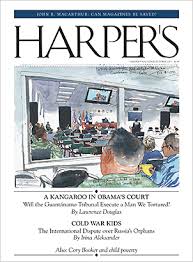
As I had done with the New Yorker, I had also done with Harper’s. Namely, I had put off reading several months worth of issues. So I’m doing a run through of the last eight months or so. The good news is that Harper’s is a monthly, so there’s a lot fewer issues to worry about. Although I do find that I typically write about three or four pieces per issue. The February 2015 issue had two worthy pieces.
This is an excerpt from Revulsion: Thomas Bernhard in San Salvador, translated by Lee Klein. It is described as fiction, although Moya appears to be a character.
I have no sense of what the full book is like, but this expert (which is barely a whole page) is one long paragraph with the character of Vega ranting at Moya. The rant is all about how horrible San Salvador has grown. (more…)
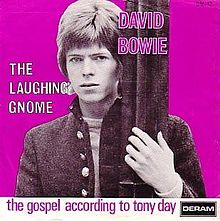
SOUNDTRACK: DAVID BOWIE-“The Laughing Gnome” (1967).
I have always liked David Bowie. Never loved him, but always liked his radio hits (and a bit more). Suffice it to say that I have never heard of “The Laughing Gnome” before reading about it in this book.
What a strange little song. I can’t tell if it came out before or after his debut solo record (he has the same haircut), but I gather it was released as a novelty record.
It’s a delightful little song. Very sixties mod with a healthy nod of dance-hall. The very different thing of course is that in the song, the main singer (Bowie) meets and sings with a sped-up-voiced Cockney “gnome.”
So the song is clearly a novelty song (what else would you call it?). Except that the production is really great and the music is really good too. Despite the gnome, the song isn’t really a “funny” song (well, there are jokes and puns, I guess). It’s certainly weird and certainly silly, but it holds up pretty well to repeated listens (even if the chorus is “ha ha ha hee hee hee I’m a laughing gnome and you can’t catch me”).
Bowie doesn’t really acknowledge the song anymore, although he did joke that he was considering performing it in a new ‘Velvet Underground-influenced’ style. Before that happens, hear the original
[READ: November 22, 2014] 1982
So yes, I know that Ghomeshi is in the midst of a scandal in which he is pretty undeniably a sexually abusive scumbag. I’ll say nothing more about that since things are still under investigation {formal charges were brought today]. But it doesn’t look good for Jian.
This is rather upsetting. For the women involved, obviously, but also for those of us who liked Jian and thought he was one of the good guys. Which I did. I loved Moxy Fruvous. I loved his solo album. I had a brief email exchange with him before he joined the CBC, and his show, Q was one of the best interview shows out there. He always seemed so nice and on the right side of so many issues. Ugh.
But anyhow, this is about the book, not him (although the book is about him as well). I only heard about the book when I was looking for news about his scandal (I had no idea he had written a book). The book is called 1982 because it is all about his life in the year 1982, a formative year in his childhood. (more…)
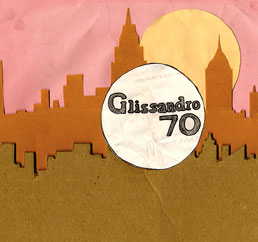
This peculiarly named band comes from the two members of it. Craig Dunsmuir is in a band called Kanada 70 and Sandro Perri has stuck his name on the end of the word “glissando” which is a musical term for gliding from one pitch to another.
Interestingly the music doesn’t glide so much. “Something” opens with a simple, pretty repetitive guitar pattern that keeps getting bigger and bigger. And then bird sounds flow over and around. It’ a very beautiful introduction. When it starts getting faster and more complex, it’s actually quite a musical feat. “Analogue Shantytown” follows with an unusual opening. Someone singing the word “shantytown” into a harmonica. It’s a weird and interesting sound. When the guitar begins it sounds very 80s King Crimson-like with wild staccato guitar Then the chords come in, with a simple repetitive rhythm. And then more and more voices start singing different phrases over the top. Like a rocking fugue.
“Bolan Muppets” has another simple, pretty rhythm and simple but lovely guitar line. More layers of voices (who knows what they are saying) propel this song along. By around 5 minutes (of the 7 minute song) the songs settles down into a simple guitar progression with very nice vocals (in English). “Portugal Rua Rua” opens with some more nonsense words (unless he’s singing in Portuguese). Then a single guitar plays along with the rhythm. Then some vocals come in English and the song fleshes out a bit more. By the end they start chanting lyrics from Model 500’s “No UFOs”) which gets a little crazy but is quite fun.
The final song is 13 minutes long. It opens with a baritone guitar playing a fast riff. The song starts to add layers of music—drums, percussion, guitar squalls. By 4 minutes it kind of settles into a repeated guitar rhythm with chanting in the background. That stays in a kind of holding pattern for a bit until around 8 minutes when they start messing with the sounds. It ends with more chanting in a decidedly Talking Heads feel (and indeed they start using a chant from the Talking Heads at the end).
So this proves to be a wild and raucous record. It has a decidedly dancey sensibility, but is not a dance record.
[READ: April 25, 2014] “Sic Transit”
I really enjoyed this T.C. Boyle story quite a lot. So much in fact that not only have I been thinking about it all day, but I could easily see him fleshing out the story into a novel.
It’s a simple enough story on the surface. In a pleasant suburban town, there’s a house that is overgrown and–out of place. So it’s no surprise to find out that the owner is dead. But it is disturbing to think that he was dead for eight days before anyone noticed and that they only noticed because of the smell.
That’s when the narrator learns that the mysterious neighbor, the one whose house you couldn’t even see from the street because of the overgrowth of bushes was a singer for a band from the late 70s and early 80s called Metalavoxx. (I have to say that I feel this band is not quite right for the time they are depicted as having played–I feel like they are about five years ahead of their time with their name and their look). At any rate, Carey Fortunoff, the singer, is dead. And the narrator feels strangely compelled to learn more about a man he doesn’t actually care about and never heard of.
Mostly this is because the narrator has just turned fifty and is thinking about mortality. What must your life be like to die and not be found for eight days? What kind of strange life did this guy live? So, on a Sunday morning he decides to at least peek in the man’s house. And when he finds a door unlocked, he decides to go in. (more…)
When I heard that three bands who I like very much were playing, it was an obvious decision to get tickets. And thanks to Sarah’s cousin, Kate who lives nearby, we were able to avoid the assholian $9/ticket fee from Ticketmaster. $9 a ticket?? Assholes. Interestingly, we got very good seats (thanks again, Kate), but for one reason or another, they were upgrading lawn seat tickets for an extra $10. I read online that for the price of a lawn seat and $10, they got sixth row. SIXTH ROW! Damn.
We arrived at the show just in time to hear Ed Robertson introducing the opening act (an opening act when there are three bands!). The opening act was a guy named Boothby Graffoe. What? Well, Graffoe is an English comedian and singer/songwriter. Most of his songs are funny. And so were these in the five song set: (more…)
 SOUNDTRACK: RHEOSTATICS-Railway Club, Vancouver, BC (November 1987).
 It’s pretty impressive that this show (ostensibly from the same month as the previous show) has such a different setlist. Between the two shows they play 22 songs and only four are repeated. And this time five of the songs come from their debut album, Greatest Hits.











 I Just Read About That...