Feeds:
Posts
Comments

Archive for the ‘Richard Thompson’ Category

nurserySOUNDTRACK: FRANK FAIRFIELD-Tiny Desk Concert #445 (May 29, 2015).

frankFrank Fairfield and friends Tom Marion (who plays mandolin on the third song) and Zac Sokolow (on guitar) play old-timey music (marches, polkas and mountain tunes).  Fairfield plays banjo and plucked cello (and apparently fiddle, although not here).

The first song “Tres Piedras” is an upbeat instrumental.  The second song “I Ain’t A Goin’ To Weep No More” was written by Harry von Tilser whose brother wrote “Take Me Out to the Ballgame.”

The final song “Campanile De Venecia/Sharpshooters March” has an overwhelming Italian feel (that mandolin, I gather).  I like that Fairfield yells “take it, Tom” so that Marion will play a lengthy mandolin solo on the for the final song.  There’s also a “traditional” Italian melody in the song that I know more from cartoons than elsewhere.

The songs feel like they leaped out of a 78 record (even Fairfield’s voice seems suitably “old” on “Weep” (although it appears that they were up playing late last night so he may not quite be up to par).

This was a fun Tiny Desk by an artist I’d never encounter anywhere else.

[READ: January 21, 2015] Nursery Rhyme Comics

This is a collection of Nursery Rhymes as drawn primarily by First Second artists.

The 50 nursery rhymes includes here are the traditional rhymes which remain unchanged.  So this was an opportunity for these artists to draw interesting visuals to accompany the traditional stories.  Some artists stayed traditional, while others went in a totally new direction.

It was fun to see that while I knew most of the nursery rhymes, there were quite a few that I didn’t know.

I always wanted to get a  collection of nursery rhymes for my kids when they were younger, and I feel like I never got one that would have been as satisfying as this one. (more…)

Read Full Post »

CV1_TNY_03_17_14Liniers.inddSOUNDTRACK: HOZIER-Tiny Desk Concert #360 (May 27, 2014).

hozierI had been cataloging the Tiny Desk Concerts from the beginning, but in recent days they have had so many good bands that I didn’t want to wait until I caught up with them.  So, for the next few posts there will be current Concerts (I have no idea what number they are, but I hope to fix them retroactively).

Hozier is responsible for the insanely catchy song “Take Me to Church.”  WXPN plays this song all the time.  I didn’t like it at first but then when I really listened to it I was hooked.  Of course I had no idea that the guy who was singing this powerful soulful song was a soft-spoken Irishman.  Hozier is Andrew Hozier-Byrne, a 24 year old from County Wicklow.  And while he’s singing this song here he makes it seems so easy to belt out those big notes.

Although it doesn’t quite reach the gravitas of the recorded version in this stripped down live session, he sounds great and the keyboard, cello and drums (and backing vocals) really bring this song to life.

The next two songs Hozier plays by himself.  “To Be Alone” is a very old-sounding blues—the sound of his guitar and the way his plays combined with the way he sings really hearkens back to early blues.  Typically I don’t especially like early blues but I do like this song quite a bit.

The final song is an acoustic ballad.  (So he plays three different guitars in this set).  It has a kind of Richard Thompson guitar feel and is a rather touching ballad.

Hozier has only released two EPs thus far, but with this amount of diversity I am looking forward to lots of other things from him.

[READ: May 29, 2014] “The Relive Box”

This story made me think of what the “Entertainment” in David Foster Wallace’s Infinite Jest might actually be like.  In Infinite Jest, the “Entertainment” is a video so intoxicating, you watch it–ignoring all other needs–until you die.  In this story, the “relive box” is a machine that plays back any memory that you have in full 3D. And people get so absorbed in their past that they forget about the present.

Specifically, the narrator is so intent on reliving that he ignores his daughter and his job.  As the story opens, the narrator’s daughter Katie says she wants to relive.  They just recently got this new relive box–it cost a fortune–and Katie wants to visit with her mother.  Her mother left them and Katie seems to have lost friends and impetus to do much else, so she would like to relive some good times.  But the narrator was planning on reliving for several hours that night, so he can’t have her hogging the machine.  So he sends her to bed, crying heavily, so he can have the machine to himself.

And what’s so important that the narrator has to relive?  After reliving his best sex moments, he goes back in time to the night he met Lisa, his first girlfriend.  She was a goth girl in a club and the narrator had the nerve to buy her a drink and ask her to dance.  Which ultimately let to sex and eventually to a relationship. And he relieves all of the highlights of their time together–something he has done several times this week already.  In fact, he has been doing this so much that he has been late for work twice and when he’s there he’s bleary-eyed and pretty much out of it.  So he says he’ll only do it once more this week.  And just for a few hours. (more…)

Read Full Post »

dec20133SOUNDTRACK: FRANKIE SPARO-Arena Hostile (VPRO Radio Recordings) [CST017] (2001).

sparo2I didn’t love Sparo’s debut album, but a year later while on tour with A Silver Mt. Zion (whom I do love) he went into a studio in Amsterdam to re-record some of those songs.  I’ll let the Constellation site tell you what this EP is and why I like it so very very much,

In January 2001, Frankie Sparo toured Europe with a Silver Mt Zion. Musicians from the latter group worked on new arrangements of songs from Sparo’s debut record My Red Scare, adding strings, organ and electronics to Frankie’s guitar and beatbox compositions. Some of the results were captured in a live studio performance recorded live to 2-track at VPRO radio in Amsterdam, where a feverish flu found Sparo in a ravaged, hallucinatory state – which only added to the dark magic of these recordings. The four songs on this EP are all first takes, beautifully recorded by the good people at VPRO. Along with 3 songs reworked from the debut album, the EP also includes a heartbreaking cover of the Rolling Stones’ “I Am Waiting”, which Sparo performed solo a number of times in concert.

“Diminish Me NYC” is great in this version with an off-kilter electronic arrangement and strings. “The Night That We Stayed In” which I singled out on the debut album has two violins, turning the song into an even cooler number (although the “throw your hands in the air” line seems moderately less comical now).  “Here Comes The Future” has an almost dance beat—a slow dance mind you, but still, a good one and ends with some organ waves.  And the cover of “I am Waiting” must be the slowest cover of a Stones song ever.  I don’t know the original, but I bet it sounds nothing like this.

I really like this EP a lot and it makes me want to like the debut album even more–if I had more patience with it.

[READ: April 15, 2014] 3 book reviews

noveltyThis month Bissell reviewed non-fiction three books.

The first is Novelty: A History of the New by Michael North.  In this book North argues that newness, that novelty, has always been a problem: “one of the very first ideas to trouble the consciousness of humankind.”  This dates all the way back to Aristotle who argued that nothing came from nothing; that everything came from something else.  Even the Renaissance, that period of great exploration and creativity was really just mimicking classics (hence the word renaissance).  The new tends to be looked at askance, so we get terms like “novelty act.”

North says that one thing which is genuinely new is our proclivity to turn everything into information as gigabits or as abstract knowledge.

I’m intrigued by the premise of this book but not enough to want to read it and frankly, Bissell doesn’t make it sound that compelling.

Bissell connects this attitude about newness and novelty to the rock world (and rightly so).  Where we (well, some people) value novelty and criticize anything that is derivative.  Which leads to the second book (another one I don’t want to read but for different reasons).  Beatles vs. Stones by John McMillian.  The Beatles were arguably the most original band ever since no one did what they did before them.  And then, bvssarguably, the Rolling Stones came along and did just what the Beatles did a little bit afterwards.

Some easy examples:

  • The cover of the Rollings Stones’ first album is compositionally similar to the cover of The Beatles’ second album.
  • A few months after the Beatles released their ballad “Yesterday,” the Stones released their ballad “As Tears Go By.”  (The song was recorded earlier but was initially dismissed as not Stones enough).
  • After the Beatles used a sitar in “Norwegian Wood,” the Stones used one (in a different way) in “Paint It Black.”
  • And quotemaster himself, John Lennon, once said, “Everything we do, the Stones do four months later.”  [The Stones did still released some great music after The Beatles broke up, of course, even if now they play nothing they wrote after 1981 on tour anymore].

And this Lennon quote is typical of this book which is a gossipy casual look at the differences between the Beatles and Stones [Beatles when you’re writing, Stones when you’re jogging; Beatles when you’re alone, Stones when you’re with people).  But in addition to comparisons, he includes scenes like when the Beatles attended a Stones show and when Jagger and Richards were at Shea Stadium for The Beatles’ arrival.

There are many similarities between the bands, although the biggest different seems to be that the Stones never really became friends, while The Beatles were friends till the end.

Of course, the Stones has always been cooler than the Beatles, which is a nice segue into Bissell’s third book: The Cool School: Writing from America’s Hip Underground by Glenn O’Brien.

coolschoolO’Brien’s thesis is the seemingly obvious one that “cool” is not a new thing–that early tribes doing war dances had cool people playing syncopated drums in the corner.  But he is not arguing about coolness, he is collecting “a louche amuse bouche [that must have been fun to write]…a primer and inspiration for future thought crime.”  The book includes works by the likes of Henry Miller, Delmore Schwartz, LeRoi Jones and Eric Bogosian.  I like some of these guys, but as soon as I see them assembled together, I know I’m not going to be going anywhere near this book.

Bissell says that there is some cool stuff here: Miles Davis writing about Charlie Parker for example, but most of the cool seems to be trying too hard.  Like the “charmlessly dated” Norman Mailer piece, “The White Negro.”

I appreciate the way Bissell sums up what comes through from the book: “to be cool…is to make the conscious choice, every step of the way through life, to care about the wrong damn thing.”

It is comforting to come away from one of these book reviews without wanting to read anything.


Read Full Post »

april 2013SOUNDTRACK: RICHARD THOMPSON-Electric (2013).

electRichard Thompson is remarkably consistent in his albums.  Especially his most recent ones.  The songs are all solid—both musically and lyrically.

Despite the name Electric, this album is no more or less electric than his other records.  Indeed, while this name may imply a much faster, heavier album, there are a number of ballads (and acoustic guitars) as well.  But if you like Richard for his amazing solos, you won’t be disappointed.

“Stony Ground” and “Sally B” are dark rockers (both mention gutters) with great fast solos.  “Treadmill” is one of RT’s class/money songs which are always spot on, even if he’s singing about sheet metal rather than playing guitar (great riff on this one too).

“Salford Sunday” is a more gentle rocker and “My Enemy” has a wonderful circular-feeling delicate melody and a gorgeous solo.  Both songs have female harmonies from Siobhan Maher Kennedy.  Indeed, Siobhan sings backing vocals on “Where’s Home” (an acoustic guitar ballad complete with violin solo), “Straight And Narrow” (a rocking song with aggressive guitars) and “Saving The Good Stuff For You.” “Good Stuff” Is a beautiful album ender, a sweet and tender ballad which I enjoyed even more live.

Alison Kraus sings backing vocals on “The Snow Goose,” a slow, somber song–the kind of which RT does so well.  “Good Things Happen to Bad People” is so unfailingly catchy, practically an earworm, that if there were any justice, this song would have been huge.  It’s got a great melody, cool lyrics and a really rocking solo.  “Another Small Thing in Her Favour” is a mellow acoustic/country song.  The end of the album goes a little too mellow.  Even though I like the songs individually, as a record it kind of trails off, which is a shame since “Good Stuff” is such a beautiful song.

I enjoyed this album tremendously and hearing him play some of those songs live was a treat.

[READ: October 10, 2013] 3 book reviews

This month Bissell reviewed three novels.

grossmanyouThe first is YOU by Austin Grossman.  Bissell explains that this is a book about a middling video games company circa the 1990s (Grossman was born in 1969 so he knows the territory well).  Bissell really enjoys the philosophical attitude of the book, specifically the narrator’s thoughts on making and playing games, although he fears that some of the characters are rather two-dimensional (and can’t decide if this is a flaw or if it’s intentional since the book is about video games).

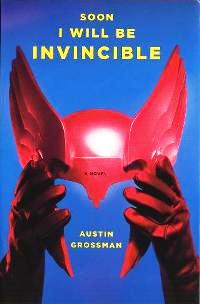
grossman soonBissell is largely very positive about the book although the excerpt he quotes about human duality and videogames was not terribly exciting to me.  However he casually raved about Grossman’s first book Soon I Will Be Invincible (which is a literary work about superheros) which I think I’d be more inclined to read. (more…)

Read Full Post »

harper septSOUNDTRACK: LINDA THOMPSON-“Love’s for Babies and Fools” (2013).

lindaAfter two pop songs, here’s a major bummer from Linda Thompson.  Thompson is a fascinating figure.  She was married to Richard Thompson and made many albums with him.  They split very acrimoniously and them Linda suffered from psychogenic dysphonia, which rendered her incapable of singing.  She stopped singing for 11 years.  Now with botox injections into her throat she can sing again, but cannot perform live. She released an album n 2002 (Richard played guitar on a track) and another album in 2007.  Now’s she’s back and Richard plays on this song as well.

In the grand tradition of folk music, Linda’s lyrics are achingly straightforward and powerful:

My father is a traveler, he has a cuckold’s luck,  my mother is a queen but her hands are tied with blood. I’ve a brother in the graveyard, my sister has the blues.  I care only for myself.  Love’s for babies and fools.

The guitar work is beautiful, the song itself is beautiful and depressing at the same time.

Linda’s voice has always been unique—almost otherworldly and yet ordinary at the same time.  It’s strange and mesmerizing.  Welcome back Linda.

[READ: October 1, 2013] “A Different Kind of Father”

This is an excerpt from a new book by Franzen. The book itself is fascinating.  It is a translation of a “Nestroy and Posterity” a somewhat obscure essay from 1912 by the Austrian satirist Karl Kraus.  Franzen’s book is called The Kraus Project and in addition to the translation, Franzen includes a ton of footnotes that are all personal, like this one.  The book is 300 some pages and it sounds like the majority of it is footnotes.  [For those who like to keep track of Franzen’s connections to David Foster Wallace, of course this collection with footnotes does make one think of DFW.  Interestingly, Franzen talks about a book he was writing in 1981 (long before he met DFW which had a main character whose name was Wallace Wallace Wallace].

This footnote (no context is given) is all about the concept of thriving as a man by surpassing your father.  Be that literal or figurative (or literary).  In the case of Kraus, Franzen says, he is denying false paternity.  It was believed that Kraus was the literary son of Heinrich Heine, but Kraus tries to annihilate Heine by dismissing his successes and impugning his character.  However, Johann Nestroy was also a precursor to Kraus but Nestroy was a somewhat neglected and undervalued one, and so Kraus seeks to place Nestroy as his surrogate father. (more…)

Read Full Post »

[ATTENDED: October 4, 2013] Richard Thompson at the McCarter Theatre

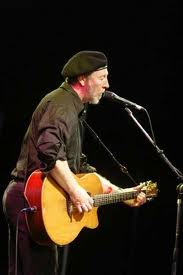
Back again for the (semi) annual Richard Thompson show at the McCarter Theatre.  RT himself said this was his 15th year playing there more or less every year.  And it seems like quite a lot of the concertgoers were multi-year attendees.

This time, Richard Thompson’s son Teddy opened.  About fifteen years ago I saw Teddy open for Richard in Boston.  That set was really enjoyable and I bought Teddy’s debut album.  But I haven’t thought all that much about him since (he has released a number of albums since 2000).

I spent some time at this show thinking about how strange it must be to tour with your father if he is a guitar wizard.  Teddy is not a guitar wizard and doesn’t try to be one.  [There’s an article that I’m going to be posting about in a few days by Jonathan Franzen which  deals with coping with successful fathers, so it was on my mind].  Indeed, in an article from a few years ago, Teddy said that at first he never listened to his parents music because it was folkie and he like rock.  But after a while: “I started to be more aware of how much people loved [my parents],” he said. “When I started doing (music) for a living, I felt, ‘I’m not as good a guitar player as my dad. My voice isn’t as good as my mother’s.'”  His mother is Linda Thompson who does have an amazing voice.  So it must be intimidating to be on with a guy that is so good and so beloved.

But Teddy has a great voice as well (more powerful than Richard’s), he sounds a bit like Neil Finn from Crowded House.  Teddy played about a dozen songs.  I actually didn’t recognize any of them, but I enjoyed them all.   As I said his voice is strong–and is really the selling point, because while the melodies are very good, they are also rather simple.  I don’t know that anything was as catchy as the songs by his dad, but of course plays a very different style of music–a kind of country folk with an occasional hard edge (both Thompsons only played acoustic guitar for this show).

I don’t know what their relationship is like (I always assume that famous (relatively) people’s children hate them.  But it was clear that Richard was proud of his son when he came out.  (more…)

Read Full Post »

dtmaxSOUNDTRACK: TOM WAITS & KEITH RICHARDS-“Shenandoah” (2013).

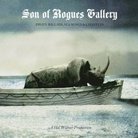
roguesgallery-f8be47f3887d51de57ea842a129f0a722e53ef74-s1This tune comes from the album Son Of Rogues Gallery.  The album is, of all things, a sequel to the album Rogues Gallery.  The full title is Son Of Rogues Gallery: Pirate Ballads, Sea Songs & Chanteys.  The first album was a kind of novelty–I can’t even say novelty hit as I don;t know if it was.  But it must have had some success because here’s a second one (and there’s no Pirates of the Caribbean movie to tie it to).

The album has 36 songs (!) by a delightful collection of artists, including: Shane MacGowan, Nick Cave, Macy Gray, Broken Social Scene, Richard Thompson, Michael Gira and Mary Margaret O’Hara (among many others).  I enjoyed the first one, but I think the line up on this one is even better.

“Shenandoah” is not a song that I particulalry like.  Because it is traditional, I have a few people doing versions of it, but I don’t gravitate twoards it–it’s a little slow and meandering (like the river I guess) for me. And this version is not much different.  What it does have going for it is Waits’ crazed warbling along with even crazier backing viclas from Keith Richards (there;s no guitar on the track).

[READ: January 7, 2012] Every Love Story is a Ghost Story

I had mixed feelings about reading this biography.  I’m a huge fan of David Foster Wallace, but I often find it simply disappointing to read about people you like.  And yet, DFW was such an interesting mind, that it seemed worthwhile to find out more about him. Plus, I’ve read everything by the guy, and a lot of things about him…realistically it’s not like I wasn’t going to read this.  I think I was afraid of being seriously bummed out.  So Sarah got me this for Christmas and I really really enjoyed reading it.

Now I didn’t know a ton about DFW going into this book–I knew basics and I had read a ton of interviews, but he never talked a lot about himself, it was predominantly about his work.  So if I say that Max is correct and did his research, I say it from the point of someone full of ignorance and because it seems comprehensive.  I’m not claiming that he was right just that he was convincing.  And Max is very convincing.  And he really did his research.

It’s also convenient that DFW wrote a lot of letters–Max has a ton of letters to quote from.  And DFW wrote to all kinds of people–friends, fellow authors  girlfriends, colleagues….  Aside from old friends, his two main correspondents were Don DeLillo, whom he thought of as a kind of mentor, and Jonathan Franzen, whom he considered one of his best friends and rivals.  I guess we can also be thankful that these recipients held on to the letters. (more…)

Read Full Post »

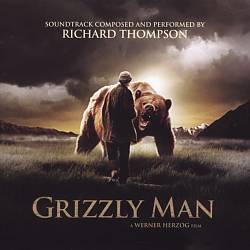
SOUNDTRACK: RICHARD THOMPSON-Grizzly Man Soundtrack (2005).

This is a largely instrumental soundtrack by Richard Thompson.  It features some wonderful guitar work (no surprise there).  There are several slow acoustic numbers (“Tim & the Bears,” “Foxes”–which is in the style of his old traditional folk ballads) there’s also the slow impassioned electric guitar solo (set over a simple beat) of “Main Title.”  “Ghosts in the Maze ” is a dark piece, the exact opposite of “Glencoe” a traditional-sounding song, both of these are under two minutes long.  “Parents” adds a cello, which means a sombre song.  “Twilight Cowboy” is one of the longer pieces, and it really conveys an openness of nature.

“Treadwell No More” is a slow six-minute dirge type song.  “That’s My Story” has spoken dialogue by Treadwell, over a simple unobtrusive guitar.  But as the title of the record says, Music composed and performed by Richard Thompson.  Which means there are other musicians on the soundtrack too.  “Small Racket” is where things start to get noisy and a little uncomfortable.  There’s some squeaks and slashes of sound, but it’s mostly a tense guitar feel.  Then comes the darker, scarier stuff.  “Bear Fight,” is a series of cello noises and swipes.  “Big Racket” is indeed that, with guitar from Henry Kaiser and noises from Jim O’Rourke.  “Corona for Mr Chocolate” is all Jim O’Rourke, it’s also odd noises and moods.  None of these three songs are terribly off-putting but they reflect a very different tone.

The album ends with “Main Title Revisited,” which is what it says and “Coyotes” by Don Edwards which has some coyote yodels.

It’s a good soundtrack, really conveying what the movie is about, and while not essential Richard Thompson, it is still some great guitar work

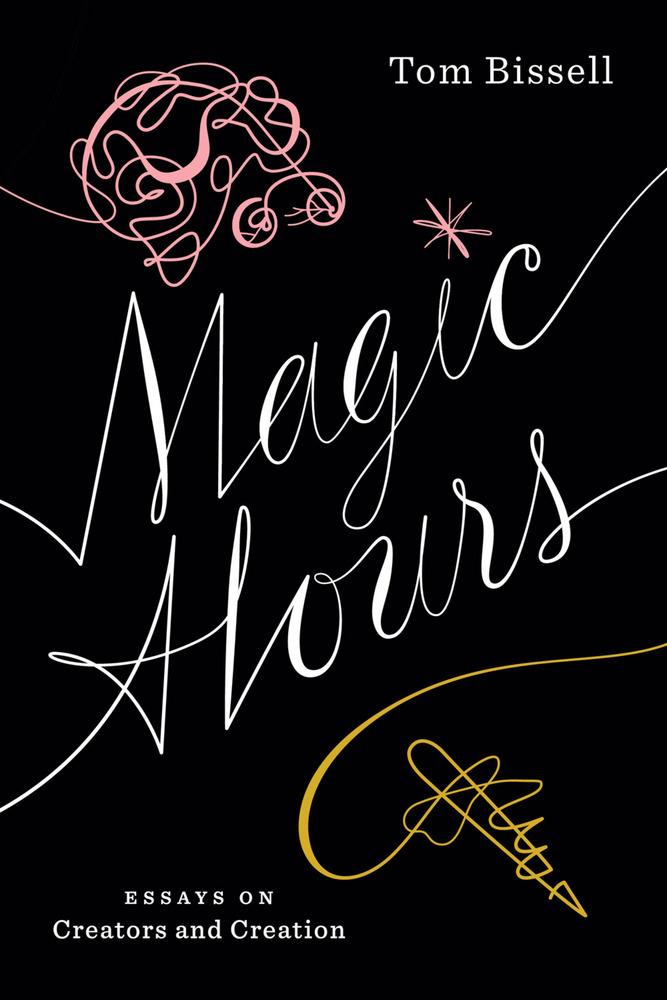
[READ: July 23, 2012] Magic Hours

I thought that I had never heard of Tom Bissell, but I see that I have read three of these articles already (I guess I don’t always pay attention to the author’s name).

This collection of essays comes from the last eleven years (2000-2011).  The articles have appeared in The Believer & The New Yorker (these are the ones I have read) and Boston Review, Harper’s, New York Times Magazine, Virginia Quarterly Review, New York Times Book Review and Outside (which I am starting to think I should really check out more).

Primarily they are articles about writing–he looks at fiction, non-fiction, film or a combination of them.  Bissell is a strong writer and he does not hold back when he sees something he likes or dislikes.  I found his articles (all of which are quite long–about 30 pages each) to be engaging, funny and very persuasive.  I’m really glad I read the book (and was even glad to re-read the articles that I had read before). (more…)

Read Full Post »

SOUNDTRACK: CIAN NUGENT-“My War Blues” (2012).

I’ve never heard of Cian Nugent before (pronounced KEE-en).  He’s an Irish guitarist (his guitar playing reminds me of José González).  And this is a cover (but not really) of Black Flag’s “My War.”  What it really is is a solo acoustic guitar workout that is inspired by the riff of “My War” (there’s no vocals).  I love Black Flag and I can say that if I didn’t know that bit of information, I would never have guessed a connection.  But having said that, this song is an inspired workout.

He plays some wonderfully dissonant slow notes as the song opens.  From there, it picks up speed as Cian tests out some new variations.  And then he gets into the solo section, sounding like an inspired Richard Thompson, he plays one of he meanest acoustic guitar solos I’ve heard in ages.  At times angry, at times jaunty, and all the while keeping the beat on the low strings.

I’m going to have to check out more by this guy.

To hear this track, check out NPR.  You’re one of them.

[READ: May 15, 2012] “First Atlanta and Then the World”

This article comes from the archives, one of three monthly suggestions from my work that I enjoy checking out.  It’s a brief history of the rise of Coca-Cola from small idea to global behemoth.  But, and here’s the kicker, it comes from a local publication: The Georgia Historical Quarterly, so there is no (real) politicking in the article.  There’s nothing about global hegemony, there’s nothing about high fructose corn syrup and nothing about obesity (it was written in 1987, back in less politicized days).  And I have to say, this made it more fun to read.  Not because I have any vested interest in promoting the worlds’ most recognized brand, but because the Coca-Cola story is pretty fascinating.  And it’s interesting to read it from a local perspective.

I don’t know how scholarly The Georgia Historical Quarterly is (since it’s on JSTOR I know it has certain aspects of scholarship—it’s not just a booster for Georgia), but the tone of this article is very light, very fun.  It makes for an interesting read. (more…)

Read Full Post »

[ATTENDED: February 17, 2012] Richard Thompson at the McCarter Theater

I have seen Richard Thompson live many times.  By my last count I think it must be five or six.  I’ve seen him solo and with others, I’ve seen him at Festivals and small venues.  And he never disappoints. RT makes an annual (or nearly annual) pilgrimage to Princeton’s McCarter Theater and the crowd is devout.  The last time Sarah and I saw him was on his 1,000 Years of Popular Music tour (a wonderful extravaganza) with olde instruments and two backing players.  But every show is different and you never know which incarnation  you never know which RT you’re going to get.

This tour was just RT and his guitar and our show proved to be a (mostly) request show.  Whether it was meant to be a request show is unclear (he just did three all request nights in NYC).  For tonight’s show, he definitely had songs in mind but the crowd politely asked for other songs and he accommodated (he doesn’t always).

Sarah and I laughed at the demographic of the audience (a lot of gray-haired ponytails here, Sarah noted–and that was just the men).  And yet next to us were a group of young rocker kids, so we were neither oldest, younger, coolest or squarest.  But none of that mattered because RT bridges all groups.  It was just he and his acoustic guitar, and he played slow ballads, serious rockers, funny songs and a few classics.

I didn’t know the first couple of songs (which surprised me) but it’s possible they were brand new, because why would he start what proved to be a greatest hits set with a bunch of obscure songs?  Well, he’s a conundrum.  Maybe anyone who was there can fill me in on the setlist.

After the first song the requests came.  RT explained that he had hoped to do some songs that he wanted to play and he hoped that those songs would be ones that we wanted to hear.  So obliging!  When the crowd convinced him to play Britney Spears’ “Oops I did it Again” (a song he played in his 1000 Years retrospective) we knew it was going to be a great show.

And it was.  (more…)

Read Full Post »

« Newer Posts - Older Posts »