SOUNDTRACK: RHEOSTATICS-Group Of Seven Live, Ottawa, ON (October 21 1995).
This concert, available from Rheostatics Live, is a recording of the band playing their Music Inspired by the Group of 7 live. I’m not sure how many of these shows there were, or even if this is the show in its entirety (it seems like it, but there’s no intro, and maybe there was more after the set?).
At any rate, the Group of 7 album is almost entirely instrumental–scored music that is certainly rock, but quite different from typical Rheostatics fare. In this live setting, we have piano, upright (and bowed) bass and cello. And yet it is distinctly Rheostatics. Band friend (and Barenaked Lady) Kevin Hearn plays piano (he joins them on many of their live shows) as he helped them compose the original soundtrack.
The band doesn’t say much during the set. In fact, they don’t talk at all until the half way point, when Bidini introduces everyone and talks about how they came to write this music. He talks about crossing Canada and is generally a jovial fellow. And then he talks about the reworking of “Northern Wish.”
The Group of 7 album is probably my least favorite Rheostatics album because it is basically a score (I do like it, and think it’s a great audialization of the Group of 7, but it’s not like their proper albums). And there are some beautiful songs here. One of the most interesting is “Boxcar Song,” which has a great riff. It also includes the reworking of “Northern Wish.”
Incidentally the album’s tracks are just listed as one through twelve, but they have gained names from live shows. And they don’t match up exactly with the album in this concert setting, as this makes it seem that the final song is the long waltz, which it isn’t.
Anyhow, this download isn’t a top ten. Unless you really like the CD, in which case this is a must hear. The show includes the samples from the album and a bunch of very interesting takes on the songs.
For a brief news story on the collaboration, check out this from CBC’s The National from 1996.
and part two
[READ: February 2, 2014] Celluloid
I actually assumed this was a new title, as it just came across my desk the other day, but I see that it is three years old. I’ve always admired McKean’s work, which I think is grotesquely beautiful. His characters always seem somewhat pained, and the angles of his lines are often harsh. So I was really unsure what to expect in an “erotic” story from him.
The fact that one of the first few pages states that this book is not to be sold to anyone under the age of 18 should let you know that by erotic, they mean explicit. (I did notice that the caveat was buried a few pages in, though). And, indeed it is. Far more than I imagined it would be. (more…)
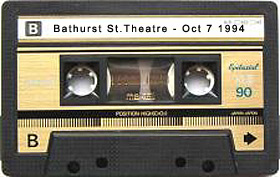
SOUNDTRACK: RHEOSTATICS-Bathurst Street Theatre, Toronto, ON (October 7, 1994).
This show was broadcast on the radio, and indeed, this is an encore broadcast that you can download from Rheostatics Live.
Anyhow, it begins with people raving about the Rheos on the radio. And then the band kicks in. The set is 45 minutes, although I assume the original must have been longer. Why? most of their shows are longer and this feels like it might have some cuts for commercials and whatnot.
They play ten songs, and it’s alike a highlight reel of their earlier music: “Take Me in Your Hand,” “King of the Past,” “Queer,” “California Dreamline,” “Soul Glue,” “Claire,” “Northern Wish.” But it’s also got its far share of goofiness: some improvs and the resolutely silly “Full Moon Over Russia” and “Alomar” (which sounds really tight here). It’s a great set and a great introduction to early Rheos live music.
[READ: January 29, 2014] “My Man Jeremy”
Everyone mostly knows Cera as an actor (who I’ll see in anything). But he’s also a writer. His previous piece in McSweeney’s was very funny. And so is this one. Although now the two published things I’ve read by him were both about being an actor, so maybe its time to broaden the range a bit.
Anyhow, this is basically a set up about text messaging. He opens by explaining that people ask him is he has any funny stories about texting (this part is in italics). Then he tells us this tale about Jeremy. The text messages are written straightforward, with interjected comments by Cera as he “studies” the exchange.
It begins with a text from an unknown number “Sup you coming to this thing?”
Michael writes back. “Hi oops I don’t know this number. I’m Michael, who is this?”
Now, this isn’t especially funny, but it did make me smile to think that anyone would respond to a wrong number this way. At any rate…. (more…)
SOUNDTRACK: RHEOSTATICS-Kingston, ON (July 7, 1991).
Yesterday I wrote a letter to the Rheostatics. In part this was inspired because I just found out that the Rheostatics Live site has added some new concerts for download (and a really fancy one for purchase, which I’m pretty excited about). I thought I had posted about a bunch of the free downloads from Rheostatics Live, but evidently I had only done one or two. And since I’m on an inspired Rheostatics kick, it was time to revisit some of these oldies.
This is the earliest show they have on the site. And it was, until recently, the only one with Dave Clark on drums. (A new set of shows that I haven’t heard yet is from that era as well). I have to admit that I find Dave Clark to be a terribly distracting/borderline really annoying member of the band.
While the Rheostatics songs aren’t “serious,” they are certainly powerful (some of them anyhow). And Dave seems to put all kinds of silly nonsense in them. I don’t mind (and it was probably fun to see live) the goofing between the songs. Like when they begin doing the improv that they call “Jerkin’ Around.” But to interject nonsense during the songs, especially something as intense as “Horses” (which is not great in this rendition anyhow), it’s a major distraction.
This is an otherwise interesting show, as they introduce some “new” songs (ie. ones that would come out on Whale Music). And there are some funny things. Like in the “Green Sprouts” song they throw in some Rush lines (and lines from “Tom Sawyer” in “Jerkin’ Around too). But otherwise this feels like the Dave Clark show. We even get “Dave’s Poetry Moment,” about which, whatever.
The sound quality is good, except for some interruptions in the last two songs and a fade out once Dave asks if someone else can sing “When Winter Comes” because his voice is shot. Overall, this is an interesting historical recording, especially given the era, but it’s not my favorite show to listen to.
[READ: January 29, 2014] “Guy Walks into a Bar”
Simon Rich always makes me laugh. And he often surprises me by making me laugh about things that seem like they couldn’t be funny.
Many years ago in a writing class I wrote a serious story and I ended it with “and then he turned into a bar.” I don’t really know why I threw the lame joke at the end of the story, I think I wanted to see if I could get away with it. (I didn’t). Well this story/joke is based on the old, old joke about a bartender who has a genie and a twelve-inch pianist. (more…)
SOUNDTRACK: An open letter to the Rheostatics (2014).
To Dave, Martin, Tim and assorted drummers:
I’ve been a fan of the Rheostatics for a long time. I recall traveling to Toronto from New Jersey back in the 90s and tracking down Introducing Happiness at Sam the Record Man. And then later driving around the Niagara Falls region listening to the strange and wonderful album. I’ve enjoyed all of the subsequent albums.
You were a unique band with a unique sound. I was sad when you split up, even if that meant that now there were three solo projects to enjoy. Of course, there’s been a lot of bands that have broken up, it’s just part of being a fan. But the thing about the Rheostatics breakup is that you three (or four or five or six) have remained friendly. You’ve done a few reunion shows since the breakup, which I think that’s super cool. It’s especially cool because RheostaticsLive tends to post them after a while so that those of us who don’t make the shows can hear them.
I’ve never seen you guys live, and I imagine I never will. And I’m okay with that. What I’m mostly bummed about is that there will be no more new music from you. You put out approximately ten albums (there’s a few miscellaneous things that are hard to qualify). Those records include soundtracks and live albums and all manner of things, so there’s really seven proper albums (the others are great, don’t get me wrong). Anyhow, my gut feeling is that there needs to be some new Rheostatics music. I know you’ve all been doing solo stuff (and I have it), but sometimes the sum is greater, etc.
Clearly I’m getting at that it’s time for a new album from the Rheostatics. Before you scoff, I’m not talking reuniting for a grand tour, or even any tour, I’m not even talking a live show. Heck, I’m not even talking about you guys hanging out for more than a couple weeks. Just an album of new songs. A decade ago it would have been unthinkable that you would get together for the expense of an album without major label support. But now, the cost is so much lower and with your fan base expanding, I assume it would be easy to recoup the expenses.
So what do you say? Since it seems like everyone is still friendly and creative, maybe you can throw some ideas around in the email, see if there’s anything magical happening. Obviously, if there’s nothing there or you just can’t work together, then don’t continue. No one wants to hear a crappy Rheostatics album. But if there’s even a chance that you guys can throw some ideas together and pull out another “Horses,” or “Northern Wish” or “CCYPA,” or holy cow, “King of the Past,” or, hell, anything you’ve done, then it’s absolutely worth it.
I don’t imagine any of you will read this, but maybe if you google yourselves, Tim Vesely, Dave Bidini, Martin Tielli, you’ll see this and think that, yes, dammit, seven records of Rheostatics music is not enough.
Thanks for the music, Paul Debraski.
[READ: January 26, 2014] Worst. Person. Ever.
I told myself that I wanted to read this book before anyone requested it. And I did. In fact, I wanted to finish it before the weekend was up, which I did as well. It’s nice to meet a minor goal.
The last few Coupland books that I read (see last week) were very dark. Since those books, he has broadened his palette somewhat, including writing a children’s book and some more non-fiction. And then we get this. A vulgar, very funny sendup of modern culture. The introduction to the book says that it was based on a short story that he wrote for McSweeney’s #31 called “Survivior.” That story was written in the style known a biji which they described as
Biji is sort of a notebook, which contains legends, anecdotes, scientific notes and local wisdom. Accounts of everyday life mix with travel narratives as well as lists. It is meant to represent a picture of the culture at the time of writing.
I thought that this style was well suited to Coupland, because he includes all of that stuff anyway. And so he has taken that story and fleshed it out into this full novel.
The worst person ever is named Raymond Gunt. He thinks he’s Jason Bourne, but he’s really just a metaphorical extra in a Bourne movie (one who probably gets killed). Gunt is a cameraman working in England. He is divorced. His wife is a raging harpy (at least from his point of view, which is all we see). Since their divorce, she has become wildly successful in television production. He calls in on her at work and she tells him about a job working as a B cameraman on a show called Survival. He knows that the job must suck or she wouldn’t give it to him, but he needs to work. Of course, he is most upset at the thought of having to work with Americans (Americans are majorly abused in this story). Although by its very nature a B cameraman position is not as good as an A cameraman, Ray needs the work, so he agrees to fly to some godforsaken tropical island to watch beautiful people starve and try to have sex with each other.
On his way out of the building he sees a homeless guy. And since Ray is the worst person ever, he kicks him. But the homeless guy is no pushover and he chases after Ray. He catches Ray in an alley and pummels him, ultimately pushing his face into some garbage. The man is Neal and although he acts crazy, he’s actually quite sharp (why he is homeless is not addressed). After forcing Ray to sing the female verses of “Don’t You Want Me,” Neal gives him this sage advice:
“Stop being a cunt to the world and the world will stop being a cunt to you.”
Advice which Ray simply cannot follow.
When ray learns that he needs a personal assistant, um, slave, he immediately thinks of Neal. So he tracks him down, cleans him up and gives him a job. And off they jet to make some TV.
In the course of the book, a series of crazy things–the kind of things only Coupland thinks of–sidetrack them from Ray’s goal. (His real goal is to get laid, naturally). First, it turns out that Neal, despite being homeless, is a total babe magnet. And throughout the story, as he gets cleaner and fresher, he becomes irresistible This, of course, ruins Ray’s plans of bedding hot women. And as Neal gets cleaner, he becomes less and less Rays assistant and more and more Ray’s equal.
They jet to L.A., (he was supposed to be in first class, but was bumped and is super angry). He also gets in trouble with the airport bartender, Lacey, who comes back to haunt him in ways one could never predict. He gets first class seats on the way to Hawaii and he abuses the privilege. Then, because of unforeseen circumstances, they have to stay in Honolulu (with lots of Spam jokes). And because of those unforseen circumstances, they need to recast the show, which means Ray’s wife has to jet down and be around them. And Ray’s wife, Fiona, is delighted to make Ray’s life miserable. Eventually, they head to their intended island and prepare to set up for the show.
In the meantime, the U.S. has decided to destroy the Great Pacific Garbage Patch–in a very imaginative way. And ray is on hand to witness the destruction. This plan causes all manner of trouble with shipping and airplane traffic. Which has the effect of isolating everyone on the Survivor island–causing a literal survival situation.
Raymond Gunt may not be the worst person ever, but he is pretty darn close. He tries to sleep with anyone. He tries to screw over everyone else (but never seems to get anywhere). And he genuinely likes to torment others. And all the while he repeats his mantra, “I consider myself a reasonable enough citizen.” Despite Gunt’s personality, he (or at least the story) is funny enough that you want to keep reading (and maybe even to succeed in some of his designs). And that made this story a major page turner. And it was very funny as well.
Coupland really gets the feel for writing a British story. It doesn’t read like any of his other books and while it’s not full of crazy accents or overt Britishisms, his main character is defiantly not American. As I said, all Americans are fat, sweaty, stupid and prudish in Ray’s mind.
This is also the worst person that Coupland has ever written. He is such an abominable person with an incredibly filthy mouth. The above quote is just one of just many curses in the book. In fact there’s a whole subplot about how prudish Americans are about people saying “fuck” despite their cavalier acceptance of violence and other things (we say friggin, when everyone knows we mean fucking).
I have to assume Coupland had a ton of fun writing this. And it really comes through. I’m also going to guess that a lot of people’ won’t like this book because Gunt is so reprehensible. But if you can get past that, the story is funny, and makes some pointedly humorous observations about a lot of contemporary life. Like “Survival [sic] is a popular reality TV show… You’re either into this show or you’re not. It’s binary.” or “‘Come on Eileen’ was a single in 1982…What’s weird about this song is that it was so huge at the time and now you listen to it and wonder, what the hell was everyone thinking? Well, that’s pop culture for you.” It even has what seem like Wikipedia entries of things throughout in the book (and a YouTube link which is bizarre to see in print).
I really enjoyed this, and I’m thrilled that Coupland has unleashed his inner black humorist.
Watch him talk about the book with Jian Ghomeshi, a great interviewer
SOUNDTRACK: JIM GUTHRIE-Tiny Desk Concert #294 (August 10, 2013).
I was unfamiliar with Guthrie before this set and I almost didn’t play it because of his mustache–he just looks so country to me. But then I read that he and his band drove 9 hours from Ontario just to do the show (which is 11 minutes long, so that’s pretty crazy). But the set is really good.
The three songs come from Guthrie’s new album Takes Time (his first solo album in ten years). And I was hooked…not right from the start, but 15 seconds into “The Difference a Day makes” when the guitar plays the chorus riff. There is something so… Canadian about the melody line. It reminds me of Neil Young, Sloan, Rheostatics, even Kathleen Edwards, all of these great Canadian songwriters who play with slightly different melodies. The fact that he sings “doubt” and “out” with an Ontario accent solidifies it. It’s one of my favorite mellow songs of the year. “Before & After” sounds a bit like Barenaked Ladies mellow song, like something written by Kevin Hearn. I tend to not like the Hearn songs, but I thin kit’s that I don’t like Hearn’s voice, because I like this song quite a lot.
Guthrie has a delicate but strong voice–I can’t imagine him screaming, but he conveys a lot. Especially in the final song, the more mellow (and minor key) “Like a Lake.” I’ve heard Tiny Desk shows that go on for five or six songs. I wish that Bob and Robin had let them play for ten more minutes. Now I’m off to find his records. Check it out.
[READ: September 10, 2013] 3 book reviews
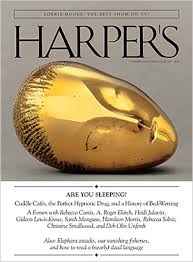
Tom Bissell reviewed three new books in the August 2013 issue of Harper’s. I like Bissell in general and since I’ll probably wind up writing about these when they get collected anyway, why not jump the gun here. Especially when there’s three good-sounding books like these.
The first is Peter Orner’s Last Car Over the Sagamore Bridge. I know Orner from McSweeney’s mostly, where I’ve read a few of his things But one of the stories that Bissell mentions from this short story collection sounds familiar and yet it doesn’t seem to be something I’ve read. Hmmm. Well anyhow, he says that Orner’s previous book (with a title that Bissell assumes he had to fight to keep–The Second Coming of Mavala Shikongo) was a great piece of fiction about Africa, and that his previous collection Esther Stories was also very solid.
This book is a little stranger—bundled into 4 sections, it includes more than fifty “stories” and is all of 200 pages. (Sounds like just the kind of thing I can get into). Bissell suggests that the stories have a layer of remove, like someone telling a story about someone telling a story. Or, if they were about a bank robbery, the story would actually be about someone describing having once met the guy who sold the robbers their ski masks. But the real selling point for me was this pithy description of the collection: imagine Brief Interviews with Hideous Men written by Alice Munro. That sounds hard to pass up. (more…)
Dave Bidini was a driving force behind Rheostatics. Although when I think of the band, I think of Martin Tielli’s wackiness and Tim Vesely’s hits, which kind of makes Bidini the sort of stable, middle of the road guy. But I don’t think that’s right either as Bidini has both a wacky side and a hit-making side. But this “solo” project focuses mainly on Bidini’s storytelling skills. Most of the songs are little narratives, which is always enjoyable.
“Desert Island Poem” is actually a story of the dissolution of the Rheostatics–when they survived a plane crash in Drumhella and ate the drummer. “Memorial Day” surprises because of the clarinet solo (which works wonderfully). “We Like to Rock” and “Song Ain’t Any Good” are the other kind of song that Bidini writes–songs about playing music. These kind of songs are always dopey and “We Like to Rock” is no exception–I think I ‘d like it more if it weren’t so tinny sounding. “Song Ain’t Any Good” is kind of funny, especially if you get through the whole song, although I don’t know if multiple listens are rewarded.
On the other hand, “The Land is Wild” is a great song about Bidini’s other passion: hockey. This is a lengthy (nearly 7 minute) story about Bryan Fogarty, a young hockey player who was a star at 21 but a forgotten addict by 31. It’s a sad, cautionary tale about how the hockey establishment all but ignored him as he wasted away. “How Zeke Roberts Died” is a very similar song, it’s an 8 minute biography of Liberian singer Zeke Roberts. This song has lead vocals by a variety of singers.
“Last Good Cigarette” is a delightful ditty about smoking with famous people (and it is super catchy–ha-cha!). “Pornography” is a funny political song about George W. Bush that is also quite catchy. And the wonderfully titled, “The Story of Canadiana and Canadiandy” is about living close to America.
Although the album is mostly folky and kind of mellow, “Terrorize Me Now” shows some of Bidini’s more wild guitar noises. And the final song, “The Ballad of 1969” is a great song that is reminiscent of the kind of highs that the Rheos would hit. There’s a bonus untitled song [later called “The List (Killing Us Now)”] which is a simple song of people who have aggrieved him. It’s funny, especially in the live context it is given.
While not as great as a Rheostatics album, this release is like an extension of the band. Bidini has a new album out which I haven’t heard yet, but I’ll certainly be checking it out.
[READ: March 5, 2012] “Haven”
Munro is back (talk about prolific!) and she has created a darkly claustrophobic house in which to place the young protagonist of this story.
The story is set in the seventies. The protagonist is from Vancouver, but her parents are heading off to Africa for a year so they have sent her to live with her Uncle Jasper and Aunt Dawn. Despite this mission to Africa, they are not going there for a missionary purpose, they are going there to teach (and haven’t come across many heathen). They’re also Unitarian. Uncle Jasper, on the other hand, insists on saying grace before meals and gets on the protagonist when she starts eating before the prayers.
It turns out that Uncle Jasper is the man of the house. Aunt Dawn does not begin eating her meal until the discussion of grace is over (after receiving an invisible nod from Jasper). More examples of her deference are given, but the quote that sums up Aunt Dawn (whether she said it or not) is “A Woman’s most important job is making a haven for her man.” Although, given that, Jasper does show her some affection: a gift and some closeness towards the end of the story. (more…)
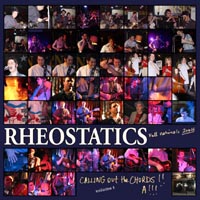
SOUNDTRACK: RHEOSTATICS-Calling Out the Chords Vol 1 (2005).
In addition to the Rheostatics’ main catalog, the cool label Zunior has released a couple of “official” bootlegs. Calling Out the Chords Vol. 1 (no Vol. 2 has been released as of yet) is a collection of 2004 live recordings from The Legendary Horseshoe Tavern. The Rheos do multiple nights at the Tavern, and this is a selection of songs from those shows.
It’s an interesting mix of essential live recordings and weird tracks that die-hards will appreciate but that newbies may scratch their heads at. Some essential recordings are the wonderful version of “California Dreamline” that segues into a blistering version of “Horses.” The version of “Mumbletypeg” with The Fall National Horns adding brass is also pretty great.
But there’s a number of songs here that are peculiar. Great for fans, but perhaps hard to explain otherwise: an instrumental version of the 1996 song “Four Little Songs.” I’m not sure why they went instrumental, as the lyrics are pretty essential, but there ya go.
There’s a crazy song “We’re All Living in a Chemical World” sung by special guest Ford Pier. The intro says that this was one of Tim Vesely’s first songs, and it’s written in their early synth pop style (Pier is an insane vocalist too). It’s quite a surprise. And speaking of guests, there’s a lot of music from special guest Kevin Hearn (who has been with Barenaked Ladies since 1996–Hearn is a touring machine, apparently). Anyhow, he contributes two songs to this disc “Who is that Man and Why is He Laughing?” and “Kevin’s Waltz” and he helps out on “I am Drummstein” and “Weiners and Beans.” “I am Drummstein” and “Weiners and Beans” are unusual tracks as they come from their children’s album and their tribute to the Group of 7.
The final track is “Legal Age Life at Variety Store,” one of their staple live songs. But this one has a twist contest in the middle. Audience members are invited onstage to twist. It is quite long (and without the actual visuals, it’s a bit hard to listen to more than once or twice) but it’s a fun way to hear the band interact with the audience and it shows what a fun live show they put on.
This is a great recording and a bargain for $5.55.
[READ: August 31, 2011] “Home”
I read this story twice. The first time, I didn’t really like it, I found it to be kind of jumbled and confused. I don’t know if that’s a typical reaction to this story or if I was feeling lazy, because the second time through I followed it okay and I enjoyed it quite a bit.
It’s a social commentary from Saunders, although exactly what the comment is is a bit unclear to me (even after the second reading). The main character is a veteran who has just returned from one of the wars we’re fighting, “…the one that’s still going on.” When he gets back home, his mother has shacked up with an unemployable guy, his sister won’t let him see her new baby and his wife has taken their son and has shacked up with some asshole he knew in high school.
And every time someone finds out he just got back from the war (like the sheriff who is evicting his mom), they all say, amusingly, as if by rote: Thank you for your service. (more…)
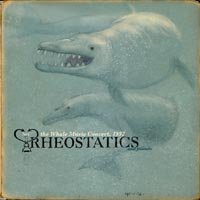
SOUNDTRACK: RHEOSTATICS-The Whale Music Concert, 1992 [Sets 1 and 2] (2005).
This is the second Rheostatics live CD that’s available from Zunior. Whale Music is a simply stellar album, and this concert focuses primarily on that disc, although there are a couple older tracks (and the then-new “Michael Jackson”) as well. The big surprise about this concert is that they consider it a night of 1,000 stars: there are a ton of guests in this show (the majority of whom are even more obscure than the Rheostatics, I believe–the only two that I knew of before hand were Kevin Hearn and Andy Stochansky (who drummed with Ani Difranco for a while). But guests like Tannis Slimmon, Doug Feaver, Tim Mech, Kevin Gould, Richard Burgman, Mitch Perkins and The Bird Sisters (and if you like Canadian music, the link for The Bird Sisters is to a cool blog called Raised on Canadian Radio: 1 Song per Day by 1 Uniquely Canadian Artist) add to the party atmosphere.
Anyhow, sometimes guests can really heighten a show. And that’s the case for some of this show. Of course, anyone who has read my criticisms of rap knows that I feel that too many guests spoil a good thing. None of these guests are “too much” here, but it does seem odd that there are so many!
The first set of this concert is awesome (the whole show was recorded to DAT and although there are a few weird drop outs, the set sounds great). It’s like a greatest hits of early Rheos songs; the band sounds tight and they really respond to the audience. “Rock Death America” is blistering, “Green Sprouts” is a fun little treat and “Palomar” and “King of the Past” sound fantastic. It’s also funny to me how many great songs Tim Vesely is responsible for. And they all seem to be featured here.
Set 2 is a little different. It feels looser, a bit sillier, and is filled with much more Dave Clarke. I’ve always known that Clarke was the goofball of the band. He’s the chatty one when they’re onstage–he is full of goofy banter and he introduces most of the guests. While it’s true that the Rheos aren’t entirely serious, I find Clarke’s goofiness to be a little off-putting. And by the end of Set 2, he sees to have taken over the show. He’s an excellent drummer, no doubt, but he hams it up on “Full Moon Over Russia” and I think he rather ruins “Queer” (one of my favorite songs) with his , yes, bad, singing. And on “When Winter Comes,” the bridge is so beautiful, that his rantings in the verses are just too much for it. Having said that, while I like the sentiment of “Guns” (although it is oversimplistic), the drum solo bit is quite cool.
The other thing that I kind of dislike in Set 2 is that the songs are really extended, but not in a good way. I mean, “Queer” is 9 minutes, but it’s a lot of Dave Clarke and Kevin Hearn’ keyboard silliness. And “Record Body Count” seems really slowed down or something. However, the band closes strong with a great version of “The Wreck of the Edmund Fitzgerald” and what sounds like an amazing version of “Horses” (the beginning of “Horses” is cut off, which is a shame).
So overall, despite some flaws, this is a really good live release. And since, it’s only $8.88, it’s totally a bargain. Plus, there’s some great artwork by Martin Tielli as well.
[READ: August-September 2011] Tree of Codes
I first heard of this book through the Five Dials news feed (and there’s an excerpt of the book in Five Dials Issue 20 which you can see here). Anyhow, I read about it and decided I wanted a copy for myself. It’s not cheap, but you can just look at it to see how complicated it was to make (or you can watch this video) .
So this book follows the exact same logic as Of Lamb. But unlike Harveys’ execution, in which she wrote out the words and made them into her own pages, Safran Foer creates a story out of an extant book. The way the book is presented, he literally cuts out what he doesn’t want you to read. It’s also fascinating to me that this book came to my house in the same week as Of Lamb did (even though this came out much earlier–but as Foer says, there was no way for him to advertise the book). They are absolutely similar ideas and yet their execution is so radically different.
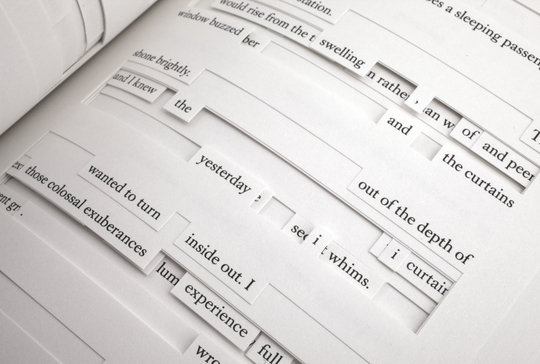
When you open this book, you see holes. Lots and lots of holes. The pages have massive squares of text missing. When you first open it, you can see many layers of text, some penetrating thirty pages down. So you can read words that comes later in the book (you often read words from the following page if you don’t hold the page up correctly or put a piece of paper under each page). Don’t believe me? Here’s a picture:
Safran Foer’s explanation (at the end of the book) is that he loved the book The Street of Crocodiles by Bruno Schulz (which I’ve never heard of and have no idea what it’s about). And he often saw a story within the story. So, he decided “to use an existing piece of text and cut a new story out of it,” using only Schulz’s words. But rather than presenting it in a conventional way (or even in an unusual way like Of Lamb), he wanted to push the boundaries of what a physical book could do. He was “curious to explore and experiment with the die-cut technique.” (more…)
This was the Rheostatics’ final release. I’m not sure if they knew this would be their last disc, but it kind of feels like they are throwing everything they can into it.
It opens with a delicate song from Martin which reminds me of Jane Siberry (the “row upon row” section). Although at about 4 minutes it starts rocking out. It’s a kind of meandering song, which is odd to open an album with.
It’s followed by “Little Bird Little Bird” a great folky song form Bidini. But the disc really come alive with “Marginalized” a song that reminds me in some ways of “Horses,” as it is rocking and a little twisted (it seems surprising that it came from Tim Vesely). It’s got some great guitar and an impressive keyboard solo (!) from new member Michael Phillip Wojewoda.
“The Tarleks” follows (with some fun frog noises). It opens slowly (as Martin songs tend to do) but once it really takes off, its got a great riff with his wonderful dramatic pauses and really funky sound from the bass/keyboards. Then we get the wonderfully odd “Power Ballad for Ozzy Osbourne.” It’s a kind of joke (but not really) about rock performers aging gracefully. Bidini gets a bunch of songs on this disc, and here he gets two in a row, with the bizarrely wonderful “I Dig Music.” The subtitle is “The Jazz Animal” and it tells you a lot about the song…it is indeed a kind of high-octane jazz. But it has many different segments (and a lyric that references Squarepusher).
“Here Comes the Image” is a 6 minute track from Vesely which sounds very much like his more mellow tracks. I’m not sure his tracks belong in the middle o f a disc because they tend to really bring the momentum to a halt. Although it is a pretty song, it’s quite mellow (the organ solo at the end is pretty sweetly retro). It’s followed by the five-minute slow instrumental “Who is This Man and Why is He Laughing?” It really feels like an album ender.
So when “The Latest Attempt on Your Life” comes in, it revitalizes the sleepiness that those two songs imbue. This track has the wonderful repeated chant “Everyone hates you, you sing like a woman”). “Polar Bears and Trees” follows and it’s another kind of crazy song from Bidini. It has such simple verses but the chanted “hey hey ho ho” rocks hard and is wonderfully fun. (The lyrics are clever too).
Vesely returns with the beautiful, wonderfully catchy “Making Progress” which has another great retro keyboard solo at the end. The final track “Praise This Mutilated World” is one of the most beautiful songs in their output. It starts as a fairly simple acoustic track (Bidini knows a good melody). At about two minutes in, the band joins in with amazing harmonies. The quiet parts keep coming back only to be overwhelmed by the harmonies once again. The last two minutes are a spoken section. It goes on a bit long, but is redeemed by another gorgeous chorus.
There’s a bonus track which is a very electronic version of “Record Body Count.” So this disc is definitely overly long in some places. There are some great parts to the disc, but it feels like it could have used a good editor. Nevertheless, since it’s the band’s final release, respect is due.
[READ: March 15, 2011] “Water Spider”
This very short (three-pages) story turned very dark rather quickly.
It opens with an African man, Bokarie, settling into his life as a convenience store clerk in Ottawa. We learn that he was granted asylum, and that he has the scars to prove it. He was quite nervous about leaving his country, and he still puts cinder blocks behind his door, to discourage uninvited guests.
At the same time, the action of the story concerns the accidental drowning of Caitlin, a young girl who presumably got too close to the creek when it overflowed. The town is obviously distraught that one of their youngest and most innocent kids was killed, and they are planning a memorial service. They are encouraging everyone to wear pink to the service and are even hoping to get a wreath put on the town’s crest.
Bokarie looks on this entire scene with a kind of bemusement. His life in Africa was full of death. Most of it horrifying. So he seems somewhat unsure of what to make of the town’s outpouring for one lost child. And then the story slowly reveals a shocking truth.
The truth is NOT that he killed Caitlin. That’d not how the story is going (I didn’t really think it would go there, but it was a possibility). Rather, the truth comes out about Bokarie himself, and his life back in Africa. And it’s frankly horrible.
As the story draws to a close, Bokarie makes a decision that is going to impact the community. It’s a little unclear what his motivation is, but it opens so many possibilities, that it really brings out a whole new realm to the story,
In some ways this story reminded me of Damon Galgut’s “An African Sermon (from The Walrus July/Aug 2004) which also had an African character whose past has a hidden element and which turns out to be much darker than originally laid out.
SOUNDTRACK: RHEOSTATICS-Night of the Shooting Stars (2001).
This was the first CD by The Rheostatics that I bought as it was released. I had gotten into them in 1999 or so, and I remember being very excited that this disc was coming out. I ordered mine from Maple Music (and it was even autographed!) and I recall the evening it came in the mail and I sat in my kitchen rocking out to it. Night is probably their most accessible disc. There’s a bunch of tracks from Tim Vesely, (who writes the sweet melodies) and although Martin Tielli’s wonderful weirdness is present, it’s more weirdness within conventional songs rather than unconventional song structures.
The disc also features a lot of heavy guitar work. The disc opens with a heavy guitar riff which morphs into an upbeat poppy number. Of course, how many pop numbers are titled “These Days Are Good for the Canadian Conservative Youth Party Alliance,” (Tielli, of course). There’s a catchy repeated bridge “these days are good for us now” even if the chorus (chorus?) features the bizarre line: “I chipped my eyetooth on the back of a urinal.”
It’s followed by two of the catchiest, poppiest, most wonderful songs the Rheos have done “Mumbletypeg” a delightful ditty sung by Dave Bidini with (again) a wonderful chorus. And, “P.I.N.”, (Tielli) too catchy by half, and featuring the wonderfully weird lyrics, (in a great descending melody): “You’ve got the key to my heart; you’ve got the P.I.N. to my guts”
“Superdifficult” is sung by Tim Vesely, and sounds a lot like the kind of songs he would later writer for The Violet Archers (he has the most delicate pop sensibility in the band). Tim also sings “We Went West.” It kind of slows the pace of the record down, but it is a beautiful song (done with different guitars in each headphone).
“The Fire” is a charming ditty sung by Tielli. It continues the mellowness of “We Went West” and runs with it until Bidini takes over vocals and adds some heavy guitars. They end the song with some beautiful harmonies and some screaming guitars.
The next two songs, Vesely’s “In It Now” and Bidinis’ “Here to There to You” are slight songs which are more charming than catchy. They’re followed by the last three tracks which end the disc with a bang.
“The Reward” has a cool slinky riff and great vocals for Tielli. It’s also sprinkled with some heavy guitar pyrotechnics late in the song. “Remain Calm” is a calming song from Vesely. It seems perfectly located between the craziness of “The Reward and the wonderful rocking nonsense of “Satan is the Whistler.”
I always think that “Satan is the Whistler” is a much longer song (it’s six minutes) because there are two official parts to it. The first 3 minutes are slow and moody, then half way through it bursts into a tremendously heavy riff (complete with whistles!). It’s a great ending to the disc.
There are also two previously recorded tracks here in new form: “Song of the Garden” is from The Story of Harmelodia, done in a slightly more rocking version here. And “Junction Foil Ball” (Tielli) was on their odd Nightlines Sessions release. It opens with some odd effects and guitars and evolves into an incredibly, incredibly catchy riff. The version here is not vastly different, but it’s a bit cleaner.
I’ve really loved this disc. And even if the middle is a bit slow, it still rocks.
[READ: March 11, 2011] “Barnyard Desires”
This was a surprisingly odd and twisted story. And for The Walrus, it was quite long, as well.
It opens with Leona hearing noises in her ceiling. She suspects that the noises are from rats. She has called the landlord out several times, but he hasn’t seen any rats. In fact, he has stopped coming out because he thinks she’s crazy. She imagines what the rats are up to up there: procreating mostly. Eventually, she notices a kind of brown stain on the ceiling, which she is convinced is the rats mating and urinating. The stain grows larger and larger, and it is right above her bed. She also believes it is taking vaguely human shape.
Meanwhile, we learn about her upstairs neighbor. The first time they met was in their building’s elevator. He proudly (and very closely) admittedly that he was recently born again. She made a quiet comment, turned away and hadn’t really spoken to him since. (more…)
 SOUNDTRACK: RHEOSTATICS-Group Of Seven Live, Ottawa, ON (October 21 1995).
 This concert, available from Rheostatics Live, is a recording of the band playing their Music Inspired by the Group of 7 live. I’m not sure how many of these shows there were, or even if this is the show in its entirety (it seems like it, but there’s no intro, and maybe there was more after the set?).















 I Just Read About That...