Feeds:
Posts
Comments

Archive for the ‘Mogwai’ Category

SOUNDTRACK: MOGWAI-EP +2 (1999).

There’s a fascinating release history behind this EP (which mostly means fans wind up with three copies of “Stanley Kubrick.”  First it came out as EP with 4 tracks (which I ordered on import).  Then it was released in the US as EP+2 with two songs from the Fuck the Curfew EP (which was not released in the US) and finally in 2000 it was reissued again as EP+6 with ten songs in total (compiling 1997’s 4 Satin, 1998’s No Education = No Future (Fuck the Curfew), and 1999’s EP–I didn’t buy this version because by then I had the original imports).

“Stanley Kubrick” is a slow burner with a great repeated mournful guitar.   It’s one of their best songs. “Christmas Song” is a slow, upbeat track with a very pretty melody.  “Burn Girl Prom Queen” opens with some really quiet guitar.  After about 90 seconds, a brass band kicks in adding amazing horns over the simple guitar melody.  It’s my favorite track on the disc.  “Rage: Man” is the first song on the album where Mogawai’s noise tendencies really come to the fore.  Once again, it’s a simple slow melody (with piano).  About two minutes in, the song is bombarded with noise guitars that take over the song but don’t obscure the melody.  There’s also a noisy guitar solo played over the noise.  Soon enough all the noise ends, and the simple, harmonic’d guitar comes back and the song ends peacefully.  It’s a great example of Mogwai dynamics.

The other two tracks, “Rollerball” and “Small Children in the Background” come from the other EP as I mentioned.  It’s odd to squeeze in songs from a different release, but Mogwai don’t sound terribly different on these early EPs, so these songs work well together.

Despite their length, Mogwai EPs are pretty uniformly wonderful.

[READ: June 1, 2011] Five Dials Number 8 bis

After publishing Five Dials Number 8, they quickly rushed out this addendum to the issue, which they’ve called Five Dials 8 bis.  According to the introduction: “The definition of ‘bis’ is a passage to be repeated, so here is a small bis for our eighth issue.”

It’s only 9 pages long and really only contains one long piece.  Primarily, this is a memento of their Paris-issue release party, which they held in Paris (duh).  The opening pages includes scans of postcards (“One of our volunteers waded into conversations and asked attendees to write down their own thoughts on Paris. We’ve reprinted five of our favourites.”)  The editor’s letter, which explains all about the party and this issue, is not credited to anyone, so I can’t so who is responsible.  [This lack of proper crediting is the one major flaw with this publication–just saying illustrations by, and then not saying which is whose, or not including the date of publication is maddening].

The big article is by Guy de Maupassant (translated by Siân Miles). (more…)

Read Full Post »

SOUNDTRACK: THE VASELINES-The Way of the Vaselines (1992).

I had never heard of The Vaselines until Kurt Cobain praised them so much back in 1992.  SubPop quickly issued Way of the Vaselines, a fairly comprehensive collection of their recordings.

I bought it and thought it was okay.  Not revolutionary or anything, but decent indie pop.  And I think my lackluster response is in part because I often react the same way to what you’d call originators of a scene when I’ve already been in the scene for a while.  Once people have blown the fundamentals away, it’s hard to appreciate the fundamentals anymore.

And so I’ve given them a new listen with more appreciative ears.  I also enjoyed poppier music a lot more now than I did in 1992 (it’s funny how poppy The Vaselines are and yet how noisy Cobain was).

The songs really hold up quite well in a Velvet Underground way (“Rory Rides Me Raw”), or the left field dance anthem cover of Divine’s “You Think You’re a Man.”  They also have some fast punk songs (“Dying for It”).

Nirvana covered three of their songs, “Son of a Gun” and more famously “Molly’s Lips.”  (The Vaselines version of “Molly” is much cuter (with a bike horn in the chorus)).  And, perhaps most famously, “Jesus Wants Me for a Sunbeam” (which is pretty close to the original).

The Vaselines sang a lot about sex, (“Sex Sux,” “Monsterpussy”) that was disguised in a largely pop context.  But they also had inclinations towards fuzzy punk.

I think what’s so wonderful about this collection is that it’s four Scottish kids who had good pop sensibilities (and some talent) playing what they liked.  They’re an amateur love to the whole disc, and yet for all of their lo-fi ness, the songs sound good–even if you can’t always understand the lyrics. (Sub Pop remastered and re-released the package with bonus tracks as Enter the Vaselines, but I’ll not be getting that).

Were they, as Allmusic says, the best pop band from 1986 to 1989? I don’t know.  But they sure played some great songs.  I’m don’t think I need to hear their reunited selves, because there’s something about the charm of these Edinburgh kids playing these songs in something of a vacuum that I rather like.  It only took two listens to this record (probably the first time in ten years) for me to see how much was here.

[READ: April 16, 2011] “Underachievers Please Try Harder”

The subtitle of this article is “Indie Rock Reunites on the English Coast,” and I’m mentioning it because it got me to listen to the Vaselines record again.

It was an interesting article about the state of music and “festival” tours, specifically All Tomorrow’s Parties.  (This year’s ATP spinoff, I’ll Be Your Mirror will be in Asbury Park, New Jersey! and features Portishead, Mogwai and A Silver Mount Zion among others–were I 20 years younger, I’d be there). (more…)

Read Full Post »

SOUNDTRACK: MOGWAI-My Father My King (2001).

Yet another EP release from Mogwai, this is a twenty-minute song that is everything that Mogwai does best.  It’s a slow builder that grows into a loud, epic track; it’s not only noisy and chaotic, but features some really catchy parts as well.

This song was produced by Steve Albini (which makes the Mogwai noise crispy and sharp and modifies their brand of waves of noise).  It’s a kind of companion to Rock Action.

It opens with a kind of middle eastern flair–Wikipedia says it was based on the melody of the Jewish prayer Avinu Malkeinu. Hear the original here.  [Man Wikipedia loves Mogwai, there are lengthy writes ups about nearly every song they’ve done.]

Even without knowing where the melody comes from, it’s a great song with wonderful structure, building and receding (in what is by now a kind of Mogwai pattern).   Twenty minutes rarely sound this good.

[READ: March 13, 2011] “Going for a Beer”

I’m currently reading Robert Coover’s A Child Again, which is a collection of short stories.  For the most part I haven’t really enjoyed it that much.  Nevertheless, I really enjoyed this one page story.  Part of me wonders, simply, if Coover works much better in much much shorter pieces.

So this story is a time-bending crazy quilt of reality.  And, indeed, the story is a lot more style over substance (which is kind of the point).

It opens in third person present with this mind-shredding sentence: “He finds himself sitting in the neighborhood bar drinking a beer at about the same time that he began to think about going there for one.” I admit I read this sentence three times before I gave up and accepted that he was fucking with me.

And, indeed he is. (more…)

Read Full Post »

SOUNDTRACK: MOGWAI-Come on Die Young (1999).

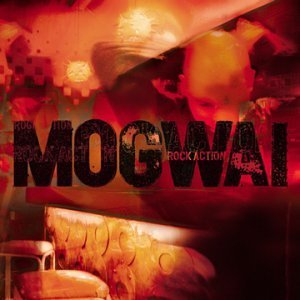
Mogwai’s second full length record goes in a slightly different direction than Young Team. Although it is still full of somewhat lengthy instrumentals, for the most part, the loud and quiet dynamic that they’ve been mastering over their EPs and Young Team is dismissed for a more atmospheric quality.  There’s also a few vocal aspects that comprise some tracks.  One in particular is very puzzling.

The disc opens with “Punk Rock.”  The music is actually not punk at all; rather, it’s a pretty melody that plays behind a rant about punk rock spoken by Iggy Pop. It’s followed by “Cody,” a kind of  sweet slow song.  This one surprises even more because it has gentle vocals which are actually audible.  The track is surprisingly soporific for Mogwai.

And then comes the real puzzler, “Helps Both Ways” is another slow track. But this time in the background is a broadcast of an American football game.  The announcers begin by telling us about an 89 yard run that was called back due to a penalty, but the game stays on throughout the track.  And I have to admit I get more absorbed in the game than the music. After these few quiet tracks,”Year 2000 Non-Compliant Cardia” is a little louder (with odd effects).  It’s also much more angular than songs past.

“Kappa” is the song in which I realized that much of the songs here are more guitar note based rather than the washes of sounds and noise.  “Waltz for Aidan” is indeed a waltz, another slow track.  It’s followed by “May Nothing” an 8 minute track which, despite its length, never gets heavy or loud or noisy.

“Oh! How the Dogs Stack Up” changes things.  It features a distorted piano which creates a very eerie 2 1/2 minutes.  And it leads into the 9 minute “Ex Cowboy.”  Although the general feeling of “Ex Cowboy” is mellow, there are some squealing guitars and noises as well.  By about 6-minutes the song turns really chaotic, its “Chocky” is another 9-minute song (the disc is very backheavy), there’s noise faintly in the background as a simple piano melody is plucked out.  It’s probably the prettiest melody on the disc, and the noisy background keep its unexpected.  The disc more or less ends with “Christmas steps.”  This is a rerecording of the awesome track from the No Education = No Future (Fuck the Curfew) EP.  It is shorter but slower and it sounds a little more polished than the EP. I actually prefer the EP version, but  this one is very good as well (it’s honestly not that different).

“Punk Rock/Puff Daddy/Antichrist” ends the disc with a fun track sounds like a drunken Chinese western  It’s two minutes of backwards sounds and is actually less interesting than its title.

This is definitely their album I listen to least.

[READ: March 15, 2011] Icelander

It’s hard to even know where to begin when talking about this story.  So I’ll begin by saying that even though it was confusing for so many reasons, I really enjoyed it (and the confusions were cleared up over time).  This story has so many levels of intrigue and obfuscation, that it’s clear that Long thought quite hard about it (and had some wonderful inspirations).

The book opens with a Prefatory note from John Treeburg, Editor (who lives in New Uruk City).  The note informs us that the author of Icelander assumes that you, the reader, will be at least a little familiar with Magnus Valison’s series The Memoirs of Emily Bean.  As such, he has included notes for clarification.  He has also included a Dramatis Personae.  The characters in the Dramatis Personae are the characters from Valison’s series (not necessarily Icelander), and are included here for context.  He also notes that his afterward will comment on the disputed authorship of this very novel.

The Dramatis Personae lists the fourteen people who Valison wrote about inThe Memoirs of Emily Bean.  Except, we learn pretty early on that the The Memoirs were based directly on the actual diaries of the actual woman Emily Bean Ymirson.  Emily Bean died in 1985, but before she died she was an extraordinary anthropologist and criminologist.  She kept meticulous journals of all of her exploits, and Valison fictionalized it (to some people’s chagrin, but to general acclaim).

Emily Bean was also the mother of Our Heroine.  Our Heroine is, indeed, the heroine of Icelander, although her real name is never given.  We learn pretty early on is that Our Heroine’s friend Shirley MacGuffin has been killed.  MacGuffin was an aspiring author (whose only published work appears on a bathroom wall).  Her final text was meant to be a recreation of Hamlet.  Not Shakespeare’s Hamlet, but Hamlet as written by Thomas Kyd.  And, indeed, Kyd’s Hamlet predated Shakespeare’s.

There’s also a lot of excitement with The Vanatru.  The Vanatru lived underground, and had a serious quarrel with surface dwellers who worked hard at keeping them down. The Queen of the Vanatru is Gerd.  She controls the Refurserkir, an inhuman race of fox-shirted spirit warriors who appear literally out of nowhere.

Okay, so how confused are you now? (more…)

Read Full Post »

SOUNDTRACK: MOGWAI & MAGOO-Do The Rock Boogaloo (2002).

This split CD features a song each by Magoo and Mogwai.  Both songs are Black Sabbath covers, with Magoo doing “Black Sabbath” and Mogwai doing “Sweet Leaf.”  This was released by Fierce Panda records and it’s clearly kind of a joke (the top of the disc says: two sonic scratches of the big bad rock arse”).

And yet despite the jokey nature of the project, the covers are actually quite faithful.  I’ve never heard of Magoo in any other context so I don’t know anything about them.  But their version of “Black Sabbath” is pretty right on.  The big difference is that it seems like Magoo have no bass in their band.  Everything from guitars to vocals is much more tinny than anything Black Sabbath put out.  In fact, when the really fast part at the end comes up, you can hear the bass, but it sounds like perhaps just more guitar notes.  The vocalist is also far less than scary.  And yet for all of that, the song isn’t really jokey, it just doesn’t sound scary like the original.

Mogwai’s cover of “Sweet Leaf” seems even more jokey.  It opens with a pretty heavy sounding riff and then stops after a few seconds so someone can say “give me the microphone.”  There’s also a lengthy conversation going on throughout the background of the song.  The vocals are quite fascinating.  They are utterly understated, bordering on spoken.  As such, there is a notable Scottish accent for the verses.

After the main body of the song, they never quite get to the heavy drum part at the end, in fact, the song kind of just fades out while the lengthy (drunken?) conversation (and burping) continues for over a minute.

No one is going to say this is an essential recording, although it’s good for a laugh, I suppose.

[READ: February 28, 2011] Consider David Foster Wallace [essays 10-12]

More than half way through the essays, we’re moving away from infinite Jest era and into the Brief Interviews era.  These articles look at sincerity, love and footnotes.

Because I don’t have a lot to say about the pieces (I’m not an academic anymore), I’m only going to mention things that I found puzzling/confusing.  But be assured that if I don’t mention the vast majority of the article it’s because I found it interesting/compelling/believable.  I don’t feel comfortable paraphrasing the articles’ argument, so I won’t really summarize. (more…)

Read Full Post »

SOUNDTRACKMOGWAI-No Education = No Future (Fuck the Curfew) (1998).

This is a 3 song EP. The opener “Xmas Stripes” is one of my favorite early Mogwai songs.  The opening melody is really great, with a cool interesting bass and a nice guitar over the top.  At about 3:30 the song grows from a silent track to a menacing, growing beast until the drums start and the song and the main riff begins.  By 5 minutes it’s all out rock noise.  By 6 minutes the song is scaled back for the violin solo.  The remaining 7 (!) minutes are a denouement for the song.  Even though I love the track, I mostly love the first 8 or 9 minutes.  The ending tends to drag a bit.

But for all of their noise, Mogwai’s early releases were really quieter instrumentals, meditative songs that were really quite pretty.  “Rollerball” is a beautiful, sad three-minute track.

The last song “Small Children in the Background” continues in this quieter vein.  At nearly 7 minutes, it allows for a noisy middle section.  This noisy section is indeed mostly noise.  And yet the pretty melody of the rest of the track is just as loud throughout the mix, making for a very cool and very brief explosion mid-song.

Not all EPs are essential, but this one is pretty fantastic.  And I have Lar to thank for getting it for me.

[READ: March 10, 2011] Changing My Mind

It’s funny to me when that when I get into an author, I seem to wind up not reading the books that people most talk about until much later.  Take Zadie Smith.  Her debut, White Teeth, is something of a touchstone for many readers.  I missed it when it came out, but I loved On Beauty and figured I’d go back and read it.  That was almost a year ago.  And in that time I have read lots of little things by her and now this collection of essays.

Regardless, this collection of essays is a wonderful look in to the nonfiction world of a writer whom I admire.  And it was quite a treat.  Zadie is an intellectual, and that comes across in all of these paces.  Whether it’s the subjects she’s writing about, the footnotes she uses or just the acknowledgment that she likes art films and not blockbusters, we know where she’s speaking from.  And, of course, I’m right there with her.  The funny thing about this book then is how few of the subjects I know.

The book is broken down into five sections: Reading, Being, Seeing, Feeling and Remembering.  The Reading section is basically book reviews.  The Being section is about her experiences.  The Seeing section is about films.  The Feeling section is about her father and the Remembering section is about David Foster Wallace. (more…)

Read Full Post »

SOUNDTRACK: MOGWAI-Kicking a Dead Pig + Mogwai Fear Satan Remixes (1998).

This release came out soon after Young Team, when it seemed like Mogwai was just flooding the market.  It’s a remix album of a number of tracks from Young Team. And, when it was re-released it contained several mixes of the track “Fear Satan” as a bonus disc.

In general, I’m not a fan of remixes.  There, I’ve said it. Back in the flush 90s, when I used to buy a lot of import singles, I enjoyed the B-sides, but was always disappointed when there was a remix rack.  Some are fine.  Indeed, some are pretty good.  But for the most part you get a very long song that is mostly drum machine and sounds and noises.  And I know that they are designed for dancing, but I’m not a dancer, so despite how much techno I own, I’m very rarely thrilled to ge a remix.

Which is  as good a way as any to say that this is a pretty inessential disc, even for Mogwai fans. Even though Mogwai themselves throw a couple of remixes on there.  And for the most part, what we get are washes of sound.  Since Mogwai don’t really do lyrics, it’s not always very obvious what song the remixers are remixing.

  • Hood: “Like Herod” has some interesting staccato, which Mogawi typically doesn’t have.
  • Max Tundra: “Helicon 2” is primarily ride cymbal although a guitar motif does come in (with some pretty harmonics) eventually.
  • Klute: “Summer” (Weird Winter Remix). There’s nothing distinctive about this.
  • Arab Strap: “Gwai on 45.”  I actually expected a lot from this mix because Arab Strap are a weirdly wonderful band and the guys have worked with Mogwai.  But then, they’re not an exciting band–they’re very good, just understated.  And as a result, this remix is okay but nothing too exciting.
  • Third Eye Foundation: “A Cheery Wave from Stranded Youngsters” (Tet Offensive Remix) is also okay.
  • Alec Empire: “Like Herod” (Face the Future Remix).  Alec Empire usually turns all of his remixes into super fast like 500 bpm noise explosions (just like Atari Teenage Riot). He doesn’t do that here, and the song just kind of melds in with the rest.
  • DJ Q: “R U Still In 2 It” has a vocal, but it is mostly one word repeated over and over.
  • Kid Loco: “Tracy.”  I liked this track more than many others.
  • Mogwai: “Fear Satan.”  It’s weird to me that you would remix one of your own songs, although I guess it’s fun.  I still like the original better.  And I’m fairly certain this one is different from the one on the next disc.

The four “Fear Satan” remixes are by:

  • Mogwai: delicate, the washes of sound are quiet and warm, and it really features the flute quite a lot. Although by the end, the feedback does come in.
  • μ-Ziq: remix is much more staccato. The washes have been removed.  There’s very little connection to the original.
  • Surgeon: remix begins electronically and builds as a slow wave.  It’s pretty much one note getting louder and louder until about a minute left when it changes tone.  It’s hard to imagine even calling this a remix.
  • My Bloody Valentine: at 16 minutes,  the MBV remix stands out for length. After about five minutes of interesting feedback squalls it shifts to a high-pitched noise, almost like a drill. After a few minutes of this it shifts into a very pretty electronic song.  By the end it’s a pounding heavy drum fill rocker.  Any resemblance to “Fear Satan” seems purely coincidental, but it’s a wild ride.

[READ: March 11, 2011] The Revolution Will Be Accessorized

I only heard about this anthology when I read the Sam Lipsyte piece from it.  I didn’t really like his piece, but the rest of the anthology sounded intriguing.  It was put out by BlackBook magazine, which I have a sort of vague awareness of, but couldn’t really say anything about (it’s some kind of counter-cultural fashion magazine or something).  But it seems like the counter-cultural aspect really lends sway here.

This anthology is a collection of short stories, essays and interviews.  There’s also an introduction by Jay McInerney

JAY McINERNEY-Introduction
He talks about BlackBook and the essays contained here. (more…)

Read Full Post »

SOUNDTRACK: MOGWAI-Ten Rapid (1997).

The release of this disc hot on the heels of Young Team rather confused me, especially when trying to keep track of which discs were “real” and which ones were compilations.  This one is a compilation.  It’s subtitled: (Collected Recordings 1996–1997).  And the fact that it has ten songs on it tells you just how much they released in those two years.  (It appears that they released 4 or 5 singles, although all the songs don’t seem to appear on Ten Rapid, and there seems to be a song or two unaccounted for.  Wikipedia also suggests that some of the songs were re-recorded for Ten Rapid.  Gosh, what’s a completist to do?).  And given all that they released back then, it’s also a surprise at how short this collection is  (just over 30 minutes).

The amazing thing is how much the disc sounds like a complete recording and not a collection of singles.  It is mostly Mogwai’s slower, quieter pieces, and the overall tone is one of “mood” rather than “songs.”  And, for those of us who thin of Mogwai as a really loud band, the prominent use of glockenspiel comes as something of a surprise (as does the quiet singing on two of the tracks).

The opener “Summer” is not the same as “Summer [Priority Version]” on Young Team.  This one is a beautiful track with glockenspiel while the YT version is much heavier and darker. “Helicon 2” (also known as “New Paths to Helicon, Pt. 2”), is a wonderful track with an interesting riff and texture.  On a recent live disc, it was expanded greatly. “Angels vs Aliens” and “Tuner” are the two tracks with vocals.  They’re both rather quiet and kind of soothing.

“I am Not Batman” is mostly washes rather than a riff based song.  “Ithica 27ϕ9” is one of their best early songs. It’s also the one track here that really experiments with sound dynamics.   It opens with a beautiful melody that swirls around for a bit.  Then the loud guitars come screaming out until it returns to that melody (and all in under 3 minutes).

The final track “End” is an entirely backwards recordings.  Wikipedia says that it is “Helicon 2” backwards, and I’ll take their word for it.

Ten Rapid is a really solid collection of songs showing just how good Mogwai was from the start.

[READ: March 8, 2011] Donald

This book is a speculative piece of fiction that answers the question: what would happen if Donald Rumsfeld was sent to Guantanamo Prison.  Note also that the cover is a parody of the cover of Rumsfeld’s own memoir (released around the same time).

The main character is clearly Rumsfeld, although he is never mentioned by his full name, always “Donald.”  But his description and his biography make it obvious that it is him.  There is a Note at the end of the book which states that the information about Donald is as accurate as possible.

First we see Donald in a library, presumably working on his memoirs.  He is accosted by a young kid who asks him questions.  Donald is annoyed by the kid and more or less blows him off.  Donald then has a fancy dinner with his wife and “Ed and Peggy” (two people who I can’t place historically).

That evening, masked people break into Donald’s home and haul him off to a prison (he is bound and his head is covered so he doesn’t know where).  The rest of the book sees him taken from one prison to the next, tortured in various ways (nothing too graphic, most of the torture consists of thinks like disrupting sleep, keeping the temperature really hot or really cold, and asking him lots and lots of questions, sometimes for 20 hours at a time.  There is no physical torture (again, it’s not graphic). (more…)

Read Full Post »

SOUNDTRACK: MOGWAI-Young Team (1997).

When Mogwai released Young Team there was quite a bit of buzz around them.  I remember when I bought the album, that I had no idea where they were from.

With the Asian-looking characters on the cover and a picture of Fuji Bank (and no band members names listed) I assumed they were Japanese.  Of course, a closer listen reveals a lot of Scottish voices quietly chatting away during some of the songs (which doesn’t necessarily mean they are Scottish…but indeed, they are).

Young Team is a great debut and Mogwai shows a lot of versatility.  It opens with a spoken word bit about Mogwai (If the stars had a sound it would sound like this).  It’s a slow instrumental, actually quite pretty, with picked guitar and continual bass and even harmonics.   It gets loud by the end, yet even that is restrained.  But just when you think that Mogwai is going to be another post rock instrumental chill out band, they hit you with “Like Herod.”

“Like Herod” is one of the more amazing songs in instrumental rock.  It plays with loud and soft dynamics like nobody’s business.  Opening with a slow rumbling bass, the guitars pick out intricate melodies.  Then at 3 minutes, all hell breaks loose in the form of big guitar chords and screaming guitar notes.  Things slow to a crawl about 6 minutes into the song. But we’re only half way done.  And those quiet notes are once again blown away by those same chords and screaming notes.

You could pretty much end the disc right there and call it a success.  But “Katrien” shows off another side of the band: a spoken word side.  Behind some gorgeous melodies there’s something of a rant.  It’s followed by “Radar Maker,” a 90 second piano-based instrumental.  It’s quite delicate and it leads right into “Tracy” a beautiful 7 minute song with a pretty melody and lovely washes of sound.

The middle of the album has two shot songs: “Summer [Priority Version]” is a condensed version of that quiet/loud dynamic that Mogwai does so well.  And “With Portfolio” plays havoc with a pretty piano song by throwing in washes of noise and sound effects which completely take over by the end.

The unfortunately titled “R U Still In 2 It” belies its bad name with some beautiful quiet guitar work played behind a vocal turn by Aidan Moffat.  There’s even a sung chorus!

“A Cheery Wave from Stranded Youngsters” is a two-minute sort of intro to the final track on the disc, the amazing “Mogwai Fear Satan.”  A 16 minute instrumental that is quite beautiful as it opens: distorted chords that don’t overpower the melody.  They bolster it as it builds and builds until it reaches a moment of silence which is filled by…a flute (!).  The song continues to build with a gorgeous repeating motif.  Then it slows down again to let the flute really sync with the song until it reaches its beautiful end.

It’s a great debut, deserving all of the praise that was heaped on it.

[READ: March 3, 2011] To Ruhleben and Back

This is a true account of one man’s escape from Ruhleben prison in Germany during WWI.  I admit that I had never heard of Ruhleben before (and frankly I’m really surprised I never have, as roughly 4,000 British citizens were interned there from 1914-1918).

This story was published in 1916 as one man’s account of his escape from the prison.  And then it quietly went out of print. McSweeneys’ Collins Library has now (well, in 2002), seen fit to get it reissued once again.

The introduction explains the historical veracity of the book, and also promises a rather ripping yarn.  And indeed, Pyke does not disappoint.

Well, maybe a little in the beginning.  The early parts of the book are a little slow.  It explains who he was and how he wound up in Germany during the war.  The short version is that he was a journalist who was frustrated that he wasn’t hearing proper news from the war, so he volunteered to go to Germany (even though at this point all English men and women were being incarcerated).  He moved there and since he spoke fluent German, he was able to blend in.  Until he was caught. (more…)

Read Full Post »

SOUNDTRACK: MOGWAI-4 Satin EP (1997).

Mogwai seemed to thunder onto the scene back in 1997.  I missed this disc when it came out but I was on board with their debut.  And then it seemed like a whole bunch of stuff was released right away: a collection of early EPs and a remix album.  It was a little hard to keep everything straight including what the band actually sounded like.

This EP is pretty representative of their early sound: it has three songs that are less “songs” than they are soundscapes (or something).   It’s something of a noise fest.  Unlike their later songs which have discernible melodies (and are actually quite catchy) the three songs on this EP are more percussion and effects than actual melodies.

“Superheroes of BMX” is a series of washes over a simple series of electronic-sounding beats (it actually seems appropriate that they were on Chemical Underground records).  Although by around 5 minutes the minimal guitar structures do come out.  “Now You’re Taken” is closer to a proper song.  It has a beautiful understated structure and vocals (!) by Aidan Moffat of Arab Strap.

But it’s “Stereodee” that really stands out: 13 minutes of noise and crashing and feedback.  At about the ten minute mark, my five year-old son said, “I like this song daddy, it sounds like monsters crashing through a small hole.”  I couldn’t agree more.

[READ: March 7, 2011] “Honor”

Golly, this story is dark.  How’s this for an opener: “My father was supposedly dead, and I found out only years later that he’d left walked out when I was eighteen months old….”  Yipes.

And I’ll say that the story doesn’t get any brighter.

So the narrator, born in the late 50s, tells the story of her mother raising a daughter (with the help of her mother who lives close by), and somehow making ends meet.  Of course she would never even consider moving back home with her mom, but she is happy to have her so close.

The mother and the narrator are strong-willed and hard to stop.  And when they are on the same side, they are formidable together. But when they disagree with each other (which they did pretty much all the time once she was a teen), it was tough being in their house.

The story unveils a plot about half way through.  The plot concerns her Aunt Andy.  Aunt Andy is her father’s brother’s wife.  And she comes to stay with them for a period of time.  In the past, Andy was shy but a little superior.  Her husband is a used car salesman and quite wealthy.  But on this visit she is pale and visibly shaken.  She is quiet and doesn’t mention her son at all.  In the past, her son was a real jerk, so she’s somewhat relieved that the boy isn’t staying with them.

Andy won’t say what the problem is and her mother refuses to tell her anything serious.  But even at the young age the narrator knows something is wrong.  And then there’s the trial. (more…)

Read Full Post »

« Newer Posts - Older Posts »