Feeds:
Posts
Comments

Archive for the ‘Iron Maiden’ Category

nov2015SOUNDTRACK: GODSPEED YOU BLACK EMPEROR!-Slow Riot for New Zerø Kanada [CST006] (1999).
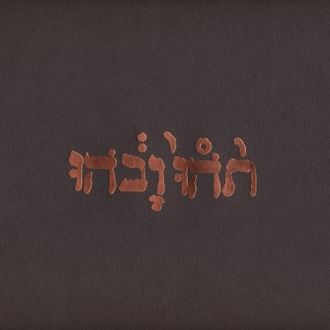
epAfter the success of their debut album, GYBE released an EP.  Being ever cryptic, the EP cover is a series of letters in Hebrew, with no mention of the band.  The Hebrew says: “Tohu va bohu” (formless and empty)

There are two tracks on this disc.  The first is called “Moya” and is something of a reworking of Gorecki’s third symphony.  The second is “BBF3” which refers “Blaise Bailey Finnegan III” the man who rants through much of the song.

“Moya” is ten minutes long (on vinyl it is played at 45 RPM).  Ominous strings open the song.  Indeed, much of the song is made of violin and cello passages intertwining.  Until about 4 minutes when the guitar starts playing.  Drums bring drama to the song about half way in.  And that’s when the guitars and strings intertwine to make a huge sound.  By around 7 minutes the song has built to a huge crescendo, but the addition of pounding bass makes everything even more intense.  It resolves with a great fast riff from the strings which the band plays for a few minutes until it settles down with just a cello and violin playing the end.

“BBF3” is a nearly 18 minute piece (on vinyl it is played at 33 RPM) with waves of music behind Finnegan being interviewed.  He tells about the American government and then about his speeding ticket (and what he told the judge–“shut your fucking mouth and listen”).  After about 3 minutes, the music changes to a new chord, a brighter sound.  As BBF3 declares that America is a “third world, third rate, third class slum,” the drums get very loud and then drop away to near silence.  The guitar pokes around quietly for a bit until it turns into a big song–drums and strings and guitars that only grows bigger as it progresses.  It builds more and more and then drops away again as BBF3 begins talking again, this time about his gun collection.  And then he reads his “poem” (which is actually the lyrics to an Iron Maiden song, “Virus”).  And then the song builds once again.  This time faster and more intensely.  It more or less grinds to a halt at around 15 minutes and then resumes after a few second of silence with some strings resuming a mournful melody until the end.

This is a pretty intense collection of music. And according to Wikipedia, Users of the website Rate Your Music rate it as the greatest EP of all time.

Godspeed You Black Emperor! has had a few lineup changes over the years.  For this EP, they changed violinists and lost the french horn. 

  • Thierry Amar — bass guitar, double bass
  • David Bryant — guitar, tapes
  • Bruce Cawdron — drums, percussion, keyboards
  • Aidan Girt — drums, percussion
  • Norsola Johnson — cello
  • Efrim Menuck — guitar, keyboards
  • Mike Moya — guitar
  • Mauro Pezzente — bass guitar
  • Sophie Trudeau — violin [replaced Christophe – violin]

no longer with the band: Thea Pratt – French horn

[READ: January 26, 2016] “How to Become a Mascot”

This story is indeed a how-to account of becoming a mascot.

It is even told in a technical manual type of style.  Although the beginning is pretty unexpected: “First, quit you day job and go back to school, even though you’re thirty-two already.  Do this because your boyfriend is dead and you will never get to run your fingers trough his curls again.”

But aside from this rather dark opening, the rest of the story is kind of funny.

The narrator is aware of a gingerbread man costume at the local outdoor shopping centre–her aunt works administration there.  No one knows how the costume got there, but she thinks it would be a good idea to take it on as a job–$15 an hour.

The first few paragraphs describe fitting it and getting used to wearing it.  “Burn 700 calories trying to undo the zipper.”  Then you must learn routines and dances. (more…)

Read Full Post »

withoutSOUNDTRACK: GOJIRA-L’Enfant Sauvage (2012).

gojiraGojira is a French heavy heavy metal band, and this album was highly recommended back in 2012 (I didn’t realize it wasn’t their debut–they have quite a few records out already).  This album is quite heavy, but it has a lot of diverse elements to keep it interesting.

At the same time, they do rely on a couple of guitar effects which make the album weirdly samey (no idea if they do it on other albums too).  The two biggest offenders in this “repeated” scenario are the seeming over-reliance on the open high e string to add contrast to the heavy chugging chords.  It’s a cool effect once or twice but they do it a lot (especially in the song “The Axe” where it happens way too much and which is then followed by “Liquid Fire” where they do it again).  The other thing they do is this weird scraping sound.  It happens in the first few notes as the disc opens (in “Explosia”).  It’s a really cool sound and quite distinctive.  When you do a weird sound like that a lot in one song, it feels like maybe too much, but then to do it in several other songs, it feels like a crutch.

Which is a shame because the rest of the album is really interesting–the vocals are growly but audible and there’s occasionally really cool backing harmony vocals (“Liquid Fire”) and some really unusual different parts to songs.

So “Explosia” opens really heavy with a crazy riff and pounding drums (and that weird scraping sound).  I love that at 2:30 it switches from bludgeoning to slower (but still heavy) and that as the song fades out with another heavy section there are slow guitar notes that remind me of a Western.  It’s really cool. “L’Enfant Sauvage” uses that open high E string in an interesting riff (by doing more than just letting the string ring out).  (The scraping sound appears here too, but in limited quantity). I like the way the song’s volume just drops for the last thirty seconds or so.

“The Axe” opens with a pummeling drum and guitar sound.  “Liquid Fire” alternates between heavy guitars and that open high E sound.  “The Wild Healer” is a simple, pretty instrumental.  It is 2 minutes long and the main riff is simple one (again all on one string).  There’s an interesting solo that plays along behind the main riff which is quite pretty–but it all ends very abruptly.

“Planned Obsolescence” jumps right in with some pummeling guitars (an a scrape sound).  It slows down a bit, but towards the end the pummeling double bass drums resume until the really slow sweet guitar section that comes in around 3:45.  “Mouth of Kala” has a heavy riff which is a cool change (even if the riff is fairly simple).  But there’s some nice melodies that alternate with the heavy stuff.  I also really like the way the song ends with a very different riff and sound than the beginning.  (And the backing vocals are really cool too).

“The Gift of Guilt” has an interesting open E string riff (which is similar to Iron Maiden’s “The Trooper,” although they do something very different with it.  This song is just littered with odd effects, like a big heavy “bowh” sound and some high-pitched guitar pyrotechnics.  But I love the way it alternates parts (the growly vocals work really well here, too) and then ends so melodically.

“Pain is a Master” opens with a slow guitar riff and whispered voices, it’s a great change of pace for the disc.  Once the slow part ends, the guitars and drums pound furiously and we get some more odd effects–a siren sound (from the guitar) alternating with the ubiquitous scrape.  But the middle parts are really quite different, slower, slightly more menacing.  “Born in Winter” opens and closes with a slow and atmospheric section (delicate vocals even).  In the middle it gets heavier (and has some really fast drumming).

“The Fall” has an Alice in Chains vibe in one section and then a more cookie monster type vocal on another.  The scraping sound returns for a final showing. I really like the way the album just sort of disintegrated into random sounds as it ends.

So overall I really enjoyed this album. It’s probably nitpicky to complain about the overuse of certain sounds, especially since they are cool.  But they have so much creativity on the disc, that to hear the same things a few times just seems redundant.  Nevertheless the album rocks and is a really enjoyable metal album.  I was supposed to see them open for Mastadon earlier in the month but something came up and I had to eat the tickets (who knew you couldn’t even give away Mastadon/Gojira tickets, come on!).

[READ: November 21, 2014] Without Blood

I’ve been enjoying Baricco so much that I decided to grab this book while I was in the library too. I had already read this book a couple of years ago, or actually, I had read the version that appeared in the New Yorker.  The Wikipedia entry says that the New Yorker version is a”revised form” of the novel.  I didn’t know what that meant exactly.  But basically I gather it means that Ann Goldstein (who translated the New Yorker version) has re-translated the story (or that they edited it for the magazine the first time).

The New Yorker version is really long for a New Yorker story (it is practically the whole novel), so it’s understandable why things were a little shorter for the magazine.  But she hasn’t changed very much for the book.  There’s a lot of little modifications–tenses of verbs (in flashback situations), word phrases are altered, additional details seems to have been added and there is at least one small section in this novel that was not in the New Yorker version.

This “new” section is about a woman who is sitting in the cafe with them.  She asks the waiter about the two main characters and we learn a little about her past as well (it’s not relevant to the story and I can see why it was omitted, but it does flesh out the scene).  I am not willing to do a page by page comparison of the two (even though that is something I tend to do). But suffice it to say that the stories are virtually identical, although I found it more satisfying reading the novel version.

Since my original recap is basically how I would summarize it this time as well, I am including it here almost verbatim.  But in the spirit of the updated version of the novel, I am modifying this post from the original in small details–see if you can spot the differences. (more…)

Read Full Post »

may20014SOUNDTRACK: CRYPTOPSY-“Slit Your Guts” (1996).

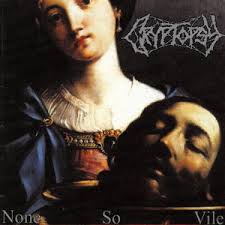
cryptI had never heard of this band until I saw the song mentioned in the article.  The song is impossibly fast with speeding guitars, super fast (inhuman) drums and an indecipherable growl as vocal.  In other words, a typical cookie monster metal song.  And yet, there is a lot more to it and, indeed it took me several listens before I could even figure out what was happening here, by which time I had really fallen for the song.

There’s a middle section which is just as punishing and fast but which is basically an instrumental break–not for showing off exactly but for showcasing more than the bands pummel.  It has a short guitar solo followed by a faster more traditional solo (each for one measure, each in a different ear). Then the tempo picks up for an extended instrumental section.  The melody is slightly more sinister, but it sounds great.  There’s even a (very short) bass solo that sticks out as a totally unexpected (and fun) surprise.

Then the growls come back in, staying with the new melody.  The vocals are so low and growly that they are almost another distorted instrument rather than a voice.

After that there’s a lengthy proper guitar solo.  As the song comes to a close,  it repeats some previous sections before suddenly halting.  It’s quite a trip. And it definitely makes me want to hear more from them (whatever their name means).

[READ: April 14, 2014] “Destroy Your Safe and Happy Lives”

Robbins, who is a poet, but about whom I know little else, takes us on a sort of literary tour of heavy metal.  His tone is interesting–he is clearly into metal, like in a big way (at the end of the article he talks about taking his writing students to see Converge (although he doesn’t exactly say why)), but he’s also not afraid to make fun of the preposterousness of, well, most of the bands–even the ones he likes.  It’s a kind of warts and all appreciation for what metal is and isn’t.  many people have written about metal from many different angles, so there’s not a lot “new” here, but it is interesting to hear the different bands discussed in such a thoughtful (and not just in a fanboy) way.

His first footnote is interesting both for metal followers and metal disdainers: “Genre classification doesn’t interest me.  Listen to Poison Idea’s Feel the Darkness followed by Repulsion’s Horrified and tell me the main difference between hardcore punk and metal isn’t that one has a bullshit positive message and one has a bullshit negative message.”

But since Robbins is a poet, he is interested in metal’s connection to poetry.  And in the article he cites William Blake (of course), but also Rilke and John Ashbery and (naturally) Milton’s Paradise Lost, as well as Shelley, Lord Byron and Charles Baudelaire.  He talks about them not because they are cool poets, but because they have also talked about because of metal’s “most familiar trope…duh, Satanism, which might be silly–okay, its’ definitely silly, but has a distinguished literary pedigree”.  Besides, he notes that Satan has the best lines in Paradise Lost (and I note that just as Judas has the best songs in Jesus Christ Superstar).

But sometimes this Satanism turns into a  form of paganism which then turns into nature worship.  From Voivod’s “Killing Technology” to black metal’s romanticism of nature (sometimes to crazy extremes–but that’s what a band needs to do to stand out sometimes).  Metal is all about the dark and primordial, a”rebuke to our soft lives.”

And yet, as a poet, Robbins has some quibbles with metal: (more…)

Read Full Post »

43SOUNDTRACK: IRON MAIDEN-Killers (1981).

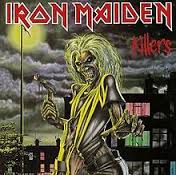
killersKillers picks up right where Iron Maiden left off–indeed many of these songs were written at the same time as the first album.  The difference is new guitarist Adrian Smith.

It opens with the great (but simple) instrumental “Ides of March” which segues into the blistering “Wrathchild.”  And it’s on this song that you can tell some of the rawness has been removed from the recording.  The guitars sound a wee bit more polished.

And you can tell the band are getting a bit more symphonic with the bass harmonics that intro the wonderful “Murders in the Rue Morgue” a song that feels long but actually isn’t.  It has several parts that all seem to signal the end until Clive Burrs drums come pounding in to restart the song.  Very cool.  “Another Life” is another fast punky song, and while I like it, it is probably one of the weaker songs on the album.  But that’s okay because it is followed by one of Maidens greatest instrumentals–“Genghis Khan” which has beautiful symphonic soaring solos over a cool propulsive beat.

“Innocent Exile” opens with another great noisy slappy bass riff that only Harris was doing at the time.  “Killers” is a classic track: fast and yet complex, with a very cool riff.   “Twilight Zone” sees Di’Anno reaching for higher more operatic notes.  He makes it, but you can just tell that the band needs more from their vocalist.  “Prodigal Son” opens with a pretty acoustic guitar intro.  I used to like this song quite a bit (whatever Lamia is), but I can see that it’s actually quite long and meandering (maybe this one is more like “War Pigs”).  It’s pretty but could probably be a bit shorter.  “Purgatory” sounds like track off the first album–fast raw and punky with screaming riffs.  “Drifter” ends the disc with a cool bass line and some more thrashing.  It’s a solid ending for an album that overall works pretty well, but which kind of shows that the band had to either do something big on the next album or get stuck in a rut.

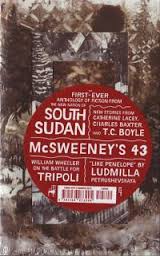
[READ: June 1, 2013] McSweeney’s #43

And with this issue I am almost all caught up with my McSweeney’s.  More impressively, I read this one only a few days after receiving it!

This issues comes with two small books.  And each book has a very cool fold-out/die cut cover (which is rather hard to close and which I was sure would get caught and therefore ripped on something but which hasn’t yet).  The first is a standard collection of letters and stories and the second is a collection of fiction from South Sudan.  Jointly they are a great collection of fiction and nonfiction, another solid effort from McSweeney’s.

Letters (more…)

Read Full Post »

42SOUNDTRACK: IRON MAIDEN-Iron Maiden (1980).

Steve Harris was on That Metal Show recently.  Harris is the baimssist and primary songwriter for Iron Maiden and has been since their first album in 1980.  When I was in high school Iron Maiden was my favorite band hands down.  I had all their albums, I had all their singles, all their hard to find British vinyl 12 inch singles, even a few pictures discs.  Wonder if they’re valuable?

Every album was an epic event for me–I even played “Rime of the Ancient Mariner “off of Powerslave to my English class (not telling anyone it was 13 minutes long).

And then, after Somewhere in Time, I just stopped listening to them. Almost full stop.  I did manage to get the first four albums on CD, but the break was pretty striking.  I actually didn’t know that they’d had personnel changes in the ensuing years.  I’d vaguely heard that Bruce Dickinson  left, and that others followed, but I don’t think I quite realized that they were back to their big lineup these days.

Anyhow, Harris was so earnest and cool that I had to go check out some of their new stuff. Which was okay.  I’d need more time to digest, but then I had to listen to the first albums again.

And wow I had forgotten how much the first Iron Maiden album melds punk and prog rock into a wild metal hybrid.  There’s so much rawness in the sound and Paul Di’Anno’s vocals, not to mention the speed of some of the tracks.  And yet there’s also some epic time changes and starts and stops and the elaborate multipart Phantom of the Opera….  Wow.

The opening chords of “Prowler” are brutal.  But what’s surprising is how the second song “Remember Tomorrow” is a lengthy song that has many ballad-like qualities, some very slow moody sections–although of course each chorus rages with a great heavy riff and a blistering solo.  On the first two albums Paul Di’Anno was the singer.  He had a fine voice (it was no Bruce Dickinson, but it was fine).  What’s funny is that Bruce does the screams in “Remember Tomorrow” so much better in the live version that I forgot Paul’s vocals were a little anemic here.

However, Paul sounds perfect for the rawness of “Running Free” a wonderfully propulsive song with classic Harris bass and very simple metal chugga chugga riffs.  And this has one of the first real dual guitar solos–with both players doing almost the same riff (and later Harris joining in on bass).

“Phantom of the Opera” is the band’s first attempt at an epic multi-secton kinda-prog song.  It opens with a memorable, if slightly idiosyncratic riff and some wonderfully fast guitars/bass.  There’s a great slow bit that morphs into an awesome instrumental soloing section with bass and twin guitars playing a wonderful melody.

“Transylvania” is an instrumental that is challenging but probably not one of the best metal instrumentals out there, although again when Dennis Stratton and Dave Murray play in synch solos it’s awesome.  This track segues into “Strange World” a surprisingly trippy song (with effects that seem like keyboards but which aren’t).  It’s slow in a “War Pigs” kind of way, but it doesn’t entirely break up the album, because there are other slow bits on the disc.  It is a little out of place though.

Especially when “Sanctuary” blasts forth.  True, it wasn’t originally on the album (in the UK), but man, blistering punk or what!  “Charlotte the Harlot” was always one of my favorite songs (it taught me what a harlot was after all), it’s quite proggy, with a lot of stuttered guitar work and a middle section that features some loud and complex bass.  The disc ends with the by now almost immortal “Iron Maiden.”   A great raw riff opens the song, a harmony guitar partners it and the band blasts forth.  Who even knows what the lyrics area about, the song just moves and moves–There’s even a great chaotic bass/drum break in the middle.  And listening to the guitar noises in the solos at the end.  Amazing.  It’s quite the debut.

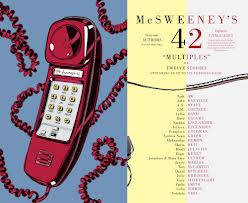
[READ: June 7, 2013] McSweeney’s #42

I have made it a point of (possibly misguided) pride that I have read every word in every McSweeney’s issue.  But this issue has brought that to an end.  As the title states, there are twelve stories in the book.  But there are also sixty-one authors writing in eighteen languages.  And there’s the rub.  One of my greatest (possibly misguided) shames is that I don’t speak any other languages.  Well, I studied Spanish and German, I know a few dozen words in French and I can read the Greek alphabet, but none of these would help me read any of these stories.  So, at least half of this book I didn’t read.

But that’s kind of the point.  The purpose of this book is to make a “telephone” type game out of these stories.  Stories are translated from one language to another and then re-translated back into English.  The translators were mostly writers rather than translators and while some of them knew the second language, many of them resorted to Google Translate or other resources to “read” the story.  Some people read the story once and then rewrote it entirely, other people tried to be as faithful as possible to the original.  And so what you get are twelve stories, some told three times in English.  Some versions are very similar and others are wildly divergent.

I normally write about the stories in the issues, but that seems sort of beside the point as the original stories were already published and were selected for various reasons (and we don’t even see any of the original stories).  The point here is the translation(s).  So, in a far less thorough than usual way, I’ll list the contents below. (more…)

Read Full Post »

[WATCHED October-November 2012] Metal Evolution

metal evolutionVH1 aired this series last year and I was intrigued by it but figured I had no time to watch an 11 hour series on the history of heavy metal.  Of course, this being VH1, they have since re-aired the series on an almost continual loop.  So, if you’re interested, you can always catch it.

This series was created by Sam Dunn, the documentary filmmaker who made the movie Metal: A Headbanger’s Journey.  I had heard good things about the movie, but never saw it.  After watching the series, I’m definitely interested in the movie.  Dunn is a keener–A Canadian heavy metal fan who is really into his subject.  He knows his stuff and he knows what he likes (heavy metal) and what he doesn’t like (glam metal, nu metal).

The sheer number of people he interviews is impressive (as are the number of locations he travels to).  Part of me says “wow, I can’t believe he was able to interview X,” and then I remember, “X is really old and is nowhere near the level of fame that he once had.”  Given that, the few hold-outs seem surprising–did they not want to have anything to do with VH1?  Are they embarrassed at how uncool they are now?  Just watch the show guys, you can’t be as low as some.

The only mild criticism I have is that the show relies a lot on the same talking heads over and over.  Scott Ian from Anthrax, whom I love, is in every episode.  Indeed, he may be a paid VH1 spokesman at this point.  There are a few other dudes who show up a little more than they warrant, but hey, you use what you got, right?

What is impressive is the volume of music he includes with the show.  I assume that he couldn’t  get the rights to any studio recordings because every clip is live.  This is good for fans in that we get to see some cool unfamiliar live footage, but some of it is current live footage which often doesn’t compare to the heyday.  Having said that, there’s a lot of live footage from the early 80s–of bands that I never saw live anywhere.  And that’s pretty awesome.

With an 11-part documentary there’s the possibility of exhaustion and overkill, but Dunn is an excellent craftsman  he jumps around from old to new, talks about how the history impacts the current and, because of his own interests, he makes it personal rather than just informative. (more…)

Read Full Post »

SOUNDTRACK: THE SWORD-Gods of the Earth (2008).

So I used to be really into heavy metal. I’m not so much anymore, although I do enjoy the occasional bout of heaviness. However, I had been listening to some Black Sabbath recently, and I guess I was in the mood, because when I read some descriptions of The Sword, I was intrigued. Black Sabbath kept coming up as an obvious precurosr. So with that and the reviews saying they use silly middle earth swords and sorcery lyrics and they have screaming guitar solos, I had to get it. It sounded great.

And the first track, a fantastic instrumental, lived up to the hype. It’s fast, it’s furious, the guitars are totally something that I would have HAD to learn how to play back in high school. It was amazing. And then the second song kicked in, and it was great too. Finally I got to hear the singer, and when he started singing, the lead guitar played the vocal line in tandem and it was awesome. And then the lead guitar stopped and the voice was….where? It was mixed way way way in the background, sounding like he was in the next room. What was the point of all the weird fantasy lyrics is you couldn’t hear them?

And so it is with the bulk of the album. The music is first rate: excellent riffs, great harmonized guitar solos, Middle Eastern (by way of Led Zeppelin) atmospheres. The acoustic guitar even pops up in a couple of places too, showing a nice range of diversity. All kinds of things that make metal so wonderful. And yet, it’s so hard to get into the voice. It sounds kind of reedy and thin. If you crank it up really loud, it kind of works. His voice does creak through on occasion. And yet, with bombast like this, you expect the voice to be out there in front, leading the way like Bruce Dickinson or Rob Halford. I guess if you grew up listening to Iron Maiden and Judas Priest, you have a certain, if not standard, then expectation. Maybe if you grew up listening to some of the great stoner bands of the 90s, the muted voice is just par for the course, which is fine, but the guitar riffs don’t jibe with that. And, frankly, I just don’t hear Black Sabbath at all.

The album ends with two strong instrumentals. The 5 minute, powerful, chugging along, rifftastic “The White Sea” and then an untitled acoustic-jam-type ballad that is totally incongruous with the rest of the disc and yet seems to put a mellow calm over the whole proceedings.

Reviews of their first album suggest that the overall mix isn’t like this one. It has more Black Sabbathy. I can’t decide if it would be worth getting. I may have to just pull out We Sold Our Souls for Rock n Roll instead.

[READ: June 30, 2008] “The Next Thing”

This was a wonderfully subversive story. It is actually quite simple in scope: on the edge of a small community, a new shopping center called “The Next Thing” is being built and causing rumors to fly. (more…)

Read Full Post »

« Newer Posts