Feeds:
Posts
Comments

Archive for the ‘Bruce Springsteen’ Category

2016-12-05-21-06-09SOUNDTRACK: ARBOREA-Tiny Desk Concert #218 (May 17, 2012).

I’d published these posts without Soundtracks while I was reading the calendars.  But I decided to add Tiny Desk Concerts to them when I realized that I’d love to post about all of the remaining 100 or shows and this was a good way to knock out 25 of them.

arboreaArborea is a totally captivating band.

The band consists of Shanti and Buck Curran.  They play three songs and each one is really different, but all with in a spooky, mellow Appalachian feel.

“Song for Obol” features Buck playing an electric guitar with an e-bow and a slide—creating single-note sirens that roar and fade.  The sounds are magical.  But they’re not the most interesting part of this song.  Because Shanti is playing the Ban-Jammer–“a sweet little hybrid that’s part banjo, part mountain dulcimer.” Shanti also sings and her voice is high and delicate—sometimes almost a whisper.  The Ban-Jammer is such an interesting and compelling sound and those washes of electric guitar so enticing that I didn’t want this song to end—even if I never really paid attention to what she was singing about.

For the second song Bob Boilen himself goes behind his desk to play harmonium with them.  Shanti plays acoustic guitar and tells us that the harmonium is

Inspired by the tales in Maine about fishing boats that were lost to the ocean—this song is about a woman who loses her lover to the sea—the harmonium is the ocean and the wind.

The harmonium isn’t very loud, but it keeps constant background while Buck pays the electric guitar (with slide, but no e-bow) and Shanti picks out the acoustic guitar melody.

The final song “A Little Time” is played on an acoustic tenor guitar.  Both Shanti and Buck sing for this track.  At first I wasn’t crazy about his voice accompanying hers, but he really gets the same tone very nice;y.  And her oh-hoos are beautifully haunting.

I’d really like to hear more from these guys.  And it is pretty fun to actually see Bob behind his Tiny Desk.

[READ: December 6, 2016] “Dream Girl”

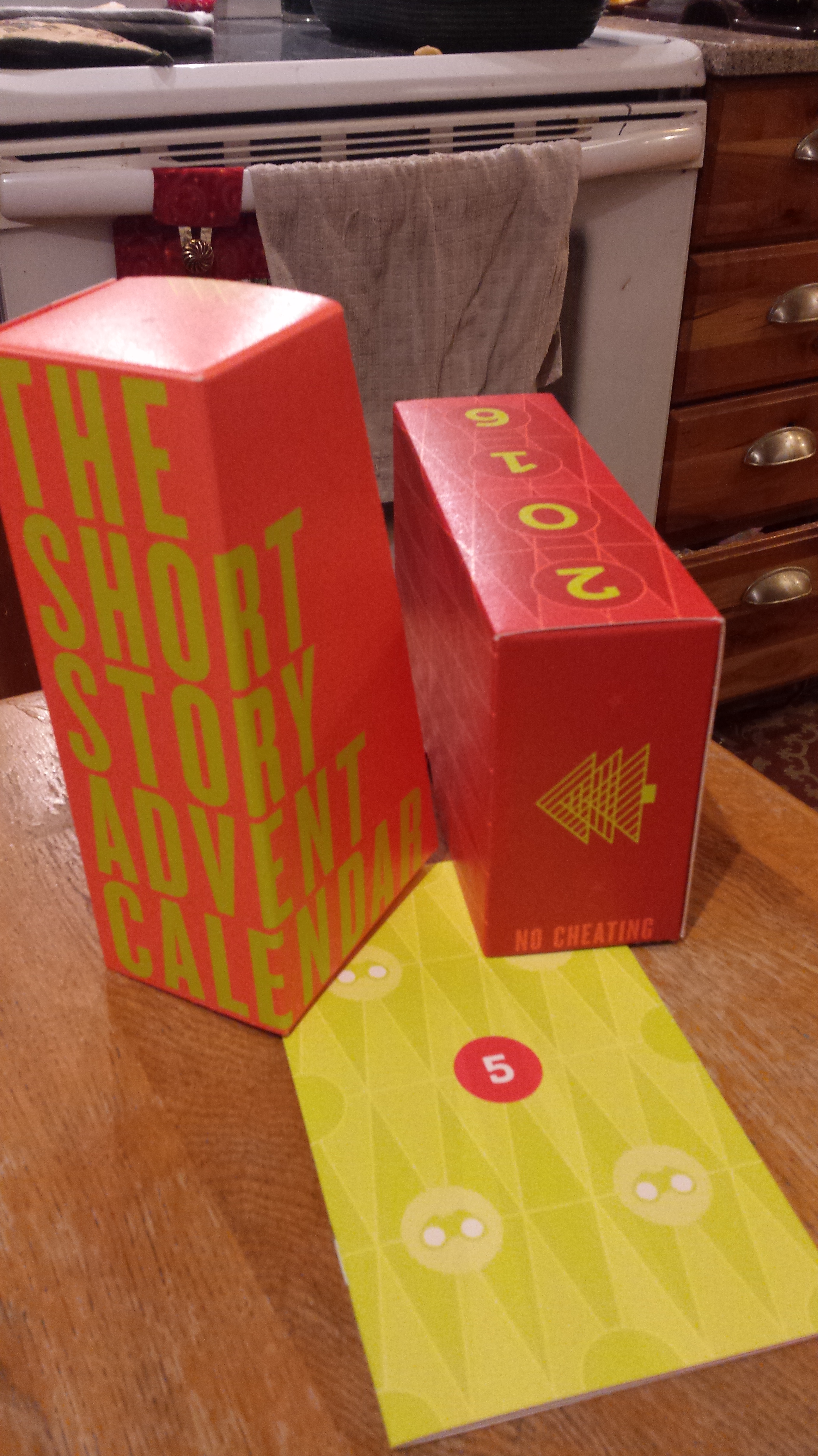
Near the end of November, I found out about The Short Story Advent Calendar.  Which is what exactly?  Well…

The Short Story Advent Calendar returns, not a moment too soon, to spice up your holidays with another collection of 24 stories that readers open one by one on the mornings leading up to Christmas.  This year’s stories once again come from some of your favourite writers across the continent—plus a couple of new crushes you haven’t met yet. Most of the stories have never appeared in a book before. Some have never been published, period.

I already had plans for what to post about in December, but since this arrived (a few days late for advent, but that was my fault for ordering so late) I’ve decided to post about every story on each day.

I wasn’t aware of Katie Coyle before reading this story.  Perhaps the only reason I might have known about her is because she is a YA author from New Jersey.

But I’d like to know more about her because this story was wonderful.  The point of view of the story was fantastic and the whole concept was weird and cool.

The narrator is never revealed, but I love this beginning:

This all started when Winston’s girlfriend Sheila dumped him at his high-school graduation party.  Or maybe it started when Sheila began to notice that Winston didn’t understand her.  Certainly it never would’ve happened had she not turned to Winston in their Modern Conflicts class nine months earlier and said, “It’s Winston, right?”

Such intrigue! (more…)

Read Full Post »

greatestSOUNDTRACK: PINK FLOYD-“The Hard Way” and “Wine Glasses” (1974).

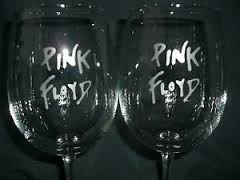
glassThis book informed me about these two unreleased Pink Floyd songs (there’s a Wikipedia site that lists some fifty more !).  While the were unreleased in 1974 (from the abandoned Household Objects album), they were eventually released in 2011 on expanded versions of albums.

“The Hard Way” features some “percussion” that sounds like someone taking steps.  There’s a bass riff which I gather is from rubber bands (but very well tuned).  There’s clocks ticking and chiming and tape being unspooled.  It’s a neat idea and while it is absurd to think you could make a whole album with this kind of stuff (in 1974), it’s a surprisingly good sounding track.

“Wine Glasses” was apparently made with wine glasses.  It is all of 2 minutes long.  It was designed to be a full song but was eventually used in the introduction to “Shine on You Crazy Diamond.”  I never really considered that there were wine glasses making the sounds (and clearly there are synths added on top), but yeah, so that ‘s kinda neat.

[READ: November 25, 2014] The Greatest Albums You’ll Never Hear

I found this book at work and knew I had to read it.  I was actually surprised at how long it took me to read (there’s a lot of entries).

The title and subtitle pretty much say everything you need to know about this book (and if you need to read it or not).  This book collects a series of writers who give a brief history of some of the more famous (and some not so famous) albums that were never released.  It explains (as best they can) why the albums weren’t released and even gives a percentage chance of likelihood of the album ever seeing the light of day (interestingly, most seem to be a 3/10–they may have been able to use a 5 point scale).

I knew some of the records they talked about (The Beach Boys’ Smile, Neil Young’s Chrome Dreams), but was ignorant of quite a lot of them. And while big fans of the artists may know all of the details about their favorite lost album already (these are sketches, not exhaustive research), there will certainly be some new information.  For instance, I’m a huge Pink Floyd fan but had no idea about the two shelved works mentioned here.

I liked the way the book was done chronologically and grouped by decade.  It was also interesting to see how the “reasons” for the non-release morphed over the decades from “the record label didn’t like it” to “it was leaked online.”

The one major gripe I have with the book is that it is chock full of “imagined” album covers.  This in itself is okay, but it is not made explicitly clear that they are all imagined (credits are given at the bottom of each image, but it took me a few entries to realize these were just people’s ideas of what the covers could look like).  And most of them are gawdawful.  Just really lame and dull (as if they had 20 minutes to come up with an idea).  They mar an otherwise cool collection,especially since some of the unreleased records actually do have proposed covers (even if they were never released).  I see that there is in fact a paragraph about the covers in the front pages of the book, but it is almost hidden away.

In addition to the albums I’ve listed below, I learned some fascinating things.  That Bruce Springsteen has hundreds of songs that he wrote but never released for various reasons.  That Pink Floyd did try to make an album out of household objects (with no instruments).  That the Sex Pistols’ Never Mind the Bollocks was almost simultaneously released illicitly as Spunk.  And that Danger Mouse’s The Grey Album was recently remastered.

The end of the book includes two small sections: other favorites that were never released.  Not sure why they earned only a small column instead of a full entry, but that’s okay.  The second was albums that we eventually did see, like My Bloody Valentine’s MBV and Guns N’ Roses’ Chinese Democracy.

So if you ever wondered what happened to that long lost album, this may be the book for you.

A sampling of the unreleased records include:

  • The Beach Boys-Smile
  • Buffalo Springfield-Stampede
  • The Kinks-Four Respected Gentlemen
  • The Beatles-Get Back
  • Jeff Beck-The Motown Album
  • Jimi Hendrix-Black Gold
  • The Who-Lifehouse
  • Wicked Lester
  • Rolling Stones-American Tour ’72
  • CSN&Y-Human Highway
  • Pink Floyd-Household Objects (1974), Spare Brick 1982
  • Dusty Springfield-Longing
  • David Bowie-The Gouster (1975), Toy (2001)
  • Sex Pistols-Spunk
  • Neil Young -Homegrown (1975), Chrome Dreams (1976)
  • Frank Zappa-Läther
  • Beastie Boys-Country Mike’s Greatest Hits
  • Weezer-Songs from the Black Hole
  • Jeff Buckley-My Sweeetheart the Drunk
  • Van Halen-IV
  • Foo Fighters-The Million Dollar Demos
  • Green Day-Cigarettes and Valentines (the author doesn’t believe it was actually stolen)
  • Tapeworm (Trent Reznor and Maynard James Keenan among others)
  • Deftones-Eros
  • U2-Songs of Ascent
  • Beck-The Song Reader


Read Full Post »

jdSOUNDTRACK: PET SHOP BOYS-Electric (2013).

psbAfter the sombre, more reflective Elysium, Pet Shop Boys came back with the far more upbeat and dancey Electric.  Right from the start, you know this is back to high energy fun (with of course sardonic lyrics). The opening track, “Axis,” is a major dance song with processed vocals and a great riff–I love how the song goes very electronic and artificial sounding around 4 minutes in.  “Bolshy” has a classic PSB sound–dancey keyboards and Neil Tennant’s ageless voice.  I don’t really quite know what the song is about but it is really fun to sing along to. It is followed by “Love is  Bourgeois Construct” (I sense a strangely political theme here–and I love that the follow-up line is “just like they said at University” ), I love the way the song gets really muddy while the synth line plays and that it emerges bigger and better than ever–the sound reminds me of the synth songs in A Clockwork Orange and the riff is on Michael Nyman’s “Chasing Sheep Is Best Left to Shepherds.” The way the music is so epic-sounding for such a simple idea of a song is great,

“Flourescent” is a darker song, with big synths and cowbells ringing in the song.  It’s got a steampunky wheeze as the drum beat and a echoey synth note which all coalesces before Tennant’s vocals which come in–two minutes into the song.  It’s a very moody piece and even at 6 minutes doesn’t feel overly long.

“Inside a Dream” is a dancey song with a fast melody.  “The Last to Die” is a Bruce Springsteen song from his album Magic (I had no idea) which they electrify and make synthy, but not dancey exactly.  They do a very good job of capturing the Springsteen vibe in their own way.  “Shouting in the Evening” is a very dancey song, one of may favorites on the record–I love the way Chris Lowe distorts his keyboards on this track.  “Thursday” has a great vocal line–“It’s Thursday night, let’s get it right.  I want to know you’re gonna stay for the weekend.”  It’s a catchy song with the repeats of the days: “Thursday Friday Saturday Sunday.”  I could do without the rap (by Example) which reminds me way too much of Blondie’s rap in Rapture–stiff and kind of forced.

The final song “Vocal” I find odd in the lyrics.  It’s about songs that he likes, which is fine, but the line, “every track has a vocal, and that make a change” is weird–do dance songs not have vocals anymore?  Well, how would I know, i don’t listen to a lot of dance music.  Anyhow, it’s super catchy and dancey.  I like the way it builds to the big chorus even if the song isn’t very complex.

While I enjoyed the introspective Elysium, it’s great to have a big loud Pet Shop Boys album as a return to form.

[READ: October 22, 2014] Three Early Stories

I found this book on the shelf at work.  I had no idea that a) Salinger had written so many stories that have yet to be collected (according to Wikipedia there are about a dozen) or that these three had been collected in this very strange edition.  The book collects three stories and includes illustrations by Anna Rose Yoken.  The illustrations are fine, but not worth getting the book for (and feel a bit more like a children’s book illustration than a Salinger story).  The other strange thing is that the text is only on the right side pages, so although the book is 69 pages, there’s really only about 35 pages of story.

I had never read any of these stories, so I was glad to find this book.  They were written before Catcher in the Rye, and it’s interesting to see what was on his ind before he created Holden Caufield.  These stories seem to focus on college-aged women and the way they behave.  The portraits of these women are not flattering, but they are fairly realistic.

“The Young Folks” is set at a party (I can’t believe how many cigarettes are smoked in these three stories).  At 11PM during the party, Lucille Henderson, (the college-aged host) sees that her friend Edna Phillips is by herself, still.  So she introduces her to William Jameson.  Jameson is more interested in the laughing (and presumably drunk) blond girl who is sitting amid three guys from Rutgers who are hanging on her every word.

As soon as Jameson is introduced to Edna, he starts making excuses that he should leave the party–he has a theme due on Monday.  But Edna clings to him  with conversation. She asks about his theme, she tells him about the guy who was too forward with her–she’s no prude, but come on.  She offers him cigarettes and invites him to the balcony.  He is too polite to tell her off, but he is giving major signals that she must see and is perhaps saving up as ammunition for later. (more…)

Read Full Post »

june23SOUNDTRACK: MONTY PYTHON-“Rock Notes” (1980).

mpThis skit (more of a monologue) comes from Monty Python’s Contractual Obligation Album, the first Python album I ever bought.  It’s not my favorite bit from them, but it’s short and wedged in the middle of the rest of the album which means that I know it by heart.  Now, the skit is most famous for naming Toad the Wet Sprocket (Eric Idle says he tried to come up with the most absurd name he could think of and there it was).  The band featured Flamboyant Ambidextrous Rex who fell off the back of a motorcycle.

What I tend to forget is that the rest of the joke is all about one band Dead Monkeys who have just broken up again.  They were together for ten years, but for nine of those years the band had other names.  Primarily, the names are fishy: Dead Salmon, Trout, Poached Trout in a White Wine Sauce, Dead Herring.  Then they ditched the fishy references for Dead Loss, Heads Together, Dead Together and ultimately Helen Shapiro.

This extended riff is rather silly and I’m not even sure it’s appropriate for a joke on bands.  I can’t think of many bands who have broken up and reformed under new names (I mean, yes, there’s a couple, but not enough to warrant this extended joke).

And yet, I still remember the joke, so it must be something, right?

What do I think of Dead Duck? or Lobster?

[READ: September 16, 2014] “Liner Notes”

This Shouts & Murmurs piece begins so strongly that I was super excited to read it.  Saunders riffs on liner notes in albums, specifically failed albums.  His liner notes are for the album 2776: A Musical Journey Through America’s Past, Present & Future which is just another attempt to “engage with the vast sweep of American history” via the musical epic.

The best joke is citing Meat Loaf’s “Ben Franklin Makes Love in a Foggy Grove of Trees” (which failed to translate to live performance).  [I would totally listen to that song].  He then talks about a Tim Rice-Andrew Lloyd Webber production of “Johnny Tremain” which was too intellectual for a nineteen-seventies audience.  But I feel like Saunders goes off track when, instead of staying with the slightly absurd realism, he jumps the shark by saying that the songs were too risqué “for a staid culture that, at that time, still believed that babies came when you left a pastel turtleneck rolled up in a wad overnight.”  It broke me right out of the exaggerated realism into the realm of outrageous farce.

Which is a shame because returning to real artists like Tom Waits making a biography of Jesse James called “A White-Trash Rambling Christ Figure Just Shot Your Brother, Amigo” is pretty darn funny. (more…)

Read Full Post »

Pete Seeger [1919-2014]

seegerPete Seeger died last night at the age of 94.  I love his anti-war quote: “Sometimes I think [about] that old saying,’The pen is mightier than the sword.’ Well, my one hope is the guitar is gonna be mightier than the bomb.”

When I was a kid, I knew a few of his songs (and didn’t really like them) because of an organ songbook we had (did everyone have an organ in the 70s?).  I can remember pounding on the wheezing organ and making up silly lyrics to “If I Had a Hammer” and “Where Have All the Flowers Gone?”  It’s amazing to think that these songs, which were written in the sixties, are often seen as eternal classics.  It’s also amazing to think that Seeger wrote “Turn! Turn! Turn!” which I never associated with him.  Indeed, like Woody Guthrie, much of American folk music can be traced to Pete Seeger (even if he adapted much of it himself).

I really started getting into Seeger when I had kids, as I found his music was fun to teach the kids to sing along to–it was designed for singing along to.  In fact, he wrote a ton of children’s music as well. (He released FIFTY-TWO studio albums, along with 22 live albums and 23 compilations).  His first solo album was a collection of traditional folk songs for children (he didn’t write them, which may be why it’s confusing to know which songs were actually his).  And I don’t even know anything about his first band The Weavers, who had hits with “Goodnight Irene,” “On Top of Old Smokey,” “So Long (It’s Been Good to Know You)” and “Wimoweh.”

(more…)

Read Full Post »

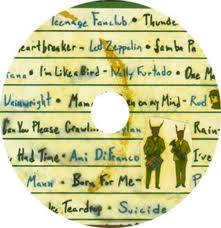
songbookSOUNDTRACK: songs from Songbook (2002).

songbook2Songbook came with an 11 song CD.  I’m curious, given the way he speaks so lovingly of the songs in the book how come more bands/labels didn’t want to be included on it.  The proceeds went to charity and it would just be more exposure for the artists.  There were a lot of songs I didn’t know and would love to have heard (or would love to hear while I was reading).  And frankly I see no downside to throwing a track on a compilation which is a collection of someone’s favorite songs.  Of course, things were very different in the music world in 2002.  Now, someone will just make a playlist on their iPod of theses songs, and post them to Spotify.

PAUL WESTERBERG-“Born for Me.” I’m much more of a fan of Westerberg with the Replacements, as he got a little too polished as a solo guy.  But this song has a fun, shambolic quality to it (it doesn’t even sound like Westerberg singing).  It wouldn’t be a favorite song of mine, but it is a nice one.

TEENAGE FANCLUB “Your Love is the Place Where I Come From” and “Ain’t That Enough.”  I really like Teenage Fanclub a lot.  They are one of my favorite jangly pop bands.  So these two songs rank pretty high for me.  Although I admit to liking their slightly more rocking songs a bit more, “Your Love” is a very pretty ballad and “Ain’t That Enough” is just gorgeous.

THE BIBLE- “Glorybound” Hornby says he knew these guys.  It’s an okay song, a little too slick for me and very of its time.

AIMEE MANN-“I’ve Had It”  I like Aimee Mann very much.  I can’t say that I paid a ton of attention to the lyrics of this song (I didn’t know it was about touring) but I’ve always liked it—the understated yet beautiful melody and chorus are very nice.

RUFUS WAINWRIGHT-“One Man Guy” I like Rufus a lot.  I don’t own any of his music, but I really like everything I hear from him.  His delivery is so louche, it makes me smile every time.  This song is actually one his father wrote and sang many years ago (very differently).

ROD STEWART-“Mama You Been on My Mind” Hornby’s essay on Rod Stewart is hilarious.  And his defense of early Stewart is wholly believable.  I, of course, know Rod from his later, laughable stuff, so I never considered his early work  But this track is pretty good.

BADLY DRAWN BOY-“A Minor Incident” Sarah and I love Badly Drawn Boy, and this soundtrack in particular.  Hornby’s discussion of how he Damon got to do the soundtrack is very interesting.

BEN FOLDS FIVE-“Smoke” I’ve liked Ben for years now (going to see him in two weeks).  This song has always been a favorite both for the lyrics, which are great and because that weird harp-type sound is him playing the strings of his grand piano with a pick.

MARK MULCAHY-“Hey Self Defeater” I don’t know Mulcahy at all.  This song has a beautiful wavery guitar and gentle vocals (it’s funny to read about Hornby rocking out when most of this disc is quite mellow).

ANI DIFRANCO-“You Had Time” I was a huge Ani DiFranco fan back in the day, but this song is unknown to me, or should I say unfamiliar to me.  It’s on one of her very early albums.  Perhaps it’s more that I must have ignored the piano opening, which Hornby pays close attention to and really explains it in a useful way, showing how it is more about a beautiful melody being born from chaos.  And now I respect the song a lot more.

[READ: 2002 and July 1, 2013] Songbook

I can’t tell you how many times I’ve written this very book in my head….  A list of favorite songs and why they are so important to me?  How cool is that.  I have no idea how come Hornby got to write it (I know, High Fidelity), but still, what a nice cozy assignment.  And to have this book illustrated by Marcel Dzama is even cooler.

This book came out in 2002 after About a Boy (and in the year that About a Boy was being turned into a film).  Hornby had recently hooked up with the McSweeney’s gang and began writing for The Believer in 2003.

I had no idea that the book was released in the UK under a different name (31 Songs) or that they also released an accompanying CD (A Selection of Music from 31 Songs) with 18 songs on it (see my comment above about CDs).  Although we got fewer songs on the disc in the US, at least ours came with the book. (more…)

Read Full Post »

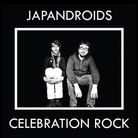
SOUNDTRACK: JAPANDROIDS-“Fire’s Highway” (2012).

I regret dismissing the suggestions of the NPR folks the other day.  As the more I dig into their suggestions, the more I like–seems their selections are better than their descriptions of said selections.  Take this description of the Japandoids’ album: “snarling punk meets the fist-in-the-air anthemics of Born to Run-era Springsteen and his modern-day equivalents in The Gaslight Anthem.”  I’ve never really liked Springsteen (I know, a Jersey boy, too).  I think it’s more about production (and saxophone) than anything else.  So, comparing bands to him is never a sell for me (even if it may be true).  To me, this sounds much more like a low-key Arcade Fire (with literally no pretensions to anything–I mean, there’s only 2 Japandroids).  Granted, Arcade Fire owe a lot to Springsteen too, but they do something different with his sound, which is why I like them.  [I’m not going to be able to argue my way out of this].

Anyhow, this song is a four minutes of punky guitars and a stupidly catchy chorus.  The fact that it’s only two guys makes it all the more remarkable that it sounds like a full band.  And perhaps, the biggest difference for me is the singer’s voice which feels very early 90s alt rock/punk.  Whatever it is, I’m a fan and will certainly be listening to more of this album.

[READ: June 14, 2012] “The Clockwork Condition”

Like most young men of a certain bent, I loved A Clockwork Orange.  I’ve watched it dozens of times and I’ve read the book.  What I especially like about the story is that my feelings about it change as I get older—which, while not the point exactly, is certainly a theme in the story–how age makes things seem different.  The most important thing I learned from this article is that there was an epilogue in the British version of the book that was not available in the American version (or the film).  And it seems to be pretty important.  What a strange thing to leave out.

Incidentally, Burgess wrote the book in 1962 and the film came out in 1973, which is why he was wrote this in 1973.  He says he was asked about Issues that arose from the film.  And he talks a lot about them.

But he also gives a lot of background.  The title of the book comes from the expression “as queer as a clockwork orange” which is Cockney slang for something so weird it subverts nature.  It was a perfect title for an idea he was going to write about—how people suggested using aversion therapy to change juvenile delinquent behavior.

So this article goes on for a pretty long time, raising all kinds of questions.  It’s really articulate and fascinating and really makes me want to re-read the anti-authoritarian novels I read in high school: 1984, It Can’t Happen Here, Brave New World.   He even talks about B.F. Skinner, who proposed that aversion therapy (which is what Alex gets in the book/movie) was wrong and that positive reinforcement was always more effective.  Skinner worked with animals (Burgess jokes about that) and the whole “you get more flies with honey” attitude works better for training animals he says.  The same is true for people.  Besides, aversion therapy removes freewill. (more…)

Read Full Post »

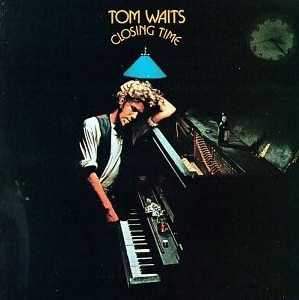
SOUNDTRACK: TOM WAITS-Closing Time (1973). 

This is the first official Tom Waits release.  There’s a couple “Early Years” collections which are really fascinating for how much he doesn’t sound like the 21st century Tom Waits, but these at least show glimpses of the man to come.  There are some songs on here that I knew of from different artists, and had no idea TW had written them  (Tim Buckley covered “Martha” the same year this came out (that’s pretty amazing), The Eagles covered “Ol’ 55” on their album the following year.  However, Van Halen’s “Ice Cream Man” is not a cover of Tom’s song). The funny thing about the record is how much he sounds like a late 70s lounge singer. How can an album as stripped down as this sound of an era? I don’t know, but it does. It’s also nice to know that his opening song “Ol’ 55” has had such a long life.

My wife does not like Tom Waits, but I think I could sneak this album past her.  You can tell that it’s Tom (before years of abuse to his vocal chords).  His voice is in fine non-gravelly form, just a little bass heavy.  And he is crooning to us.  He even has one of his sweet songs (“Midnight Lullaby”).  It’s hard (but not impossible) to imagine that this man would have turned into the man from Bone Machine.

As I was saying about the mid 70’s, the style of songs here could easily have been played on the same radio station as Springsteen (this album came out the same year as Greetings from Asbury Park–and Springsteen made famous “Jersey Girl” one of Tom’s early songs).  Indeed, many of these songs were covered by other artists.  The funny thing to me about the album is that although Tom is the pianist, I feel like the album is more focused on the trumpet (that muted trumpet seems to be everywhere (giving the album more of a jazzy feel than a rock feel).  And yet, despite this overall jazziness, “I Hope That I Don’t Fall in Love with You” and “Old Shoes (& Picture Postcards)” is a pretty straight-ahead folk song.  There’s also the beautiful ballad “Martha” played only on piano–such a gorgeous melody.  Perhaps the least exciting song is the instrumental ballad “Closing Time.”  It’s a simple piano melody with more trumpet.  There’s nothing wrong with it, it’s just not that inspirational.

I find that as I get older I like this album more (which is somewhat ironic since he recorded it when he was 24).  It’s tempting to say that the album–with its many styles–is unfocused, but Waits’ albums all seem to follow in this multiple-styles vein.  He’s not afraid to try something new (see his entire output since 1983).  But this one is a surprisingly straightforward album.  I can’t wait to see if Sarah likes it.

[READ: September 21, 2011] “Town of Cats”

Murakami is (in my limited experience) a master of the surreal. And yet for his more recent short stories, he seems to be switching into more of a story within a story conceit.  And that’s fine too, because the stories and the stories within the stories are clever and creative and still a bit surreal.

This story starts out a little awkwardly: at Koenji Station, Tengo boards a train with absolutely no destination in mind.  He can get off anywhere that he wants, he decides. He imagines going to the beach and enjoying a nice day.  But then he realizes that all along he has ben heading in one specific direction: to visit his father in a nursing home.  This is especially surprising for Tengo as he has not visited his father in over two years (and Tengo is his only relative).

As Tengo thinks back to his childhood, it is full of nothing but anger.  Anger that his father took him on his work (collecting fees for Japanese TV) every Sunday and that Tengo never had any chance for fun.  In fairness to Tengo’s father, Tengo’s mother died when Tengo was just a baby and his father had to take care of him as best as he could.  But there was no love, no warmth, no emotion.  And the more he thought about his father he realizes that that’s what his father was like–no intellectual curiosity of any kind.  Just work work work.

And yet Tengo can’t shake a memory from when he was only a year and a half or so of his mother standing near hs crib with a man who wasn’t his father kissing her naked breasts.  This memory has always been with him and he can’t help but wonder if his father really isn’t his father at all.  (more…)

Read Full Post »

« Newer Posts