Feeds:
Posts
Comments

Archive for the ‘Blue Öyster Cult’ Category

SOUNDTRACK: BLUE ÖYSTER CULT-Curse of the Hidden Mirror (2001).

It’s something of a shame that BOC has fallen off the radar so much.  While never a big seller, they’ve been a surprisingly good singles band.  And on this disc, they have a couple of songs that could have been big hits if anybody still cared about them.

“Dance on Stilts” is their most interesting song in quite some time.  It’s catchy, it’ got a cool riff and it’s got a great keyboard sound that you could easily hear on rock radio.    “Here Comes That Feeling Again” could also have been a pretty huge hit, even now on a mellow rock station, it would work very well.  In fact, the whole disc plays wonderfully within the classic rock style.

Cyberpunk author John Shirley (who wrote a song called “Transmaniacon” based on a BOC song) wrote most of the lyrics for this disc.  And the band seems inspired by the subject material because throughout the disc, the riffs are solid and catchy and the songs are great.  “One Step Ahead of the Devil” has the great BOC keyboard sound that punctuates the chorus, while “I Just Want to Be Bad” is a silly song that surpasses it clichés with a  cool unexpected minor key riff.

Since the band has only released two albums since Imaginos, it’s faint praise to say that this is their best album in that time.  But this album is definitely one of their best released.  Whereas Heaven Forbid sounded like a standard collection of BOC songs, this one seems like a collection of superior tracks based on the classic BOC format.   BOC fans who were unsure if it was worth tracking down these latter day discs would do well with this one.  The final track, “Good to Feel Hungry” is pretty silly and is definietly something of a throwaway, but aside from that the whole disc is very solid.

[READ: March 20, 2010] “Just Before the Black”

This is the second story by Franco that I’ve read.  I’m torn about whether I think he ought to be a good writer or not.  I’ve enjoyed his acting, but when an actor switches to another medium, it’s always tough to know whether he’s serious.  Of course, Franco has gone to writing programs, and is in pursuit of his PhD, so I think his writing motives are pure.  It’s also interesting to wonder if there were any writers who inspired him to want to write.  In the two stories I’ve read, his style has been terse, and I’ve wondered if Hemingway was an inspiration.

This one started off short and brusque (typical of Esquire fiction), and I was afraid I wasn’t going to enjoy it.  But after a few paragraphs, the heart of the story came to light and I found it really fascinating; the story morphed from a tough guy story about two dudes hanging out in a car to an introspective story bout two dudes hanging out in a car. (more…)

Read Full Post »

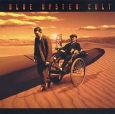
SOUNDTRACK: BLUE ÖYSTER CULT-Heaven Forbid (1998).

After Imaginos, it seemed like Blue Öyster Cult was all wrapped up.  (Of course, they tour all the time, so I guess they’ll never officially go away).  So it was something of a surprise to hear that they had a new album out back in 1998.

The album cover is dreadful, but the music is actually pretty good.  It sounds like a good compendium of BOC styles, all updated with a late 90s sound.  You get heavy songs, light ballads, and even a cover of an old BOC hit.

The album opens with “See You in Black” a really heavy chuggy guitar sound, much heavier than anything BOC has done before.  (And lyrically, he wants to see her in black because that means her husband is dead).  And yet by the time of the fourth song, “X-Ray Eyes” we’re back in familiar keyboard-heavy poppy territory.

The second song, “Harvest Moon” is actually quite nice, and would likely have been a hit single a decade or so earlier.   By the time we get to “Damaged” we’re in the pretty traditional heavy boogie sound of their earlier discs.

“Cold Gray Light of Dawn” sounds like late period BOC.   And “Real World” offers one of the first tweaks of the BOC sound: acoustic guitars in a rocking song. The disc ends with a reprise of the earlier hit “In Thee.”  It’s live and sounds good in this all-acoustic guitar format (and since Allan Lanier plays on the disc, it’s okay that they re-recorded it).

There’s very little in the way of mind blowing songs here, but if you’re a fan of BOC, and you’re not sure what you’ll be getting with this disc, fear not.  Bloom’s heavy songs are typical of the heavy BOC sound and Buck Dharma has hit his stride with his poppy tracks ala “Burnin for You.”

[READ: March 21, 2010] “The Return”

I intend to read the other Bolaño books once I’m done with 2666, but the publishing world seems to be conspiring to make me read them all before that.  This story is another one from the forthcoming The Return, translated by Chris Andrews.

And whether it was the unusual subject matter or the translation itself, this is one of my favorite of his short stories so far.  The premise of this story is quite simple, and it is set up in the first paragraph.  The narrator has recently died, and he shares two pieces of news: there is life after death and Jean-Claude Villeneuve is a necrophiliac.

The story follows the narrator after his death (he died on the dance floor).  His spirit leaves his body (like that scene from Ghost) and floats around following the body as it goes through the process of post-death existence.  The narrator is funny, with snide comments about himself and the workmen who are caring for him (and how he can’t watch his own autopsy).  But it’s when his body is carted off the premises that things get really interesting. (more…)

Read Full Post »

SOUNDTRACK: BLUE ÖYSTER CULT-Imaginos (1988).

I think of this as the last BOC album (although they have released two since this one) because it was the last one that I was really aware of when it came out.  My roommate Glen was super excited about it and we listened to it all the time.  And even though I’ve said that Fire of Unknown Origin is my favorite BOC disc, I think this one may be better.

The story behind this disc is convoluted and strange.  It was apparently written by Albert Bouchard as a concept album that was designed to be 2 or 3 discs long.  He had started writing it as long ago as 1972.  Two tracks appeared in 1974 (“Astronomy” and “Subhuman” (which became “Blue Öyster Cult” on Imaginos).

Because record labels suck, the disc never got released as intended.  I’m not sure if it was ever even recorded in total.  When Imaginos was finally released in 1988, it no longer resembled the original and the liner notes are not exactly accurate about who plays what.

The concept behind the disc (and the original liner notes do explain the “concept”) is pretty confusing (for a summary, the Wikipedia entry is pretty helpful).

But if the released tracks are any indication, the whole package would have been amazing.  The songs retain the feel of the early 70s tracks, but they also feel updated to a more 80’s metal sound.  “I am the One You Warned Me Of” is a great rocking opener with wonderful use of keyboards.  What really sells the disc is the choral vocals, chanting/chorusing/adding incredible depth.  The “your master is a monster” part of “In the Presence of Another World” is fantastic.

But the centerpiece is undoubtedly, “The Siege and Investiture of Baron von Frankenstein’s Castle at Weisseria.”  The lyrics, the tension, the call and response are all fantastic.  It is one of the most unheralded hard rock songs ever.  And it deserves a wider audience.

We get a 14 year reprise of the classic “Astronomy,” this one is basically the same song but played differently, more epic.  I’m always torn as to which version I like better.  “Magna of Illusion” has a fun spoken part, “Grandaughter!”  and continues the excellence of side two.

“Blue Oyster Cult” the remake of “Subhuman,” keeps the strangeness of the song (“Ladies, Fish and Gentlemen”), but sounds quite a bit different.  It’s almost meandering on the original disc, a slow guitar solo and a Doors-sounding keyboard fill the track.  On the Imaginos version, it’s much heavier, and the keyboard is a staccato piano.  It’s also three minutes longer with the chanted “We understand. Blue Oyster Cult.”  It’s almost unrecognizable, and yet those lyrics are unmistakable.  The title track ends the disc with a catchy and cool riff and chorus.

There’s also a whole bunch of guests listed in the notes, including Robby Krieger, Also Nova (!) and Joe Satriani.

Imaginos was reissued recently but I’m not sure if it’s worth getting as it has no bonus anything on it (except corrected liner notes).  The original recording sounds pretty poor (at least compared to other contemporary discs) but I’m holding off for the proper reissue (will we ever see the whole project?) that this disc deserves.

[READ: Week of March 15, 2010]  2666 [pg 466-513]

This week’s reading is the shortest amount for the entire book.  It offers some new ideas and lots more deaths.

As the reading opens, Epifanio is continuing his investigation into the murder of Estrella Ruiz Sandoval.  He tracks down two of her friends, both named Rosa (although neither is a Rosa that we have met before).  After hanging around with Rosa for some time (and even going to her house) he learns that Estrella had been frequenting a computer shop owned by a blond blond man.  Lately, he had grown angry with her.

The Santa Teresa police decide that there is one man behind the grisly unsolved murders (they focus specifically on the three women who have been brutalized in the same manner (don’t make me write it). And they discuss whether or not he is a serial killer.  One argues that the serial killer is responsible just for the three recent deaths (that the others were done by someone else, but because they didn’t match the pattern, it can’t be the same guy).  Another proposal is that the same man is responsible for all of the killings.  But now, he is upping his gruesomeness because he feels cocky. (more…)

Read Full Post »

SOUNDTRACK: BLUE OYSTER CULT-Club Ninja (1986).

My roommate Glen is the only person that I know who not only owned this record but also played it a lot.  No doubt it was his relentless playing of this disc that now leads me to think of it rather fondly, even if it is pretty poorly regarded as far as BOC discs go.

It has a very poppy/80’s metal feel to it, there’s no denying.  Some of the songs are beautiful keyboard-rich tracks (“Perfect Water” which is close to cheesey but I don’t think ever crosses the line), some of them are pummeling 80s metal with chanted choruses “Make Rock Not War” (boom), and “Beat ‘Em Up” (which is as delightfully silly as it sounds).

It also featured a song that could have been a hit called “Dancing in the Ruins.”  The less bombastic metal songs are also quite catchy, like “Shadow Warrior.”  And the final song, “Madness to the Method” reminds me of one of their 70s songs, “The Marshall Plan” as it’s complete with spoken word sections and seems to be about rocking out.

I suppose compared to their 70s heyday, this falls a little short, but as an 80s metal album it’s quite solid.

[READ: March 12, 2010] The Color of Water

This is the second part of Kim Dong Hwa’s trilogy of the maturation of Ehwa (a character loosely based on his mother).  It is beautiful, engaging and very very real.

Ehwa is growing up in rural Korea. Her father died many years ago, so it is just her and her mother living together.  Her mother owns the local tavern, and for much of the day Ehwa is free to roam around and learn things from her friends.

This second part of the trilogy focuses on Ehwa’s budding sexual maturity.  She learns  more and more about what her mother and the “picture man” are feeling when he arrives at their house.  She learns, through her friend Bongsoon, what it feels like to experience individual pleasure.  She also learns what it feels like to fall heavily for someone when she meets the handsome and strong Duksam. (more…)

Read Full Post »

SOUNDTRACK: BLUE ÖYSTER CULT-The Revolution by Night (1987).

After the amazing Fire of Unknown Origin, BOC, returned (retreated?) into keyboard-fueled tracks.  And we know that where BOC is concerned, keyboards=crossover attempts.  Now I don’t know if it’s just my own preferences, but I feel like the lightweight pseudo-metal here is better than their earlier stabs at lightweight pseudo-metal (Mirrors, etc).  I assume it’s because I grew up listening to metal around this time, so even if it’s not terribly original, it’s at least comfortable.

It opens promisingly enough with the keyboard heavy but rocking “Take Me Away”  And the 7 minute “Shooting Shark” is kind of catchy (in that BOC ballady sort of way).  But by the time we get to “Veins” we’re in full-fledged keyboard heavy pop metal (has there ever been a poppier song about veins in my eyeballs and veins in my skull?).

“Shadow of California” has a cool sinister angle on the keyboards which leads to a good riff-heavy track.  It emphasizes the slick metal sound from Fire.  “Feel the Thunder” also sounds like a typical late 80s metal song (but there is something distinctly BOC about it). “Let Go” is definitely a child of the 80s, complete with chantings of B.O.C.!

This CD sold poorly, which explains that Columbia-dominant cover design.  It seemed like BOC’s star had faded.

[READ: March 9, 2010] “The Knocking”

By about the third paragraph of this story, you just know that there’s not going to be any kind of “ending” to this piece.  (It’s not even really a story, per se). (more…)

Read Full Post »

SOUNDTRACK: BLUE ÖYSTER CULT-compilations and live releases (1978-2010).

For a band that had basically two hits (“Don’t Fear the Reaper” and “Burnin’ for You”) and maybe a half a dozen other songs that people might have heard of, BOC has an astonishing number of “greatest hits” collections.

Starting in 1987 we got Career of Evil: The Metal Years (1987), Don’t Fear the Reaper (1989), On Flame with Rock n’ Roll (1990), Cult Classic (which is actually the band re-recording their old tracks (!)) (1994), and the two cd collection Workshop of the Telescopes (1995).  There’s even Singles Collection, (2005) which is a collection of their European singles & Bsides.

This doesn’t include any of the “budget price” collections: E.T.I. Revisited, Tattoo Vampire, Super Hits, Then and Now, The Essential, Are You Ready To Rock?, Shooting Shark, Best of, and the 2010 release: Playlist: The Very Best of).

The lesson is that you evidently won’t lose money making a BOC collection.

I don’t know that any of these collections are any better than the others.

The 2 CD one is for completists, but for the most part you’re going to get the same basic tracks on all of them.

And, although none of them have “Monsters” for the average person looking for some BOC, any disc is a good one.

Regardless of the number of hits they had, BOC was tremendous live.  And, as a result, there have also been a ton of live records released.  Initially the band (like Rush) released a live album after every three studio albums. On Your Feet or On Your Knees (1975) Some Enchanted Evening (1978) and Extraterrestrial Live (1982) were the “real releases.”

Then, in 1994 we got Live 1976 as both CD and DVD (which spares us nothing, including Eric Bloom’s lengthy harangue about the unfairness of…the speed limit).  It’s the most raw and unpolished on live sets.  2002 saw the release of A Long Day’s Night, a recording of a 2002 concert (also on DVD) which had Eric Bloom, Buck Dharma an Allan Lanier reunited.

They also have a number of might-be real live releases (fans debate the legitimacy of many of these).  Picking a concert disc is tough if only because it depends on the era you like.  ETLive is regarded as the best “real” live disc, although the reissued double disc set of Some Enchanted Evening is hard to pass up.  Likewise, the 2002 recording is a good overview of their career, and includes some of their more recent work.

If you consider live albums best of’s (which many people do) I think it’s far to say that BOC has more best of’s than original discs.  Fascinating.  Many BOC fans believe that if they buy all the best of discs, it will convince Columbia to finally reissue the rest of the original discs (and there are a number of worthy contenders!) in deluxe packages.  I don’t know if it will work, but I applaud the effort.

[READ: October 2009-February 2010] State By State

This is a big book. And, since it’s a collection essays, it’s not really the kind of big book that you read straight through.  It’s a perfect dip in book.  And that’s why it took me so long to get through.

I would love to spend a huge amount of time devoting a post to each essay in the book.  But, well, there’s 51 (including D.C.) and quite a few of them I read so long ago I couldn’t say anything meaningful about.  But I will summarize or at least give a sentence about each essay, because they’re all so different.

I’ll also say that I read the Introduction and Preface last (which may have been a mistake, but whatever).  The Preface reveals that what I took to be a flaw in the book was actually intentional.  But let me back up and set up the book better.

The catalyst for the book is the WPA American Guide Series and sort of Steinbeck’s Travels with Charley.  The WPA Guides were written in the 1930s as part of the Works Progress Administration.  48 guide books were written, one for each state.  Some famous writers wrote the books, but they were ultimately edited (and many say watered down) by a committee.  I haven’t read any of them, but am quite interested in them (and am looking to get the New Jersey one).  Each guide was multiple hundreds of pages (the New Jersey one is over 800).

State By State is written in the spirit of that series, except the whole book is 500 pages (which is about 10 pages per state, give or take).  And, once again, famous writers were asked to contribute (no committee edited this book, though).  I’ve included the entire list of authors at the end of the post, for quick access.

So I started the book with New Jersey, of course.  I didn’t realize who Anthony Bourdain was until I looked him up in the contributor’s list (I’m sure he is thrilled to hear that).  And his contribution was simultaneously exciting and disappointing,.  Exciting because he and I had quite similar upbringings: he grew up in North Jersey (although in the wealitheir county next to mine) and had similar (although, again, more wealthy) experiences. The disappointing thing for me was that Bourdain fled the state  for New York City (and, as I now know, untold wealth and fame (except by me))  I felt that his fleeing the state, while something many people aspire to, is not really representative of the residents of the state as a whole.

And that dissatisfaction is what I thought of as the flaw of the book (until I read the Preface).  In the Preface, Matt Weiland explains that they asked all different authors to write about states.  They asked some natives, they asked some moved-ins, they asked some temporary residents and they asked a couple of people to go to a state for the first time.  In reality, this decision makes for a very diverse and highly entertaining reading.  In my idealized world, I feel like it’s disingenuous to have people who just stop in to give their impression of an area.  But hey, that’s not the kind of book they wanted to compile, and I did enjoy what they gave us, so idealism be damned.

For most of the book, whenever I read an essay by someone who wasn’t a native or a resident of a state, I assumed that there weren’t any famous writers from that state.  I’ve no idea if that played into anything or not.  From what I gather, they had a list of authors, and a list of states (I was delighted to read that three people wanted to write about New Jersey-if the other two writers ever decided to put 1,000 words  to paper, I’d love to read them (hey editors, how about State by State Bonus Features online, including any extra essays that people may have wanted to write).

From New Jersey, I proceeded alphabetically.  And, I have to say that I’m a little glad I did.  I say this because the first few states in the book come across as rather negative and kind of unpleasant.  Alabama (written by George Packer) comes across as downtrodden, like a place you’d really have to love to live there.  Even Alaska, which ended up being a very cool story, felt like a veil of oppression resided over the state (or at  least the part of the state that Paul Greenberg wrote bout.)  But what I liked about this essay and the book in general was that the authors often focused on unexpected or little known aspects of each state.  So the Alaska essay focused on Native fisherman and the salmon industry.  Obviously it doesn’t do justice to the rest of that enormous state,  but that’s not what the book is about.

The book is meant to be a personal account of the author’s experiences in the state. (more…)

Read Full Post »

SOUNDTRACK: BLUE ÖYSTER CULT-Cultösaurus Erectus (1980).

BOC came back with a vengeance on this disc.  From the cool title (c’mon that’s a cool title) to the futuristic fossil on the cover, this album is all heavy.

The opener, “Black Blade” puts us firmly back in the heavy sci-fi world of BOC.  There’s cool time changes, there’s a wild end section with weirdo distorted vocals.  And the lyrics are by Michael Moorcock.  It’s followed by my favorite BOC track of all time: “Monsters.”  This is a fairly straightforward metal song.  It’s starts with a fast riff and big power chords but after the second verse it bursts into a full on jazz section: walking bass, wailing sax solo (!)  for several measures, until it jumps right back into the song as if nothing happened.  Thre’s even a third, even heavie part that comes later.  It a terribly underrated song.

The next two songs flirt back with their more recent gentle releases.  “Deadline” is keyboard fueled little ditty (and the general BOC rule is, the more keyboards, the less metal.)  Yet, in small doses, Allen Lanier’s keyboards really define BOC’s sound.  “Hungry Boys” and “Fallen Angel” show the band really trying to find its sound (and not being terribly successful there).

“The Marshall Plan” gets the band back on heavier terms, with that classic theme of metal songs: playing in a metal band.  (There’s a humorous musical quote from “Smoke on the Water” AND a spoken line from Don Kirshner).  Finally, the wonderfully weirdly titled “Lips in the Hills” gets the band back on familiar rocking territory.

While this isn’t their best disc, it is certainly better than the previous one, and ranks up pretty high in their catalog.

[READ: March 7, 2010] “Paul Farenbacher’s Yard Sale”

This was a cool story with a bunch of twists.  The simple premise is that the story is set at a yard sale.  The sale is being held by the wife (and new boyfriend) of Paul Farenbacher, a recently deceased man.  The narrator was the family’s neighbor (and on one occasion kissed their son).

In the intervening years she has become closer to the family.  She helped sell some products that Farenbacher was selling, and also sold new (home made organic cleaning products) to Farenbacher’s wife (and the rest of the community).

The story is a way for secrets to get revealed and truths to be told. (more…)

Read Full Post »

SOUNDTRACK: BLUE ÖYSTER CULT-Fire of Unknown Origin (1981).

This was the first BOC album that I bought.  The video for “Burnin’ for You” was all over MTV (although I don’t remember it at all, now).  And I was an instant convert to BOC.  I listened to this disc constantly.

It took going to college and meeting my roommate before I got any other BOC discs (he was a diehard fan).  And while I like most of their releases, this one still ranks as number one for me.  BOC had been getting poppier and lighter over the years, there’s no question.  But this album perfected this mix, making for a supremely catchy recording that still exhibited all of their metal trademarks: wild guitar solos, bizarro futuristic lyrics (although there’s no weirdo titles on this one) and heavy heavy chords.

The opener, “Fire of Unknown Origin” is a wonderful rocking song.  It sets the tone for the disc: keyboards, yes, but of the atmospheric/spooky variety, not the poppy/hit single variety.  “Burnin’ for You” seems like an obvious single, and so it was. It also screams early 80s to me, which I guess isn’t necessarily a bad thing.

But the album’s wonderful weirdness kicks in with “Veteran of the psychic Wars” written by Michael Moorcock. It was featured in the movie Heavy Metal, and is weird and creepy, propelled by thunderous drums and a great guitar riff: a sci-fi masterpiece.  “Sole Survivor” is in the same vein, Eric Blooms ragged voice and the awesome bass line really sell the song.

The middle track is “Heavy Metal (Black and Silver)”  It is heavy heavy heavy and it rocks like all get out with a screaming feedback solo.  It’s an awesome song that seems more than a little out of place on this rather light sounding disc (although even on their later discs, they have included an occasional heavy track).

“Vengeance (The Pact)” is a keyboard-fueled track.  But the greatness is that it’s Lanier’s spooky keyboards.  It also features an awesome middle section with heavy heavy guitars and dark lyrics.  “After Dark” is another wonderfully creepy keyboard song.  The underlying riff is sinister and cool, and the lyrics (and harmonies) meld the “band vocals” on some of their more “hit single” songs, with the oddness that keeps BOC interesting.

But by far the creepiest, most sinister and flat out weird song is “Joan Crawford.”  When I first heard this song back in 1982, I had no idea who Joan Crawford was.  Finding out later that she was a real person has messed with my head for my entire life.  I have never seen a film with her in it and am just convinced that she’s a scary, scary woman (the whispered “Christina…mother’s home” really did me in).  Interestingly, I don’t find the song spooky (although I do get chills if I’m paying attention), but I still find her spooky.  It opens with a pseudo-classical piano riff and then bursts out with menacing metal chords.  The chorus “Joan Crawford has risen from the grave!” complete with squeaky violins proceeds until and the break with sound effects that imply Crawford’s life, I assume: car crashes, race tracks, telephones, babies crying and the whispered “No.”   And it’s all catchy as hell.

“Don’t Turn You Back” ends the disc as something of a mellowing out after Joan Crawford.  It features a great solo and rather soothing choruses (despite the warning that you shouldn’t turn your back).  And it features the ever confusing line: “You use that special option in your car”  (what could that BE?).

Why on earth hasn’t this disc gotten a deluxe reissue from Columbia>?

[READ: March 3, 2010] Abraham Lincoln: Vampire Hunter

I received this book as a prepub Advanced Readers Copy and hoped to have it finished before the book actually came out, but I was shy of it by a couple of days (rats).

So Grahame-Smith wrote Pride and Prejudice and Zombies.  His was pretty much the first in what has become an ever increasing series of literary mash-ups: using “classic” texts as a basis and inserting a seemingly random (usually horror) element.  The genre is already close to jumping the shark, although realistically, you never know when a combination is going to work wonders.

I wasn’t really that interested in the follow up to P&P&Z: Sense & Sensibility & Sea Monsters.  When I first heard of it I was intrigued, but watching the promotional video for the book actually turned me off of it.  I’m intrigued that a new title: Pride and Prejudice and Zombies: Dawn of the Dreadfuls is written by a different author, but I have to assume that it will be all original as there’s no prequel to P&P itself.  And I have to admit I like the title of the upcoming Jane Slayre (for Jane Eyre).

But the things about P&P&Z were that it kept the original text (mostly) intact, and there were a number of things in the original that actually led to inserting zombies into the text.

Plus, Grahame-Smith matched the tone of the original perfectly.  The forthcoming mashups will have a lot to prove but I think some cream will definitely rise to the top.

So, Grahame-Smith’s new book Abraham Lincoln: Vampire Hunter is sort of a mashup.  Unlike P&P&Z, there is no source text to blend.  Rather, Seth Grahame-Smith, who is a character in the introduction of the book is given the “secret” diary of Abraham Lincoln, under provision that he write up the real story of our 16th president.  The secret diary reveals not only that our country was plagued by vampires but that Lincoln himself was personally impacted by them. (more…)

Read Full Post »

SOUNDTRACK: BLUE ÖYSTER CULT-Mirrors (1979).
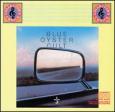
Lord only knows what happened to BOC on this disc.  It’s almost as if the mirror on the cover was indicating a weird backwards image of the band.  They had been flirting with pop tracks for a few albums now, but this one goes far over the edge.  Backing female vocalists!  Poppy ballads!  No weirdo titles!  And yet still no hits.
The title track is hopeless radio rock (but not even good radio rock). It’s hard to image them touring this album and incorporating these tracks with “Dominace and Submission” (or even imagining Eric Bloom decked out in his leather suit singing these songs).  And the less said about “Lonely Teardrops” the better.

That’s not to say that the album is a total wash.  The super sugary ballad “In Thee” is actually quite good, as ballads go (Allen Lanier has a knack for piano pop).  And “Moon Crazy” has an 80s rock feel mixed with some weird jazzy bits.  “The Vigil” and “I am the Storm” are also pretty good, but they may just stand out among the rest of the tracks.

It may be telling that when Columbia remastered and re-released all of their CDs, they didn’t bother with this one.  Hence, the rather embarrassing cover image above which is more about  Columbia music than Blue Öyster Cult.

[READ: March 1, 2010] “Appetite”

This is a strange little story about work frustration, grilled cheeses, and rain.

The main character is a cook.  He is planning to ask his boss for a raise, but when he goes into the boss’ office, the boss is distressed about the state of the restaurant, specifically the fact that several items were returned that evening.  How hard is it to make  grilled cheese after all?

When the story pulls back a bit the narrator muses about his graduation, where he was simply one of 500 being told about his future by the valedictorian (who clearly cribbed his speech from a book of speeches).   Some of you will go to college; some of you will go to the army; some of you will go straight to the workforce.  He was the latter.  And now, at 25, he can’t quite belive he’s still in the same place. (more…)

Read Full Post »

SOUNDTRACK: BLUE ÖYSTER CULT-Agents of Fortune (1976).

After the release of their first official live album On Your Feet or On Your Knees, it’s unsurprising that the band would put a concert photo on the back cover of this disc (On Your Feet…was their first Top 40 disc).

What is surprising is the piano fueled second track “True Confessions” which is as delicate as the title suggests  (Eric Bloom even hits a falsetto note AND there’s a saxophone solo(!)).  Combine this with  “Debbie Denise” a tender (!) song about lost love (!) and you have quite a tender an un-heavy metal album.

Of course, the disc opens with “This Ain’t the Summer of Love” which is certainly a strong heavy track.  But that’s mostly it.  There’s a lot more piano/keyboard on “E.T.I. (Extra Terrestrial Intelligence)” although the guitars definitely come to the fore during the wailing solos.  And then, frequent contributor Patti Smith gets a vocal inclusion “The Revenge of Vera Gemini” (her voice works quite well with the spooky psychedelia of the band).  “Sinful Love” is an almost disco-ey dance track (the falsetto backing vocals are weird, to say the least!).

The later songs on the disc sound like 70s rock.  There’s rather little heavy metal involved at all.  In fact, “Tenderloin” comes close to sounding like Kansas.  That’s not necessarily a bad thing, it’s just kind of a shock coming from these heavy metal pioneers.

Oh, and I almost forgot, it also contains the biggest BOC song in the universe, “(Don’t Fear) The Reaper.”  [When my friend Lar saw a BOC Greatest Hits disc he asked if it was just this song 12 times).  Of course, you probably know the song, but if you haven’t heard in a long time, it sounds even better than you remember.  I have to assume that that track alone absolved the band of all the mellow tracks on this disc.

The bonus tracks on the remastered edition include a truly bizarro version of “Fire of Unknown Origin” and a demo of “Reaper.”

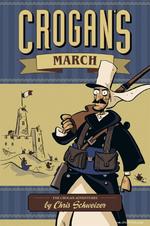
[READ: February 22, 2010] Crogan’s March

I enjoyed the first book in this series so much that I couldn’t wait for number two.  And how lucky for me that it was already available!

The premise of this series is that the Crogan family (who live in contemporary America) are a fairly normal family: happily married, two young kids who squabble a lot, etc.  This family aspect of the story bookends the main body of action (their father tells them a story about one of their ancestors to prove a point or make an argument).

In this case, a fight between the boys is summed up by their dad: “Some people believe that everyone should be given the freedom to make their own choice and others that everyone should be held to the same moral standards.”  So, let’s hear the story of Peter Crogan, member of the French Foreign Legion circa 1912.

When I was a kid, the foreign legion was this sort of mythical entity.  The phrase, “run away and join the foreign legion” seemed to be bandied about a lot as a means of escape.  I don’t know why it was, or why it seems to no longer be, but suffice it to say that I haven’t thought about the foreign legion in twenty years.

So, this story about a legionnaire was a welcome surprise from the get go. (more…)

Read Full Post »

« Newer Posts - Older Posts »