Feeds:
Posts
Comments

Archive for the ‘Acid Mothers Temple’ Category

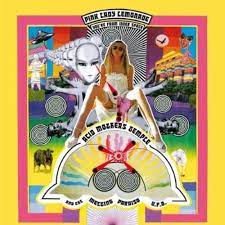
SOUNDTRACK: ACID MOTHERS TEMPLE & THE MELTING PARAISO U.F.O.-Pink Lady Lemonade ~ You’re From Inner Space (2011).

This album is something like the fortieth AMT album and somewhere in the middle of the band’s tenure with this lineup:

Tsuyama Atsushi: monster bass, voice, cosmic joker
Higashi Hiroshi: synthesizer, dancin’ king
Shimura Koji: drums, latino cool
Kawabata Makoto: guitar, guitar synthesizer, speed guru

The album consists of one song, the title track, broken into 4 parts all based around a simple, but rather lovely guitar melody

 “Part 1” is 32 minutes long.  It begins with the opening guitar melody which plays along with some trippy sounds.  Tsuyama is reciting the words (in Japanese?  English?  Gibberish?) and occasionally you hear the words “Pink lady Lemonade.”  At around 12 minutes drums and bass are added.  Once the bass starts meandering through some catchy riffs, Kawabata starts soloing.  It’s pretty far down in the mix (the main melody continues throughout).  Then around 22 minutes Tsuyama starts adding the monster bass–wild riffs that go up and down the fretboard.  With about 5 minutes left Kawabata starts playing s louder solo–louder than the rest of the music–and you can really hear him wailing away.   Part 1 fades out completely before jumping into Part 2.

“Part 2” is only 5 minutes, but it is utter chaos, with everyone making a big pile of noise–keyboard banging, sliding bass, thumping drums and wild, seemingly uncontrollable guitars.  It ends five minutes later with some warbling keys

Then comes “Part 3,” which runs just over the minutes.  It’s a faster chord version of the same guitar intro with slow bass notes and a big guitar solo.  It changes shape and adds some discoey bass lines.  About midway through the synths take over and while there is music in the background the song becomes mostly washes of sounds.

“Part 4” ends the disc at just over 18 minutes.  It picks up with the original guitar melody once more.  This time, it’s only a minute until the drums and bass kick in and the soling begins.  At five and a half minutes the guitar solo gets really loud and takes over.  The soloing is wild for over ten minutes and then around 13 minutes the song grows very quiet with only the lead guitar and the heavily echoed main riff playing.

There’s on online version here that has this entire record but adds six minutes at the end of the last part which is mostly the introductory melody and some washes of keys over the top.  i rather like this extra 6 minutes and it feels like a really nice ending.


[READ: May 1, 2021] “My First Passport”

This essay was translated from the Turkish by Maureen Feely.

Pamuk talks about people travelling from Turkey when he was young.  First it was his father, who left the country when Orhan was seven.  No one heard a word from him for several weeks when he turned up in Paris.  He was writing notebooks and regularly saw John-Paul Sartre.   He had become one of the penniless and miserable Turkish intellectuals who had been walking the streets of Paris.  Initially Orhan’s grandmother sent Orhan’s father money but eventually she stopped subsidizing her bohemian son in Paris.

When he ran out of money he got a job with I.B.M. and was transferred to Geneva.  Soon after Orhan’s mother joined his father but left Orhan and his brother with the grandparents.  They would follow when school was done.

Orhan sat for his first passport photo (included in the essay).  Thirty years later he realized that they had put the wrong eye color down–“a passport is not a document that tells us who were are but a document that shows what other people think of us.” (more…)

Read Full Post »

[POSTPONED: March 8, 2021] Acid Mothers Temple / ST 37 [rescheduled from May 3, 2020]

indexI had just checked to see the status of this show and the following day it was announced that their tour was cancelled.  Not surprising of course, but still sad.

A message from the artist

Acid Mothers Temple’s upcoming US tour dates that were set to take place in February – March have unfortunately been cancelled due to COVID19.  Refunds will be available at your point of purchase.  We do look forward to having them back out in North America once the pandemic has settled down and it’s safe to do so.

I have seen Japanese psych rockers Acid Mothers Temple twice and each show was a whirlwind of fun and insanity.

I promised myself I would see them any time they came to town.  So I was very excited to see them again. (more…)

Read Full Post »

20000000SOUNDTRACK: KAWABATA MAKOTO [河端一]-I’m in Your Inner Most (2001).
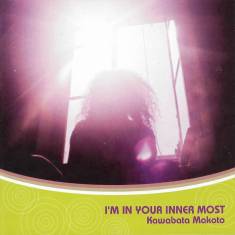
a3548319280_16Recently, Kawabata Makoto [河端一], mastermind behind Acid Mothers Temple, revealed a new bandcamp site for some newer releases.

This is Kawabata Makoto’s minimal music works by his own ensemble reissued in 2002 with a bonus track.

This album is in fact two parts of the same song (technically). And they’re the first of his solo works to predominantly feature organ.  It also features artwork by Kawabata Sachiko

“I’m In Your Inner Most Part.1″ (19.11)  starts with a repeated organ riff and (the inevitable) high-pitched feedback sounds.  This one also has the voice of Audrey Ginestet repeating one word (drift? drip? something in French?).  Every few measure a new item is added and repeated–mostly organ notes in a pattern or a scale.  The last five minutes or so feels like a two note siren as the high notes soar around the top.”

I’m In Your Inner Most Part.2″  (20.24)  opens with that repeated word.  This piece feels a biot more like an improv with organ and the tambura rotating through.

Kawabata Makoto is credited with electric organ, electric harpsichord, violin, tambura, percussion, electronics and electric guitar on this release.

The bonus track is called “Osculation (remix version)”  (15.32).  I can’t tell exactly what it is remixing as it sounds like parts of both songs are melded together.  There is a lot of church organ sounds and repeating motifs.  But around 11 minutes a grinding noise comes into the song and start to take over until the end is just all noise.

Like most of Kawabata’s solo album, this one feels improvised and off the cuff.  The inclusion of the organ however, makes this one solitary in his vast catalog.

[READ: June 13, 2020] “Man-Eating Cats”

Twenty years apart, Murakami has two surreal stories about animals. Actually, this one is far less surreal than the monkey story, but there is a supernatural component for sure.

The story opens with the narrator reading to Izumi from the newspaper.  The article is about a woman who died and her cats ate her–they had been alone in the apartment for about a week with no food.

Izumi wants to know what happened to the cats, but the paper doesn’t say.  She wonders if he were the town’s mayor or chief of police, would he have the cats put down?  He suggests reforming them into vegetarians, but Izumi didn’t laugh at that. (more…)

Read Full Post »

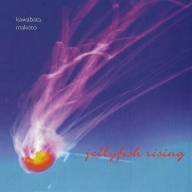
june8SOUNDTRACK: KAWABATA MAKOTO [河端一]-Jellyfish Rising (2005).

a1318054058_16Recently, Kawabata Makoto [河端一], mastermind behind Acid Mothers Temple, revealed a new bandcamp site for some newer releases.

This is another one of Kawabata Makoto’s minimal music works by electric guitars.  It also has two lengthy tracks.

“Astral Aurelia Aurita Laavarek” (28:05) is an echoing looping solo guitar piece.  It is chill and pretty. The looping is fairly quick until about 11 minutes when he slows it down to single notes.  The faster notes are still floating around in the background–ever so slowly fading away.  The pace speeds up and slows down through the rest of the song, creating a wall of new agey vibes.

“Meditation Of Pelagia Panopyra Perea” (27:16) is a similar style but deeper notes and a much lower backing drone.  This whole piece feels less relaxing but still soothing in a different way.

This might be my favorite solo record so far.

[READ: June 13, 2020] “Confessions of a Shinagawa Monkey”

The narrator met the titular monkey about five years ago in Gunma Province at a small Japanese-style inn.  He had arrived at the hot springs town and needed a place to crash for the night.  The place was practically a flophouse, but it was cheap and it was just one night.

But the hot springs bath was wonderful.  He was by himself and he spent a long time there, getting light-headed.

That’s when the monkey walked in and said “Excuse me.”  The monkey asked if the bath was satisfactory and if the narrator would like his back scrubbed (he did).

The monkey “didn’t have any clothes on.  Which, of course, is usually the case for a monkey, so it didn’t strike me as odd.” (more…)

Read Full Post »

june8SOUNDTRACK: KAWABATA MAKOTO [河端一]-That Awaking: Good​-​bye Me (2020).

a0192176181_16Recently, Kawabata Makoto [河端一], mastermind behind Acid Mothers Temple, revealed a new bandcamp site for some newer releases.

This album is his most recent release (and I believe the impetus for this new site).

This album has two sons, each over a half an hour.

On “Summoning Souls To Meet” (35:47), a quiet, pretty acoustic guitar melody plays throughout the background while on top comes a series of electric guitar noises an explorations.  It’s a pretty improvisational song that never goes too crazy in the experimentation (although there are a few times when he plays some wild solos).  That acoustic melody keeps it grounded.

“That Awaking : Good-bye Me” (31.29) opens with a piercing sound which slowly morphs into another beautiful acoustic melody.  He then overdubs a pretty electric wah wah guitar solo.  It’s a lovely piece of music, although I wish that piercing ringing note was not there (it wouldn’t be Kawabata if there weren’t some high frequency sound floating around).  Eventually, you lose that high note amid the wonderful soloing he’s doing.  It’s soaring and psychedelic, sometimes fast sometimes echoing.  The last ten minutes or so seem to have some backwards looping going on.

Kawabata Makoto recorded this in May 2020 using electric guitar, acoustic guitar, and driftbox.

[READ: June 13, 2020] “White Noise”

This story is about Harvey Weinstein, except that it technically isn’t.

It’s about a movie mogul named Harvey who is on trial for abusing women.  It basically covers a short time before his verdict.

I wondered why Cline would feel compelled to write this fictionalized account of such a dreadful man.  I don’t often read the accompanying interviews with writers (I guess I should). The important takeaway is that “Curiosity about a consciousness doesn’t translate into endorsement.” (more…)

Read Full Post »

june8SOUNDTRACK: KAWABATA MAKOTO [河端一]-Mizu Naranu Ao Ni Sae [水ならぬ青にさへ] (1998).

a1335809529_16Recently, Kawabata Makoto [河端一], mastermind behind Acid Mothers Temple, revealed a new bandcamp site for some newer solo recordings.

 This album is more along the lines of what you might expect from Kawabata Makoto: electric guitar solos from 1998.

Dazzling music for the temporal world, overflowing with a sense of pellucidity totally different from his work with Musica Transonic.

The album has two songs.

The first is “Mai Sagarisi Negai [舞い下がりし願ひ] (16:38). .   It is loops of guitar noises and feedback.  It’s not a lot of guitar “playing” but more like guitar experimenting.

“Amou No Shibuki [天生の水沫] (17:59) is different.  It features ringing, chiming guitars and sounds like he has something metallic resting on the strings to keep everything vibrating.  This one is more spacey.

[READ: June 13, 2020] “Pursuit as Happiness”

I haven’t read a ton of Ernest Hemingway.  Honestly, his stories of hunting and boxing and whatever other masculine things he was up to while somehow also being a sissy writer never appealed to me.

This is the story of the pursuit, capture and slaughter of marlins.  Now frankly, I think a marlin is about the coolest thing in the ocean.  And while it may be very manly to wrestle one in with just a fishing line, it sure seems like a waste of a beautiful fish.

So Ernest (for the narrator’s name is Ernest Hemingway) and the captain of the boat he was on fished off of Cuba for a month.  They caught twenty-five but that wasn’t enough, so they went back for more. (more…)

Read Full Post »

june8SOUNDTRACK: KAWABATA MAKOTO [河端一]–Gesseki No Sho [月跡の焦] (1998).

a2609153540_16Recently, Kawabata Makoto [河端一], mastermind behind Acid Mothers Temple, revealed a new bandcamp site for some newer solo recordings.

This is Kawabata Makoto’s 1st Sarangi solo album.  The sarangi is  a bowed Indian instrument.

Esoteric acoustic works that conceal a sense of magic and chaos akin to that of Toho Sara.

1.Kimi Ga Chi O Mote 君が血を持て (21:06)  is a lengthy improv piece of high bowed notes– a lot of scratchy sounds or as my daughter put it, is that someone screaming?

2.Kusa Shinobu 草しのぶ (18:21) is more percussive, with him apparently banging on the sarangi to produce chords.  It’s a cool effect.  After about 3 minutes, he starts plucking the strings and then the bowing begins.  There’s moments of scratching and scraping as he explores all aspects of this instrument.

[READ: June 9, 2020] “Brooklyn”

This issue of the New Yorker has four one-page essays called “Close Encounters.”  Since I like all of the authors, I was looking forward to reading them all.

I have really enjoyed Moshfegh’s stories.  But there is very little that is less interesting than reading about somebody drinking a lot.

In 2006, evidently Moshfegh was a chronic alcoholic.  She went out with friends and drank.  She found their company lacking (as I am sure they felt about her as well) so she went out and drank some more. (more…)

Read Full Post »

june8SOUNDTRACK: KAWABATA MAKOTO [河端一]–Lost Milky Way in The Metaphysical Space (2013).

a0544282959_16

Recently, Kawabata Makoto [河端一], mastermind behind Acid Mothers Temple, revealed a new bandcamp site for some newer solo recordings.

This album features his voice and his glissando guitar.  It has two songs.

“Old Letters From Andromeda” (21:04)  sounds like metallic outer space filled with slowly moving metallic whale sounds.  At 6 minutes a lovely acoustic guitar melody comes in and there’s gently crooned ahhhs as well.  Around 12 minutes a lead solo lays over the top.  It’s all quite lovely.

“Lost Milky Way” (18:36) features squeaking, squealing feedback behind a lovely acoustic guitar melody.  Pretty much the entire song is made up of this delicate acoustic guitar pattern. The backing soaring sounds change and modify throughout.  Sometimes, it is tinny.  Sometimes trippy.  Sometimes menacing.  –

This release is quite fetching.

[READ: June 9, 2020] “You Miss It When It’s Gone”

This issue of the New Yorker has four one page essays called “Close Encounters.”  Since I like all of the authors, I was looking forward to reading them all.

This essay is about the current Coronavirus crisis and how it has impacted socializing.  Not by thinking about the now but by remembering the then.

Washington mentions various ways that customers at gay bars get close to each other.  Often it is simply very crowded, with everyone being “a blob of gas and air.”  But there are also details. (more…)

Read Full Post »

june8SOUNDTRACK: KAWABATA MAKOTO [河端一]–Sunday Morning (1978-83).

a2955928138_16

Recently, Kawabata Makoto [河端一], mastermind behind Acid Mothers Temple, revealed a new bandcamp site for some newer solo recordings.

This is Kawabata’s first musique concrète works. He played 2 cassette decks, a half-broken radio cassette-corder, tapes of field recordings and something else and a synthesizer.

This album has been reissued on CD-R as a part of “Kawabata Makoto’s Early Works 1978-1983 : Learning From The Past – R.E.P. Reissue Series vol.1” (11CD-Rs + 1 CD) box set in 2012.

There are two parts.  Part 1 is 24 min.  It sounds like short wave radio with lots of static. It’s a very mechanical, earthy sound which by the middle feels like a vacuum cleaner.  This one was particularly headache inducing.

Part 2 is 21 minutes long and feels a bit more musical with tape sounds and synthesizers but all under a gauze of hiss and static. There are musical notes –ringing harp-like notes buried beneath the fuzz–and echoing vocals.  At around 18 minutes the piece slows down with thumping “drums” that slow the pace.

These first two releases are very abstract.

[READ: June 9, 2020] “Breaking Stride”

This issue of the New Yorker has four one page essays called “Close Encounters.”  Since I like all of the authors, I was looking forward to reading them all.

This piece is fascinating to me because of two things.  The first is that Matthew Klam and his oldest friend managed to stay reasonably good friends for all of their lives.   And second because both of them went on to be creative.

In 1978 Matthew and David were in eighth grade.  They are not particularly popular but they both love Steve martin’s Let’s Get Small (this is right out of Freaks and Geeks). (more…)

Read Full Post »

june8SOUNDTRACK: KAWABATA MAKOTO [河端一]–Undead Underdrive Electrique (2019).

a3667527135_16Recently, Kawabata Makoto [河端一], mastermind behind Acid Mothers Temple, revealed a new bandcamp site for some newer solo recordings.

These are mostly abstract and meandering.  On this release he uses synthesizer and  electric guitar (and I hear a theremin).

Both of these tracks are similar although there is a clear distinction of style.

Part 1 is 22:52.  It is primarily the theremin sounds and sounds a lot like the middle siren-sounding section of Pink Floyd’s “Echoes,” but for twenty minutes.

Part 2 is 23 minutes.  It stars with a throbbing helicopter sounding pulse.  There’s lots of static and squelchy sounds.  Around 8 minutes in, it sounds vaguely outer-space like.  At 14 minutes it turns mechanical and like its breaking up and then the high siren returns.

[READ: June 9, 2020] “Praying”

This issue of the New Yorker has four one page essays called “Close Encounters.”  Since I like all of the authors, I was looking forward to reading them all.

Miranda July writes unusual pieces.  They don’t always make sense to me, but they’;re usually fun to read.  I often feel like Miranda is on a whole different wavelength than I am.

So, as this essay starts she talks bout going to the library and using her own method for finding a book.

She overhears a conversation and picks out a prominent word.  She searched for that word in the catalog and then pick the first author who shared a first or last name with someone she knew.  She would either take out that book or open it and pick out a word at random and resume the search until something grabbed her.  (more…)

Read Full Post »

« Newer Posts - Older Posts »