Feeds:
Posts
Comments

Archive for the ‘Acid Mothers Temple & the Melting Paraiso U.F.O.’ Category

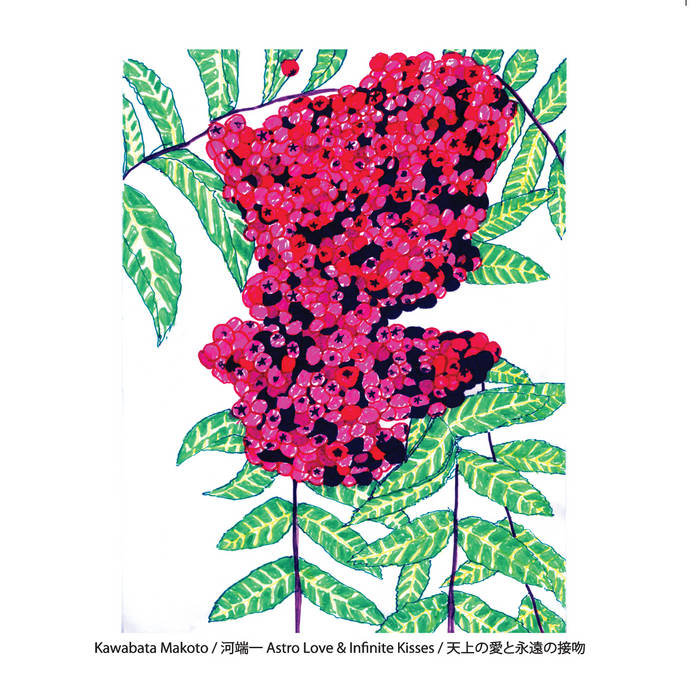
december 11SOUNDTRACK: KAWABATA MAKOTO [河端一]-Astro Love & Infinite Kisses (2017).

Kawabata Makoto [河端一] is the guitarist and mastermind behind Acid Mothers Temple. The band is hugely prolific. But he still had time to record solo albums. Often times without any guitar.

This was a Kawabata solo LP, now available on bandcamp.

Astro Love is the first widely available solo release in several years from Kawabata, emerging from a period of relative quiet with this blockbuster Krautrock-flavored epic. On the whole, this a lovely and impressionistic record, the other side of Makoto’s outrageous works with Acid Mothers’ Temple. Taking cues from classics of the genre like Tangerine Dream’s Phaedra and Steve Hillage’s Rainbow Dome Music.  Cover by Japanese youth art sensation Okumura Mondo!

“Dos Nurages” (40:30) is the centerpiece of the record, a 41 minute hypnotic epic, with echoplex’d guitar anchoring a stream of expertly done glissando. It is a fast, pulsing Krautrock experience with a swirling drone and fast repeated notes on the echoing guitar.  The waves of sound fade in and out leaving just the echoing guitar and then replacing it with more of the same.

“Astro Love & Infinite Kisses” (17:41) is a darker drone, in the traditions of Kawabata’s INUI series of releases for VHF. Scraping sounds and pizzicato string melodies converge over the drone.  This melody runs throughout the song as the backing drones grow bigger and louder.  These drone progressions add a lot of tension.

“Woman From Dream Island” (18:22) finishes the record with a thick buzz of tamboura overlaid with trippy backwards guitar, before giving way to a gentle finger-picked acoustic coda.  The drone sounds like a sitar or a hurdy gurdy.  There also seems to be a kind of strummed sitar over the top.  At 13 minutes a lovely pizzicato melody is added on top.

This is certainly one of the less harsh solo creations that Kawabata has unveiled.

[READ: September 10, 2019] “The Story of Dice”

I haven’t read a lot by Ricky Jay.  I had heard of him just before he died and I’d like to see more of what he has done.  Especially if they are as interesting as this.

Jay has a book out called Dice: Deception, Fate & Rotten Luck.  It has pictures by Rosamund Purcell.  The book is 64 pages.  I have to wonder, since the book is full of lavish photos, if this essay is the entirety of the book.

This essays is divided into parts, with each small section focusing on a different aspect of the history of dice–which is more interesting than you might expect.

In “Dice in a Bottle” he talks about a pair of dice found in the Thames.  They were in a waterproof cage dating from the 15th century.  They had been drilled and weighted with quicksilver to the throwers advantage.  There were also “high men” dice that only had a 4, 5 and 6 and “low men” that only had a 1, 2 and 3. They were clearly tossed into the river by a hustler trying to avoid detection. (more…)

Read Full Post »

30SOUNDTRACK: KAWABATA MAKOTO [河端一]-INUI 4 (2007).

a2911123677_16Kawabata Makoto [河端一] is the guitarist and mastermind behind Acid Mothers Temple. The band is hugely prolific. But he still had time to record solo albums. Often times without any guitar.

This was Kawabata’s fourth solo LP, now available on bandcamp

NUI 4 is the fourth volume in Makoto’s series of occasional solo releases for VHF. While widely and rightly known for ear-splitting Deep Purple style guitar demolition with Acid Mothers Temple, Gong, etc, Kawabata’s INUI works are highly personal and introspective, with lots of room given to cosmic atmosphere and acoustic instruments. INUI 4 is a single 68 minute track, a slow building and evolving multi-layered swath of acoustic & electric guitars, electronics, and hurdy gurdy. The final 20 minutes of the track features prominent “glissando” guitar, ala Daevid Allen, a very fine sound to be lost in.

This album consists of 1 hour-long song called RYO (01:07:51).

A piercing high note lingers throughout the track as a beautiful bouzouki melody plays and trippy space sounds swirl around.  The piercing note seems to fade into the background as soaring swirling sounds begin around 5 minutes with a kind of high whistling melody running through from about 8 minutes.

AS the song  continues, new sounds continue to enter.  At 15 minutes, warping and buzzing sound swirl in.  At 23 minutes, deep moaning sounds cycle through.  At 30 minutes swirling spaceship sounds float in.

Around 35 minutes a melody seems to come through the hazy distance (possibly from the hurdy gurdy).  Around 40 minutes a “beat” (made of possible reversed guitar chords) starts to come in.  This adds a kind of quiet propulsion to the sound as the soloing in the distance gets more intense (yet still quite).

Then at 46 minutes it shifts dramatically.  All the drones drop away and the song starts fresh with gentle swirling guitars.  Everything feels like it is ringing and chiming and it stays in this beautiful glissando style for the next 20 minutes.

Not a bad way to spend an hour.

[READ: September 13, 2019] “On a Bad Day You Can See Forever”

This story seems mostly like an opportunity for Woody Allen to throw in as many fifty-cent words as he can.  Which is kind of funny since it is about overpaying for renovations.

You’d never quite guess that’s where this story is going from the opening.  As it opens the narrator is at the gym and has just thrown out his back (“my spine suddenly assumed the shape of a Möbius strip”) trying to “tickle pink the almond-eyed fox” doing push ups near him.  Given Allen’s history, this is unfortunate to say the least.  Not the least of which is because this character is married.

But whatever, it’s a comic story, right? (more…)

Read Full Post »

indexSOUNDTRACK: KAWABATA MAKOTO [河端一]-INUI 3 (2005).

a0649002429_16Kawabata Makoto [河端一] is the guitarist and mastermind behind Acid Mothers Temple. The band is hugely prolific. But he still had time to record solo albums. Often times without any guitar.

This was Kawabata’s third solo LP, now available on bandcamp

Third volume in an acclaimed series by the Acid Mothers Temple leader. INUI 3 focuses on Kawabata’s highly personal brand of epic instrumental drone. Performing on bouzouki, sarangi, electric guitar, viola, and ECS-101, Makoto emphasizes the gradual build of monumental sound structures. Running 12 minutes each, “Sui” and “Ken” are darkly spun tales, with wisps of sound keening over a distant backdrop. Recalling the Speed Guru’s lovely 2001 collaboration with Richard Youngs, the 47 minute “Fuku” is based on a hypnotic arpeggio plucked out on the bouzouki over which Gong-style glissando guitar and other zonked sounds are carefully layered.

Sui (12.33) over a drone it sounds like he’s playing a hammered dulcimer, but I gather it is the bouzouki.  There’s a very pretty melody which seems to morph into a reverse-sounding musical style after about 5 minutes.  These pulsing waves slowly shift into washes of synths over the drone.

Ken (12.35) starts was a drone–whether electronic or acoustic is hard to tell.  Waves of sound like waves swoop through this rather relaxing piece.

Fuku (47.08) has more of that hammered bouzouki style of playing.  It’s a lovely melody with a drone behind it.  After 9 minutes the backing chords change the texture of the song.  Around 11 minutes the melody starts to grow slightly discordant as the backing chords start to morph and the bouzouki plays some discordant notes.

The discord seems to weave in an out–never growing too harsh, just enough to give the song some tension.

Around 30 minutes, waves of electronics start to take over, there’s a slightly sinister sound to them.  By the end things get a little intense and it feels like the closing credits to a dramatic film.

It’s amazing that he can keep this up for 47 minutes.

[READ: September 10, 2019] “What I Saw From the Forest”

In this story Charles and Dulcie have been together for a while.  They lost their baby when Dulcie was six months pregnant.  It was nobody’s fault but Dulcie can’t help but try to figure out what she did wrong.

Their relationship has been prickly ever since.

Dulcie hates to drive on freeways–she doesn’t like that she can’t exit when she wants, so they tend to take back roads.  They had been to a party and Charles was too drunk to drive home so Dulcie drove his car.

He woke up when they were rear-ended.  It was a a group of young men with a gun.  They asked for the keys.  Charles gave them the keys and his wallet and then he and Dulcie ran.  The police promised them they would not see their car again.  When Dulcie worried that they would come to their house since the registration was in the car, the policeman said not to worry, “crackheads never did that.”

Dulcie took a few days off (she was a teacher) so Charles drove her car to work.  When he got home she had moved the mattress into the living room.  There was a rat in the bedroom walls.  They could hear it and had gotten used to it because when they told the landlord he said he would take care of it –which means “there’re ten other people in line for your apartment.”

She insisted on leaving the lights on all night.  She even talked about getting an inflatable person to sit in a chair to let people think someone was home.

The next evening as he was driving home, someone threw an egg at his car.  He freaked out until he realized it was Halloween.  They hadn’t bought any candy, so when he got home Dulcie was cowering saying people kept ringing the doorbell and she couldn’t trust anyone.

A week after the holdup, police called to say their car was found. It was in a lot in South Central.  The policeman asked if he was white.  Charles said yes, and the polieman said to go early in the morning before “wake-up time.”  They arrived and the car was stripped–even the steering wheel–so they turned it in rather than having it towed.

Charles took a day off from work.  He drove to a park and sat, thinking.  He realized he could either stay or go.  He had a decision to make.


Read Full Post »

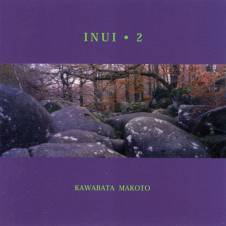
amazSOUNDTRACK: KAWABATA MAKOTO [河端一]-INUI 2 (2000).

a1729275931_16Kawabata Makoto [河端一] is the guitarist and mastermind behind Acid Mothers Temple. The band is hugely prolific. But he still had time to record solo albums. Often times without any guitar.

This was Kawabata’s second solo LP, now available on bandcamp

INUI 2 was the first widely available solo CD by this prolific Japanese guitarist/composer/bearded guru. Known primarily for his recent work with oddballs Acid Mothers Temple, Kawabata’s career actually goes back to the late ’70s and spans many styles, including solo guitar improv, electronics, folk, and, of course, the deranged acid mayhem associated with the PSF scene. Performed entirely solo on violin, kemenje, zurna, electronics, sarangi, taiko, gong, water, bouzouki, cello, vibes, organ, and sitar, the four tracks that make up INUI 2 are perfectly executed dream-music, equal parts delicately floating and heavily droning. There’s also one all-too-short modal essay for bouzouki that is amazingly beautiful.

“Mou” (9:56) has a drone underpinning the song as he plays a quiet keyboard melody over the top.  About half way through the zurna comes in playing its somewhat harsh melody (although it is less harsh here).  This is a pretty cool chill out song.  [Instruments: Violin, kemenje, zurna, electronics].

“Meii” (11:02) is composed of slowly plucked sarangi strings.  They ring out loud and are accompanied by thumps on the taiko and occasional crashes of the gong. There is also a high pitched feedback/electronic sound that rings out form time to time.   About midway through the bowing become s a little wild and improvisational until it settles back down again.  [Instruments: Sarangi, taiko, gong, water].

“Shi” (3:47) is the ‘all too short” piece and I agree that it is too short.  It features a quietly plucked string melody on the bouzouki that is very pretty.  It has mild drones behind it.  About half way through the melody changes, a faster more deliberate style but still quiet and pleasing.  I could listen to this one for much much longer.  [Instruments: bouzouki, cello, vibe, organ].

“Kan” (14:18) starts as harsh electronic drone with occasional blips of hi frequency sounds.   It’s the first unpleasant sound on the disc.  Although after 2 and a half minutes, the string drones enter and smooth things over.  At some point a pulsing possibly, backwards recorded series of notes comes in to give the drone some drive.  [Instruments: bowed sitar, violin, electric sitar, electronics].

[READ: September 10, 2019] “Ranch Girl”

This brief story was collected in Meloy’s Half in Love.

It starts with the fatalistic sentence:

If you’re white and you’re not rich or poor but somewhere in the middle it’s hard to have worse luck than to be born a girl on a ranch.

The unnamed protagonist grew up the daughter of the foreman of the Ted Haskell Running H Ranch.  Haskell’s brand was a slanted H–she had seen it all her life and didn’t know an H was supposed to be upright until she went to school. (more…)

Read Full Post »

New_Yorker_September_11_2000-2015_02_20_13_56_46-1000x1400SOUNDTRACK: KAWABATA MAKOTO [河端一]-INUI 1 (2000).

a2061426618_16Kawabata Makoto [河端一] is the guitarist and mastermind behind Acid Mothers Temple.  The band is hugely prolific.  But he still had time to record solo albums.  Often times without any guitar.

This was Kawabata’s first solo LP, now available on bandcamp

from way back in 2000 (about 100 releases ago, in Kawabata terms). Originally released by the mighty SIWA label in a tiny, hand printed edition of 300, this has long been the most sought-after Kawabata item, pretty much impossible to track down without a wallet full of ebay slush funds. The music, as on all of Kawabata’s INUI series releases, is intensely personal and introspective, with long tracks built up of soft-focus layers of mid-fi violin, sarangi, oud, sitar, bouzouki, etc.

And that’s what this is.

The credits indicate that he plays violin, sarangi, oud, sitar, bouzouki, lyra, shou, nei, and sings.

There are three tracks.

“Shin” (11:09) is a quiet drone of him playing any or all of the instruments mentioned.  I like the middle eastern drone style paired with a kind of lead bowing improv.  The piece ends with a fifteen second moaning voice.  The voice is French film maker and musician Audrey Ginestet.

Tai (9:45) is combination of drones and plucked notes.  He sings a melody along with a bowed solo, making this song very calming.

Son (21:45) is nearly twenty minutes of unchanging drones.  It can really make you feel transcendent.  After about 16 minutes his voice comes in, echoing and distant.

This album is not for everyone, but it can certainly put you in a different head space.

[READ: August 15, 2019] “Water Child”

Nadine is a nurse.  She has moved to Brooklyn from Haiti and is living by herself.

The story opens wit her receiving a letter from her parents. It is positive and warm and asks her to call them.  Nadine wants to call but does not. For days and weeks.  But she reads the note several times a day, marveling at the lightness of the airmail paper.

Nadine ate lunch by herself.  A fellow nurse, Josette’s lunch began when Nadine’s ended and they crossed paths every day.  But their conversations were brief and functional. (more…)

Read Full Post »

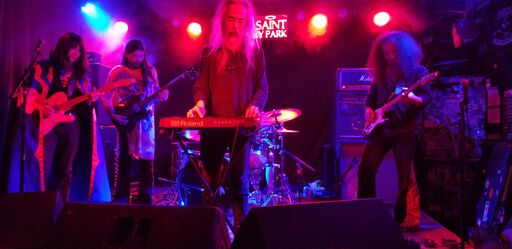
[ATTENDED: April 21, 2018] Acid Mothers Temple & the Melting Paraiso U.F.O.

I saw Acid Mothers Temple around this time last year and it was an amazing experience.  It was too loud, too intense, too much…and I couldn’t wait to see them again.

The pictures in this post look terrible for some reason.  The originals were actually quite nice–must be a web compression thing.

Evidently they come around to the Northeast pretty regularly in the spring, so I was super psyched to see them again in the same place.  Then we decided to go on vacation that week instead.  I was bummed to miss them (but psyched for vacation, of course).  Then I saw that they were playing the night before we left in The Saint. I loved The Saint as a venue and knew I would love seeing Acid Mothers Temple there. (more…)

Read Full Post »

[ATTENDED: February 20, 2019] YAMANTAKA // SONIC TITAN

I had heard of YAMANTAKA // SONIC TITAN on NPR.  They played a song off of their latest album Dirt and I was stunned by how cool it was.   It was heavy and rocking with prog elements and a chorus that was pure J-Pop.  It was magical.

Then I read a little about them.  From their website:

They’re a “Noh-Wave” prog collective, a black-and-white (and sometimes red) theatre company, an operatic psych cult, and the speculative prophets of humanity’s impending doom.

The new album Dirt:

was conceived as the soundtrack for an unreleased Haudenosaunee and Buddhist themed Anime produced in 1987. Like UZU [their previous disc], it takes place on the planet Pureland, now 10,000 years after the planet has flooded. The surviving people live within bubble domes floating in orbit. A team of mercenaries descends into the drowned wreckage of the world to receive the last sample of uncorrupted soil.

Though the name of their fantastical universe is derived from a strand of Buddhism and Haudenosaunee that first blossomed in China, its narratives are inspired by the Iroquois story of the creation of North America. The members of Yamantaka//Sonic Titan keep the history of indigenous people close to them and their work, even incorporating hand drums and traditional rhythms into songs

(more…)

Read Full Post »

[ATTENDED: April 21, 2018] Acid Mothers Temple & the Melting Paraiso U.F.O.

Several months ago I purchased a ticket for Ministry in Morristown, NJ.  I’d loved Ministry’s brand of industrial noise in the early 90s, although I pretty much stopped listening to them altogether before Y2K.

But I saw that they were touring and that they were playing some older songs so I thought it might be a cathartic experience.

Then I found out that Acid Mothers Temple & the Melting Paraiso U.F.O. were playing at a small club the same night.  Acid Mothers Temple is one of my friend Lar’s favorite live acts and it was fairly easy for me to decide to get a ticket to them and sell my Ministry one.  (I decided I’d rather be pummeled by psychedelia than vitriol and anger).

It was the right decision because Acid Mothers Temple was amazing. (more…)

Read Full Post »

[ATTENDED: April 21, 2018] Yoo Doo Right

I hadn’t heard of Montreal’s Yoo Doo Right when I saw they were touring with Acid Mothers Temple.  But I may have been the only person there who hadn’t.

Before the band even started to set up, a guy with (reasonably) professional looking audio equipment set up his microphones right up on stage.  And another guy with a camcorder propped himself up near the side of the stage to record the whole set.

The band got their name from a Can song and they play a kind of psychedelic Krautrock-inspired indie rock.  It was a really great set and I totally got into it.

The band came out and set up their gear (poor John Talbot on drums needed a bigger cinder block as his drums kept sliding forward).  Charles Masson on bass stood center stage anchoring the flights of noise and melody from Justin Cober on guitar/keyboard/vocals.

Off to the left somewhat was Charles Bourassa on keys.  At first it didn’t seem like he was an integral part of the show, but I gather that after letting the other guys get the noise out of their system he was there to anchor the songs with synth melodies and more noise.  He was also lead vocals on a few songs.

I loved the noisy guitars that Cober played.  And how he switched back and forth between guitar and keys.  Between him and Bourassa, I’m not sure who was making what sounds.

There were some great sections of droning guitars and walls of sounds.  And they often has great moments when the bass and drums came in to anchor the song.

But when all was said and done they were just there to rock.

I chatted with th eband after the show and they were super friendly.  They have two EPS out on bandcamp right now.

Read Full Post »

« Newer Posts