Feeds:
Posts
Comments

Archive for the ‘Military’ Category

jan2006 SOUNDTRACK: KURT WAGNER-Tiny Desk Concert #6 (October 8, 2008).

kurtI have never been a big fan of Lambchop.  It’s just not my kind of music—a little too slow for me.  But I really enjoyed Kurt Wagner in this Tiny Desk performance.  His guitar playing I really beautiful (I loved how he hit the high note on Bob Dylan’s  “You’re a Big Girl Now.”  He plays three Lambchop songs and two covers.

Wagner is from Nashville, and he has an air of Southern propriety about him–apologizing for taking up everyone’s time at work.  He sounds great doing the Dylan song, which I suppose is no real surprise.  The first Lambchop song is a pretty ballad called “Slipped Dissolved and Loosed.”

He is a charming and funny guy, joking about a few things (like working in an office) and then discussing about one of his songs, “National Talk Like a Pirate Day” (which is not as funny as the title might suggest).  Another song is titled “Sharing a Gibson with Martin Luther King Jr.” (and Wagner waves a fan of MLK Jr. (from a funeral home-(?)) to start the song.

The final song is a Don Williams song called “I Believe in You.”  I’ve never heard of him (and neither had anyone else in the studio).  It’s a really enjoyable, sweet song, and there’s a funny moment when sirens go past and he comments that at least they are in tune.  I still don’t think I’ll be listening to a lot of Lambchop, but I really liked this Tiny Desk show.

[READ: October 8, 2013] “Improvised, Explosive, & Divisive”

Two years after writing about his trip to Vietnam, Bissell returned to another war zone.  This time going to Iraq to get embedded (I suppose that’s the technical term for what he did) with some Marines at Camp Taqaddum in Iraq (17 miles from Baghdad).  This was during the Iraq war (and the Bush presidency), after Mission Accomplished, when the military was searching for a strategy for what to do in the situation.

This article shows interviews with Marines and makes assessments about our then current plans (such as they were) for how to extricate ourselves from a seemingly hopeless situation.  After Mission Accomplished the war went from a “war” to “stability and support operations against an insurgent element” or what is called MOOTW (military operations other than war).  And Bissell acknowledges that it barely seems like any resembling war in Iraq where the soldiers are headquartered.  They cannot drink alcohol, have sex or view pornography (they are trying to remain respectful of their host country), but at the same time they play softball and go to the gym, wear Co-Ed Naked Camel Watching T-shirts and have a Baskin-Robbins ice cream stand.  Not to mention DVD, video game consoles and Coke for sale in the PX.

Some of the article is technical—a side of the fighting that most readers probably don’t know. Like that the troops must be fully protected (and the vehicles as well) just to travel the relatively short distance between camps. (more…)

Read Full Post »

dec2004SOUNDTRACK: AWAY-Cities (2013).

awayAway is Michel Langevin, the drummer for metal band Voivod.  But on his first solo album he eschews all conventional music.  Rather, he has created an exercise in found sound and released it on the small label Utech Records.

The album is described as

Strong field recordings capture more than just the sound of an area, they capture a mood and spirit of the place and people. On Cities, local color and nature recordings clash with riots and discord, capturing the full human experience across the world. Literal and metaphorical “found music” appears: the booming stereo of a passing car or distant church bells, as does the rhythmic engine hum of a bus or the chirping of birds. This tour is a fast paced one, rapidly weaving through the geographic locations building a diverse, yet consistently engaging experience. The audio journey captured here perfectly reinforces the fact that, regardless of one’s location, the presence of music is never far, nor should it be.

What we get is a collection that sounds like a tour through the streets of the respective cities (nothing more specific than Europe is given, sadly).  We hear street noise and buskers playing (interestingly just about every type of music I have heard in Boston subways as well).

I only wish more information was given about just what Away was up to.  Where he was and, more importantly, how he recorded these sounds. The recording quality is amazing—the panpipes and harmonicas sound crisp and clean with no other ambient noise.  Did he ask the performers if he could record?  How did he get them so pristine especially since I assume they are in the streets?  And for the Europe ones, was there any given order to the way they were edited?  Is it the progression of their Voivod tour, or is it just random?  The mixing and sequencing is quite good, especially in the shorter pieces which really take you on a journey.  Not knowing what’s happening is maddening and part of the fun as you try to picture (especially if you use headphones) exactly what you are hearing.

“Montreal 2010” opens with the sound of travel until we zoom in on panpipes (for a few seconds).  This switches to a lurching shanty (sung, I suspect in French—it’s a little hard to hear).  Then from the shadows comes the sound of someone playing Leonard Cohen’s “Hallelujah” on the harmonica.

“Europe 2012” opens with someone playing what I suspect is a hammered dulcimer (exactly the kind of thing that buskers play in subway stations), it shifts to a jazz trio (sax, bass, drums) wailing away with traffic noises in the background.  After some busses and an accordion solo, there are delicate chimes.  Finally a bagpipe melody leads us away from the delicate chimes until we hear announcements in what sound like Russian and then French.  The track ends with fans chanting “Voivod Voivod.”

Montreal 2012 returns Away to near his home city.  This time the scene is much nosier—it could be joyous, it could be angry—there are whistles and horns, and by the end it seems like a joyous parade.  The noise diminishes as an operatic voice pierces through briefly until the drums return.  More street noises, including police sirens, French chanting and a train passing by as we return to yet more street drumming.  If this track had more context for the title it would probably be more enjoyable. And yet as the parade (for surely that is what it is ) marches past you feel like you’re there.

“Mexico City 2012” opens with a truck honking and street noise until we hear what sounds like an indigenous band playing, then some more flute music and church bells pealing. Then there are announcements in Spanish (by both a man and woman presumably in the church) and church organ music.  Pan pipes and drums bring us back into the street and what sounds like a market scene which ends with some Mexican music playing.

“Europe 2011” opens with some beautiful guitar or perhaps an Indian stringed instrument playing and some traditional Indian singing.  There’s some more music playing and cheering and then some peace as birds take us out of this short track.

“Montreal 2011” opens with banjo music (!).  And then the more typically French sounding violin moves us along.  More pan pipes and traffic noise progress us through the city.  Then two very different examples of accordion music meld until the noise of the train wipes them out.   The track fades out with a band playing a  jaunty accordion inspired track.

“Chicago 2012” ends the disc with a symphony orchestra tuning up (I presume) for a few minutes.  It’s a shocking cacophony.  Until someone shushes the noises and the birds return, playing us out of this aural tour.

You can stream, download or buy the CD  here.  Buying the CD gets you some of Away’s cool art (although I wish there was more).

[READ: October 8, 2013] “War Wounds”

Since I’ve been enjoying Tom Bissell’s book reviews, I thought I’d see what else he had written in Harper’s.  He seems to have a storied career with the magazine as a traveling journalist.  And this article dates back to 2004.

It is a personal article about himself and his father.  What I found fascinating about this is that his father was a Vietnam veteran, and I don’t know too much in the way of writing that concerns being the child of a Vietnam veteran.  There are a lot of books and films about the Vietnam experience for the soldiers, but not so much about the families that they returned to (as far as I know).  So it was interesting to read Bissell’s account of growing up with his father–who was a hard man and who wasn’t afraid to fight with his children (especially when drunk).

The man that Tom grew up with had a temper and didn’t much approve of Tom’s chosen profession.  But unlike many people of his generation, Tom didn’t feel that he had a particularly estranged relationship with his father.  What on earth possessed him to invite his father on a trip to Vietnam–to visit the sites where he lost friends and was himself wounded, is the stuff of journalism. (more…)

Read Full Post »

43SOUNDTRACK: IRON MAIDEN-Killers (1981).

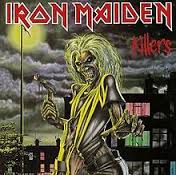
killersKillers picks up right where Iron Maiden left off–indeed many of these songs were written at the same time as the first album.  The difference is new guitarist Adrian Smith.

It opens with the great (but simple) instrumental “Ides of March” which segues into the blistering “Wrathchild.”  And it’s on this song that you can tell some of the rawness has been removed from the recording.  The guitars sound a wee bit more polished.

And you can tell the band are getting a bit more symphonic with the bass harmonics that intro the wonderful “Murders in the Rue Morgue” a song that feels long but actually isn’t.  It has several parts that all seem to signal the end until Clive Burrs drums come pounding in to restart the song.  Very cool.  “Another Life” is another fast punky song, and while I like it, it is probably one of the weaker songs on the album.  But that’s okay because it is followed by one of Maidens greatest instrumentals–“Genghis Khan” which has beautiful symphonic soaring solos over a cool propulsive beat.

“Innocent Exile” opens with another great noisy slappy bass riff that only Harris was doing at the time.  “Killers” is a classic track: fast and yet complex, with a very cool riff.   “Twilight Zone” sees Di’Anno reaching for higher more operatic notes.  He makes it, but you can just tell that the band needs more from their vocalist.  “Prodigal Son” opens with a pretty acoustic guitar intro.  I used to like this song quite a bit (whatever Lamia is), but I can see that it’s actually quite long and meandering (maybe this one is more like “War Pigs”).  It’s pretty but could probably be a bit shorter.  “Purgatory” sounds like track off the first album–fast raw and punky with screaming riffs.  “Drifter” ends the disc with a cool bass line and some more thrashing.  It’s a solid ending for an album that overall works pretty well, but which kind of shows that the band had to either do something big on the next album or get stuck in a rut.

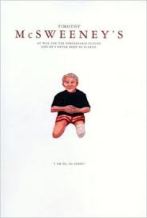
[READ: June 1, 2013] McSweeney’s #43

And with this issue I am almost all caught up with my McSweeney’s.  More impressively, I read this one only a few days after receiving it!

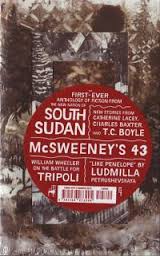
This issues comes with two small books.  And each book has a very cool fold-out/die cut cover (which is rather hard to close and which I was sure would get caught and therefore ripped on something but which hasn’t yet).  The first is a standard collection of letters and stories and the second is a collection of fiction from South Sudan.  Jointly they are a great collection of fiction and nonfiction, another solid effort from McSweeney’s.

Letters (more…)

Read Full Post »

artofmcSOUNDTRACK: SUGAR-“Helpless” single (1992).

helplessI loved that first Sugar album and even bought the single for “Helpless” (back then singles were ways for record labels to get more money out of fans of a band rather than for people to pay for one song).  In addition to “Helpless,” the single contains three songs.  “Needle Hits E” is a poppy song–very Mould, very Sugar.  The song is a bright and vibrant addition and would fit nicely on Copper Blue.

The second track is an acoustic version of “If I Can’t Change Your Mind” which sounds wonderful.  Mould really knows how to record a 12 string guitar to make it sound huge.  “Try Again” is the final track.  It reminds me of The Who, especially the bass line at the end of each verse.  It’s a darker song (especially for his single which is so up).  But I love the way the acoustic guitar seems to make it build and build.  Then, some time around the two and a half minute mark, a feedback squall starts building.  It’s way in the background (and actually sounds a bit like squealing balloons).  It continues until the last thirty seconds just degenerate into full blown feedback noise–just so you know Sugar aren’t all pop sweetness.  All three songs were later released on Sugar’s Besides collection.

[READ: May 10, 2013] The Art of McSweeney’s

Sarah got this book for me for my birthday and I devoured it.  It answers every question I’ve had about McSweeney’s and many more that I didn’t.  It provides behind the scenes information, previously unseen pieces and all kinds of interviews with the authors and creators of the issues as well as The Believer, Wholphin and some of the novels.

The real treasure troves come from the earliest issues, when there was very little information available about the journal.  So there’s some great stories about how those early covers were designed (ostensibly the book is about the artwork, but it talks about a lot more), how the content was acquired and how the books were publicized (book parties where Arthur Bradford smashed his guitar after singing songs!).

The cover of the book has a very elaborate series of very short stories by Eggers (these same stories appeared on the inside cover of McSweeney’s 23).  For reasons I’m unclear about, the rings of stories have been rotated somewhat so it is does not look exactly the same–although the stories are the same.  The inside photo of the book also gives the origin of the phrase “Impossible, you say? Nothing is impossible when you work for the circus.”

The opening pages show the original letters that Dave Eggers sent out to various writers seeking stories and ideas that were rejected by other publications (and interesting idea for a journal). (more…)

Read Full Post »

cousinkSOUNDTRACK: FOALS-“Inhaler” (2013).

foalsinhalerI really really liked Foals debut album.  It was weird and off-kilter and was one of my favorite albums of that year.  I had heard that their follow-up was very different, less weird, more conventional, and I have yet to hear it (narrow-minded, I know).  But then I heard that their new album was really great.  “Inhaler” was the first song I heard.

Man, do I love it. The song opens kind of funky with some noisy echoed guitars.  After a few verses the bridge comes in and the big excitement of the song comes when he gets to the chorus, “I can’t get enough SPACE!”  It’s not so much that he yells “space,” which he does, it’s more the way the whole song explodes with a new exciting riff and it just seems to get bigger and bigger. It blows me away every time.

After the first chorus we drop right back to that falsettoed slow verse delivery.  And the song slowly builds back up again.  The length of the bridge as you anticipate the big chorus is just excruciatingly wonderful.

[READ: April 5, 2013] Cousin K

I found this book when I was cataloging it at my job.  I don’t know what grabbed me about it (there’s nothing special about the cover).  I think it may have been the French Voices label in the corner (and its brevity).  I thought, hey why not read a contemporary French novella for something different.

Well, to my surprise, that is not what I got.  Indeed, nothing in this book is as it seems.

Yasminia Khadra is a pseudonym for Mohammed Moulesshoul.  He chose the name to avoid military censorship (that’s all the book says, I don’t really understand what that means).  Moulesshoul was born in the Algerian Sahara.  He is now retired from the military and is living in France.

But so, instead of this being a story from a French woman, the story is actually from a Male Algerian.  Which doesn’t really matter in the long run, but I assumed that the narrator was a girl (based on the “author = narrator” theory that is an easy shortcut in fiction.  This was really only confusing because the narrator is unnamed for quite a while in the book.

But what a book.  In just 80 some pages, Khadra turns in a  fascinating psychological picture of neglect and psychological abuse.  But it is such an elliptical book that there are almost as many questions as there are answers.  It is this elliptical style which provides some of the confusion, but a lot of the interesting structure of the story. (more…)

Read Full Post »

CV1_TNY_03_11_13Blitt.indd

SOUNDTRACK: SINKANE-“Jeeper Creeper” (SXSW, March 21, 2013).

sinkaneI’ve never heard of Sinkane either (was there anyone at this SXSW that I knew?).  NPR is streaming on song from this band.  It’s about 7 minutes of low-key funk with reggae-like guitars, some great bass jams and simple lyrics.  I really like the vibe that the song gives off.  They would be a great band to see live.

Sinkane later played with Usher and The Afghan Whigs, which shows a very cool range.  And evidently Sinkane leader Ahmed Gallab has collaborated with the likes of Yeasayer and Of Montreal.

Watch it here.

[READ: March 19, 2013] “Kattekoppen”

I had just finished John LeCarré’s excerpt in Harper’s when I read this short story (or possibly excerpt—it ended rather oddly).  So here was another spying operation, although this one was American and military-based.  I know very little about military operations, so this was all new to me.  And there were some things I liked about this story quite a bit. The story is set in Afghanistan where the army has just brought in a new howitzer-liaison (good job title, that) named Levi.  Levi is Dutch and yet somehow still in the US Army–and he is a good soldier.   His wife lives in Texas and is about to have a baby.

Levi gets Dutch care packages a lot.  In addition to stroopawaffles (yum!) are Kattekoppen which are cat-shaped licorice-like objects.  Levi loved them as a kid bit now he puts them on the shelf of things that people don’t want (until they desperately want them).  Eventually the narrator tries one and immediately spits it out because it tastes like ammonia.  He’s not even able to get the taste out with snow… or dirt.  It’s that bad.  I found this part of the story quite interesting.

The rest of the story was more specific to military operations.  He talks about how Levi targeted the howitzer and how he made target rings which offered an area of projection for where the shell would strike.  And that he was very good at it.  The minor problem was that Levi wanted to be home for his son’s birth.  Not a big problem except that thy Generals wouldn’t give them a new howitzer liaison in the meantime. (more…)

Read Full Post »

14

SOUNDTRACK: DEFTONES-Diamond Eyes (2010).

diamondBefore releasing Diamond Eyes, Deftones had two band crises. The first was that they didn’t really seem to like each other anymore.  The previous album was fraught with tension and they barely toured.  After deciding that they wanted to remain as a band, they were invigorated and made an album called Eros.  But during the recording, bassist Chi Cheng was in a car accident and was in a coma.  As of yet he has not fully recovered.  So they shelved Eros, hired a temporary bass player Sergio Vega and set about recording Diamond Eyes.  And for whatever reason, it proved to be one of their best releases so far.

“Diamond Eyes” opens with a heavy down-tuned guitar–very abrasive–until the chorus come in and it’s their most beautiful ones yet–with soaring keyboards and  harmonies.  And then the heavy guitars come back–it’s what Deftones do so well–beauty and ugly together.  Stephen Carpenter really shines, as always.  “Royal” is a fast song with a great harmonizing chorus.  “Cmnd/Ctrl” has a shocking low riff that explodes into a  bright chorus.  “You’ve Seen the Butcher” has guitars that seem almost untuned as the song starts.  But it morphs into a kind of sexy butt-shaking chorus.  And Abe Cunningham’s drums are, of course, fantastic.

“Beauty School” is the first that doesn’t really start out heavy, it’s a got a gentle guitar intro and the first song where Vega’s bass is really prominent as a separate instrument and it creates a beautiful alternative song–great vocals throughout.  “Prince” brings in a lot of new textures to the album, including a clanging guitar sound and a great screamed chorus. “Rocket Skates” is one of my favorite songs on the record, it has a classic metal riff and the great screamed-beyond-comprehension chorus of Guns, Razors Knives and a weird little whoooo that ends the chorus.

“Sextape” is a surprisingly gentle song, opening with an echoed guitar riff and one of Chino’s most gentle choruses.  “976-Evil” has an echoey guitar and voices not unlike the Cocteau Twins.  “This Place is Death” has another great alt rock feel–a big song with bright guitars and dark lyrics.  I haven’t really mentioned Frank Delgado on keyboards and samples.  He’s been with the band since White Pony, and I feel like his presence was made notable on a few songs here and there.  But it seems like on this disc he really comes to the fore, adding new textures and sounds to the album which really fill it out.

[READ: March 12, 2013] McSweeney’s #14

After the colorful extravaganza of the Comics Issue of McSweeney’s #13, this book settles down into something more somber  The book is softcover and all white.  The cover depicts a cartoon of George Bush with both legs blown off and the caption, “I Am So, So Sorry.”  On the spine in small print: “We’re praying as fast as we can.”  It is the most context-full cover they’ve done yet and, nearly a decade away it seems like a rather mean cover, but if I remember correctly at the time it seemed apt and delicious, especially in light of the upcoming election.

Yet despite the overtly political cover, the content inside is not political or even thematic (although it is pretty dark stuff).  Nevertheless, the table of contents gives us a small joke when it says “To help you know which stories to read first, we have indicated with either a * or a † those that deserve special consideration from you, the reader.  If you see either a * or a †, do not miss that story.”  Of course every story has either a * or a † but they cleverly did not put any kind of pattern to the symbols.

The colophon explains that when they were in Ireland, they met an actual Timothy McSweeney.  He had been given a copy of Issue #3 and then promptly forgot about the magazine.  But when McSweeney’s was in Galway to do a reading at the Galway Arts Festival, Timothy (Ted) McSweeney traveled from Dublin to check it out (not a short trip).  This also resulted in a letter from Mr McSweeney which is actually quite funny.

There are also illustrations in the book, although they are small illustrations and are placed on the title of each piece in the book.  All of the illustrations are old, mostly coming from the 1800s, although one dates back to 1670.  They illustrations are all technical scientific ones and don’t have anything to do with the stories. (more…)

Read Full Post »

McSweeney’s #13 (2006)

13SOUNDTRACKPARTS & LABOR-Stay Afraid (2006).

partslaborParts & Labor have changed t heir style over the years going from noisemakers who have a melody to being melodious noisemakers.  This album is one of their earlier releases when noise dominated.  Right from the opening you know the album is going to be a challenge.  The first song has pounding drums (electronics that sound like bagpipes) and heavy distorted shouty vocals.  By the end of the songs there is squealing feedback, punk speed drums and screaming distorted vocals (complete with space sound effects).  It’s an aggressive opening for sure.  Song two opens with a long low rumbling and then “Drastic Measures” proves to be another fast-paced song.

“A Pleasant Stay” is 5 minutes long (most of the rest of the album’s songs are about 3 minutes).  It continues in this fast framework, although it has a bit more open moments of just drums or just vocals.  The way the band plays with feedback in the last minute or so of the song  very cool.

“New Buildings” has a hardcore beat with a guitar part that sounds sped up.  “Death” is a thumping song (the drums are very loud on this disc), while “Timeline” is two minutes of squealing guitars.  “Stay Afraid” has a false start (although who knows why–how do these guys know if the feedback sounds are what  they wanted anyhow?).  The song ends with 30 seconds of sheer noise).  The album ends with the 5 minute “Changing of the Guard” a song not unlike the rest of the album–noisy with loud drumming and more noise.

The album is certainly challenging, it’s abrasive and off putting, but there;s surprising pleasures and melodies amidst the chaos.   Indeed, after a listen or two you start to really look forward to the hooks.  If you like this sort of thing, this album s a joy.  It’s also quite brief, so it never overstays its welcome.

[READ: April 15, 2011] McSweeney’s #13

I have been looking forward to reading this issue for quite some time.  Indeed, as soon as I received it I wanted to put aside time for it.  It only took eight years.  For this is the fabled comics issue.  Or as the cover puts it: Included with this paper: a free 264 page hardcover.  Because the cover is a fold-out poster–a gorgeous broadside done by Chris Ware called “God.”  And as with all Chris Ware stories, this is about life, the universe and everything.  On the flip side of the (seriously, really beautiful with gold foil and everything) Ware comic are the contributors’ list and a large drawing that is credited to LHOOQ which is the name of Marcel Duchamp’s art piece in which he put a mustache on the Mona Lisa.  It’s a kind of composite of the history of famous faces in art all done in a series of concentric squares.  It’s quite cool.

So, yes, this issue is all about comics.  There are a couple of essays, a couple of biographical sketches by Ware of artists that I assume many people don’t know and there’s a few unpublished pieces by famous mainstream artists.  But the bulk of the book is comprised of underground (and some who are not so underground anymore) artists showing of their goods.  It’s amazing how divergent the styles are for subject matter that is (for the most part) pretty similar: woe is me!  Angst fills these pages.  Whether it is the biographical angst of famous artists by Brunetti or the angst of not getting the girl (most of the others) or the angst of life (the remaining ones), there’s not a lot of joy here. Although there is a lot of humor.  A couple of these comics made it into the Best American Comics 2006.

There’s no letters this issue, which makes sense as the whole thing is Chris Ware’s baby.  But there are two special tiny books that fit nearly into the fold that the oversized cover makes.  There’s also two introductions.  One by Ira Glass (and yes I’d rather hear him say it but what can you do).  And the other by Ware.  Ware has advocated for underground comics forever and it’s cool that he has a forum for his ideas here.  I’m not sure I’ve ever read prose from him before. (more…)

Read Full Post »

[WATCHED: December 16, 2012] McSweeney’s #11

11

THE DVD that came with Issue #11 was listed as a “Deleted Scenes” bonus feature for this issue.  The colophon of the book explains in great detail what they wanted to do and how they went about doing it all.  And that’s all quite amusing in itself.

Now, of course, there are no “deleted scenes” up front.  The DVD is, at first glance, authors reading from the works in the book.  But as you scroll down the menu, there are some deleted scenes, as well as behind the scenes features and audio commentary.  All in all there’s about two hours worth of stuff crammed in here and some of it is quite interesting.

DELETED SCENES

This is where the authors read from their works.  They each read between 3 and 6 minutes, with some of them reading different sections (Samantha Hunt), but most of them reading a chunk.   (more…)

Read Full Post »

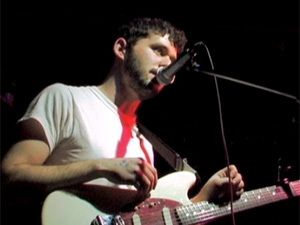
11SOUNDTRACK: THE ANTLERS-Live at the Black Cat, Washington DC, May 11, 2009 (2009).

antlersI mentioned that I was uncertain about my appreciation of this band.  And I wondered how they would hold up to a longer show.  The answer is surprisingly well.  The sound quality of this set isn’t great–the levels seem way too loud (not sure if that’s the band or the recording) and I really can’t understand the words, but the music is very moody and evocative and I like it quite a lot.

This set comes from the album Hospice, which is a concept album about a person dying of bone cancer (with lyrics like “they told me that there was no saving you” and song titles like “Kettering”).  Earlier descriptions made me think the album was a major drag to listen to– I mean the subject alone is exhausting–but musically it’s a different story.  There’s lush strings and interesting guitars.  And, at least live, the band can make a holy racket.

I’m a little surprised by the number of keyboard errors in “Atrophy.”  I mean an occasional bum note is fine, but there’s a bunch in that track.  It’s very weird.  But that is made up for by the vocals which are angsty and impassioned, especially on the final song “Cold War.”  The NPR site has three tracks available for viewing and I must say that watching the band is more exciting than just listening to them.  But I have really gained an appreciation for The Antlers.

Check out the show here.

[READ: December 16, 2012] McSweeney’s #11

This crazy title for this Issue/Post comes because the cover and spine of the book are all text.  Indeed, the book is gorgeously bound in black leather(ish) with shiny gold print.  Each author gets a summary of his or her work and a note that he or she is free (see each story below).

I did not read Issue #10 yet because it came out as a thrilling paperback, and I’ve been putting it off for a reason even I can’t quite fathom.  I anticipate reading that one last.  Again, no idea why.  In some ways, Issue #11 picks up where Issue #9 left off.  There’s lots of text on the cover, there’s letters and everything else that makes it look like McSweeney’s.  But as I said this one seems more somehow.  It’s the hardcover.  And, it’s also the DVD that accompanies the book.  I have a hard time believing I’ve owned this book for almost ten years and never watched the DVD but I finally got around to it.  More on that soon.

This issue contains letters, fiction, non-fiction and a play that picks up from Issue #9 (more…)

Read Full Post »

« Newer Posts - Older Posts »