Feeds:
Posts
Comments

Archive for the ‘Memoirs’ Category

SOUNDTRACK: PUBLIC ENEMY-Fear of a Black Planet (1990).

NPR recently broadcast a PE show from the All Tomorrow’s Parties Festival.  I didn’t know that PE was still touring, so that was a surprise to me.  The show was largely a celebration of Fear of a Black Planet, which meant that I had to go back and listen to the original.

Man, is this a solid album.  The lyrics pack a punch even twenty years later and what is perhaps more amazing is that the sound collages that Terminator X created, which were something of an oppressive sonic assault are now fairly mainstream-sounding (forward thinking or what?).

What I like about this (and most PE) albums, is that  they have little skits between songs, but unlike most rap skits they’re not one-not jokes that you listen to once and then skip every future time.  A wonderful skit (for lack of a better word) is “Incident at 66.6 FM” in which we hear an amazing amount of racist epithets thrown at PE apparently on the radio.  Or the rather disturbing “Meet the G That Killed Me.”  “Anti-Nigger Machine” is a great collage of samples like “Think” and James Brown and a dozen more songs.

“Can’t Do Nuttin for Ya, Man!” is a (sort of) comic song from Flav that is catchy as anything. While “Reggie Jax” is a confusingly titled song that has nothing to do with baseball, but everything to do with funk.

Of course, this disc has some of PE’s best songs as well.  From the awesome “911 is a Joke” to one of the best rap songs ever, “Welcome to the Terrordome” (my favorite story of this song is when I was wearing a  Welcome to the Terrordome shirt and my philosophy professor asked me quite pointedly, “What in the hell is a terrordome.”  That was a fun conversation).  “Terrordome” is still amazing–powerful, musically intense and for all of its lyrical acuity, it still has funny moments….boing.

And of course, “Burn Hollywood Burn” is an amazing critique of the movie industry (and it’s catchy too).  I got Black Caesar back at the crib, right Lar?

I’ve always been a little confused by “Pollywannacracker.”  Not lyrically, but vocally, as Chuck’s (is it really Chuck?) voice is treated in a surprisingly tinny way.  I liked the song more on this listen than any other, I guess in the past it just kind of snuck by me.

The album is a little front loaded with greatness.   “Power to the People” is another powerful song, but it’s not quite as memorable as the other tracks.  “Fear of a Black Planet” has some really cool sounds on it (where did they get that “black man, black woman, black baby” sample?).   “Revolutionary Generation” is a great track in which Chuck and Flav stand up for black women: “R-E-S-P-E-C-T, my sister’s not my enemy.”  Not your average rap subject.

And the last couple of proper songs, “B Side Wins Again” and “War at 33 1/3” are fast paced and furious, but they don’t really have much in the way of a hook.  Nevertheless, lyrically they are really great, and I love to hear Chuck D flow that quickly.

The biggest surprise for me is the censored version of “Fight the Power” (the song that got me into PE in the first place, thanks Spike).  It’s really surprising to me that PE allowed their music to be bleeped–unless it was just for a deliberate radio play (which I can accept).  Although they also list a title as “Leave This Off You Fu*Kin Charts” (did I buy a Columbia House version or something?)

This is an amazing album, one that still sounds fresh and sadly, is still relevant.

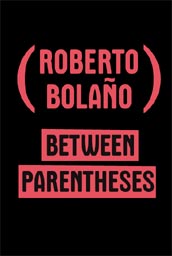
[READ: October 15, 2011] Between Parentheses

I never expected to get so addicted to Roberto Bolaño.  And despite his death, there is no shortage of works coming out in English (that is one of the advantages to reading a translated author–even death doesn’t cease the available materials).  Indeed, this year alone, New Directions is publishing Between Parentheses, and Tres and FSG is publishing The Third Reich (a collection of non fiction, a collection of poetry and a novel respectively).

When I really get into an author, I fall for his or her works, not necessarily him or her as a person (heck, some author are downright jerks).  But there are some authors that I want to know about, personally.  Bolaño is a pretty polarizing figure–he seems obnoxious, his works don’t shy away from very specific opinions, and sometimes it’s unclear what kind of views Bolaño himself has in his works (or if he’s even telling the truth about his so-called truths).  One thing in particular is the constant use of the word “faggot.”  It is used often in 2666 (and I know that is a translator’s choice, but still) and used derogatorily.  Now, clearly the context is everything for something like that.  But it seems to speak badly of Bolaño.  And yet, when reading these essays he is not homophobic in the least.  He is obviously well aware of institutionalized homophobia in Latin America, and he is obviously not supportive of it.

But that’s just one interesting thing about this book.  So let me back up. (more…)

Read Full Post »

SOUNDTRACK: KISS-Gene Simmons (1978).

Even all these year later I feel like there is something very “polished” about this album.  It feels different from the others for an intangible reason.  I like it quite a bit,and yet it doesn’t sound like a record from a demon with blood leaking out of his mouth.  Maybe it’s the surprisingly faithful (and delicate) cover of “When You Wish Upon a Star”?  Maybe it’s the cameo by Cher?  Maybe it’s the weird effects on “Radioactive”?  The whole things just seems different to me.

It starts out menacing enough with the creepy laughing and the crazy strings (like a Disney nightmare) and the chanting (what is that chanting–its sounds demonic but they seem to be saying Hosannah?).  And it all swirls into a…disco sounding guitar?  “Radioactive” is a wonderful ditty and shows that Gene, while not exactly a good singer, has more range than the God of Thunder would have suggested.   (That’s Aerosmith’s Joe Perry on guitar).  “Burning Up with Fever” opens with a bizarre, really out of tune guitar intro (that’s two songs with crazy intros).  This feels much more Kiss than anything else on the album, although again, it’s very slick feeling.  And surprisingly, I like the backing vocals on this track–especially the solo that the woman takes–hey is that Katey Segal?  No evidently it is Donna Summer (!!).  I guess Katey was one of the backing chorus on some other songs.  (And that’s Steely Dan’s Jeff “Skunk” Baxter on guitar).

Musically, I rather like “See You Tonite,” but I find his vocals a little weird on this one.  It’s such a sweet song…again, unusual for the demon (Skunk Baxter on guitar, again).  “Tunnel of Love” seems quite sinister in the beginning with a great bass line.  And then the chorus kicks in with these delicate la las (Skunk Baxter on guitars again–Katey Sagal must be in there somewhere).  “True Confessions” has a pretty hilarious choir in the middle of the song.  My mom felt that “Living in Sin” was bad publicity for the Holiday Inn.  Although I thought it was a very funny line (and yes, Cher is the squeaking fangirl and Joe Perry is on guitar again).  “Always Near You/Nowhere to Hide” is a really slick track in which Gene shows of his more delicate singing style.  The first half is a gentle acoustic track but it builds into a high concept highly produced track–and let’s not forget the amazing high notes he hits (is that really him?).

“Man of 1,000 Faces” is another song with sinister sounds in the verses (cool strings, and is that french horn?) and then a gentle, swelling chorus.  “Mr Make Believe” begins the delicate ending of the album (Skunk Baxter, again).  This is a sweet ballad, showing a very gentle side of Gene.  There’s a little diversion in his cover of Kiss’ “See You in Your Dreams.”  This version rocks harder than the Kiss version, and the backing vocals lend a weird edge to the song which is why I like it better than the one on Rock and Roll Over (that’s Cheap Trick’s Rick Nielsen on guitar).  And then yes, “When You Wish Upon a Star.”  My dad laughed about as hard at the demon guy singing this song as he did about the butch biker guy singing “Oh Danny Boy” in the Village People movie Can’t Stop the Music (which we watched as a family.

Gene’s solo album charted the highest when they were released, although now Ace’s has sold more.  It’s pretty great.

[READ: October 8, 2011] “To Catch a Beat”

There were four one-page pieces in this week’s New Yorker under the heading “Sticky Fingers.”  Each one was about theft in some way (this being the money issue, that ‘s a nice connection).

Lethem, who now appears here twice in just a few short days, also breaks the mould set up by Miranda July (so I guess 2 of four stories about shoplifting is not so much a mould as a half).  Indeed, Lethem goes against all the conventions of the other pieces, for in this story, Lethem is not the thief at all.  There is hardly any thieving going on here.

This story is about Lethem working in used book stores in Brooklyn as a kid.  He mentions several different places where he worked, nut the story focuses on one in particular.  The name isn’t important to the story (in fact it doesn’t exist anymore).  But what happens there is the crux of the story.  It’s basically about a friend of Allan Ginsberg’s armed Herbert Huncke (who I’ve never heard of).  Huncke was a major fixture for the Beats, and is written about (in disguised form) by Burroughs and Kerouac.   But he was also a junkie and an ex-con.  And he came into this bookstore regularly. (more…)

Read Full Post »

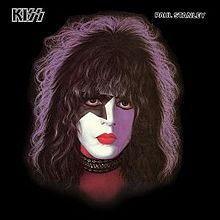
SOUNDTRACK: KISS-Paul Stanley (1978).

For Christmas in 1978 or so, my parents gave me a guitar which was signed from “Paul Stanley.”  I knew it wasn’t (and was a little disappointed that it wasn’t a drum set), but that’s the guitar I learned how to play on.  And Paul Stanley (while not the god that Ace is) is still a charismatic player.  But I didn’t really like this solo album that much when it came out.  My order of preference at the time was Gene>Ace>Paul>>>>>>>>>>Peter.  But sometime in college I reassessed this album and have regraded it as my favorite of the four and it even ranks higher than many of the Kiss albums.  (Seeing him live on a club tour certainly helped).

Paul is in great voice.  And I guess because Paul sang on so many different types of Kiss songs, he doesn’t seem out of his element here.  The chruses are more of him rather than backing vocalists (like the other guys used, although he does use some).  And the production is not too far away from the sound of Kiss at the time (certainly more polished than it should be but not as weirdly polished as Gene’s). 

 The opening of “Tonight You Belong To Me” is a wonderful acoustic intro and the song itself has a great riff and a wonderful solo.  The chorus is intense and strong.  “Move On” is something of a lesser song (it seems too choppy), but I love the quiet break in the middle.  “Ain’t Quite Right” is a cool minor key ballad.  It’s a bit 70’s-sounding, but there’s some interesting stuff going on.  The solo is again quite cool (Bob Kulick, brother of future Kiss guitarist Bruce Kulick does duties here).

“Wouldn’t You Like to Know Me” is a pretty standard upbeat Kiss song.  It’s followed by “Take Me Away (Together As One)” one of the great slow-building ballads that turn into a rocking chorus that Kiss does so well.  Paul practically whispers the verses but he belts out full strength in the loud part (not so much a chorus as just a loud part).  It’s one of my favorite songs.  “Wouldn’t You like to Know Me” is the kind of song that Kiss would play in the late 80s (full of outrageously cocky lyrics like “Girl you know, I’ll be leaving in the morning; you got to get what you can”), but there’s enough grit in this version to make me like much more than say, “Lick It Up.”

“Hold Me Touch Me (Think of Me, When We’re Apart)” is the flip side of Kiss’ cockiness, the sweet sentimental side.  Paul can croon like the best of ’em on this song.  “Love in Chains” also sounds like a typical Kiss rocker (except for the cool drum fill in the chorus).  I think I don’t like Paul’s singing in these stripped down choruses–I like it when his voice soars.  “Goodbye” has a cool typical Kiss riff in the bridge, which I like quite a bit.  And the chorus soars with a very simple guitar riff.  A perfect mid-tempo Paul song–it even has an unexpected third part that sends the song into a brief minor chord phase before returning to the happiness of saying goodbye to someone.

Still my favorite of the solo albums.

[READ: October 8, 2011] “Stealing Fire”

There were four one-page pieces in this week’s New Yorker under the heading “Sticky Fingers.”  Each one was about theft in some way (this being the money issue, that ‘s a nice connection).

As I said for Patti Smith, I felt like the tone of these articles was all set, but Wolff totally changes the concept behind these stories.  He wasn’t the thief–well he was–but  the theft came from a parent not from a store.  When Wolff was growing up, he coveted his father’s gold lighter.  He even took up smoking just so he could use it (there’s a lesson for you). (more…)

Read Full Post »

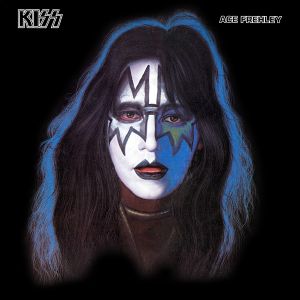
SOUNDTRACK: KISS-Ace Frehley (1978).

Unlike Peter’s album, Ace’s solo album is probably the most Kiss-like of the four, and I think that most of the songs on here are better than Ace’s Kiss songs.  I also liked that his had his cool autograph on the back.

“Rip It Out” opens with some great rough guitars and a supremely catchy chorus.  His voice also sounds much more assured than it had on the Kiss records.  “Speeding Back to My Baby” is a bit too “rock n roll” for me as well (I don’t like all the backing vocals on the choruses) but the guitar is absolutely on fire in this song–the solo is noisy and insane.  In fact, he really highlights his melodic soloing skills on this disc.  This song always bothered me because he clearly says “maybe I should turn around maybe I should stop” and then second later proceeds to sing “speeding back to my baby and I don’t mean maybe.”  Very confusing. 

The guitars on “Snowblind” are jagged and very cool (and the drums are really techno and a little silly but they sound cool and spacey).  And of course, there’s another great solo.  “Ozone” is a wonderful guitar workout, showing off what Ace does best.  Lyrically it’s a bit of a nonentity, but it is fun to say “O-zone” over and over again.  “What’s On Your Mind” is a poppy little number with a super catchy bridge (although again, a lot of “maybes” in this song).

“New York Groove” is such an anomaly.  A top-40 hit, and I’m not sure why exactly.  It’s so simple, with kind of a funky guitar.  But I guess that super catchy simple chorus could win anyone over.  The spoken word part in the middle cracks me up, his accent is so strong: “Here I am.  In the city.”  “In Need of Love” has an odd feel to it, kind of sinister, but that guitar solo–wow.   “Wiped Out” is wonderful from start to finish.  The crazy cackle in the beginning, the wonderful slippery bass, the cool guitar solo that precedes each chorus and the fast, fun-to-sing verses.  It’s just a great song (it’s probably the most successful flirtation with disco of all four solo albums).

The album ends with the magnificent “Fractured Mirror.”  It starts off as a simple enough guitar picking song.  But it keeps building.  And building.  And then a solo comes in.  And it builds more…until it ends like it began.  It’s a masterpiece of guitar overdubbing.

This album is pretty darn awesome.

[READ: October 8, 2011] “Off the Shelf”

There were four one-page pieces in this week’s New Yorker under the heading “Sticky Fingers.”  Each one was about theft in some way (this being the money issue, that ‘s a nice connection).

When the New Yorker groups four essays under the same heading, the first one really sets the tone for the others.  So it came as no surprise to me that Patti Smith was going to write about shoplifting too (frankly, she was punk goddess, how could she not have shoplifted?).  But her story is quite different and it was one that I found incredibly moving.

Her story concerns the time she stole an encyclopedia.  Not the whole thing (she still weighs less than a whole set), but the first volume, from the grocery store. (more…)

Read Full Post »

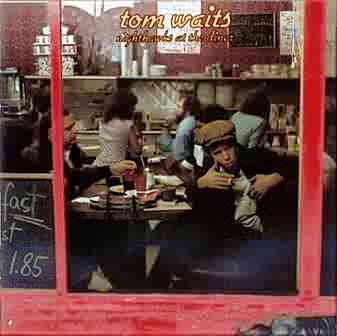
SOUNDTRACK: TOM WAITS-Nighthawks at the Diner (1975).

This is Waits’ third album, a live recording (!) which was actually recorded live in the studio. But not the way most bands record live in the studio. The producers brought in tables and chairs and created a bar-like atmosphere into the (evidently rather large) studio.  Then they invited fans in to watch the performance. Wild, man.

Just as wild is the bebopping and scatting that Waits does here. The opening “Emotional Weather Report” is all kinds of comical phrasing and silliness about himself.  It’s funny and quite enjoyable.  And it makes it feel like a nightclub.  He also introduces mos of his sings with a story, and for most of the songs, the introductions are almost longer than the song.  The two-minute intro to “On a Foggy Night” is full of Tom’s storytelling–but in a much more improv jazzy style.  Indeed, it’s not entirely clear when the intro ends and the song begins.

The intro to “Eggs and Sausage” has the very funny conceit that the food he has eaten in some greasy spoon is pretty frightening.  The veal came down to beat the shit out of his coffee, but the coffee wasnt strong enough to defend itself.  Nice.  “Better Off Without a Wife” he talks about having an evening just to yourself, you know, for pleasure.  We all do it, he says, but I’m not weird about it; I don’t tie myself up or anything.

Overall, this is a fun album.  It’s loose, the crowd is at ease and so is Tom.  It’s long album–about 70 minutes, which might be a little too long, but you get the whole vibe of a night out–good stories and good music.

[READ: September 21, 2011] “Starlight”

This story is four short pieces.  The titles should tell you everything you need to know about the content: “Mrs. Nixon Joins the Final Official Photograph,” “Mrs. Nixon reacts to RN: The memoirs of Richard Nixon,” “Brownie,” and “Mrs. Nixon’s Thoughts, Late-Night Walk, San Clemente”

So, clearly these are four short pieces that delve into the mind of Richard Nixon’s wife, Pat.  I don’t know a lot about her or about Nixon himself, really (I know all the highlights or low lights but I haven’t really ever looked into the man aside from what the sitcoms say about him).

So when I was reading the first excerpt I just couldn’t get into it.  I didn’t know who the people were for sure.  I assumed Ollie was Ollie North, but who knows.  I almost didn’t read any more, I was so uninspired by the first one.  But the next day I decided to try again.  (more…)

Read Full Post »

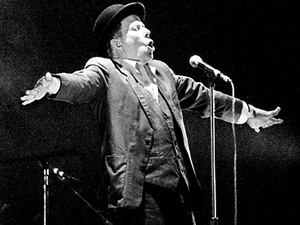
SOUNDTRACK: TOM WAITS-Live Glitter and Doom tour, Atlanta GA, July 5, 2008 (2008).

I downloaded this concert–which was recorded at the Fox Theater in Atlanta Georgia from NPR.  In the introduction, Bob Boilen says the concert is over two hours, but the page says (and the download comes in) at about 1 hour and 45 minutes, which is still plenty of Tom Waits.

This is a great show.  Although it focuses on the more recent albums, the show covers quite a span of his career: from Real Gone (“Hoist That Rag”) and Bone Machine (the album that introduced me to Mr Waits), all the way back to Heartattack and Vine (“On the Nickel”) and even three songs from Rain Dogs.

His band sounds great, tight as a drum, even playing Waits’ off musical assortments with no problem (is Casey Waits on drums Tom’s son?). There’s clearly some visual stuff going on that we are not privvy to here–the band has a good time towards the end of the set with some musical jokes.  And there’s some fun vamping and a number of good Waits stories (including the “pastika” one from the live album, see below).  He doesn’t play “Day After Tomorrow,” one of the most moving war songs I’ve ever heard, which I think is good.  It is so emotionally charged (unlike his other ballads which are moving but not quite so powerful) that I thin it would bring the whole set down.  Rather, this is more of a rumpus-filled show.  And we’re all the better for it. 

All in all, this is a great document of Waits’ live shows.  His voice sounds great and the band (including a few special guests) is fantastic. 

Later in 2009, Waits released Glitter and Doom Live, a document from this tour.  What’s nice in terms of this show is that the setlist is different for this show than it is for the album.  The album has songs from various venues on the tour, so you get different performances anyhow, but quite a lot of the songs are new here.  So even if you have the album, this is a unique experience.

Also, check out this amusing video interview:

[READ: September 20, 2011] “Dear Life”

This kind of piece is one of the reasons I don’t write about nonfiction that much.  How do you review someone ‘s life?  More specifically, how do you review a short excerpt about someone’s childhood (is this leading to a full length memoir?).  Nevertheless, I love Alice Munro, and this look into her childhood in Wingham, Ontario is fascinating.  I never really conceptualized that Munro is 80 years old.  She grew up with an outhouse and what seems like a one room schoolhouse.

What’s more interesting is that the town where she grew up more or less disappeared once people started building houses on the other side of the river (higher up the hill).  All but the poorest people moved to the new higher elevations, thereby evacuating the town and leaving only the tiny school left (the school she was so excited to get away from!).  Munro remembers many of the bad things in her life–getting whipped by her father for disobeying, walking to school and being teased and even not being allowed to go to a new friend’s house because the friend’s mother was prostitute!  But unlike in a full length memoir, Munro is able to skip past these memories pretty quickly by talking about how when she got older things were smoother (and the room where the whippings took place was converted into something else). (more…)

Read Full Post »

SOUNDTRACKLOS CAMPESINOS!-“By Your Hand” (2011).

I’ve enjoyed Los Campesinos!’s records in the past and I’m pretty excited about the prospect of a new release.  This song doesn’t deviate too far from their previous releases although to my ear it sounds a bit more musical (more instruments, more vocals) and less abrasive.  The basic elements are still there:great lyrics delivered in a more or less spoken way, followed on its heels by big shouty sections (and the whole band seems to be shouting along on this one).

This song also feels a little warmer, although the lyrics “by your hand is the only end I’ve foreseen” is either really dark or really naughty depending on how well it correlates to the verses.  Regardless, the chorus is catchy and fun to sing and the lyrics are wonderfully twisted.  Los Campesinos! have done it again.

And here’s the video.

[READ: September 16, 2011] “Jean-Baptiste Labat and the Buccaneer Barbecue in Seventeenth-Century Martinique”

I was interested in this article because it talked about the boucan and the buccaneer, and both of these things were mentioned in Book 9 of The 39 Clues.  It was a weird sort of coincidence that the boucan which I had never heard of before should appear in two things that I read about week apart (and then this weekend the Pa Renaissance Faire was pyrate themed!).   I was also interested because of the way this article was presented in the email to us: “if you have ever wondered on what foods a seventeenth-century missionary from the island of Martinique dined, check out this article from Gastronomica. (Hint: They include manatee, lizard, and parakeet)” made it a must-read.

While the article does, indeed make mention of these foodstuffs, it is by no means the extent of the article.  Rather, Toczyski looks at what Labat, a French priest and a missionary, wrote in his extensive chronicle about his stay in the Caribbean.  In particular, she focuses on the amazing breadth and depth of his gastronomical accounts (which includes details about all the meals they ate en route (the ship was amazingly well stocked–they even had a garden on board, which was under guard day and night (!); and then on the island he also talks in loving detail (with recipes) of all of the native dishes that he would eventually consume (including turtles, frogs and the palm worm (see picture at right (the picture and an awesome description of eating the palm worm is here at Boots in the Oven, at the bottom of the page).

(more…)

Read Full Post »

SOUNDTRACK: GRINGO STAR-“Shadow’ (2011).

This song was forecast as a great Fall song on NPR.  The band’s name is perhaps too cutesy, but the music is interesting.  The verses are jangly and in no way prepare you for the Beatlesesque (ie., soaring harmonies) chorus that follows. 

There’s not a lot to the song, and on my first listen I wasn’t all that impressed in the beginning.  But by the end of the song I was won over. 

The song feels very familiar, but I can’t say that it sounds like anything in particular.  The ooo-ooohs in the chorus are really pretty, the intro guitar is more intricate than I realized.  And after just a few listens I was totally hooked.  It just seems like more of a summer record to me.

I’m curious to see what else is on this record. 

[READ: September 15, 2011] “A Hobo Memoir, 1936”

My company provided some links to interesting articles that are available on JSTOR, an electronic archiving resource.  If you have access to a university database, chances are you have access to these articles.  I was particularly struck by the fascinating subjects of a few of these pieces and for the next few posts I’m going to mention them.

I had to start with this article because for some reason my kids are obsessed with hobos.  I don’t really know how it came about–reading older kids’ stories, I suspect.  On our first train ride, we saw a freight car with a door open and there was much talk about hoboes sleeping in the cars and, hoo boy, it just escalated from there.  And, despite the fact that hobos haven’t really existed in eighty some years, once you keep an ear open for the word, you hear it quite a lot (Craig Ferguson was calling his audience hobos for a while–it’s a good comedy word).

This article contains an introduction by Elizabeth Rambeau, assistant editor of the magazine, who gives us a brief history of John Fawcett and of hobos in general.  Including this very informative distinction: a hobo is a transient person who looks for work while he travels, a tramp is a drifter who does not look for work and a bum is a stationary person who does not look for work.  So, be mindful of the epithets you use!  Fawcett, Rambeau tells us, was unlike most hoboes at the time.  Indeed, he wasn’t really a hobo at all.  He was the son of a wealthy doctor.  But he grew tired of his life at boarding school and decided to take a trip on the rails from West Virginia to Texas.  But he lived the hobo lifestyle, hopping trains, getting busted by the police, and not carrying any (or much, anyhow) money.  He even hung out with a hobo named Shorty.

The reason that this article is noteworthy (in terms of hobo literature) is that unlike other hobo memoirs from the time, Fawcett was an educated man and a decent writer in his own right (most hobo memoirs were recollections from the hobos themselves, written by ghostwriters).  This Memoir comes from meticulous diary entries that he kept during his entire trip.  And, of course, the article includes hobo signs, everyone’s favorite piece of folk art.  What’s interesting is that there are no extant records of original hobo signs.  They were made with chalk and all were ephemeral.  All of the signs we have are from people’s recollections and the signs included here were done by an art dept.

Fawcett’s original work comes from an unpublished 1991 book called Awakening of Conscience.  What we have is a twelve page excerpt.  In the author’s introduction, he explains his life situation, his family situation and his pressing need to have some freedom in his life.  In hindsight, he can’t imagine what kind of grief he put his parents through (he left a note saying he was going to a friend’s house but then took a month-long hobo journey) and he regrets that.   But he’s also pretty proud of what he did. (more…)

Read Full Post »

SOUNDTRACK:  MY MORNING JACKET-“Touch Me, I’m Going to Scream (Part 2)” (From the Basement) (2009).

As I mentioned, My Morning Jacket is one of the few bands that has two videos up on the From the Basement site.  So here is Part 2 of the song from yesterday.  While Part 1 is a beautiful, smooth, folkie kind of song, Part 2 delves into a more electronic sound.  It starts with some keyboard noodlings, morphs into a loud rocker and then ends with more keyboards noodlings. 

I enjoyed watching this because Jim James is playing the keyboardy parts on a very small contraption the size of an iPad.  It’s one of those new fangled instruments that make me show my age.  I gather it’s a sampler, but even looking at the buttons I have no idea what he’s doing with it.  About midway through the song, James puts down the keyboard object and pulls on the Flying V guitar for some good loud guitars. 

Again, the harmonies are fantastic and it’s cool to see the whole band sing along.  I also enjoyed watching the other guitarist play the slide on his guitar.  

By the end of the video, it’s amusing to see them all sink lower and lower to the ground as the music fades and regresses into tiny quiet twinklings.  Until, that is, the surprising (and unannounced) addition of the 6 second “Good Intentions.”

Jim James does not wear a cape during this song, by the way.

[READ: September 1, 2011] “Trading Stories”

I have still yet to read much Lahiri, a woman whom I know I should be reading.  And now that I just learned she won a Pulitzer, it seems even more egregious that I haven’t. 

This personal history is about growing up without books.  Her father was a librarian so they borrowed a lot of books; however, but she never really owned any.  [My wife and I are not that kind of librarian–books litter our house]. 

The story reveals Jhumpa as a child writing stories with a friend in school (even during recess).  They were immensely creative and inventive and they loved it.  But she slowly began losing interest in writing.  (more…)

Read Full Post »

SOUNDTRACK:THEM CROOKED VULTURES-Live on Austin City Limits, Feb 13, 2010 (2010).

This set from Them Crooked Vultures is outstanding. I really like the album, but in a live setting these three (technically 4) guys are on fire.  They extend the songs a bit but are always tight as a drum.  Josh Homme is a great front man, even if he’s not that animated.  He shares guitar duties with Alain Johannes who is not on the album, but who gets some great sounds out of his guitar.

Dave Grohl is in his drum-pounding glory back there.  Man, he hits the drums hard.  And he seems to be really enjoying himself .

 And the biggest surprise (sort of, but not really) is John Paul Jones.  He fits in perfectly with the two younguns, and he really shows them how it’s done.  His bass work is phenomenal: fast, furious and accurate to a fault.  He also plays keyboards, an LED pulsing 12-(at least) string bass and a fascinating purple electric slide guitar contraption on “Nobody Loves Me and Neither Do I”.   Matt Rosoff from cnet explains this guitar here:

It looked like some sort of slide guitar with an electronic screen. I’d never seen anything like it before, so I did a little digging and found out from a March interview in Bass Player that it’s a custom-made axe created by Hugh Manson, who has been Jones’ tech for some time and who owns a renowned guitar shop in England. It’s essentially laid out like a lap slide guitar, modified so Jones can sling it over his shoulder and carry it around on stage, and with two extra bass strings at the bottom.

So what about that rectangular screen? According to a forum post on the EMG pickups site, it’s a MIDI controller that Jones can use to trigger stage lights. I imagine it could also be used to trigger various effects, similar to the modified Korg Kaoss controller that Manson built into a guitar for Muse’s Matt Bellamy.

If you’re already a fan of the band, you really need to check out this live show; they are amazing.  And if you’re not a fan, you will be after this show.  This is how I first heard  them and I was blown away.

You can watch the show online on PBS.

[READ: July 27, 2011] Five Dials Number 20

I didn’t expect to get caught up to Five Dials issues so quickly (has it really been 20 weeks already?).  This is the most recently releases issue!  They aren’t getting published as often as I expected.  Which is fine.  But the funny thing with this issue is that there were several printing errors in the initial run of this issue.  I don’t know if this has happened before, but it seemed so noticeable to me, that I had to wonder how it slipped by everyone.  The most obvious was that the front page had many ƒƒƒƒ characters (these were also evident in the Word Cloud later on).  There’s a word missing from the fiction “the thin cold stillness you got [  ] this part of the country” and there’s a crazy typo in the Fiction story later on. The errors have now been fixed.  But, the letter to the editor (and this has not been fixed) promises us a picture which isn’t there. “Here’s a photo of Doni at the reading – he did a brilliant job.”  I’ll assume they were partying too hard at the Port Eliot Festival to make sure  the issue was launch-ready

CRAIG TAYLOR-A Letter from the Editor: On Cable Street and General Interests
There were some serious race riots on Cable Street back in 1936.  Indeed,the head of the British Union of Fascists, Mosley, and his aggressive supporters were turned back by a noisy crowd (Irish women throwing fishy potatoes at them).  The rest of the magazine he says is general Interest, an anachronistic term from the 20th century before all magazines had to specialize in something.  I mentioned in my introduction that there was a photo error here.  Doni Gewirtzman performed a reading at the launch of Five Dials 19.  They couldn’t out the picture there, so they added it here.  Perhaps in Issue 21? (more…)

Read Full Post »

« Newer Posts - Older Posts »