Feeds:
Posts
Comments

Archive for the ‘McSweeney’s’ Category

17Many many years ago, I discovered Might magazine.  It was a funny, silly magazine that spoofed everything (but had a serious backbone, too).  (You can order back issues here).  And so, I subscribed around issue 13.  When the magazine folded (with issue 16–and you can read a little bit about that in the intro to Shiny Adidas Track Suits) it somehow morphed into McSweeney‘s, and much of the creative team behind Might went with them.

The early volumes (1-5 are reviewed in these pages, and the rest will come one of these days) are a more literary enterprise than Might was.  There’s still a lot of the same humor (and a lot of silliness), but there are also lengthy non-fiction pieces.  The big difference is that McSweeney’s was bound as a softcover book rather than as a magazine. And, I guess technically it is called Timothy McSweeney’s Quarterly Concern as opposed to Timothy McSweeney’s Internet Tendency. (more…)

Read Full Post »

createdSOUNDTRACK: ONE RING ZERO-As Smart as We Are (2004).

orzI had this CD sitting around my house for about 4 years.  I had received it as a promo disc from Soft Skull Press (along with several other books on CD) and I just never put it on.  Then one day I was going through all these promos to see if any were books I wanted to listen to.  It was then that I actually read the disc label and saw that it was a band with lyrics written by some of my favorite authors.

I liked the disc so much I wound up buying it because the packaging is truly cool.  It’s a little booklet and it features an interview with the band and some really cool insights into how the songs came about, how they got the writers to submit lyrics, and the cool fact that One Ring Zero became McSweeney’s house band, accompanying writers during their weekly readings.

One Ring Zero is comprised of two guys (and guests).  And for this disc they split the tracks in half and one of them wrote melodies for 8 songs and the other guy wrote melodies for the other 8.  I’m not sure that I could tell the song writers apart by their styles, though.

But sure, the lyrics are probably great, but what does the band sound like?  Well, in the introduction, they are described as specializing “in the sort of 19th century, gypsy-klezmer, circus-flea-cartoon music you mainly hear in your dreams.” And, yep, that is a good summary of things.  The band uses water pipes, claviola, slide whistle and a theremin (among other homemade instruments).

And so, as with other McSweeney’s things, I’m going to list all of the lyricists with their titles.  But lyrically it’s an interesting concoction.  The authors were asked to write lyrics, but not necessarily songs.  So some pieces don’t have choruses.  Some pieces are just silly, and some pieces work quite nicely.  But most of them are really poems (and I can’t really review poems).  They’re fun to read, and it is fun to see what these authors made of this assignment.

PAUL AUSTER-“Natty Man Blues”
A rollicking opening that lopes around with the nonsensical lyrics, “There ain’t no sin in Cincinnati.” This one feels like a twisted Western.

DANIEL HANDLER-“Radio”
A supremely catchy (and rather vulgar) song that gets stuck in my head for days.  “Fucking good, fucking good, fucking good…”

DARIN STRAUSS-“We Both Have a Feeling That You Still Want Me”
A Dark and somewhat disturbing song that is also quite fun.

RICK MOODY-“Kiss Me, You Brat”
A delicate twinkly piece sung byguest vocalist Allysa Lamb *the first female vocalist to appear) .  Once the chorus breaks in, it has an almost carnivalesque tone to it.  This is the only song whose lyrics were written after the music.

LAWRENCE KRAUSER-“Deposition Disposition”
A twisted song that works as a call and response with delightful theremin sounds.  It has a very noir feel.

CLAY McLEOD CHAPMAN-“Half and Half”
This is a sort of comic torchy ballad.  Lyrically, it’ a bout being a hermaphrodite (and it’s dirty too).  Vocals by Hanna Cheek.

DAVE EGGERS-“The Ghost of Rita Gonzalo”
This has a sort of Beach Boys-y folky sound (albeit totally underproduced).  But that theremin is certainly back.

MARGARET ATWOOD-“Frankenstein Monster Song”
This song begins simply with some keyboard notes but it breaks into a very creepy middle section.  It’s fun to think of Margaret Atwood working on this piece.

AARON NAPARSTEK-“Honku”
This song’s only about 20 seconds long.  It is one of a series of haikus about cars, hence honku.

DENIS JOHNSON-“Blessing”
The most folk-sounding of all the tracks (acoustic guitar & tambourine).  It reminds me of Negativland, somehow.  It is also either religious or blasphemous.  I can’t quite be sure which.

NEIL GAIMAN-“On the Wall”
A tender piano ballad.  The chorus gets more sinister, although it retains that simple ballad feel throughout.  It’s probably the least catchy of all the songs.  But lyrically it’s quite sharp.

AMY FUSSELMAN-“All About House Plants”
An absurdist accordion-driven march.  This is probably the most TMBG-like of the bunch (especially when the background vocals kick in).

MYLA GOLDBERG-“Golem”
This song opens (appropriately) with a very Jewish-sounding vibe (especially the clarinet).  But once that intro is over, the song turns into a sinister, spare piece.

A.M. HOMES-“Snow”
This song opens as a sort of indie guitar rock song.  It slowly builds, but just as it reached a full sound, it quickly ends.  The song’s lyrics totally about twenty words.

BEN GREENMAN-“Nothing Else is Happening”
This song has more of that sinister carnivalesque feel to it (especially when the spooky background vocals and the accordion kick in).  The epilogue of a sample from a carnival ride doesn’t hurt either.

JONATHAN AMES-“The Story of the Hairy Call”
This song has a great lo-fi guitar sound (accented with what sounds like who knows what: an electronic thumb piano?).  It rages with a crazily catchy chorus, especially given the raging absurdity of the lyrics.

JONATHAN LETHEM-“Water”
This track is especially interesting. The two writers each wrote melodies for these lyrics.  So, rather than picking one, they simply merged them. It sounds schizophrenic, but is really quite wonderful.  The two melodies sound nothing alike, yet the work together quite well.

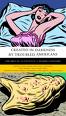
[READ: Some time in 2004 & Summer 2009] Created in Darkness by Troubled Americans

This was the first collection of McSweeney’s humorous stories/pieces/lists whatever you call them.  Some of the pieces came from McSweeney’s issues, but most of them came from McSweeney’s Internet Tendency.

The humor spans a great deal of categories, there’s some literary, some absurd, some nonsensical and, most amusingly, lists.  The back of the book has an entire selection of lists, but there are also some scattered throughout the book as well (I don’t know what criteria was used to allow some lists to be in the “main” part).

As with the other McSweeney’s collections, I’m only writing a line or two about each piece.  For the lists, I’m including a representative sample (not necessarily the best one, though!)

Overall, I enjoyed the book quite a lot (which is why I re-read it this year).  There are puns, there are twisted takes on pop culture, there are literary amusements (Ezra Pound features prominently, which seems odd).  It spans the spectrum of humor.  You may not like every piece, but there’s bound to be many things that make you laugh. (more…)

Read Full Post »

32SOUNDTRACK: TINDERSTICKS-Tindersticks [the red one] (1993).

tsTindersticks are a fascinating band.  The first distinctive thing about them is Stuart Staples’ voice: a deep rich bass that he uses almost like a whisper.  The second thing you notice is the music.  It’s an orchestral/chamber pop collection of dark rockers with fantastic moodiness to it.  And then you notice the lyrics: dark songs of lost (and decayed) love.

Yet despite the description of chamber pop, the nad is really much darker than chamber pop suggests.  The band has a very noir sound: organs that penetrate through walls of sound, tinkling pianos suring hushed moments.  The horns and strings add dark atmospherics (strings zing like a Hitchcock movie).  And the minor key chords are rich and loud.

You also get a song like “Whisky and Water” which genuinely rocks hard (loud guitars are featured).  Or a simple acoustic guitar driven song like “Blood.”  Throughout the disk you get these fantastic melodies that play off of Staples’ voice and the twisted lyrics.  “City Sickness” and “Patchwork” are just two of the tracks that are very catchy.

And then there’s the fantastic “Jism” with its awesome noir organ.  Or “Raindrops” with its accents of vibes and the beautiful piano trilling at the end (and the detailed and emotional lyrics: What we got here is a lazy love / It mooches around the house / Can’t wait to go out / What it needs, it just grabs / It never asks / We sit and watch the divide widen / We sit and listen to our hearts crumble”).  “Her” follows up with a wonderfully flamenco-infused spaghetti western number.

And lets not forget “Drunk Tank” a propulsive song that is as sinister as it is catchy.  Oh heck, I could just keep raving.  But there’s 22 songs!   Four songs are about a minute each, and the disc is about 75 minutes (not bad for a debut!).  And the disc never loses momentum or its sense of purpose.

What really distinguishes this disk is the mood of the music.  Like the best soundtracks, you can feel the emotions and imagery with the music alone, but when you add Staples’ evocative lyrics and powerful voice, it’s a deadly potent combination.

The disc was reissued a few years ago with a bonus disc of demo tracks.  The demos are surprisingly rich (they’re not at-home recordings or done without accompaniment) so they don’t differ that dramatically from the originals.  But they have a slightly less polished feel, which doesn’t hurt the band at all. There’s also a demo of the fantastic “For Those…” which doesn’t appear on the original disc.

I have to thank my friend Lar for getting me into this band. (Thanks Lar).

[READ: October 19, 2009] McSweeney’s #32

The concept for this issue is this: McSweeney’s asked several authors to “travel somewhere in the world–Budapest, Cape Town, Houston, any sleepy or sleepless outpost they could find–and send back a story set in that spot fifteen years from now, in the year 2024.”

And so, all of the stories are vaguely sci-fi-ish in that they are future related, but they are all grounded very heavily in reality, in particular, the reality of individuals trying to live in this future world. (more…)

Read Full Post »

harper novSOUNDTRACK: JILL SOBULE-California Years (2009).

caliSo Jill Sobule had the first hit single called “I Kissed a Girl” (that was sung by a woman).  And it was sort of a novelty hit, which is the kiss of death for any songwriter.  After most people forgot about her, I followed her career for a while.  And I found her follow up to “I Kissed a Girl,” Happy Town, to be a superb album and the follow up to that one, Pink Pearl ,was also really good.  And then she fell off my radar.

California Years is the first album that she self-released (and self-financed).  And it finds Sobule in find voice.  Her voice still sounds fantastic: strong and dusky, with a sly wink. When I first listened to the disc, I enjoyed it immensely.  Further listenings have revealed some flaws to me, which have lessened my enjoyment somewhat.  But before I nitpick, I’ll mention the highlights.

The first three songs are just top of the line.  “Palm Springs” opens the disc with a wonderful air of freedom.  “San Francisco” is another cool folky song, typical Jill.  These two are followed by one of Sobule’s excellent rocking/sarcastic/snotty songs, “Nothin’ to Prove” (catchy and snarky!).

After a few tracks, “Wendell Lee” resumes the fun with a list of all the people she’s dated and what they’re up to now.  “Mexican Pharmacy” & “Spiderman” are two fun/funny songs that close the disc nicely.  The final track is a list of all the people who gave her money to make the record.  It’s a catchy little tune even if you’ll never even try to remember the lyrics.

But there are a few clunkers on the disc. “Where is Bobbie Gentry,” when I first heard it, it was fun to guess that Bobbie had written “Ode to Billie Joe” (I didn’t know she had written it).  And this sort of update to that song (which I actually don’t like that much anyhow) sounded like a good idea, but on repeated listens it seems forced and rather silly (especially the “I was the baby…”) line.

There’s another weird song in the middle section: “Empty Glass.”  What’s weird about it is that Sobule doesn’t normally hold notes for very long, she’s more of a quick singer.  And I think her voice doesn’t really hold up to the chorus of “empty glass.”  My final gripe is with “Bloody Valentine” which begins with the exact same chord structure and vocal melody line as the first song on the disc.  Whenever it comes on I start singing “Palm Springs.”  It also ends with a weird little “rocking” section which simply doesn’t suit the disc.

So, overall it’s something of a mixed bag.  But the highs outnumber the lows by a long shot, and the highs are quite high.

[READ: October 13, 2009] “Among the Beanwoods,” “Heather,” “Pandemonium”

I’ve had these stories lying around for quite some time.  When I first saved them it was because I had just read McSweeney’s #24 which had a Donald Barthelme section in it.  I had read these short pieces then, but they didn’t leave that much of an impact on me, so I decided to re-read them now.

“Among the Beanwoods” & “Heather” are from the 1970s.  And “Pandemonium” was written just before his death in 1989.

And it’s here that I admit that I really don’t know all that much about Barthelme (even having read the McSweeney’s issue).   And I can also admit that I don’t really “get ” him. (more…)

Read Full Post »

adidasSOUNDTRACK: TV ON THE RADIO-Dear Science, (2008).

sciencThe problem with TV on the Radio for me is that their first EP is so damned good that anything else they do pales in comparison.  Having said that, Dear Science, comes really close to topping that EP.  I liked Cookie Mountain (their previous disc) but I felt like they put so many elements into the mix that it detracted from the best part of the band: Tunde Adepimbe & Kyp Malone’s vocals.
And so, on Dear Science, the vocals are back up front where they belong.  This disc is a lot less busy, which may seem a little like selling out, but instead, it just heightens the complexity and originality of the band’s work.  The disc rocks hard but it also heightens some really cool jazz and dance elements.    But it all comes back to the melodies and vocals for me.  And on Dear Science, they pretty much outdo themselves.

And you can dance to it!

[READ: September 30, 2009] Shiny Adidas Tracksuits and the Death of Camp and Other Essays

After reading David Foster Wallace’s essay in this book, I looked at the other articles here and decided to read the whole thing.  And I’m really glad I did.  It’s an interesting book full of, funny and often thought-provoking pop culture articles circa 1996.  As with some of the other pop culture/political books that I’ve read several years after they were relevant, it’s often weird to look back and see what things fully occupied the popular landscape at the time.  And, when a piece is completed dated, it’s pretty obvious, and sometimes unintentionally funny.  But there are many pieces here that are timeless (or at least hold up for a decade), and those are still really good reads.

This book also does a good job of summarizing the tenor of the defunct Might magazine.  A dose of irony, a splash of humor and a lot of criticism of what’s trendy.

The strange thing to me about this book, though is the targets that they chose to go after sometimes.  Rather than critiquing right-wing attitudes or corporate shenanigans (which they do touch on), they really seem to be after pop and rock celebrity.  For instance, there are two separate articles which take a potshot at Eddie Vedder (this was around the time of the Ticketmaster fiasco which didn’t put him in the best light but which could hardly be seen as only self-serving).  This seems rather unfair, unless his sincerity could really be called into question by a bunch of ironic jokesters.  Magazines like Radar and Spy used to do snarky articles like this. I’d always thought that Might was a little better than that.  But indeed, there’s one or two pieces here that have a holier- (or perhaps indier)-than-thou attitude.   Which may have been fine in the 90s but which seem petulant now.

But aside from those, the irony-free pieces are very enjoyable.  (more…)

Read Full Post »

hideousSOUNDTRACK: TOPLESS WOMEN TALK ABOUT THEIR LIVES soundtrack (2006).

topI learned about this soundtrack from a very cool article in The Believer (the beginning of which is online here).  In the piece, the author claims to have never seen the film (he was given the soundtrack by a friend) and he doesn’t want  to change his associations with the music by watching the film.  And now, I too can say I have never seen the film, and likely never will.  And I really enjoy the soundtrack too.

The soundtrack is sort of an excuse to showcase a bunch of bands from New Zealand’s Flying Nun record label.  Featured artists are The 3DS, The Bats, The Clean, Superette, Snapper, The Chills, Straightjacket Fits, and Chris Knox.

It’s nigh impossible to give an overarching style to these songs.  Even when the bands have multiple songs on the soundtrack, they are not repetitive at all.  Even trying to represent a genre would be difficult.  The opener “Hey Suess” is almost a surf-punk song, while Chris Knox’s gorgeous “Not Given Lightly” is a stunning ballad.  There’s a cool shoe-gazer song “Saskatchewan,” and some great simple indie rock (a bunch of other tracks).

The only thing these bands have in common is that they’re all from New Zealand.  And as with any large body of land, no two bands are going to sound alike.  Nevertheless, all of the bands fall under the indie rock umbrella.  It’s a great collection of songs that many people probably haven’t heard.  It’s worth tracking down for the great collection of tunes and, if all you know about New Zealand is The Flight of the Conchords.

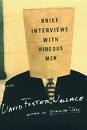
[READ: September 24, 2009] Brief Interviews with Hideous Men

After finishing Infinite Jest I wasn’t sure just how much more DFW I would want to read right away (of course, seeing as how I have now read almost all of his uncollected work, that is a rather moot point).  But when I saw that John Krasinski (of TV’s The Office) was making a film of this book, I had to jump in and read it again.

Obviously, there are many questions to be asked about this film ().  Is it going to be based on all the stories in the book?  (Surely not, some are completely unrelated).  Is it going to be just the interviews? (Probably, and yet there’s no overall narrative structure there).  And, having seen the trailer, I know structure is present.  I’m quite interested in the film.  In part because I didn’t LOVE the stories.  Well, that’s not quite right.  I enjoyed them very much, but since they weren’t stories per se, just dialogue, I’m not afraid of the stories getting turned into something else.  The text isn’t sacred to me, which may indeed make for the perfect set-up for a film.

Anyhow, onto the stories.

The obvious joke is that the author of Infinite Jest has created a book with “Brief” in the title!  But indeed, many of these stories are quite brief.  Some are only a couple of paragraphs (which true, from DFW that could still be ten pages).  But, indeed, most of the interviews in the book are brief too (except the final one in the book, which is nearly 30 pages).   (more…)

Read Full Post »

dfwshelfSOUNDTRACKFLEET FOXES-Sun Giant EP (2008).

sungiantMy friend Jarrett introduced me to the Fleet Foxes with their self-titled CD.  I recently picked up the Sun Giant EP and it is just as good as the main CD.  It opens with a beautiful a capella introduction to “Sun Giant” in multipart harmony that melds into a nice folksy song.

The remaining 4 songs all contain these harmonies, although some rock harder than others (within their style of orchestral folk).  Orchestral folk implies a “bigness” that the band never really strives for.  In fact, some songs sounds downright pastoral.

“English House” is great for so many reasons: the fantastic guitar lines, the breaks in the song proper, just everything.  But the track “Mykonos” is probably my favorite Fleet Foxes song of all.  It has such a wonderfully catchy pre-chorus and then an even more fantastic post-chorus.  Simply amazing (even if I don’t know what they’re saying).

The EP is a great introduction to this fantastic band.

[READ: Mid-September 2009] uncollected essays

I don’t normally like to have a bunch of things appear in one post.  But this post is going to be about those small, uncollected pieces that aren’t really long enough to warrant their own entry (letters, interviews, etc).  I tracked down most of these pieces from The Howling Fantods, but I also got a few from The Joy of Sox.  You’ll notice that many of these pieces are stored at http://theknowe.net/dfw and yet I can’t figure out how to access the files there directly, so Howling Fantods links are what we get.

The text in bold comes from The Howling Fantods site (I hope they don’t mind that I swiped it).  The text underneath is my review/opinion/idea. (more…)

Read Full Post »

convSOUNDTRACK: SONIC YOUTH-SYR 6 Koncertas Stan Brakhage Prisiminimui (2005).
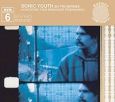
syr6This CD sees Sonic Youth playing an instrumental background to three silent films from Stan Brakhage.  It reminds me of the Jem Cohen DVD in which A Silver Mt Zion play the music for the silent Cohen film.

Now obviously, we don’t see the films on the CD.  In fact, as far as I can tell it doesn’t even say which films they are (the credits are in Lithuanian).  So, it’s impossible to tell if the pieces are contextually good.

As for the songs themselves, there are three short pieces.  The first is about 25 minutes, the second about 14 and the last about 27 (even though the disc itself lists one piece at about 65 minutes).  The pieces are leisurely and very abstract.  There’s very little in the way of Sonic Youth in evidence: minimal distorted guitars (or much of any guitars).  Rather, there are effects, percussion and occasional vocals from Kim.  There are no hooks of any kind.  But then what would you expect from soundtrack work?

Unlike the other SYR discs which were all about improvisation, this one feels more like a composition: abstract, strange and a little disorienting, but a composition nonetheless.   I imagine that the films are dark and mysterious.

This disc falls in line with the style of SYR 4 Goodbye 20th Century.  If you’re not really sure about SY, but you like abstract soundscapes, this is a good disc to check out.

[READ: August 30, 2009] The Convalescent

I had read a sample of the book about a month ago and was very intrigued.  When the book came in the mail I was pretty excited to read it all.

But how to explain this peculiar book?  Rovar Pfliegman is a mute, crippled man who lives in a broken down bus on the side of the road–out of which he sells meat.  His meat is the cheapest and freshest in town so even though he sells it out of  a bus on the side of the road, he has many clients.

Pfliegman is Hungarian, specifically, he comes from one of the eleven tribes who migrated over the Ural Mountains.  (History records only ten tribes, and the word Hungarian stems from the word onogur, which means ten arrows.)  This eleventh tribe, the Pliegmans tripped over their own feet, growled at strangers, stole other peoples food and were generally outcasts even amongst outcasts.  As an example of the sort of tribe the Pfliegmans are, Rovar’s father after receiving a VCR in 1984 spent four minutes examining the buttons and one minute examining the manual before bashing it in the face. (more…)

Read Full Post »

lydiaSOUNDTRACK: SONIC YOUTH-SYR8: Andre Sider Af Sonic Youth (2008).

syr8This final (so far) SYR release is another live recording and it sees the bands joined by saxophonist Mats Gustaffson and electronic wunderkind Merzbow.  This EP comes from the 2005 Roskilde Festival in Denmark (and the language is all written in Danish).  According to the SY website, the day before this, they had performed a set in support of Sonic Nurse. However, this set, “The Other Side of Sonic Youth” is an hour or so improvisation. It is basically broken down into 5 minute intervals:

1 min.  Kim (guitar) & Steve (drums) start
5 min. Thurston (guitar) joins
10 min. Lee (more guitar) joins
15 min. Jim O’ Rourke (bass/synth?) joins
20 min. Mats Gustaffson (saxophone) joins
25 min. Merzbow (laptop) joins
30 min. Kim & Steve leave
35 min. Thurston leaves
40 min. Lee leaves
45 min. Mats leaves
50 min. Merzbow finishes

All times are approximate, and even listening to the disc it’s not entirely clear when the new players come on (or when they leave). For the most part, the set is varying levels of noise and dissonance.  But it’s not just a wall of chaos. It starts fairly simply with the guitar and drums (although when Kim and Steve play it’s never really simple).  By the time Jim comes out, the band has morphed into all manner of sound scapes.

When Mats comes in and that saxophone starts squealing, it’s a whole new ballgame. I don’t find Merzbow’s entrance to be all that noteworthy, but by the end, when it’s just him and Mats (or him by himself) he’s doing some pretty amazing stuff.

It’s hard to imagine what the Roskilde people thought of this (although crowd noise seems to be positive).  This set was followed by Black Sabbath, which in and of itself is pretty funny.  Especially since the SY set seems far more dissonant.

[READ: September 6, 2009] Samuel Johnson is Indignant

This collection of Davis’ work contains fifty-six of stories.  The stories range from one sentence (!) to some twenty pages.

The book is disconcerting in that it opens with several of the one to two page stories, leading you to suspect that they will all be that length. Then, when you actually get to the longer pieces it kind of throws you.

Those first stories are I guess what you’d call flash fiction.  Except that for the most part, it’s hard to tell whether the pieces are even meant to be fiction.  They are aphoristic, often.  Talking about neighbors and friends, uncomfortable moments, and mostly, lots of thinking about everyday activities.  Some of them are funny.  Some of them are thought-provoking.  Some of them are just weird.  And some of them make you wonder why they were written at all, or more to the point, why she would name this collection Samuel Johnson is Indignant, when this story,consists of this:

“Samuel Johnson is Indignant: that Scotland has so few trees.” (more…)

Read Full Post »

nyorkerSOUNDTRACK: SONIC YOUTH-TV Shit (1993).

tvshitThis is a funny little addition to the SY catalog. It is essentially four covers of a song by Youth Brigade called “No Song II” (which is from Dischord records, Possible EP here).

The original song is one second long, with the band shouting “No”

So, covers of it are obviously absurd.  There are 4 tracks in total on the disc, the last two are each over three minutes long (!)

The band is in full noise/freak out ensemble, complete with maniacal screamer/lunatic  Yamatsuka Eye from the Boredoms (and elsewhere).

Obviously it’s a bit of fun, and little more. It’s only for super-die-hard fans or anyone who might like the Boredoms-style of noise rock.

[READ, August 18, 2009] “Max at Sea”

Since I just finished Eggers’ How We Are Hungry, I was delighted to find a new story by him in the New Yorker. The picture next to it looks like a still from the upcoming film of Where the Wild Things Are (Eggers cowrote the screenplay). So, when the story started and Max put on a bear costume, I thought, huh, that seems very familiar.

As the story progressed, well, it seemed really really familiar. Now, I admit I don’t know Where the Wild Things Are by heart, but I sure recognized a lot of it. And then I confirmed with Sarah that indeed, this short story IS the story of Where the Wild Things Are. Eggers has fleshed it out (presumably for the screenplay) and added some details and things, but the whole plot of the story is Maurice Sendak’s.

And I’m not sure how I feel about releasing it as a short story. It is acknowledged in the Eggers bio in the front of the magazine that it does come from Sendak’s work, but somehow it seems wrong to take up a fiction spot in the New Yorker (that most venerable of fiction locations) with a story that is a retelling of someone else’s story. (more…)

Read Full Post »

« Newer Posts - Older Posts »