This song was NPR’s song of the day on July 7th. I’d never heard of Rockwell Knuckles before. He’s a rapper from St. Louis and has at least one other album out as far as I can tell. I was rather fond of this song for, as the NPR page says, he often prefers to be absurd.
This song has fast, manic music–jittery and confusing and the rap over the top of that music, especially the chorus, is equally frenetic and hard to fathom on one listen. But the chorus has a interesting twisty melody and the lyrics (the ones that I can follow) are bizarre and thoughtful and not typical “street life” lyrics.
I listened to this sevral times in a row, and will defitely check out his full length (which you can stream here, and the songs I listened to are equally weird and catchy).
[READ: July 6, 2011] Lucky Peach Issue 1
McSweeney’s has yet another new periodical to occupy my ever diminishing reading time. This one is a food magazine which, as the cover states is “the new food quarterly from Momofuku’s David Chang.” I don’t especially like food magazines (Sarah subscribes to several, but I just can’t get into them–reading recipes to me is the equivalent of looking at XHTML code for most people). I mean, I like to cook sometimes, but I don’t look for new recipes or anything like that. So, I am probably the least likely recipient of this magazine. Not to mention I’ve never heard of David Chang and only know about Momofuku because of the Elvis Costello album.
And then geez, the first issue is about Ramen? Who gives a fuck about Ramen? It’s that crappy stuff you buy 10 for $1 at the supermarket. And you’re really going to devote 174 ad-free (except, obviously lots of mentions of Momofuku) pages to ramen?
Well, yes they are. And holy shit if it wasn’t amazing. David Chang is a really funny guy and co-editor Peter Meehan is a great foul-mouthed humorist. [I have never seen so many “fucking”s in a cooking magazine before–in fact I suspect I’ve never seen any in a cooking magazine before]. The articles were funny and a little low brow (I doubt most cooking magazines mention people throwing up either), but they were engaging and interesting too. (more…)
SOUNDTRACK: THE HEAD AND THE HEART-SXSW, March 18, 2011 (2011).
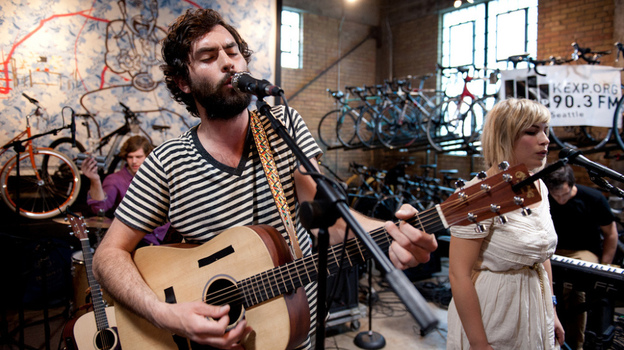
Just months after their in-studio session, The Head and the Heart played South by Southwest. This set seems somehow louder than the in-studio (which seems a very common phenomenon–the bands just seems to be quieter in-studio somehow, even if they are playing hard, it still seems subdued, which isn’t bad at all, just odd). So here, the band really lets loose (or maybe it’s because they’ve been playing no for six extra months?) and they sound like they’re really having fun.
Their sound is loud and (somewhat) chaotic, and it really suits them. The set list is similar to the in-studio (they also play “Cats and Dogs” which segues into “Coeur d’Alene”). “Ghosts” and “Lost in My Mind” are also here (“Lost” sounds great in this rambling, somewhat shambolic format). They also play “Down in the Valley.” Added to the set are “Winter Song” and “River and Roads.” These two songs feature vocals by violinist Charity Thielin, and I have to admit I don’t love her voice. Perhaps it’s in this context or that she is mixed a wee bit to loud (because I didn’t dislike her voice in the in-studio). As I said, I haven’t heard the studio version yet, so I’ll chalk it up to a very large crowd.
But otherwise the set is outstanding, and I’m becoming a huge fan of the band.
[READ: March 28, 2011] Here They Come
I had been thinking about reading this book for a while (the blurbs on the back are quiet compelling) but I kept putting other McSweeney’s books in front of them (I had hoped to finish an entire stack of McSweeney’s novels before The Pale King came. But it shipped two weeks early and threw off my plan).
I have read two pieces by Murphy in previous McSweeney’s issues, but looking back they didn’t prepare me for this strange story. And the strangest thing is the point of view of the narrator (but more on that later).
This is actually a simple enough story. Set in New York over an unspecified time period (there’s a couple of winters and a couple of summers, but I’m not sure if it’s new seasons or flashbacks), the (as far as can tell) unnamed narrator girl leads a pretty crap existence.
Firs there is John, the hot dog vendor. He’s a married man from a middle eastern country (his family is back there). And basically the narrator lets him feel her up (for what it’s worth on a flat chested 13-year-old) for free hot dogs and candy bars. She doesn’t seem to upset by the groping and keeps going back to pass the time with him.
Then there is her brother, an obnoxious boy who walks around in a silk dragon bathrobe all the time. When he is not smashing things with his guitar when he walks past the furniture, he is smashing things in his room or threatening to shoot himself with their old, unloaded gun.
Her mother works all the time but really can’t afford to take care of them or feed them. And she says “Merde” night and day (she is French). But worse is her mother’s mother, la mere, who stays with them from time to time. la Mere seems like she has money but she never gives them any. (more…)
SOUNDTRACK: KANYE WEST-My Beautiful Dark Twisted Fantasy (2010).
Before buying this album I really only knew of Kanye West as a loudmouthed guy who tweeted a lot and told off George Bush. But then everyone was raving about this album (Pitchfork gave it a 10 out of 10!). So I decided to check it out. And I can’t get over how great an album it is.
Now I’m going to start this review by mentioning a few things I dislike about rap as a genre. 1) I dislike all of the “guests” that appear on a record–I bought the album because for you, not your friends. 2) I dislike excessive use of “unh” and “yeah” at the beginning of a track; when you have nothing to say–let the backing music flow, save your voice for actual words. 3) Rap is still terribly misogynist and vulgar–I’ve nothing against vulgarity per se (I do have something against misogyny) but excessive use is lazy, and it stands out much more in a rap song since you’re saying the words not singing them.
The Kanye West album is guilty of all three of these things, and yet I still think it’s fantastic. The first reason is because it goes beyond a lot of rap by introducing real musical content into the songs. This is not an “all rap is just a beatbox” dismissal of rap, it’s an observation that rap tends to be more about the lyrics and the musical accompaniment can get kind of lazy. West’s songs have (beautiful) choruses, strings, and samples that augment the rest of the song, as opposed to samples that ARE the song. And Kanye West’s voice is great. His delivery is weird and twisted, a little cocky but more funny, with a twisted attitude that is really cool–and to my rather limited palate of rappers, it’s original.
The opening of the disc “Dark Fantasy” has a chorus singing “Can we get much higher” which is catchy and cool (and is used in the promo for The Hangover 2). The switch from this opening to the rapping works well (aside from the FOUR “yea”s). Although I don’t love the yeahs, I love his delivery, and that he occasionally ends lines with these weird “hunh” sounds, that are wonderfully emphatic.
The guests start showing up on track 2, but even the guests can’t detract from the excellent guitars of the song (and the cool solo). And I’ll say about the guests that I like some of them, but for the most part I’d rather hear Kanye.
“Power” samples King Crimson’s, “21st Century Schizoid Man”; anyone who samples King Crimson is alright with me. But to use it so perfectly, to make it part of your song is real genius. It works musically as well as within the overall concept of the album.
“All of the Lights” (with the pretty piano intro) features scads of guests including John Legend, The-Dream, Elly Jackson, Alicia Keys, Fergie, Kid Cudi, Elton John (!), and Rihanna. I can hear some of these people but not Elton John (why would he agree to be on a track where you can’t even hear him?). It is a beautiful pop track nevertheless.
“Monster” is a monster of tracks with yet more guests (I like that some of these guests break with the typical guest, like Bon Iver (!)). And I really like Nicki Minaj’s verse. [I’m not familiar with her work at all (in fact I keep wanting to say Minja instead of Minaj) but her verse with the wonderfully crazy vocal styling she displays is weird and cool and very powerful–I would like to check out her solo album, but the samples I heard weren’t that interesting]. It also has a great repeated chorus of being a “motherfucking monster.”
It’s followed by the even more catchy “So Appalled” (with FIVE guest rappers–some of whom I’ve never heard of but who do a good job. I love Cyhi da Prince’s lyrics: “I am so outrageous, I wear my pride on my sleeve like a bracelet, if God had an iPod, I’d be on his playlist” or “So call my lady Rosa Parks/I am nothing like them niggas baby those are marks/I met this girl on Valentine’s Day/fucked her in May/she found out about April so she chose to March” or this line, “y’all just some major haters and some math minors.”
“Devil in a New Dress” opens with a bunch of “unhs” (which I dislike) but this is nice ballad in the midst of all of the noise (and it has some clever lyrics). It morphs right into “Runaway” one of the more audacious singles I can think of. The piano melody is so simple (a single note to start) and the lyrics show Kanye as a loser in relationships. It’s a surprisingly thoughtful song for a song with a chorus that goes: “Lets have a toast for the douchebags, let’s have a toast for the asshole; a toast for the scumbags every one of them that I know. You been putting up with my shit for way too long…runaway fast as you can.” It gets even more audacious when you realize the last 4 minutes of the song are a solo with distorted voice. And the video…the video is 35 minutes long!
The sentiment of that song is erased by the next one, “Hell of a Life”. It opens with a great distorted guitar riff and lyrics about sex with a porn star. “Blame Game” is a surprisingly honest song about being nasty to your girlfriend (“I’d rather argue with you than be with someone else”). It features a sample of Aphex Twin’s (!) “Avril 14th”. And it’s quite a sad but lovely track. It ends with a very long skit by Chris Rock. I like Chris Rock, but this dialogue is kind of creepy because the woman who Rock is talking to (about the great sex she gave him) seems to be a robotic sample–why not have an actual woman talk to him?
The final track, “Lost in the World” has a lengthy intro by an auto-tuned Bon Iver. It’s one of my favorite tracks on the disc, especially the end, where the processed vocals get even weirder but accent the beat wonderfully. This track morphs into what is the actual final track, “Who Will Survive in America” which is basically a long recitation from Gil-Scot Heron. It works great as an album closer.
So, despite several things I don’t like about the disc, overall, it’s really an amazing release. And I can overlook the few things I dislike because the rest is so solid. I can’t decide if it’s worth looking for his earlier releases. How can they live up to this one?
[READ: May 6, 2011] McSweeney’s #37
This is the first McSweeney’s book where I’ve had to complain about the binding. The glue peeled off pretty quickly from the center cover. Fortunately, the back cover held up well. I’m guessing it’s because there’s an extra book tucked into the front cover which prevents the book from closing nicely when it’s removed.
But aside from that, the design of the cover is very cool. It is meant to look like a book (duh), but actually like a 3-D book, so the bottom right and top left corners are cut on diagonals (this makes for a very disconcerting-looking book inside–with triangles cut across the top). The artwork inside is also cool. In keeping with this appearance, each two page spread looks like a book with a spine drawing in the gutter of the pages). And the bottom of each page has lines making it look like the bottom of a book. (The illustrated margins are by SOPHIA CARA FRYDMAN and HENRY JAMES and there are interior paintings by JONATHAN RUNCIO).
The front matter is wonderful. Although it gives the usual publishing information, the bulk of this small print section is devoted to counteracting all the claims that the book is dead. It offers plenty of statistics to show that not only are the public reading, they are reading more than ever. The introduction also goes a long way towards arguing against the idea that people are reading less now than in the past. When was this “golden age” of readers? There’s also the wonderfully encouraging news that 98% of American are considered literate.
SOUNDTRACK: SONIC YOUTH on NPR [interviews and stories] (2006-2009).
While I was finding all of these awesome downloadable shows on NPR, I also found that there are hundreds of downloadable NPR stories about all kinds of bands. But I was especially interested in the Sonic Youth ones because, well, I’m a fan of the band, but also because it seemed so incongruous to me to hear Peter Sagal introducing a story about Sonic Youth (with noise rock in the background).
The three downloadable shows cover the period from 2006-2008. It’s no coincidence that this is the Rather Ripped period, where the band is at its most commercial. And yet it is still pretty neat to hear them play samples of the noisier music as well.
The first one, A 25-Year Experiment in Artful noise (June 12, 2006) appeared on All Things Considered. It is an interview from WHYY (but with the Peter Sagal intro!). Joel Rose asks the band about their longevity as well as the history of their sound (this is where Thurston admits that their unusual tunings were because their crappy thrift store guitars sounded very bad in normal tuning). This interview also revealed to me that Thurston and Kim were married in 1984. I knew they were an item forever, but didn’t know they were official for that long. Well done!
The interview also mentions their appearance on the beloved show The Gilmore Girls. They watched the show with their daughter, Coco and heard Sonic Youth mentioned a few times (by cool chick Lane). So they got in touch with the producers and were invited on set (I wonder if the actress who played Lane liked them as much as Lane did?). And they played a fun “troubadour” version of one of their songs on the show (with Coco on bass).
The second download, Story of a ‘Kool thing’ (June 13, 2008) is more of an interview with David Browne, whose book Goodbye 20th Century: A Biography of Sonic Youth, I have not read (although it sounds good). This interview delves into their earlier music a bit more (how cool to hear Tom Violence on an NPR show–admittedly this show is The Bryant Park Project, so it’s not quite All Things Considered). This segment is a general overview of the band’s history and of the book itself (but unlike the book, this offers snippets of music!)
The third one has a rather snarky title: “Turning ‘Sonic Youth’ Fans Into Readers” (January 27, 2009). It’s not so much about the band as it is about a book curated by Peter Wild called Noise: Fiction Inspired by Sonic Youth.
It’s a brief segment which delves into the inspiration for the book and for Wild’s own story “Radical Adults Lick Godhead Style.” There’s a strangely credulous tone to the whole piece which makes it seem like they don’t really like the book. I’m curious about the book as there are a few well-recognized writers on board, but I’m not sure if I’ll ever get around to reading it (although Amazon sells used copies for $2.50).
Contributors include:
Hiag Akmakjian • Christopher Coake • Katherine Dunn • Mary Gaitskill • Rebecca Godfrey • Laird Hunt • Shelley Jackson • J. Robert Lennon • Samuel Ligon • Emily Maguire • Tom McCarthy • Scott Mebus • Eileen Myles • Catherine O’Flynn • Emily Carter Roiphe • Kevin Sampsell • Steven Sherrill • Matt Thorne • Rachel Trezise • Jess Walter • Peter Wild
[READ: April 18, 2011] 826 NYC Art Show Catalog
This item is always for sale pretty cheap at the McSweeney’s site. It recently was marked down to $3 so I figured I’d check it out. This is a collection of art prints. Each one is on a stocky paper just under 8 1/2″ x 11″. The prints are reproduced beautifully (there’s about an inch and a half border (making them suitable for framing). The back side of the print has a review of the print. And, most amusingly, the reviews are by 6 to 8 year olds.
The art is hard to summarize, as it covers a lot of ground. There’s a ton of different styles as well, from straight ahead photography to line and pencil drawing to painting. These artists each have one page: (more…)
Wavves opened for Best Coast (what a great double bill). Wavves play a raucous, rowdy set of bratty punk. Unlike Best Coast, the lead singer seems like he might be something of a jerk. But it played pretty well into the personality of the music (sloppy, abrasive). And I wonder just how many times he said he was drunk?
Personalities aside, the was a really fun set. I have the newest Wavves album, but I think their live show was more engaging. For all of their sloppiness, the band was always together, with no missed notes (except when the drummer was apparently not paying attention).
They play 16 songs, including a cover of Black Flag’s “Nervous Breakdown” (which the play very well). And even if you’re not won over by the singer’s personality (which is kind of funny), you’ll be won over by the simple, punky music. You can listen here.
[READ: March 29, 2011] The Riddle of the Traveling Skull
This is the 4th book in McSweeney’s Collins Library Series. It’s the final book in the series that I’ve read and I have to say that once again, Paul Collins has blown me away with this selection. Collins apparently stopped his library after 6 volumes. I wondered if there were more coming, but the Collins Library website is rather confusing. There’s an almanac with updates as recent as March 1st, and yet the Biography of Paul Collins says: Paul Collins is currently on tour in support of his memoir, Sixpence House, which recounts his time spent living in the Welsh town of Hay-on-Wye, known as the “Town of Books.” But Sixpence House came out in 2003 (and it sounds awesome!).
Anyhow, back to this book, which was my favorite of the bunch. It is a genuine mystery from 1939. Indeed, Harry Stephen Keeler was even more prolific than Agatha Christie (they were born in the same year). The thing about Keeler though is that his stories are, well, crazy. Many of his stories were just his attempts to meld disparate ideas into one story. He includes crazy dialect. He seems to have no concern for conventional storytelling. Indeed, he has little concern for conventional mystery storytelling (in one of his stories, he introduced the murderer on the last page).
And this story has similar improbable elements.
In sum: Clay Calthorpe, a salesman returning from the Philipines picks up the wrong bag on the trolley. When he gets home he finds a skull inside it. The skull has a name plate affixed to it, a bullet inside it and, in the wads of paper that are keeping the bullet from rattling around, he finds the carbon copy of a poem. (more…)
SOUNDTRACK: DARKTHRONE-“Kathaarian Life Code,” (1992), “Sacrificing to the God of Doubt” (2004), “Canadian Metal” (2007).
After watching Until the Light Takes Us, I wanted to check out some of Darkthrone’s music. According to their Wikipedia page, over the years the band who pioneered black metal has morphed away from the sound. They’ve added elements of punk and speed metal to their bludgeoning sound. In the movie Fenriz says that he listens to all kinds of music and is very open-minded.
“Kathaarian Life Code” is a ten minute dirge of black metal. It opens the band’s second album (considered to be a black metal classic) with chanting and guttural spoken words. Then it blasts forth with the jackhammer style of drums that is now standard in black metal.
It slows down from time to time, allowing for the really heavy parts to blast through the chaos of the fast parts. It’s pretty intense and not for the faint of heart. You can hear occasional guitars screaming through the din, but the production is intentionally murky, dark and noisy. As they say in the movie, the bands intentionally recorded on the shittiest equipment they could find.
“Sacrificing to the God of Doubt” is a later song, taken from what is considered their final album in the black metal style. The band was turning away from the traditional black metal sound, and there are elements of punk (guitar riffs that are audible, and a sound that is less bass heavy) present. And the production, while still mired by noise is relatively cleaner.
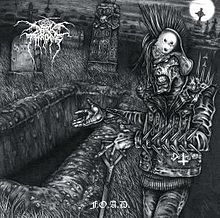
“Canadian Metal” is from their third most recent album, after the shift from black metal was more or less official. It sounds more like an early death metal song. There’s low tuned notes, audible vocals (growled, but you can actually hear words) and a kind of headbanging aspect to it. The album is called F.O.A.D. which was a song by Venom (and others, obviously), and this track reminds me of Venom somewhat. I wouldn’t say that the band has sold out because there’s no way anyone is playing this on the radio, but it’s interesting to see how a band has managed to change things up and add new elements to its sound even though they were the forerunner and grandfather of a scene.
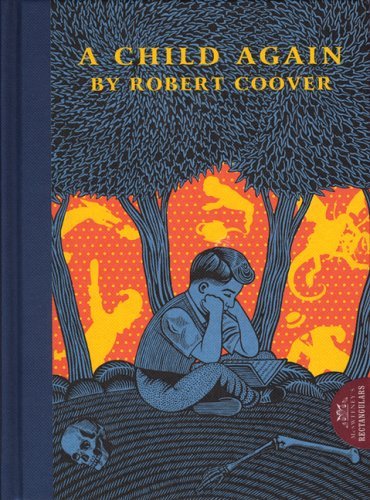
[READ: February and March 2011] A Child Again
This is a collection of short stories from Robert Coover. There is a kind of theme throughout (most of) the stories about returning to childhood. But the overall sense is one of despair, sadness, pointlessness and sex. Lots and lots of sex. And the sex is usually as vulgar and nasty as the tone of the book suggests it would be. It’s a little off-putting, actually.
I was planning to say that I didn’t like this collection at all because I really didn’t enjoy the first half-dozen or so stories. I continued because Coover has a great reputation that I didn’t want to give up after a few misfires.
The real disappointment came because the stories seem so promising: many of them are a kind of retelling of classic fairy tales that looks at “what happened afterward.” However, and this was true for almost all of them, Coover tries to do two contradictory things with the stories. He is playing with fairy tales but he is also writing stories that are completely unlike fairy tales. By that I mean, Coover’s stories are long and very detailed, they bring far too much information to the story. And a fairy tale is almost by definition short. I mean, “Puff the Magic Dragon” is a song that’s about five paragraphs long. But Coover’s “Sir John Paper Returns to Honah-Lee” is 26 pages long. So instead of playing with the original, it feels like an original story that uses someone else’s characters. It’s unsettling and unsatisfying.
It’s also not very funny. And I’m not sure fit’s supposed to be. But with a title like “Sir John Paper Returns to Honah-Lee” you expect the funny. And there are funny moments. I mean the whole premise is that little Jackie Paper has grown up into Sir John Paper. He’s now an old Knight and he is sent to slay the dragon (Puff) who is plaguing the city. Even though that is a tragic story, it is also inherently humorous. And there are laughs when they reunite. But it gets so bogged down in details, that the essence of the story seems to get lost. Perhaps I’m just disappointed because it (they) turned out so unlike I wanted them to be. (more…)
SOUNDTRACK: BLACK MOUNTAIN-Live at the Rock n Roll Hotel, Washington DC, February 19, 2008 (From NPR) (2008).
I’ve really enjoyed the two Black Mountain CDs that I have (I’ve yet to hear their debut). Their blend of psychedelia and Black Sabbath is always interesting, especially when singer Amber Webber adds her great harmonies (and leads) to the proceedings.
So it’s astonishing that Webber herself is the sole reason that I can’t listen to this show.
The band sounds great. The musicians are right on, and the energy is good. But I can’t imagine what possessed Webber to sing the way she does. At the end of every sung line, she ends with a vibrato that is not so much vibrato as it is staccato. I thought it was an odd affectation to increase the psychedelicness of the first song, but she does it on every track, even when she sings lead!
Holy cow, is it ever annoyin-in-in-in-in-ing.
There are tracks when she doesn’t participate, and those are fine. There’s also a song that is mostly instrumental and that sounds great. But as soon as she starts singing, the whole thing goes downhill. She doesn’t sing like that on the records, so what ever made her think that was a wise choice for a live show? To add a really obscure reference, she sounds not unlike Diamanda Galás during her Plague Mask recordings–but that was an operatic style befitting her over the top recording. It simply doesn’t work here.
Even Bob Boilen, normally an ecstatic reviewer of the shows he hosts seems put out by them. He says that the band never set up a rapport with the audience. That’s not exactly true as they do thank everyone for coming out on a Tuesday night. But there didn’t seem to be a lot of warmth shared between everyone.
Stick to the studio albums!
[READ: March 19, 2011] Half a Life
This book is a memoir by novelist Darin Strauss. And it opens with the fairly shocking revelation: when he was 18, he killed a girl. She was a fellow classmate in the grade below his.
He and some friends were driving to a of social event (they were all sober). She was riding her bike with some friends on the same road. He saw her, but he was in the left lane, so he wasn’t too concerned and then suddenly she swerved over two lanes and into his windshield. She died soon after.
He was completely absolved of all blame: police, eyewitnesses, even her family (oh my god, her family), everyone agreed that it was not his fault at all, there was nothing he could have done. And yet, as he puts it, because of where he was, a girl is now dead.
The rest of the book details how, at 18, one can learn to cope (or not) with the unthinkable. He has to finish school and prom with all of the kids in his small Long Island town who know that he killed a classmate. He also can’t stop thinking about her and wonders how he can go on with his life when she won’t be able to do the same.
It’s an emotionally riveting story and I was utterly empathetic. Not that I’ve had any kind of experience like that, but (especially) now that I have children, I can’t imagine how I would react to such news. And since Strauss is a sensitive individual I can imagine at how that would eat away at you forever.
By the second half of the book, something newly unthinkable has happened; her family is suing him for $1 million. Which he obviously doesn’t have. This trial–and remember he has been exonerated by everyone–lasts on and off for 5 years, all during his college. And, of course, this isn’t something you tell people–he doesn’t want anyone at college to think of him as a killer–so there’s pretty much no one he can talk to.
The events of the story happened in the 80s. Strauss has gone on to be a succesful novelist (although I hadn’t heard of him before this book). He also has a family of his own. Writing this book was his way of trying to cope with this incident that really defined his life.
It’s hard to say much more about the book. It is really powerful and a simply horrifying thing to consider. Strauss is a very good writer who never plays for sympathy (he even sides with her family in the beginning). The book is also a remarkably fast read. Many of his chapters are one or two paragraphs, and you can finish it in a couple of hours. But that’s also because the story is so gripping.
Mogwai’s second full length record goes in a slightly different direction than Young Team. Although it is still full of somewhat lengthy instrumentals, for the most part, the loud and quiet dynamic that they’ve been mastering over their EPs and Young Team is dismissed for a more atmospheric quality. There’s also a few vocal aspects that comprise some tracks. One in particular is very puzzling.
The disc opens with “Punk Rock.” The music is actually not punk at all; rather, it’s a pretty melody that plays behind a rant about punk rock spoken by Iggy Pop. It’s followed by “Cody,” a kind of sweet slow song. This one surprises even more because it has gentle vocals which are actually audible. The track is surprisingly soporific for Mogwai.
And then comes the real puzzler, “Helps Both Ways” is another slow track. But this time in the background is a broadcast of an American football game. The announcers begin by telling us about an 89 yard run that was called back due to a penalty, but the game stays on throughout the track. And I have to admit I get more absorbed in the game than the music. After these few quiet tracks,”Year 2000 Non-Compliant Cardia” is a little louder (with odd effects). It’s also much more angular than songs past.
“Kappa” is the song in which I realized that much of the songs here are more guitar note based rather than the washes of sounds and noise. “Waltz for Aidan” is indeed a waltz, another slow track. It’s followed by “May Nothing” an 8 minute track which, despite its length, never gets heavy or loud or noisy.
“Oh! How the Dogs Stack Up” changes things. It features a distorted piano which creates a very eerie 2 1/2 minutes. And it leads into the 9 minute “Ex Cowboy.” Although the general feeling of “Ex Cowboy” is mellow, there are some squealing guitars and noises as well. By about 6-minutes the song turns really chaotic, its “Chocky” is another 9-minute song (the disc is very backheavy), there’s noise faintly in the background as a simple piano melody is plucked out. It’s probably the prettiest melody on the disc, and the noisy background keep its unexpected. The disc more or less ends with “Christmas steps.” This is a rerecording of the awesome track from the No Education = No Future (Fuck the Curfew) EP. It is shorter but slower and it sounds a little more polished than the EP. I actually prefer the EP version, but this one is very good as well (it’s honestly not that different).
“Punk Rock/Puff Daddy/Antichrist” ends the disc with a fun track sounds like a drunken Chinese western It’s two minutes of backwards sounds and is actually less interesting than its title.
This is definitely their album I listen to least.
[READ: March 15, 2011] Icelander
It’s hard to even know where to begin when talking about this story. So I’ll begin by saying that even though it was confusing for so many reasons, I really enjoyed it (and the confusions were cleared up over time). This story has so many levels of intrigue and obfuscation, that it’s clear that Long thought quite hard about it (and had some wonderful inspirations).
The book opens with a Prefatory note from John Treeburg, Editor (who lives in New Uruk City). The note informs us that the author of Icelander assumes that you, the reader, will be at least a little familiar with Magnus Valison’s series The Memoirs of Emily Bean. As such, he has included notes for clarification. He has also included a Dramatis Personae. The characters in the Dramatis Personae are the characters from Valison’s series (not necessarily Icelander), and are included here for context. He also notes that his afterward will comment on the disputed authorship of this very novel.
The Dramatis Personae lists the fourteen people who Valison wrote about inThe Memoirs of Emily Bean. Except, we learn pretty early on that the The Memoirs were based directly on the actual diaries of the actual woman Emily Bean Ymirson. Emily Bean died in 1985, but before she died she was an extraordinary anthropologist and criminologist. She kept meticulous journals of all of her exploits, and Valison fictionalized it (to some people’s chagrin, but to general acclaim).
Emily Bean was also the mother of Our Heroine. Our Heroine is, indeed, the heroine of Icelander, although her real name is never given. We learn pretty early on is that Our Heroine’s friend Shirley MacGuffin has been killed. MacGuffin was an aspiring author (whose only published work appears on a bathroom wall). Her final text was meant to be a recreation of Hamlet. Not Shakespeare’s Hamlet, but Hamlet as written by Thomas Kyd. And, indeed, Kyd’s Hamlet predated Shakespeare’s.
There’s also a lot of excitement with The Vanatru. The Vanatru lived underground, and had a serious quarrel with surface dwellers who worked hard at keeping them down. The Queen of the Vanatru is Gerd. She controls the Refurserkir, an inhuman race of fox-shirted spirit warriors who appear literally out of nowhere.
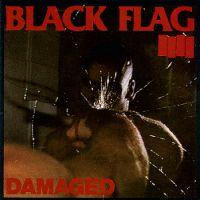
I’ve liked Black Flag since I bought Loose Nut on vinyl way back when (1985, the year punk broke for me). And those four bars were iconic to me even before I had heard a note (although I just learned they are supposed to represent a flag waving).
And this is where their legend really took off. So a few things I never knew about this album until I looked them up recently. 1) That’s Rollins on the cover punching the mirror. 2) He didn’t really punch the mirror (it was smashed prior and the blood is fake). 3) I knew that Black Flag existed for a while before Rollins’ arrival and that they’d had a series of singers before him. But I didn’t realize what a their first EP (Nervous Breakdown–Keith Morris on vocals) came out in 1978, their second EP (Jealous Again–Ron Reyes on vocals–credited as Chavo Pederast (he left the band in the middle of a live show, so they changed his name to that rather offensive one)) came out in 1980. Their third EP (Six Pack –Dez Cadena on vocals) came out in 1981. Rollins joined a few months after that and Damaged–their first full length–came out in December 1981.
“Rise Above” is a wonderfully angry song. The gang vocals of pure empowerment work so well with the chords. It’s still effective thirty years later. “Spray Paint” goes in the other direction: rather than an uplifting, catchy chorus, it’s a deliberately angular chorus that’s hard to sing along to (even for Rollins).
“Six Pack” represents the more “popular” side of the band. And it is a wonderfully funny single. I just can’t decide if it’s serious or ironic (see also “TV Party”). These two dopey songs are great to sing along to and are simply awesome. (Fridays!)
The rest of the album turns away from the lighthearted tracks. “What I See” is a really dark moment on this album. And the negativity is unusual especially given Rollins’ later penchant for lyrics about fighting back. True, Rollins didn’t write these lyrics.
“Thirsty and Miserable” is a blast of noise with some of Ginn’s first real guitar solos (which Guitar World says is as one of the worst guitar solos in history…and I say really? that’s the solo they pick? Ginn has done some pretty outlandishly bad solos over the years…of course the whole list is questionable at best). “Police Story” is a simple but effective description of the punks vs cops scene at the time.
“Gimme Gimme Gimme” seems childish, but that’s clearly the point. “Depression” is a super fast track. (Trouser Press considered Black Flag America’s first hardcore band). “Room 13” is an odd musical track, with pretty much no bass. It’s just some roaring guitars and drums and Rollins’s screams. This track stands out because Chuck Dukowski’s bass propels most of the songs here.
“No More” sounds “typically” hardcore: very fast with the chanted chorus of “No More No More No More No More.” “Padded Cell” is also fast (and is pretty hard to understand) except for the “Manic” chant, but the following track “Life of Pain” features what would become a signature Greg Ginn sound…angular guitars playing a riff that seems slightly off somehow. Compelling in a way that’s hard to explain.
It’s funny that a band that plays as fast as they did also released some pretty long songs. “Damaged II” is almost 3 and a half minutes long. It has several different parts (and a pretty catchy chorus). And the final song “Damaged I” is a kind of crazed rant from Rollins; It’s one of his scariest vocal performances; he sounds really deranged. Especially when it sounds like he just cant think of anything else to say so he just screams maniacally. But his vocals are mixed behind the music as if he’s trying really hard to get heard. There’s very little else on record like it.
It’s a wonderful end to an intense disc, and the beginning of a brief but powerful career.
[READ: March 25, 2011] The Life of Polycrates
I’ve been reading Connell for a few years now. In fact, the first time I posted about his work came with a blistering dismissal of his story “The Life of Captain Gareth Caernarvon” in McSweeney’s 19. That story is included here, and upon rereading it, I learned two things:
One: context is everything.
Two: I was totally and completely wrong in that original review, and I take it back.
But before I explain further, some background about this book. This is a collection of eleven stories, eight of which have appeared elsewhere. Unfortunately there’s no dates of publication included so I don’t know how old any of these stories are.
The other thing I’m fascinated about is Connell himself. I’m not the kind of reader who wants to know a ton of details about the author, but I like a little bit of bio (or a photo) when I read someone. The only bio that is consistently presented about Connell is that he was born in Santa Fe, New Mexico. I’m fascinated by this because so many of his stories are set in Europe. So I have concocted a master biography about Connell’s life and how he has lived and toured extensively in Europe, studied theology (and found it wanting) and investigated all of the world’s darker corners.
It’s this latter aspect that really altered my perception of Connell’s writing. I’ve liked the last few things that he’s written, but I fear that I was not looking at him through the proper lens. And this relates back to bullet point one above.
Connell writes in a world not unlike H.P. Lovecraft–a world that is unconventional, dark and more than a little twisted. And yet, unlike Lovecraft, there is very little of the fantastical in his stories. Rather, his characters reside in our own world (with a little chymical help from time to time), but they are all real. They’re just not characters most of us choose to associate with. So, reading that first story in McSweeney’s, where it was so different from all those others, I found it really distasteful. In retrospect, I’m not going to say that it is meant to be distasteful, although some of his stories are, but it was certainly not a pleasant story by any means.
The other fascinating thing to note about this book is that all of the stories are written in short, Roman Numeraled segments. So the title story has 35 segments. But even some of the shorter ones has twelve or thirteen segments (sometimes a segment is just a few lines long). I actually enjoy this style (especially when the segments introduce something totally new into the story–which many of these do). (more…)
The release of this disc hot on the heels of Young Team rather confused me, especially when trying to keep track of which discs were “real” and which ones were compilations. This one is a compilation. It’s subtitled: (Collected Recordings 1996–1997). And the fact that it has ten songs on it tells you just how much they released in those two years. (It appears that they released 4 or 5 singles, although all the songs don’t seem to appear on Ten Rapid, and there seems to be a song or two unaccounted for. Wikipedia also suggests that some of the songs were re-recorded for Ten Rapid. Gosh, what’s a completist to do?). And given all that they released back then, it’s also a surprise at how short this collection is (just over 30 minutes).
The amazing thing is how much the disc sounds like a complete recording and not a collection of singles. It is mostly Mogwai’s slower, quieter pieces, and the overall tone is one of “mood” rather than “songs.” And, for those of us who thin of Mogwai as a really loud band, the prominent use of glockenspiel comes as something of a surprise (as does the quiet singing on two of the tracks).
The opener “Summer” is not the same as “Summer [Priority Version]” on Young Team. This one is a beautiful track with glockenspiel while the YT version is much heavier and darker. “Helicon 2” (also known as “New Paths to Helicon, Pt. 2”), is a wonderful track with an interesting riff and texture. On a recent live disc, it was expanded greatly. “Angels vs Aliens” and “Tuner” are the two tracks with vocals. They’re both rather quiet and kind of soothing.
“I am Not Batman” is mostly washes rather than a riff based song. “Ithica 27ϕ9” is one of their best early songs. It’s also the one track here that really experiments with sound dynamics. It opens with a beautiful melody that swirls around for a bit. Then the loud guitars come screaming out until it returns to that melody (and all in under 3 minutes).
The final track “End” is an entirely backwards recordings. Wikipedia says that it is “Helicon 2” backwards, and I’ll take their word for it.
Ten Rapid is a really solid collection of songs showing just how good Mogwai was from the start.
[READ: March 8, 2011] Donald
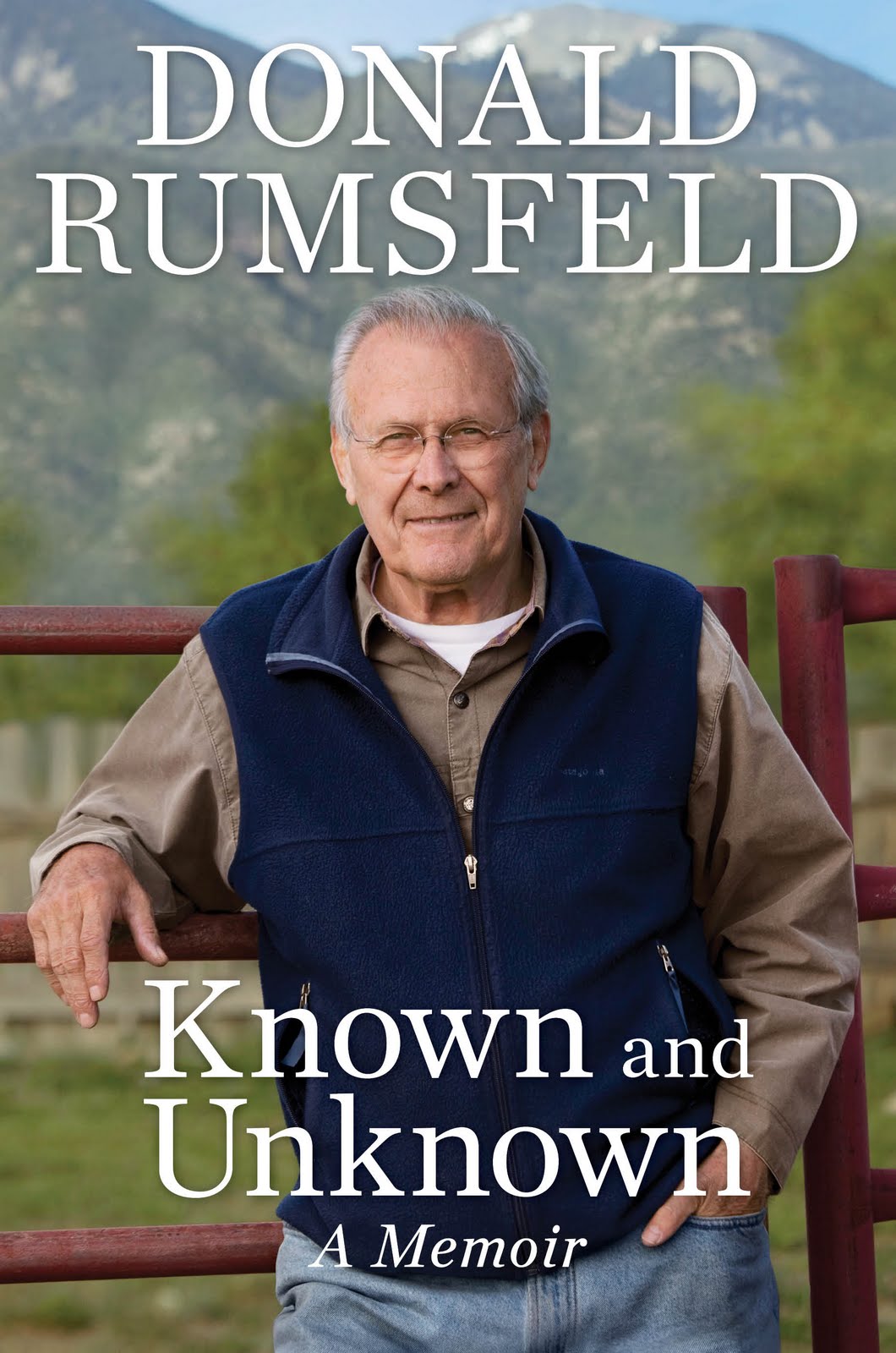
This book is a speculative piece of fiction that answers the question: what would happen if Donald Rumsfeld was sent to Guantanamo Prison. Note also that the cover is a parody of the cover of Rumsfeld’s own memoir (released around the same time).
The main character is clearly Rumsfeld, although he is never mentioned by his full name, always “Donald.” But his description and his biography make it obvious that it is him. There is a Note at the end of the book which states that the information about Donald is as accurate as possible.
First we see Donald in a library, presumably working on his memoirs. He is accosted by a young kid who asks him questions. Donald is annoyed by the kid and more or less blows him off. Donald then has a fancy dinner with his wife and “Ed and Peggy” (two people who I can’t place historically).
That evening, masked people break into Donald’s home and haul him off to a prison (he is bound and his head is covered so he doesn’t know where). The rest of the book sees him taken from one prison to the next, tortured in various ways (nothing too graphic, most of the torture consists of thinks like disrupting sleep, keeping the temperature really hot or really cold, and asking him lots and lots of questions, sometimes for 20 hours at a time. There is no physical torture (again, it’s not graphic). (more…)
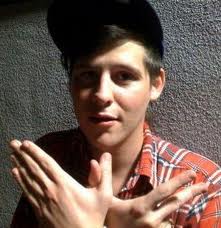
 SOUNDTRACK: ROCKWELL KNUCKLES-“Silly Human” (2011).
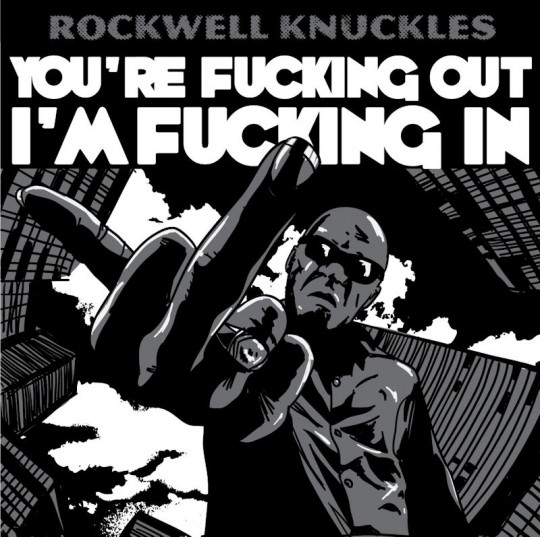 This song was NPR’s song of the day on July 7th. I’d never heard of Rockwell Knuckles before. He’s a rapper from St. Louis and has at least one other album out as far as I can tell. I was rather fond of this song for, as the NPR page says, he often prefers to be absurd.









 I Just Read About That...