Feeds:
Posts
Comments

Archive for the ‘Marriage Trouble’ Category

CV1_TNY_03_31_14Sempe.inddSOUNDTRACK: MARIAN McLAUGHLIN-Tiny Desk Concert #363 (June 7, 2014).

marianMarian McLaughlin is a singer-songwriter from Washington D.C. who has self released one album.  In this Tiny Desk setting McLaughlin plays an acoustic guitar (and some very unexpected chords) and sings while a string trio plays very eccentric melodies (and often not the ones you might expect) behind her.

Indeed, McLaughlin sounds like she might be right at home at a Renaissance Faire (her long hair and floral dress speak to that as well).  Her voice isn’t especially quirky but her delivery certainly is. And when the strings really get going (as they do in many places) the music is really powerful and more than a little off-beat.

“Heavier-than-air” seems to have many parts in its 4 minutes. While “Ocean” brings in some amazing low end with the bowed double bass and cello.  It also has an extended violin solo which is quite pretty.

“Horse” is the most intense song of the three, opening with an interesting guitar motif and that great bowed bass.  True, it’s unusual to hear the line “we are in debt to our equine friends” and later, “rhythm like a paradiddle,” but when the strings (but not the guitar) start playing a super-heavy almost heavy metal riff for a few bars, it is really intense.  There’s no question that McLaughlin is a unique voice, and I imagine that mainstream success will elude her.  But I really admire this kind of eccentric songwriting, and I am curious to check out her album at bandcamp.

[READ: June 9, 204] “The Big Cat”

I enjoyed this story quite a lot although I didn’t really care for the title (in relation to the story, the title itself is fine). There were so many images and turns of phrase that I think would have been much more interesting as a title. But if that’s all one has to complain about, that’s no too bad.

This story is from the point of view of a man who was happily married to a woman who snored.  In fact all of the women on her side of the family snored.  One holiday visit with her family he had many sleepless nights listening to the crazy loud racket of “the rip saw” (Elida’s mother) “the welders” (her sisters) and the polisher (Elida herself).  He says “sometimes they snored in unison—which was terrifying” (this made me laugh out loud).

They have a daughter together, Valery, who does not snore–as of yet.

He and Elida were from Minnesota but they lived in Hollywood for a time.  He was a relatively successful minor actor—lots of commercials, TV shows, etc and she was a film editor.  They were becoming successful in their jobs.  But then when Valery was 12 and unhappy in school, Elida decided it was the nature of Hollywood, so they moved back to Minnesota.  This ended his acting career so he found new work doing something else. (more…)

Read Full Post »

flies2SOUNDTRACK: CIAN NUGENT-Tiny Desk Concert #353 (May 3, 2014).

cianCian Nugent is from Dublin.  In this Tiny Desk Concert, he plays two guitars, including a crappy no name electric guitar with a great raw sound.  For the first song, he plays a pretty acoustic guitar instrumental called “Grass Above My Head.”   It has a slow melody that turns into a ragtime jaunt over the course of 6 and half minutes.

The next two songs are on that electric guitar and are both rather different (he says the songs comes from “incoherent range of the mess that is my musical career”).  Before playing “Hire Purchase” he tells a very funny story about getting a pencil from a garage (and that he uses it to keep his string from detuning–does that work?).  This is an electric guitar instrumental, bluesy and mellow with some great riffs.

The final song, “Nightlife” has words.  It’s a simple blues song. Nugent has a nice delicate voice.  I’m not a big fan of bluesy songs, but he does a great job with this and the other two styles.

He also wrote a song called “My War Blues” which is variations on a Black Flag song (I don’t recognize the original in his version, myself).  But you can hear that here.

[READ: June 4, 2014] King of the Flies 2. The Origin of the World

This book picks up right where Book 1 left off.  This edition was also translated only by Helge Dascher although it says she had help from Dag Dascher and Kim Thomspon (I didn’t notice any change in quality).

As this book starts, Eric’s mother is making serious advances with Francis–the man whom she just met but who she is already calling her fiance.  Eric fantasizes about killing him (his dream sequence mother says this is the 13th time he has killed Francis).  Marie and Eric are still together and, through a strange series of events, Ringo is asking Eric to hold on to a cool looking elephant bowling bag.

By the end of this first story, Eric has saved Becker from drowning.  And yet neither Becker nor Karine bothers to thank him.  Indeed, Karine seems even more angry at him.  But this blow off makes Eric want Karine even more.

In a later story we finally meet Karine’s family who are just as freaked out about her “dating” this old guy.  And, by the end of the story Becker has a heart attack and dies.  When she returns home after the funeral she sees Eric and she confides in him that she is pregnant.

The newest development in the book comes in the next story in which we learn that Damien is a ghost and that he visits everyone that he knew.  Some people who are receptive to seeing him can actually talk with him.  He’s obviously pissed about Eric and Sal, but he has come to terms with a lot of things.  He even forgives the man who killed him (by accident).  He also winds up meeting ghost Becker at some point. (more…)

Read Full Post »

flies1SOUNDTRACK: PUBLIC SERVICE BROADCASTING-Tiny Desk Concert #354 (May 5, 2014).

indexI heard about Public Service Broadcasting via NPR and I loved their song “Spitfire,” a rocking instrumental with interesting samples scattered throughout.  Well, it turns out that live, the rock just as hard.  Even though there’s only two of them.  There’s J. Willgoose, Esq. on guitar, banjo and electronics and Wrigglesworth on drums. The samples come from British public-service films from roughly the 1940s through the 1960s.

Watching this video, I was stunned at just how much Willgoose is doing, and just how much noise these two guys can make.  There’s even a video going on behind them.   The only problem here was that the samples were not loud enough.

 “Signal 30” opens with samples and samples and then a rocking guitar and solid drums. It amazing watching Willgoose do some many different things while playing the guitar. The change of tone at the middle of the song is great and I love watching him just bang the guitar to keep the notes going (while he is playing the keyboard).

 After the song, there is a sample of “Thank you very much” in an arch British voice (the duo don’t speak during the show).   “Spitfire” also sounds great hear–the song is surprisingly complex for an instrumental, and for what seems like it might be a novelty band, the song is really solid.  After this song, Willgoose had to fetch something and the talking sample said “talk amongst yourselves!” The final track “Everest” has a very catchy riff and some really great drumming.  But I love most watching Willgoose play the guitar with one hand and play a solo on the keyboard with the other.

This is definitely a band to check out live.

[READ: June 4, 2014] King of the Flies 1. Hallorave

Hallorave is a dark, violent, sexual comic series written by Pirus and drawn by Mezzo.  Both artists are French and have worked together before.  This book was translated by Helge Dascher and John Kadlecek (and it was translated very well–I didn’t realize it wasn’t American until they started talking about Euros sometime in the middle of the book.

So this is actually a series of short stories narrated by different people.  They seem unrelated, but after a couple of stories, you see the connections.  And there proves to be a core collection of characters all living in this suburb (the location is really irrelevant).

The first story starts with Eric (who proves to be the main protagonist) drinking, reading magazines and sitting on a couch on the (dried up and dead) lawn of his mother’s house.  He is also jealous of his best friend Damien because he is very hot for Damien’s girlfriend Sal.

That first story introduces us to a visual that will run through the book: Eric sitting with a giant fly head on.  The three are going to a Hallorave for Halloween.  Eric is King of the Flies, Sal has a giant cat’s head on and Damien is a skeleton.  By the end of the party, they are all high (you can seem them feeding each other drugs in the picture below).  Eric pledged his love to Sal in front of Damien, and Damien is in a foul mood.  He gets in a fight with some other party goers. By the end of the short story, Eric and Sal are having sex (with their costume heads on) and Damien has been hit by a car and killed.  That’s the kind of stories we’re getting here. (more…)

Read Full Post »

CV1_TNY_04_14_14Blitt.inddSOUNDTRACK: SIMONE DINNERSTEIN-Tiny Desk Concert #362 (June 2, 2014).

simoneSimone Dinnerstein plays several of Bach’s two-part inventions.  And my jaw hits the floor.

I like Bach–I like his elaborate arrangements and the way he makes the piano (or harpsichord) sing.  But I never really thought about how hard these pieces are.  Watching Dinnerstein play these–simply watching the amazingness of her fingers–has blown me way.  And if I may say, her fingers aren’t long slender graceful things, they look a lot like mine.  So she doesn’t seem to have that advantage of an octave and a half reach or anything.  I am amazed that her two hands can work so independently.  And it sounds beautiful.

She groups them together into three segments and between each segment she talks a little about Bach and about playing these difficult pieces.  Her story about learning these as a child and then teaching them to children is really fascinating (and funny).

I have no idea how many Inventions Back wrote, but this set list is: Inventions Nos. 1, 6, 8, then Inventions Nos. 9, 10, and finally Inventions Nos. 12, 13, 14.

Check this out.

[READ: June 3, 2104] “Box Sets”

How can Roddy Doyle, who does funny so well, also do domestic unhappiness with such verisimilitude?

In this brief story, just as Ireland is getting through the worst of the economic depression and Sam and his wife Emer are feeling like they can exhale, Sam is let go from his job.  Now he’s been on the dole for three months.  And he is miserable.  The only good thing is that he has been watching box set seasons of all of the really good TV that everyone’s been talking about.  He feels foolish watching it all after the fuss about them has ended, but he’s still glad to watch it.  And Emer is great through the whole thing, always cheerful, always trying to make him feel better.  Always with a smile.  But Sam is getting darker and darker.

Then one night when Emer says they’re going to a friend’s house on Friday, Sam says he’d rather not.  He reminds her that at their last get together he was stumped when someone asked him what he did.  He just doesn’t want to go out anymore.  Emer tries to comfort him but fails.  He just gets madder until he throws a coffee mug and it shatters.  He takes the dog for a walk down to the seaside to cool off. (more…)

Read Full Post »

SCV1_TNY_04_21_14Brunetti.inddOUNDTRACK: JUANA MOLINA-Tiny Desk Concert #361 (May 31, 2014).
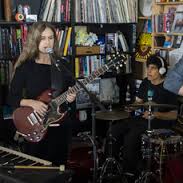
juana I had heard of Juana Molina but had never heard anything she sang. In fact I didn’t really know anything about her. So, she’s from Buenos Aires and is 51 this year. She has released 6 albums. I don’t know if they all sound like this, but these threes songs are really cool and interesting. The sounds are wholly unexpected—weird effects on guitar and on keyboard. Interesting samples (played by all three members) and delightfully odd backing vocals all accompany Molina’s pretty voice (she sings mostly in Spanish).

   “Eras” opens with a stuttering guitar line that proves to be not a guitar at all. By the time the song moves along there’s a groovy guitar line, spare vocals (at one point counting mostly in Spanish uno tres cuatro cinco seis (yes there’s no dos)) and a very catchy chorus.

   “Wed 21” has an insane guitar riff that in addition to being unusual in itself is also crazily wobbly. Then there’s processed vocals which act almost as a percussion instrument.  All of this once again leads to a super catchy chorus.  When the strange noises reappear after the chorus it sounds even more peculiar.

Molina proves to be very familiar with the Tiny Desk Concerts.  She is excited to be there, which is always fun to see in a performer. She also says that now she knows what people are looking at when the scan the audience.

   The same odd vibrato guitar opens “Sin Guia, No” as well. After a slinky voice (Molina’s voice is delicate and whispery for much of the songs but can get big and loud as needed) with some interesting backing vocals (that sound like they are coming from a well), Molina adds a new guitar line to the mix.  There’s a lot of music coming from this trio.  And I like it a lot.

[READ: June 4, 2014] “Hubcaps”

Stories about 70s families are pretty much always sad.  In the decade of smoking and drinking parents and of neglected children, there’s never going to be happiness there.  Although there is sometimes comedy.  And yet for all of the sadness of the fictionalized decade, I often enjoy reading about it.

This story opens with Owen knowing that when his parents break open their first cocktails in the later afternoon, that’s pretty much the end of the night for them–and a chance for Owen to sneak out.  Mostly he goes to the homemade baseball field(!) of his friends the Kershaws.  The oldest Kershaw boy is a good athlete, the middle one is working on his paper route and the youngest is physically and mentally challenged.  But they all love baseball, especially the youngest, Ben.  And given his specialness, he is excellent at remembering statistics of baseball.  Owen finds his knowledge fascinating, so he hangs around with him on the bus and sometimes after school.  Ben is also pretty good at baseball, so he is always picked for a team.  As is Owen.  It seems idyllic, except for Owen’s family life.

But Owen manages to catch and raise some tiny turtles (don’t get too attached to them). (more…)

Read Full Post »

CV1_TNY_03_17_14Liniers.inddSOUNDTRACK: HOZIER-Tiny Desk Concert #360 (May 27, 2014).

hozierI had been cataloging the Tiny Desk Concerts from the beginning, but in recent days they have had so many good bands that I didn’t want to wait until I caught up with them.  So, for the next few posts there will be current Concerts (I have no idea what number they are, but I hope to fix them retroactively).

Hozier is responsible for the insanely catchy song “Take Me to Church.”  WXPN plays this song all the time.  I didn’t like it at first but then when I really listened to it I was hooked.  Of course I had no idea that the guy who was singing this powerful soulful song was a soft-spoken Irishman.  Hozier is Andrew Hozier-Byrne, a 24 year old from County Wicklow.  And while he’s singing this song here he makes it seems so easy to belt out those big notes.

Although it doesn’t quite reach the gravitas of the recorded version in this stripped down live session, he sounds great and the keyboard, cello and drums (and backing vocals) really bring this song to life.

The next two songs Hozier plays by himself.  “To Be Alone” is a very old-sounding blues—the sound of his guitar and the way his plays combined with the way he sings really hearkens back to early blues.  Typically I don’t especially like early blues but I do like this song quite a bit.

The final song is an acoustic ballad.  (So he plays three different guitars in this set).  It has a kind of Richard Thompson guitar feel and is a rather touching ballad.

Hozier has only released two EPs thus far, but with this amount of diversity I am looking forward to lots of other things from him.

[READ: May 29, 2014] “The Relive Box”

This story made me think of what the “Entertainment” in David Foster Wallace’s Infinite Jest might actually be like.  In Infinite Jest, the “Entertainment” is a video so intoxicating, you watch it–ignoring all other needs–until you die.  In this story, the “relive box” is a machine that plays back any memory that you have in full 3D. And people get so absorbed in their past that they forget about the present.

Specifically, the narrator is so intent on reliving that he ignores his daughter and his job.  As the story opens, the narrator’s daughter Katie says she wants to relive.  They just recently got this new relive box–it cost a fortune–and Katie wants to visit with her mother.  Her mother left them and Katie seems to have lost friends and impetus to do much else, so she would like to relive some good times.  But the narrator was planning on reliving for several hours that night, so he can’t have her hogging the machine.  So he sends her to bed, crying heavily, so he can have the machine to himself.

And what’s so important that the narrator has to relive?  After reliving his best sex moments, he goes back in time to the night he met Lisa, his first girlfriend.  She was a goth girl in a club and the narrator had the nerve to buy her a drink and ask her to dance.  Which ultimately let to sex and eventually to a relationship. And he relieves all of the highlights of their time together–something he has done several times this week already.  In fact, he has been doing this so much that he has been late for work twice and when he’s there he’s bleary-eyed and pretty much out of it.  So he says he’ll only do it once more this week.  And just for a few hours. (more…)

Read Full Post »

CV1_TNY_05_05_14Berberian.inddSOUNDTRACK: AUSTRALIAN CHAMBER ORCHESTRA-Tiny Desk Concert #40 (December 21, 2009).

chmaberThis was a very nice classical Tiny Desk Concert.  The Orchestra plays three songs.  The first two are a Ravel String Quartet, and a Kaddish based on Ravel written by one of the members of the Orchestra.

Then comes a surprise.  Composer Joseph Tawadros accompanies them on the Egyptian oud and his brother James plays percussion on Tawadros’ song “Oasis.”  I love the addition of the oud to the orchestra–it brings a wonderfully alien sound to the piece.  You can see the whole show here.

This was the final Tiny Desk Concert of 2009.

[READ: May 29, 2014] “The Naturals”

I have enjoyed just about everything that Sam Lipsyte has written and this story was no exception.  As with many of Lipsyte’s stories, the main character has an unusual name: Caperton.  Caperton works as a consultant for a marketing firm.  He is trying to secure a job for a lakefront property.  The man in charge of the meeting keeps calling the kiosk that they are going to install a “koisk” (this alone made me love the story).

Caperton has recently broken up with his girlfriend because he confirmed to her that he did not want to have children.  He’s a little bummed but not heartbroken.

But the main action of the story is that Caperton’s father is dying and his stepmother has called him to come home.  Evidently Caperton’s father has been on the verge of death many times so Caperton’s not entirely sad about the situation.  But he goes nonetheless.  And we learn that Stell, his stepmother is nice enough but has always had one rule–stay out of her refrigerator.  She is happy to fix anything for anyone as long as they keep out of the fridge.  (This also made me love the story).

(more…)

Read Full Post »

millionSOUNDTRACK: RE:Mnant [CST015] (2001).

cst015webThere is a (tiny) gimmick with this album.  The band is called Re: and all of the songs have titles that work when you add “re” as a prefix.  So song titles include: 1. scue 2. duce 3. solute 4. cipe 5. straint 6. buke 7. pent 8. legate 9. volve 10. ject 11. gulate.  This makes me smile, even as the music can be a bit more challenging.

The first track is simply noise and electronic pulsing for 2 minutes. It melds into track 2 in which the noise ends but the electronic pulsing continues. Then a faster, newer noise comes in and stays there while the beeping gives us a rhythm. Then all the noise drops out and it is replaced by a more delicate wave of almost strings. Then what sounds like detuned strings play some notes while the noise is buzzing in the background and swirling around your head.  The 7 minute track 3 is a bit much. It opens with the sound of a kind of static and mechanical sounds. It has a feel of a horror movie soundtrack, especially as it builds and tension mounts with the “bass” notes that come through. Even though I find it long, by the time it really gets going I could listen to a lot more of it, I think the buildup at the beginning is too long.

The fourth track brings in some interesting percussive sounds, but mostly it seems to be about the background noises that swell and get in your head (those piercing high notes).   Track 5 introduces an acoustic guitar. I feel like this should have gone earlier so it’s not as much of a surprise at this stage. It’s quite a pretty melody (with more of those electronic noises floating around the background and it’s a nice interlude among all of the mechanicals. 6 also has a guitars–this time electric–playing a staccato rhythm. The chords are nice and there’s that persistent electronic noise floating around to keep it somewhat edgy.   7 employs feedback sounds and beats with what sounds like human voices. And interesting piece of soundtrack noise.

Track 8 starts off quietly but introduces some more guitar. There’ an interesting melody with the electronics buzzing around in the background.  9 has big percussion sounds and lasts a reasonable 3 minutes. 10 is an acoustic guitar song that reminds me of something Beck might do, and it’s too short at 2:15. The final track, 11, is mostly low pulsing sounds. It’s kind of meandering end to the disc that features a lot of uptempo noisy music.

[READ: April 25, 2014] A Million Heavens

I’ve enjoyed John Brandon’s other novels, and I had read an excerpt from this one in McSweeney’s #41.  I found it enjoyable and somewhat confusing.  And, actually that’s a bit how I feel about the book as a whole.

Each section of the book (from a paragraph to several pages) has a different character as its title.  What’s confusing is that it starts off with “The Wolf” who is a major character and is (for the most part) sentient and thoughtful.  The wolf roams the periphery (as wolves do) coming close to interacting with characters but seeming more like  a narrator than a character.  The next character we meet is Soren’s Father.

Soren’s Father’s story is a catalyst for much of the book’s action.  Soren was at piano practice.  He was a new student.  When the teacher walked away, he played a piece of beautiful music for about 15 seconds and then passed into a coma.  He has been in the coma for a few months now with no real hope of recovery but with no real indication of not recovering either.  Soren’s Father is a pragmatic man, not interested in the music his son played, nor in the plans and prayers of the people who are holding a vigil outside.  Really he just wants this over so he can go back to his old life.  But he is ever faithful to his son, sitting with him every day, letting his business slowly erode.  Over the course of the story, several people become connected to Soren’s Father.

The Piano Teacher is another character.  She feels responsible for all of this.  She didn’t want any kind of prodigy, if that’s what Soren is, she just wanted kids to play the piano badly so she could teach them to do better. (more…)

Read Full Post »

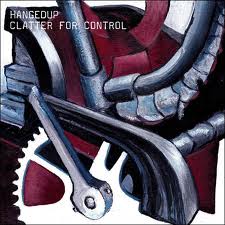
dec20133SOUNDTRACK: HANGEDUP-Clatter for Control [CST034] (2005).

clatterClatter for Control is Hangedup’s third and (so far) last album.  As Kicker was an evolution from their debut, Clatter feels like an evolution as well.  It feels like a more experimental work with fewer “proper’ songs proper and more soundscapes and ideas.

“Klang Klang” is a fast, yes, klanging song.  The viola is slightly discordant and the riffs are abrupt and staccato and it builds into a frenzy.  “Alarm” is more spooky sounding with tape manipulation. “A Different Kind Of Function” starts with some staccato notes and then builds into merging lines of viola and feels almost like a remix song.  “Kick-Back-Hub” is 90 seconds of squeaking bowing and metal clanking along with some very fast drums. It melds into “Eksplozije” which is 2:25 and is more feedback and big noisy drums.

“Go Let’s Go” feels like an actual song with riffs and chords, while “Derailleur” is another short piece, just under 2 minutes of noise and rattling and wildly untuned viola sounds.  “Fuck This Place” has a bass guitar although you wouldn’t necessarily know it (there is more bottom end), it feels like the viola is actually vocal samplings which is neat. “How We Keep Time” is a slower song with languorous viola sounds and sparse drumming.  “Junk The Clatter” feels like the most song like of the bunch. After a minute intro a fully realized riff comes out.  There’s some beautiful melodies and when the song ends it has a cool rocking section.

I prefer Kicker in Tow, but there’s record is a lot of fun too, full of unusual and discordant sounds–if you like that sort of thing.

 [READ: May 5, 2014] “I Can Say Many Nice Things”

I wound up reading about 3/4 of this story in one sitting and I loved it.  But when I came back to finish the end, I didn’t really like it as much.  I though the first part was engaging and complex without being convoluted.  I was interested in the direction the story was going and I was disappointed that it went where it did.  The ending ultimately makes sense within the context of the story, but I enjoyed so much of what happened before that I guess I didn’t want it to end.

So what was so great?

Fleming is an writing teacher.  A disgruntled and unpopular writing teacher.  He has been given a chance to teach a writing class… on a cruise!  A five day cruise with all expenses paid and ten well-paying students signed up for a morning and afternoon class.  Everyone he knew thought he was so lucky (colleagues pretended to be jealous)–it would certainly be an easy way to rack up positive evaluations from happy cruisers?  But Fleming is a pretty miserable guy.  He’s even more miserable because he intended to get in shape for the cruise, but in fact he got fatter, and he feels lousy about himself.

Even though at heart this is a story about teaching and writing (typically not great story topics), the set up is unusual–especially as we slowly come to realize that he is trapped on this ship. And when you add in some of the other details, I thought this was a really interesting setup.

Here’s some details that i found compelling. (more…)

Read Full Post »

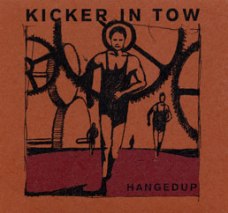
dec20133SOUNDTRACK: HANGEDUP-Kicker in Tow [CST022] (2002).

hanged2Hangedup’s second album is bigger and better than the debut (which was pretty good to start with).  This one is far more intense, and much better sounding.

I love the way the first song “Kinetic Work” starts out in such a fast and intense fashion and then shifts gears to a slower beat about 90 seconds in. Then it reverts back to a fast building song, growing very intense by the end.  “Sink” is a scattered affair with the drums taking “lead” playing all kinds of noises and rhythms over the slow beat of the strings. “Losing your charm” is more about tone and mood—with a steady pulsing beat and ever more energetic strings. It sends a middle eastern vibe too.

“View from the Ground” brings in some more unusual sounds—very machine like (with lots of echo on the percussion). And the strings sound a bit more like guitars here. “Moment for the Motion Machine” is a 1 minute 28 second precursor to the 13 minute “No More Bad Future.” If there was ever an epic instrumental of two instruments, it is this. Like a suite from GYBE, it builds slowly with grinding viola and occasional mechanical percussion.  The song changes pace and then assumes a kind of martial beat at around 5 minutes in. And then shifts gears growing more and more intense until the end.

“Motorcycle Muffler” is metallic and machine-like with interesting effects on the cool ringing tones–it sounds like he may be actually banging on a muffler.  “Automatic Spark Control” starts slowly but builds aggressively with the occasional ringing note as a progress bar. “Broken Reel” ends the disc with a slow series of viola chords (and overdubs). The title implies and the song sounds like an Irish dance, and it does, but one that is well, broken and several paces too slow.  It’s quite a change from the rest of the record, but it shows an expanding style and shows just how much they can do with two instruments. Hangedup is a very cool experimental band for those who like melodic noise.

 [READ: May 2, 2014] “Flight”

This story is about a very stoic couple breaking up.  It is narrated by the woman.  She says that her husband, Allan, left her about a year ago.

When they were first together he talked about her in a way that sounded like he felt they had a cozy life,

like the castles he used to build out of straw bales when he was a boy.  Inside the castle was a den in which to eat cookies and drink fruit juice while listening to the rumble of the combine in the next field.  That’s what being with me was like, Allan, said.

But it seems that it was really more suffocating than cozy.  Allan worked for a wind farm company and traveled the world as a technical consultant.  But he never told her anything about where he went–he found it hard to describe and explain.  So she eventually bought him a camera.  He took pictures and sent them to her from around the world.  But he got back he still had nothing to say to her.

dolly-sods-wilderness-west-virginia-hdr-photography-sunsetThe one place that is mentioned in the story is Dolly Sods, West Virginia, (see this cool photo to the right of Dolly Sods from Captain Kimono).  [I had never heard of Dolly Sods Wilderness, but it is protected land and is described : Dolly Sods is an area of high elevation wind-swept plains on the Allegheny Plateau. At elevations of 2,600 to over 4,000 feet, the area has extensive flat rocky plains, upland bogs, beaver ponds, and sweeping vistas. The plant life and climate on this high plateau resembles northern Canada, and many species found here are near their southernmost range].  The narrator explains how there are parts of Dolly Sods that have never been touched by human hands.  In the picture that Allan sent from there, he is next to a wind turbine that is going to be put up. (more…)

Read Full Post »

« Newer Posts - Older Posts »