Feeds:
Posts
Comments

Archive for the ‘Marriage (Happy)’ Category

CV1_TNY_05_27_13Juan.inddSOUNDTRACK: CHANCE THE RAPPER-“Juice” & “NaNa”(2013).

chancetherapper-acidrapNPR has raved about Chance the Rapper, both at SXSW and now with Acidrap as one of their favorite albums of 2013.

Chance the Rapper has a couple of different vocals styles (kind of Jamaican, kind of falsetto, also a deeper voice) and his lyrics are crazily all over the place.

I have no idea what “Juice” is about (I’m not hip to the slang, man), and of the two I like that one less.  “NaNa” is just crazy fun–it’s got a great bass riff–weird and all over the place, like slow funk.  He sounds more Jamaican here, and the lyrics are just nutty

In terms of rap, his style is quite different–fun and weird (there’s a lot of laughing during “Juice”).  The chorus of “NaNa” is a kind of whine and taunt.  And various things keep interrupting the song (is that part of the video or the song?  I don’t know).  And by the end, the song keeps telling him (or us) to shut up.

It has a feel like Childish Gambino, which i like. And I like that he’s doing something different.  I suspect with a few listens this could be a great mixtape.  You can get the whole thing for free at his website.

[READ: June 9, 2013] “Thirteen Wives”

I’ve read a number of Millhauser stories before, although I don’t recall if I generally like him or not.  (hmm, it seems that I do).

This story seemed more like an exercise or a challenge—can I write about 13 different women and given them all different characteristics.  For indeed, that is what the story is.  The narrator explains that he has 13 wives and they are all equal in his eyes.  After some perfunctory explanation about how this works, he sets out to describe them all.

And then we get the 13 one-dimensional women that he has married and the one defining characteristic about her (the one who is always in sync with him, the one who is submissive, the one who is bitchy, etc).

And really that’s all there is to it. (more…)

Read Full Post »

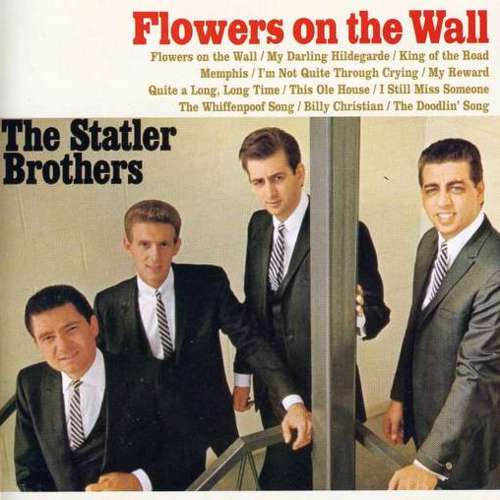
200px-FatesWorseThanDeathSOUNDTRACK: THE STATLER BROTHERS-“Flowers on the Wall” (1965).

flowersonthe Vonnegut mentions this Statler Brothers song in Palm Sunday as well.  I know this from Pulp Fiction–a song that I found very amusing and never would have guessed was a classic country song.  Country music was very different in 1965 than it is now.  I don’t even know if there was a folk or bluegrass category back then, and this song, with its banjo and bouncey acoustic guitar is a great example of the kind of country music I like.  And those harmonies!

This song certainly seems to be about insanity–about a man counting flowers on the wall, playing solitaire with a deck of 51 cards, smoking cigarettes and watching Captain KAN Kangaroo.  Don’t tell him he’s nothing to do.  What a weird little song.  And man is it catchy.  No wonder it was a #1 hit.

[READ: May 31, 2013] Fates Worse Than Death

After reading Palm Sunday I learned that Fates Worse Than Death was a kind of autobiographical sequel to that non fiction book.  I also learned that the two essays that make up Nothing is Lost Save Honor which is impossible to find (and for which I can’t even find a cover) are available in FwtD.  However, since there is no real contents or index, you do have to read the whole thing to find out which chapters contain the essays.  Or you can just look here and see that “The Worst Addiction of Them All” (which was published in The Nation) is in Chapter XIV and “Fates Worse Than Death” appears in Chapter XV.

The last time I read a bunch of Vonnegut together I got a bit burnt out on him and the same thing happened here.  The problem with Vonnegut’s nonfiction is that he tends to repeat himself.  A lot.  And while this book is ostensibly about the 1980s, he talks an awful lot about his family and his friends from the war and his other literary acquaintances., like he did in Palm Sunday.  In a number of places, he says that he doesn’t like to read himself in English, and it would seem that he doesn’t proofread to see if he said something already either.

This is not to say that the book is not worth reading.  Indeed, if you read Palm Sunday in the 80s and then this one in the 90s, you might not remember all of the details that pop up again, but when you read them days apart…well. (more…)

Read Full Post »

PalmSundayFrontandBackSOUNDTRACK: THE STATLER BROTHERS-“Class of ’57” (1972).

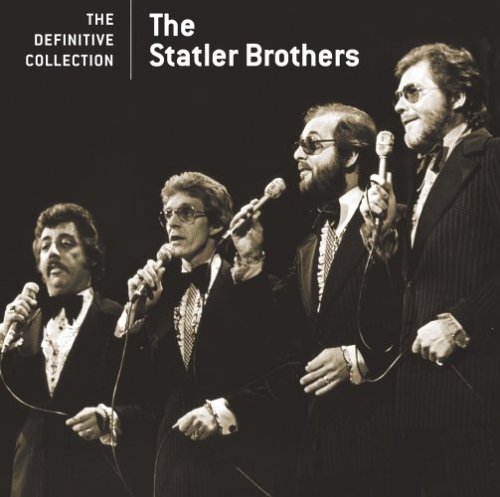
stalerI don’t know much about The Statler Brothers.  They are considered country, although this song is hardly country–it’s more folk with some bluegrass and, the real selling point–great harmonies (especially the bass singer with the big mustache).

The song is a wonderful coming of age song, sad and funny with a list of what happened to everyone in the class of ’57.  Like:

Betty runs a trailer park, Jan sells Tupperware,
Randy’s on an insane ward, Mary’s on welfare.
Charlie took a job with Ford, Joe took Freddie’s wife,
Charlotte took a millionaire, and Freddie took his life.

John is big in cattle, Ray is deep in debt,
Where Mavis finally wound up is anybody’s bet.

But the kicker comes at the chorus:

And the class of ’57 had its dreams,
Oh, we all thought we’d change the world with our great words and deeds.
Or maybe we just thought the world would change to fit our needs,
The class of ’57 had its dreams.

And then at the end:

And the class of ’57 had its dreams,
But living life from day to day is never like it seems.
Things get complicated when you get past eighteen,
But the class of ’57 had its dreams.

Vonnegut quotes the entirety of this song in the book and I’m glad he did, it’s a very moving song and really captures American life.

[READ: May 26, 2013] Palm Sunday

After writing several successful novels, Vonnegut paused to collect his thoughts.  And Palm Sunday begins: “This is a very great book by an American genius.”  It is also a “marvelous new literary form which combines the tidal power of a major novel with the bone-rattling immediacy of front-line journalism.”  After all the self praise, he decides that this collage–a collection of essays and speeches as well as a short story and a play which is all tied together with new pieces (in TV they would call this a clip show)–this new idea of a book should have a new name and he chooses: blivit (during his adolescence, this word was defined as “two pounds of shit in a one-pound bag.”  He proposes that all books combining facts and fiction be called blivits (which would even lead to a new category on the best seller list).  Until then, this great book should go on both lists.

This book is a collection of all manner of speeches and essays, but they are not arranged chronologically.  rather they are given a kind of narrative context.  What’s nice is that the table of contents lists what each of the items in the book is (or more specifically, what each small piece is when gathered under a certain topic).

Chapter 1 is The First Amendment in which he talks about Slaughterhouse Five being burned and how outraged he was by that–especially since the people so anxious to burn it hadn’t even read it (and the only “bad” thing is the word motherfucker).  The first speeches included are “Dear Mr. McCarthy” to the head of the school board where his books were burned and “Un-American Nonsense” an essay for the New York Times about his book being banned in New York State.  The next two are “God’s Law” for an A.C.L.U. fund raiser–it includes his confusion as to why people don’t support the A.C.L.U. which is working for all of our own civil liberties. (more…)

Read Full Post »

harpers maySOUNDTRACK: LAURA VEIRS-“Sun Song” (2013).

lauraI know of Laura Veirs from her work with The Decemberists, but as she’s mostly a backup singer (and occasional lead), I couldn’t really say I knew her very well.  So I was delighted to hear this song that she had written and to see just how great it is,.

The song begins with a simple folk guitar and pizzicato pluckings. Veirs’ voice has an innocence that I really love—gentle but clean.  The chorus brings an unexpected harmony vocals and vibrato but nothing prepares you for the feedback squalls that the new electric guitars bring in.

The song doesn’t get faster, just a little noisier—it reminds me of the best Sarah Harmer tracks.   Then the electric guitar goes away and the song feels fuller somehow.  The end of the song introduces a  kind of call and response which adds a cool new element until it all relaxes back into its original mellow style.

I really like this song and need to hear more from Veirs.  And I see that she has released a whole bunch of albums, so there’s a lot to choose from.

[READ: May 30, 2013] “Loyalty”

This story begins with a pretty straightforward sentiment: “As much as I love her, I blame Astrid.  Astrid told my wife, Corinne, that she could achieve happiness if only she’d leave me.”  Indeed, Astrid made a regular suggestion out of it–leave him, be free.  And so finally Corinne did–she left him alone with their son, Jeremy.  Initially Jeremy wrote to Corinne but eventually the replies were fewer and further between and he gave up.

Wes was crushed, but soon after he fell in love with Astrid and they got married.  I love the way it is presented:

The minute Corinne was gone, Astrid showed up. I don’t recall that, prior to that day, we had so much as exchanged a moody, sparking glance. She took me into her expert arms. It was consolation and sympathy at first, I guess. I didn’t question it. In about the time it takes to change the painted background in a photographer’s studio from a woodland scene to a brick wall, she had left her boyfriend and was presenting me with casseroles and opened bottles of cold beer.

We never really learn if Astrid had planned this all along.  It seems like it, but it’s not like Wes is a huge catch.  Corinne’s divorce request went though with no trouble or custody problems.  And soon he and Astrid had a new child, a daughter, Lucy.  Then they saw Corinne on TV, on a show about runaway moms–Wes asks, what would make her do such a thing–and no reasonable answer is given. (more…)

Read Full Post »

5.20SOUNDTRACK: ELEKTRA-“I Don’t Do Boys” (2009).

elektraI found out about this band and video because of my recent reading of the Icelandic magazine Séð og Heyrt and this post on I Love Icelandic Music.

This song was listed as one of Iceland’s musical scandals because of the aggressively lesbian imagery.

The song is simple enough.  Piano chords play slowly until the tone changes for the bridge and the very simple chorus (which reminds me of Blur’s Boys and Girls in a way, although it doesn’t sound anything like them): “I don’t do Boys, I just do Girls, I just do girls with style and class. I don’t do boys I just do girls I just do girls with kissable ass”). It’s poppy but a little more aggressive than a typical pop song (and not as metal as a pop metal song).  There’s an interesting style to the backing vocals that seems to make it more than a pop song as well.  I’m not saying it’s good, but it’s more than typical.

As for the video, I can’t tell if this is male fantasy lesbianism or what, but since this story is all about kissing, here’s a video that’s all about kissing.  See if it’s as scandalous as Iceland thinks.

[READ: May 16, 2013] “Leaning In”

The five brief pieces in this week’s New Yorker are labeled as “Imagined Inventions.”  And in each one, the author is tasked with inventing something.

Mindy Kaling is always funny, especially when you’re not sure how serious she is.  As when she begins her essay, “One of the perks of my job is that I regularly get to kiss men—often married men—with zero repercussions for anyone involved.”  Of course she’s talking about acting, but as she says—who is to know if she slips out of character while kissing?

She explains that kissing new people is one of the great joys in life and, while being in a committed relationship is also wonderful, she feels that removing the joy of kissing new people is a terrible drag.  She agrees that marriage is a serious business but kissing is not.  “Kissing in and of itself can’t create offspring or cause life-threatening disease.”  She offers an example of how if you just kissed someone you would never be stuck having to listen to his post-coital ramblings afterwards. (more…)

Read Full Post »

[LISTENED TO: May 13, 2013] Musicophilia

musico

My sister-in-law Karen got me this audio book for Christmas.  I had never read any Oliver Sacks before although I have always been amused/intrigued by his stuff (The Man Who Mistook His Wife for a Hat is such a great title).  So this book, as one might guess, is all about how music impacts our lives.  Music is more than just an enjoyable set of melodies, it is a more primordial form of communication.  The key thing for any fan of music to know about this book is that about 97% of the music he talks about is classical.  Which is fine, but you’re not going to get any kind of insight into rock.  The reason for this is twofold.  One–he likes classical (and doesn’t seem to like rock–although he did take one of his patients to a Grateful Dead show) and two–he wants to talk more about music and not so much about lyrics (although again, that’s not entirely true).

I have to admit that while I enjoyed the stories in the book and will certainly talk about it a lot, I found the book a little overwhelming–it was exhaustive and exhausting.  Sacks really tries to cover ever aspect of music (and many I never would have guessed) and so I found the nine hours of story a bit tiring by the end.

Part of that may also have been John Lee, the reader, who spoke very clearly and a little slowly and gave the book something of a lecture-feel.  Which was fine for much of the book, although again, it was a little exhausting sometimes.

The thing that is most exhausting about the book is that virtually every person he talks to or about has had some kind of trauma which makes their appreciation of music different from the norm.  If you are in any way a hypochondriac, this book will make you go insane  I’m not, but even I found myself worrying about having a stroke at any second or experiencing some kind of weird brain thing where I no longer like music or god forbid get some kind of long term amnesia.  Jesus, I was getting a little spooked by the end. (more…)

Read Full Post »

CV1_TNY_04_01_13Gutierez.inddSOUNDTRACK: TRAGICALLY HIP-“Man Machine Poem” (2012).

hip manI received the new Tragically Hip album Now for Plan A a while back. I’ve listened to it a few times, but it got lost in the shuffle.  Then I put this song on and it really blew me away.

It’s a very typical Hip song–guitars that build but then retreat to let Gord Downie’s voice soar above the quiet verses.  There’s something agonizingly beautiful about the way he sings the verses, which almost feel like they are a capella, the music is so minimal.  Then for the second verse, the band kicks in and builds the song even more.

The chorus, which is very simple and is barely a chorus at all, punctuates the verses perfectly, with Downie’s voice being a great anchor.  The song doesn’t rock as hard as some Hip songs, nor is it as ballady as others, but it’s a perfect example of what the Hip do so well–a middle tempo song that is both passionate and also rocks.  (Although I could do without those weird little keyboard notes that dot the end).

[READ: May 8, 2013] “Marjorie Lemke”

At first I was unhappy about this story—it seemed like it would be another story of a young girl who gets pregnant and has a shitty life.  Especially when I found out the father is a junkie who has run off and that she herself was a huffer of chemical fumes.  Oh boy. And for some reason I thought the story was Irish (I guess there’s lots of down on your luck Irish girl stories out there–cheeky!)

But Braunstein transcends that story but giving Marjorie a support system.  Her aunt, who is very helpful (but doesn’t remove her responsibilities), and a job as a maid at a nice (but not too nice) hotel.  Her daughter, Della, is small for her age, but she seems mostly healthy.  And the hotel allows Marjorie to bring Della along on her cleaning cart (tucked into the clean towels).  Della pretty much sleeps all day (which is good for work, but not so good for nighttime), and no one has complained about her cooing or drinking a bottle when she does wake up.

Then Marjorie knocks on a door and a man is in there—he didn’t say anything when she knocked.  At first Marjorie thinks he’s masturbating, but he’s not, he’s just absorbed in the newspaper on his lap.  He tells her to just go about her work, don’t mind him.  So she does.  He’s not cold exactly just absorbed in what he’s doing.

The next time she goes to the room, he is there again, but this time his wife is there too. She is brusque and tells Marjorie that they will be in the room for about 4 weeks—she is an inspector and has several jobs in the area.  She asks that Marjorie come every two days to clean and says there will be a large tip waiting for her.

The story then jumps forward a bit.  In a way that is impressionistic more than telling, we learn that Marjorie and the man, Gabe, are getting close—talking, holding hands, comforting each other.  (more…)

Read Full Post »

[LISTENED TO: March 30, 2013] Knucklehead

knuckleheadWe were looking for a good audio book for the kids and I stumbled upon this, an autobiography from Jon Scieszka.  We love Scieszka’s books (Stinky Cheese Man and the Time Warp Trio among others) and figured that this autobiography had to be good for a few laughs too.  And we were very much correct.

This is a funny book about what it was like to grow up as the second oldest of six brothers in Flint, Michigan.  It’s not really about being an author (although he does talk about where he gets ideas), it’s really about his childhood.  Most of the anecdotes in the book are things that he and his brothers got up to and how his father used to affectionately call all six of them knuckleheads.

The book has almost 40 chapters, all of them very short (as befitting the author of books for reluctant readers).  And each one has a pretty good set up and punchline.  Like how the older brothers used to tease the youngest ones or how Jon and his brother burnt a dry cleaning bag because it dropped little plastic bombs onto a battlefield–in the basement.  Or how he and his brother peed on the space heater because they thought that would put it out (that seems suspect, but it could have happened. (more…)

Read Full Post »

vonlastintSOUNDTRACKSURFER BLOOD-“Demon Dance” (Live at SXSW, March 27, 2013).

surfer blood

I’ve liked Surfer Blood since I first heard them.  They write catchy, mostly short, poppy songs.  And usually after a few listens, the hooks really grab you.  The strange thing about the band is that the hooks aren’t always readily apparent, which makes their songs sound kind of samey sometimes.

Of course, samey isn’t a bad thing, necessarily.  Surfer Blood is quite distinctive and I tend to enjoy everything they do.  This new song sounds like their other stuff, which is fine.  But the most distinctive thing about the band of probably their singer who sounds like a less-affected Morrissey.

Having also listened to the song from the album I can say that the singer is far harder to understand live, so maybe live is not the best way to hear a new song from them, but for an old favorite, Surfer Blood has a great energy live.

Watch the show here and hear the studio version here.

[READ: March 27, 2013] The Last Interview and Other Conversations

Melville House has published a number of these “Last Interview” books, and as a completist I feel compelled to read them.  I have read criticisms of the series primarily because what the books are are collections of interviews including the last interview that the writer gave.  They don’t have anything new or proprietary.  The last interview just happens to be the last one he gave.   So it seems a little disingenuous, but is not technically wrong.

There’s so far five books in the series, and I figured I’d read at least three (Vonnegut, David Foster Wallace and Roberto Bolaño–the other two turned out to be Jorge Luis Borges–who I would be interested in reading about and Jacques Derrida (!) who I have always loved–I guess this series was tailor made for me).

At any rate, these interviews are from various times and locations in Vonnegut’s career.  There are six in total.  I don’t know if the titles they give here were the titles in the original publications but here’s what’s inside:

  • “Kurt Vonnegut: The Art of Fiction” from The Paris Review, Spring 1977 (by David Hayman, David Michaelis, George Plimpton, Richard Rhodes)
  • “There Must be More to Love Than Death” from The Nation, August 1980 (by Robert K. Musil)
  • “The Joe & Kurt Show” from Playboy, May 1982 (by Joseph Heller and Carole Mallory)
  • “The Melancholia of Everything Completed” from Stop Smiling, August 2006 (by J.C. Gabel)
  • “God Bless You, Mr. Vonnegut” from U.S. Airways Magazine (!!!), June 2007 (by J. Rentilly)
  • “The Last Interview” from In These Times May 9, 2007 (by Heather Augustyn) (more…)

Read Full Post »

[WATCHED: March 11, 2013] Chitty Chitty Bang Bang

ccbbAfter enjoying the audio book of Chitty Chitty Bang Bang so much we thought it would be fun to watch the movie–it’s one of the first times we’ve watched a movie after reading the book with the kids so we thought it would be fun to compare them.

This proved to be an awesome opportunity to show that books and movies can be a wee bit different.  Holy moley, about the only thing that the movie has in common with the book is (some of) the characters have the same name and that there’s a magical car.  Oh, and there’s candy involved.  Other than that, there’s really no resemblance whatsoever.

The screenplay to the movie was written by Roald Dahl, which explains some of the weirdness (child catcher, anyone?), And yes the movie producer’s real name is Albert Broccoli.  But seriously, someone read the book and said, hey, that car is cool, I’m going to take it and make something totally different with it.  Oh, and I know, it should be a musical!  Oh, and it should be two and a half hours long!   Oh and even though it’s set in England, it will star Dick van Dyke!  Oh, and instead of him having that crazy accent like in Mary Poppins, he’ll be American, even though his children and father will be British.

I was going to talk a bit about the movie, but that only seems doable by comparing it to the book.  In this handy table format. (more…)

Read Full Post »

« Newer Posts - Older Posts »