Feeds:
Posts
Comments

Archive for the ‘Magazines’ Category

SOUNDTRACK: KOPECKY FAMILY BAND-Embraces EP (2008).
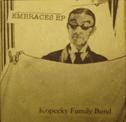
I learned about Kopecky Family Band from NPR’s Tiny Desk Concert.  When I investigated further, I found that I could download this EP for free. I compared their Tiny Desk show favorably to The Head and the Heart.  This earlier EP has a bit more punky edge to it (as their other stuff may as well–Tiny Desk doesn’t really lend towards punk).

And so this EP leads me to compare them more towards Stars.  But perhaps we’ll call them a more acoustic version of Stars.  There is some wonderfully intense musical construction on this EP, and the dynamic of the duel vocalists really bring great tensions.

This is a wonderful EP.  The strings belie the rather heavy chords  (especially on “Trainwreck”) and the harmonies throughout are really infectious.

[READ: June 30, 2011] “A Mouthful of Cut Glass”

I’ve really enjoyed Tessa Hadley’s recent stories in The New Yorker.  So I decided to go back through their archives and read the other stories of hers that they have published.  It turns out that she has been published in the New Yorker since 2002.  But many of the earlier stories were collected in her previous collection which I’ll read one of these days.  But rather, I started with the first ones that have yet to be collected.

“A Mouthful of Cut Glass” is a conflation of two expressions, neither of which I was familiar with: “talking through a mouth full of plums” and “an accent like cut glass.”  The malaprop came from the protagonist’s boyfriends’ mother.  And yet, I say protagonist as if Shiela is the real protagonist.  The story quite clearly opens with Neil.

In 1952 Neil was born into a very poor household.  But over the years, he was able to rise above his sattion and become a successful University student.  It was at University that Neil met Sheila.  Sheila grew up in a vicar’s house with a gaggle of brothers and sisters.  The two of them hit it off very well and began a serious relationship. (more…)

Read Full Post »

SOUNDTRACK: ROCKWELL KNUCKLES-“Silly Human” (2011).

This song was NPR’s song of the day on July 7th.  I’d never heard of Rockwell Knuckles before.  He’s a rapper from St. Louis and has at least one other album out as far as I can tell.  I was rather fond of this song for, as the NPR page says, he often prefers to be absurd.

This song has fast, manic music–jittery and confusing and the rap over the top of that music, especially the chorus, is equally frenetic and hard to fathom on one listen.  But the chorus has a interesting twisty melody and the lyrics (the ones that I can follow) are bizarre and thoughtful and not typical “street life” lyrics.

I listened to this sevral times in a row, and will defitely check out his full length (which you can stream here, and the songs I listened to are equally weird and catchy).

[READ: July 6, 2011] Lucky Peach Issue 1

McSweeney’s has yet another new periodical to occupy my ever diminishing reading time.  This one is a food magazine which, as the cover states is “the new food quarterly from Momofuku’s David Chang.”  I don’t especially like food magazines (Sarah subscribes to several, but I just can’t get into them–reading recipes to me is the equivalent of looking at XHTML code for most people).  I mean, I like to cook sometimes, but I don’t look for new recipes or anything like that.  So, I am probably the least likely recipient of this magazine.  Not to mention I’ve never heard of David Chang and only know about Momofuku because of the Elvis Costello album.

And then geez, the first issue is about Ramen?  Who gives a fuck about Ramen?  It’s that crappy stuff you buy 10 for $1 at the supermarket.  And you’re really going to devote 174 ad-free (except, obviously lots of mentions of Momofuku) pages to ramen?

Well, yes they are.  And holy shit if it wasn’t amazing.  David Chang is a really funny guy and co-editor Peter Meehan is a great foul-mouthed humorist.  [I have never seen so many “fucking”s in a cooking magazine before–in fact I suspect I’ve never seen any in a cooking magazine before].  The articles were funny and a little low brow (I doubt most cooking magazines mention people throwing up either), but they were engaging and interesting too. (more…)

Read Full Post »

SOUNDTRACK: GUSTER-Easy Wonderful (2010).

This Guster album is confusing.  It’s rather short (compared to their other discs).  Combined with the (kind of flimsy) cardboard packaging, it feels almost like an EP.  It also seems to be kind of religious (although I don’t think it is)–like a themed EP.  And yet it isn’t off-putting or anything (a few mentions of Jesus is all, although that’s a lot more than usual).

But, like most of Guster’s releases, it’s super catchy kind of alternative jangly pop.  After one or two listens the songs are instantly recognizable.  There isn’t a bad song in the bunch.  However, they’re also mildly underwhelming compared to their previous releases.  The songs feel a bit more subtle, but really it seems like they might be just a little too smooth.  The dynamics aren’t quite as exciting as they have been.

Having said all that, the disc is still pretty great and I find myself humming a lot of these songs all day long.

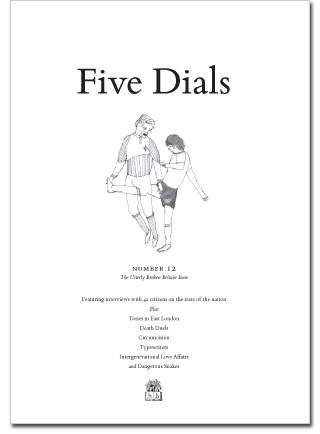
[READ: June 18, 2011] Five Dials Number 12

Five Dials Number 12 has a theme explicitly stated on the cover.  The premise of the theme is that the Conservative Party of Britain had been claiming (in their TV ads and billboards) that Britain was broken.  This idea was relentlessly pushed across Britain.  And Five Dials wondered if people thought that that was true in general.  So they asked 42 citizens (no idea what kind of random sample it may have been, realistically) and they recorded the results.

The rest of the issue has some of the standard Five Dials material we’ve come to expect: essays and fiction, advice and lists.  The theme gives an interesting tone to the proceedings.

CRAIG TAYLOR-A Letter from the Editor: On Broken Britain and Nick Dewar
Taylor addresses much of what is said above.  David Cameron (I still can’t get used to him being Prime Minister, it’s still Gordon Brown in my head–I guess Cameron hasn’t done much yet) is the man who keeps trying to “mend our broken society.”  Even though (and statistics are similar in the U.S.):

They found that violent crime had almost halved since 1995, while crime generally fell by an extraordinary 45%. The figures for teenage pregnancies – a favourite of those talking about social decay – remain constant since Labour came to power in 1997; so too do those for teenage abortions.

The rest of the letter is devoted to the passing of Nick Dewar.  Dewar drew the illustrations for Five Dials Number One.  I really liked Dewar’s style, and his absurdist sensibilities.  Taylor says that Dewar’s color work was even better.  And I think he’s right. (more…)

Read Full Post »

SOUNDTRACK: TINDERSTICKS-35 Rhums (2008).

This is a charming and very French sounding soundtrack. A delightful melody runs throughout the disc (which totals just over 25 minutes).

When Sarah first heard it, she said, “What’s this French music you’re listening to?”  And indeed, it is very French-sounding. There are very simple instruments: melodica, acoustic guitars, piano.  And that melodica is a prominent sound–giving it a sense of intrigue as well as a sense of solitude (the melodica can sound so yearning).  But it’s not all melodica and intrigue; for instance, there’s some delicate xylophone on “Night Time Apartments.”

There are also several snippets from the movie online.  Here’s one clip (with Tindersticks score underneath):

Of the new soundtracks releases this one is my favorite.  And it’s one that I could see listening to for fun.

[READ: June 16, 2011] “The Rules of Engagement”

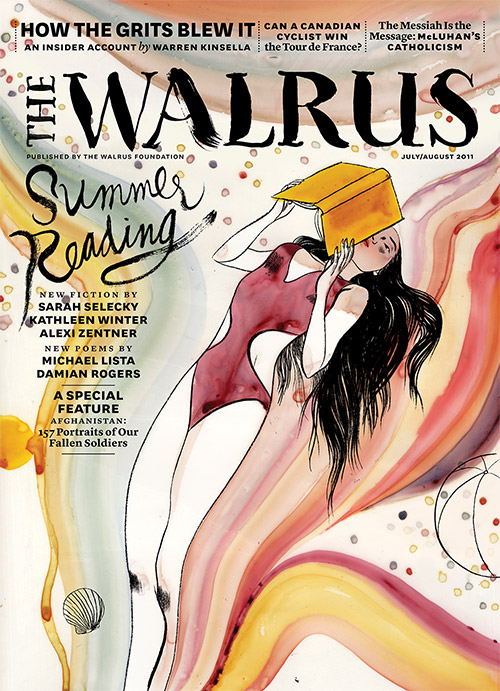
This is the final story in The Walrus‘ Summer Reading issue.  As I mentioned, the intro states: “We asked five celebrated writers to devise five guidelines for composing a short story or poem. They all traded lists–and played by the rules.”  Alexi Zenther was given rules by Sarah Selecky (which I posted below).

I really enjoyed this story, despite the immoral behavior.  Susan and her friends from high school (it’s ten years after high school now) are enjoying a foreign vacation for a week.  The first thing we see is a man seducing Susan.  They call him “Fork” because after a few hours of flirting, he asked, “And now we fork?”  Amusingly, for someone who made a living seducing women, he was bad in bed.

The other women also meet and bed these professional gigilos.  After sex, one of them simply walked over to the woman’s wallet and took money when he was ready to leave.  She notes that he took “probably less than I would have given him if he had asked.”

The women are in various stages of relationships, one woman is divorced, another is serially monogamous and a third is married (that’s the immoral part).

There’s a wonderful diversion in the story that flashes back to Susan’s grandfather Bert.  Bert had a U-pick apple stand and the girls worked there for many summers.  There’s an especially tender moment in which Susan and Bert are wandering the island and they see a wild horse.  And the scene fills Susan (and the reader) with a sense of wonder at her grandfather. (more…)

Read Full Post »

SOUNDTRACK: TINDERSTICKS-Claire Denis Film Scores 1996-2009: L’Intrus [CST077] (2004).

This score comes from Claire Denis’ 2004 film L’Intrus.  The soundtrack was done by Stuart Staples.  In the booklet he talks about how conventional scoring just didn’t seem appropriate for the film, so he chose this rather noise-filled style.

It is a noisy, menacing work (L’Intrus means The Intruder, so that makes sense).  The sounds are clanky and squeaking, creating an ominous atmosphere.

But what’s most interesting about the score is that despite this limited collection of sounds, he creates a musical work out of it that is interesting to listen to on its own.  The track “Horse Dreams” is full of discordant notes and screeches.  While “The Black Mountain” features a solo horn over the noises.  It’s not easy listening, but it is certainly evocative.

This score is also very short about 25 minutes or so).  The movie is 130 minutes.  I wonder what other sounds are in the film?

[READ: June 15 2011] “Madame Poirer’s Dog”

This is the second story in The Walrus’ Summer Reading issue.  As I mentioned, the intro states: “We asked five celebrated writers to devise five guidelines for composing a short story or poem. They all traded lists–and played by the rules.”  Kathleen Winter was given rules by Alexi Zenther (which I posted below).

I didn’t enjoy this story all that much.  More specifically, I enjoyed the story within the story, but the full, proper story was a little too indistinct to me: It felt kind of all over the place.  In some ways this is appropriate as the story is set in an old folks’ home.  The titular dog comes into play throughout the story and the hard and fast facts of the dog’s tale give some grounding to the story.

The dog’s story is told in a just-the-facts, not-the-details style.  And the dog’s story is a funny story.  It involves a chastity belt (for the dog), and another dog’s skill at the belt’s removal.  But  the funniest part came at the end when the narrator criticized her son’s wife because she would be the kind of person who would ask for details “that no one cares to remember: what exactly does it look like, a chastity belt for digs, and of what material is such a thing made?”

The bookend parts that surrounded the story just kind of fade from my memory.

The five rules from Alexi Zenther: (more…)

Read Full Post »

SOUNDTRACK: TINDERSTICKS-Claire Denis Film Scores 1996-2009: Vendredi Soir [CST077] (2002).

This score was created by Dickon Hinchliffe and the liner notes indicate that it was something of a jumping off point for his future film scores.  This was the third score that the band created for Denis (after Nenette & Trouble).  Stuart Staples was working on the latest Tindersticks album so Dickon took over all of the duties on this one.

This is a beautiful, melancholy soundtrack, full of gorgeous swelling strings and simple piano notes.  It doesn’t remind one all that much of  Tindersticks, but it’s not terribly far removed from their sound either.

The whole score (which is paired here with the score from L’Intrus) is 25 minutes, which made me wonder whether this is a full length film, or just a film with lots of silence (or, perhaps non-Hinchcliffe music that wasn’t included here).  [The film is 90 minutes long].

Pairing it with L’Intrus makes sense in terms of space, but the two scores could not be more different from each other.

[READ: June 15, 2011] “The Cat”

This is the first story in The Walrus’ Summer Reading issue.  As I mentioned, the intro states: “We asked five celebrated writers to devise five guidelines for composing a short story or poem. They all traded lists–and played by the rules.”  Sarah Selecky was given rules by Kathleen Winter (which I posted below).

The first line of the story really sets up the whole thing: “I am not at all surprised that my father has come back to earth in the form of a grey and white cat.”  And indeed, the rest of the story discusses her relationship with her father (those awful fishing trips when she could neither speak nor move) and how he never seemed to be pleased about her.

Now that he’s back as a cat, the dynamic has changed.  Although there’s still fish in their relationship.

I really enjoyed this story,  For although it was brief, it was wonderfully evocative.

Kathleen Winter imposed these rules on the story: (more…)

Read Full Post »

SOUNDTRACK: THE RESIDENTS-Meet the Residents plus Santa Dog EP (1973/1972).

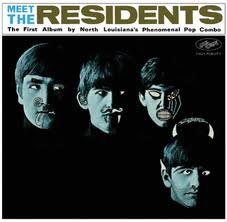
Like a proto- Negativland meets Primus, The Residents took the world by storm in 1973.  Their debut album (pictured here) bore the unmistakable tagline: The First Album by North Louisiana’s Phenomenal Pop Combo.  And so it is.

Read more about the album in the Jon Savage essay below.

“Boots” is a sampled and remashed version of “These Boots Are Made for Walking.”  “Gylum Bardot” sounds like a Primus demo.  “Breath and Length” is noise and noise and effects and a soothing female vocal singing the title.   “Consuelo’s Departure” is a noisy soundtrack to nothing and “Smelly Tongues” sounds like a hammered dulcimer with a menacing bassline behind it until the vocals come in: “Smelly tongues looked just as they felt”.   And all 6 of these songs last less than ten minutes total.

“Rest Aria” changes tempo of things.  It’s five minutes long.  It starts as a simple piano track (slightly out of tune) but it slowly adds crazy horns and what sounds like children’s instruments.  The other longish song, “Spotted Pinto Beans” comes with a kind of faux chorus (female and then male) singing a kind of call and response which is overtaken by noise.

The one-minute “Skratz” comes between these two longer songs and is mostly  mumbling spoken vocal.  “Infant Tango” sounds like a normal song.  It opens with a funky wah wahed guitar.  Of course, the skronking horns and mumbled bass vocals tell you this is not going to be a hit.  It runs 6 minutes long with a strange little “guitar solo” in the middle.

“Seasoned Greetings” (with it’s weird holiday wishes at the end) segues into the 9 minute “N-Er-Gee (Crisis Blues”).  “N-Er-Gee” is a piano “melody” which is really someone banging the same notes very hard on the piano.  The voice on both tracks sounds like the aural equivalent of blackface until the sample (a very long sample that apparently voided placement on some releases) of “Nobody But You” morphs into a manipulated sampling of the word “boogaloo” and eventually becomes a dissonant chant of the title.

The appended Santa Dog is a bit more song-like.  Totally weird songs yes, but there’s actual melodies and lyrics.  Like on “Fire”: “Santa dog’s a Jesus fetus.”  “Aircraft Damage” is mostly a bunch of people reciting bizarre lyrics over each other.  The whole EP was about 12 minutes.  It’s weird but more palatable than the LP.

Despite how much this album foreshadowed loony alternative bands in the future, there is a clear predecessor in Trout Mask Replica.  Although Captain Beefheart followed a (relatively) more conventional song structure, you can hear elements of the Beefheart within.  This album is also notable for being made in the early 70s when the technology to do this easily was very far away.  You could whip this album up in a few minutes now, but back then with splice and paste, it would take ages.

It did not sell as well as the similarly titled Meet the Beatles.

[READ: June 16, 2011] Five Dials Number 11

Five Dials Number 10 was a special issue, but Number 11 goes back to the format we know.  It sort of has a theme about lists.   It contains half a dozen short essays and one long short story by Paul Murray (author of Skippy Dies).  This issue is also something of a surprise as it weighs in at a fairly small 16 pages (sometimes smaller is perfectly fine).  The issue also raised a couple of totally weird coincidences which I will point out as they come up.

CRAIG TAYLOR-A Letter from the Editor: On Wilton’s and Lists
Number 10 was designed to be ready for an evening at Wilton’s Music Hall on February 26th.  But the real theme of the issue is lists.  In part this is inspired by the Raymond Chandler entry, it’s also inspired because Taylor keeps lists around the office.  At the end of the letter he provides a list of all of the notes he’d left to himself in the office.  Some are about the issue (Paul Murray manuscript), other are seemingly more random (USA 5 Canada 3, men’s Olympic ice hockey result;  Canada 7-Russia 3, men’s Olympic ice hockey result; ‘Range Life’–Pavement).  And the one that is most coincidental to me–(The Umbrellas of Cherbourg–Jacques Demy).  This is coincidental because on the day that I read this, my friend Lar wrote a post about this very movie, which was completely unknown to me. (more…)

Read Full Post »

SOUNDTRACK: MOUNT KIMBIE-Tiny Desk Concert #121 (April 18, 2011).

After subscribing to the NPR Podcasts, I found out that every few days, a new concert gets downloaded to my folder (which is pretty cool, but which I must check on from time to time so I don’t fill my machine!).

This Tiny Desk concert came along unannounced by a band I’d never heard of.  I’m not planning to listen to every concert that comes along, but this band seemed interesting.  Mount Kimbie’s Crooks and Lovers made the NPR list of “Albums We Missed in 2010” and the song they play there “Before I Move Off” is a fun and twisted song of blips and bleeps set to a catchy beat.  About mid way, the samples (cut up and unrecognizable) come in and add a new (almost creepy) texture to this song.

This concert reveals the less “programmed” side of the band as there is an electric guitar and (evidently from the notes) a live drum.  What’s most interesting about these songs is that even after a few minutes of riff and repeat, they throw something in that changes things.  Like the vocals (!) on “Maybes” (which frankly don’t live up to the rest of the song) that begin in the last-minute of a 5 minute song.  (The opening noises are really great).

The other two tracks “Ode to Bear” and “Field” are good, interesting electronic tracks.  But after a couple of listens to the show, I was actually growing a little bored with them.  It wa s good introduction, but that’s probably as far as it will go for me and Mount Kimbie.

[READ: April 6, 2011] “Two Fables”

A fable is defined as “a short story to teach a moral lesson.”  Given this definition, I would say that these stories failed as fables. I didn’t get any kind of moral lesson from either of them.  Indeed, I have a hard time with a lot of things that claim to be modern fables if only because of the definition…a vague or missing moral seems to me that it fails as a fable. (more…)

Read Full Post »

SOUNDTRACK: MOGWAI-Happy Songs for Happy People (2003).

Happy Songs for Happy People follows up Rock Action with more sedate music from Mogwai.  In fact, while Rock Action was pretty mellow (with a few bursts of noise) HMFHP is even more mellow.

Although it does open with a rocking track: “Hunted By a Freak.”  “Hunted” is one of Mogwai’s best songs.  It opens the disc with a catchy riff, some cool synthesized vocals and great washes of sounds.  It’s great on record and even better live.  But starting with “Moses I Am’n’t” the album takes a decidedly more mellow approach.  “Moses” is a song of slow washes layered on each other. There’s interesting textural sounds on display, but not a lot of melody.  It leads to “Kids Will Be Skeletons,” another mellow layered song.  It has a simple melody with delicate (!) keyboard washes.

But just when you think Mogwai have gone all soft, “Killing All the Flies” adds some intense sounds to the disc. It is similarly structured to the earlier songs on the disc, although it has some rather happy-sounding guitar lines in it.  It also grows in intensity about two-thirds of the way through.

“Boring Machines Disturbs Sleep” (sic) is a short, quiet song with subdued vocals.  It’s followed by “Ratts of the Capital” the only really long song here (8 and a half minutes).  It opens in this more subdued vein (is that a glockenspiel I hear?), but by 4 and a half minutes all you hear is guitar–growing louder and louder.  There are solos buried in the noise that threaten to explode out of the speakers, but they ultimately seem to hold back a wee bit.

“Golden Porsche” mellows things out again with a very pretty, very simple song (almost 3 minutes of beautiful melody) that reminds me of the interludes in Twin Peaks.  “I Know You Are But What Am I?” opens with a tense kind of piano (with some slightly off chords).  They merge with pretty keyboard notes which counteract the somewhat sinister feel of the main riff.

The disc ends with “Stop Coming to My House” (Mogwai have always excelled at song titles).  It’s a very subdued track (quiet drums propel waves of keyboards) and as the songs continues, more and more waves layer on each other until it just all fades away.

I obviously prefer the louder, more raucous Mogwai tracks, so these two albums are not what I think of when I think Mogwai.  These two albums feel like the work of a more mature, more restrained band–as if they are deliberately trying to put constraints on their music to see what they can achieve.  But even if they are less intense, the songs are wonderfully structured and show a still show a great emotional range.

[READ: June 07, 2011] “Clever Girl”

This was a fascinating story and is yet another story by Tessa Hadley that I really enjoyed.  And it’s another story that I didn’t realize was set in England until the fourth paragraph, which opens “Mum unpacked.”

Anyhow, this story follows Stella, a young girl whose family moves to a small suburb that has recently been developed (trees were cut down and none newly planted).  Stella and her mother used to live alone together for many years, but recently Stella’s mom met Norbert.  They married and moved into this new suburban house.

The story is told in past tense about the events from Stella’s childhood.  But there are occasional moments where the narrator pops in and offers some moments of “grown up Stella” perspective–like maybe she could have been nicer to Norbert.  Grown up Stella realizes that Nortbert was really perfect for her mom (especially since she was an older woman,  with a grown daughter).  At the time, she thought that Norbert seemed okay, but the whole move has upset her sensibilities.  [I also love that Norbert is known as “Nor,” which is wonderfully contradictory.] (more…)

Read Full Post »

SOUNDTRACK: MOGWAI-5 Track Tour Single (2001).

I usually am able to track provenance of my discs pretty well, but this one I am only largely certain came from my friend Lar (sorry Lar, the memory is not what it used to be).  But where else would I have gotten a CD from a Mogwai show if I’ve never seen them live?

This promotional bauble is a delightful collection of 5 songs (duh).  The first three are studio recordings that were pretty much unavailable elsewhere (I read some sit that explained where you could’ve gotten them beforehand, but let’s just say unavailable).  And the live tracks were also unreleased.

The three studio tracks, “Close Encounters,” “Drum Machine” and “D to E” are very pretty, rather delicate instrumentals.  I would say that they are uncharacteristic of Mogwai, except that Rock Action was a pretty mellow album.  Nevertheless, even for Mogwai these are especially mellow and pretty.

The final two tracks are live: “You Don’t Know Jesus” is from Rock Action, and this live version is a bit more dramatic than the album release.  The final track is the amazing “New Paths to Helicon (Part II),” a song which never suffers from a lack of drama.

This is a pretty great tour artifact.

[READ: May 30, 2011] “Trade”

I was a little skeptical of this Simon Rich piece because I find that sports metaphors don’t always pan out, especially for a (somewhat) longish comedy piece.  But Rich manages to make the whole thing not only funny but also fit within the confines of the metaphor.

For this is the story of a breakup told as if it were a baseball trade.

Josh is traded by his girlfriend Kate.  He is devastated; he thought he was doing very well on her team.  But when he speaks with his brother Craig (who offers condolences and a trade story of his own), he realizes that his relationship numbers were not up to stuff.   But Josh is really devastated when he finds out who he was traded for (when he meets the man to exchange Kate’s apartment keys). (more…)

Read Full Post »

« Newer Posts - Older Posts »