Feeds:
Posts
Comments

Archive for the ‘Magazines’ Category

harpjuneSOUNDTRACK: KING TUFF-“Black Moon Spell” and “Eyes of the Muse” (2014).

tuffI first heard King Tuff on WXPN.  A few weeks later I heard two of his songs on NPR Music.  I’m including both of these because they’re from the same album and yet they are so very different.

“Black Moon Spell” has a stupid, great, heavy riff–it’s all distortion and garage rock.  And when the first verse starts, Tuff’s voice sounds very 60’s–whispered and trippy.  It’s a great contrast to the rocking riff that repeats in the chorus.  The second verse and the chorus sound pretty much the same, but they are so catchy it’s hard not to rock out to it all.  There’s a cool guitar solo and, perhaps most unexpected, female backing vocals as the chorus repeats in the outro.

It has a real classic rock sensibility but with modern elements.

“Eyes of the Muse” is also full of classic rock sensibilities but in a very different way.  This song is anything but heavy–it has jangly chords, and a pretty guitar riff.  The vocals are also higher pitched with a very sixties folky style.  And when the Boston-style guitars burst forth about half way through, you’d swear you’d heard it all before, and yet it is still different enough to be really enjoyable.

Ty Segall plays drums of “Black Moon Spell” and I can compare this record to him or to Mikal Cronin–simple familiar elements done in a novel and exciting way.  I’d definitely like to hear more from this record.

[READ: November 17, 2014] “The Second Doctor Service”

I didn’t think I’d read anything by Mason before, but I had.  I didn’t really like his previous story in Harper’s,(which was sort of a parody of Herodotus).  This one was written in an old style as well (although not a parody this time–if indeed the first one was supposed to be one).

Anyhow, this one opens like an old story (with county names given in this format: K— and S—).  At first I thought we didn’t really need a story pretending to be old like this, but Mason really mastered the style.  Not to mention a story with this content works much better as an old one (before “modern” science).

Essentially, the author is writing a letter to the Journal, in response to Dr Slayer’s study “On the So-called Cumberland Were-wolf.”  He has not encountered a were-wolf but he hopes that anyone reading the Journal might be familiar with his own unusual plight.  (more…)

Read Full Post »

withoutSOUNDTRACK: GOJIRA-L’Enfant Sauvage (2012).

gojiraGojira is a French heavy heavy metal band, and this album was highly recommended back in 2012 (I didn’t realize it wasn’t their debut–they have quite a few records out already).  This album is quite heavy, but it has a lot of diverse elements to keep it interesting.

At the same time, they do rely on a couple of guitar effects which make the album weirdly samey (no idea if they do it on other albums too).  The two biggest offenders in this “repeated” scenario are the seeming over-reliance on the open high e string to add contrast to the heavy chugging chords.  It’s a cool effect once or twice but they do it a lot (especially in the song “The Axe” where it happens way too much and which is then followed by “Liquid Fire” where they do it again).  The other thing they do is this weird scraping sound.  It happens in the first few notes as the disc opens (in “Explosia”).  It’s a really cool sound and quite distinctive.  When you do a weird sound like that a lot in one song, it feels like maybe too much, but then to do it in several other songs, it feels like a crutch.

Which is a shame because the rest of the album is really interesting–the vocals are growly but audible and there’s occasionally really cool backing harmony vocals (“Liquid Fire”) and some really unusual different parts to songs.

So “Explosia” opens really heavy with a crazy riff and pounding drums (and that weird scraping sound).  I love that at 2:30 it switches from bludgeoning to slower (but still heavy) and that as the song fades out with another heavy section there are slow guitar notes that remind me of a Western.  It’s really cool. “L’Enfant Sauvage” uses that open high E string in an interesting riff (by doing more than just letting the string ring out).  (The scraping sound appears here too, but in limited quantity). I like the way the song’s volume just drops for the last thirty seconds or so.

“The Axe” opens with a pummeling drum and guitar sound.  “Liquid Fire” alternates between heavy guitars and that open high E sound.  “The Wild Healer” is a simple, pretty instrumental.  It is 2 minutes long and the main riff is simple one (again all on one string).  There’s an interesting solo that plays along behind the main riff which is quite pretty–but it all ends very abruptly.

“Planned Obsolescence” jumps right in with some pummeling guitars (an a scrape sound).  It slows down a bit, but towards the end the pummeling double bass drums resume until the really slow sweet guitar section that comes in around 3:45.  “Mouth of Kala” has a heavy riff which is a cool change (even if the riff is fairly simple).  But there’s some nice melodies that alternate with the heavy stuff.  I also really like the way the song ends with a very different riff and sound than the beginning.  (And the backing vocals are really cool too).

“The Gift of Guilt” has an interesting open E string riff (which is similar to Iron Maiden’s “The Trooper,” although they do something very different with it.  This song is just littered with odd effects, like a big heavy “bowh” sound and some high-pitched guitar pyrotechnics.  But I love the way it alternates parts (the growly vocals work really well here, too) and then ends so melodically.

“Pain is a Master” opens with a slow guitar riff and whispered voices, it’s a great change of pace for the disc.  Once the slow part ends, the guitars and drums pound furiously and we get some more odd effects–a siren sound (from the guitar) alternating with the ubiquitous scrape.  But the middle parts are really quite different, slower, slightly more menacing.  “Born in Winter” opens and closes with a slow and atmospheric section (delicate vocals even).  In the middle it gets heavier (and has some really fast drumming).

“The Fall” has an Alice in Chains vibe in one section and then a more cookie monster type vocal on another.  The scraping sound returns for a final showing. I really like the way the album just sort of disintegrated into random sounds as it ends.

So overall I really enjoyed this album. It’s probably nitpicky to complain about the overuse of certain sounds, especially since they are cool.  But they have so much creativity on the disc, that to hear the same things a few times just seems redundant.  Nevertheless the album rocks and is a really enjoyable metal album.  I was supposed to see them open for Mastadon earlier in the month but something came up and I had to eat the tickets (who knew you couldn’t even give away Mastadon/Gojira tickets, come on!).

[READ: November 21, 2014] Without Blood

I’ve been enjoying Baricco so much that I decided to grab this book while I was in the library too. I had already read this book a couple of years ago, or actually, I had read the version that appeared in the New Yorker.  The Wikipedia entry says that the New Yorker version is a”revised form” of the novel.  I didn’t know what that meant exactly.  But basically I gather it means that Ann Goldstein (who translated the New Yorker version) has re-translated the story (or that they edited it for the magazine the first time).

The New Yorker version is really long for a New Yorker story (it is practically the whole novel), so it’s understandable why things were a little shorter for the magazine.  But she hasn’t changed very much for the book.  There’s a lot of little modifications–tenses of verbs (in flashback situations), word phrases are altered, additional details seems to have been added and there is at least one small section in this novel that was not in the New Yorker version.

This “new” section is about a woman who is sitting in the cafe with them.  She asks the waiter about the two main characters and we learn a little about her past as well (it’s not relevant to the story and I can see why it was omitted, but it does flesh out the scene).  I am not willing to do a page by page comparison of the two (even though that is something I tend to do). But suffice it to say that the stories are virtually identical, although I found it more satisfying reading the novel version.

Since my original recap is basically how I would summarize it this time as well, I am including it here almost verbatim.  But in the spirit of the updated version of the novel, I am modifying this post from the original in small details–see if you can spot the differences. (more…)

Read Full Post »

writeSOUNDTRACK: NELLY FURTADO-“Time Stand Still” (2010).

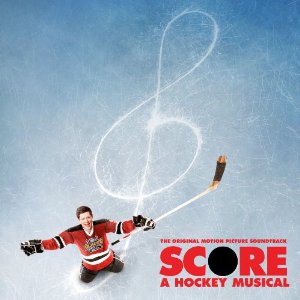
scoreI stumbled upon this cover of a Rush song when I learned about Score: A Hockey Musical (which I stumbled on when looking for information about Dave Bidini).  I hadn’t heard of the movie, but i was sure intrigued by it (the parts I’ve seen have terrible songs but since it’s all jokey, it’s okay).

This cover song is presumably an end credits song.

I don’t really have an opinion of Nelly Furtado, but, man, I really don’t like this cover.  I’m of course delighted that she covered Rush at all (and it makes sense in a Canadian hockey movie to have a Rush song) but she basically strips away all of the music and adds a very simple synth riff and drums.  It’s painful for a Rush fan to hear all the music taken away from this song.

Furtado’s voice actually works pretty well (especially since Aimee Mann does the backing vocals on the original) and she sings it quite nicely.  I think I might like it if I didn’t know it was a Rush song, originally (the music is good, eh?).  It just hurts my sense of righteousness to hear this weird lite version of Rush.

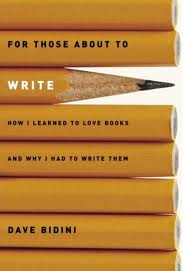
[READ: February 24, 2014] For Those About to Write

After reading Pseudonymous Bosch’s writing guide for young people, I figured I’d compare it to Dave Bidini’s writing guide for young people.

It’s interesting to see how two writers can try to accomplish the same thing in such vastly different ways.  Bidini doesn’t really write fiction (he has written some, but not much), so unlike Bosch, he doesn’t try to get the young writer involved with a made up story.  Rather, he presents his own life as an example of one way to become a writer.

Bidini talks about how he loved books as a kid–stapling together stories, or loving the feel of cardboard binding books together (he fondly remember his first writing project for school and how it all felt so official).  He was also fortunate to have parents who could appreciate his artistic needs–so if he needed to write or to play music, they were supportive. (more…)

Read Full Post »

whiteSOUNDTRACK: IMAGINE DRAGONS-Night Visions (2012).

nightvisImagine Dragons is a band that is hugely popular (popular enough for “Weird Al” to parody their song) and seemed to come out of nowhere.  I kind of sort of like them but also sort of don’t.  I didn’t know anything about them when I first heard “Radioactive” a big bombastic anthemic sing along with big drums and an amusing (or interesting at least) part in the beginning where the singer “breathes in chemicals.” And what’s great about the song is that it’s fun to sing along to and it doesn’t overstay its welcome.

But the thing about the album is that some of their songs veer right into the realm of cheesey pop.  “Tiptoe” has a synth sound that is so cheesy I can’t stand it.  It also has a chorus that a boy band could easily do.

So the album is full of songs I like and one or two I dislike a lot.  “It’s Time” stays on the good side of pop with a preposterously poppy song which never drifts into cheese (even if it flirts with the line). “Demons” is catchy and fun as is “On Top of the World” (with the “hey”s and handclaps).  Depending on my mood, I could easily hate these songs, but most days I find them happy and enjoyable.

“Amsterdam” and “Hear Me” are rocking anthems that sits pretty squarely in the not-too-poppy camp.  They have big choruses and are pretty easy to like.

As for songs I dislike–“Every Night” is the worst piece of pop crap drivel I’ve heard in a long time.  Everything about it is gawdawful ( I won’t even list them all).  I can see it being huge.  And “Underdog” goes over the line into cheese for me as well.  I don’t know if it’s the synth sounds or the lyrics or what but I can do without it.

“Bleeding Out” returns to that gritty vocals but still pretty polished sounding song that Dragons do quite well.  “Nothing Left to Say” is an interesting ender to the album (with cellos and all).  The tacked on coda “Rocks” is also kind of fun in a Mumford and Sons sorta way.

It was about half way through the disc that I realized the band sounds like Coldplay (the opening of “Demons,” jeez–I may have even heard this on the radio and assumed it was Coldplay)–but like an excessive version of Coldplay (both in anthemic quality (which is hard to do) and in pop potential).

I haven’t heard the band’s new single, but it should let me know which way the band is going–more rock anthems or into the pop pit of despair–and that will probably determine my final verdict of the band.

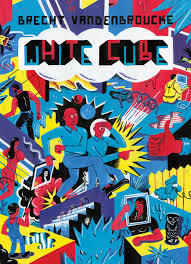
[READ: October 17, 2014] White Cube

I found this book at work and was quite intrigued by it.  Of course, I am intrigued by nearly everything Drawn & Quarterly puts out, even if I don’t love everything they release. And I didn’t love this one.

In fairness, there was a lot I liked about it.  The fact that it was originally published in Belgium is pretty cool.  And the fact that there are barely any words in it also made it intriguing.  I even enjoyed that there were two main characters, each one a virtually identical pink bald man who express his pleasure by giving a thumbs up.  And yes, I enjoyed that most of the stories were about art.  So, perhaps I did enjoy this more than I realized.

The book as a whole seems to be mocking the state of modern art.  When the two unnamed guys go into the “White Cube” they follow signs for Modern Art and then make adjustments to what they see, giving a thumbs up when they are done.

What confused me was trying to figure out whether each piece was an individual story or part of the whole. Several of them start with a “title panel” that says White Cube (while others seem to have different titles).  But since they all seem to be about art, they could all be rooms in the big White Cube. (more…)

Read Full Post »

june2014SOUNDTRACK: BATTLES-Glass Drop (2011).

220px-BattlesGlossDropI didn’t know anything about Battles before I heard the single, “Ice Cream.”  Battles are an experimental band comprised of the guitarist from Don Caballero (one of my favorite post-rock bands) and the drummer from Helmet.   And they write music that is very angular, with lots of stops and starts and direction changes.  There’s some story about their first album (which I have not heard) having a singer who left just before the recording of this album.  And the remaining trio’s solution was to have outside singers sing on certain songs.  And it all works very well.

The majority of the album is instrumental though.  And the songs feature a very distinctive sound that I feel is close to a steel drum, but which I know is actually a keyboard–but that echoing sound is so drumlike, that when the drummer’s pounding is added, the whole album feels like a percussive explosion.

“Africastle” opens the disc with ringing guitars and a melody that uses those steel drum sounds.  After about 2 minutes of slow intro, when the ferocious drums kick in, the song rockets to life in a frenzy of activity and counterpoints.  It’s really quite something.

“Ice Cream” is the song that introduced me to this album.  The guitars are modified to once again a steel drum sound, but the melody and rhythm are so fast staccato that it removes any sense of steel drum especially when the notes are clearly electronic. This song features vocals (no idea what they are saying) by Matias Aguayo.  They compliment the sound of the music.  Despite all the overlapping disparate elements the song winds up being strangely catchy. The way the chaos ends with a simple Dum duh duh dum dum… is very cool.

“Futura” continues in that staccato style but it features an aggressively catchy melody.  “Inchworm” has a fun almost reggae feel amid the staccato noises.  “Wall Street” brings the drums to the fore again as it propels the jumpy melody along.  “My Machines” has a guest vocal from Gary Numan. I have never liked Gary Numan (I need to never hear “Cars” again) but his voice (he actually sings…sort of) works well with this cacophony.

“Dominican Fade” adds some heavier bass and wild percussion notes to this 2 minute track. It even has hand claps and cowbells at the end.  “Sweetie and Shag,” has vocals from  Blonde Redhead’s Kazu Makino.  She adds a whole new element to the album with her high pitched yet breathy vocals.  A definite highlight.

“Toddler” is a 1 minute sng that feels like a transition into the manic and bouncy “Rolls Bayce” (which Dave Konopka describes as almost wholly an experiment).

“White Electric” start slow with some echoed notes. Then a martial beat keeps time as the notes seems to swirl around. The song builds and builds with more layers until it crashes apart at around 5 minutes.  At which point the song slowly rebuilds itself into a pretty coda.

The final song sounds like a reggae singer but it is actually Yamataka Eye from The Boredoms.  Konopka says that Eye sent vocals and told them to do whatever they wanted with the track.  The band thought “he was speaking Japanese, but he’s just making up his own stuff and he’s repeating stuff that he’s making up.”  The backing noises sound like a whale song.

Despite the weirdness of the album, there’s a lot of poppiness to it, and I think it is a great release.  It also is a great headphones release, if you like that sort of thing.  I need to check out their debut as well.

[READ: October 15, 2014] “Who Will Water the Wallflowers?”

I don’t quite know what to make of this story.  It seemed to me to be full of individual incidents that were all wiped away by the flood that is mentioned in the very first line.

I enjoyed the details of the story quite a lot.  In it, the girl (unnamed) looks after her neighbor’s cat Cha-Cha while Ms Feliz is away.  Cha-Cha is a a Turkish angora, a delicate breed.  And there is an interesting description of the cat after he has gotten wet in the rain.  Sometime the girl sleeps at Ms Feliz’ house (her mom doesn’t mind since they live across the street).

The girl finds sanctuary in Ms Feliz’s house.  Except for Mr Bradley.  Mr Bradley is an enigmatic neighbor–he seems to be home all the time, dressed in work clothes and slippers. It is clear that the girl is uncomfortable around him, but he seems to always be around.  He seems pleasant enough.  He sees her almost every day and always asks “learning something?” to which she doesn’t know what to say.  She tries to avoid him by looking for Cha-Cha, but he doesn’t leave (and Cha-Cha doesn’t show up).  She tells him that she watched a film about geysers .

He replies, “I know a joke about geysers….it probably wouldn’t be appropriate.” (more…)

Read Full Post »

2014-07SOUNDTRACK: SLOAN-Commonwealth [Spade Side–Andrew Scott] (2014).

commonFor Sloan’s 11th album, the four members of the band each wrote the songs of a side.  I originally thought that they recorded all of the music alone, but that seems to be wrong–and would hardly be a Sloan album).  In conjunction with the album, each guy was given a suit of cards (and an actual deck was made as well).  While this doesn’t necessarily mean the album is very different from their others (it still sounds very Sloan), it seems to have given the guys a bit more room to experiment.

The final side of Commonwealth is by drummer Andrew Scott.  Scott has written three singles for Sloan over the years: “500 Up”, “People of the Sky”, and “I’ve Gotta Try.”  But for this album, he has created a 17 minute and 49 second epic called “Forty-Eight Portraits.” This makes it seem like it could be 48 small songs which it isn’t.  But it also isn’t one long song exactly.  There are, by my count 15 sections–although there could be more or fewer depending on how you break it up.

So my demarcations:

  1. The song opens with a dog barking.  There’s complex percussion and a smattering of piano seemingly searching for a melody.
  2. At 3 minutes the first real song proper starts.  We’ll call it “You say you’re going with me.” There’s acoustic guitars and a bouncy melody.  It’s a great song with a neat guitar riff that overlays around 4 minutes in.  But
  3. At 4:23 the song changes dramatically.  It grinds to a slow pensive section, call it the “Don’t ask for a second chance.”  But it doesn’t last long,
  4. At 5:16, the next part jumps in, it’s a bit faster and feels like it could be an extension of the previous section.  Call it the “Do the things I do” section.  It speeds up
  5. At 5:41, to a similar style as the “first song.”  It has a sing along starting “How Does It Feel?”  It’s got one verse before a time signature change and instrumental break.
  6. At 6:40 the next section comes in.  Aggressive guitars and spoken word lyrics “There’s something happening here.”  It also has one of the few uses of the word “fucking” in a Sloan song.
  7. At 7:25 it shifts to a falsetto style and higher pitched guitars.  It’s vaguely Beach Boys-like for a verse “Do you think she loves you?” until
  8. At 7:48 it’s back to a reprise of the “How does it feel” section.
  9. At 8:15 it shifts to a new slow piano section.  This feels like the most fully realized song section of the epic.  “I can’t believe you never told me the truth.”   It leads into a big chorus sounding section (two lines) around 8:40 (“What it is us unsustainable”).  There’s even a repeat of this “verse” and  “chorus” as well.
  10. At 10:26 a new guitar section is introduced.  It works as a transition “You said you’re coming with me.” It morphs
  11. At 10:52 into a very cool slowed down section “I asked for a proper glass.”  And then
  12. At 11:22 the song again returns to the “How did it feel” section.
  13. At 12 minutes the song transitions with a “ba ba ba” and horns which move into the “Sometimes I feel like I’m slipping away” section.  The song feels like it might end at 13 minutes as the last notes seem to ring out.  But
  14. At 13:21, the song rebuilds again with the “inside a cloud” section.  This feels like the final section of the song is built around a similar construct. It’s a guitar riff that introduces a children’s chorus at around the 14 minute mark.  There’s a slow guitar solo and pizzicato strings that keep this section from being to easy, but that guitar riff and children’s section reunite the end which concludes with the spoken “W.W.L.R.D.?” (which I assume the L.R. refers to Lou Reed).
  15. At 16 minutes, the chaos of the beginning returns with a dog bark, but the concluding riff is strong and seems to really draw out the end.

I really haven’t listened to the lyrics that carefully to know exactly what’s going on, but I really enjoy the “choruses.”  While a 17 minute song is not everyone’s cup of tea, there are so many parts and so many interesting and catchy sections, that it feels like a whole collection of short songs rather than one long song.  It’s a cool experiment and one that I find myself singling out as I try to parse it a bit more.

[READ: October 11, 2014] “Part of the Main” and “Watching the Cop Show in Bed”

The Walrus’ summer reading issue presents three stories and two poems in which: “The Walrus presents fresh takes on old crimes.”  Each story is about a crime of some kind, but seemed from an unexpected way.  I rather enjoyed the way the writers played around with the crime genre to make them something very different.  These were two poems.

I’ve don’t normally review the poetry in The Walrus, but since I had four sides and only three stories it seemed worthwhile to throw the two poems in as well 9especially since the finally song was so unusual).

The first one “Part of the Main” is written with wonderfully evocative language as it talks about something so base.

The first stanza talks about the inevitability of the tide, of life.  With beautiful language like: “the contours of the and effaced by the saintly patience of the tide.”  But the second stanza shifts gears.  In it, the narrator says that you can show him dire things on the television: “bloated bellies…bomb blasts” and he will weep and clench his fists “but otherwise do nothing.”  It is sadly an uncomfortably relatable attitude. (more…)

Read Full Post »

2014-07SOUNDTRACK: SLOAN-Commonwealth [Shamrock Side–Patrick Pentland] (2014).

commonFor Sloan’s 11th album, the four members of the band each wrote the songs of a side.  I originally thought that they recorded all of the music alone, but that seems to be wrong–and would hardly be a Sloan album).  In conjunction with the album, each guy was given a suit of cards (and an actual deck was made as well).  While this doesn’t necessarily mean the album is very different from their others (it still sounds very Sloan), it seems to have given the guys a bit more room to experiment.

I’ve always had trouble telling whose songs are whose in Sloan, primarily because they all write such different songs all the time.  But also because their voices aren’t radically distinct.

According to the CBC website, Patrick Pentland is responsible for some of the band’s biggest hit songs, including “The Good in Everyone,” “Everything You’ve Done Wrong” and “Money City Maniacs.”

Pentland only wrote four songs for his side.  And none of them are especially long.  Overall his songs are heavier fuzzier and rockier.

“13 (Under a Bad Sign)” is a heavy rocker at only two minutes.  Even though it’s the same length as Murphy’s also heavy “Get Out” it just rocks a lot harder.  It also opens with a bass–one of the few songs on the album that does so.  It’s a big loud rocking riff.  “Take It Easy” is even noisier.  The guitars feedback as the bass propels along.  It’s a simple song, with a simple heavy chord structure, and it has a simple catchy chorus.  Good rocking Sloan.

“What’s Inside” slows things down a bit—it has a familiar bass line and swirling guitars.  There’s lots of echo on this song, especially in the chorus which seems almost shoegazey.  It’s probably my least favorite song on the album because of the way it kind of meanders–it rather slows the momentum of the disc.  But his final song, “Keep Swinging (Downtown)” totally redeems it, with a super catchy classic rock sound classic.  It has a great got sing along chorus.  This could easily be a huge single and a live concert favorite.  It’s 3 and a half minutes, but nearly the last minute is an extended outro with a great pretty acoustic guitar riff.

For only four songs, Pentland makes a huge statement.

[READ: October 11, 2014] “Brute”

The Walrus’ summer reading issue presents three stories and two poems in which: “The Walrus presents fresh takes on old crimes.”  Each story is about a crime of some kind, but seemed from an unexpected way.  I rather enjoyed the way the writers played around with the crime genre to make them something very different.  This story is about murder.

Of the three stories I liked this story the least.  Not because it from the point of view of a dog–that part I liked.  In fact I enjoyed a lot of details in the story–like that there was a character named Grassy Noel, that the narrator believes all golden labs have a Scottish accent and that the narrator speaks as if he is not a dog.

First we learn about Big Cy’s (the narrator) history.  He used to hang around the bus station grubbing for food.

Then he witnessed a Lab rescue a baby and saw that dog praised and held high.  He wants to know:

Who is better. The dog who is … naturally good or the one who struggles to be good. (more…)

Read Full Post »

2014-07SOUNDTRACK: SLOAN-Commonwealth [Heart Side–Chris Murphy] (2014).

commonFor Sloan’s 11th album, the four members of the band each wrote the songs of a side.  I originally thought that they recorded all of the music alone, but that seems to be wrong–and would hardly be a Sloan album).  In conjunction with the album, each guy was given a suit of cards (and an actual deck was made as well).  While this doesn’t necessarily mean the album is very different from their others (it still sounds very Sloan), it seems to have given the guys a bit more room to experiment.

I’ve always had trouble telling whose songs are whose in Sloan, primarily because they all write such different songs all the time.  But also because their voices aren’t radically distinct.  According to Wikipedia, Murphy has written several Sloan songs that have been released as singles, including “Underwhelmed” from the album Smeared, “Coax Me” from Twice Removed, “G Turns to D” from One Chord to Another, “She Says What She Means” from Navy Blues, “The Other Man” from Pretty Together, and “The Rest of My Life” from Action Pact.

 Murphy, like Ferguson writes some really catchy songs here.  They are no connected like Ferguson’s though, and they feel more like discrete songs.  “Carried Away” is another amazingly catchy song that I get stuck in my head for hours.  The song opens with a full sound including strings. The verses are slow. But the chorus just kicks in catchy and easy to sing along with this great line: “She carried on buit she got carried away…”

“So Far So Good” is a slow piano ballad. The chorus swells in a big classic-rock-with-piano way and is also catchy.  “Get Out” is a short rocker, under 2 minutes.  It comes in, rocks hard and gets out. “Misty’s Beside Herself” is another song with an infectious chorus.  It’s a slow ballad, but with a big powerful chorus full of harmonies. It’s really pretty. “You Don’t Need Excuses to Be Good” has rawer guitar sound and sounds a bit more like older Sloan. Although it’s not as catchy as the other songs, there’s something about the sound (how different it is from the other songs) that really makes it stand out (that guitar solo s pretty great too).

Like Ferguson, Murphy knows how to write great catchy songs, and these five songs really showcase his strengths as a writer.

[READ: October 11, 2014] “Care and Feeding of the Amish”

The Walrus‘ summer reading issue presents three stories and two poems in which: “The Walrus presents fresh takes on old crimes.”  Each story is about a crime of some kind, but seemed from an unexpected way.  I rather enjoyed the way the writers played around with the crime genre to make them something very different.  This story is about kidnapping.

I’ve enjoyed Kuitenbouwer’s peculiar vantage point in a number of stories before.  Since this was a “crime” story I was curious about what this title could possibly have to do with a crime.  And then it’s laid out–a bunch of kids in a Montessori class (who are camping out in the woods) are lying in await for an Amish buggy to come by.  (While waiting for the ambush one of them farts, which really sets the tone for the story: “The fart hovered at nose level as the nostalgic clop of horses sounded and a decision became necessary”).

And then the decision is made.  Becky ran out into the street with a stick which made the buggy driver stop.  While Becky was asking him how many Amish it took to change a light bulb, the rest of her class snuck behind the buggy and grabbed the buggy’s little boy occupant.  She then frightened the horses and the buggy took off–with the driver unaware of the kidnapping. (more…)

Read Full Post »

2014-07SOUNDTRACK: SLOAN-Commonwealth [Diamond Side–Jay Ferguson] (2014).

 commonFor Sloan’s 11th album, the four members of the band each wrote the songs of a side.  I originally thought that they recorded all of the music alone, but that seems to be wrong–and would hardly be a Sloan album).  In conjunction with the album, each guy was given a suit of cards (and an actual deck was made as well).  While this doesn’t necessarily mean the album is very different from their others (it still sounds very Sloan), it seems to have given the guys a bit more room to experiment.

I’ve always had trouble telling whose songs are whose in Sloan, primarily because they all write such different songs all the time.  But also because their voices aren’t radically distinct.  According to Wikipedia, Ferguson’s more famous songs are: “I Hate My Generation” from the album Twice Removed, “The Lines You Amend” from One Chord to Another, “Who Taught You to Live Like That?” from the album Never Hear the End of It, and “Witch’s Wand” from Parallel Play.

Jay Ferguson has the more falsetto’s/delicate voice of the bunch.  He writes five songs that all works as kind of a suite.

“We’ve Come This Far,” opens the disc as a minute and a half piano intro.  It blends right into “You’ve Got a Lot on Your Mind” one of several super catchy songs on this record. The verses are gentle with an acoustic guitar playing along with Ferguson’s singing.  It’s a simple song with a great sing along chorus (and even a long Yeah- h- h ).   “Three Sisters” also starts with a piano (and reminds me of Twin Peaks theme in tone).  It is slower than the other songs, which suits Ferguson’s voice very well.  I enjoyed this lyrics which plays to the album art: “I Played a diamond where her heart should land. She recognized the tune but not the band.”  The mellow song has a cool buzzy guitar solo laid over the top.

And It jumps right into the much faster “Cleopatra” which is a simple (and again catchy) track with a boppy “talk to ya later” bridge. The piano and guitar solos are quiet affairs which play against the type of song and really showcase the Ferguson’s songwriting skills.  “Neither Here Not There” opens with, in sequence: a gentle organ, a quiet electric guitar riff and then a 12 string guitar  (not bad for 20 seconds). The song is barely 2 minutes long and is pretty ballad.

It’s a really pretty song cycle and shows of the kinds of songs that Sloan has been doing so well for so many years.

[READ: October 11, 2014] “Ultrasound”

The Walrus’ summer reading issue presents three stories and two poems in which: “The Walrus presents fresh takes on old crimes.”  Each story is about a crime of some kind, but seemed from an unexpected way.  I rather enjoyed the way the writers played around with the crime genre to make them something very different.  This story is about rape.

I’ve mentioned before that I feel kind of hit or miss about Stephen Marche’s short stories.  But I loved this one.

I was a little concerned at first because of the very cold and distant way it began: “On a scale of 1 to 10, with 1 representing “of no interest to me” and 10 representing “of maximum interest to me,” the rapes in my neighbourhood rated a 2.3.”

It’s a cold way to open a story.  But the narrator is not finished with his detached tone.  Indeed, he looks at everything in this detached way–on scales of 1-10 or in percentages.  He shares the same outlook as the protagonist of American Psycho, but this story is not about a psycho, just about a person who is exceedingly rational.

And it is a love story too (sort of).  We learn that he dated Catherine Anne Doran and he rates his time with her at 9.3 out of 10.  But by the end of the story something changed.  It wasn’t how he felt about her, it as something intangible.  Thus we learn the problem with the narrator: “Despite this high level of personal significance, the measurable changes our relationship produced were negligible. The numbers were the same, but everything changed. This is what I fail to understand.” (more…)

Read Full Post »

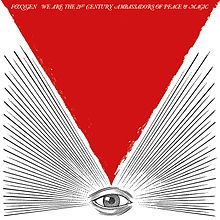
jun9SOUNDTRACK: FOXYGEN-We Are the 21st Century Ambassadors of Peace & Magic (2013).
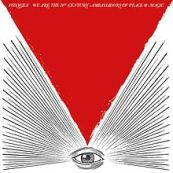
foxyI had no idea this was Foxygen’s third album (they have a new album out this week as well).  I had only heard of this because of NPR.  And I was delighted with the band’s utterly retro feel and sound–so much retro that it is almost too much.  But they do it with such flair that it works.  Indeed, the whole feeling of this album is one of sampling all of recent music history–with elements thrown in haphazardly (but effectively) and really celebrating a whole 60s/70s vibe with a sprinkling of modern technology.

“In the Darkness” is a 2 minute piano heavy track with horns, big swelling vocals chorals and all kinds of joy.  “No Destruction” though is where the retro sound really shines.  Sounding like a Velvet Underground track with a sweeter singer (who is no less blase).  Except that the chorus rises into a glorious hippie happiness.  It also features funny lines like the deadpan, “There’s no need to be an assshole you’re not in Brooklyn anymore.”

“On Blue Mountain” opens with a kind of Flaming Lips vibe (deep morphing voices counting down), but Sam France has a much higher pitched voice as he sings the slow intro.  Once the song kicks in faster, the real hippy vibe (combined with some Rolling Stones and some girlie backing vocals) kick in.  There’s even a big friendly chorus (that reminds me of “Suspicious Minds”).  After almost 4 minutes, the song shifts gears entirely into a raucous sing along  (with what sounds like a children’s choir).

After the manic intensity of “Mountain,” “San Francisco” emerges as a sweet delicate flute filled hippie song.  This was the first song I heard by them and I loved it immediately–the simple melody, the delicate (funny) female responses, the swelling strings. it was delightful.  “Bowling Trophies” is a weird little less than two-minute instrumental that leads to the glorious “Shuggie.”  “Shuggie” is the least hippie song on the album and screams more of a kind of French disco pop, with some wonderful lyrics.  The chorus is just a rollicking good time and the wah wah synth solo is terrific.  At three and a half minutes the song is just way too short, although it seems that anything that last longer than 4 minutes will shift gears into something else eventually anyway.

“Oh Yeah” brings in a staggered kind of sound, with some interesting breaks and stops.  It also inserts some doo-wop into it.  I love how the end once again shifts gears into a “freak out” with a wild guitar solo and fast drums.  The title song is fuzzy and distorted (the vocals are nearly inaudible).  It’s fast paced but still very retro sounding (Jefferson Airplane?) except for the modern electronic and guitar breaks.  And of course, the last minute is entirely different from the rest of the song, as well.

The album ends with “Oh No 2,” a five-minute track that begins as a slow swelling almost soundtrack song.  Indeed, when the spoken word part (“I was standing on the bed, birds were landing on my head”) emerges later on, it comes close to The Rocky Horror Picture Show (which is not a bad thing), including the piano outro (with slightly out of tune voice).

This whole album could just be an obnoxious rip off of old timey sounds, but instead it’s more like a fun reference point for those who know the music and just a fun good time for those who don’t.  And at something like 35 minutes, it never overstays its welcome.

[READ: September 17, 2014] “The Bad Graft”

This year’s Summer Fiction issue of the New Yorker was subtitled Love Stories.  In addition to all of the shorter pieces that were included in this issue, there were also four fiction contributions.

This was the final story in this issue and, sadly for me, it was the one I liked least.  It has three sections: I. Germination; II. Emergence; III. Establishment.  And while I enjoyed (mostly) section I., I really didn’t enjoy the turn the story took once it entered section II and the “plot” emerged.

The story opens with two young (actually not that young) lovers traveling towards Joshua Tree.  This couple is madly in love and are basically eloping.  Except, of course, that they don’t want to ever get married, so it is a symbolic elopement.  On their first date they had decided to run away together.  They left their homes in Pennsylvania more or less unannounced, took all their money and drove to the desert.

Andy and Angie, for that is what their names are, prepared well with Andy having, among other things a large knife (note to Chekovians).  After a few days they are startled to discover how expensive this road trip is.  But they are undaunted because they are in love.  Of course, they are also exhausted and perhaps a little on edge.

When they arrive at Joshua Tree, it is 106 degrees.  The park ranger informs them that they have arrived in time to see the yucca moths do their magic with the trees.  he calls it, the ‘pulse event.”  The entire range of Joshuas is in bloom and the moths are smitten.  This sounds exciting but it is also sad, as the Joshua Teees may be on the brink of extinction and this massive blossoming is like a distress call.

With all of this set up, it is a total surprise when half way through the section, the story informs is that “This is where the bad graft occurs.” (more…)

Read Full Post »

« Newer Posts - Older Posts »