Feeds:
Posts
Comments

Archive for the ‘New Yorker’ Category

harperioctSOUNDTRACK: RHEOSTATICS-The Icehouse, Victoria, BC (July 18 2001).

ice-house-oyster-bar-tofinoAfter playing the free show earlier that afternoon, the Rheos played a show at The Icehouse that evening.  And it seems like quite a number of people showed up.  And they were not disappointed.  They also got to see Michael Phillip Wojewoda on drums.

Although the show begins with some slightly sketchy sound quality, it clears up pretty quickly.  This show starts with a bunch of great older material “King of the Past,” “Fat,” “Northern Wish.”  There’s an amazing guitar solo in “Christopher.” And “Fat” is one of the best live versions I’ve heard.

When they play “Four Little Songs” it gives MPW a chance to sing his bit.  But when someone requests “Guns” Dave says that MPW doesn’t do poetry.  At what I believe is a fan’s request, the play “The Pooby Song,” and then joke that they are going to play the entire Nightlines Sessions. 

Then they talk about Stompin’ Tom Connors and how they met a 65-year-old man who scares the Canadian into you.  This is an intro to “The Ballad of Wendel Clark” which includes two Stompin’ Tom fragments “Gumboot Clogeroo” and “The Ketchup Song.”  The seven minute version of “Dope Fiends and Boozehounds” ends with a crazy riff and noisy drums–a rare jam section.  There’s more great drums on “Song of Flight” and excellent harmonies on “California Dreamline.”

This is a really fantastic show–one of their best.  And as Lucky notes the “Dopefiends -> California Dreamline -> Song of Flight -> Self-Serve -> Winter Comes Reprise” is killer.  The end of the show tacks on an amazing version of “Horses.”  But it doesn’t seem like it’s from this show.  The sound is a little different, and it seems pretty certain that the night ended after “Record Body Count.”  But who knows.

[READ: April 19, 2015] “Hitler in Chicago”

This short story, from the book Learning Cyrillic, is fascinating in the way it begins as one thing and then turns into something else entirely.  David Albahari is a Serbian novelist and the story was translated by Ellen Elias-Bursać.

As the story opens, the narrator talks about how afraid he is of flying on planes.  He would much rather ride by carriage.  Why is everyone in such a hurry, anyway?  But he needs to fly and so he does.  He pays careful attention to the stewardesses and then tries as quickly as possible to fall asleep.

On this flight to North America, he falls asleep pretty well, but when the book he was reading falls off his lap, it wakes him up.  His seat mate picks up the book and smiles.  The book is by Isaac Bashevis Singer and is called Enemies, A Love Story (a real book).  The woman says that knows Singer and asks if he has read the story where Singer met Hitler in New York.  He has.

Then she says,

“I spent a night with him.”
“Hitler?”
“No, she said, I would never have allowed myself such a thing.  I meant Singer.”

(more…)

Read Full Post »

2015_02_23SOUNDTRACK: THE LOW ANTHEM-Tiny Desk Concert #43 (January 20, 2010).

lowanthemThe Low Anthem grow more charming as the Tiny Desk goes on.  The first cool thing is the story that accompanies them. They played at the Newport Folk Festival and when Bob talked to the organizer about them, the organizer said that “Last year, they were volunteers at the festival, picking up trash.”

Then things get more interesting as each of the three songs introduces new instrumentation and ways of making music.  They brought a lot of gear to this Tiny Desk.

The first song, “Ghost Woman Blues” opens with strummed acoustic guitar and upright bass.  The first surprise comes with the clarinet solo (by harmony vocalist Jocie Adams).  Lead singer Ben Knox Miller has a voice not unlike Vic Chesnutt’s and these songs follow along his rather simple and spare style.

The biggest surprises come in the second song, “This God Damn House.”  Miller starts the song by playing a small bras horn (not sure what it is).  Adams plays more clarinet (in a very cool echoing style) and upright bassist Mat Davidson switches to an old-sounding organ.  But the coolest thing is when Miller takes out his cell phone (what!).  He has dialed another phone in the room which he then answers.  With both phones flipped open (it is 2010 after all), he begins whistling into them, playing with the feedback and echoes and creating a very cool sound to end the song.

It’s a shame there’s a cut to the next song, because I’m sure Bob asked him about that.  For the final song, “To the Ghosts Who Write History Books,” Miller switches to the organ (and harmonica, man that guy is talented). Davidson is back on bass and Adams plays a bunch of cymbals with a violin bow (I wish that was a little louder).

I generally don’t like super mellow music like this, but there’s something really captivating about The Low Anthem–the instrumentation, the voices–something, really elevates them.

There is a drum kit set up although no one uses it.  I can’t imagine it would have made a lot of difference.  Check them out here.

[READ: April 11, 2015] “Kino”

This longer story was a typically enigmatic one from Murakami.  In it, he does a great job of melding the real with the psychological, so that things that seem very surface level are actually much deeper.

Kino is a pretty simple man.  He was a runner until he pulled his Achilles tendon and could no longer run.  So he started working for a shoe company.  He sold the premium shoes to good runners.  The brand was not super popular, but it had a devoted following.  And Kino made decent money for him and his wife.

He was a salesman and often went on business trips.  As happens, he came home early one day to find his wife in bed with a fellow coworker.  He walked out and never went back. (more…)

Read Full Post »

ny2015SOUNDTRACK: RHEOSTATICS-Hamilton ON (February 24 2001).

hamiltonThis is a show that there is no real information about.  In fact, I have to wonder if it is actually from the date that it says because during the set someone (very casually, I think) mentions that their album came out today (it was released on October 23, 2001).  It is also really short (just over an hour) and is clearly not the entire show.  I assume the first half was lost, but it’s hard to know.

Despite the brevity, there is a great sound on the disc.  The first two songs sound amazing.  And “Stolen Car” is scorchingly good.

There’s a funny discussion about the washroom, which turns into a joke that the “washroom rocks.”  And there’s some wonderfully funny “ads” for Snapple, Marlboro “the smoke that hurts,” and even a Gibson “the guitar for depressed musicians.”  “Feed Yourself” is particularly long with lots of chatter in the middle and they joke about Martin playing with “millennium technology,” some gadget that makes his guitar sound different.

“Four Little Songs” has a very funny refrain about Martin’s “device” which they now call the robot dog–there’s even a silly riff at the end.

It’s a great show, even if it is brief and it’s a good collection of older songs (which is weird if their new album came out that day).

[READ: April 21, 2015] “Major Maybe”

This was the second short and breezy story I read this week, which was kind of fun.

This story is so simple, it’s even told quickly, as if the narrator just had to get it out.

“Major Maybe” is the name of a dog in her neighborhood.  She and her roommate Eagle Soars (his real name) are living in Chelsea in New York.  He is a wanna be actor and she helps him with his lines.

One day they were rehearsing in their usual spot in front of their building.  Their building was quite nice, the first floor resident was a therapist and he decked out the front stoop very nicely with flowers and chairs.  As they were rehearsing the red-haried homeless lady came by.  She was known to have good days and bad days  Today was a bad day. (more…)

Read Full Post »

ny216SOUNDTRACK: JEFF The Brotherhood–“Black Cherry Pie” (2015).

jeffJEFF the Brotherhood is back with a new album.  The first song I’ve heard from it is called “Black Cherry Pie.”  It is a slow, heavy, nihilistic track with slightly more instrumentation than the usual duo set up.

And then at 40 seconds, there’s a FLUTE SOLO!

The lyrics are crazy–glass in my teeth, driving vans off cliffs, knives in eyes, with the simple chorus of “black cherry pie.”

And then just as you sorta forget that here was a flute solo (although it is hard to forget), a second one comes up at around 3 minutes.  And since you can’t help but think it sounds like Jethro Tull, I’ll tell you that that flute solo is by Mr Jethro Tull himself–Ian Anderson!  Huzzah!

As you can see by the photo, the Brotherhood has always been fans of Jeffro Tull, so this is a nice flourish.

[READ: February 15, 2015] “Labyrinth”

This is the first story I’ve read by Amelia Gray.  Now, any story that is called Labyrinth pretty much invokes the idea of a maze and a minotaur.  In this short work (only two pages) Gray takes these basic ideas and twists them in an interesting way.

Dale is a local farmer who holds and annual Pumpkin Jamboree to raise money for the fire department.  It features a hayride, face painting and a corn maze.  The narrator, Jim, tells us that Dale had recently been reading about Hellenic myths, and that this year he wanted to do something different with his maze. So he’s made a labyrinth.  The difference?  In a labyrinth, there’s only one road and it leads to only one place.

The folk are disappointed saying that there’s no point if you can’t get lost.  And they’re even more upset when he says that each person must go in alone–there’s no way folks are letting their kids go in alone.  Even when Dale says that people believe the center of the labyrinth possesses magic, allowing you to discover the thing you most desire, the folk start to wander off.  But Jim, feeling bad that Dale went to so much trouble, volunteers. (more…)

Read Full Post »

spioiledSOUNDTRACK: THE BEATLES-Let It Be (1970).

letOf all the fascinating details about Beatles releases, I don’t think any are more fascinating than the details about Let It Be.  I’m not even close to understanding everything that went on here.  But in a nutshell, it seems that they went into the studio to record an album called Get Back. They were even going to film the whole things.  It got scrapped.  Some members quit the band then rejoined.  And then they recorded Abbey Road.

And then the band did a concert on a rooftop (almost exactly 46 years ago!).  And soon after they broke up. Then some producers decided to release Let It Be as a soundtrack to the documentary made about their recording.  They used some of the material from Get Back and some from the rooftop concert and then Phil Spector got involved and put all kinds of strings on everything and then the album was released in the UK on my first birthday.

There’s lots of snippets of dialogue which seem designed to make it feel like a soundtrack (which it doesn’t).  There’s really short snippets of songs, there’s raw live songs, there’s overproduced string laden songs.  It’s kind of a mess.  But in there are some good songs too.

“Two of Us” is a pretty folkie number that I like quite a lot although I first became familiar with it from a Guster cover (which is pretty fine.  I never quite understood the title of “Dig a Pony,” but it’s a big weird sloppy song. It’s kind of fun to sing along to—especially the falsetto “Beeeecause.”  This song was recorded from their rooftop concert and it feels rawer than some of the other songs.

“Across the Universe” is a lovely song.  Evidently Lennon didn’t contribute much to Let It Be, so they threw this on to give him more content.  I actually know this more from the Fiona Apple version (which I think is actually better than this processed version). I don’t really care for the strings and echoes feel on this version. “Dig It” is a short piece of nonsense. It was exerted from a lengthy jam but for some reason only this little snippet was included on the record–it sounds odd here.

“Let it Be” is quite a lovely song. I don’t really care for the Phil Spectorisms that were done to it—the strings and choruses seem a bit cheesy.  At the same time, the guitar solo (which is quite good) sounds too raw and harsh for the song.  “Maggie Mae” is a traditional song, another bit of fun nonsense.  I like “I Me Mine,” it’s rather dark and the chorus just rocks out.  “I’ve Got a Feeling”, was also recorded on the roof, so it feels raw.  There’s some great guitars sounds on it. Evidently it was initially two songs, and Lennon’s part (the repeated “everybody” section) was added to it.

“One After 909” sounds so much like an early Beatles song–very traditional rock and roll (which means I don’t really like it).  Although the version is raw sounding (it was also recorded from the rooftop) so that’s kind of cool. Huh, Wikipedia says “the song was written no later than spring 1960 and perhaps as early as 1957, and is one of the first Lennon–McCartney compositions.”   “The Long and Winding Road” is where all the controversy comes from.  McCartney hated what Phil Spector did to his song.  He HATED it.  And I have to agree.  It sounds nothing like the Beatles–it sounds very treacly and almost muzaky.  It feels endless.  At the same time, I’m not even sure if the song is that good–it’s so hard to tell after all these years. I think it kind of rips off the transition in “Hey Jude” which was used to much better effect.

“For You Blue” is a simple blues. I like it better than most of the Beatles’ blues, perhaps because of John’s slide guitar (and the funny comments through the song–which makes it seem like the band actually liked each other).  “Get Back” ends the disc as a fun rollicking romp.  I really like this song, although I’m surprised at how short it seems–I thought there was a lengthy outro.  The end of the song (and the disc) has John asking if they passed the audition–lots of fun going on in this contentious recording session.

So it’s not the best career ending disc, although I guess as a soundtrack it’s pretty good.  I’ve never seen the film, and I’m kind of curious to after having walked through all of these Beatles albums.

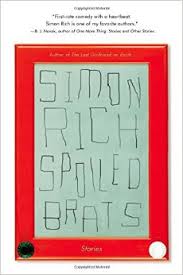
[READ: January 19, 2015] Spoiled Brats

I probably read too much Simon Rich too close together, but it’s so hard to resist him.  I’ve said before that I enjoy his shorter pieces the most, but there were some longer ones in this one which were really good as well.

This is the first book where I thought that Rich went a little too dark (although not as dark as Sarah thought he did).  That’s sort of the point of the book, though, to look at people (especially people named Simon Rich) who are horrible human beings.

“Animals” [New Yorker, April 10, 2013] opens from the point of view of a class hamster.  He is tormented by the children in the class and he knows that when Simon Rich is supposed to feed and give them water that their lives might just be over.  The Simon character is hilarious, and it’s nice to see that revenge is sweet.

“Gifted” wonders what if a child isn’t so much gifted as Satanic–how many euphemisms will be used for this one child?

“Semester Abroad” is the diary of a girl who has gone abroad–to another planet.  And how her insensitivity is handled during an intergalactic crisis.  I enjoyed this one a lot. (more…)

Read Full Post »

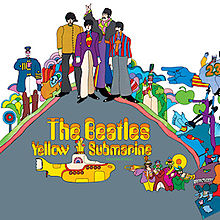
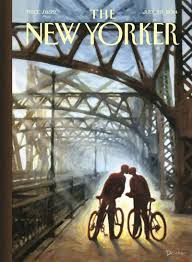
CV1_TNY_01_20_14Blitt.inddSOUNDTRACK: THE BEATLES-Yellow Submarine (1969).

I220px-TheBeatles-YellowSubmarinealbumcover‘ve enjoyed listening to the Beatles lately, but I’ve been marveling more at how they were (I assume) pressured into releasing songs almost constantly (this is their tenth album in six years).  So, this album, a soundtrack to the film, came out six weeks after The Beatles.  Six weeks after a double album which was still on the charts (still #1 in the US) this album came out.

Even though it sold very well, I imagine it has to be the least-listened to Beatles album (even though it is the other vinyl Beatles album that I own, which I got when I was a kid).

There are 13 tracks on the disc.  Two are repeated Beatles songs. Four are “new” songs (meaning they were thus far unreleased, but they were recorded a while back) and the rest are orchestral songs from the movie, composed by George Martin.

The repeated songs are “Yellow Submarine” (from Revolver, although obviously it makes sense here) and “All You Need is Love” which was just recently released as a single (and on Magical Mystery Tour in the US and which works fine in the movie).

The new songs include: “Only a Northern Song” written by George Harrison.  It was recorded during the sessions for Sgt. Pepper.  I didn’t know anything about the song, and I thought the lyrics were kind of, um, dumb?  But now I see that they were written because Harrison was angry about being a contracted songwriter to the Beatles’ publishing company, Northern Songs: “It doesn’t really matter what chords I play/What words I say or time of day it is/As it’s only a Northern Song.”  The song itself is kind of unusual.  It opens with a big organ sound. Then with the lines saying it doesn’t matter what chords the play, the backing music is pretty out there–not quite wrong, but certainly off.

Harrison got a second song (this has to be the most songs per disc for Harrison).  “It’s All Too Much.”  It also starts with an organ.  It’s the only psychedelic song on the album (and has Indian overtones).  It was recorded during Sgt Pepper and was supposed to appear on Magical Mystery Tour.  I like the song, but at 6 and a half minutes, it’s a bit long (the original mix was 8 minutes!)

“All Together Now” is a goofy song.  It’s clearly something written in five minutes–the lyrics and melody are so simple–but man is it catchy and fun to sing along to.   The final new song is “Hey Bulldog.”  I really like this song a lot and I’m bummed that it’s kind of overlooked on this soundtrack.  The riff is really hard rocking (even on piano) and I like the silliness with the barking and whatnot at the end.

The second side was the orchestral songs.  Most of them are about 3 minutes long.  If you know the film, they’re fun to listen to to revisit the visuals, but they’re not what you get a Beatles album for.  Of course, I always listened to sides one and two of my records, so I must have listened to the score three or five dozen times back in the day.

[READ: June 10, 2014] “A Mistake”

This was one of the 2014 New Yorker stories that I thought I had posted about but which I just found in my drafts pile.

This is the story of a boy from India who has emigrated to America with his family.

As the story opens we learn that the boy’s father always wanted to leave India, he felt he could do better in America, although the boy’s mother had no interest in leaving her home.

There’s some very funny lines about the father.  Like “I used to assume that my father had been assigned to us by the government. This was because he appeared to serve no purpose…all he did was sit in his chair in the living room, drink tea and tread the paper.  Often he looked angry.”  But then his father left for America and a year later called for them. (more…)

Read Full Post »

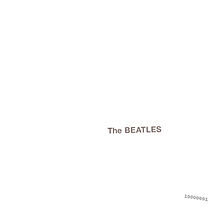
dec2SOUNDTRACK: THE BEATLES-The Beatles (1968).

220px-TheBeatles68LPDespite the sound effects, it’s clear from the start that this album is going to be different from the psychedelia of previous albums.  And the whole album is very stark—guitars, bass, drums, occasional piano and organ but not much else.  True there are some strings and horns, but it’s all very much in the vein of rock and roll–nothing trippy.  Turns out that most of the songs were written during a Transcendental Meditation course with Maharishi Mahesh Yogi in Rishikesh, India–a period that was free from drugs (except or marijuana of course).

“Back in the USSR” is a fun rocker, although it always confused me and there’s some explanation that this is sort of a joke on the Beach Boys.  “Dear Prudence” is a mid tempo song (with some cool bass lines).  I should have been keeping track of all the Beatles songs that I know better from other artists.  This one I know better from Siouxsie and the Banshees.  I had no idea what this song was about, and the story is weird and fascinating.  I love the way it builds band builds. “Glass Onion” has a really groovy sound, and I love all the self referential nonsense in it.  “the walrus was Paul” and “I told you about the Fool on the Hill” (McCartney overdubbed a record part to reference the original)–sounds like Lennon goofing around but making cool music out of it.

“Ob-La-Di, Ob-La-Da”is a goofy song (Paul is good at those it seems).  Evidently it was meant as a pastiche of ska (with Jimmy Cliff contributing initially).  According to Wikipedia this song is one of the factors that led to the break up of the band because they got so sick of it.  “Wild Honey Pie” is a weird 50 second snippet of a song.  This seems to foreshadow the medley tracks on Abbey Road.  Evidently it was just McCartney goofing around and referencing “Honey Pie” from later in the album.  “The Continuing Story of Bungalow Bill” is a song that I always sort of liked because it’s so weird.  But I never understood it.  While it may not be necessary to know all of the details of songs, it’s fascinating to learn that this one was written by Lennon after an American visitor to Rishikesh left for a few weeks to hunt tigers. The recording features vocals from almost everyone who happened to be in the studio at the time. Yoko Ono sings one line and co-sings another.  The Spanish guitar at the beginning of the recording was overdubbed later by Harrison.

I’ve always really liked “While My Guitar Gently Weeps” and thought Harrison was an underrated songwriter because of it (although I find that I don’t really like most of his other stuff that much).  I never knew that Eric Clapton played the leads on this song, which may be why I like it so much–not that I’m a huge fan of Clapton but he really scorched this song in a way that I don’t think Harrison every would have.

“Happiness Is A Warm Gun”always surprises me because the first verses sound so unlike the rest of the song–I really don’t recognize it as this song, always assuming it starts at the “I need a fix” part.  Of course, there are so many different parts that it’s really more like several different songs.  And that was all for side one.  Side Two opened with “Martha My Dear” a jaunty piano ballad played entirely by McCartney.  “I’m So Tired” reminds me a lot of “Bungalow Bill” and seems unnecessary.  “Blackbird” is, simply, a beautiful song.

“Piggies” is an interesting criticism of modern society–I love that they used a harpsichord for it (evidently Charles Manson was inspired by it as well as “Helter Skelter”).  Like “Bungalow Bill” I never really understood “Rocky Raccoon.”  McCartney’s crazy accent at the beginning and the whole premise of the song is peculiar–unless of course you don’t think of Rocky Racoon as a raccoon (which I have a hard time getting past).  It’s a pretty decent folk song. though, I suppose.  “Don’t Pass Me By” is a song I really don’t know at all–a honky tonk piano (which was the first solo song Ringo wrote).  It’s fine and kind of nice.

I had always assumed that “Why Don’t We Do It in the Road?” was a Lennon song, but it was all McCartney–Lennon didn’t even play on it.  It’s  just a weird noisy track (written when Paul saw monkeys doing it in the road in India)  Despite its brevity (less than 2 minutes), I actually find it goes on too long.  “I Will” is a sweet acoustic song.  I always assumed that “Julia” was a McCartney song, but it’s a beautiful Lennon ballad.

I asked Sarah, who was a huge Beatles fan, if she listened to sides 3 and 4 as much as sides 1& 2 because listening to these sides, I feel like I don’t really know them that well.  She says they did, so what do I know?

Of course I know “Birthday.”  i find it to be a weird song–why would you write a song about a birthday unless you didn’t want to sing the Happy Birthday song anymore?  It is evidently meant to be in the style of Little Richard.  I didn’t know and rather dislike “Yer Blues,” which I simply don’t believe the lyrics of.  And um, what is the reason why? It’s a pretty dull blues song although the guitars solos are pretty good.

I don’t really know “Mother Nature’s Son” that well–I feel like I know the little bass line between verses as significant but not the song itself.  It’s a pretty acoustic song that kind of reminds me of “Julia.”  “Everybody’s Got Something to Hide Except Me and My Monkey” has some really sharp piercing guitars on it.  I like the ringing bells and c’mon c’mon section. The whole song is fun, whatever it’s about.  “Sexy Sadie” is a song I’ve never been too crazy about.  I like the middle part better than the verses.  Apparently this was originally called “Maharishi” and was written about him–he changed the words later–which makes it all make a bit more sense.

It’s a shame that Manson has co-opted “Helter Skelter” because it’s a wonderfully blistering song.  The guitars and vocals are just awesomely rocking and raw.  I also love that a helter skelter is just a slide and not something sinister (duh, Charles–see what happens when you try to read into Beatles lyrics).  I actually knew Siouxsie and the Banshees and Mötley Crüe’s versions before the original, but now I think the original is the best version.  I love that the song just never really ends–it’s got codas and extras and blisters on fingers.

“Long, Long, Long” is a song I don’t really know.  I like the melody although it’ a bit too slow for me.

“Revolution 1” is weird to me because I knew the more rocking version first and this sounds like a kind of jokey version (with the shoobie doo wops)–although it was actually recorded first.  “Honey Pie” is a cute dance hall/1920s era song–Lennon played the guitar solo on the track, but later said he hated the song, calling it “beyond redemption”.  (He was quite nasty about a lot of Paul’s silly songs).  “Savoy Truffle” is yet another Harrison song that I just don’t know–did radio stations ban his songs?  It’s a decent rocker with electric piano and saxophone.  “Cry Baby Cry” is a song that I kind of know. I like that there’s accordion on it.  It builds very nicely.  The end has a little coda called “Can You Take Me Back.”

“Revolution 9” is probably the most notorious track on the disc.  I have to assume it was left on because there was a lot of empty space to fill in order to make the album a double album.  It’s such a strange creation and has really been responsible for so many cut and paste songs I’m sure.  There’s some sophisticated tape manipulation going on, but at 8 minute sit is just too long for what it is.

“Goodnight” is a sweet song that I have to assume was often ignored by fans who took the needle off the record during “Revolution 9.”  i actually didn’t even know there was a song after revolution 9.  Indeed, I only know the song because it was on a children’s CD that I used to play for my kids every night.  And while Ringo’s voice is nice, I like the other version (which I can’t think of) a little more.

So there’s the big white album–an album I never owned until recently.   It could probably have been reduced to a single album, but there are some undoubtedly brilliant songs on it.

[READ: July 3, 2014] “Road Kill”

I was curious to see how many short stories of older New Yorker magazines I had read.  It turned out that I have read nearly every story in every issue for the last several years from 2009-2014 (and many from 2008).  However, I have missed a few over the years.  Like this one.  I had typed up a post but just never finished it for some reason.

So, I’ve decided that I will go back and make sure that I’ve read each story from each issue from 2008-2015 (but not right away, I’ve done a lot of New Yorker stories recently.  So, I’ve got 13 from 2009, 6 from 2010, 2 from 2011, 1 from 2013 and 1 from 2014 (and, uh 27 from 2008–that’ over half, so maybe I wasn’t quite in the spirit of things yet back then).  But in the meantime, here’s one from 2013.

This is a brief story about a taxi driver in Sri Lanka.  He has been traveling the same route (across country) for two years.  This necessitates a stop in Kilinocchi, a town associated with the nerve center of terror (it is even commented on that it sounds brutal in English).  But the driver is a pro now—he says all you have to do to stay safe is keep your eyes open to drive all night.

On this trip, he is driving Mr and Mrs Arunachalam to see their soon-to-be house.  She is hugely pregnant and complains much of the way and they are both relieved when the hotel pulls into view. (more…)

Read Full Post »

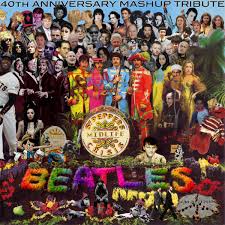
july 28SOUNDTRACK: THE BEATLES-Sgt. Pepper’s Lonely Heart’s Club Band (1967).

pepper A few years ago I started writing about Beatles records–a thankless task if ever there was.  I got held up at Sgt Pepper, so it seems fitting to get back to the Beatles after enjoying the cover album from the Flaming Lips.

I have long thought that this was my favorite Beatles album–it was the first one I bought on vinyl, after all.  But when I was writing about the records last time, I discovered that I like Revolver a little better.  I’m surprised by this especially since I really enjoy all of the amazing musical advances the band made with this album (and the psychedelics too).  I mean, to pretend to be another band, to add a full orchestra–the band had pretty much given up touring at this point–and to have added so many interesting things to this record is really amazing.  And I don’t mean to say that I dislike the record, just that I think Revolver is better.

The title opening is great with the horns and sound effects (just so you know, Paul’s voice is all in the right channel, something that sounds really weird if you only listen to the left!).  In fact the whole album has all kinds of fun stereo manipulations.

“With a Little Help from My Friends” has so many great vocal parts and I love the bass–slow and simple but playing unexpectedly high notes.  This apparently also means that Ringo is Billy Shears.  Speaking of the concept, this album doesn’t really work as a concept album–I mean, overall, what’s the “message”?  There are some songs about love (the lonely hearts club) but there’s also some songs that are not at all about love.  And how does say “She’s Leaving Home” connect to “Mr. Kite?”  It doesn’t really matter, I suppose.

“Lucy in the Sky with Diamonds” is just great–everything about it from the harpsichord to the weirdo processed vocals and the big drums for the chorus (the chorus could actually be a bit bigger) still sound tremendous.  “Getting Better” sounds very old school Beatles to me–I like it but it doesn’t really fit the psychedelic nature of the album.  The harmonies are great (“it can’t no worse”).  It’s also a strangely simply love song I believe, even though it seems like it’s about life in general.  On a sour note, what’s with the Beatles beating their women?

“Fixing a Hole” has a great melody line and instrumentation.  I have always liked “She’s Leaving Home,” I think it’s pretty and the lyrics are great.  But I suddenly find it to be a bit too slow and string-heavy–guess I’m just a rocker at heart?  Interestingly there’s no other Beatles playing instruments on the song.  “Being for the Benefit of Mr. Kite!” is all sung in the right speaker. It’s a wonderfully weird song with great instrumentation.

I’m constantly surprised by “Within You Without You” just because it is completely Indian–no Beatle plays on the song at all, expect for George.  There are also uncredited Indian musicians on swarmandal, dilruba, tabla, and tambura–imagine that there are Indian musicians who can actually say they played on Sgt Pepper, and be telling the truth!  I feel like with a 5 minute song (twice the length of any other song on the disc, except the closing) that Indian music should have become much more popular (or maybe people just skipped the track–it was track 1 on side 2 after all.

The delightfully silly, but somehow profound “When I’m 64”–vocals sped up a bit and bouncing from left to right ear seems like a trifle but is still fun.  “Lovely Rita” is a fun jaunty song.  I like that he thought she was cute dressed as a military man.  Interestingly, she pays for dinner.  “Good Morning” I feel is more known for the chorus, while the verses are a bit obscure.  Although it’s interesting to hear the kind of fast verses that Lennon sings (and that scorching guitar solo (from Paul!) is pretty cool).

I’m intrigued that “A Day in the Life” comes after the song that seems like it should end the record (the Pepper reprise).  “A Day in the Life” really does get better with each listen–the closer you listen, the better it gets, too.  It’s a great way to end any disc.

So yes this album is great and incredibly influential.  I love listening to it.  The biggest surprise to me is that the album is only 39 minutes.

Thirty-nine minutes!

[READ: January 24, 2015] “Last Meal at Whole Foods”

This story is set in a Whole Foods (duh). The narrator is eating dinner with his poor mother.  He says that she is till young which is the tragedy, since she is close to death.  They had a doctor’s appointment earlier which was meant to be “a formality.”

While they are eating he tells us that she has maintained an appetite even though she was always just a nibbler.  But as of late her apatite has been voracious.

The man then reflects back on the location of the Whole Foods.  Twenty years ago this street was apart of a dicey neighborhood.  The only building was the Goodwill.  The Goodwill that he and his other shopped at when they first moved to the area.

On their first outing there (his mother was so excited to get to building) she bought him a football jersey–even though he didn’t follow the local team. But the jersey proved to be a very cool item and the boys all talked to him about football because he wore it–there was even a rumor that he was related to the name of the back of his shirt. (more…)

Read Full Post »

july21SOUNDTRACK: THE FLAMING LIPS 2014-With a Little Help from My Fwends (2014).

fwendsAnd speaking of covers.

Probably the least anticipated album of 2014 was the Flaming Lips’ cover of Sgt Peppers Lonely Hearts Club Band.  Although the biggest surprise (mostly in a bad way, it seemed) was Wayne Coyne’s embrace (metaphorical, we hope) of Miley Cyrus.  The fact that Cyrus appears on this record at all totally overshadowed the fact that so many other people and bands appeared here as well.  I literally had no idea at the names that contributed to this electronic psychedelic re-imagining of a very psychedelic album.

The biggest overall difference between the two is that the Beatles’ psychedelia was conveyed through organic instruments–strings, horns, sitar, piano–while The Fwends version is almost entirely electronic.  This of course means that the album sounds very different from the original.  But what I think makes the album a success overall is that the various artists involved all bring a slightly different vision to the proceedings.  This makes it less of a Flaming Lips record and more of a Friends of Lips-style psychedelia collection.  I’m not even sure why it’s a Flaming Lips record, except that they are credited with playing on a bunch of songs (and presumably produced it–which explains some of the excess noise on the record).

Obviously, they are not trying to improve on the original.  And obviously, die-hard Beatles fans are appalled at this travesty.  But anyone who knows the Beatles knows that they were all about experimenting themselves.  Rather than getting mad about this, perhaps listeners should see that  they are having fun with the originals–sometimes staying faithful, sometimes exploring other ways to do songs, and sometimes just throwing everything out the window for a chance to jam.  And some versions you may even like.

“Sgt. Pepper’s Lonely Hearts Club Band” featuring My Morning Jacket, Fever the Ghost & J Mascis
The song starts out with a goofy falsetto rendition of the song which makes it seem like the whole album is going to be a big joke (I assume this is Fever the Ghost whom I don’t know).  But I loved the way the “record” slows down to let MMJ take over with a great noisy, respectful chorus.  The song could certainly use more MMJ.  When “Billy Shears” is introduced, it turns out be J Masics playing a totally song-inappropriate wailing guitar solo.
“With a Little Help from My Friends” featuring The Flaming Lips, Black Pus & Autumn Defense
I love that Wayne sings this verse (about being out of tune) with an auto tune on his voice.  He sings it really quite lovely.  I even enjoy that the response verses are done in a kind of out of tune crazy way.  But the problem is that they are too much–it turns the song into too much of a joke (which is to be expected form a band called Black Pus, I suppose).  It’s a shame because the idea could work really well if it didn’t sound like someone crashing a party.  Autumn Defense is a side project from the bassist for Wilco, and I assume he does the lovely harmony vocals.
“Lucy in the Sky with Diamonds” featuring The Flaming Lips, Miley Cyrus & Moby
Miley so overshadows everyone on this song that I didn’t even realize Moby was on it.  Miley sounds really quite good in this version–not all that dissimilar to John’s falsetto voice on the original.  The removal of the big drum before the chorus is distressing, although I do like the replacement, the echoed “gone” part (which must be Moby).  I like that they are having fun with the song (the repeat of “Marshmallow Pie” is cute) I just wish the chorus wasn’t mixed so loud that it is so distorted.  I hate that about recent Lips releases, why do they do it?
“Getting Better” featuring Dr. Dog, Chuck Inglish & Morgan Delt
Dr Dog sounds great in this version, although I find Inglish’s recitation (in which he can’t seem to hit any notes on the few times when he  “sings” to be rather unsettling).  I don’t know Morgan Delt, but I find his trippy vocals to work quite well.
“Fixing a Hole” featuring Electric Würms
Electric Würms are the side project of Flaming Lip Steven Drozd.  This is claustrophobic but quite appropriate for the song (I wish it were a little cleaner though).
“She’s Leaving Home” featuring Phantogram, Julianna Barwick & Spaceface
This is a great, delicate version of this with Phantogram and Barwick sharing lead vocals duties.  It’s quite lovely.
“Being for the Benefit of Mr. Kite!” featuring The Flaming Lips, Maynard James Keenan, Puscifer & Sunbears!
Maynard does a great job reciting the song.  The song is not necessarily more trippy than the original (which is pretty trippy), it’s just a lot more electronic-sounding.  It’s a weird but cool rendition of the song.
“Within You Without You” featuring The Flaming Lips, Birdflower & Morgan Delt
I don’t know Birdflower, but she does a great job in a higher register with the Indian melody (it’s all electronic and not traditional Indian instrumentation but it sounds cool).  Delt sings alternate leads and is a good counterpoint.
“When I’m Sixty-Four” featuring The Flaming Lips, Def Rain & Pitchwafuzz
I don’t know Def Rain or Pitchwafuzz, but I think Def Rain is doing the voice.  The robotic voice that sings this song is kind of fun–a little too much at times, but overall fun.
“Lovely Rita” featuring Tegan and Sara & Stardeath and White Dwarfs
Tegan and Sara have fun with this song while the noise from Stardeath is much darker than the original.
“Good Morning Good Morning” featuring Zorch, Grace Potter & Treasure Mammal
This song is a little wild (although so is the original).  I don’t know any of the artists involved in it.
“Sgt. Pepper’s Lonely Hearts Club Band (Reprise)” featuring Foxygen & Ben Goldwasser
Foxygen takes this one minute reprise and turns it into a five minute jam session. It has nothing at all to do with the original and it is a weird way to delay the final song.  I don’t know what Goldwasser contributes.  If you can get past the fact that it sounds nothing like the original, it’s an interesting noisy jam.
“A Day in the Life” featuring The Flaming Lips, Miley Cyrus & New Fumes
Wayne and Miley duet on this, with again, Wayne taking the vocals seriously.  Wayne does the “John” verses.  The switch to Miley’s take on the “Paul” verses is a pretty big shock the way it sounds so stark and electronic.  There’s a few too many echoes on her part, but again, Miley does pretty well with a detached reading.  And because The Lips are purposefully difficult, the end gets cut off before the final famous crescendo.

So is this a great record that people will listen to a lot? Nope.  Is it an interesting twist on a famous record?  Sure.  Is it enjoyable?  For the most part.  As long a you don’t think of it is a definitive re-make, and accept it as a way to raise money for a charity, which it did for The Bella Foundation.

[READ: January 28, 2015] “Wagner in the Desert”

This story reminded me in spirit of both Less than Zero and Generation X, but perhaps for Generation Y.

It’s about a bunch of friends getting ready to ring in the New Year in Palm Springs with a lot of drugs.

The narrator and friends were vacationing some friends from whom he had drifted.  Marta and Eli were trying to have a baby and were looking to do one more sort of wild night before it all became to real: “The Baby Bucket List they were calling it.”  So they all headed to Palm Springs, a group of “modern hustlers: filmmakers, ad writers (screen, Web, magazine), who periodically worked as narrative consultants on ad campaigns, sustainability experts, P.R. lifers, designers, or design consultants, social entrepreneurs and that strange species of human beings who has invented an app.”

Unlike the coke heads of the 80s, though: “We thought we were not bad people.  Not the best, a bit spoiled, maybe, but pleasant, inconstant, decent.”

The group were all paired off except for the narrator and Lily, who was pretty and neurotic, an executive in training.  And he soon filled the role of her gofer because “she needed a lot of things.” He had hoped to have sex with her–his only goal for the vacation.  But as of day three, they had only made out a bit. (more…)

Read Full Post »

 appleSOUNDTRACK: PRIMUS AND THE CHOCOLATE FACTORY with THE FUNGI ENSEMBLE (2014).

Achoclnd after all of that, we catch up to present day Primus.  And this time Tim Alexander is back with them again!  I was supposed to see Primus at a small theater when they toured for the chocolate Factory.  And because of a planning snafu I didn’t get to go.  I had wanted to see the show live before hearing the album.  Sigh.

I was thinking about Les Claypool and covers.  He does a lot of them.  Even though he is clearly a creative tour de force, he also likes to revisit stuff.  His live albums are full of covers, and the Duo de Twang mostly revisited songs he had already done, not to mention how he has re-recorded almost all the songs from Primus’ debut at one point or another.

So it comes as no surprise to me that they would cover the entire Willy Wonka and the Chocolate Factory soundtrack.

The thing to know right off the bat is that Les Claypool is a rather dark and disturbed individual.  And that means that this cover recording is really much more dark and nightmarish than the original (which is quite sweet).  Now true, Wonka is a really dark and creepy figure, and maybe that’s what Les was playing off when he constructed this carnivalesque, dark funhouse mirror version of soundtrack.

And your tolerance for that (and your love of the original) will say whether or not you enjoy this.

This is not fun goofy Primus, this is dark Primus of the “My Name is Mud” and Mushroom Men variety.

“Hello Wonkites” opens this disc with dark and slow bass strings and a slow and menacing melody.  “Candy Man” one of the sweetest songs ever is turned incredibly dark with hypnotic vibes and weird bowed bass sounds.  The way they speed up parts of the song are really disturbing and his vocals are creepy as anything.  This tells you all you need to know about this recording.

“Cheer up, Charlie” is a little bit sweeter as it opens with cellos. But Les’ vocal is weird and a little, yes, disturbing,  Although I don’t really like the original very much so this one works better for me.  “Golden Ticket” is also quite sinister with the mad carnival sounds and the stomping bass.  “Lermaninoff” is a cool 5 second reprise of the Rachmaninoff lock in the movie.

“Pure Imagination” is probably the least creepy of all the songs, although it is still dark and ominous.   It features a lot of percussion, and I read somewhere that Tim doesn’t really play drums on this record, he just hits all kinds of crap that’s around him.  There’s a long instrumental section that is pretty cool.

There are four versions of the Oompa Loompa song, just like in the movie.  Each one is about a minute and a half long.  They’re each quite similar and faithful to the original’s creepy vibe.  They might do better to be spaced out more, but it’s still fun.  The “Semi Wondrous Boat Ride” is actually not nearly as creepy as the original.  “Wonkamobile” is just over a minute long and it is just Les being Les.

“I Want It Now” features lead vocals by Ler!  I don’t know that we’ve ever heard him sing anywhere before.  He doesn’t have a great voice (or he’s trying to be bratty, it’s hard to tell), but it’s such a welcome change to have someone else singing on the disc.

My favorite track is “Goodbye Wonkites” which has a very cool Pink Floyd feel.  The instrumentation is the same as “Hello” but the guitars have this great echo, and the chords that Ler is playing (yes normal chords) sound very much like Pink Floyd to me.  It’s a cool instrumental.

Even though I don’t love this soundtrack, I’d still like to see the stage show that they create for it, which I imagine is just insane.

And that brings an end to the Primus land–a month’s worth of Les and the boys.

That there’s a bad egg.

[READ: January 29, 2015] “Apple Cake”

This story is about a woman who has just entered hospice care.  And yet surprisingly it is not all that sad.

Jeanne was the youngest sister.  Her to older sisters Sylvia and Helen are very different but both were quite upset that it was their baby sister who would die first (even though none of them was actually young).

Since she was in hospice, the family was gathered around pretty much all the time.  The sisters were there constantly and her sons and nieces and nephews all took time off to pay their last respects.  But Jeanne lingered–despite doctors saying that she had only a day or two left, she continued to seem rather strong and coherent.

And really this story turns out to be more about the fighting between the healthy sisters–and their children.  Will they defer to Jeanne’s wishes–like when she asks for a bagel even though she hasn’t eaten solid foods in weeks?  And, most importantly, will they honor Jeanne’s wishes about her death–she wants no funeral, no ceremony, not even a burial.  Or will they follow tradition and have a rabbi preside over her.

And so this fight comes down to Helen and Sylvia.  Even though Jeanne has made her intentions clear to her sons, Helen and Sylvia have always been at odds and will continue to be so: “There was simply the great divide between them: Helen told the truth, while Sylvia tried to paper over everything.”  Helen is insistent that Jeanne see a rabbi and have a proper burial.  But Sylvia and everyone else finds it disrespectful.

And in her grief, Helen begins baking.  After all, she was the baker of the family–Sylvia hadn’t baked in years because her husband was diabetic.  She made apple cake (which was pretty good), almond cookies (which were less so) and a pecan bar which was, well, left uneaten.  And so the food starts piling up, because Helen never threw anything away.

Then one day Sylvia brought in an apple cake, warm and fragrant.  Even Jeanne remarked on how good it smelled.  Which gets Helen indignant.

“It’s my recipe,” Helen said, “I gave that recipe to Sylvia twenty years ago.”
“Yes I remember,” Jeanne said, “she bakes a very good apple cake.”
“I bake the same one!  I brought you apple cake last week.”
“I know, but I like hers better,” Jeanne said.

Eventually Helen convinced the rabbi to see Jeanne.  The rabbi is friendly and accepts that Jeanne is an atheist–Jeanne was looking for a fight but he was very kind.  And she even concedes that she could be buried in her plot.

When Jeane eventually dies, they agree to a simple ceremony.  Helen tries to make it more religious–saying that Jeanne agreed to it–but she is unable to hijack the ceremony.  Sylvia is off course pot off by Helen’s behavior and gets rather sulky.

At the gathering afterward, they agreed it would be catered and no one would bring baked goods.  But as the day dragged on, there suddenly came the smell of fresh-baked apple cake.  The nuclear option had been pulled.

I really enjoyed this story and the inner workings of passive aggressive family troubles.  And the way that Jeanne seemed to supervise the whole thing.

Read Full Post »
« Newer Posts - Older Posts »