Feeds:
Posts
Comments

Archive for the ‘New Yorker’ Category

SOUNDTRACK: DARLINGSIDE-Live at Newport Folk Festival (July 27, 2018).

Darlingside never disappoints and this stream from Newport Folk Festival is an excellent opportunity to hear them live.

The sound quality is excellent and their voices are more clear than on the record!

I had no idea this was only their first time at Newport Folk est and Harris is suitably excited (even though it’s only 11AM).

It’s also an opportunity to hear their one of a kind banter.

The harmonies on “Go Back” are just heavenly.  And they are positively angelic on “Singularity.”

The introductory cello solo at the beginning of “Harrison Ford” was a delightful change.  And the guitar really rocks loud on “Eschaton” (almost like a real rock band!)

There’s also the hilarious band member introduction (different at every show).

Auyon says that they were able to play for a boys and girls camp, Camp Grovernor.  But something was lost in communication and the camp director thought the band name was “Don Mitchell,” (their banjo player).  And the director was asking, “Is it Don Mitchell and the…”  Auyon explained that the Don Mitchell is silent and it’s just Darlingide.  This got him to wonder what the band would be if each member was the main character.

Dave Senft plays kick drum, bass and guitar.  Dave had a child recently so it would be Dave Senft and The Weird Uncles.
Harris Paseltiner plays cello and guitar. Harris lights his beer light in body and light in color and as far as I can tell utterly devoid of flavor…  so Harris Paseltiner and The Lightest Beers.
Don Mitchell plays banjo and guitar.  Don is from CT and is steeped in New England traditions, like nativism and xenophobia which he demonstrates every time he uses Midwestern as an insult…. which is particularly irksome to those of us in the band who are from the Midwest.  In the spirit of brotherhood, Don Mitchell and The Midwesterners.
Auyon Mukharji plays mandolin and violin and with me we would be Auyon Mukharji and the Best of Friends.

Harris: it’s the first time he’s ever been earnest.  It must be something in the water.
Don: that was the height of Midwesternness.
Auyon: and it felt really good.

This the first time I’ve heard them play the Neil Young song “Red Sun” which sounds great of course.  It’s done a capella, too.

  • “The God of Loss”
  • “Go Back”
  • “White Horses”
  • “Extralife”
  • “Harrison Ford”
  • “Singularity”
  • “Eschaton”
  • “Red Sun (Neil Young)”
  • “Blow The House Down”

[READ: February 4, 2016] “Five Arrows”

This is strange little story about a man who moves to an island because his gangrenous foot smells so bad that he has ejected himself from polite society.

But it is told from the point of view of a young boy, Insu.  Insu is from the village of Bupyeong in Korea.  But he has lived in The United States and Germany for the last two years.

Insu is shocked at what has happened to their village–the river which five years ago was so clear you could see the bottom was now dammed up and cloudy.  The locals were trying to grow carp.

It turns out that Insu and his friend are rowing across the river to find Big Uncle and Little Uncle.  They are skipping school and know that the uncles can keep a secret. (more…)

Read Full Post »

SOUNDTRACK: PHISH-Live Bait Vol. 8 (2012).

Live Bait Vol 8 included 6 songs in 90 minutes with a date range of 1993-2011.

It opens with a rollicking, shambling, fun version of “Run LIke an Antelope” from 1994.  The song opens with a Simpsons title riff and a big D’oh! from everyone.  The song sort of starts going but it is interrupted by a verse or two from “Big Black Furry Creature from Mars” (Just the “When I get home from work, what do I do? I try to kill you” part).  By ten minutes the music has gotten so far afield from the original.  There’s as creaming guitar solo from 14-17 minutes and at 18 minutes there’s a little bass solo until the try to rein it back in.  You almost forget what song they are playing and when it’s time for the words, Trey gets the line wrong, saying “Set the gear shift…” but quickly corrects himself and reverts to instead of “Rye Rye Rocco.”  In total this 21 minute song has about 2 minutes of actual “antelope.”  It’s pretty fun.

It jumps to a 2000 version of “Bathtub Gin.”  Page is in good form as this one opens with lots of wild piano in the introduction.  It’s a fun, groovy version that lasts about 15 minutes.

Back to 1996 for a bouncy funky version of Simple.  The middle shows of Page once again as he plays with all kinds of sounds from his keyboard rig.  The middle is some great funky organ.  The end of the song (after some 14 minutes, mellows out with some lovely piano from Page and what I suspect are bells played by Fish.

The fourth track is a 1998 version of the instrumental “Buried Alive.”  That riff is so good and they jam it for quite a while.  Trey really scorched throughout the song and he returns to the original riff after some 12 minutes of jamming.

The oldest track is a “Halley’s Comet” that segues into “Slave to the Traffic Light” from 1993.  The opening of “Comet” has everyone singing in harmony.  While the harmony is going on, Mike has got some good funky bass going too.  But six and a half minutes there’s more piano work from Page.  The segue into “Slave” comes at 9:45.  This version of the song is solid and sounds great.

Finally the freebie disc wraps us with a 15 minute “Tweezer” from 2011.  The opening lines all have little instrumental jams in them so it takes four-minute to get to the Ebenezer line.  The jam is very bright and cheerful with pretty solos from Trey and nice accents from Page.

While certainly shorter than some oft he other Bait, it’s a solid collection of 6 lengthy jams.

[READ: January 3, 2017] “The Abandonment”

This story was (I believe) deliberately confusing as it started.

It opens with a man searching around a neighborhood.  He is hoping to find a woman who isn’t there. Then it flashes back to he and his wife getting married in Cuba and, in the same paragraph, he acknowledges that they will now get divorced.

So far the only characters are the he and her (no names yet).  So in the next section when he winds up at a place and hopes to find her there, we have to assume it is his wife.

He buzzes the intercom and gives his name, (Nick) so that he is able to go in.  But when he gets to the elevator, a woman exits and says “Oh my God…I thought that was you…You are just…awesome….  I mean it, I love you…  Oh, I’m so embarrassed.” (more…)

Read Full Post »

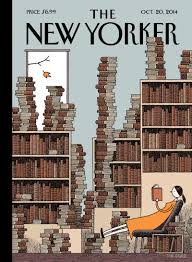
nyoct20

SOUNDTRACK: MOBY-One Song, Two Days, Three Versions (Project Song: May 4, 2010).

Project Song was a nifty little show that NPR Music created.  The premise was that NPR would give a musician some prompts and a recording studio.  They then had two days to write and record a song.  I don’t know how much of the process was to be filmed, but presumably most of it. Then it would be edited down to a fifteen minute show.  The results are pretty cool and it’s a shame they only made five of them.

The fifth and (presumably) final one they did was about six months after the previous one.  This Project was offered to Moby.

Moby generally works alone in his New York apartment, but for Project Song, we asked him to bring along a collaborator. He picked Kelli Scarr, a Brooklyn-based singer and songwriter with a breathtaking voice. They arrived at NPR, a bit nervous and eager.

It takes weeks, even years, to write a song. NPR Music’s Project Song challenges musicians to do it in just two days. And every Project Song participant has worked right up to the last-minute — that is, until Moby.

He and collaborator Kelli Scarr finished their song in a little more than a single day. In fact, they had so much time left over, they recorded a second version of the song. And after that, they gave a small concert for the staff at NPR.

I kicked off the songwriting process by showing them a series of photographs and words. The surreal images came from New York artist Phil Toledano; you can see more of his work at NPR’s Picture Show blog. Moby and Scarr are both drawn to an image of a man in the woods wearing a trenchcoat. [Moby: “A disconcerting loneliness that I really like”].  There’s a brown briefcase on the earthen floor beside him, and his head looks like a glowing storm cloud.

Next, I gave them a series of words to choose from. Moby picked the word “flight.” Scarr chose “Sunday,” which Moby calls “the most depressing day of the week.”

Not too long after, Moby puts the card with the word “Sunday” printed on it, along with the photograph, on a nearby chair. He picks up a bass guitar and immediately starts playing a riff in the key of E. Turns out, this hastily played bass line would become the bedrock for their new song.

Just six hours later, the first of three versions of “Gone to Sleep” was recorded.

When he arrives he says he thought about cheating with chords ahead of time, but he likes the idea of jumping headlong into a project.  And as the blurb says, within minutes he’s got a bass line, some synths and drums.  Then a guitar line and more keyboard sounds.

Then they work on lyrics.  Moby says, “My favorite type of unsettling art is art that isn’t immediately unsettling.”  he cites the classic example of “Mack the Knife.”  You first hear it and it’s happy and then you listen to the lyrics and its terrifying.

The end of the video clip plays the whole song, guitar and piano and atmospheric.  Then over the closing credits they play a somewhat less atmospheric, gentler version of the song.  And then there’s the Tiny Desk which is altogether different.

It’s like Moby broke Project Song by making it seem too easy.

[READ: July 27, 2017] “Christina the Astonishing (1150-1224)”

I’ve read a few things by Vladez Quade, but this one is quite different from anything else.  It’s actually quite different form anything else I’ve read, period.  The closest author this reminded me of would be Brendan Connell, who likes to thoroughly investigate a historical character (real or imagined).

But this story is based on an actual; person:

St. Christina the Astonishing has been recognized as a saint since the 12th century. She was placed in the calendar of the saints by at least two bishops of the Catholic Church in two different centuries (17th & 19th) that also recognized her life in a religious order and preservation of her relics.

The story tells of her life from the point of view of her older sister and is written in a rather formal, almost canonical, style with section headings in an old style: “How She was Led Forth from the Body and How She Lived Again.”

The narrator, Mara, tells us that Christina lay dead in her coffin, a grave awaiting her.  Mara is sad, she loved Christina, “I see this now.  She was difficult, unknowable but I loved her.”

But at the same time she says that perhaps if they had hastened, outrun the melody.  If we’d only got those last words out, “He might have spared us our miracle.”

For indeed, the dead Christina not only rose bodily from her coffin, she levitated to the rafters. The narrator and her sister Gertrude clutched each other in fear. (more…)

Read Full Post »

SOUNDTRACK: CHRIS WALLA AND J. ROBBINS-Create ‘Mercury’ (Project Song: October 12, 2009).

Project Song was a nifty little show that NPR Music created.  The premise was that NPR would give a musician some prompts and a recording studio.  They then had two days to write and record a song.  I don’t know how much of the process was to be filmed, but presumably most of it. Then it would be edited down to a fifteen minute show.  The results are pretty cool and it’s a shame they only made five of them.

The fourth one they did was over a year and a half after the previous one.  This Project was offered to Chris Walla (of Death Cab for Cutie) and a performer he’d admired, J. Robbins (of Jawbox and Burning Airlines).

What made this project especially difficult was that the two had never even met before they stepped into NPR’s performance studio.

I supplied some inspiration for their song: photo collages created by artist Tom Chambers [The picture are really, really cool]. They chose a photograph of a house in a canyon filled with water, tilted and flooded. Not far from the house is a dog on a boat, floating either toward or away from the house. I also supplied a series of words. They selected the word “cerebral” and promised when they wrote the song not to be too cerebral about it.

Unlike the pairing from Georgie James, this pair is instantly excited at the possibilities–changes and ideas.

Robbins says he will not write any lyrics, it takes him a month and a half to hone them,

But it didn’t take long for Robbins to pick up his bass guitar, for Walla to pick up a guitar, and for the two to begin their musical friendship.

They were inspired by JG Ballard and his drowned world series. In these books there are people who know the world is dying but they embrace it as a forward movement into the unknown

J. get a great bass line right away (its sounds very Death Cab, interestingly).  Bob asks about the music and J. says the music sounds like a dog on a boat heading towards a half-submerged house.  And Walla is singing the word “mercury.”

Walla and Robbins were joined by Robbins’ friend, drummer Darren Zentek.

He adds a wonderful beat and the song sounds great.  They get excited filling out the possibilities–end on the bridge!

Walla goes off by himself to write lyrics.  And Robbins works on a piano part.  And then things really come together when Walla picks up the 12 string.

The song they created, “Mercury,” takes its subject matter from that photograph, which is a bit of a cataclysmic scenario turned into a song about the climate crisis.

The result has a definite Death Cab feel, but with Robbins and Walla alternating lead vocals it is a different, wonderful thing.

[READ: July 23, 2018] “I Walk Between the Raindrops”

This story centers around Valentine’s Day.  But it’s a T.C. Boyle story so there’s always something else to look forward to.

I love the way this story opens with Brandon the narrator telling us.

This past Valentine’s Day, I was in Kingman, Arizona, with my wife, Nola, staying in the Motel 6 there, just off the I-40. You might not think of Kingman as a prime location for a romantic getaway (who would?), but Nola and I have been married for fifteen years now, and romance is just part of the continuum….  Were we slumming?  Yes, sure.  We could have stayed anywhere we liked…and if it’s not ideal, at least it’s different.

They were there because Nola’s father lives nearby and they decided to pay a visit and to let Nola search for antiques.  They went to Denny’s (the only place her father will eat), and after eating, Nola went antiquing and Brandon went to a bar to wait for her.

It’s not unfriendly (despite some graffiti like “fuck you, liberal pussies” (which he chooses to take as ironic), but he doesn’t order a Pinot Noir or anything.  (more…)

Read Full Post »

SOUNDTRACK: STEPHIN MERRITT: Two Days, ‘A Million Faces’ (Project Song: November 4, 2007).

Project Song was a nifty little show that NPR Music created.  The premise was that NPR would give a musician some prompts and a recording studio.  They then had two days to write and record a song.  I don’t know how much of the process was to be filmed, but presumably most of it. Then it would be edited down to a fifteen minute show.  The results are pretty cool and it’s a shame they only made five of them.

The first one they did was with Magnetic Field’s singer/songwriter/wizard Stephin Meritt.

Merritt is quite prolific so this seemed like it would be no big challenge.  They showed him six images and six words.  He had to choose one picture and one word.  He chose a picture and the word 1974.

Merritt does most of his writing sitting in a bar, with throbbing music in the background.

“Some recording artists write in the studio,” he tells All Songs Considered host Bob Boilen. “I think they’re crazy.”

So for the first installment of a new multimedia experiment called Project Song, All Songs Consideredset up a bar for Merritt in NPR’s Studio 4A, an expansive wood-floored room with plenty of space for a creative artist to spread out and experiment. We supplied him with a grand piano, an assortment of other keyboards (including a ’70s MOOG synthesizer), drums and guitars — even a sampler, from which Merritt extracted the sound of a vintage Mellotron.

The photograph he chose, by artist Phil Toledano, is an incredible image of a man covered head to toe in what looks like a bodysuit made of baby dolls.

In Merritt’s imagination the man shape shifts as a criminal.

For the music, he chose a “Shepherd tone” which is the illusion of ever ascending pitches.

And then we watch Merritt recording instruments and vocals and talking to the recording engineer.

It is very cool to see how this song evolves with bass, guitar, synth and more added in.

The final two minutes wrap up his take on.  He says he would normally work a lot longer.  There is only one section to the song. (It’s verse no chorus?) Yes.   The song is based on a loop because he finished the song sooner than he might have.  “But I write lots of fairly simple songs, and I like this one.”

[READ: Feb 3, 2016] “Silk Brocade”

Once again Tessa Hadley easily transports me to another time and place.

In this story, we meet Ann Gallagher, a talented seamstress who has started a small business with her gregarious friend Kit.  They are going to make couture dresses and more.

Unfortunately, old friends of theirs have come a-calling.  And today, Nola Higgins straight from Fishponds, has come asking a favor.

Turns out that Nola is getting married to nobility and she hopes that Ann can make a dress from some gorgeous old silk brocade that was in his house.  Ann is fully intending to turn her away–saying that Nola will never be able to afford their work–until she learns about the money. (more…)

Read Full Post »

SOUNDTRACK: EMILY HAINES AND THE SOFT SKELETON-Live at Massey Hall (December 5, 2017).

I really like Metric a lot.  They hit all the poppy sweet spots that I like with enough rough edges to keep them interesting.

I had heard a song from Haines’ Soft Skeleton album and really liked it–the bass line outstanding.  When this tour came to Philly I conisdered going but ultimately didn’t.  So I’m glad I get to see an abbreviated version of it here from Massey Hall.

This is also the final show (I assume) of the fifth season of Live at Massey Hall as the historic venue now undergoes two years of renovations!

Haines says that Massey Hall is the place that when you’re growing up on Neil Young that you dream of playing someday. She did two nights with metric in 2010 and now to do it solo is an incredible honor.

The show starts with chirping birds and Emily walking around the stage which looks made up like a bedroom.  She takes off her coat, puts on a dressing gown and a sleep mask and lays down on a “bed.”

An alarm goes off and when she shuts it off, a piano melody starts with backing vocals.  It’s the song “Planets,” and she lays down on the bed and sings the lyrics.  The pretty piano melody and swelling backing voices are lovely.  Then she brushes her teeth and a voice (hers?) starts talking to her.  What are you doing here?  Did you sleep at all?

What revelation are you after?  Do you want to go back or are you scared you never left?  This is an introduction to “Nihilist Abyss.”  For this song, she plays the piano and sings.  As the song ends the voice returns, calling “Emily” (echoing) “come back now its time to come back.  You’ve got to get dressed, you have to play a show tonight.  You booked a tour for some reason and you’re on it now….”

“Put on your jacket…”  She stomps around the stage as the rest of the band comes out–Jimmy Shaw, guitar; Sam Goldberg, bass; Justin Peroff, drums (all of whom were in Broken Social Scene, which Haines performed in as well).  She sits at the piano and a robotic voice introduces “Emily Haines and The Soft Skeleton.”

“Our Hell” has  thumping drums and bass as washes of guitars flood in while Haines plays piano and sings.   It’s a dramatic change from the first songs, but not as immediate or poppy as Metric.

“Detective Daughter” is interrupted by her saying that this record and band are a different state of mind than metric–challenging in a different way.  The music and her role is to push herself to the threshold of emotion without cracking.  “It’s raw strong and real.”  There’s more intense guitar from Shaw (who has worked with her on nearly everything she’s done).

“Minefield of Memory” has a scratchy guitar playing a rhythm with the drums, while “Legend of the Wild Horse” has the biggest chorus yet.

“Doctor Blind” has a woozy da da da da middle section along with the echoing distorted guitars.

The set ends with “Fatal Gift,” the song that I love from this album. It starts with a slow piano but after a few minutes the song gets bigger and louder and that bass line is just a knockout.  I don’t rally like the that she repeats over and over “you own it and it owns you,” as it takes away from the music.  But this section of the song is so good the music is intense and wonderful.

I’m not disappointed that i didn’t see this live, although it sounds like an interesting theatrical experience (the venue is usually standing but for this show seats were being sold).

Over the credits she comments that now “because of technology people can use algorithms to pander and give the people what they want a feeling of pandering.  But what I have to offer is a glimpse of someone attempting to access their authentic self.”

[READ: April 15, 2016] “The Five Wounds”

This story surprised me right from the outset with the line “This year Amadeo Padilla is Jesus.”  There’s a few ways that could be taken and I was wrong about all of them.  The closest I came was thinking that Amadeo was a boy in a school play.

But no, Amadeo is a 33 year old man and being Jesus is very real.

People in the village are saying that Amadeo is the best Jesus they’ve had in years.  People are lining up to peek through the chain link fence and watch Amadeo.  He has build his cross out of heavy oak, not pine, and he’s even thinking of adding more nails to make it heavier.

But whats so surpring is that Amdeo is pockmarked and bad-toothed and worse.  If you name the sin, he’s done it: gluttony, sloth, fucked a second cousin on the dark bleachers at the high school.

Amadeo is working so hard at his cross that he is sweating–typically he only ever sweats when he eats and drinks too much. (more…)

Read Full Post »

SOUNDTRACK: DAVID BECKINGHAM-Live at Massey Hall (December 5, 2017).

I don’t know Beckingham or his main band Hey Ocean.

Beckingham says that he and Ashleigh Ball from the Hey Ocean started playing together in their early 20s.  They met Dave and formed Hey Ocean and it took off in a surprising way.

He’d always wanted to do something solo but felt he wasn’t ready and then they took time from Hey Ocean and worked on it.  But he never expected to play Massey Hall.

The show begins with “Explosion” which has a sweet vocal line and a very friendly sound with strings.  As he starts “Window Frame” they interrupt it with an interview in which he says that Hey Ocean is more around Ashleigh and her vocals while the solo stuff is more personal.  He feels a lot more exposed physically as well as with the material.

Adi’s Song is a quiet powerful ballad

Late in the evening
She starts to cry
She’d been down on her luck since summer now she’s stuck
In the longest ever winter of her life

She called the doctor
Asking for pills
To make it all seem far away like the stars in outer space
She says the feelings doesn’t hurt, she says it kills

And the salt in her tears carves a line down her cheeks
So when the drops reach her mouth, well you’ll almost believe she was smiling

Just when the light hits it right

During “Slowly” he gets the crowd to sing along “don’t it take the words from you sometimes.”

The final two songs are his biggest: “Soldier” and “Forest.”  His music is quite consistent–pretty and folkie without a lot of drama.  But these last two songs have something extra.  The bridge in “Soldier” bombs overhead / trying my best to find you / I was blind and deaf is really powerful with the strings.  “Forest” has a distinctive catchy melody up front, which a lot of these songs don’t.

He’s joined by Mike Rosen on the keyboards and a small string section Michelle Farhermann (cello) Rachael Cardiello (viola) and Kelly LeFaive (violin) and he thanks them for pulling this all together in a few days time.

[READ: January 7, 2017] “Stuff”

“Stuff” is a terrible name for a story.  But this story is pretty much full of stuff, so maybe it does work here.

I’m not really sure what happened to this story because it started out so linear and interesting (a little weird, yes, but interesting) and then it turned into something else–much more weird.

Henry was in the doctor’s office.  His own doctor was not there, so he was seeing a new doctor.  This new doctor told Henry that he had lung cancer and would die soon.

Henry talked about the cigarettes he smokes–called the work sticks because they help him write. (more…)

Read Full Post »

SOUNDTRACK: JENNIFER CASTLE-Live at Massey Hall (November 23, 2017).

I didn’t think I knew Jennifer Castle, but I see that she has appeared as a guest singer on a whole bunch of records by artists that I know: Eric Chenaux, Bry Webb, Constantines and Fucked Up.

She has an unusual voice–soaring, delicate and whispery with a slight warble and yet you know she could belt out if she wanted to.

She starts the show saying Toronto has incredible beautiful old buildings and its rare these days to go inside one.  Inside Massey Hall it’s lit up to be another member of the band and to be part of the show.

I found the music to be incredibly spare–too spare in fact.  It is primarily piano and her vocals (with backing singers), but the piano (Jonathan Adjemian) is not a primary instrument, it is simply playing chords for her to sing over.  The sparseness was a little disconcerting.  But the backing vocalists (Victoria Cheeong and Isla Craig) are stellar–they really add a lot to the music and their voices soar in their own right.

But I think that sparseness allows her lyrics to really come through.  “Like a Gun” has the lyric “he was lik e gun [hah, from lovely backing vocalists] he was always going off.”

“Nature” has even better lyrics

Despite all my feelings of life parallel
Nature is happening without my goodwill
I called my friend up and she said it still
Happens to you even when you are ill

and ends with this interesting conceit

I lift my skirt for the economy

“Texas” is played on guitar with a very catchy “hoo hoo hoo hoo” clap-along.

I go down to Texas
To kiss my grandmother goodbye
She forgets things
But when I look her in the eye
I see my father
And he’s been gone so very long
In the name of time travel
Help him to hear to my little song

Jennifer plays electric guitar on “Truth is the Freshest Fruit” which changes the whole dynamic of her songs.  She plays guitar with piano accompaniment on “Sailing Away.”

She is the first person to mention the renovations Massey Hall is currently undergoing:

I know that Massey is going to go through a great big change but it feels good to play while the history is still on the paint.

The final song is absolutely wonderful.  She says she wrote “Please Take Me (I’m Broken)” because she knew they were coming to Massey and it celebrates the school of Greek mythology

The backing vocalists sing a verse by themselves and they sound great.  I love the chorus

Please take me cause something don’t seem right; something don’t compute.  I don’t belong here.
Please take me I’m broken;  I’ve woken up and I should be dreaming.
Please take me back to those other realms they seem much kinder on a dreamer like me.
I’ve always looked up to those ancient Greek stories.
I love the thrill of the scale; I like the the roll of the chorus.

A thoughtful and unique performer.

[READ: July 17, 2018] “Now More Than Ever”

I  feel like Zadie Smith’s recent stories have been exploring a new style for her, a more “in the present” kind of vibe.  This story has meta-elements and is very much an of the moment piece.  It seems to address current hot button issues and her own inability to fully wrap her head around them.

It begins: “There is an urge to be good. To be seen to be good. To be seen.  Also to be.”

This is what she told Mary.  She also told Mary that no one is called Marty these days.  “Could you get the hell out of here?”  So Mary left.  Then Scout came by–a great improvement.

Scout is active and alert on all platforms. She;s usually no later than the 300th person to see something.  The narrator was “the ten million two hundred and sixth person to see that thing.” (more…)

Read Full Post »

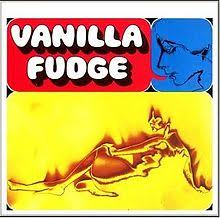
SOUNDTRACK: VANILLA FUDGE-Vanilla Fudge (1967).

I’m still puzzled by the existence of Vanilla Fudge.  By 1967 I wouldn’t think that a band who existed primarily on covers would be viable.  I also wouldn’t think that an album that is all covers would have been marketable.  But I guess the fascinating sound of Vanilla Fudge–lots of organ, screamed vocals and a heavy rhythm section covering recent hits at a drastically reduced speed was a sensation.

Evidently they influenced everyone (Led Zeppelin opened for them and Richie Blackmore and Jon Lord loved the organ sound and wanted it for Deep Purple) and are considered a link between psychedelia and heavy metal.

The first song is a cover of The Beatles’ “Ticket to Ride” of all songs. The Beatles released it in 1965 and two years later the Fudge put heir spin on it.  It is pretty much unrecognizable until they get to the lyrics.  Singer Max Stein takes the lyrics smooth and slow until he starts screaming like a heavy metal song (I can hear an Ian Gillan precedent).   After the “Ri-ii-iide,” in the chorus there’s a little guitar riff that stands out amid all of the organ.

“People Get Ready” (also originally from 1965) also starts unrecognizable until 90 seconds in when there’s a nod to the main riff and then a lot of harmony vocals. By nearly 2 minutes, the main melody of the song is played slowly on a church style organ and they sing the chorus in a kind of church choir.  The whole song is pretty much all organ and Stein crooning.

“She’s Not There” (recorded by The Zombies in 1964) is organ heavy with a build up for each line The song feels really psychedelic with Stein’s screamed vocals, and Appice’s drumming.  I really rather like the backing vocals.

“Bang Bang” (1966) was written by Sonny Bono is noisy with crashing drums and intermittent guitar surrounded by the Hammond organ.  About 2 minutes in, he sings in a childlike voice “Ring Around The Rosy” and “A Tisket a Tasket.”  I don;t know the original at all, but can;t imagine how it went.

After an introduction called “Illusions of My Childhood, Pt. 1” which is basically 20 seconds of keys, they get into their first hit a cool, slow cover of “You Keep Me Hanging On.”  I find that with the Vanilla Fudge, it’s the songs I don’t know as well that I enjoy their treatment of more.

“Take Me for a Little While” is less than 3:30 after the introductory “Illusions of My Childhood, Pt. 2.”  It ends with a melody of the Farmer in the Dell before the martial beat introduces us to the next song.

After the 25 seconds of “Illusions of My Childhood, Pt. 3” the official cover of “Eleanor Rigby” begins completely unlike any version of the song.  It’s just keys and such until about 3 minutes when they start singing “oh, look at all the lonely people” in a kind of choir.  When the actual lyrics come in, they are sing quietly or in a group chorale.  They end the song by chanting “they do, they do.”  It’s a complete reinvention of the songs.

The record ends with them singing a denouement of “nothing is real, nothing to get hung about.”

There really is nothing else like this band.  But they seem far more like a novelty than a foundation of a musical style.  And they’re still touring today.

[READ: February 1, 2016] “The Actual Hollister”

I really like Dave Eggers’ writing style. It always seems casual yet dedicated.  Like he might not really care that much about what he’s going to tell you but that he paid a lot of attention while he was getting ready to bring it to you.  That attitude kind of helps especially when reading something that you yourself don’t really have a care about (to start with).

This story is about Hollister, California.  Eggers says he was inspired to go there because he had been seeing those sweatshirts that say Hollister on them.  [At this point I have t confess that I have seen them, but don’t really register them and didn’t know it had anything to do with Abercrombie and Fitch].

And thus the story bifurcates into the story of the brand and the story of the town.  And never shall they meet. (more…)

Read Full Post »

 SOUNDTRACK: PHISH Live Bait 14 (2018).

Phish has just released its 14th compilation of free downloads.  This one is a little over two hours with seven long songs.

Harry Hood (8/2/97 Gorge Amphitheatre – George, WA) 18:11
After a slow intro–it’s about two and a half minutes before the vocals come in–then there’s jazzy bass and funky keys.  The jam is pretty mellow, he even asks to have them kill the lights “so I can have the outdoor vibe here.”  A relaxed piano comes in around 12 and it’s not until 17 minutes that they sing the end of the song.

McGrupp And The Watchful Hosemasters (10/29/98 Greek Theatre – Los Angeles, CA) 11:45
This is a fun treat as they don;t play this song much anymore.  The piano opening is very quiet, but the middle is cool with a piano and splash cymbals.  The ending is twinkling piano that segues perfectly (despite being nearly a year later) into the next song.

Wolfman’s Brother (9/24/99 South Park Meadows – Austin, TX) 18:55
opens with a quiet piano but it quickly grows upbeat with a hot jam. Although the final section is dark for a bout a minute before it ends.

Gotta Jibboo > Saw It Again > Magilla (7/4/00 E Centre – Camden, NJ) 39:28
Gotta Jibboo brings back the lightness again. It’s got a happy solo with a pulsing high keyboard note that runs for almost ten minutes while Trey solos.  It turns funky/groovy around fifteen minutes in and then around 17 minutes in it shifts gears and grows slowly noisy and chaotic before sequing to Saw It Again.  Around 34 minutes, it slows down and segues into Magilla with really cool drums.

What’s The Use? (6/25/00 Alltel Pavilion at Walnut Creek – Raleigh, NC) 9:52
This is an instrumental that starts out sounding quite raw–the guitar is sharp with feedback moments.  After  couple of minutes the guitar fades and it gets quiet and pretty before the guitar returns and grows noisy again.

Runaway Jim (7/9/99 Merriweather Post Pavilion – Columbia, MD) 12:21
As always this song rocks.   Although the jam is pretty mellow and pleasant sounding.

Tweezer > Prince Caspian (8/22/15 Magnaball, Watkins Glen International – Watkins Glen, NY) 34:17
Most of the songs on this compilation are from the turn of the century, but this one is from just a couple years ago and it’s a big old “Tweezer” exploration.  This version sounds pretty loose–Trey even modifies the open chord riff somewhat.  Even the “Uncle Ebeneezer” noise is somewhat subdued.  It grows fairly calm before a funky guitar solo.  By 11 minutes, there’s a lot of piano added and then through 17 minutes “Prince Caspian” begins.  It’s a typically fun version of the song.  And by 31 minutes it feels like the song is circling back around to “Tweezer,” but it never actually gets there.  It just kind of ends.

Hard to complain about a free compilation, and there’s not much to complain about here.  Good selection of songs and great performances.

[READ: January 19, 2018] “The Blade”

This is story of tramps.  Hoboes.

There is a young kid who reminded Ronnie of himself from way back.  But it generally assumed the kid will be tossed off the train car before two long.

After some silence Vanboss and Stark begin talking.  Vanboss tells of a head on collision between two cars going 100 mph and how the cars were melded into a small cube but somehow a baby escaped unharmed.  No one believes that, so they talk of other deaths, brutal and extraordinary. (more…)

Read Full Post »

« Newer Posts - Older Posts »