Feeds:
Posts
Comments

Archive for the ‘New Yorker’ Category

SOUNDTRACK: STEVE GUNN-Plays Between the Ties of an Abandoned Railroad (Field Recordings, October 12, 2016).
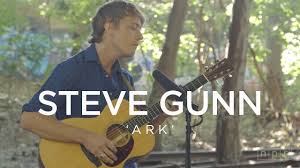
I don’t know Steve Gunn and I am surprised to see that he has released fourteen albums and has worked with Kurt Vile.

For this Field Recording, Gunn headed out to the woods to play three beautiful songs.

 In Forest Park, Queens, N.Y., an old relic suits Gunn’s sound. The Long Island Railroad’s Rockaway Beach Branch used to run through the park. It’s been abandoned for over a half-century, and trees have grown between the ties, skewing the rails and jarring the lines. Late this past summer, Gunn stood on the tracks of this worn American symbol and sang three songs off his latest album — songs about meandering, home and the crooked paths that take us wherever we’re meant to be.

Once again I am really impressed by the quality of the sound.  His guitar is absolutely clear and his voice is perfectly mic’d, but you can also hear ambient sounds–birds and such–making this recording unique.

Gunn has a pretty picking style (using thumb and fingers independently to get strums and picked notes simultaneously).  This enables him to keep the song moving forward while he plays the pretty guitar melodies.

“Full Moon Tide” has a great melody and a delightful chorus.

He walks further into the woods to play “Night Wander.”  It has a kind of circular feel in which the chorus feels like a part of the verse.  I’d say that Gunn’s voice is nothing special, but I like the deeper resonances he gets on this song.

For the final song, “Ark” he walks further down the tracks to a bridge.  Whether it is having the surface above him or just the style of his playing, this song feels warmer, and quite different from the others.

It’s a great introduction to this excellent guitarist.

[READ: January 9, 2017] “The Apartment”

This story is a fascinating look at a woman convincing herself that something must be true.

The apartment across from hers has been vacant for sometime–since the woman living there died.  But recently there was movement inside.  The person’s last name was Jahani.

Louise knew a man named Jahani when she was studying at Stockholm University.  Arman Jahani was the second man she’d slept with (her husband Martin was the first).  Martin, did not know about Arman.

While she is having lunch (sushi) with her adult son Jonas, she intersperses his conversation with memories of Arman.  The two most resonating thoughts are that he died in the early nineties and was survived by a son and a daughter.  Or so she believed.

She tells Jonas that the vacant apartment has been filled.  Jonas hasn’t lived at home for quite some time.  He wasn’t there when the woman died.  “You can;t imagine the smell” she tells him.  It was actually her husband who discovered her and was shocked that no one has mentioned the smell. (more…)

Read Full Post »

SOUNDTRACK: CAMP COPE-Tiny Desk Concert #778 (August 22, 2018).

Camp Cope recently played PhilaMOCA, but it sold out so quickly I didn’t even have a chance of going.  Camp Cope plays a deceptively simple poppy punk that really allows the excellent lyrics to shine through.  I love the sound of Kelly-Dawn “Kelso” Hellmrich’s bass lines, which contribute a great melody while singer guitarist Georgia “Maq” McDonald plays a somewhat muted guitar, with a ton of power in here voice.

Camp Cope’s Tiny Desk performance opened — fittingly — with “The Opener,” a song about overcoming the obnoxious, exhausting and all-too-common sexism endemic to the music industry.

Great lyrics:

You worked so hard but we were ‘just lucky’
To ride those coat tails into infinity
And all my success has got nothing to do with me
Yeah, tell me again how there just aren’t that many girls in the music scene

It’s another all-male tour preaching equality
It’s another straight cis man who knows more about this than me
It’s another man telling us we’re missing a frequency, love ya Kelly

[Lyrics genius explains this last line: The bass lines in many Camp Cope songs, contributed by bassist Kelly-Dawn Helmrich, are played primarily in the upper register of that instrument, so there are few low bass frequencies in their music. On the average Camp Cope clip on Youtube, you can usually find a dozen or so dudes helpfully pointing this out in the comments.].

It’s a stunning and deeply gratifying performance; Maq lists off what exes, industry insiders and fellow musicians have said to undermine the band with a measured determination that sometimes tips into a full-throated, impassioned cry. Bands like Camp Cope get told they’re “just lucky,” that they “can’t fill up a room,” that they should “book a smaller venue.” But when Maq roars from behind the Tiny Desk, “See how far we’ve come not listening to you,” she makes it clear which voice deserves the attention.

I love the dismissive final line:

“Yeah, just get a female opener, that’ll fill the quota.”

The second song, “The Face of God” features complex guitar patterns from Maq and (at the start) a simpler bass line).  But once the song takes off, the bass starts throwing in notes all over the instrument.

is a stunning, delicate song about feeling lonely and distraught in the aftermath of sexual violence. It’s a standout from the band’s debut album, How to Socialise & Make Friends, and shows what Camp Cope does so well: using tiny moments of introspection to illuminate life’s bewildering, terrifying, isolating aspects — especially as they apply to women. You can hear equal parts conviction and desperation in Maq’s voice as she sings:

I saw it, the face of god
And he turned himself away from me and said I did something wrong
That somehow what happened to me was my fault.

Camp Cope must usually play more raucously live since after “Face of God” Maq  laughed, “We’ve never done this before — we’ve never been quiet. Not once in our entire lives!” Hellmrich joked that it was perhaps a “good lesson” to “rock out in your mind.”

The band closed its set with “Keep Growing,” an older track about autonomy and heartache.   It opens with Sarah “Thomo” Thompson’s drums, simply and direct and then Hellmrich’s bass is at the fore once again, playing a cool melody.

Elsewhere, it might be too easy to tune into Camp Cope’s powerful message and overlook the strength of the band’s songcraft. But at the Tiny Desk, you can’t miss it: Maq’s gargantuan voice; Hellmrich’s clever, melodic basslines; Thompson’s stoic drumming.

I wish even more that I’d seen them in a small venue while I had the chance.

[READ: August 21, 2017] “Dogs Go Wolf”

This was a peculiar story that felt like it was part of a larger story.  It felt incomplete and yet also that it had accomplished everything it intended.  Which was odd.  In the same way that the title makes sense but only when you think about it.

I enjoyed the way the story worked its way backwards.  Two sisters are on an island.  They are young (four and seven) and they are alone.  Even the dog that was with them has been strangely quiet lately.  The dog was mean and although they missed its companionship they weren’t sad to see it go.

The big sister tells the little sister stories to comfort her.  But they can only go so far when food is scarce, when the generator has run out and when they have little else to do.

(more…)

Read Full Post »

SOUNDTRACK:  YO-YO-MA-Tiny Desk Concert #777 (August 17, 2018).

One needs to say very little to introduce Yo-Yo Ma, probably the most famous cellist in the world.  He is here because he has recorded Six Suites for Unaccompanied Cello by Johann Sebastian Bach.  Again.  For the third time.

Obsessed or awestruck, artists revisit great inspirations because they believe there is yet another story to tell – about life, about themselves.  Cellist Yo-Yo Ma brought his great inspiration, and in turn part of his own life story, to an enthusiastic audience packed around the Tiny Desk on a hot summer day. Ma is returning, yet again, to the Six Suites for Unaccompanied Cello by Johann Sebastian Bach, a Mount Everest for any cellist. He has just released Six Evolutions – Bach: Cello Suites, his third studio recording of the complete set and is taking the music on a two-year, six-continent tour. Ma’s first recording of the Suites, released in 1983, earned him his first Grammy.

Certainly one of the most brilliant cellists of modern times, he’s also a thoughtful, curious humanitarian, with an endless thirst to understand, celebrate, and connect disparate cultures of the world.

He plays three pieces from the Suites

J.S. Bach: “Prelude (from Suite No. 1 for Solo Cello)”  It is so beautiful and familiar, it sounds amazing on his cello.  he says “This was the very first piece of music I started on the cello… when I was 4 years old.  One measure a day.  It’s not painful to learn something incrementally.”  He describes how he recognized that the second measure was similar to the first and the third was just a variation.  He says, “I lived with this music for 58 years (plus 4, that’s my age).”

Ma has played the music for 58 years and along the way it’s become something of a practical guide to living, pulling him through hardships and celebrating times of joy. “It’s like forensic musicology,” Ma told the Tiny Desk audience. “Embedded in the way I play is actually, in many ways, everything I’ve experienced.”

J.S. Bach: “Sarabande (from Suite No. 6 for Solo Cello)”  The sarabande comes from many places.   All of these places have claimed it:  Guatemala, Mexico, Moorish Spain, via Portugal or Morocco.  He says the sarabande is the heart of the suites.

It has served dual purposes, Ma explained. “I’ve played this piece both at friends’ weddings, and unfortunately also at their memorial services.”

J.S. Bach: “Gigue (from Suite No. 3 for Solo Cello)”  He says for the last piece at the Tiny Desk, I’m going to play a tiny jig.  He says Bach goes from old dances to folk or popular dance.  Here is this German composer working a jog into the third suite.

The exuberant “Gigue,” from the Third Suite, with its toe-tapping beat, reminds us that Bach was far from a stuffed wig. Such is this sturdy, versatile and benevolent music, offering a full range of the human condition.

Ma is happy to teach the listeners what he is doing, to share the joy and love of music.  Sometimes literally

As soon as he arrived at our office to play, Ma unpacked his cello – a famed 1712 Stradivarius – and immediately handed it over, with his bow, and said, “Here play something.” It didn’t matter that I’d never held a cello. It was just another one of Yo-Yo Ma’s warm and welcoming gestures, another way to open up music to anyone and everyone.

It’s all beautiful!

[READ: August 27, 2018] “Ways and Means”

This story tackles sexual harassment at the workplace from an interesting angle (and is written in a great, fluid style that makes the story utterly compelling).

Hal (short for Haley-Ann, a name she always hated) is an engineer at a public radio station.  She was one of the first women to work in such a position and has been there for over a decade.  The story opens with her reading a public apology from an on-air personality, Oliver.  Oliver had worked at he station for over three decades and was a huge draw for both audience and pledges.

The apology went to everyone’s inbox and then went public.  She felt it was trite with words that he, Oliver, would never have said in real life like invalidated).

The accuser was unnamed but everyone in the building knew it was Molly, a 26-year-old podcast producer. (more…)

Read Full Post »

SOUNDTRACK: HALEY HEYNDERICKX-Tiny Desk Concert #772 (August 3, 2018).

Haley Heynderickx (presumably not her native spelling) is an NPR Slingshot atist-a new person that they are following and promoting.  So it’s no surprise to see her at the Tiny Desk.

Unlike her solo acoustic releases, which are quiet, mostly solemn affairs, Haley Heynderickx came to NPR’s Tiny Desk with her band: Denzel Mendoza on trombone, Lily Breshears on Moog bass, and Phil Rogers on drums. They opened with the song that is most out of character for Haley.

She opens by saying “recently we learned that oom means mother and shalala means water fall so here’s wishing you mothers and waterfalls.”  She has a very high and quiet speaking voice that matches her singing voice quite well.

I know “Oom Sha La La” from NPR playing it.  I enjoy the way it gets frantic in the middle after the mellow rest of the song.  The addition of the (to me surprising) trombone, is pretty cool and adds an interesting texture.

She says, “The goal of that song is to feel embarrassed so if you felt embarrassed singing along, thank you.”

Turns out “Oom Sha La La” was

a song she wrote as part of a song challenge and she challenged the crowd here at NPR to a sing-a-long. We didn’t do so well, it was early in the day — but this song about self-doubt and searching for life’s meaning with its cathartic phrase “I need to start a garden” (which is also the title to her 2018 debut) is a potent reminder to take action when life gets bewildering.

She then asks for five seconds of intimate eye contact with the camera to show the people back home that we love them.  [The band stares at the camera].

The second song, “No Face,” is a reminder to love people as kindly as you can; otherwise you’ll wind up like the character No Face from the Hayao Miyazaki film Spirited Away.  This is a pretty song that begins with just her guitar and Mendoza’s trombone.  It eventually adds drums and bass.

In introducing the final song, “Worth It,” Haley Heynderickx told the Tiny Desk crowd that it was written in a basement with the belief that it would never leave that basement.

This has the best guitar lick of her three songs.  It’s a cool meandering song that lasts almost seven minutes.

The opening riff and Haley’s ooh’s are quite pretty.  After a couple of verses, the drums come in and the song picks up into a straight up garage rocker emphasizing a nice riff.

It seems like the song will continue like that, but it returns to the opening melody and oohs once again.

The third part is a bit faster but feels more like variant of the other two parts.  Towards the end Haley and Lily sing some gorgeous harmonies.  The end of thee song slows things down to just quiet guitar and their harmonies until they fill it out ounce more with drums, trombone (a lovely denouement solo) and gorgeous vocals.

[READ: January 4, 2017] “Papaya”

This set up in an interesting way.  I didn’t enjoy the first part, but the second part was pretty fascinating and made me re-read the first part, which I enjoyed more on the second read.

The story is about Errol Healy.  As the story begins, he is an elderly man, refusing to retire, but visiting his daughter and grandchild regularly.  But every time he does, he hurries back to his home in Palm Beach, Florida.

As this first part ends, we see him sharing a meal with Dr. Higueros.  He and the doctor met as refugees–Dr Higueros and his wife from the north coast of Cuba and Errol from a kind of captivity in the Bahamas.

The second part flashes back to the captivity. (more…)

Read Full Post »

SOUNDTRACK: THE DEL McCOURY BAND-Tiny Desk Concert #771 (August 1, 2018). 

I have really grown to like bluegrass a lot over the years.  And yet I still dislike country.  Never shall the twain meet.

Del McCoury is a bluegrass legend, singing, playing guitar and writing songs for the past 60 years, including his days with the “father of bluegrass,” Mr. Bill Monroe. The Del McCoury Band itself is 50 years strong, and these days includes Del’s sons Robbie on banjo and Ronnie on mandolin and vocals. All are astonishing players, here joined by the five-time award-winning fiddling of Jason Carter and this year’s International Bluegrass Music Association bass player of the year Alan Bartram.

The Band plays three songs (their session runs to nearly 20 minutes because Del talks a lot between songs!).  As the blurb notes:

These are story songs; Del is, of course, quite the storyteller, taking his time between them to reminisce. At 79 years old, he’s got a lot of them tell.

For their visit to the Tiny Desk, the group brought along some traveling songs. The first (of two) train tunes, “That Ol’ Train,” comes from their new album Del McCoury Still Sings Bluegrass, while their closing gospel tale “All Aboard” is a staple from 2001’s Del and the Boys. The other (a motorcycle song), “1952 Vincent Black Lightning,” was written by another master of his craft, British folk icon Richard Thompson, and has been a part of Del’s repertoire for a while now. It shows not only the deep connection that bluegrass has to British folk music, but also Del McCoury’s willingness to keep his sound fresh all these years on.

“That Ol’ Train” is a great introduction (for me) to the group.  The song sounds timeless, even though it is new, with the age old sentiment: “I’d cover every mile of track / I’d bring my baby back / and put a happy ending to this song.”  There’s a wonderful set of solos.  Fiddle then banjo then fiddle and then mandolin solo.  The fiddle player is really amazing, even making the instrument sound like a train whistle.  And the harmonies are pretty sweet as well.

There is a moment, near the top of this Tiny Desk concert — when three voices gather ’round a single microphone to deliver the chorus of “That Ol’ Train” — that is so pure and beautiful

Del introduces the band.  He mentions that Jason Carter has won fiddle player of the year countless times.  But he didn’t win this year.  I don’t know what happened to him.

On the banjo is his son.  He has a new album called “The Five String Flamethrower” because when he plays at night with low stage lights he plays really fast and you can see sparks on the strings because uses metal picks.

He talks about his son on mandolin.  Back in 1983, they were going to tour Europe and he wanted to bring his son along while he was still in high school.   The principal called Del in to talk about the show wondering where they were going.  Del told him, British Isles, Germany, Holland and more.  The principal said he would allow Ronnie to go and he;s not going to have to make up any work he’ll learn a lot over there.

Del says his boys have their own band The Travelin’ McCourys who released an album on the same day at heir bluegrass Festival in Cumberland, Maryland.  Richard Thompson was there this year.  And they played the following song together (which Del and his band have been laying for years).

“1952 Vincent Black Lightning” is done on the banjo with a very different tone.  McCoury sings it wonderfully, but again, it’s doesn’t have the same tone, exactly.  But it still works.  The end of the song is banjo only, and it’s pretty amazing.

Before the final song, Del says, it’s just a little to early to sing.  We usually sing late night, at least 6 o clock. Then he says he has new strings on an old Martin guitar that’s why they’re out of tune.

Del says “I used to write songs myself but I got lazy because people in Nashville give them such good songs.”

“All Aboard” starts with furious banjo picking.  It’s intense and fast.  Del seems to be straining, but in a good way  as he sings the lyrics.  When the harmonies come in mid way through its really powerful.

I’m totally sold on Del McCoury and his family.

[READ: August 22, 2017] “An Evening Out”

This is a simple story with a lot going on in it.

The bulk of the story is about an American teacher in Bulgaria.  He has been there for seven years and has decided to call it quits.

So he is going out for the night with some former students, Z. and N.  There is much drinking.  Since he is leaving Sofia (the capital) they wanted to give him a real Bulgarian night out.

The teacher is very attracted to Z.–a forbidden thing in the country and a far more forbidden thing if he was his teacher (which he no longer is).  In fact Z. and N. both graduated some time ago.  N. had gone to America to be lawyer and had a miserable time.  Z, knew he would and even the teacher knew he would.  But that’s what N.’s mother wanted for him.  He tells them that after the bad year he has decided to student literature.  How did he convince his mother?

I just failed all my classes. (more…)

Read Full Post »

SOUNDTRACK: FLASHER-Tiny Desk Concert #770 (July 30, 2018).

I haven’t heard of Flasher, but the description of the band (noisy) makes me think I’d like them.  I’m also intrigued by the various guitar and bass lines.  The vocals are also really nice–wonder just how buried they are on record:

For its visit to the Tiny Desk, this young Washington trio set aside the distortion and worked up a semi-acoustic set of three songs — taken from its debut album, Constant Image.  Voices sometimes in unison, sometimes swapping leads, adding a shifting point of view to songs that, on record, give equal footing to a precise noise.

These three high school friends, Taylor Mulitz (guitar, vocals), Daniel Saperstein (bass, guitar) and Emma Baker (drums) have been bouncing around the D.C. punk scene of house shows and DIY venues for some time.

I rather got a kick out of this little “How Bob knows the band”

I’ve been aware of Taylor’s work for a while…in the potent D.C. band Priests; Daniel I’ve known (a bit) since he was a child, mostly from Hanukkah parties with his family (his mom was the executive producer at All Things Considered when I was the show’s director); Emma can be seen playing around town with another band, Big Hush.

I really enjoyed the stops and starts of “Pressure” I imagine it’s really fun when they rock.  It also has some really clever word play: “saving face / self-effacing / keeping pace / in a stasis.”  Most of the delicate harmony vocals come from the bassist (who is actually playing acoustic guitar), although when all three of them sing it sounds even better.

The interchange of electric and acoustic guitar works great on “XYZ.”  All three sing in tight harmony.

I love the way “Who’s Got Time?” seems to be constantly catching up on itself, like they are running out of time to finish the song–even though it never sounds like they are out of sync with each other.

Their overall sound is wonderful acoustic shoegaze.  At least at the Tiny Desk.

[READ: August 15, 2018] “A Refugee Crisis”

I didn’t love Wink’s last story (about killing cats), but I found this one fascinating because of how many elements were included here.

The narrator is a writer living in a place where one can cross-country ski regularly (Bozeman, MT).  The trail is mostly unused except for a guy who runs tours by dogsled–and there is plenty of dog shit on the trail to show where the sled went.

When he gets home, M is lying on his couch.  She says she let herself in since she knew the key was still under the mat.  She says she just came back from Serbia.  (She had been in Athens, Budapest and Frankfurt among other places).  The refugee camps there were really bad–people are trying to get across Hungary and the military is beating them, shooting at them.

She is twenty-three but looks forty and her personal hygiene is atrocious.  They have sex anyhow.  She says they can’t get pregnant because she already is–from a nineteen year old boy from Raqqa.  She didn’t tell the guy.  She is planning to get an abortion shortly. (more…)

Read Full Post »

SOUNDTRACK: SUFJAN STEVENS, BRYCE DESSNER, NICO MUHLY-“Mercury” (Field Recordings, June 8, 2017).

I love Sufjan’s Steven’s voice.  And this song, from the Planetarium project is just beautiful.  [Watch Sufjan Stevens, Nico Muhly And Bryce Dessner Play ‘Planetarium’ Track ‘Mercury’]  It opens with just the simple repeating piano melody and Stevens’ singing.  Eventually a guitar is added, playing complimentary melody.

Steven’s voice remains pure and powerful in this live recording. The viola from Nadia Sirota adds a lovely counterpoint to this song and leads it into the middle part which is minor keys and stings.

“Mercury” is the closing track off Planetarium, a song cycle about the planets by Stevens, Dessner, Muhly and James McAlister. The work was originally composed on commission for the Dutch concert hall Muziekgebouw Eindhoven, and first performed there in 2012. Five turns around the sun later, Planetarium will arrive in recorded form on June 9 via 4AD. “Mercury” is one of the most intimate songs on the record, a quality that’s emphasized by its spot just after the 15-minute, ambient, electronic epic, “Earth.” Where the record’s other songs foreground synthesizers and spastic electric drum samples reminiscent of 2010’s The Age of Adz, “Mercury” largely rests on Muhly’s gentle piano work and Stevens’ beautiful vocal. Where once, in the original live performances, the song swelled to a cinematic rush on the order of Illinois, it’s now spare and elegant. Its warm intimacy is all the more apparent in the group’s live performance, which features Dessner of The National lightly doubling on guitar Stevens’ wordless refrain at the song’s close. Like many of the pieces on the record, its lyrics are a constellation of the cosmic, the personal and the mythological. The song, named for the messenger god, is a perfect musical setting for the feeling of having something dear carried away from you. “All that I’ve known to be of life / and I am gentle,” Stevens sings. “

I love hearing his voice live, because it’s so perfect on record and while this is in no way imperfect, it lets us see a bit of humanity.  Even if this recording isn’t in a field or even an unconventional space, it’s still quite lovely.

[READ: January 3, 2015] “Little Man”

I feel like it takes a lot if chutzpah to recreate a story that is familiar to everyone.  This is the story of Rumpelstiltskin as told from the point of view of the little man himself.

But the twist on it is that Rumpelstiltskin isn’t a strange psycho bent on stealing children.  Rather, he is a lonely man, with no hope of finding love or having a child of his own.  Indeed, the first section is taken up with the man’s desire to have a child and his belief that having a child is not like ordering a pizza, which is how many couples seems to take it.

The story is written in second person (you), so it is meant to be even more intimate. (more…)

Read Full Post »

SOUNDTRACK: SLOWDIVE-“Sugar for the Pill” (Field Recordings, June 13, 2017).

It has been nearly a year since NPR Music broadcast its last Field Recording.  From 2012-2017, these were fun, interesting opportunities to put a band in an unlikely setting and have them play a song live,

There are 80 some of these recordings (see the whole shebang here), and I’ve decided to focus on “Slowdive Fills A Shuffleboard Parlor With Shimmering Sound.”

Before a month-and-change ago, Slowdive hadn’t released an album in 22 years. So you’d be forgiven for watching the band perform “Sugar For The Pill” and struggling to pin down what era you’re in — especially since NPR Music plopped the group in a playfully retro Brooklyn shuffleboard parlor for the occasion.

This live recording might be stripped down (I’m not sure), but it sounds great. Neil Halstead plays a pretty, shimmering guitar and sings with his distinctive whispered vocals.  Rachel Goswell is there to provide her delicate harmonies as well.  With them are Nick Chaplin (I assume) on bass.  The bass sounds terrific.  The low end is really good and moves the song along perfectly.  Simon Scott is there to add electronic drums.

A patient mid-tempo gem that’s as hooky as it is hypnotic, “Sugar For The Pill” is a particular highlight, so it’s a joy to watch the reconstituted band trot it out for this Field Recording, filmed at Royal Palms Shuffleboard in Brooklyn.

I don;t understand how this song sounds so good in a shuffleboard facility, but it does.  It sounds great.

[READ: January 4, 2017] “Dido’s Lament”

I really love Hadley’s stories.  I love that she is able to write compellingly about small moments–moments that aren’t going to end a person’s life, but will certainly impact it.

This story starts with Lynette.  She is shopping in a John Lewis–and is quite embarrassed about it.  She is described as “tall, anxious, original, in her late thirties…her hair was shaved above her ears and the rest of it, dyed bronze and pink, was piled up in a striking bird’s nest mess.” It’s the way she throws in that word “original” that I love.

A man pushes though the crowd and knocks her over.  She stumbles and hurts her ankle while trying not to trip over a stroller.

There is no way she is going to let this guy do that and not apologize or acknowledge what he did.  So she runs after him.  She is determined not to hobble or let anyone see her in pain, so she deals with the pain and goes in pursuit of the coat that she knows he is wearing.

She finally catches him on a subway platform.  She taps him on the shoulder ready to yell at him  But when he turns around, she realizes that not only does she know him, she used to be married to him.  She and Toby had separated nine years earlier.  He seems bigger now, but more confident in his ways.  Rather than yell at him, she was struck mute until he turned and was so excited to see her! (more…)

Read Full Post »

SOUNDTRACK: BAND OF HORSES-Live at Newport Folk Festival (July 25, 2014).

 I was checking out some of the Newport Folk Festival archives at NPR and found this show from 2014.  This was Band of Horses’ first time at Newport and they sound great and have fun with the set up, by slowly building to a full band.

They start “quietly” with Ben Bridwell singing “St. Augustine” solo on acoustic guitar.

For “Part One,” the bring out Ryan Monroe and Tyler Ramsey to sing along.  You can hear a heckler shout “you need more beard.”

Then they bring out Bill Reynolds to play upright bass on “Weed Party.”  This song sound so very different from the album version–it’s a much more country, don home version, rather than the soaring record.  There’s even a middle break with room for a bass “solo.”

Finally, out comes Creighton Barrett behind the drums for “Everything’s Gonna Be Undone,” their then newest song and the only one from their 2012 album that they play.

The rest of the set is primarily from the first two albums, and the songs sound great.  Ben’s voice is in good form and the band is tight.  “Great Alt Lake” rocks and “Is There a Ghost” even gives Ben the opportunity to shout 1,2,3,4 mid song as they bust out the rocking section.  Ben even screams in the intro to “Laredo.”

Things slow down for “No One’s Gonna Love You.”  When he plays that opening chord everyone cheers, but he says, “that’s the wrong thing, though. that’s not right.” and then he gets himself sorted (with a pitch pipe?) and they play a gorgeous version of it.  The rest of the set sounds equally good, including a rousing “The Funeral.”

They end the set with a cover of a classic blues song “Am I a Good Man?”  Each band member gets a little solo and they even act out some soul with a “Newport are you ready? “One time!” [pow] “two times!” [pow pow] “half a time [tss].

It’s a great show and a precursor of future great shows that I’ve seen from them.

  • “St. Augustine” *
  • “Part One” *
  • “Weed Party” *
  • “Everything’s Gonna Be Undone” ****
  • “The Great Salt Lake” *
  • “Is There A Ghost” **
  • “Laredo” ***
  • “No One’s Gonna Love You” **
  • “Islands On The Coast” **
  • “The General Specific” **
  • “Ode To LRC” **
  • “The Funeral” *
  • “Am I A Good Man?” [cover]

[READ: August 17, 2017] “The Itch”

The story begins that after his divorce, the narrator felt an odd physical and mental numbness although over time he began to talk more to people.

But the most persistent thing is the itch.  Sometimes the left wrist.  Although at home in the evening, it was the upper arms.  Thighs and shins at night.  He began to think of it as “sense data from the exterior.”  Although he didn’t really believe that,.

The only person he has told about the itch is his friend and co-worker, Joel.  Joel told him that he should contextualize the itch–look for a famous statesman with the same problem or perhaps something biblical.  He capitalized The Itch.

He had been seeing a woman whose name was Ana.  He liked that it was spelled that way but when he asked if there was a reason for it–family tradition, a European novel?  She disappointed him and said no.  Just a name spelled a certain way.   He hadn’t told her about The Itch.   (more…)

Read Full Post »

SOUNDTRACK: LUCIUS-Live at the Newport Folk Festival (July 27, 2018).

I was considering going to see Lucius at Union Transfer on July 25.  Something came up and I wound up not getting tickets.

While hearing a stream of them isn’t quite as good as seeing them live (especially since their look is so arresting), it was great to hear what I missed.

For this tour, Lucius was unplugged–acoustic versions of their songs and some covers.

It sounds like there may have been more going on at Newport (as there always is)

Accompanied by members of yMusic, students from the Berklee College of Music on strings and J. Blynn, along with Lucius regulars Jess Wolfe, Holly Laessig, Dan Molad, and Peter Lalish. The group also incorporated choreography into the set, with the dancers known as The Seaweed Sisters.

Songs included favorites new and old, like “Woman” and Turn It Around.” Tears were shed as they movingly tributed the recently departed producer and musician Richard Swift. Lucius performed Swift’s song “The Most of What I Know” (from his 2006 album Dressed Up for the Letdown) and, in typical Newport fashion, were joined by Brandi Carlile and the Twins, Nicole AtkinsSharon Van Etten and Bedouine.

Go Home” is my favorite song of theirs.  They opened with it.  I could have gone home happy.  “Right Down the Line” is a song I didn’t know by Gerry Rafferty.  It sounds pretty 70s–slick and poppy.  “Something About You”  featured the Seaweed Sisters doing choreography.

“Feels Like a Curse” is a slower number with strings.  It’s quite pretty.

“Turn It Around” is another favorite of mine, with big claps and a wonderfully catchy chorus (yes, I would have stayed for this!)  I love the power behind the chorus: “She’s looking through the wrong end of the telescope ha!”

Brandi Carlisle joins them for “Dusty Trails” and when they sing the “we’ll be alright” at the end, it is really transportive.

Next up

“They movingly tributed the recently departed producer and musician Richard Swift. Lucius performed Swift’s song “The Most of What I Know” (which I don;t know) and, in typical Newport fashion, were joined by Brandi Carlile and the Twins, Nicole Atkins, Sharon Van Etten and Bedouine.

“How Loud Your Heart Gets” is a little too overwhelmed by strings to really appreciate their vocals (which is crazy since they sing loud!).  “Woman” also sounds great and is a stunning set closer. The “encore” (sort of) is “A Dream Is A Wish” a lovely a capella version.

Below is the set list from Newport and what i would have seen had I gone to Union Transfer.

SET LIST:

  • “Go Home”
  • “Right Down The Line” (Gerry Rafferty)
  • “Something About You”
  • “Feels Like A Curse”
  • “Turn It Around”
  • “Madness”
  • “Dusty Trails”
  • “Most Of What I Know” (Richard Swift) [did not play at UT]
  • “Two of Us On The Run”
  • “How Loud Your Heart Gets”
  • “Woman”
  • “A Dream Is A Wish” (Daniel Bedingfield-Disney Song)

UNION TRANSFER SETLIST (duplicated songs in bold)

  1. Go Home
  2. Tempest
  3. Right Down the Line (Gerry Rafferty)
  4. Something About You
  5. Neighbors
  6. Feels Like a Curse
  7. Until We Get There
  8. Sweet and Tender Romance (The McKinleys)
  9. Turn It Around
  10. Madness
  11. True Love Will Find You in the End (Daniel Johnston)
  12. Two of Us on the Run
  13. How Loud Your Heart Gets
  14. Woman
  15. Dusty Trails
  16. Strangers (The Kinks)
  17. A Dream Is A Wish (Daniel Bedingfield-Disney Song)

[READ: August 6, 2018] “Displaced”

I enjoyed this story but it seemed to take forever.  I attribute this to Ford’s writing style although there’s nothing I could point to about it that makes me feel this way.

This is a story about a recently turned 16 year old boy, Henry, whose father died unexpectedly.  Henry’s main sadness about the is that if his father had lived longer, his mother would have divorced him and Henry could have gone o military school.

He is now alone, with his mother, in the South.  His fellow students have placed him in a strange limbo because of his father;s death .  He doesn’t like it.

In their neighborhood is a house for “transients.”  Out front is a sign that says DIAL 33377 (that’s all) and everyone referred to it as the DIAL house.  Secretaries and waitresses lived there.   Young married couples.  Even two men living together.  Henry realizes now that he and his mother were transients too, they just didn’t call themselves that. (more…)

Read Full Post »

« Newer Posts - Older Posts »