Feeds:
Posts
Comments

Archive for the ‘Harper’s’ Category

nov 2013SOUNDTRACK: VIC CHESNUTT-Tiny Desk Concert #2 (June 5, 2008).

chesnuttVic Chesnutt seems to have come into my life at random times. I bought the charity record/tribute album (Sweet Relief II) only because I liked a lot of the artists on it–I’d never heard of him at the time.  More recently his records were released on Constellation, a label I trust wholeheartedly.  And then just as I was really starting to appreciate him, he died in 2009 from an overdose of muscle relaxants.

He was a fascinating person.  A 1983 car accident left him partially paralyzed; he used a wheelchair and had limited use of his hands (which you can see in the video).   He struggled with drugs and alcohol and depression.  Despite all of this, he released his first album in 1990.

Robin Hilton, music dude at NPR, introduces him here and talks about how much he loves his music.  But even Hilton’s association with Chesnutt is checkered.  He writes that when he was younger and went to see him in concert, “[Chesnutt] was often drunk and sometimes belligerent. I walked out of at least one performance,” and “all of this probably made it easy to dismiss Vic Chesnutt’s music. He was a challenging guy, and his unpolished, idiosyncratic songs weren’t easily digested.”

And yet for all of that Chesnutt seems rather shy and unsettled in this Tiny Desk setting.  He seems unsure about what he wants to play and often asks if he should play this or that song.

He plays 5 songs (for 26 minutes total).  The opener is “When the Bottom Fell Out.”  A lot of Chesnutt’s songs, especially in this setting sound similar.  His voice is incredibly distinctive, as is his playing.  But since most of his songs are just him strumming and singing, they sound quite similar.  The second song, “Very Friendly Lighthouses” sounds a little different because he plays a “horn” solo using his mouth as a trumpet. It is a web request which he says he’ll “try” to do (and that he needs a cheat sheet).  I don’t know the song but it sounds fine to me.  He also emphatically states that the song is not about Kristin Hersh (something she has claimed).

“Panic Pure” also has a Kristin Hersh connection (she recorded it on Sweet Relief).  He says he stole the melody from “Two Sleepy People” by Hoagy Carmichael.  He turned it to a minor key and wrote his song.

For the next track, he asks if he should try a new song that he just wrote–more or less asking permission to do this unreleased track.  “You really want me to try out a new song that might suuuck?” (resounding yes). “We Were Strolling Hand in Hand” proves to be a very good song indeed.

The final track “Glossolalia” comes from North Star Deserter, the album I own.  It’s about being an atheist songwriter in a Christian country.  It’s funny that he says he hasn’t played it in a long time (it’s from his then new album…).

Chesnutt was not for everyone, clearly.  But his music is haunting and beautiful in its own way, and this is a very engaging setting to see him perform.

[READ: November 8, 2013] “Lovely, Dark, Deep”

Karen told me to check out this story and while I was planning to, she got me to move it up higher on my pile.  And I’m really glad she did because there is so much going on in this story that I was glad to be prepared for it.

The story seems simple enough, a young girl goes to interview famed poet Robert Frost at a writer’s workshop.  She is an unknown writer writing for a small college journal (Poetry Parnassus) and really has no business interviewing the Poet Himself.  She is shy and literally virginal.  When she walks up on Frost, he is sound asleep on a porch.  She dares to take a few pictures of the man (which later sold for a lot of money…although presumably not for her).

When Frost wakes up he is surprised and a little disconcerted by the young girl.  And then he gets cocky with her, suggesting she sit on the bench with him.  She demurs and begins trying to be as professional as possible.

Frost proves to be an obnoxious interviewee, full of ego for himself and nothing but disdain for all other poets.  She is intimidated by him, fearing that all of her questions are silly.  Then she tries to ask him some insightful questions but he tends to dismiss them as obvious or simply ignore them.  Eventually she asks one personal question too many and he becomes blatantly offensive.  He asks about her panties and if they are now wet (the cushion she is sitting on is damp from rain).  And he bullies her terribly.  She is offended but remains strong and continues to ask him questions. (more…)

Read Full Post »

feb2003SOUNDTRACK: LAURA GIBSON-Tiny Desk Concert #1 (April 22, 2008).

gibsonI have enjoyed many of NPR’s Tiny Desk Concerts over the years.  And while I was listening to an All Songs Considered show, it was mentioned that there have been over 200 shows (I believe it is now over 300).  And I realized that I had missed dozens of good ones.  So, being the kind of person I am, I decided to start watching/listening to them all.  I don’t typically watch most of them as they’re usually not very visually interesting–they’re fun to watch for a minute or so, but most of the artists are there to sing, not to do visual entertainment.  So usually I just listen while doing something else.

I toyed with the idea of writing about one a day until I was done.  But the logistics of that made my head hurt.  So instead, I will write about them all over the course of however long it takes.  (And since they don’t post one every day, I will catch up eventually).

Laura Gibson had the first ever Tiny Desk show, and there’s some notable things about the show itself.  First, look how empty Bob’s shelves are!   And the camera work is a little wonky, I think.  I also enjoy how they introduce this performance without a clue as to whether there would be more of them!

I had never heard of Laura Gibson before listening to this.  She plays simple but beautiful guitar (I enjoyed watching how confidently she played the chords and individual strings).  But the big selling point is her voice.  Her voice is very quiet (this was the impetus for the Tiny Desk concept–they saw her in a club and the crowd was too loud for them to enjoy her so they invited her up to their office).  But her voice is also slightly peculiar (in a very engaging way), which you can especially hear on “A Good Word, An Honest Man,” where she is practically a capella.

She sings four songs: “Hands in Pockets,” “A Good Word, An Honest Man,” “Come by Storm,” “Night Watch.”  The sing-along at the end of the last song is really pretty–shame the audience wasn’t mic’d.  All four songs are beautiful and slightly haunting–her delivery is so spare you kind of lean in to hear more.  She currently has three albums out, and I’d like to investigate her music further.

[READ: October 31, 2013] “A Comet’s Tale”

Despite the fact that this article talks about and more or less guarantees the end of the world by asteroid or comet it was incredibly enjoyable and staggeringly informative.

Bissell begins by talking about the Biblical Apocalypse and how in 1862 Premillennial Dispensationalism (premillennialism is the belief that Christ will return before setting up his millennial kingdom and dispensationalism divides up the Bible and human history into various eras or dispensations, based on how God deals with humanity) was smuggled into the Americas and it has never left.  Fully 59% of Americans now believe that Revelations will come to pass (although what that could possibly literally mean is another question).  [Incidentally the book is not called Revelations, it is Revelation or more specifically Revelation to John.  And all of that numerology (666) must mean something right?  Well, yes, it means that the Ancient world was obsessed with numerology. The bible makes great use of the trick of predicting the future by describing the past.

Bissell pulls back from the bible to look at planet Earth “the most ambitious mass murderer in the galaxy.”  He then lists all the atrocities that have happened from natural causes to all species in the history of the planet.  But even recent tragedies (which seem to only happen to people in far off countries says the westerner) are only by happenstance happening there.  Between overpopulation and global warming we are preparing for our own apocalypse.  Although we also mustn’t look too crazy like in The Late Great Planet Earth (which still sells around 10,00 copies a year).  In that book Hal Lindsey predicted the end of the world but also the rise of a single world religion, a Soviet Ethiopian invasion of Israel and the obliteration of Tokyo, London and New York.  But astonishingly, Lindsey also worked for the Reagan administration, much like Tim LeHaye (famed “author” of the Left Behind series) was co-chairman of Jack Kemp’s 1988 presidential campaign.  Apocalyptos have way too much power in this country.

But even if we weren’t preparing for our own doom, there would still be space items to do it for us. Like 1950DA an asteroid that has near-missed the earth fifteen times and may just not miss us in the future. (more…)

Read Full Post »

dec2000SOUNDTRACK: FLY ASHTRAY-“Also Muffins” (2013).

flyRecently I was thinking to myself that I don’t hear much music that is just weird anymore.  It could be that I am exposed to it a lot less than I used to be (when I was music director at my college station I received all kinds of crazy stuff) or maybe people just don’t do unconventional music as much.  This latter option seems very unlikely give the preponderance of cheap home recording equipment.  But bands that are not exactly novelty acts, but who are just totally out there (and amazingly used to get album releases).

And then my friend Paula forwarded me this absolutely weird song from Fly Ashtray.  Not only was I delighted to hear a weird song, I loved how good it was.

“Also Muffins” starts with big sloppy guitars and a piercing guitar riff which is simple but slightly off.  This goes for about 20 seconds before a staccato decrescendo brings the riff to a halt.  This fun chaos is repeated three times. It’s a crazy wonderful punk intro.

Then at a minute an a half the song turns almost folkie, with strummed acoustic guitars.  The band starts singing together (in no-part harmony) about how good their delicatessen is (they also sell muffins).  They all seem somewhat flat in their delivery, as a deliberate let down from the frenetic earlier section.  Then for part 3, an electric guitar comes back in with a kind of great alt 90s solo and a series of fast chords.  I love this section a lot.

The final section comes in and opens with another simple riff that is at once catchy even if the last note is flat.  It is fast and vaguely sinister (with a kind of siren sound in the background) and with some skittery guitars and an occasional bass element thrown in.  This last part lasts for over a minute and then the whole song fades out.

The video is low budget and fun and gives a kind of explanation to the music, although I have found that i enjoy it without the video as well.

And visit the band’s website.

[READ: November 1, 2013] “All is Vanity”

This is not an actual article by Bissell, it is one of those “annotation” items in Harper’s in which an advertisement or press release is critiqued.  in this one they analyze an Xlibris ad.

Bissell was an editor at Henry Holt (and may still be) when he wrote this.  And he is snarky from the start (as the Annotation always is), emphasizing the “Publishing Services Provider” and noting with numbers why Xlibris is a foolish vanity project.

“70 percent of the books the company has sold have been bought by their own authors.”

And how in general

“90 percent of the half-million [books] written each year remain unpublished.” (more…)

Read Full Post »

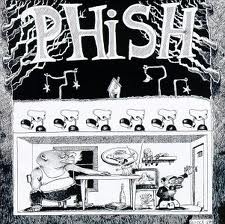
april 2002SOUNDTRACK: PHISH-The Siket Disc (1999).

siketThis is an (almost) entirely instrumental disc.  It’s exactly the kind of thing that people think of when they imagine Phish—long jams with no structure.  But unlike some of their more frenetic jams, this is a kind of enjoyable chilling out disc.  The compositions are actually select excerpts from the long-form improvisations of the “Ghost Sessions.”

There are 9 songs and most of them are short.  Except for “Whats the Use” which is an 11 minute track with a very cool guitar riff (that reminds me again of Frank Zappa) and some cool accompanying keyboard sounds.

“Me Left Toe” is about 5 minutes and has a nice build up within  it.  And “The Name is Slick” is a bit more staccato and less smooth than the other songs and it holds up for 4 minutes.

Most of the other songs are short jams (with 4 tracks being about 2 minutes or less).  Although there are a couple of weird, nonsensey tracks like “Fish Bass” which is just a weird series of noises.  Or “Quadrophonic Toppling” which has some spoken words (just the title repeated) as does “Title Track” which has the repeated word “Siket”and laughing.  “Insects” is a little unsettling as well.

“The Happy Whip and Dung Song” is 5 minutes long and, despite some weird effect on the keyboards, feels like a full song.  “Albert” is a short, pretty, gentle ballad.  It’s a nice ending to this disc.  While this is by no means an essential Phish disc, it is an interesting insight into their recording process and is as I said, a good chill out album.

[READ: October 28, 2013] “Eternal Winter”

I had never heard of the Aral Sea before reading this article and I am surprised that I haven’t and I’m shocked by what has happened there.  Near the city of Karalpakistan (no connection to Pakistan), near Uzbekistan and Kazakhstan, lies the Aral Sea. It was once the fourth largest body of water on Earth, larger than lake Michigan.  It is now shrunk by approximately 74%.

It was through the Soviet Union’s thirst for development and “progress” that canals were built which diverted water away from the Sea.  This effectively slowly dried out the lake (which the Soviet Union knew would happen).  The Soviet Union also dumped insecticides and toxic waste into it, rendering what is left of the sea bed largely poisonous. Anything that is not poisonous is heavily salinated making it worse than useless.  And to make it worse (if that is possible), the windstorms that frequently occur simply pick up the toxic dirt and dust and blow it all around the land.  Without the water, the temperature soars in the region–often reaching 120 degrees.

One of the reasons for the diversion of the water was cotton.  Cotton is a thirsty crop and it was discovered that Uzbekistan was well suited to the climate for the crop.  They just needed more water.  And so in the 1950s, the Amu Darya river was diverted away from the Aral Sea and into the Uzbekistan deserts.  And cotton flourished there.  Then in 1960, the Aral Sea began to shrink. (more…)

Read Full Post »

sep2000SOUNDTRACK: PHISH-Rift (1993).

riftRift has a kind of story to it (albeit it’s not a real concept album) and you can tell by the full cover (see the bottom) that the story is complex–thank you gatefold sleeves).  The album starts with “Rift” a fast guitar spiral that opens with a harmony vocals on the opening lyric and then a call and response between I believe, Page and Trey as they each take a line of the verse—it’s a cool and surprising opening.

“Fast Enough for You” is a slow country-tinged song (with slide guitar).  This is the first song of their early records that I really don’t know that well.  So it must not get played very much.  It’s a pretty song.  “Lengthwise” is a cute little a capella song (with snoring and clock ticking) which I think about whenever I am alone in a bed: “When you’re there I sleep lengthwise and when you’re gone I sleep diagonal in my bed.”

“Maze” is one of my favorite Phish songs and it sounds great here.  I love the bomp bomp at the end of the verses and the fugue vocals at the end of the song.  This version is fantastic.  “Sparkle” also features fugue and barbershop type vocals (with Mike’s deep voice added in) in a funny silly roping song.  It’s another highlight.  “Horn” has a great opening guitar line (that reminds me of Pearl Jam for some reason).  I’ve always enjoyed this one.  It sounds great here (because you can actually hear what the harmony voices are saying (something you usually can’t in the live setting).  “The Wedge” is a mid tempo song that sounds different from their live versions.

“My Friend My Friend” is a pretty dark song (“My friend, my friend he;s got a knife”) but the opening is a beautiful instrumental with lovely guitar sequences until at 2:30 when the piano takes over and the song becomes slightly menacing.  “Weigh” is a weird song that I rather like.  It’s very piano heavy and very boppy despite the crazy lyrics:  “I’d like to cut your head off to weight it, whaddya say?  5 pounds, 6 pounds, 7 pounds.”  “All Things Reconsidered” a nice NPR joke.  This is a 2 and a half minute instrumental of guitar and keyboards that sort of plays with the NPR “All Things Considered” music.

“Mound” starts with some wonderful out of time signature riffing—4/4 drums and bass and then super fast guitars that don’t quite match until the drums and bass then catch up.  It’s hard to believe that that unusual opening leads to the big catchy bouncy chorus: “And it’s time, time, time for the last rewind.”  “It’s Ice” is a little slower here than live but I kind of like it in this slightly slower version (you can really hear the riffs).  This is another song with fugue-like vocals (they do all of their vocal tricks very well).  “The Horse’ begins as a beautiful Spanish style guitar piece and morphs into a simple acoustic song (it’s al of 90 seconds) which bleeds into “Silent in the Morning,” another highlight from their live shows and a standout here.

Rift might just be my favorite Phish album.

[READ: October 23, 2013] “Escanaba’s Magic Hour”

Once I found out that Tom Bissell had written a number of articles in Harper’s I decided to read them all, especially since some of them already appeared in his book Magic Hours.  This was his first piece for Harper’s and it is the one I remembered most from the book.  So I enjoyed reading it again.

I’m also glad I read the Harper’s version because although I don’t think it varies from the book version at all (and I’m not willing to check), it had pictures from the movie and from Escanaba, which brought a bit more reality to the article.

So, what’s this about a movie?

Well, this article is about Jeff Daniels making a movie in Escanaba, Michigan called Escanaba in da Moonlight (which I haven’t seen, but as I said after reading this the first time, I now feel invested enough in it to want to watch it–reviews are mixed).  And it sounds kind of interesting.  I also really enjoyed the comment that Daniels’ appeal “has something to do with the fact that many men, if asked to cast their lives without undue conceit, might settle on Jeff Daniels to play themselves.” (more…)

Read Full Post »

harper juneSOUNDTRACK: PHISH-A Picture of Nectar (1992).

nectarA Picture of Nectar plays with expectations of Phish somewhat (as many as could be formed after two albums).  This album has sixteen songs, with half of them at 3 minutes or less.  These include the pretty jazz instrumental “Eliza,”  “Poor Heart” which is a slide guitar filled short country-ish romp, “Manteca” thirty seconds of nonsense.  “Magila” is a jazz instrumental which has solos by both piano and guitar.  “The Landlady” is another instrumental, but one that is a rocking guitar workout. “Faht” is a pretty, simple guitar piece with birds playing in the background

After somewhat anemic recordings, A Picture of Nectar feels a lot more full.  “Llama” bursts out of the gate sounding very complete with all of the instruments at the same power and breadth.  “Cavern” has a pretty ridiculous drum sound—very big and echoey and the pace is a little slower than is typical live, but it sounds very good. “Stash” clocks in at 7 minutes and it sounds very similar to the albums (although there are a still a bunch of silly voices like the one who says “Please don’t do that.”  “Guelah Papyrus” (no idea what that name is about) sounds fine here—very much like the live versions, full and fun.

“Glide” features the “glad glad glad” chorus in multipart harmony that makes this song seem like a barbershop number and sounds wonderful.  The longest song on the album is perennial favorite “Tweezer.”  The song is very much like the live versions except that the middle section has a crazy noisy breakdown which is a little disconcerting.  The solo then moves into a typical jam for Phish which really shows what they would do with this song live.  “The Mango Song” is a fun piano based jaunty number that highlights the band’s harmonies.  It sounds really good too.  “Chalk Dust Torture” sounds different because the voice is very different.  It sounds like Trey through a processor of some sort, or possibly somebody else singing.

The album ends with “Tweezer Reprise” because the song is so good it needs a proper ending.  This is another successful album from Phish.

[READ: September 20, 2013] “East Texas Lumber”

I wasn’t sure I would like this story about an unsuccessful guy in East Texas.  But I really did.

The narrator is Brian, a guy who has not been very successful since he got out of school.  He’s trying to save up to be a locksmith, but in the meantime he’s working at East Texas lumber.  And he’s thankful to divine providence for sending a tornado which helped him get the job.

A tornado ripped through their town and because of all of the rebuilding, the lumber store needed extra help, and that’s where Brian came in.  Even though on his first day he crushed some drywall and put a nail in his foot, they kept him on.  He was paired with Jimmy, a goof who had been working there for a long time.  Jimmy liked to smoke pot and go to parties, but he was the only one willing to partner up with potential liability Brian.

On this day their boss has given them a cushy job.  Deliver two loads of shingles to two different locations.  This was easy work—a lot of driving and no lumber to stack.  And it should get them back around 4, which is just enough time to goof off for the last hour, and get to The Hangout by 5 PM. (more…)

Read Full Post »

harper septSOUNDTRACK: PHISH-Lawn Boy (1990).

220px-Lawn_Boy_coverFor what I consider a guitar dominated band (Trey Anastasio is certainly the frontman), the early Phish albums have a lot of piano dominated tracks.  It’s not the guitar is absent but the piano is mixed quite loudly which gives these songs a slightly different emphasis than when they are played live.

Also was with many songs on Junta, “Reba” feels slower than the live versions.  It also has some funny backing vocals (a common occurrence with these early songs).  “My Sweet One” is a lot more honky tonk than the live versions, which often feel almost barbershoppy.  In “Split Open and Melt,” the vocals are done in a very funny mumbly way (with weird background vocals).  There’s also horns (crazy horns) and female vocals –giving it  vaguely R&B feel.

“The Oh Kee Pa Ceremony” (for origins of the phrase, check out this) is a live favorite that’s a fun and funky guitar solo (with a retro feel) and in this version there is much laughing and carrying on in the background).  “Bathtub Gin” opens with the crazy seemingly out of tune piano that they do live (although not as much).  There’s more funny voices on the chorus and crazy sound effects throughout.  Earlier Phish were a lot sillier than later Phish.

“Run Like an Antelope” also has crazy sound effects and it’s funny how I forget that the song is almost entirely introductory guitar solo wailing.  It’s not until 8 minutes that we get to the “rye rye rocco” section and the actual “run run run” part.   In this studio version, the “set your gear ship for the heart of your soul” section is spoken so quietly.  And the song is not quite ten minutes long.  “Lawn Boy” sounds clean and jazzy in ways that it doesn’t live.  And “Bouncing Round the Room” sounds a lot like the live version.  It’s a little slower, with a few more details thrown in.

Overall, Lawn Boy is a great early Phish album, with every song being a success.

[READ: October 3, 2013] “Life as a Terrorist”

William Vollmann was a suspect in the Unabomber case.  All because a “concerned citizen” alerted the FBI about his fiction.

This sounds utterly crazy, but it is true.

Vollmann has written about all kinds of things, both fiction and non-fiction.  For his non-fiction, he has traveled extensively, to Afghanistan and other places where terrorists reside.  So when he was detained upon reentering the United States from Yemen, he didn’t think too much of it.  But when he was detained a second time, years later–for seven hours and treated like a criminal–well, that got him mad.  And he used the Freedom of Information Act to see what the FBI had on him.

This is a sobering look at how the justice system in its zealotry to protect us can actually do far more harm than good, at least to innocent individuals. Vollmann uses this as the basis of his essay which looks at the omnipresent Unamericans: those who would attack without provocation and intimidate the weak. (more…)

Read Full Post »

harper septSOUNDTRACK: PHISH-Junta (1989).

juntaI’ve been listening to a lot of live Phish as of late and thought it would be interesting to see if there was truth to the adage that Phish is great live but not so great in the studio.  So here is their first official album.  It was released as a double album, and when it was reissued on CD some bonus material was added.  Incidentally, I just found out that the album if pronounced “juhnta” and not “hoonta” because of the engineer they worked with.

The album starts with “Fee” which is a fun song (the lyrics are wonderfully weird) and they don’t play it all that much so it’s a treat to listen to.  I enjoy the way the verses sound compressed and distant but the choruses are nice and full.  There’s also some funny and interesting sound effects (some of which accentuate the action) throughout the song. This sound effects and noises processing has been with Phish from the beginning and they kept it up through many of their earlier, less mature albums. “You Enjoy Myself” is a live favorite so it’s fun to hear it in this version.  As with a lot of their earlier records, this song sounds a little stiff, especially if you’ve heard the wild live versions. It’s not bad at all, indeed, it has a perfectionist quality to it—the time changes are perfect, the solos are flawless.  Indeed, it’s quite an achievement (and in this more polished version it sounds more like Yes than their live versions ever did).  Interestingly when we finally get to the lyrical section (about 5 minutes in) it’s quite a bit slower than they play live.

“Esther” sounds much more theatrical here.  The music is gorgeous and there are lots of effects and backing vocals which bring a bit more menace to the song than the live version possesses. This also had a very prog rock sensibility to it.  “Golgi Apparatus” has a lot more in the way of backing vocals than the live version.  And “Foam” has some changes: the bass is especially loud and funky and yet the pace is so much slower than I’m used to.  The odd thing is the kind of stiff way that the lead vocals enunciate everything.  And the deep voice (Mike?) is quite amusing at the end of the song.  “Dinner and a Movie” is a fun and silly song and this version is especially enjoyable because of the backing voices and chatter and laughter which illustrate the dinner (and presumably the movie).

“Divided Sky” has a beautiful melody and it’s nice to hear it played so pretty and simply here.  But again the remarkable thing is how much slower the song is here.  “David Bowie” also sounds great (there’s all kinds of weird sounds effects in the background of the (very long) soloing section—I have no idea why or what they might be).  The solo sounds like it was maybe done in one take as there’s a couple spots where it’s not “right,” (whether flubs or intentional is hard to say) but it still sounds terrific.  In fact a number of tracks have some little flubs which makes it seem like they either didn’t mind or tried for a more live feel.

“Fluffhead” sounds solid and like the live versions.  What I never realized until I actually paid attention is that the bulk of the music (the extended jam session) is called “Fluff’s Travels.”  “Flulfhead is only 3 and a half minutes, while “Fluff’s Travels” is over 11 minutes (it opens with the beginning of the guitar solo–the catchy riff that starts the lengthy jam).  “Contact” is a delightfully silly song about tires and cars that I’ve always enjoyed and find myself singing often because the melody is so simple.

What’s funny is that the end of “Contact” kind of bleeds into “Union Federal” which is listed as a live song (and clocks in at over 25 minutes long).  This “Union Federal” is an improvisational jam (or an Oh Kee Pah Ceremony—where the guys would get together with instruments (and other things) and jam for a time.  This song is weird with many layers—and is rather typical of one of Phish’s weirder jazz –flavored improv sections (meaning that there is a lot of dissonance and noise).  It’s quite jarring especially after all of the melodies and prettiness of the album proper.  And I can see a lot of people not being happy about its inclusion.  “Sanity” on the other hand is a fun song.  In the intro, they keep claiming the song is by Jimmy Buffett. They are clearly very silly in this setting, especially at the end of the song.  The final track is a live version of “Icculus” the song which is pretty much all buildup.  In the intro they quote U2 “This is red rocks, this is the edge.”  But the “joke” of this version is that Trey keeps postponing the name of the person who wrote the name of the Helping Friendly Book–stalling in any way he can.  As the song gets louder and louder and more absurd, the guys are even more frenetic.  It takes over 3 and a half minutes to get to the proper lyrics of the song.   And then the song itself is about 15 seconds.  Absurd nonsense.  But very amusing.

So this is quite a solid debut album, and the amount of songs that they still play live shows how fond everyone is of it.

[READ: October 2, 2013]  “Wrong Answer”

I didn’t hate Algebra.  I rather like solving puzzles so I enjoyed solving for x.  Algebra II I recall being more daunting and less fun with lots of formulae to memorize.  And, unlike everything promised, I have never used any of it in my adult life (geometry and angles, sure, but not logarithms).  According to this article the new United States CORE curriculum (which I know my son is dealing with already in 3rd grade) says that high school graduates must have Algebra II.

The reasons for this intensification in the studying of math are many (starting around the time of Ronald Reagan) but the current push comes from Arne Duncane, the U.S. secretary of education.  He believes that “algebra is a key, maybe the key to success in college.  Students who have completed Algebra II in high school are twice as likely to earn degree as those who didn’t.”  Whether or not that is true, those of us who earned a degree in nonmathematical  subjects certainly were not aided by this class.  But Nicholson Baker explains that the reason this might be true is that for most colleges, Algebra II is a prerequisite.  Ergo: if you don’t take Algebra II you can’t get into college because colleges require Algebra II.  That, for those who may not have taken logic–a far more useful course than Algebra II in daily life–is called a tautological fallacy.  [Indeed, I maintain that all high school students should have to take a course in logic because they would then be able to see through all of the builshit that politicians spill and claim to be logic.  Like the current (as I type this) government shutdown in which Republicans are claiming they didn’t want to shut down the government when they in fact signed papers saying they were going to shut down the government).]

The real problem with Duncan’s postulate that everyone should take Algebra II (“airplane mechanics do complex measurements and work with proportions and ratios…X-ray technicians calculate time exposures to capture the cleanest possible image.  Most factory workers need to understand Algebra II or even some trigonometry to operate complex manufacturing electronic equipment”) is that even if that were true (I don’t have any idea of it is or not), most people do not do those kinds of jobs.  And even if they did know higher math, they would still be salesmen, graphic artists, librarians, preschool teachers, custodians and many many other jobs that in no way require math. (more…)

Read Full Post »

dec2004SOUNDTRACK: AWAY-Cities (2013).

awayAway is Michel Langevin, the drummer for metal band Voivod.  But on his first solo album he eschews all conventional music.  Rather, he has created an exercise in found sound and released it on the small label Utech Records.

The album is described as

Strong field recordings capture more than just the sound of an area, they capture a mood and spirit of the place and people. On Cities, local color and nature recordings clash with riots and discord, capturing the full human experience across the world. Literal and metaphorical “found music” appears: the booming stereo of a passing car or distant church bells, as does the rhythmic engine hum of a bus or the chirping of birds. This tour is a fast paced one, rapidly weaving through the geographic locations building a diverse, yet consistently engaging experience. The audio journey captured here perfectly reinforces the fact that, regardless of one’s location, the presence of music is never far, nor should it be.

What we get is a collection that sounds like a tour through the streets of the respective cities (nothing more specific than Europe is given, sadly).  We hear street noise and buskers playing (interestingly just about every type of music I have heard in Boston subways as well).

I only wish more information was given about just what Away was up to.  Where he was and, more importantly, how he recorded these sounds. The recording quality is amazing—the panpipes and harmonicas sound crisp and clean with no other ambient noise.  Did he ask the performers if he could record?  How did he get them so pristine especially since I assume they are in the streets?  And for the Europe ones, was there any given order to the way they were edited?  Is it the progression of their Voivod tour, or is it just random?  The mixing and sequencing is quite good, especially in the shorter pieces which really take you on a journey.  Not knowing what’s happening is maddening and part of the fun as you try to picture (especially if you use headphones) exactly what you are hearing.

“Montreal 2010” opens with the sound of travel until we zoom in on panpipes (for a few seconds).  This switches to a lurching shanty (sung, I suspect in French—it’s a little hard to hear).  Then from the shadows comes the sound of someone playing Leonard Cohen’s “Hallelujah” on the harmonica.

“Europe 2012” opens with someone playing what I suspect is a hammered dulcimer (exactly the kind of thing that buskers play in subway stations), it shifts to a jazz trio (sax, bass, drums) wailing away with traffic noises in the background.  After some busses and an accordion solo, there are delicate chimes.  Finally a bagpipe melody leads us away from the delicate chimes until we hear announcements in what sound like Russian and then French.  The track ends with fans chanting “Voivod Voivod.”

Montreal 2012 returns Away to near his home city.  This time the scene is much nosier—it could be joyous, it could be angry—there are whistles and horns, and by the end it seems like a joyous parade.  The noise diminishes as an operatic voice pierces through briefly until the drums return.  More street noises, including police sirens, French chanting and a train passing by as we return to yet more street drumming.  If this track had more context for the title it would probably be more enjoyable. And yet as the parade (for surely that is what it is ) marches past you feel like you’re there.

“Mexico City 2012” opens with a truck honking and street noise until we hear what sounds like an indigenous band playing, then some more flute music and church bells pealing. Then there are announcements in Spanish (by both a man and woman presumably in the church) and church organ music.  Pan pipes and drums bring us back into the street and what sounds like a market scene which ends with some Mexican music playing.

“Europe 2011” opens with some beautiful guitar or perhaps an Indian stringed instrument playing and some traditional Indian singing.  There’s some more music playing and cheering and then some peace as birds take us out of this short track.

“Montreal 2011” opens with banjo music (!).  And then the more typically French sounding violin moves us along.  More pan pipes and traffic noise progress us through the city.  Then two very different examples of accordion music meld until the noise of the train wipes them out.   The track fades out with a band playing a  jaunty accordion inspired track.

“Chicago 2012” ends the disc with a symphony orchestra tuning up (I presume) for a few minutes.  It’s a shocking cacophony.  Until someone shushes the noises and the birds return, playing us out of this aural tour.

You can stream, download or buy the CD  here.  Buying the CD gets you some of Away’s cool art (although I wish there was more).

[READ: October 8, 2013] “War Wounds”

Since I’ve been enjoying Tom Bissell’s book reviews, I thought I’d see what else he had written in Harper’s.  He seems to have a storied career with the magazine as a traveling journalist.  And this article dates back to 2004.

It is a personal article about himself and his father.  What I found fascinating about this is that his father was a Vietnam veteran, and I don’t know too much in the way of writing that concerns being the child of a Vietnam veteran.  There are a lot of books and films about the Vietnam experience for the soldiers, but not so much about the families that they returned to (as far as I know).  So it was interesting to read Bissell’s account of growing up with his father–who was a hard man and who wasn’t afraid to fight with his children (especially when drunk).

The man that Tom grew up with had a temper and didn’t much approve of Tom’s chosen profession.  But unlike many people of his generation, Tom didn’t feel that he had a particularly estranged relationship with his father.  What on earth possessed him to invite his father on a trip to Vietnam–to visit the sites where he lost friends and was himself wounded, is the stuff of journalism. (more…)

Read Full Post »

harper septSOUNDTRACK: THE AVETT BROTHERS-“Open Ended Life” (2013).

AvettBrothers_CVR-560658fd89bf96b9dd1bf2b2be57013e64cb38cd-s1The folks at NPR love The Avett Brothers, and while I can see the appeal of their live show, their studio output just sounds like typical Americana to me.  Not bad by any means, but nothing all that special–honky tonk swing, occasional harmonica and expected harmonies.

The album was produced by Rick Rubin, which would have surprised me a few years ago but after his work with Johnny Cash it makes a lot of sense.

This song is a pretty rollicking good time (and the pretty ooohs are something of a surprise) especially by the end when everybody joins in–I’ll bet this is a hoot live.  The melody is certainly catchy.  I just want to like it more than I do.

[READ: October 1, 2013] “The Two Davises and the Rug”

Even though I recently complained about flash fiction, there is one author who does a very good job with it.  And that author is Lydia Davis.  She can generate an entire story out of a very simple concept . And while some of her flash fiction falls into that “it’s just a sketch, not a story” world, her longer short stories pack a lot in.

Like this one.  The entire premise of this story is that two people are interested in the same rug.  And they are both named Davis (bt are unrelated).

This Davis purchased the rug many years ago and has grown tired of it.  When her apartment complex has a sale for charity she puts in the rug and asks $10 for it.  But the sales people mark it up to $50 (it’s for charity after all).  No one buys the rug but another tenant across the way (also named Davis) is interested in it. But that Davis doesn’t buy the rug.  And when the sales is over this David takes the rug back home while that Davis wishes he had bought it.

The fun part of the story is that both Davises are indecisive.  So, this Davis wonders if she should sell the rug to that Davis and if so, for how much.  But if he really wanted it, maybe she should keep it, maybe it’s better than she realized.  And that Davis is unsure how well it will go in his house and he wonders if may be he could try it for a time first.  But this Davis is reluctant to give it up in case he really likes it or in case she really likes it.  And maybe she should give $50 to charity since she didn’t sell it.

And the story goes on like the, with insecurities running rampant. Fortunately it’s not a very long story (this is one instance where the short version pays off handsomely). And after we have gone through the various permutations, it may be hard for even us to know what those Davises should do.

Read Full Post »

« Newer Posts - Older Posts »