Feeds:
Posts
Comments

Archive for the ‘Harper’s’ Category

dec20133SOUNDTRACK: FRANKIE SPARO-Welcome Crummy Mystics [CST023] (2003).

sparo3It’s a shame that Welcome Crummy Mystics proved to be Sparo’s last album, because it is by far his best.

This album has more sounds, sounds that accentuate the simplicity that Sparo has constructed.  So there are all kinds of unexpected instruments on th opener “Hospitalville” including horns and bass, And the whole thing has a noir feel that pervades much of the disc.  It was was completely absent on the debut (intentionally obviously).  There are harmony vocals on “Sleds to Moderne” and “Akzidenz Grotesk” has electric guitar and Sparo’s voice mixed a bit louder.  There’s more rocking out on “Back on Speed.”

But it’s not all uptempo.  “Bright Angel Park” is a pretty  instrumental with lots of piano while “My Sistr” is a menacing slow piece that begins with just bass and voice.  Although as more instruments are added the menace is replaced by a kind of jazz feel.

“Camera” is sung in French and has interesting electronics throughout and “City as it Might Have Been” has beautiful strings layered on top of each other as it builds to an epic conclusion.  “This Lie” ends the disc with piano and organ an excellent accompaniment to his lyrics.  And on this album you can really hear what a great lyricist he is.

It’s amazing what a change this is from the debut and that he packs all of this great music in to a mere 37 minutes.

[READ: April 15, 2014] “Loving Las Vegas

I felt like I had read something else from Whitehead about gambling and it turns out he wrote an article for Grantland about the World Series of Poker in Atlantic City.  This essay is an excerpt from the upcoming book that he is writing about said World Series.

This is a story about Whitehead’s appreciation for Vegas from when he was young and dumb (well, not so dumb, really).  His friend Darren got a job writing for Let’s Go, the funky travel guide.  And the assignment was Vegas.  In 1991.  They were Gen X and they were going on a great road trip.  So naturally, the first thing to do was get new speakers for the crappy car.  [I have often felt a strong connection to Whitehead, feeling that we could have been soul mates if I were a little more daring and had lived in NY instead of NJ].

They go on a great road trip (Colson hadn’t gotten a license yet so he was a navigator).  They went to Chicago and saw the Sears Tower, they went to New Orleans to visit an old friend whose frat buddies wanted to know why he was “bringing niggers and Jews” into their chill-space (yikes).  Then they got out of there and went to the Grand Canyon and Lake Mead (which they wrote about).   And then it was on to Vegas. (more…)

Read Full Post »

dec20133SOUNDTRACK: FRANKIE SPARO-Arena Hostile (VPRO Radio Recordings) [CST017] (2001).

sparo2I didn’t love Sparo’s debut album, but a year later while on tour with A Silver Mt. Zion (whom I do love) he went into a studio in Amsterdam to re-record some of those songs.  I’ll let the Constellation site tell you what this EP is and why I like it so very very much,

In January 2001, Frankie Sparo toured Europe with a Silver Mt Zion. Musicians from the latter group worked on new arrangements of songs from Sparo’s debut record My Red Scare, adding strings, organ and electronics to Frankie’s guitar and beatbox compositions. Some of the results were captured in a live studio performance recorded live to 2-track at VPRO radio in Amsterdam, where a feverish flu found Sparo in a ravaged, hallucinatory state – which only added to the dark magic of these recordings. The four songs on this EP are all first takes, beautifully recorded by the good people at VPRO. Along with 3 songs reworked from the debut album, the EP also includes a heartbreaking cover of the Rolling Stones’ “I Am Waiting”, which Sparo performed solo a number of times in concert.

“Diminish Me NYC” is great in this version with an off-kilter electronic arrangement and strings. “The Night That We Stayed In” which I singled out on the debut album has two violins, turning the song into an even cooler number (although the “throw your hands in the air” line seems moderately less comical now).  “Here Comes The Future” has an almost dance beat—a slow dance mind you, but still, a good one and ends with some organ waves.  And the cover of “I am Waiting” must be the slowest cover of a Stones song ever.  I don’t know the original, but I bet it sounds nothing like this.

I really like this EP a lot and it makes me want to like the debut album even more–if I had more patience with it.

[READ: April 15, 2014] 3 book reviews

noveltyThis month Bissell reviewed non-fiction three books.

The first is Novelty: A History of the New by Michael North.  In this book North argues that newness, that novelty, has always been a problem: “one of the very first ideas to trouble the consciousness of humankind.”  This dates all the way back to Aristotle who argued that nothing came from nothing; that everything came from something else.  Even the Renaissance, that period of great exploration and creativity was really just mimicking classics (hence the word renaissance).  The new tends to be looked at askance, so we get terms like “novelty act.”

North says that one thing which is genuinely new is our proclivity to turn everything into information as gigabits or as abstract knowledge.

I’m intrigued by the premise of this book but not enough to want to read it and frankly, Bissell doesn’t make it sound that compelling.

Bissell connects this attitude about newness and novelty to the rock world (and rightly so).  Where we (well, some people) value novelty and criticize anything that is derivative.  Which leads to the second book (another one I don’t want to read but for different reasons).  Beatles vs. Stones by John McMillian.  The Beatles were arguably the most original band ever since no one did what they did before them.  And then, bvssarguably, the Rolling Stones came along and did just what the Beatles did a little bit afterwards.

Some easy examples:

  • The cover of the Rollings Stones’ first album is compositionally similar to the cover of The Beatles’ second album.
  • A few months after the Beatles released their ballad “Yesterday,” the Stones released their ballad “As Tears Go By.”  (The song was recorded earlier but was initially dismissed as not Stones enough).
  • After the Beatles used a sitar in “Norwegian Wood,” the Stones used one (in a different way) in “Paint It Black.”
  • And quotemaster himself, John Lennon, once said, “Everything we do, the Stones do four months later.”  [The Stones did still released some great music after The Beatles broke up, of course, even if now they play nothing they wrote after 1981 on tour anymore].

And this Lennon quote is typical of this book which is a gossipy casual look at the differences between the Beatles and Stones [Beatles when you’re writing, Stones when you’re jogging; Beatles when you’re alone, Stones when you’re with people).  But in addition to comparisons, he includes scenes like when the Beatles attended a Stones show and when Jagger and Richards were at Shea Stadium for The Beatles’ arrival.

There are many similarities between the bands, although the biggest different seems to be that the Stones never really became friends, while The Beatles were friends till the end.

Of course, the Stones has always been cooler than the Beatles, which is a nice segue into Bissell’s third book: The Cool School: Writing from America’s Hip Underground by Glenn O’Brien.

coolschoolO’Brien’s thesis is the seemingly obvious one that “cool” is not a new thing–that early tribes doing war dances had cool people playing syncopated drums in the corner.  But he is not arguing about coolness, he is collecting “a louche amuse bouche [that must have been fun to write]…a primer and inspiration for future thought crime.”  The book includes works by the likes of Henry Miller, Delmore Schwartz, LeRoi Jones and Eric Bogosian.  I like some of these guys, but as soon as I see them assembled together, I know I’m not going to be going anywhere near this book.

Bissell says that there is some cool stuff here: Miles Davis writing about Charlie Parker for example, but most of the cool seems to be trying too hard.  Like the “charmlessly dated” Norman Mailer piece, “The White Negro.”

I appreciate the way Bissell sums up what comes through from the book: “to be cool…is to make the conscious choice, every step of the way through life, to care about the wrong damn thing.”

It is comforting to come away from one of these book reviews without wanting to read anything.


Read Full Post »

harpoctSOUNDTRACK: FRANKIE SPARO-My Red Scare [CST013] (2000).

sparo1Speaking of early Constellation Records releases, Frankie Sparo was everywhere in the early stages of the label.  And then he just disappeared.  That proves to be quite literal as he was the pseudonym of Chad Jones (who i don’t know from anywhere else).  Frankie released two albums and an EP and then Chad retired him.

This debut is perhaps the most deconstructed and un-musical album of songs that I can think of.  It’s as if Sparo wrote songs and then decided to take four of every five notes out of the song.  And then he sings in a style that accompanies that spareness.  It’s actually too much of such littleness.  If Sparo’s voice filled the song the minimal accompaniment would be interesting.  If there was more music, his slow singing wouldn’t sound quite so… flat?  There’s talk of his lyrics being good, but I honestly find his singing to be so slow that I can’t really follows any of the songs.

And it’s a shame because his voice is plaintive and longing and the construction is very interesting, it just doesn’t really pan out for me.

The final two songs start to add more to them and I like them better.  I especially like the final tack “The Night That We Stayed In” which has without a doubt the slowest rendition of the oft cited phrase “throw your hands up in the air and wave them like you just don’t care” (imagine falling asleep while saying that).  But the music is fuller, bringing in a new and interesting style to the end of the album .

I suppose that in the right frame of mind this would be exquisite, I just hope I’m never in that frame of mind.

[READ: April 18, 2014] “Near-Death in the Afternoon”

I’m not  huge fan of Ernest Hemingway–I just don’t like his macho schtick.  But this piece–which is a comic story (I don’t know who the person he’s talking about is) is not only quite funny, it seems to be turning his macho image on its head.  Although perhaps I am oversimplifying Hemingway.

Anyhow, this comes from a collection of his letters, although it is considered a story and what submitted to (and rejected by) Vanity Fair in 1924.  The full title is “My Life in the Bull Ring with Donald Ogden Stewart” which implies to me that it is a longer piece, although it feels full to me.

It begins with Hemingway saying that he often encounters Donald Stewart in the bull ring (which make me laugh).  But he’d often ignored him.  Yet on this occasion the crowd is going crazy for him: “Don Stewart!” they chant.  Ernest wants to get into the ring but the crowd is insistent and, indeed, someone even throws a tomato at him (and hits him right in the face). (more…)

Read Full Post »

may20014SOUNDTRACK: CRYPTOPSY-“Slit Your Guts” (1996).

cryptI had never heard of this band until I saw the song mentioned in the article.  The song is impossibly fast with speeding guitars, super fast (inhuman) drums and an indecipherable growl as vocal.  In other words, a typical cookie monster metal song.  And yet, there is a lot more to it and, indeed it took me several listens before I could even figure out what was happening here, by which time I had really fallen for the song.

There’s a middle section which is just as punishing and fast but which is basically an instrumental break–not for showing off exactly but for showcasing more than the bands pummel.  It has a short guitar solo followed by a faster more traditional solo (each for one measure, each in a different ear). Then the tempo picks up for an extended instrumental section.  The melody is slightly more sinister, but it sounds great.  There’s even a (very short) bass solo that sticks out as a totally unexpected (and fun) surprise.

Then the growls come back in, staying with the new melody.  The vocals are so low and growly that they are almost another distorted instrument rather than a voice.

After that there’s a lengthy proper guitar solo.  As the song comes to a close,  it repeats some previous sections before suddenly halting.  It’s quite a trip. And it definitely makes me want to hear more from them (whatever their name means).

[READ: April 14, 2014] “Destroy Your Safe and Happy Lives”

Robbins, who is a poet, but about whom I know little else, takes us on a sort of literary tour of heavy metal.  His tone is interesting–he is clearly into metal, like in a big way (at the end of the article he talks about taking his writing students to see Converge (although he doesn’t exactly say why)), but he’s also not afraid to make fun of the preposterousness of, well, most of the bands–even the ones he likes.  It’s a kind of warts and all appreciation for what metal is and isn’t.  many people have written about metal from many different angles, so there’s not a lot “new” here, but it is interesting to hear the different bands discussed in such a thoughtful (and not just in a fanboy) way.

His first footnote is interesting both for metal followers and metal disdainers: “Genre classification doesn’t interest me.  Listen to Poison Idea’s Feel the Darkness followed by Repulsion’s Horrified and tell me the main difference between hardcore punk and metal isn’t that one has a bullshit positive message and one has a bullshit negative message.”

But since Robbins is a poet, he is interested in metal’s connection to poetry.  And in the article he cites William Blake (of course), but also Rilke and John Ashbery and (naturally) Milton’s Paradise Lost, as well as Shelley, Lord Byron and Charles Baudelaire.  He talks about them not because they are cool poets, but because they have also talked about because of metal’s “most familiar trope…duh, Satanism, which might be silly–okay, its’ definitely silly, but has a distinguished literary pedigree”.  Besides, he notes that Satan has the best lines in Paradise Lost (and I note that just as Judas has the best songs in Jesus Christ Superstar).

But sometimes this Satanism turns into a  form of paganism which then turns into nature worship.  From Voivod’s “Killing Technology” to black metal’s romanticism of nature (sometimes to crazy extremes–but that’s what a band needs to do to stand out sometimes).  Metal is all about the dark and primordial, a”rebuke to our soft lives.”

And yet, as a poet, Robbins has some quibbles with metal: (more…)

Read Full Post »

may20014SOUNDTRACK: “Elementary, My Dear” (1973).

elemYou have to have a particularly cruel heart if you don’t love School House Rock.

All of the songs, well, most of the songs, are super catchy and by golly if you don’t learn a lot.

And they attack problems in an interesting way.  The premise of using Noah’s Ark to show how to multiply by 2 is genius.

You’ll get that “elementary, my dear” section stuck in your head.  But I’m also impressed at the way the song goes into unexpected chords for “you get an even number.” And I love the way Bob Dorough really gets into it (whooping it up at the end).

Few people would think that the 2 times table is hard, but man is it fun to sing along to.

This song is not as popular as some of the other ones, but it’s still great

[READ: April 14, 2014] “A Study in Sherlock”

A while back I wrote a post about Sherlock Holmes on TV (Sherlock and Elementary) and in the movies (Sherlock Holmes).  I had read a few stories and so I did a brief comparison of the shows.  Since then while I have continued to believe that Sherlock is the better show, I have really grown to appreciate Elementary a lot more.  They almost seem incomparable because they are so very different in structure and intent.  Elementary has actually been a little more satisfying lately because it has so many more episodes that it allows the characters to develop and fail in interesting ways–something that the three episodes of Sherlock simply won’t do.

Laura Miller has done a similar thing with this article.  Although in fairness she did a lot more research than I did and talks a lot more about the original books and stage and early film adaptations, and she talks a lot less about the TV shows.  And no she doesn’t cite my post.

This was an enjoyable piece because it goes beyond the commonly known elements of Conan Doyle–how he did not like Holmes and tried to kill him off twice, that he wanted to write more important fiction–and into what Holmes was like after Doyle was finished with him.  Holmes has entered the public domain in both England and America, and so he is basically free for everyone to use, much like a classic myth or a fairy tale.  The big difference is that we know his origins.

What I especially enjoyed was that so many things that we think of as quintessential Holmes are actually not from Doyle.  His deerstalker hat was added by a book illustrator but is never mentioned in the text.  The calabash pipe came a decade later when a stage actor used it so that the audience could still see his face.  Conan Doyle was still alive while these changes were being made.  Indeed, when a play of Sherlock Holmes was written, the playwrite called and asked if he could give the man a love interest and Conan Doyle replied, “Marry him, murder him or do what you like with him.” (more…)

Read Full Post »

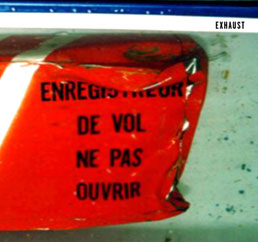
may20014SOUNDTRACK: EXHAUST-Enregistreur [CST021] (2002).

exhaust2While Exhaust’s debut was a mixed affair, their follow up really showed some great improvement.  The band feels more unified, there aren’t any single songs that were remixed (which stand out in a bad way), rather the remixing was done throughout the songs.  And, best of all there’s a lot more of that spooky bass clarinet.

The album feels more organic, “Gauss” opens with waves of music setting a mood until about a minute into track 2 “Behind The Water Tower” when the drums kick in the atmospherics gains urgency. “Voiceboxed” has a feeling of contemporary Portsihead which is neat from an album that came out almost a decade earlier.  This one has some samples of commercials , but they’re a little low in the mix so its hard to make them out. Although the spoken word part that swirls around your head is very cool and a little startling. (Headphones are a must for this album). There’s also a funny standup routine (yes, in the middle of the song)—wonder who it is.

“Ice Storm” opens with a sampled piano & a lot of static.  It morphs into a lengthy play/commercial/PSA by Heathrow Wimbledon and is called “The Maternal Habitat.”  I can’t find anything else about it online.  It’s rather fun to listen to, although when the skit is done, the music becomes strangely slow and the last two minutes (of 9) go on too long.  It bleeds into “Dither” which is mostly sampled voices and more commercials.  I love this Negativland kind of pastiche

“Behind the Paint Factory” mirrors “Water Tower” in that the drums kick in after 2 minutes and the song sounds great.  “My Country is Winter” is mostly tape manipulations including a screaming guitar solo that runs around your head.  “Silence Sur la Plateau” returns to that sort of ominous Portishead vibe with the sound of loud crinkling plastic as its main “music.”  There’ also a lengthy silence in the track which seems rather pointless to me.  The album ends much like it began with “Degauss” which is mostly clarinet solo and atmospheric sounds

It’s much better than their debut but still feels like they could have made a tighter album if they’d gotten rid of some (but not all) of the nonsense.

[READ: December 1, 2012] “The There There”

I have enjoyed Nelson’s stories in the past, and I feel like it’s time to find a collection of hers (and I see she has a lot, too).

What I especially enjoyed about this one was the way the title was used in the story and also the way it encompassed the main character in a way that was unrelated to the way it was used in the story.  In the first instance, the family is on vacation and they overhear some tourists asking “Where the hell are we?” while standing in front of the Colosseum.  The son explains that’s “like not seeing the Grand Canyon until you fell in it, like it’s the there there.”

The story is about a family–a mother, a father, and two sons.   It opens with the sons and the mother discussing the perfect murder.  The husband disapproves of the discussion but only indicates this with a cleared throat.  We see that Caroline, the mother, was imagining her husband when she was describing her murder.

While the story is basically about the mother (although told in third person), it flits back and forth to the other family members and how their behavior affects her.  First we see that their oldest son, having gone off to college, has fallen in love with his landlady–a woman with children older than him.  Caroline is appalled at this especially when Drew reveals that she’s not all that pretty, that he would have chosen one of those daughters. (more…)

Read Full Post »

may20014SOUNDTRACK: EXHAUST-Exhaust [CST004] (1998).

exhaustExhaust’s self titled album was another early release from Constellation (disc number 4).  At this point Godspeed You Black Emperor had not defined the label’s sound yet (correctly or incorrectly), so we get Exhaust.  Aidan, who is 1-Speed Bike, which did not have very good drums, is the drummer for Exhaust.  And man, the drums are awesome here.  The drums are again, loud, and they have a great live feel to them–the beats are funky and different and while they anchor what’s going on they in no way keep things settled.

The rest of the band includes a bass, a guitar, a bass clarinet and samples.  The samples just aren’t loud enough anywhere on the album.  It’s a shame–you simply can’t really hear them, which I guess is the point, but then what’s the point of having them?  So the first song, “A History of Guerrilla Warfare” is interesting (again, those drums!), but it’s in song two “Metro Mile End” when that bass clarinet comes out that it totally rules. The third song “Homemade Maggot Beer” is a 20 second hardcore song with just drums and feedback.  Song 4 “We Support Iran in Their Bid to Win the 1998 World Cup” is a remix by 1-Speed Bike, and after listening to the full length 1-Speed Bike, it sounds like it– a little dull, a little slow and nowhere near as dynamic as the album.  And it has such a good title too.

“Two Years On Welfare” has louder samples–you can hear a kind of political rant going on, but it seems like it could have been used better.  But around 1;30 the sounds get really interesting.  Track six, “This Is Our (Borrowed) Equipment” is another 1-Speed Bike remix, and it is mostly drums again.  “Wool Fever” makes good use of harmonics and drums although it goes on a bit too long.  The 8th song, “A Medley Of Late Night Buffet Commercials” is the final 1-Speed Bike remix.  Unlike the others I really like this one.  True, I wish the song was more akin to what the title says, but the drums are funky and hammering and sound great.  “Winterlude” is 40 seconds of squealing radio sounds before the final track reintroduces us to that great clarinet.  “The Black Horns Of H2T” reminds us how good this album can sound.

So it’s a mixed bag, but the highs are definitely high.

[READ: April 14, 2014] “Humor”

This article appeared in the December 1958 issue of Harper’s magazine.  Mark Twain made over 100 contributions to the magazine (geez).  I have often thought that Twain is an author I need to read more of.  But when I hear he has contributed over 100 articles to Harper’s alone, my mind reels at the output.

Anyhow, this is an article about repetition in the art of humor.  Interestingly, he relates a story that happened forty years before writing this.  So the occasions of the joke he tells was in 1918!  Woah.

The article talks about the first and second lectures that he ever gave.  The first was a success but he was concerned about the second as he had very little in the way of humor to warm up the audience.  He decided to make use of an anecdote that everyone in San Francisco had heard many times and were undoubtedly sick of.  It had been overdone as long as five years ago.  But he decided that he would simply tells the very overdone story over and over until people started to laugh (the precursor of Saturday Night Live, obviously). (more…)

Read Full Post »

march2014SOUNDTRACK: VALENTINA LISITSA-Chasing Pianos: The Piano Music of Michael Nyman (2014).

Inym,an don’t listen to a lot of classical music, but I do like it. I also enjoy some modern composers, in particular I have a strong fondness for Michael Nyman. Yes, yes, he’s a soundtrack composer, blah blah, but I find his music to be very pretty and often delightfully eccentric.   His music reminds me of Phillip Glass, in its repetitive nature, but he goes beyond the minimalism that Glass was trying to create by implementing inventive melodies and expansive sounds.

 Valentina Lisitsa is a 44 year old Ukrainian pianist and she tackles music from throughout Nymans’ soundtrack career.  Nyman came to prominence with The Piano, which is a beautiful score.  And this is where this album starts out.

I’m not going to talk about each piece.  Rather, the album overall has a consistent feel–piano versions of Nyman’s music.  Nyman isn’t the most difficult composer, but he has his own style and so the entire album has a nice flow (although it does get a little slow by the end).

She plays songs from eleven of his soundtracks (which I’ve listed at the end).  Many of them get only one track, but Wonderland gets two and The Diary of Anne Frank gets 5 cuts.  I actually don’t know either of those two scores.  The bulk of the disc is, unsurprisingly, from The Piano which has ten cuts here.

I actually know his older soundtracks a lot better, so it was interesting to hear these piano versions of many of these familiar tracks.  Like “Time Lapse” from A Zed & Two Naughts and “Chasing Sheep is Best Left to Shepherds” (ne of my favorite pieces by him) from The Draughtman’s Contract.

Stripping down Nyman has an interesting effect because you can really hear how pretty the melodies are.  Although the real pleasure I get from his songs is the weird embellishments he puts on them, like the interesting sounds (horn and didgeridoo?) in “Here to There” from the Piano (which are absent here).

Although it has the feeling of a piano concerto the end (with several songs from The Piano in a row) is a bit samey.  It was smart to end the disc with a reprise of the opening.

There’s also songs from Drowning By Numbers, Carrington, The End of The, Man with a Movie Camera, The Claim and Gattaca

[READ: April 3, 2014] “On Nudity” and “The Trees Step Out of the Forest”

I am linking these two essays because I read them very close to each other and they are almost diametrically opposed in their content. And I thought it would be an interesting contrast.

“On Nudity” is a very simple essay about nudity. When Norman Rush was a kid–9 or 10–his father was really into nudism. He always wanted to go to nude beaches, he was very lax with nudity around the house and he tried to get his wife to join him. She was reluctant. Indeed, she didn’t really seem to like her husband very much and it seems they only got married because she was pregnant (and he may not have thought that was a good enough reason, to be honest).  She tried her best to make him unhappy because of this, and that seemed to involve declining his nudity bug.

So there were copies of Sunshine and Health (the premiere nudist magazine) hidden in the house (although Norman knew where they were), and yet, despite this access, he couldn’t get enough.  Rather than sating his needs, he was more obsessed than ever.  He wanted the real thing, whether it was getting his cousin to play strip poker or trying to spy on women in changing rooms.  He talks about the various hings he did just to get a peek of flesh.  And as the essay comes to close he apologizes to the two women whose privacy he invaded by spying on them.  The guilt about what he did to these women made him stop, although the women likely never knew what had happened to them. (more…)

Read Full Post »

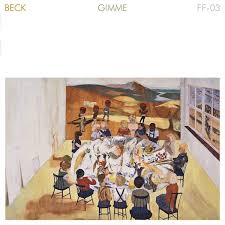
harperjanSOUNDTRACK: BECK-“Gimme” (2013).

gimmeThis was the final of the three singles that Beck released in 2013.

It is by far the weirdest of the three, and seems the most experimental.

The song is only 2 and a half minutes long.  It starts with vibraphone-like sounds. The vocals are layered and processed with random voices shouting “Gimme” throughout the track.  I have no idea what the lyrics are.

It is noisy and cluttered, although there is a melody under all of that.  And then it ends just as suddenly as it began.  This song may some end of the year lists, but it’s certainly not easy listening.

[READ: April 1, 2014] “Subject to Search”

Sarah recently brought home a copy of Lorrie Moore’s Bark, and I’ve put it on my to-read list (somewhere near the top).  So browsing through this back issue of Harper’s I saw this story and figured it was probably in Bark (it is), but I decided to read it anyhow.

The story begins with an amusing exchange.  A man sits down and says “I have to leave.”  He and the woman are in a restaurant and she wonders if he has time to eat.  He tells her to order lamb couscous and she worries about her pronunciation.  It turns out they are in France and her French is passable at best.  She worries that there is a distinction between lamb to eat and lamb as a pet (like between pork and pig) in French and that she may end up with something totally unacceptable.

When the man returns he explains to her that he has to fly back to the States, and to us that he is in “the intelligence game.”

As the story unfold we learn more about him from the way she has perceived him (she assumed he was a drug runner from his story about driving cars in Holland).  He escaped from Iran just before the hostage situation broke out in the 70s.  And he paid for everything in cash.  But we also learn that she has known him for years. (more…)

Read Full Post »

harperjanSOUNDTRACK: BECK-“I Won’t Be Long” (2013).

iwontbelongThis was Beck’s second single in 2013.  I did not like this at first as you can see here, but as I predicted, it grew I me. Interestingly, listening to it now, after having heard it a few dozen times, my observations about the song are the same, I just find it more appealing.  And listening with headphones showed me that there’s more to it than the radio listens showed me.

The verses are actually kind of fun and while I initially found the chorus to be way too slow, it has really grown on me. And there’s a lot more music in the track than I initially realized. It’s quite a full and satisfying song. Including a very noisy guitar solo at the end which makes this song less soporific.  In fact, some of the guitar notes hearken back to 80s guitar sounds very nicely.

So, yes I’ve become a fan of this song.  And having listened through his catalog I find that it’s not as out of place as I initially thought.

[READ: April 1, 2014] “The Boys on the Block”

The only other thing I’ve read by Gordon Lish was in Harper’s in January 2013 (perhaps this is an annual thing).  That story was a tale in which Lish was the narrator and the main character and it was halting and complicated but generally enjoyable.

This story is actually listed as a memoir, so the self-referential nature is to be expected.  What is not expected (although maybe that is how Lish writes) is the halting, stumbling narrator.  In this piece, Lish looks back at the kids on his block and the games of one-upmanship they would play.  And it’s funny that he can spend several paragraphs correcting himself and addenduming himself all to talk about the boys on his block playing paddle ball

the paddle and the ball and the string–are you with me?–the paddle and the ball and the string, which the whole idea of the game was for you to grab the paddle in your hand and see if you could toss the little red ball up a little bit and then smack it with the paddle and then keep on smacking it with the paddle until you missed it altogether or, you know, you just didn’t smack it right and it went all crazy in the wrong direction and then it was the other boy’s turn… [the sentence continues for longer than I have written so far].

Naturally there were boys who were good at it–Gordon was not one of them, but the Stanleys were–they were two boys named Stanley.  But Gordon, oh Jesus, did he fear taking his turn, especially after the Stanleys were so good at it.  But at least there was Bobby–he was the worst at everything.  Gordon couldn’t wait for Bobby to take a turn.  But lo, Bobby was amazing at it, almost as good as the Stanley’s and that could not be. (more…)

Read Full Post »

« Newer Posts - Older Posts »