 SOUNDTRACK: JIAN-The First 6 Songs (2001).
 Being American and apolitical in my youth, I had no idea who Pierre Trudeau was until about 2001. And my first real introduction was through this album by Jian Ghomeshi. Jian was one of the four guys in Moxy Früvous (and man has his career skyrocketed since then…watch his great interview show Q online–in particular, check out the crazily uncomfortable interview with Billy Bob Thornton or the wonderful hour long interview with Rush).
Moxy Früvous had just broken up and Jian, who was one of my faves in the band, put out the optimistically title The first 6 songs (no other songs have arrived yet).
Jian is a mostly folk rock album which features Jian’s gentle voice. And gentleness is one of Jian’s trademarks, it would seem. But more than gentleness, his songs are about accountability and justice. And yet lyrically, he’s not naive or obvious. “Quebec City” is about the Summit of the Americas in Quebec City in 2001 (“the whole world is watching”).
I’ve always felt connected to the last track, “Lousy Boy”:
“And a man Is a man If he’s got a gun in his hand
Well I never wanted to destroy I always made a lousy boy…. And I know guys who are just like me
They like hockey and poetry
I think in retrospect that we have won
I’m a full-grown man and I don’t own a gun.”
Früvous has similarly thoughtful lyrics but in addition to the lyrics, the music is always interesting. So the unexpected chord changes in the bridge to “Astronaut” turn the song from a simple folk song into a moving rocker. And “Baby Don’t Lie” is a 5 minute track that builds on a folk base and is a catchy sing along.
of course, this all leads to the song “Father (For Pierre Trudeau)” the song that first taught me a little bit about the Prime Minister. The song covers a few moments of his media-saturated leadership. But mostly it’s a reflection about Trudeau on the day of his death. The personal touch of course is that Ghomeshi’s father wanted to meet him (as did Jian) but now they w0uld never get to. It’s a very touching song, and I have a hard time imagining someone writing a similar song about a President.
It was this song that got me to investigate the life and leadership of Trudeau. (I even wrote an email to Jian, to which he quickly responded…I only wish I still had that email account active).
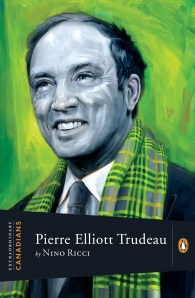
[READ: January 12, 2011] Pierre Elliot Trudeau
This is one of the more exciting biographies that I’ve read. Which is pretty great. Although one of the reasons it is so exciting is because he presumes that the reader knows a lot about Trudeau already. And to be fair, I assume most Canadians would know the global picture (and most of the details) about him already. So, basically, you get a summary picture of Trudeau, but instead of a quick outline that glosses over details, we get a lot of details, but no gloss.
What I’m getting at is that there are a number of places where Ricci talks about events and movements as if we know them. So this makes for incredible fluency even if the novice is left puzzling exactly what all the fuss was about. In fairness, contextually it’s easy to figure out, it’s just a bit surprising.
Another fascinating thing: Ricci skips over Trudeau’s childhood pretty much completely. The book opens with Ricci’s memory of seeing Trudeau in 1967 when he (Ricci) was a young boy and seeing the way his teachers an adults seemed mesmerized by him.
Nostalgia aside, Ricci quickly explains what a polarizing figure Trudeau has been. Warmly loved by many and yet (according to Macleans) ranked 5th of all Canadian Prime Ministers (despite being re-elected several times). Actually, the way that Ricci words it it sounds like he came much lower than that (he says “third tier” which seems much mower than 5th). And, judging by comments on YouTube videos, utterly hated by others.
The next chapter continues in 1968 at the beginning of Trudeaumania. Treudeaumania sounds a lot like Obamamania–a young, relatively inexperienced politician makes some noise and is thrust into prominence. (Of course, in 1968, Trudeau only ran for office for a month and a half before being elected–ah the bliss of a short campaign season).
A video of Trudeaumania shows people swooning over him.
 The biography does cover some of Trudeau’s earlier years (taken largely from Young Trudeau by Max and Monique Nemni). He was a somewhat rebellious youth and his teen behavior was full of the usual (and not so usual) rebellions. But the thing with Trudeau is that it is never clear whether he seriously held certain beliefs or if he was just trying to get a reaction out of people.
He established a society called les X whose purpose was to create an independent Quebec (organized under fascist principles). les X faded from Trudeau’s life and existence with very little fanfare, and evidently radical groups like that sprang up all the time in Quebec at that time. Really, it seems to point to his growing bored at his school and with the provincialism of Quebec.
When he left Quebec for Harvard and later for Europe, his mind was expanded and his beliefs opened up accordingly. He had written many anti-Semitic things in his Montreal youth but once he actually met some Jews, he quickly changed his tune. Indeed, Harvard seems to have really shaped his later outlook in life. And his exposure to vastly different attitudes during his studying Paris and then later in London exposed him to so much more in the world.
When he returned home to Quebec he found everything small and narrow (which is exactly how it (and he) was when he left it). And he quickly finds himself embroiled in politics with the Asbestos Strike of 1949. He took a position (and offered free legal assistance to anyone striking) which raised his profile and quickly made him persona non grata in his province.
This led him to leave for Ottawa, where he was less known and (since his credentials were great) where he could easily get a low position in politics and establish his career. The main thing he learned, though, was that Ottawa was not the enemy (as is generally held to be true in Quebec).
Trudeau eventually returned to Quebec for Cité libre. This is one of the things that Ricci glosses over…I’m still not exactly sure what Cité libre is (okay, an influential political journal), but I’m well aware of Trudeau’s involvement in it. And how it helped him to state his principles and beliefs.
There’s a lengthy passage where Ricci explains how Trudeau’s federalism came to blossom so powerfully for him. And this argument is one of the reasons why I am in the camp of Trudeau, because even though his piece is meant to be just about Quebec, I find it holds true for the U.S. as well (substitute out Quebec for any special interest).
The sort of independent Quebec he had dreamed of as a young man, he saw now, would only have given greater rein to the ruling elites to exploit nationalism for their own end, as Duplessis has done. In a Quebec obsessed with the survival of French-Canadian culture it was too easy for leaders to manipulate the electorate by promoting vague ideological goals rather than more practical ones, such as those providing infrastructure and employment (103).
Trudeaumania quickly swept him into office, but he was most reviled by his home province which felt betrayed by his turning his back on separatism. He was the target of an attack by the FLQ, which captured and killed Trudeau’s friend and cabinet minister Pierre Laport. This was known as the October Crisis. Trudeau’s reaction was swift and hard, he called for martial law (and the Mounties certainly abused their rights). But when questioned about whether he should or could step so hard on a province his answer was “Just watch me”
Now, it turns out that that quote comes at the end of a lengthy interview and makes for a glib soundbite when in fact Trudeau was anything but glib.
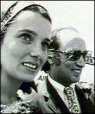 The next big moment of excitement for Trudeaumania was when he married Margaret Sinclair. For a brief time, they were the it couple. He was 51, she was just 22, and she was beautiful. Trudeau seemed to be a confirmed bachelor or at least a consummate playboy, so to have him settled down was quite a story. But how hard must it have been to be a young woman suddenly thrust into the political spotlight.
Naturally, cracks would surface in their marriage. In fact, in 1977, Maggie decided to party with The Rolling Stones rather than attend her sixth wedding anniversary party (read the wonderful article in People about it–I love the tsk tsk tone!).
But the penultimate chapter is, mostly, about Trudeau’s disappointments. He had taken office in a hail of excitement but really had not a lot to show for it. He was even set for retirement, until he was drawn back in. And in this final term, he was finally able to achieve his legacy. And this legacy seems to be summarized by two words: federalism and patriation. (With the downside being summed up in the word “notwithstanding”). Now, this is obviously something that Canadians know all about, and it seems foolish to summarize what this meant for readers who lived it. But for me, who knows precious little about the mechanics of Canadian politics, I was a little lost in the details.
I got the Federalism thing, but the constitution is a bit confusing. And the whole notwithstanding clause really kind of lost me. Nevertheless, the chapter that covered this was rather exciting because Ricci writes as if there is one man whose mission is to see him fail. And this nemesis is Rene Lévesque. It’s a classic mano a mano battle between two Quebeckers and it’s really rather exciting (especially if you didn’t know the results).
The final chapter talks of Trudeau’s legacy. And in this chapter Ricci seems to side with Trudeau. He cites specific examples of being the best man at a same-sex wedding ceremony, something that would not be possible without Trudeau (even though Trudeau never envisioned it). Indeed, there’s a comment that:
during the 1968 leaders’ debate, Réal Caouette, leader of the Ralliement créditistes, joked that Trudeau’s Criminal Code amendments might lead to a situation where “a man, a mature man, could in the future marry another mature man” Caouette had his joke while Trudeau, awaiting his response time, smiled civilly and held his tongue.
Because I’m not part of the culture, I don’t know to read Ricci’s take on the man. He is not afraid to show off all of Trudeau’s faults. In fact, in many instances he rather highlights them. For instance, the debt under Trudeau expanded exponentially. When Trudeau took office in 1968 Canada had a debt of $18 billion; when he left office in 1984, that debt stood at $200 billion, an increase of 83% in real terms. And yet at the end of a nasty passage he will present some evidence which ameliorates Trudeau either in whole or (more typically) in part.
I guess in that sense it is an excellent primer on Trudeau’s political life. But it’s also personal enough that you can see how one man impacted people. Not citizens, but people. And when he describes the people lined up for Trudeau’s funeral it ties right back to Jian’s song. It really shows the impact that one person can have on the lives of so many.
And, here’s a shameless plug to the folks at Penguin Canada–I will absolutely post about all of the books in this series if you want to send me the rest of them. I don’t know how much attention these titles will get outside of Canada, but I am quite interested in a number of the subjects, and will happily read all of the books if you want to send them to me. Just contact me here!
For ease of searching I include: Fruvous, creditistes, Real Caouette, Rene Levesque, Cite libre
Read Full Post »
 SOUNDTRACK: SUPERCHUNK-Superchunk (1990).
 Some time ago, I reviewed all of the Superchunk EPs. After progresing to their most current music, returning to their first album is a bit of a shock. Superchunk’s first full length album is incredibly raw, with lots of screaming (two vocalists at once, even) and a very grungy attitude. It has a DIY aestethic, in keeping with the undeground scene at the time.


 I’m very late to this show, I know. But then I have an excuse: I don’t like watching TV/movies/etc on my computer. So, even when I watched the awesome Dr Horrible, and the commentary told me all about Felicia Day’s online show, I didn’t investigate.
 SOUNDTRACK: WALLER NOT WELLER blog.
 WallerNotWeller
 SOUNDTRACK: SISTERS OF MERCY-Floodland (1987).
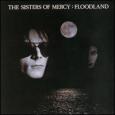 Since I’m reviewing a goth book, why not talk about a goth record? Back in the day, I really liked Floodland (and still think it’s pretty cool). The album is over the top, but it’s quite apparent that I’m really drawn to theatrical music.
 SOUNDTRACK: FUGAZI-13 Songs (1990).
 I was so blown away by that first Fugazi disc that I immediately ran out and got this collection of their first two EPs.

 I Just Read About That...