Feeds:
Posts
Comments

Archive for the ‘Language’ Category

SOUNDTRACK: WEEZER-Hurley (2010).

In my head, no band garners as much debate as Weezer.  According to this article, a man offered them $10 million to break up.  Even I go back and forth about whether they are great pop song writers or incredible sell outs.  I mean, look at one of the items on their thanks list for Hurley: “Dodge–makers of the timeless Challenger.”  Is this ironic or not and if not, does it matter?  I’m also torn by Rivers Cuomo’s Harvard degree, which I would think means he would write intellectually rigorous songs–and yet he never does.

But what of it?  Let’s talk about the music.  It has dawned on me that the closest band to compare them to is Cheap Trick.  They write poppy songs with often heavy guitars that are completely sing along-y but are in no way alternative to anything.  And yet everyone loves Cheap Trick, so why not love Weezer, too?

Hurley is no different.  Each song is 3 minutes of pure pop (for crying out loud Desmond Child is on one track–put one in the sell out column).  But they also have some odd fans on this disc: the crew from Jackass sings backing vocals on “Memories” and Michael Cera plays mandolin and sings backing vocals on “Hang On” (although you can’t hear any of them really).  “Hang On,” by the way is their most Cheap Trick-y song to date.

“Unspoken” features a flute and acoustic guitars until about two minutes into a three-minute song.  Then it bursts out of acousticland and into heavy rocking guitars.  The one song I don’t get is “Where My Sex?” which I suppose is the controversial song on the disc.  He’s clearly talking about socks but he keeps saying sex.  I really have no idea why.  It’s not funny, even remotely.  It’s just an odd decision.  And I would say I rather dislike the song, but the chorus is great, as is the totally unexpected third section (which is like  pop song unto itself) that comes in 2 and a half minutes out of nowhere.

“Smart Girls” has to be ironic, but who knows anymore.  To me the most interesting song is “Brave New World.”  It eschews the standard big-chords-for-choruses format they’ve been using with a much heavier guitar and single guitar notes in the verses.  (Although the chorus is, once again super catchy).

My version of Hurley has bonus tracks which are separated by an interesting 10 seconds of string music.  The bonus tracks include a cover of a song from Yo Gabba Gabba ( I really must watch that show some time).  There’s also a great cover of Coldplay’s “Viva La Vida” (in many ways Weezer is like a harder rocking version of Coldplay in terms of success and obvious sellout possibilities).  Although this live version shows that Rivers’ voice is no match for Chris Martin’s.

“I want to Be Someone” is an earnest acoustic solo track while “Represent” (Rocked Out Mix) is one of the heaviest things they’ve done.  I assumed the original was on Raditude, but it’s not.  Evidently it’s the unofficial song of the U.S. World Cup soccer team.  Huh, who knew?

So yes, it seems that they’re pretty much sell outs.  And yet for thirty minutes (all of their discs are so nicely short) it’s easy to stop worrying about “indie or not” and just sing along.

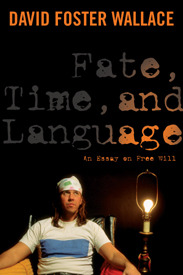
[READ: November 7, 2010] Fate, Time and Language: An Essay on Free Will

First I wanted to thank Columbia University Press for sending me an Uncorrected Proof of this book. I was pretty excited to read it, but to get it a few weeks early was even cooler (and, no, this won’t have any impact on my review).

Second, I wanted to state exactly what this book IS (because I wasn’t entirely sure myself).  The book is a reprinting of David Foster Wallace’s philosophy graduate undergrad thesis.  However, rather than just publishing the thesis (and giving us a short book or a long book with one sentence per page), Columbia University Press has packed the book with a great many essays that help to contextualize the thesis.  The Preface by Steven H. Cahn & Maureen Eckert explains this quite neatly.

So, my (briefer) version of the background: DFW’s thesis is about Richard Taylor’s article “Fatalism” (1962).  CUP has also included Taylor’s initial article (so we can see what DFW is talking about).  And even more than that, when Taylor’s article was initially published, it caused a bit of controversy and a lot of responses.  So, to get a sense of everything that DFW was working with (and against), this book also includes the intellectual dialogue: articles that range from four to ten pages (and also include a dense of Taylor by Steven H. Cahn himself (published in 1964).

Part II of the book includes an introduction by Maureen Eckhart and DFW’s essay.

Part III is a brief look at DFW as a student written by a former professor, Jay Garfield.

Before I get to the meat of the book itself, I wanted to say that I didn’t know anything about this essay.  And I’d thought about this thesis as possibly an interesting piece of philosophy from an author whose work I greatly admired.    Well the introduction to this book states in pretty certain terms that my thinking about this thesis is a massive understatement.  For, in fact, DFW’s thesis undermined Taylor’s argument in ways that no other argument had been able to do before.  His thesis more or less repudiated Taylor’s original essay.  The thesis also won the Amherst University Gail Kennedy Memorial Prize in Philosophy (and a wonderful piece of trivia: DFW’s father James won the same prize in 1959).  So, yes, this isn’t just a graduate undergrad thesis, this is real philosophy.

On to the book: (more…)

Read Full Post »

SOUNDTRACK: FUN BOY THREE-“Our Lips Are Sealed” (1983).

In an interview with David Foster Wallace’s sister, she says that David spent an entire summer listening to this song.  Most of us know the Go-Go’s version which is bubbly and playful (even though the lyrics–which are the same–are quite dark).

I’ve had this song on some compilation or other for years and I’ve alway thought of it as a kind of novelty.  And yet the more I listened to it, the more I liked it (and the more I liked it more than the Go-Go’s version).

Terry Hall, the singer of Fun Boy Three (and The Specials), co-wrote the song with Jane Wiedlin.  And it’s funny to hear how very different the two cowriters made their versions.

There’s definitely a new romantics vibe to the Fun Boy Three version, but the great bass backing vocals bring a coolly mysterious element to the song.  And if you check out the live version, you can see the polar opposite stage manner from Belinda Carlisle.  Terry Hall makes Robert Smith seems gregarious and silly.  And yet, for all of the darkness of the song, it’s still hard not to bop along to.  It’s pretty wonderful.

[READ: November 7, 2010] Consider David Foster Wallace

A group read of Consider David Foster Wallace is currently underway.  I had planned to read along and contribute weekly posts here.  I read the first two articles and, as it turns out, I have literally nothing useful to say about them.  And I certainly don’t have enough to contribute a weekly opinion about them.

It’s not that they are bad, not at all.  The onus is mine.  I am out of academia for something like a decade now.  I am totally out of practice for coming up with clever arguments and rebuttals to well researched pieces.  I have also seen a few people’s comments and critiques of these pieces and I realize that I am just not in the right mindset to be a productive member of the academic community.

But that doesn’t mean that I’m not going to read it and write a post when I’m done (I’ll likely follow along with the discussions, so this book won’t get posted for quite some time).

In the meantime, I wanted to say a few words about the preface and introduction.  (more…)

Read Full Post »

[LISTENED TO: End of October 2010] Brief Interviews with Hideous Men

There are three options for listening to Brief Interviews.

The first version is the original audio cassette which is read entirely by DFW (1999).  It’s out of print but you can download the audio for free at the David Foster Wallace Audio Project. The second version is the newly released audio book that coincides with John Krasinski’s film (2009).  This CD features some of the readings by DFW although most of the actual interviews are read by the actors from the film (see below for all details).  The third option is a collection of staged readings which were created by The Howling Fantods Brief Interviews Project.  They are available at the site and at the David Foster Wallace Audio Project.  [UPDATE Nov. 8: For the sake of accuracy, I wanted to state that George Carr is responsible for all of the work down for these recordings.  The Howling Fantods site simply hosted the results].

None of these recordings include all of the stories from the book.  Although the stories that they do include are unedited (this is officially listed as “unedited selections from the book”).  The stories that are not included in any of these recordings are:  creepy organ music

  • “The Depressed Person”  [this would have been a tour de force to read]
  • “The Devil Is a Busy Man”
  • “Think”
  • “Signifying Nothing”
  • Datum Centurio” [I can’t imagine trying to read this out loud]
  • “Octet”
  • “Adult World (I)”
  • “Adult World (II)” [I would have liked to hear how these were handled]
  • “The Devil Is a Busy Man”
  • “Church Not Made with Hands”
  • “Yet Another Example of the Porousness of Certain Borders (XI)”
  • “Tri-Stan: I Sold Sissee Nar to Ecko” [this is my least favorite bit of DFW work and I would have really liked to have heard it read aloud to see if I could get anything more out of it].
  • “On His Deathbed, Holding Your Hand, the Acclaimed New Young Off-Broadway Playwright’s Father Begs a Boon” (more…)

Read Full Post »

SOUNDTRACK: BROKEN BELLS-Broken Bells (2010).
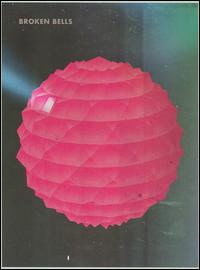
When I first played this disc I was really disappointed by it.  I’ve grown to expect crazy magic from Danger Mouse, and I assumed that this collaboration with James Mercer of The Shins would be crazy awesome.  But it seemed very mellow to me.  Mellow in a way that just kind of sat there.  So I put it aside for a while.

Then I listened to it again a little later and I found that I really liked it this time.  In fact, it rapidly grew into one of my favorite releases of 2010.

The disc is a wonderfully paced mixture of acoustic guitars, interesting keyboard sounds and, often, downright bizarre electronic choices (subtle, yet bizarre).  The weird sounds that open the disc, a kind of backwards keyboard, are disorienting but also very catchy.  And the song itself is instantly familiar.  It’s followed by “Vaporize” a simple acoustic number that bursts out with some great organ and (very) distorted drums.  It also features a fascinating horn solo!

“Your Head is on Fire” settles things down a bit with a mellow track which, after some cool introduction, sounds like a  pretty typical sounding Shins track (ie, very nice indeed–and more on this in a moment).

“The Ghost Inside” feels like a ubiquitous single.  I’m not sure if it is or if it’s just so catchy (with dancey bits and hand claps and a great falsetto) that it should be everywhere.  “Sailing to Nowhere” reminds me, I think, of Air.  And the great weird drums/cymbals that punctuate each verse are weird and cool.

One of the best songs is “Mongrel Heart” it opens with a western-inspired sound, but quickly shifts to a quiet verse.  The bridge picks up the electronics to add a sinister air (and all of this is accompanied by nice backing vocals, too).  But it’s the mid section of the song that’s really a surprise: it suddenly breaks into a Western movie soundtrack (ala Morricone) with a lone trumpet playing a melancholy solo.  And this surprise is, paradoxically, somewhat typical of the disc: lots of songs have quirky surprises in them, which is pretty cool.

Having said all this, there are a few tracks where it feels like the two aren’t so much collaborating as just playing with each other.  And that may have been my initial disappointment.  I was expecting a great work from a combined powerhouse, and I think what we get is two artists writing great stuff while seemingly respecting each other too much to step on each others toes.

There is another Broken Bells disc in the works.  And I have to assume that they’ll feel more comfortable with each other and simply knock our socks off next time.  But in the meantime we have this really wonderful disc to enjoy.

[READ: October 21, 2010] The Broom of the System

It dawned on me sometime last summer that I had never read DFW’s first novel.  I bought it not long after reading Infinite Jest and then for some reason, never read it.  And by around this time I had a not very convincing reason for not reading it.  DFW seemed to dismiss his “earlier work” as not very good.  I now assume that he’s referring to his pre-Broom writings, but I was a little nervous that maybe this book was just not very good.

Well I need not have worried.

It’s hard not to talk about this book in the context of his other books, but I’m going to try.  Broom is set in the (then) future of 1990.  But the past of the book is not the same past that we inhabited.  While the world that we know is not radically different, there is one huge difference in the United States: the Great Ohio Desert.  The scene in which the desert comes about (in 1972) is one of the many outstanding set pieces of the book, so I’ll refrain from revealing the details of it.  Suffice it to say that the desert is important for many reasons in the book, and its origin is fascinating and rather funny. (more…)

Read Full Post »

[LISTENED TO: October 20, 2010] Readings

This (all too brief) collection of readings by David Foster Wallace includes several excerpts and a few shorter pieces.  I’ve noticed that there seem to be more and more videos (audios) of DFW reading on YouTube.  If I had time I would try to gather all of these videos (or even just try to watch them), but for now, I’ll stick with what’s at the David Foster Wallace Audio Project.

The Consider the Lobster reading is an excerpt from”The View from Mrs. Thompson’s”.  I’d never heard him read this piece before and it is a fascinating look at the events of 9/11/01 from Bloomington, Indiana.  I haven’t read the piece in a few years and it was quite affecting to hear him read it aloud.  The introduction was also interesting because he mentions that this is the quickest piece he has ever written (I wonder how many drafts he was able to do in that short period). (more…)

Read Full Post »

[LISTENED TO: October 20, 2010] Dubliners Part II

This collection covers the last five stories from the book.  They are all longer stories, especially the fantastic novella “The Dead,” which runs well over an hour.  The titles included in Part II are:

A Painful Case
Ivy Day in the Committee Room
A Mother
Grace
The Dead

These last five stories look at (continuing the theme from my previous post) middle age and later life.  The protagonists are all older, and as with the first part, they all must deal with harsh realities and even death.

“A Painful Case” is the first story in the book where the title doesn’t directly apply to the protagonist (even  though, of course, it does).  Mr Duffy is a solitary man.  He goes out from time to time but is not really social.  At a concert he meets Mrs Sinico and they form a friendship.  Her husband approves of the friendship because he believes that Mr Duffy is really after their daughter.  The relationship grows stronger and stronger and Mrs Sinico feels closer to him than she does to her husband.  Then, Mrs Sinico make a gesture indicating she’d like a more intimate relationship.  Mr Duffy is immediately turned off by this and vows to himself to see her no more.  This leads to a quote that I assume is not original to Joyce, and yet it is still common today: “Love between man and man is impossible because there must not be sexual intercourse and friendship between man and woman is impossible because there must be sexual intercourse.”  The strange thing about this story is that it then jumps ahead four years.  We learn that Mrs Sinico took the dissolution of their friendship very hard indeed.  And naturally, Mr Duffy is made to rethink his life choices.  It’s yet another story of despair. (more…)

Read Full Post »

[LISTENED TO: October 19, 2010] David Foster Wallace Eulogies

There are some really nice eulogies done for when DFW died.  The official (written) memorial service eulogies (from Jonathan Franzen, Zadie Smith, George Saunders and others) are available here (from an outstanding online journal called Five Dials).  They’re all beautiful (I was amused that the second longest one comes from DFW’s editor!).

The audio eulogies are available at The David Foster Wallace Audio Project.  They include two very long full length ceremonies and several news (NPR mostly) reports.  And there’s a lengthy interview with David’s sister, Amy, which is by far the most moving one.

The first of the lengthy pieces is the ceremony from Amherst.  It consists of colleagues, friends and students all telling stories about DFW.  And their collective memories join together to create a great portrait of the man; things that you’d never know about him (except you kind of would) from reading his work.  The thing that really struck me from this memorial was just how many friends he had.  This seems like an insult but it isn’t meant to be; rather, the impression I had was that he was quite a solitary man, holing up with his dogs and his pens.  But the stories and love from his friends during his college years especially are really quite nice to hear, and showcase a side of him that he left out of his work (except, of course, really he didn’t). (more…)

Read Full Post »

[LISTENED TO: Week of October 10, 2010] David Foster Wallace interviews

There will soon be a group read of Consider David Foster Wallace, a book of essays about, yes, David Foster Wallace.  In a sort of preparation for the group read, I decided to immerse myself in the available audio files online.

The David Foster Wallace Audio Project hosts quite a vast collection of audio files, including interviews, readings and eulogies.  Even the Howling Fantods points to it.

I started with the interviews.  They cover the period from Infinite Jest to Consider the Lobster.  For the most part, the interviews took place on various NPR stations.  There are not a lot of details given about the items on the site (which is the only flaw that I can see with the site), but you can more or less tell from the titles given what book is the cause for the interview.

I know that DFW was not a fan of interviews, yet I can’t help but be surprised at how few interviews actually seem to be extant (or at least preserved online).  You can see a list of all of the interviews on the site.  I’m listing and giving very brief notations for some of the longer interviews, but I just don’t have the time/inclination to go into great detail. (more…)

Read Full Post »

[LISTENED TO: September 27, 2010] Ulysses [abridged]

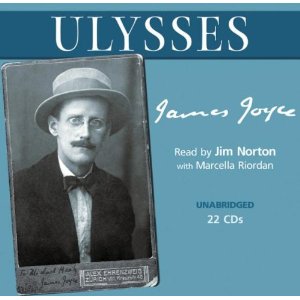
Because I am a glutton for punishment, I decided to listen to the abridged version of Ulysses as well (what’s 4 more hours of my life?).  (This edition is by Naxos, which Amazon is selling as a download).  I decided that the main reason was that since I have the text so fresh in my mind, it would be interesting to see what they abridged.  I mentioned in a recent post that the abridged version is 4 discs (just under 5 hours).  That is a serious abridgment, from 40 to 5 hours (actually the Naxos unabridged version is only 22 discs…how come theirs is so much shorter?  It seems that Jim Norton reads much faster).  And I am curious to see what they consider the “essential” text of the book.  Plus, realistically, I would never really want to do it at a later date.

So this version is read by two different people: Jim Norton (who read Dubliners, Portrait, and an abridged Finnegans Wake too) and Marcella Riordan.  There are a number of places where the two interact (she is Molly in the early scene in bed and she is some of the whores in the nightwon scene…it adds some real dramatic resonance to the story). (more…)

Read Full Post »

[LISTENED TO: Week of September 20, 2010] Ulysses 17-18

The final two Episodes of the Ulysses audio book were a mix of nothing new and massive revelations.

Episode 17, the catechism, doesn’t reveal all that much in the reading.  It’s a fairly straightforward Episode, so there’s not very much in the actual reading that would impact it.  One or two things do become somewhat clearer with the audible emphases but questions like this one are still a beast to unpack:

What counterproposals were alternately advanced, accepted, modified, declined, restated in other terms, reaccepted, ratified, reconfirmed?

Although in Episode 18, Molly says:

he says hes an author and going to be a university professor of Italian and Im to take lessons what is he driving at now

So I guess the Italian lessons plan is settled?  Which gives us some account of Stephen’s future.

But back in 17, this time through I became more aware of the

interment of Mrs Mary Dedalus, born Goulding, 26 June 1903.

So Stephen has been “in mourning” for almost a year.  Is that standard for Ireland at the time?  And how interesting it is that

Rudolph Bloom (Rudolf Virag) died on the evening of the 27 June 1886.

Their parents died on almost the exact same date (different years, obviously).  This is another interesting similarity that is not directly mentioned in the Q&A. (more…)

Read Full Post »

« Newer Posts - Older Posts »