Feeds:
Posts
Comments

Archive for the ‘Humiliation’ Category

SOUNDTRACK: COLIN STETSON-Live at All Tomorrow’s Parties, October 4, 2011 (2011).
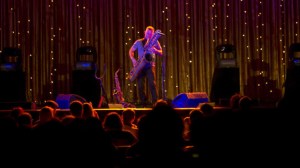
In addition to playing SXSW, Colin Stetson also played All Tomorrow’s Parties, and NPR was there.  Unlike with SXSW, this set appears to be full length (about 50 minutes–which is a pretty amazing amount of time for him to blow that horn).  Like SXSW (and the album) Stetston starts with “Awake on Foreign Shores” and “Judges.”  What I love about this recording is that after Stetson finishes “Judges” a guy in the audience shouts (in a voice of total amazement) “That shit was off the hook!”  And he is right.  It’s not even worth me going into how amazing Steston is once again (check previous posts for  that), but man, just look at the size of that horn he’s playing (seriously, click on the link to see it bigger).

Stetson plays a few more songs from New History Warfare, Vol. 2: Judges like “The Righteous Wrath of an Honorable Man” (which is outstanding) and “A Dream of Water” (which works without Laurie Anderson, although he does say he’s sorry she’s not there).  He also introduces two news songs “Hunted 1” and “Hunted 2” which show new levels and new styles that Stetson employs.

This is a remarkable set, and Steston is clearly in his element (and the crowd is rapt).  The only problem I have is the recording level.  It must be very difficult to maintain recording levels for Stetson’s brand of noise–his louds are really loud–but you can’t hear him talk at all.  And most of the time, the introductions to his songs are worth hearing.  I’m sure if they tried to get the speaking level a little louder the music would have sacrificed though, so I think they made the right choice–I only wish there was a transcript available.

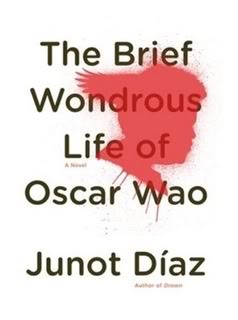
[READ: October 31, 2011] The Brief Wondrous Life of Oscar Wao

Apparently it’s pronounced, “Wow”, by the way.

Because of my new job, I don’t have a  full hour of lunch-time reading like I used to.  And so this book took considerably longer than I intended.  However, once I set aside some time to read it, I flew through the book.

I’m going to get this part out of the way because I was thinking about it throughout the book and I want to mention it without having it bog down the post.  This story reminded me a lot of Roberto Bolaño.  On the surface, sure this is because they are both writers from “Central America” (Diaz is originally from the Dominican Republic but moved to the US, while Bolaño is originally from Chile but moved to Mexico and then Spain).   But I’m not really talking about their origins so much as the style of storytelling.

Without going into a lot of Bolaño here, I’ll just say that Bolaño tends to write very detailed character studies–stories that follow one person throughout his whole life on something of a fruitless quest.  And the details of that person’s life include information about family members and distant relatives.  Further, Bolaño has written about the brutalities of both Chile and Mexico and how a person can survive in such a place.  Similarly, Díaz follows the life of Oscar and his extended family and he talks about the brutalities of the Dominican Republic.

This is in no way to suggest that there is any connection between the two writers. I mean, The Savage Detectives came out in the States in 2007 (same years as Oscar Wao) and while he certainly could have read it in Spanish, I have no evidence that he did (and as I recently found out, the first draft of the Oscar story was written in 2000).  Again, the parallels are only from my reading and have nothing to do with Díaz himself.

Okay, now that that’s out of my system…

This is the story of Oscar de Leon.  But more than that, this is the story of a fukú–a curse that befalls the de Leon family and follows them through several generations.  Oscar is the youngest member of the family and the person whom the narrator knows best.  So we see this fukú as it impacts Oscar.  And although the book is ostensibly about Oscar, it is about much more.

Oscar was born in Paterson, NJ (the town next to where I grew up!) and went to Don Bosco Tech High School (where many of my friends went).  Oscar is Dominican (his mother is from the DR, but he and his sister were born in NJ), but unlike every other Dominican male, Oscar is totally uncool, into geeky sci-fi and D&D and is clearly destined to be a virgin because he is fat with terrible hair and no social skills.

And, (no spoiler), as the title states, his life will be short. (more…)

Read Full Post »

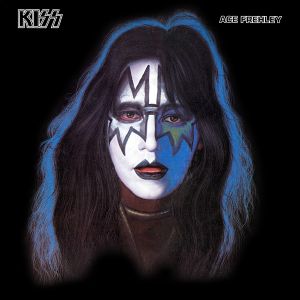
SOUNDTRACK: KISS-Ace Frehley (1978).

Unlike Peter’s album, Ace’s solo album is probably the most Kiss-like of the four, and I think that most of the songs on here are better than Ace’s Kiss songs.  I also liked that his had his cool autograph on the back.

“Rip It Out” opens with some great rough guitars and a supremely catchy chorus.  His voice also sounds much more assured than it had on the Kiss records.  “Speeding Back to My Baby” is a bit too “rock n roll” for me as well (I don’t like all the backing vocals on the choruses) but the guitar is absolutely on fire in this song–the solo is noisy and insane.  In fact, he really highlights his melodic soloing skills on this disc.  This song always bothered me because he clearly says “maybe I should turn around maybe I should stop” and then second later proceeds to sing “speeding back to my baby and I don’t mean maybe.”  Very confusing. 

The guitars on “Snowblind” are jagged and very cool (and the drums are really techno and a little silly but they sound cool and spacey).  And of course, there’s another great solo.  “Ozone” is a wonderful guitar workout, showing off what Ace does best.  Lyrically it’s a bit of a nonentity, but it is fun to say “O-zone” over and over again.  “What’s On Your Mind” is a poppy little number with a super catchy bridge (although again, a lot of “maybes” in this song).

“New York Groove” is such an anomaly.  A top-40 hit, and I’m not sure why exactly.  It’s so simple, with kind of a funky guitar.  But I guess that super catchy simple chorus could win anyone over.  The spoken word part in the middle cracks me up, his accent is so strong: “Here I am.  In the city.”  “In Need of Love” has an odd feel to it, kind of sinister, but that guitar solo–wow.   “Wiped Out” is wonderful from start to finish.  The crazy cackle in the beginning, the wonderful slippery bass, the cool guitar solo that precedes each chorus and the fast, fun-to-sing verses.  It’s just a great song (it’s probably the most successful flirtation with disco of all four solo albums).

The album ends with the magnificent “Fractured Mirror.”  It starts off as a simple enough guitar picking song.  But it keeps building.  And building.  And then a solo comes in.  And it builds more…until it ends like it began.  It’s a masterpiece of guitar overdubbing.

This album is pretty darn awesome.

[READ: October 8, 2011] “Off the Shelf”

There were four one-page pieces in this week’s New Yorker under the heading “Sticky Fingers.”  Each one was about theft in some way (this being the money issue, that ‘s a nice connection).

When the New Yorker groups four essays under the same heading, the first one really sets the tone for the others.  So it came as no surprise to me that Patti Smith was going to write about shoplifting too (frankly, she was punk goddess, how could she not have shoplifted?).  But her story is quite different and it was one that I found incredibly moving.

Her story concerns the time she stole an encyclopedia.  Not the whole thing (she still weighs less than a whole set), but the first volume, from the grocery store. (more…)

Read Full Post »

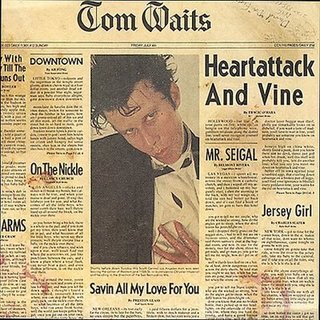
SOUNDTRACK: TOM WAITS-Heartattack and Vine (1980).

This is the final album Waits made before switching labels and starting over as a new, far more artsy artist.  The album cover is crazy, it looks like a newspaper (with all the lyrics to printed like articles on the cover).  And there’s a picture of Waits in a tux, hair askew, looking like the most stricken man alive.  It’s not a pretty cover, but it sure conveys a lot.

“Heartattack and Vine” is agreat noisy bluesy song.  It’s very simple and focuses on Wait’s lyrics and delivery: “I bet she’s still a virgin, but its only 20 after nine”).  Oddly, after that great vocal delivery song, we get the instrumental “In Shades.”  This has a lot of organ (which is a fairly new instrument in his repertoire) that he shows off his skills on, but it’s nothing that spectacular (and it’s recorded live apparently).

“Saving All My Love for You” is a sloppy kind of ballad (not as nice as most of his ballads), but then judging by the cover image, this is not going to be a sweet album.  See also “Downtown,” another rough track like the title song.

Of course, all of the talk of gruff nastiness is rendered false by the beauty of “Jersey Girl.”  Most people know the Springsteen version of this song, but (aside from the strings, which may be a bit much) I think this version exudes more real emotion.   “Jersey Girl” is a really wonderful song (especially if you’re married to a Jersey girl).  But what’s really great about it is that despite all of the sappy emotion (“My little girl gives me everything, I know that some day she’ll wear my ring,” there’s some great reality as well: “I see you on the street and you look so tired, I know that job you got leaves you so uninspired, When I come by to take you out to eat, You’re lyin’ all dressed up on the bed baby fast asleep, Go in the bathroom and put your makeup on, We’re gonna take that little brat of yours and drop her off at your mom’s.”

Sonically the shift from the guitar based blues noise of “‘Til the Money Runs Out” to the string laden ballad “On the Nickel” is pretty jarring. “On the Nickel” is one of Waits’ lullabies that’s not quite a lullaby.  But it’s got that mournful permanence that is hard to beat from Waits (he even performed it in the 2009 concert from NPR).  “Mr Siegel” is a barsy blues song (although it doesn’t sound like his earlier albums at all) and the album ends with the mournful ballad “Ruby’s Arms,”  which Waits sings in his best downtrodden voice. 

This album really showcases the breadth of his talents at this stage of his career.

[READ: September 24, 2o11] “The Ring Bin”

Who could even imagine what the title of this story means?  It’s weird, and it has so many possibilities.  By the time the answer is revealed, the story has gone in so many directions, you almost forget that you cared what the title meant in the first place.

First off, the tone of the story is bizarrely cool.  After a brief, confusing introduction (we’re at a celebrity gala of some sort), the story gives us this: “That’s when our heroine’s cellphone rings.”  It’s a kind of jarring intrusion by the narrator.  But before we can muse on this, the crowd is appalled at her break in etiquette.  And the story continues, “If these people knew the whole truth, they’d be more than annoyed.”  What is going on here?

And then the narrator gives up any pretense of disinterestedness: “I should step back a moment and describe for you the big picture.”  By now, as a reader you are reeling from all oft he broken rules.  

And then we find that this wonderful setting, this gala, is attended only by white people (which makes them all a little uncomfortable) but that the people onstage are a veritable United Nations and that the topic of the gala is tolerance.  Well, who knows what to think. (more…)

Read Full Post »

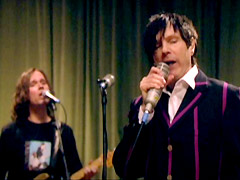
SOUNDTRACK: SPARKS-“Good Morning” (From the Basement) (2008).

I’ve enjoyed Sparks for a long time.  But I never got around to getting the album that this song comes from (Exotic Creatures from the Deep–which has two wonderful song titles: “Lighten Up, Morrissey” and “I Can’t Believe That You Would Fall for All The Crap In This Song.” 

“Good Morning” was the first single from the album.  It features a very bouncy keyboard opening which reminds me of Strangeways-era Smiths.  And then Russel Mael’s crazy falsetto comes pounding in on top of the whole thing. 

Visually, Sparks are fascinating because Ron Mael looks exactly the same as he has since day one: slicked back hair, thick glasses and a crazy little moustache.  This band is doubly fascinating because the two guitarists and bassist all have shoulder length hair and are wearing T-shirts with the new album cover on them.  In fact, the bassist and one guitarist look like they could be twins (the other guitarist is wearing a hat, so he messes with the identical-ness).  It’s an amusing scene to see.

This is a strange song, it’s catchy in its repetitiveness, but it’s got a cool bridge that breaks up the song into different parts (and the backing guys hit the high falsetto notes perfectly–I think I would have assumed they were women!).  This seems like a strange choice for a single and I can see wh it wasn’t a big hit.  (Most Sparks songs are kind of strange, so who knows which of their songs will catch on).  Of course, I don’t know the rest of the album so I don’t know if there was a more likely choice.  Nevertheless, I may have to investiagate this disc a bit more.

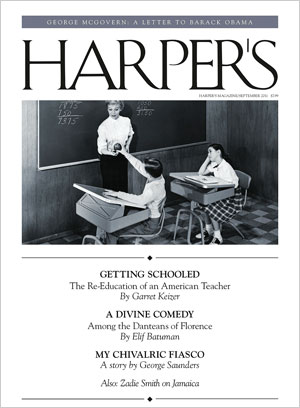
[READ: August 31, 2011] “My Chivalric Fiasco”

This is the second Saunders piece in a couple of weeks in two different publications (this seems to happen to him a lot–do I smell a new book coming out?).  This is one another of Saunders’ more corporate-mocking pieces.  He plays around with name brands and has a lot of trademarked and capitalized words.

But it starts off very unlike that whole realm. It seems to be set at a Ren Faire or some such thing.  On TorchLightNight the narrator sees Martha running through the woods saying, that guy is my boss.  Don Murray comes out of the woods after her, and it clear that something has gone on between them.  When Ted, the narrator, asks them what’s going on, they admit to a “voluntary” fling.  Then Don tells Ted that he has been promoted out of Janitorial; he is now a Pacing Guard.

The next day, Ted is given some KnightLyfe, a pill that helps him with medieval improv.  Until the pill kicks in, Ted is horrible in his role, but once it does, he (and the story) switch into a  kind of crazy Ren Faire “Olde” English: “Quoth Don Murray with a glassome wink, Ted you know what you and me should do sometime?” (more…)

Read Full Post »

SOUNDTRACK: RADIOHEAD-The King of Limbs: From the Basement (2011).

The TV channel Palladia has been showing this BBC production since it became available.  And it’s scheduled to be broadcast a few more times in the next couple of months. 

From the Basement is a show in which (very cool) bands play in this recording studio (presumably in the basement of wherever it is recorded).  The show is filmed in HD and the sound is fantastic.   The Wikipedia page gives some context for the show–it was originally designed as a program to showcase several bands playing a few songs.  Several of these episodes aired (the Wikipedia page gives details).  The show was created by Nigel Godrich, Radiohead’s producer.  Thus, it makes sense that Radiohead have now done live sessions shows for their last two albums.

So this is a recording of The King of Limbs.  I’m not sure if the album had come out by then, but this is basically the complete album and two extra songs: “The Daily Mail” and “Staircase.”

The session sounds amazing.  There’s a brass section for a number of songs, there’s two drummers (both completely bald, which is kind of neat to see), and you get to see Thom Yorke up close (sometimes a little too close) on all kinds of instruments.   I feel a little bad for Jonny Greenwood as it seems like Thom plays most of the guitar parts (unless Jonny is on keyboards too–it’s not always clear who is playing what).

I liked King of Limbs, but I must say that this live recording brings much more depth to the album.  While the band sounds tight as a drum, paradoxically, they also seem looser in their overall feel.  They seem like they’re really enjoying themselves.  It doesn’t have the same vibe as a concert (they’re not playing off the crowd or improvise at all), rather it has a feeling of jamming with friends–trying to get a perfect take, without the tension of fretting about the perfect take.  It’s really a great show and worth watching for any fan of Radiohead.

[READ: September 5, 2011:] ” What Have You Done”

I had a hard time getting into this story.  It’s about a man named Paul.  Paul is headed home to visit his family in Cleveland and he is more than a little apprehensive about it.  He deliberately hasn’t been home in about ten years, so this is quite a chore for him.  And it is quite clear from the outset that Paul is something of an asshole.  We don’t really learn why in the beginning (and that’s why the story was hard for me to get into–more on that)–he’s just sort of accepted as an asshole and that his family will give him shit.

And that’s what families do, this idea is in no way new.  But what’s is odd about the story is that we don’t really have any context for Paul’s attitude.  We seem to jump into the story with him feeling like an asshole and assuming that his parents will treat him like crap.  That they won’t believe anything he says and that they’ll give him a hard time.  Indeed, when he finally gets to his parents’ house (and his sister and her husband are there) he is so aggressively defensive that he’s quite unlikable.  And yet we still don’t know if he is defensive or if they are nasty.  Paul seems to flare up at anything anyone says and yet we don’t know if he has a right to.

The crazy thing is that Paul’s major fault seems to be that he’s fat.  Quite a bit is made of the fact that he is fat.  And he seems to be so very lonely–hateful of his family and resentful of his sister’s happiness–that when we finally learn the truth about him and what he’s been up to these last ten years, it’s hard to believe it’s really true.  His family doesn’t believe him, and the only reason we do is from a phone call that comes in to him.  But he’s so paranoid, it’s hard to know what to believe. (more…)

Read Full Post »

SOUNDTRACK: NEIL YOUNG-Trans (1982).

By most standards this Neil Young album is a disaster.  It’s so bad that despite updating his entire catalog and releasing all kinds of bootleg concerts, he has never issued this disc on CD in the States.  So, just what’s so awful about this disc?

Well, mostly it’s awful as a Neil Young disc.  Meaning, if you like Neil Young (either flavor: country/folk or hard rock/grunge) this disc is a big fat HUH??  Neil Young has gone all synthy?  And not just synth but computerized synthy–sometimes his voice is utterly like a computer.  It’s a travesty, it’s a shame, it’s an incredible surprise.  Unless you listen to it without thinking of it as a Neil Young record.

But after all that introduction, the biggest surprise is the first song.  You’ve been prepped for this weird album full of computer nonsense and you get the fairly standard (if a little dull) rockabilly type music of “A Little Thing Called Love.”  It’s a pretty standard Neil Young song for the time.  Hmm, maybe the album isn’t that weird.

Well, then comes “Computer Age” and the keyboards kick in.  Interestingly, to me anyhow, this is the year that Rush released Signals.  Signals was the album where Rush fans said Woah, what’s with the keyboards guys.  Similarly, “Computer Age” makes you say, geez, was there a sale on keyboards in Canada?  The keyboards are kind of thin and wheedly, but the real surprise comes in the processed vocals (Rush never went that far).  The vocals are basically the 1980s equivalent of auto-tune (no idea how they did this back then).  Because the song is all about the computer age it kind of makes sense that he would use this weird robotic voice.  Sometimes it’s the only voice, although he also uses the computer voice as a high-pitched harmony over his normal singing voice.

“We R in Control” sounds like it might be a heavy rocker (anemic production notwithstanding) until we get more computer vocals.  Again, conceptually it works (its all about the dominance of CCTV), but it is pretty weird as a Neil Young song.

And then comes yet another shock, “Transformer Man.”  Yes, THAT “Transformer Man,” except not.  This original version of the song is sung entirely in a processed super high pitched computer voice that is almost hard to understand).  The only “normal’ part of the song is the occasional chorus and the “do do do dos.”  It sounds like a weird cover.  Sarah, who loves Neil Young, practically ran out of the room when she heard this version.

“Computer Cowboy (aka Syscrusher)” continues in that same vein.  Musically it’s a bit more experimental (and the computer vocals are in a much lower register).  Although I think it’s probably the least interesting of these songs.

Just to confuse the listener further, “Hold On to Your Love” is a conventional poppy song–no computer anything (aside from occasional keyboard notes).  Then comes the 8 minute “Sample and Hold” the most computerized song of the bunch and one of the weirder, cooler songs on the disc.  It really feels like a complete song–all vocodered out with multiple layers of vocals, not thin and lacking substance like some of the tracks.  It opens with personal stats (hair: blonde, eyes: blue) and proceeds through a litany of repeated “new design, new design” motifs.

This is followed by a remake of “Mr Soul” previously only on Decade.  This is a new vocodered-harmonies version of the song.

The biggest failure of the disc to me is “Like an Inca” it’s nine minutes of virtually the same guitar riff.  The chorus is pretty wonderful, but it’s a very minor part of the song itself.  It is fairly traditional Neil song, I just wish it were much shorter.

So, this travesty of a disc is actually pretty interesting and, for me, pretty enjoyable.  Most of these synthy songs sound kind of weak but I think that has more to do with the production of the time. I’d love to hear newly recorded versions of these songs (with or without the vocoder) to see what he could do with a great production team behind him.

Trans is not a Neil Young disc in any conventional sense, but as an experiment, as a document of early 80s synth music, it not only holds up, it actually pushes a lot of envelopes.   I’m not saying he was trying to out Kraftwerk Kraftwerk or anything like that, but for a folk/rock singer to take chances like this was pretty admirable.  Shame everybody hated it.

[READ: July 5, 2011] Five Dials 19

Five Dials 19 is the Parenting Issue.  But rather than offering parenting advice, the writers simply talk about what it’s like to be a parent, or to have a parent.  It was one of the most enjoyable Five Dials issues I have read so far.

CRAIG TAYLOR & DIEDRE DOLAN-On Foreign Bureuas and Parenting Issues
I enjoyed Taylor’s introduction, in which he explains that he is not very useful for a parenting issue   That most of the duties will be taken on by Diedre Dolan in NYC.  They are currently in her house working while her daughter plays in the next room.  His ending comment was hilarious:

Also, as is traditional at most newsweeklies, someone just put a plastic tiara on my head and then ran away laughing at me.

I resist Parenting magazines, from Parents to Parenting to Fretful Mother, they all offer some sound advice but only after they offer heaps and heaps of guilt and impossible standards.  So I was delighted to see that Five Dials would take an approach to parenting that I fully approve of.  Dolan writes:

Nobody knows what works. Most people just make some choices and defend them for the next 18 to 50 years – claiming nurture (good manners) or nature (crippling shyness) when it suits them best.

And indeed, the magazine made me feel a lot better about my skills (or lack) as a parent. (more…)

Read Full Post »

SOUNDTRACK: BILLY BRAGG-Live at the Newport Folk Festival (2009).

Billy Bragg is one of the great holdouts of aggressive political liberalism in music.  For every “American Idiot” that young bands play, Billy can whip out “There is Power in a Union” or the more prescient, “No Power without Accountability.”  Lyrics:

IMF, WTO,
I hear these words just every place I go
Who are these people? Who elected them?
And how do I replace them with some of my friends?

He’s an old school American folkie, despite the fact that he is so outrageously British that his singing accent is stronger than most British folks’ speaking voices.

But he’s not all politics (well, yes he is, but sometimes he disguises it).  Like on his minor hit “Sexuality.”  With some of the first gay positive lyrics I can remember hearing on the radio: “I’ve had relations with girls from many nations/I’ve made passes at women of all classes/And just because you’re gay I won’t turn you away/If you stick around I’m sure that we can find some common ground.”

Billy’s set is pretty great.  He plays the electric guitar for most of it (with an amusing moment where he switches to the acoustic guitar and references Dylan), and really, he needs no accompaniment.  He plays several of his own songs as well as a number of Woody Guthrie songs (both ones that Guthrie recorded and ones that Bragg and friends recorded for the Mermaid Avenue project).

Bragg also talks.  A lot.  His stage banter is as funny as it is impassioned.  And he urges people not to give in to cynicism about their newly elected President (the task is too great for him to please everyone).   Sometimes he comes across as really inspirational and other times as simply idealistic.

The only part of the show that I don’t really like is the “cover” of “One Love.”  I don’t particularly like the song to begin with and this version is 6 minutes long.  True, he modifies the lyric, but the basics are  the same.  Aside from that it’s a pretty rousing set (even if the DJs interrupt him about 40 minutes in, apparently thinking he was going to be end).

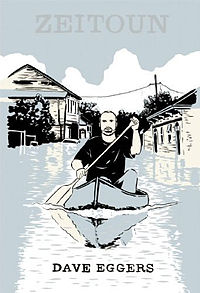
[READ: August 1, 2011] Zeitoun

I loved A Heartbreaking Work of Staggering Genius.  And I liked You Shall Know Our Velocity quite a bit too (and I just found out that YSKOV was rereleased as Sacrament with an extra 45 page section from Hand’s point of view–and that apparently there is only one copy available anywhere in the world and it costs $250!).

Anyhow, It was through Eggers that I found McSweeney’s (and its vast empire).  And yet during that time, I sort of gave up on reading Eggers’ published works.  When Zeitoun came out, I wasn’t all that interested to read it.  Mostly because I knew the book was about Hurricane Katrina, and I didn’t think I could handle a book about such a tragedy.

But recently, several people in book clubs had mentioned how good (and quick) of a read it was.  So I decided to give it a read.  And I’m really glad I did.

The book is about Abdulrahman Zeitoun, a Syrian born American.  He was living in New Orleans and was the owner of a very successful remodelling business (as well as the landlord of several properties around New Orleans).  Zeitoun is a hard-working, exceptionally conscientious man (the flashback to him running to work, carrying his broken bicycle on his back is as inspirational as it is amusing).  He rarely takes a vacation (much to his family’s chagrin) and oftentimes his wife has taken their kids on a vacation without him.  (One time they dragged into the car with his bags already in it without telling him they were going away for a weeklong vacation). (more…)

Read Full Post »

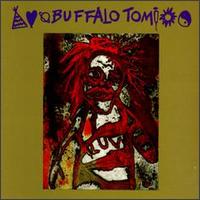
SOUNDTRACK: BUFFALO TOM-Buffalo Tom (1988).

After listening to the new Buffalo Tom song, I decided to go back and reappraise their back catalog.  This first album was produced by J. Mascis, and a lot of reviews talk about the album sounding very Dino Jr.  But I have to say that rather than Dino Jr, I hear Hüsker Dü.  There’s some big loud choruses and, to me, the vocals sound much more like any of the screamier Hüsker Dü songs than anything Dino did.

There are a couple of songs that have the catchy urgency of Hüsker Dü, but for the most part the disc feels like it’s all urgency, with little in the way of songcraft.  There are elements of something here but it feels underdeveloped, especially compared to their later releases (an unfair comparison, I suppose).

 It’s also a surprise to hear just how punky this is when as recent as their next album, they would be far less abrasive.  I don’t dislike the album, but it didn’t leave a very big impact on me.

[READ: July 18, 2011] “Wendy Mort & I”

Bradford has a second story published by Nerve.com.  This one, while again featuring a rollicking sex scene (more explicit than your average short story) ultimately also went in an unexpected direction.

The narrator is dating an actress named Wendy.  Wendy is not so much an actress as an “actress.”  The narrator first sees her in an experimental play in which she is naked for the entire second act.  He’s pretty psyched to have this naked woman right next to him after their second date.  In fact, sex is the bulk of the beginning of the story,  Their relationship is very physical.  In the beginning, he is expressly forbidden to go without a condom.  But later in the story, there’s an intense scene where they have sex without one.

Now the gun on the wall must go off by the end of the story, right?  And yet this one doesn’t (minor spoiler).  The story does not focus on anything that could go wrong without using a condom–in some ways its nice that the condomless sex is all about pleasure.  (Of course, this is for nerve.com, which is all about sexual pleasure). (more…)

Read Full Post »

SOUNDTRACKSUPERCHUNK-Superchunk (1990).

Some time ago, I reviewed all of the Superchunk EPs.  After progresing to their most current music, returning to their first album is a bit of a shock.  Superchunk’s first full length album is incredibly raw, with lots of screaming (two vocalists at once, even) and a very grungy attitude.  It has a DIY aestethic, in keeping with the undeground scene at the time.

The first four songs fly past in a pretty quick blur of adrenaline (the longest is just over 3 minutes).  The fifth song, the aptly named “Slow” slows things down and strecthes things out with a five minute track of slow distorted chords and a long solo.

Of course, the pinnacle comes with the next song “Slack Motherfucker” one of the best grunge anthems of all time. 

The last four tracks speed things up again with the bratty attitude that Superchunk is so good at (see especially “Down the Hall”).  But it’s not all just blistering speed.  The band has some dynamics down and there are a couple of tempo changes as well.

The album is a lot of fun to listen to, especially if you’re lookig for grunge before it became Grunge.  Although there’s very little indication that they would become the indie superstars that they eventually became you can clearly hear proto-Superchunk chunks–Mac’s voice is as it ever was and the noise is present but not overpowering.  There are even hints of melody (although nothing as catchy as later albums).  And yet for all that it sounds like a criticism, the album is really quite solid.

[READ: June 15, 2011] The Hollow Planet

Yes, THAT Scott Thompson, from The Kids in the Hall.  I found out about this comic book from my good friend Jessee Thorne at The Grid.

The backstory is that Scott Thompson had been working on this story for years and years.  He imagined it as a movie (starring him, of course).  When that didn’t pan out, he decided to sell it is a comic book.  And while he was recovering from cancer, he worked on it extensively with Kyle Morton–character likenesses and whatnot.  And now we have a cartoon rendering of Scott Thompson!

This story focuses on Scott’s character Danny Husk…

The book opens with Danny and his wife and kids at a carnival.  After a few moments, Danny’s son gets lost on the merry-go-round.  In the next scene we see just how much his wife is estranged from him (she may even be cheating on him), and how little his daughter thinks of him.  Soon after, Danny goes to work, inserts a disc into his laptop and more or less brings down his company.

So far nothing out of the oridnary for this type of  story–henpecked husband on a quest for revenge that he doesn’t know he wants yet.

Then Danny visits with his old friend Steve.  They talk, they bond over Danny’s concern about his wife.  And Danny feels better.  Until he gets home.  After a scene which I won’t spoil, the story suddenly takes off with a high speed car chase (no kidding) and with Danny entering the titular hollowness of the planet. (more…)

Read Full Post »

SOUNDTRACK: PARTS & LABOR-“Runaway” (2011).

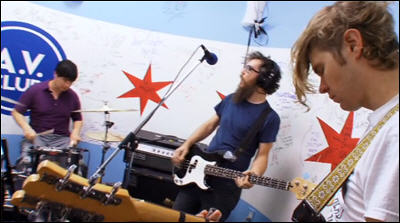
Parts & Labor cover Kanye West’s “Runaway” at the AV Club

I didn’t know Parts & Labor when I played this, but I was really curious to see how any band of non-rappers would perform this awesome Kanye West track.  It’s a testament to how great the song is that Parts & Labor (who totally kick ass) can play around with it as much as they do (they wisely don’t rap) and retain the greatness of the song. 

Parts & Labor seem like a pretty standard punk-type outfit: guitars, bass, drums and keys (although some of their studio albums belie that simplicity).  But the keyboardist (who opens the song) is playing notes while manipulating effects pedals on top of the keyboard.  It’s a great introduction.  The bassist (with his amazing beard) sings in a couple of different registers that work out the angst of the song wonderfully. 

But for me the guy I can’t stop watching is the drummer. He opens the track with his snare drum on his lap.  While keeping the beat with one finger on a floor tom he is clearly playing the snares of his snare drum with a guitar pick.   When the song breaks half way through and he puts his snare back, he is a maniac of intensity and cacophony. It is amazing.  The second half of the song is a cathartic release for the noisy beginning. 

This is a wonderful cover.  And I’ll be checking out Parts & Labor on Spotify to see what I’ve been missing.  Watch it here.

[READ: July 20, 2011] “High School Confidential”

Continuing with the New Yorker’s Fiction Issue, we get this Starting Out essay from Téa Obreht.  Now, Obreht’s story was the least believable of the five for me.  As you can see by this photo, Obreht is adorable.  Now we all know people who blossomed from an ugly childhood or had a youthful gangly phase or grew into beauty or whatever.  But the introduction of her essay, when she describes herself in quite unflattering terms seems like it may be, if not over the top, then at least wishful thinking.

Téa

She claims she was awkward, tall, gangly with coke bottle glasses a huge gap in her teeth from one that never came in.  In reading it again I guess it’s not as dramatic as I though the first time, and corrective work could fix those things, but still.  It seemed a bit like that MTV show Awkward (second mention in a few days–it’s been a slow summer, TVwise), in which the main character is way too cute to be considered an outcast.

Too cute to be that awkward

But hey, maybe cute people have problems too. 

It’s when Obreht moves past that and talks about being made fun of for what she wanted to be that things get interesting.  

Obreht has always wanted to be a writer and when she let her classmates known that, they picked on her (oh are you going to write about that).  But she pressed on.  She was most devastated when the stories she gave to a boy in confidence were soon being read, aloud, by a girl who hated her.

Maybe cute girls are unpopular too. (more…)

Read Full Post »

« Newer Posts - Older Posts »