Feeds:
Posts
Comments

Archive for the ‘Humiliation’ Category

CV1_TNY_07_08_13Hunter.inddSOUNDTRACK: AGAINST ME!-True Trans EP (2013).

trueThis EP (free for a limited time) contains two acoustic songs from punks Against Me!  (The gentleness of the acoustic songs is belied by this stark cover).  I have an older Against Me! album which I like and which is quite punky.  But since that album the lead singer Tom Gabel has gone through gender reassignment surgery (and his fans mostly stayed with her, which is pretty awesome).  Their newest full length Transgender Dysphoria Blues is due out in the future and this is a little acoustic taste of what’s to come.  Both songs appear to be about his transition.

The first one, with the interesting title of “FuckMyLife666”, is an upbeat song (musically), while lyrically it is a song to someone—possibly himself?  It’s about avoiding regrets and embracing a new life.

The second song is a big darker (musically) although it does have a big bright chorus with the final line of: “Does God bless your transsexual heart?”  It’s very very catchy and I find myself singing that rather awkward line to myself during the day.

I’m not sure exactly what the future has in store for Against Me!, but it seems like Laura Jane Grace is planning on keeping the music coming.

[READ: July 15, 2013] “All Ahead of Them”

This story opens with a misunderstanding—at least that’s what we hear Bud saying into the phone.  He quickly looks for an excuse to get off the phone and then starts playing with the cigarettes that he found in the hotel drawer.  (He promised he’d quit smoking after the wedding which was just six days ago).  We also quickly learn that the misunderstanding has to do with his new wife and that it proves that she is a liar.

Of course, his wife, Arden, has a history of changing the truth (as many of us do).  Even her name, which he thought was so artistic-sounding, is fake.  Well, it is real now, but she was originally call Nedra (after her father’s mother) and she reversed the letters.  This of, course hurt her father, who loved his dear mother, and who refused to call her Arden—even during his wedding toast.  She hadn’t even told Bud that she had changed her name until moments before he met Arden’s father—and only as a preparation that her father wouldn’t call her Arden.

The original Nedra’s story is pretty interesting in and of itself.  She was a beautiful and talented singer, although her day job was as a music teacher in a Buffalo high school.  She was arrested for selling marijuana (during the brutal Rockefeller laws of the 1970s) to other teachers.  She was given 25 years in jail.  After three of those 25 years, she hanged herself.  Arden’s father was very young when this happened and he never really got over it (as can be expected). (more…)

Read Full Post »

walrusjulySOUNDTRACK: POKEY LAFARGE-Live on Mountain Stage (2012).

pokey2I really only know Pokey LaFarge from NPR (they’ve embraced them, but I haven’t heard them anywhere else).  Pokey and his band plays a mix of early string-band music, ragtime, country blues and Western swing, in a completely un-ironic way (they dress the part as well).  Like Squirrel Nut Zippers, but even more so.

Interestingly, I know the first song “La La Blues” from a previous performance (on a Tiny Desk Concert) and I actually liked that version better than this one.  This entire performance feels a little too loose.  Which is weird because the music is designed to be loose, but in the previous performances there was a little more structure which made the songs jump out a little more (or maybe the recording just isn’t loud enough).

There’s 5 songs in total: 4 originals include “Central Time,” “Drinkin’ Whiskey Tonight,” and “Won’tcha Please Don’t Do It.”  And a Jimmie Rogers song called “Peach Pickin’ Time in Georgia.”  This final song feels more authentically of the time than LaFarge’s originals but only barely, just barely (perhaps its the “gal pickin’ time” line).  And yet “Won’tch Please Don’t Do It” sounds just right too.

The best joke in the set is when Pokey says they have 78 RPM records for sale (they really do).  But that they don’t have any that night because they are sold out!

LaFarge is an engaging live performer (even if the crowd seems subdued here).  And while I don’t see myself buying any of his records, I would like to see him live–it seems like a fun show.  Check it out here.

[READ: July 15, 2013] “Somewhere, a Long Happy Life Probably Awaits You”

The prefatory paragraph that precedes up this story seems so light-hearted: “Manfred met Elizabeth when she interviewed for a position at his fortune cookie company.  She was a greeting card writer looking to branch out.”  That is an actual quote from the story, but in the story, it is a flashback after the main action of the story has begun.

When the story begins, Elizabeth is trying to protect a tree in her front yard.  It has gotten Dutch Elm disease and is to be cut down this summer.  She would like to know when, but she is only told between may and September.  While she is not going to go crazy protecting this tree, she would like some actual notification, so she can be there to say goodbye.

Going crazy, it turns out is an important thing to note, though.  Because Elizabeth from time to time goes on “safaris.”  These safaris can last an indeterminate amount of time, and in some cases may even require Manfred to track her down.  Like when she was protesting the war in front of a building (where no one else was) or, as in one case, when she was frolicking in a sprinkler in her underwear. (more…)

Read Full Post »

CV1_TNY_06_03_13Hall.inddSOUNDTRACK: DEAFHEAVEN-“Dream House” (2013).

deafheavenNPR’s Lars Gotrich always picks songs that I like–even if I would never have found them any other way.

His favorite album of the year so far is by this band Deafheaven whom I have never heard of.  The song is 9 minutes long and it combines big loud guitars, super fast crashing drums, and cookie monster vocals (mixed so low in the mix that they almost sound just like noise–a neat trick).  The waves and layers of sound give it a kind of My Bloody Valentine feel.

For the first half of the song, the drums are absolutely speed metal fast–pounding and pounding with wild cymbals.  But they too are mixed low in the mix–setting a beat but not dominating the song.  For really this song seems to be all about the guitar–which is not exactly playing along with them.  Sure, there are fast  moments, and the guitar is largely distorted and noisy.  But the tone of the guitar is very bright–especially when he starts playing some simple but pretty riffs (amid the noise).

And then about half way through, the noise drops away and the music become quiet and pretty.  Two guitars interweave slow melodies.  Until the music crashes back in, but with a different tempo and a feeling like Explosions in the Sky or Mogwai.

I know many will be turned off by the vocals (I think I might even like it more if it were purely instrumental), but the way they are mixed, shows that the music is the dominant sound, and I can get behind that.

[READ: June 12, 2013] “Company Man”

I always enjoying reading a David Sedaris Personal History (interestingly I haven’t read all of his books—I seem to stick to the articles instead).  This one is about having a  guest room.  He considers it a true sign of aging gracefully that his new house has a guest room (with its own bathroom).

Their previous house in Normandy had nothing of the sort and he gives typically humorous anecdotes about being embarrassed for the guests who don’t have any privacy in the bathroom (“we’ll be going out for about twenty minutes if you need anything.”)  But now they have this new space.

Which means of course that they have guests.  I enjoyed the part when Hugh’s friends come to visit–based on his father’s behaviors, David is allowed to leave in the middle of a conversation because he is not the one entertaining the guests).  But the bulk of the second half concerns David’s family.  (more…)

Read Full Post »

200px-FatesWorseThanDeathSOUNDTRACK: THE STATLER BROTHERS-“Flowers on the Wall” (1965).

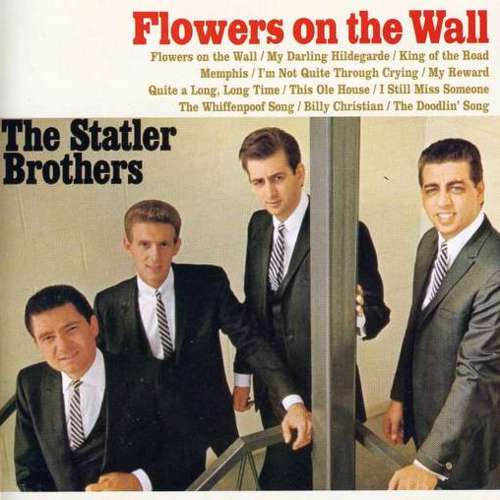
flowersonthe Vonnegut mentions this Statler Brothers song in Palm Sunday as well.  I know this from Pulp Fiction–a song that I found very amusing and never would have guessed was a classic country song.  Country music was very different in 1965 than it is now.  I don’t even know if there was a folk or bluegrass category back then, and this song, with its banjo and bouncey acoustic guitar is a great example of the kind of country music I like.  And those harmonies!

This song certainly seems to be about insanity–about a man counting flowers on the wall, playing solitaire with a deck of 51 cards, smoking cigarettes and watching Captain KAN Kangaroo.  Don’t tell him he’s nothing to do.  What a weird little song.  And man is it catchy.  No wonder it was a #1 hit.

[READ: May 31, 2013] Fates Worse Than Death

After reading Palm Sunday I learned that Fates Worse Than Death was a kind of autobiographical sequel to that non fiction book.  I also learned that the two essays that make up Nothing is Lost Save Honor which is impossible to find (and for which I can’t even find a cover) are available in FwtD.  However, since there is no real contents or index, you do have to read the whole thing to find out which chapters contain the essays.  Or you can just look here and see that “The Worst Addiction of Them All” (which was published in The Nation) is in Chapter XIV and “Fates Worse Than Death” appears in Chapter XV.

The last time I read a bunch of Vonnegut together I got a bit burnt out on him and the same thing happened here.  The problem with Vonnegut’s nonfiction is that he tends to repeat himself.  A lot.  And while this book is ostensibly about the 1980s, he talks an awful lot about his family and his friends from the war and his other literary acquaintances., like he did in Palm Sunday.  In a number of places, he says that he doesn’t like to read himself in English, and it would seem that he doesn’t proofread to see if he said something already either.

This is not to say that the book is not worth reading.  Indeed, if you read Palm Sunday in the 80s and then this one in the 90s, you might not remember all of the details that pop up again, but when you read them days apart…well. (more…)

Read Full Post »

PalmSundayFrontandBackSOUNDTRACK: THE STATLER BROTHERS-“Class of ’57” (1972).

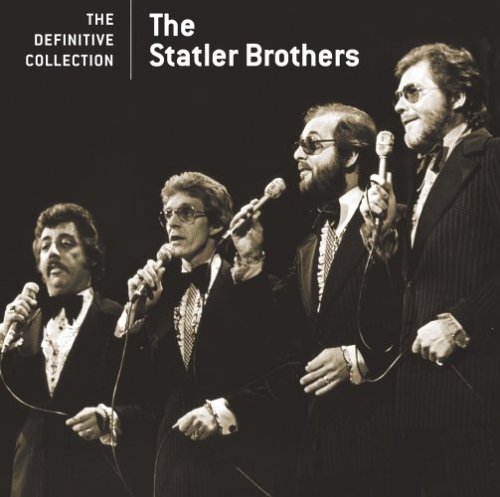
stalerI don’t know much about The Statler Brothers.  They are considered country, although this song is hardly country–it’s more folk with some bluegrass and, the real selling point–great harmonies (especially the bass singer with the big mustache).

The song is a wonderful coming of age song, sad and funny with a list of what happened to everyone in the class of ’57.  Like:

Betty runs a trailer park, Jan sells Tupperware,
Randy’s on an insane ward, Mary’s on welfare.
Charlie took a job with Ford, Joe took Freddie’s wife,
Charlotte took a millionaire, and Freddie took his life.

John is big in cattle, Ray is deep in debt,
Where Mavis finally wound up is anybody’s bet.

But the kicker comes at the chorus:

And the class of ’57 had its dreams,
Oh, we all thought we’d change the world with our great words and deeds.
Or maybe we just thought the world would change to fit our needs,
The class of ’57 had its dreams.

And then at the end:

And the class of ’57 had its dreams,
But living life from day to day is never like it seems.
Things get complicated when you get past eighteen,
But the class of ’57 had its dreams.

Vonnegut quotes the entirety of this song in the book and I’m glad he did, it’s a very moving song and really captures American life.

[READ: May 26, 2013] Palm Sunday

After writing several successful novels, Vonnegut paused to collect his thoughts.  And Palm Sunday begins: “This is a very great book by an American genius.”  It is also a “marvelous new literary form which combines the tidal power of a major novel with the bone-rattling immediacy of front-line journalism.”  After all the self praise, he decides that this collage–a collection of essays and speeches as well as a short story and a play which is all tied together with new pieces (in TV they would call this a clip show)–this new idea of a book should have a new name and he chooses: blivit (during his adolescence, this word was defined as “two pounds of shit in a one-pound bag.”  He proposes that all books combining facts and fiction be called blivits (which would even lead to a new category on the best seller list).  Until then, this great book should go on both lists.

This book is a collection of all manner of speeches and essays, but they are not arranged chronologically.  rather they are given a kind of narrative context.  What’s nice is that the table of contents lists what each of the items in the book is (or more specifically, what each small piece is when gathered under a certain topic).

Chapter 1 is The First Amendment in which he talks about Slaughterhouse Five being burned and how outraged he was by that–especially since the people so anxious to burn it hadn’t even read it (and the only “bad” thing is the word motherfucker).  The first speeches included are “Dear Mr. McCarthy” to the head of the school board where his books were burned and “Un-American Nonsense” an essay for the New York Times about his book being banned in New York State.  The next two are “God’s Law” for an A.C.L.U. fund raiser–it includes his confusion as to why people don’t support the A.C.L.U. which is working for all of our own civil liberties. (more…)

Read Full Post »

5.20SOUNDTRACK: PAT METHENY-“Mastema” (2013).

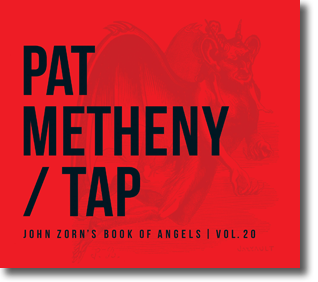
Itap-cd-cover don’t know all that much about pat Metehny.  I know he’s a jazz guitarist held in high regard by some and in less high regard by others.  This song is Metheny playing a John Zorn composition–indeed, it comes from an entire album of Zorn covers called Tap: John Zorn’s Book of Angels, Vol. 20.  I have been a huge fan of Zorn for decades, and yet some time ago I had to stop following him–his output is just too huge.  So this Book of Angels series by the Masada String Quartet is unfamiliar to me.

Knowing what I do about Zorn, this piece is quite an interesting statement–it’s got a lot of the wildness that Zorn throws into his music, but it’s also got the pretty melodies that Zorn writes as well as the Jewish melodies that saturate the Masada albums.

Strangely enough this song reminds me more of Frank Zappa than John Zorn.  That may have to do more wbecause it’s a guitar and not a sax, but it also has something to do with the bass guitar that is playing along–it’s got a very Zappa sound to it.

I feel like I’d rather just listen to Masada, but I’d have to really compare the two to see how this holds up.  It’s a pretty wild guitar workout though, if you like that sort of thing.

[READ: May 16, 2013] “Vision Quest”

The five brief pieces in this week’s New Yorker are labeled as “Imagined Inventions.”  And in each one, the author is tasked with inventing something.

Karen Russell is the first of the five authors whom I did not recognize (although I have read a few short pieces of hers in the New Yorker).  She describes her last invention, which was for the seventh grade science fair. It was called the Roller Solar Cream—she poured sunscreen on a roll-on deodorant stick.  It got a C+.  So she explains that she’s not much of an inventor, but she’s going to give it a try.  She also states that she doesn’t know how any of these inventions would work, nevertheless she proposes four.

Number 1 is a “Trapster” for social situations.  The original trapster is an app to alert you to speed traps and the like (I’ve never heard of that).   Her app would alert you when you are heading into a socially dangerous situation (be careful what you say around this person, her dad is famous).  Number 2 is called “Last Wishes Glasses” which upon wearing allow you to know what your dead relative would actually think of your plans/ideas (“she would have wanted it this way” is no longer needed).  I have to admit I find this invention to be pretty nonsensical.  Number 3 is the one I like most.  It’s called “Baby Roshambo” and it’s a program that allows you to see what a baby’s life will be like depending on what name you give him or her—see how Ashley, Bubbles, La’Dynasty and Gertrude would turn out differently just because of their names.

(more…)

Read Full Post »

#20SOUNDTRACK: SUGAR-File Under: Easy Listening (1994).

fuelI  always thought File Under: Easy Listening was a very funny title.  But it’s possible that people took it too literally as it didn’t sell all that well. And in Mould’s autobiography he says he didn’t have much time to write songs for this disc and he thinks it suffered.  Of the three Sugar discs, this is definitely the weakest, although there are some great moments on it.

The disc opens with “Gift” which has some ragged distorted guitars. It’s got some noises and grungy sounding solos showing that FU:EL was a joke.  Although, the overall sound is kind of a cleaner version of the angry songs on Beaster.  “Company Book” is kind of a pounder, until the voice comes in and you realize…it’s not Mould!  It’s got a catchy chorus, but after the kind of underwhelming opener, it’s a strange place for a song that’s also not so dynamic.  Especially when it’s followed by “Your Favorite Thing” another great pop song from Mould—not top tier but a really strong second tier (although that bright, simple guitar solo is a real winner).  “What You Want It To Be” is a another decent song (the addition of that extra guitar playing the melody line really makes the song shine.  “Gee Angel” is also a high point.  A catchy song, but which never quite reaches the heights of the previous albums.

“Panama City Hotel” has the same feel as the opening of Beaster: bright acoustic guitars and a similar riff.  But it never really goes anywhere, and the 4 minutes seem.  The “do do do do’s” that open “Can’t Help You Anymore” are certainly the brightest spot on the album, and a big pop song as well.  “Granny Cool” has a nicely abrasive riff although it seems kind of mean spirited.  It’s funny that he tucked “Believe What You’re Saying” at the end of the album.  It’s a minor song but it sounds so bright on this album after the other songs. It’s really quite pretty.

And the closer, “Explode and Make Up” is one of Mould’s great angry songs.  Unlike Beaster, this one has a happy acoustic field—bnright guitars with that raging distorted guitar underneath.  It’s a great slow burner of a song and at five minutes it ends a somewhat lackluster album in a great way.

[READ: March 31, 2013] McSweeney’s #20

McSweeney’s #20 is an issue that I have read before.  At least I think I have.  My recollection is that it was the last one I read before I started writing about them on this blog.  I was hesitant to read it soon again, which is why I waited until now.  And while I remember the issue itself (with all of the art), I didn’t remember the stories.  So who knows if I actually read it six years ago.

Anyhow, this issue comes jam-packed with art.  Every fourth page has full-color artwork on it–many of them are quite famous.  It makes for a very beautiful book.

In between these artworks are a number of stories–ranging in size from 2 pages to 30-some pages.  There are no letters, and the explanatory and copyright information is on the cover of the book–which would be fine, except that it is covered up by a kind of 3-D artwork.  I wonder if the whole text is available anywhere?

The book also comes with a separate pamphlet–an excerpt from Chris Adrian’s Children’s Hospital.  I intend to read the novel eventually so I didn’t read the excerpt–although maybe if I put off the novel for six years I should just read the excerpt now. (more…)

Read Full Post »

#15SOUNDTRACK: SUGAR-Copper Blue (1992).

copperblueAfter Bob Mould made some solo albums, he created another band.  Another trio, this one called Sugar.  Sugar seems to take Mould’s poppiest elements and wrap them in a big 90s grunge sound–a sound that Mould pretty much invented in Hüsker Dü.  And in many ways Sugar is not all that different from Hüsker Dü–maybe a bit less experimental and a little more commercial.

One thing I noticed about this album that, once I noticed it I couldn’t avoid it, was that when the drummer plays the cymbal (it might even be a hi hat with a tambourine on it), which he plays a lot, the tinny shimmer of that sound is so pervasive, I find it rather distracting.  Or should I say it adds an almost minute level of static over the proceedings.

The disc opens with “The Act We Act,” where big grungy guitars and a simple chugga chugga riff burst out of the speakers. I love the Pixies feeling of “A Good Idea” both that up front bass and the buggy sounding guitars provide an almost false introduction to the catchy verse and chorus that’s to come.  I also enjoy the unexpected break after the chorus.

It’s followed by the ringing guitars that introduce “Changes” a classic poppy rock song that is unmistakably Mould.  The uneasy almost nauseating sounds at the end of the song are again like a feint in the wrong direction as “Helpless” easily the most pop song Mould has ever written comes out.  Of course, as with Mould, this outrageously poppy song is all about feeling helpless.

Keyboards open the next song, “Hoover Dam” (something of a surprise for this album), which proves to be yet another big Mould single.  The song is so open with multiple acoustic guitars (and that cool synth solo) and a really wild reverse guitar solo.  It’s one of my favorite Mould  songs and yet another example of why this album was such a huge hit.

“The Slim” brings back the darker songs that Mould is also known for.  And just when you think that Mould can’t pull out another huge big single, he gives us “If I Can’t Change Your Mind,” one of his great big bouncy acoustic guitar songs.  It is almost obscene how catchy this song is, right down to the simple scale solo at the end.  Mould has this little technique that I find irresistible where he plays a song normally and then plays two fast chord changes segueing into another section.  It’s so cool.

“Fortune Teller” is a fast rocker with Mould’s trebly guitar taking the lead.  “Slick” is the only song I’m not crazy about. There’s something about it that kind of slows the momentum down, which is odd for a song about a car.  It’s got a real middle-period-Who feel to it, which I do like (and I really like the bridge) it just feels odd in this place in the disc.  The end of the song has some snippets of chatter that could have been edited out but lend an amusing air to the final track, “Man on the Moon” which ends the disc with that same air that the rest of the album has—big guitars and Mould’s slightly distorted vocals.  The solo is weirdly processed and kind of fun.  The end of the track with its repeated half step has a very Beatles feel to it. And the very end of the disc has the sound of tape rewinding, an amusing nod to the digital era.

Copper Blue was Mould’s first huge success and in his book he talks about not realizing quite how huge it was until he was in the middle of it.

[READ: March 20, 2013] McSweeney’s #15

I was a little disappointed with McSweeney’s #14, but #15 was once again fantastic.  This issue is a smallish hardcover (I like when their books are this size).  The bottom half of the cover features a cool 2 color painting by Leif Parsons.  The issue is known as the Icelandic Issue because of a few things.  The first half of the book features stories by the usual suspects.  Each of these stories is accompanied by an illustration of a Scandinavian rune that dates to the Viking era.  The stories in the second half of the book have illustrations that are taken from Icelandic grimoires–magician’s handbooks.  It is these second half stories that are all from Scandinavian authors.  It’s a fascinating peek into a culture few of us probably get to read.

There’s no letters in this book, which removes some of the levity, but that’s okay.  The front page has a brief story that it was being written on November 2, 2004 in New Mexico, hoping to bring some voting power to “the good guys “in this “completely fucking terrifying election.”  (The bad guy eked out a victory 49.8 to 49.1).  They went canvassing door to door with an Iraqi veteran named Joey (who was 21).  He was very pro-Kerry and may have even convinced a young girl to vote (she thought her vote didn’t count because she was poor (!)).  It really evokes the feeling on that dark night in 2004 when the iota of hope was snuffed out. (more…)

Read Full Post »

CV1_TNY_02_25_13Ulriksen.inddSOUNDTRACK: THE KNIFE-Shaking the Habitual (2013).

theknife2Since I reviewed the 19 minute song from this album yesterday I thought I’d check out the rest of the disc (still a handful).  I kept bearing in mind that The Knife are pretty much a dance duo.  So this departure is not only radical, it pretty much undercuts the kind of music they make.  The progress is probably exciting but I imagine fans would turn away in droves.  I wonder how this record will play out for them in the long run.  Incidentally, I wasn’t a fan before, so I don’t really have a horse in this race.

“A Tooth for an Eye” opens the record with an interesting percussion sound an a pulsing keyboard melody.  The keening vocals come in sounding weird and distant and more than a little eerie.  “Full of Fire” is a 9-minute song with a weird skittery “melody” that seems to float above the battered mechanical “drum.”  The whispered vocals are strained and also a little creepy.  The middle section has the skittery music jump around while the vocals get even more processed—making it simultaneously more friendly and less so.  It’s probably the coolest weird song on the disc, with parts that are catchy and interesting and parts that are just peculiar.  This is the single, by the way.

“A Cherry on Top” is 8 minutes of reasonable quietude, with the second half introducing an autoharp.  It’s certainly the most mellow thing on the disc.  Although it’s not exactly relaxing.  “Without You My Life Would Be Boring” seems like it should be the single—it is propulsive and while the vocals are certainly odd, they are the most conventional thing on the album.  “Wrap Your Arms Around Me” has big electronic pulsing drums and whispered vocals.  It’s a fairly normal sounding song (at least for this album), and could easily play in a goth club.

“Crake” is 55 second of squalling feedback.  The album also has “Oryx” which is 37 second of wailing noise.  In between is the 10 minute “Raging Lung” which is not available on Spotify.  “Networking” a skittering beat with a second beat that may just be a sample of a person making noise in his or her throat.  The “voices” get stranger throughout the song, keening, twisting and spinning, reminiscent of The Art of Noise.

“Stay Out Here” is a ten minute song.  It starts with a fairly standard electronic drumbeat.  Whispered vocals come in giving it a kind of Nine Inch Nails vibe, until the female vocals come in (and are quickly manipulated to sound kind of male).  The switch from male and female vocals is interesting, giving it an almost modern sounding Dead Can Dance feel.

“Fracking Fluid Injection” has sounds like scraping, rusted gates as the beat with sampled voices overlaid.  Again, this is nearly 10 minute long.  The problem with things like this, aside from their relative tediousness, is that they aren’t all that original.  Now originality is nothing to hold a band to, we all know, but if you’re going to do non-form sounds that are echoed with little else to it, it would be more interesting if there was something original to pin to it.  “Ready to Lose” ends the album with a steady beat and a pretty standard vocal line (even if the voices are processed).

So this album us a pretty radical departure for the band and it’s a pretty radical departure for dance music as a whole.  I’m curious to see if this will lead to a anything or if this will be their one weird album.

[READ: April 15, 2013] “The Furies”

The story opens with a rather creepy man stating at his wedding reception that he is in an exclusive club: “There are not too many men who can say that they’re older than their father-in-law.” Ew.  He was fifty-eight, his new wife 31.  His father-in-law is 56.  The father-in-law seems okay with this, but really how could he be?

Ray is a dentist and his new wife, Shelly, had been his hygienist for years.  When Shelly told him she was thinking of getting a new job, he professed his love for her, and informed his wife, Angie that he was in love with Shelly.  Angie took it badly, but he was surprised when she seemed mad that he didn’t do this years earlier while she still had a chance to meet someone (rather than being distraught that he was leaving her).  As a parting shot she says that she wishes him ill.  And she hope he suffers with the woman who took him from her.

But they had no children, just assets, and things were divided evenly and cleanly.  And he thanked his lucky starts to be with a new woman, someone who was fun and so different from his first wife. (more…)

Read Full Post »

seminarbookSOUNDTRACK: BOBTOWN-“Don’t Fear the Reaper” (2012).

bobtownI heard this song on the radio today.  When it started I didn’t think much of it–a nice acoustic guitar which… suddenly sounded familiar.  And then, no doubt, it was “Don’t Fear the Reaper.”  With banjo!  A good song can be played in any genre, and while I never would have guessed that this song would work in this genre, man, Bobtown knock it out of the park.

Bobtown has five members–two men, on bass and banjo, and three women who sing in gorgeous harmony.  And if you know “Don’t Fear the Reaper” you know that there are various vocal parts, which these woman tackle beautifully.  Their version gave me chills.

Now, befitting a bluegrass band, they did not play the super fast part (in fact they ignored that entire section of the song–the didn’t use cowbell either).  I was initially a little disappointed because I wanted to hear what they would do with it.  But it was truer to their version to leave it out and by removing it, they made the song a little different–more sombre, less wild.  And it was really good.

This version below is not the studio version, it was recorded in a stairwell.  But the band sounds great in this unlikely location.

[READ:April 7, 2013] Seminar

I grabbed this book at work (just like Cousin K).  This book was also short, which was a plus since I knew nothing about it.  It was also a play and it listed the cast from the opening on Broadway.  And I was rather surprised.  Hamish Linklater (the brother on New Adventures of Old Christine), Jerry O’Connell and..Alan Rickman!  I hadn’t heard of either of the women (Lily Rave–she’s been in nothing I’ve seen and Hetienne Park–her first role).

The story is a one act play about four college-aged writing students taking a seminar with a former great writer and current old man.

The four students are Douglas, a cocky writer who has connections and talent and who has been published in Tin House and is soon to be published in The New Yorker.  Martin, a shy writer who is rather insecure, although he proves to be very talented.  Kate is a girl who Martin knew from high school.  She has been writing the same story for six years and is outraged at the way her fellow students and their teacher behave.  And Izzy (who I thought was a man for a few pages) is a sexually adventurous woman who seems to be willing to do anything to succeed. (more…)

Read Full Post »

« Newer Posts - Older Posts »