Feeds:
Posts
Comments

Archive for the ‘Humiliation’ Category

peanuts-1995SOUNDTRACK: TINARIWEN-Tiny Desk Concert #184 (January 5, 2012).

tinariwenTinariwen are a band from northern Mali, whose members met in the training camps of Col. Moammar Gadhafi. Much has been written about them and their story, which is pretty amazing.  I’m only going to talk about this Tint Desk Concert.

Typically, they play an interesting electric guitar kind of trance music.  But for this one they were all acoustic.  As Bob Boilen notes, they are his “favorite electric-guitar-based band on the planet.”  But he says he was:

“initially worried and disappointed when I learned that it was coming to play the Tiny Desk as a trio carrying acoustic guitars. My heart sank a bit more when the three Tuareg musicians from the Sahara arrived in jeans and polo shirts instead of the beautiful, flowing robes I’d seen them wear on stage so many times.

But they switched clothes and they do not disappoint on acoustic guitar.

I don’t know their music all that well, but it feels like the acoustic nature of this show is even more soothing and trance inducing.  The two acoustic guitars interweave–one playing lead (which is mostly hammered notes–not a “solo” per se) and the other strumming.  The percussion is the sound of two hands rubbing, clacking (with a cigarette lighter) and pounding (for bass drum) a large gourd.

The songs tend to be almost looping.  Like they could go on forever.  There’s no real verse chorus structure that I can tell.  It’s more of a meditative sound.

All of the vocals are in Tamashek and I have no idea what the songs are about.

On “Adounia” both guitarists sing and the voices sound very traditional, almost atonal. “Takkest Tamidaret” opens with a more conventional sounding guitar lick, but it’s all so quiet in the mix, that you can’t tell how much his fingers are moving.  The lyrics are a bit slower, but still in that droning style.  I love the way “Tenhert”  has a a cool riff from the lead guitar–one that probably sounds more intense on electric guitar.  He sing/speaks incredibly quickly.  “Tahlamoyt” is a much slower song with the lyrics pretty much all spoken word.

The “Mali sound” is pretty distinctive and Tinariwen are great proponents of it, spreading it around the world for all to hear.

[READ: June 8, 2016] The Complete Peanuts 1995-1996

I was under the impression that these last few volumes of books would show a serious drop in quality.  I had assumed that with the amount of product the Peanuts characters were sponsoring that these strips would be more cute.  But that is far from true.  I enjoyed this book as much if mot more than some of the other recent volumes.

I was also surprised to discover that I really enjoyed the Sunday cartoons more than the dailies.  In the past I haven’t really gotten big laughs form the Sundays–it seemed like the big stories and jokes were in the dailies and the Sundays were unrelated one offs with varying degrees of punch.  But I enjoyed a dozen or so in this book.

One of the major additions in this book is the inclusion of a slightly older Rerun.  He is now mobile and even heading to kindergarten (I love that he is aging while the others aren’t).  But rather than using Rerun for obvious cute child jokes (he’s no longer riding the back of his mom’s bike) Rerun is now making funny “outsider” observations about the world of Peanuts–he is constantly disenchanted with the way  things are going and with the belief that people are always lying to him.  There are also a ton of strips of him trying to shoot a basketball and failing miserably.  Schulz has always tended to take an idea and run and run and run with it, but this one is pretty good for the number that he uses it. (more…)

Read Full Post »

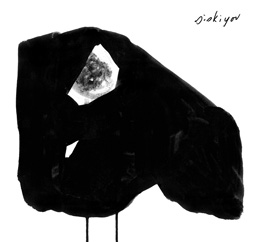
sempleSOUNDTRACK: SISKIYOU-Nervous [CST109] (2015).

cst109covera_258x242This album begins with “Deserter,” in which a choir of children singing over a kind of spooky tone.  And then a loud rumbling bass and scratching on a guitar.  It’s quite different from the previous Siskiyou releases and outpaces the others by several steps.

Once Colin Huebert’s voice kicks in, that familiar Siskiyou sound returns—acoustic guitar and Huebert’s voice which is a mix between a whisper and Win Butler from Arcade Fire.  But “Deserter” features backing vocals and, perhaps most surprisingly, a wild baritone sax solo by Colin Stetson.  But it stays grounded with that cool rumbling bass line.

The second song “Bank Accounts and Dollar Bills (Give Peace a Chance)” opens with an echoed guitar likes some classic 1990s shoegaze music.  The vocals are a cool, intense whisper.  The verses are great and then the chorus adds a piano and his vocals rise into an impassioned wail.  The third song “Wasted Genius” adds a kind of steel drum sound that includes a great melody to the simple and slightly ominous verses.   The middle of the song switches to pummeling drums and a buzzy guitar solo before returning to the mellow verse.

“Violent Motion Pictures” has another cool whispered vocals and quiet guitars that get accented with a low bass and percussion.  There’s a neat section of falsetto vocals that remind me of Pink Floyd over a bouncy melody–before it returns to the verses.  It’s a wonderfully catchy, if brief, segment.  “Jesus in the 70s” has slow guitar lines and atmospheric keys.  “Oval Window” is a bouncy folk song (with a slightly creepy vocal over the top), but its even got a folksy kind of guitar line on it.

“Nervous” is a slow ballad.  “Imbecile Thoughts” is a fun song with stomping drums.  It has a cool ending that leads to the slow building, strings-included nearly 7 minute “Babylonian Proclivities.”  The disc ends with the 1 minute “Falling Down the Stairs.”

This album is really fantastic–an overlooked gem from 2015.

[READ: November 8, 2016] Today Will Be Different

I’ve really enjoyed Maria Semple’s books.  And this one was no exception.

She really conveys the hectic, overstimulated, over scheduled life of middle age parenting.  It helps that her stories are typically set around Seattle and that there’s a lot of excitement, tech and pop culture to throw around, too.

This is the story of a day in the life of Eleanor Flood.  Sarah pointed out, as I didn’t quite realize it, that the story takes place in one day (hence the title) although there are flashbacks that flesh out the story too.

Eleanor is, or perhaps “was” is the better verb, an artist.  She was lead animator (or something–it’s a little confusing) on the successful show Looper Wash.  When the show ended she received an advance to write a book/memoir.  That was eight years ago.

Things have been sprialling out of control for Eleanor for a while, but she vows that today will be different.  She will make a difference. (more…)

Read Full Post »

1993-1994 SOUNDTRACK: LEON BRIDGES-Tiny Desk Concert #469 (September 8, 2015).

leonLeon Bridges has a great old soul voice.  Indeed, I had no idea he was so young until he started speaking after the third song and all manner of young person chat came out of his mouth: “Thanks to my main man, you all looking beautiful man.”  His voice is pure and clean and hearkens back to 1960s soul singers like Sam Cooke.

The way he sings “baby baby baby” in “Coming Home” is classic soul.  And his enunciation of “mouth” is just gorgeous.  This song features the backing vocals of his sister Jesse.

“Smooth Sailin'” features a sax solo and Bridges on guitar.  Since there are 2 guitarists already Bridges’ guitar doesn’t  add much, but for me it’s all about his voice anyhow.

“Twistin’ & Groovin'” is about how his grandparents met.  He says the first time he saw her at a party the thing he noticed first about her was her long legs.

“River” is just him on acoustic guitar with Jesse singing backing vocals.

It’s a solid set and Bridges’ star has continued to rise since this show.

[READ: September 18, 2016]  The Complete Peanuts: 1993-1994

I didn’t like the previous book all that much, but this one picked things up a bit.

The year starts with Snoopy taking a test in school and acing the true false part–the only one to do so!

1993 has Schulz’ first celebration of MLK day.  Patty mentions the “I have a dream speech” but I love that she just mentions it without making it a big deal, it quickly changes to an unfair lunch swap between a carrot stick and french fry.  Speaking of old words, Lucy begins insulting Linus with: blockhead airhead, noodleneck but then finds that these older words work better: puzzlewit, dimbulb.

In pop culture notes, April 1993 sees Snoopy as Joe Grunge and in May 1993 Sally asks why is Barney purple? (more…)

Read Full Post »

peanuts-10991SOUNDTRACK: CHRIS STAPLETON-Tiny Desk Concert #484 (November 5, 2015).

chrisChris Stapleton is a big dude with a big beard and long hair.  He could be a heavy metal guy, but put a cowboy hat on him and you know exactly what his music is going to sound like–slow with an almost mumbling drawl (although his lyrics are quite clear).

The blurb says that his songs are timeless and in a way they are–I wouldn’t know if these songs were old country songs or new country songs, but that’s probably because I don’t much like country songs anyway.

“More of You” is a slow song in which he is joined by his wife Morgane on harmony vocals.  The song is fine.  But I was surprised by how funny he was when it was over and he asked, “When did DC turn into Louisiana?  It’s hot!”

“When The Stars Come Out” was cowritten with Dan Wilson but it doesn’t quite have Wilson’s super catchiness.

He is playing a beat up guitar that he says is 12 years old.  He doesn’t know where it came from, but he says he thinks someone has even used it as a canoe paddle and it has mud in it.  He says he has lots of guitars and his wife says Lots and Lots.

“Whiskey and You” is a song about, big surprise, drinking.  Lyrically it’s kind of funny, despite its intentional sadness.

[READ: September 14, 2016] The Complete Peanuts 1991-1992

I was trying to figure out when the last original Peanuts strip I’d ever read was written.  I stopped reading newspapers in college.  But I’m sure I came across Peanuts once in a while.  My dad also used to get the papers, and I might have browsed through the comics.  But I have to assume it was sometime around 1992 or 1993 that I stopped looking altogether.

I wonder if Sparky started golfing again as there are a lot of golfing comics this year, including one on April 21 1991 where Snoopy is trying to hit it over a tidal wave.  This is one of those rare Sunday comic that he started doing with what was basically a full-page comic as opposed to several panels.

I also felt that 1991 was not a particularly great year for Peanuts.  We all know that Snoopy loves to be in different characters–and has recently been a surgeon.  Well, in January 1991, Snoopy pretends to be a road flagman.  Not very aspirational.

I loved the Peggy Jean story line from last year.  She finally gets a mentions again in March, but she has moved away. Which means he’s back to pining for the red-haired girl.  I know that the red-haired girl is classic Peanuts, but I really liked Peggy Jean.

But there are some great strips and themes.

I did enjoy that Sally after being steady rebuffed by her sweet Babboo calls herself his Sweet Babbooette.  Later, Sally comes up with a new philosophy.  “I’ve decided to put everything off until the last-minute and to learn everything in life the hard way.”  When Charlie says, “Good luck,” Sally says, “That’s what my teacher said.”

Sally asks Linus what happens if she doesn’t go to school and he tells her the sheriff comes and throws you in a dungeon with no food or water for ten years.  She hates that idea, but then thinks, “if we go to school for 12 years….”

Harriet’s famous recipe for seven minute frosting makes a return in April 1991 with all the birds talking about it.  Man, I should find out what this is.

And there’s a lot of scenes with Snoopy wrangling with Linus’ blankets which I always like.

Joe Garagiola gets some more abuse in May when he makes it into the hall of fame and Lucy says, “It means there’s still hope for us all.”

One thing I have never mentioned is the amount of times Schulz draws or mentions zambonis (and even calls them zucchinis).  I assume someone has collected this information, but he must have really loved the zamboni because boy does it ever make a lot of appearances.  Often times once a week for several weeks.

For something new Sally and Charlie are asked to teach a Bible class to kids, which is kind of fun.  The boy wish they’d gotten a “cute chick” instead of an “old lady” like sally.  And one of the boys keeps talking about the Great Gatsby, “Gatsby stood by the sea of Galilee and picked out the green light at the end of day’s dock.”  The series ends with the kid waving goodbye to her and Snoopy saying “So long, old sport.”

Way back in a previous book Billie Jean King says that whenever Sparky put her name in a strip it meant she should call him.  So in August Snoopy says “I’ve always wanted to call Billie Jean King.”

I enjoy this attitude from Patty: “Hey Marcie its a beautiful summer day  C’mon out and we’ll waste it away doing nothing. Then we can look back upon it and regret it for the rest of our lives.”

When I was a kid I believe I had the same seasonal beliefs as Patty does in Sept 1991: “the four seasons are baseball, football basketball and hockey.”

The football gag in 1991 shows Lucy waving a book about holding the football.  But when she pulls the ball away she tells him that she wrote the book.

Later in the year, Lucy speculates that the Great Pumpkin might be a she  “Never occurred to you, did it?”

As the year ends, Marcie and Patty give Charlie an ultimatum to decide who he likes best.  Of course he hesitates and they walk away.

In January 1992, Spike says that if he had an earache his dad would blow cigar smoke in his ear.  I’d never heard of this, but it is indeed an old wives tale.

Schulz loved having his Peanuts‘ kids read really big books.  And sometimes they were used a lot as punchlines.  But I enjoyed Patty saying A  Tale of Two Cites was written by “Charlie Dickens.  Chuck  Chaz?”  And then when she gives here report she begins “St. Paul and Minneapolis are…” and then we see her sitting next to Marcie who says “One of the great tries of all time, sir.”

Sally continues to be one of my favorite snarky characters.  “Sometimes I worry about you big brother.  Often?  No not often, just sometimes.  Like maybe seldom.  That’s it, seldom!”

Charlie is still being very loving and missing Snoopy.  He tries to get out of school a lot so he can sit with the dog and even worries when it rains.  When he goes away he calls over to where Snoopy is staying and talks on the phone (he says “Woof”) and Snoopy says “Woof? what does that mean?”

Another full-page Sunday strip came on April 19, 1990.  This may be the weirdest, most context-free strip of them all.  Snoopy is looking at a map and the whole page is covered with a gorge and the caption says “Every year thousand of tourists visit Victoria Falls in Zambia.”  Huh?

There are still more Tiny Tots Concerts, Patty still hates to be called a Tiny Tot.  Although she gets excited in May of 1992 because she thinks the new song is called “Hey dude” when it is actually “Etude.”

Pop culture references: in August 1991 someone described being suspended from the bungee cord of life Fried Green Tomatoes is mentioned in April 1992.  Spike does Velcro jumping in July 1992.  After playing some football, Marcie says she could be another Joe Iowa (Montana).

And Sally changed her philosophy from “who cares?” to “what do I care?”

In Summer 1992, Charlie goes to camp and helps out a kid named Cormac, although we don’t see him much after that.

In 1992, Charlie believes that Lucy in sincere about holding the ball.  When he misses, Sally says “You’re not in love with Lucy, are you big brother?”  When he says No, she says, “I should Hope not,  I’ve discovered that love makes us do strange things.  So does stupidity.”

In 1992, Marcie decides to help spread the word about the Great Pumpkin but she calls it the Great Grape.  When she realizes her mistake she says, “I guess it would be hard to carve a scary face in a  grape, wouldn’t it?”

Over the years there have been hundred of jokes about Schroeder’s musical staff and Snoopy either sleeping on it or breaking it or so many other possibilities.  They’ve all been mildly amusing.  I liked in December 1992, when Snoopy takes the notes and uses them as the sound of his bell when he is Santa Claus ringing bells on the street.  Because yes, for the last two years Snoopy has dressed up like Santa Claus on a street corner ringing bells.   I like the one later when Charlie brings snoopy his dinner and a girl says “Hey look, Ma, Santa Claus is eating out of dog dish.”

There’s two Sundays in a row with Sally writing a letter to Samantha Claus.  In the first one, Charlie asks if she goes Ho Ho Ho or just smiles daintily, but the following week we find out that Sally talked about her in school and was roundly mocked.

Spikes Christmases have been pretty sad, but I did get a kick out of this one. “Last year I exchanged a gift with a rock, I think he liked what I bought him…he still wearing it.”  And there’ s funny sequence where Spike puts lights on his tree then walks all the way to Needles to plug it in at the chamber of commerce.  There’s even a news story the next say, “Someone sneaked into the chamber of commerce building last night and plugged in an extension cord.  The cord led out of town somewhere into the dessert.  Everyone is puzzled as to who or why someone would do such a thing.”

Although perhaps the best Christmas joke ever comes in 1992 when Sally is writing her thank you note: “Dear Grandma, Thank you for the money you sent me for Christmas.  I am going to save it for my college education.”  Then she says “It’s hard to write with a straight face.”  And Charlie says, “I never said a word.”

1992 ends with a New Years Eve party at Snoopy’s and he says “What do you mean we’re all out of hors d’oeuvres.

So overall, it’s not a bad two years, there’s just not a ton of noteworthy jokes.

The introduction is by Tom Tomorrow.  He says his influences were Mad magazine, Garry Trudeau and Matt Groening but his earliest inspiration was Charles Schulz.

He says that in the 1960s he hit the perfect sweet spot with Peanuts:  old enough to understand the humor, young enough to truly appreciate the whimsy. When he was a child, he loved the Christmas Special, and he was excited that his parents bought their first color TV in time for its annual airing.  He had also been given a Snoopy astronaut in the year he became the unofficial mascot of Apollo 10.

He describes Peanuts as “a strip that spun heartbreak into wry humor.  A cartoon about childhood anxiety that veered frequently into the realm of magical realism.”

He loves things like that the doghouse was bigger on the inside than the outside (although that aspect has been downplayed in recent years).

When he was a young cartoonist, he wrote to Charles Schulz.  And Schulz invited him over for lunch. Schulz was very generous with his time. “We ate at the cafe adjacent to the skating rink he’d built. The table was always reserved for him and on which you will still find a reserved sign to this day.”

Tomorrow says he wrote the only obituary comic he’d ever done for Schulz and he quotes Schulz: “If I were a better artist, I’d be a painter. And if I were a  better writer, I’d write books.  But I’m not so I draw cartoons.”

Tomorrow addresses his change from the strict four panel strips of his whole career, which I noted with concern and excitement.  Evidently, Schulz always wanted to experiment with the panels, but he was unsure if the Syndicate would allow it.  Tomorrow jokes that at this point in his career, he probably could have demanded a solid gold table and a full complement of chorus girls to entertain him while he worked.

He concludes his introduction by saying that Schulz gave him an original strip–which is the middle strip on page 71 in this book (dated June 14), and what a nice one it is:

“It’s nice to be able to do something for someone once in a while that’s appreciated.”

Read Full Post »

klezmerSOUNDTRACK: COLIN STETSON [CST073] “The Righteous Wrath of an Honorable Man” (2010).

stet7This is a 7″ release from Constellation, a kind of single from New History Warfare 2.  It has two tracks, “The righteous wrath of an honorable man” is such a good song that it deserved to be singled out like this.  It’s also amazing how short it is.

Side 2 is called “Judges (Damian Taylor Concretification Mix).”  This is a fascinating track because Taylor has “grabbed samples from throughout the album to create a musique concrète roundup of the entire record!”

It’s a strange listen as he picks certain things and repeats them–sometimes very quickly (like a skip) other times in slow modulations.  And then it just jumps somewhere else–again, like a skip.  There’s some menace and some sirens like sound juxtaposed with thudding bass moments.  And the middle samples all the clicking and banging from the keys on his sax.

I did like how he throws in a few notable riffs into the song but more as a repeated refrain than as part of the overall song.

This track is more interesting than enjoyable.  It’s unlikely to convince anyone of the genius of Stetson, but it’s an interesting listen.

[READ: June 10, 2016] Klezmer

I have read a bunch of books by Sfar because of First Second publishes a lot of his books (although apparently only a small fraction of the hundreds that he has written).  The frustrating thing about this book is that thee are apparently five volumes of this original series but it appears that there is no intention of publishing the rest (it has been ten years since this one came out, after all).

This story is meant to be very loosely based on something, although I’m not exactly clear what.  As with so many other stories, it was translated by Alexis Siegel. (more…)

Read Full Post »

1987  SOUNDTRACK: GINA CHAVEZ-Tiny Desk Concert #472 (September 22, 2015 ).

ginaChavez’ voice is poppy but a little deep, almost muscular which I rather like. Or perhaps its just confidence, the blurb notes “the intense openness and warmth of her performances.”

“Fire Water” is primarily a capella and percussion (with interesting clicks and shakers and even a guy whispering “ahhh” ). A few bass notes enter near the end, but other wise it is a very stark song.

“Miles Da Millas” is dedicated to a fiend of a friend who died recently.  He loved Tiny Desk Concerts.  Whenever someone mentioned a new band he would say “But do they have a Tiny Desk?”  So this makes Gina feel like she’s made it  This song, a cumbia, is bilingual with the chorus in Spanish.  And her voice is just as strong if not more so in Spanish.   It’s fun when the percussionist yells and whoops and overall it’s a nice groovy song.  It’s a little weird that she hums a trumpet (quite well, admittedly) when there is an actual trumpet player in the band.  They take turns so I guess it’s kind of duet.

When introducing the final song, she says spent 8 months in El Salvador doing mission work teaching English in an all girls’ school.  Things are really bad down there, so she started a college scholarship fund called Niñas Arriba.  This song “Siete-D” is about a wild ride on the 7D bus from Soyapongo to San Salvador.  Soyapongo is the home of the MS13 gang, the place where guide books tell you not to go.

It’s a fun song (sung entirely in Spanish) with a cool “Sube! Hey! ho!” chant.  It’s a bouncy song with some great trumpet work.  There’s even a rap in Spanish

[READ: September 9, 2016] The Complete Peanuts 1987-1988

I felt like after the major highs of the last few books, this one fell into a bit of a repetitive pattern.  This is not to say there weren’t memorable moments in the book, but there were a lot of variations on a similar jokes (especially with Spike in the desert–how many different ways can you make a joke about a cactus looking like a person with his arms up?  About fifty, I guess).

But perhaps it seems like things have changed because On 1-11 1987, that heading that has been there for so long–the hand-drawn looking “Peanuts featuring Good Ol’ Charlie Brown” had been replaced by a computer-generated font that just says “Peanuts.”  It also felt like the drawings looked different somehow–thicker lines, somewhat less polished?  And in July of 1988 it seems like Snoopy looks rather different. His ears are much smaller for one thing.  That seems to go away though.  But it’s some time round here or maybe even in a previous book that Schulz started drawing circles for eyes on Snoopy from time to time–mostly to express distress or angry.  But Snoopy is meant to have dots or sixes for eyes–the circles always look weird.  And sometime they look poorly drawn, if I may say so.   Especially on October 12 1988 (he’s supposed to look aggrieved, but they still look sloppy for Schulz).

And then, a huge shock to the system!  The daily strips go from 4 panels to 3.  Three panels!  What gives?  Is it because many of his fourth panels didn’t really have a punchline so much as a commentary on the punchline?  It’s mind blowing!  After thirty some years, he is finally messing with the format! (more…)

Read Full Post »

19893 SOUNDTRACK: TEDDY ABRAMS-Tiny Desk Concert #491 (November 30, 2015).

teddyTeddy Abrams is a young piano player (he was 28 in 2015) and he was recently made conductor of the Louisville Orchestra.  Here’s some fun details from the Tiny Desk blurb:

For his first week on the job in Louisville, Abrams played jazz piano in the streets and took his orchestra players into nightclubs and African-American churches. PBS made a web series on his first season.  Earlier this year, he put two first symphonies on the same program — Brahms’ First and a debut symphony by Sebastian Chang, a composer still in his 20s — just to gauge audience reaction. Abrams filled the hall by giving out free tickets to first-time symphonygoers. He was happy to hear that many of them liked the new piece best, saying they appreciated hearing the composer introduce it onstage.

Abrams plays three pieces.  Two originals and one from Beethoven.  The first, “Big Band,” [from the blurb: swirls with jazz history. Hints of Thelonious Monk fly by, along with tips of the hat to the stride style from the early 20th century] is a fun and fast piece with Abrams playing fun and bouncy rhythms and very fast solo runs.  It’s infectious.

Abrams decided to begin the opening movement of Beethoven: Sonata No. 30 in E, Op. 109, I. Vivace, ma non troppo with a short improvisation, noting that the great composer was known for riffing at the piano for hours on end and was often getting into improvisation battles.  At he end, he says that we shouldn’t have been able to tell where the improv ended and the song properly began (although fans of the song could probably tell).  By the end of his life Beethoven was experimenting and some of his later stuff is pretty out there and modern.  That may be true if you know classical music, but it just sounded pretty to me.

He ends the set with a bluesy number, “The Long Goodbye,” [from the blurb: describing it as a slow ballad halfway between “My Funny Valentine” and “Somewhere Over the Rainbow”].  It is indeed a wonderful conglomeration of jazzy melodies.  A lovely and fun piece that is familiar but new at the same time.

[READ: July 26, 2016] The Complete Peanuts 1983-1984

As 1983 opens, Schroeder finally goes on the attack against Lucy “I have resolved not to be so serious..I’m going to try to laugh more” and then he pulls the piano out from under her and laughs like crazy.

For the past few books there have been a lot of jokes with Schroeder’s musical staves like Snoopy crawling through them.  Most have invoked Woodstock interacting with them.  As Schulz tends to do he will go on tears were he makes similar jokes every day for a week and then drops the joke for a while.  There’s also been some strips with Woodstock singing .  In one of my favorite, he is singing and the rain comes and actually washes the notes away from the stave. Even funnier is in Nov 1984 whee the rain comes and makes the notes droop really low.

For Valentine’s Day this year, Linus did not send Sally a card and she is very upset. Charlie says he should punch Linus in the nose.  But he says instead that Linus should just walk into his fist.  Charlie holds out his fist but Lucy walks into it instead.  That’s pretty funny.

More abuse for Lucy comes from Linus.  he gets a small bit of revenge by using Snoopy as a strange catapult and launching a snowball at her.

In the summer of 1983 while Snoopy is on a hike with the troops, the birds Bill and Harriet run off and get married and they stay in Point Lobos. (more…)

Read Full Post »

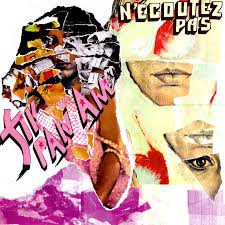
clowns SOUNDTRACK: LE FLY PAN AM: N’écoutez pas [CST031] (2004).

flypanam31N’écoutez pas (Do Not Listen) was the third and final full length album from Constellation’s Fly Pan Am (or in this case Le Fly Pan Am).  There are several short tracks on the disc as well as two 11 minutes songs

“Brûlez suivant, suivante!” (Burn Next, Next!) Opens the disc and hints that it’s going to be a standard rock album—4×4 drums and a dense buzzy electric guitar.  And even when the song proper starts, there’s chanted worded in French and some noisy guitar—its very far from the bass and funky glitchy stuff of previous albums.  The song has very conventional element—a drum break where one might clap along and what sounds like people singing lalalalalala, but all under a veneer of noise and decay that makes it anything but poppy.  There’s a deep voice speaking insistently in French and way in the background a person screaming.  So, really it’s rather unconventional, but within a relatively “normal” framework.  “Ex éleveurs de renards argentés” (Ex breeders silver foxes) is the noise of completely detuned guitars getting plucked and strummed for 30 seconds until a piano plays a chord and all else stops.  It seems like a song will begin but, no, more noises—industrial waves and cars honking takes over.  And then a cacophony of voices begins talking all over each other (including a couple in English).  It’s all over after about 2 minutes.

“Autant zig-zag” (As much zig-zag) is a totally apt name for this song.  This is the first 11 minute track.  After a minute or so introduction, the song comes in with a propulsive bass (not funky at all like the last album) and the song feels like it’s ready to rock.  And it does.  It keeps up this rhythm for a bit and then shifts to a new part with wordless vocals.  There’s even a call and response section with sung words and ooh ooohs as response.  The song shifts to a kind of pummeling section that continues for several minutes until the end.  It contains pretty much everything the band does.  “Buvez nos larmes de métal” (Drink our metal tears) is a noise collage with dramatic movie soundtrack type music played behind the static and distant voices and noises.

“Pas à pas step until” (Step by Step until) has a commanding one, two, three, pause, four, riff going on that is at once catchy and noisy.  The song proper comes in with whispered singing and a wild bass line.  Alexandre St-Onge contributes his wonderful chaos to this song which has some really catchy backing vocals in it

“…” opens side two with what sounds like a voice repeating Fly Pan Am over an over amidst the sound of someone else chewing.  It segues into “Très très ‘retro'” “Very Very ‘Retro’” is the other 11 minute song.  It has two guests, Dominique Petrin on vocals and Tim Heck on electronics.  The song opens with a high-pitched bass and some great counterpoint rhythms.   There’s more hidden vocals throughout the song  Around three minutes in, the bass gets funky.  This runs on for several minutes with some interesting sound effects thrown in until there’s a loud pop and silence.   And then another pop and organ music takes over.  At about 9 minute the song resumes the funky bass line. Again, the band has crammed a lot of stuff into this song.

“Vos rêves revers” (Your dreams setback) has a nice bass sound with some ringing guitar notes.  There’s whispered vocals that sing a melody of sorts.  It’s a fairly conventional song—catchy and bouncy with vocals and everything (true they are whispered and hushed vocals but they do follow a melody line).  At about 4 minutes (of 6), the songs crashes unto itself with the drums and the guitars seeming to fall apart

“Ce sale désir éfilé qui sortant de ma bouche” (This dirty tapered desire coming out of my mouth) has a deep echoing drum kick which keeps a beat.  In the distant background a keening voice kind of follows the melody.  The disc ends with “Le faux pas aimer vous souhaite d’être follement ami” (The false not love you madly want to be friend).  It’s a one minute song with sliding guitars and rock drums which propel this to as close to punk as the band has gotten.  There’s chanting and excitement and fun and then the whole song unravels after about 40 seconds at the end with a sloppy piano denouement.

And that was it from this avant-garde band. The members went on to make lots of other music, Jonathan Parant went on to form Feu Thérèse. Felix Morel has played drums with all kind of interesting bands including Et Sans.  Roger Tellier-Craig has been in Et Sans and Set Fire to Flames among others.  And Jean-Sebastian Truchy has played in several bands including Avec le soleil sortant de sa bouche.

[READ: February 6, 2016] City of Clowns

In the afterword to this book, Alarcón explains how it as written.  He lived in Lima, Peru for a year, teaching.  But while he was there, he had writer’s block.  So he moved to a farmhouse in the middle of America–pure solitude.  And there he wrote the story “City of Clowns” (which I read back in 2013 in the New Yorker) in English.  Sheila Alvarado talked to him about turning the book into a graphic novel.  And so it was completed (after much labor, he says) in a slightly condensed Spanish edition to be released in Spain.  And then, eventually, it was translated into English again, from the Spanish graphic novel.

Since the story really doesn’t change from the short story version, I’m going to put my original comments here:

It opens with Oscarcito going to the hospital because his father died the night before.  He finds his mother mopping floors because his father’s bill was unpaid.  And in that very first paragraph, she introduces her son to Carmela—the woman whom his father left them for.  She was mopping the floor with Oscarcito’s  mother.  He is confused and enraged by this.

His half brothers are also there.  He had never met them before, preferring to stay away from his father’s other life.  But he saw them in front of him and clearly saw that they were related to him.  But the most galling thing was that although he was the oldest of all the children, they were clearly the chosen children—after all, his father stayed with them.

Then we learn about his father’s life.  He was born in Cerro de Pasco and moved to Lima when his young family was still young.  He worked hard in semi-legitimate businesses and then brought his family to the city.  Young Oscarcito, age 8, loved it.  But his mother hated missing her family in Cerro de Pasco.  And now they were living with his father who was practically a stranger. His father worked hard and succeeded, but he was rarely home.

Between flashbacks to his father’s story we see that Oscarcito is now a reporter for the local newspaper and he has been asked to write about the clowns that are prevalent around the city.  Oscarcito is on a bus when a clown approaches.  The clown is pelted by water balloons but still manages to climb aboard the bus and peddle his wares—gaining a few coins for his “act.”  Oscarcito is not interested in the subject and puts it off.

So he travels to his mother’s house to see how she is doing, but a neighbor there tells him she has been living with Carmela since his father got sick.  His mother was embarrassed by this and asked the neighbor not to say anything to him.

His mother had been a cleaning lady since they moved to Lima.  She worked for the Azcártes, a wealthy local family who treated her very well and treated Oscarcito practically like their own son.  Oscar was even sent to a nice school where he was welcomed until they realized where he was from.  Gangs would steal anything from anyone, and were called Piranhas.  And that became Oscar’s nickname at school.  And soon he was made fun of by just about everyone, but especially by one boy.

A flashback then shows that Oscarcito went to work with his father doing construction on a few occasions—they worked very hard on expansions of people’s houses—working hard and working well and making good improvements.  But all the while, they were waiting patiently until they could rob them of all of their fine things.

So when he found his father was working for the father of the boy who made fun of him, he wanted in, and he stole the boy’s suit.

Finally, after putting off his article for ages, Oscarcito meets and interviews a clown.  And that clown tells him how he started and invites him along.  And Oscarcito does.  He finds that he likes the anonymity of the job.

All of the threads come to a head as the story reaches its close—where Oscar will confront his mother and deal with his newfound joy at being a clown.

The ending was very powerful and I enjoyed this story immensely.

There are few details from the original story that have been changed (and I amended my comments accordingly).

There is also an extra scene added of him dating a girl named Carla who walked on stilts.  There’s an erotic moment which is really interesting and which brings a whole new level of fascination to Oscar’s clown life.

Obviously the biggest change is Alvarado’s illustrations.  She does an excellent job recreating these scenes much as I imagined them.  I really  enjoyed the way she worked within the mens’ professions–putting words on bricks as his father was laying them, hanging papers up to dry with text on them, and using excellent distinctions of black and white to show the different settings in Oscar’s life.

The biggest change I think is the depiction of Oscar in his clown suit.  It’s nothing like I imagined and is all the better for it.  Alarcón says that now this is “its true and definitive form” of the book, and I imagine that this is what I will think of when I think of the story.

For ease of searching, I include: Daniel Alarcon.


Read Full Post »

1981 SOUNDTRACK: SON LITTLE-Tiny Desk Concert #496 (December 18, 2015).

sonlittleI know of Son Little, although only vaguely.  WXPN has played his song “The River” quite a lot, although I don’t think I’ve heard anything else.

For this Tiny Desk Concert, he’s really stripped down–just his acoustic guitar, a percussionist (Jabari Exum playing a djembe with accoutrements) and a backing vocalist, his sister Megan Livingston.  His playing is even pretty stripped down–his chords are minimal, almost more like accents for most of the songs (although he does play louder from time to time).

As such, this really celebrates his voice which is strong and almost gospel-like.

He plays three songs. “Lay Down,” is a quiet soulful song with perfectly spare accompaniment.  When it ends, everyone seems adorably shy with Little saying, “just mildly awkward enough.”

“Your Love Will Blow Me Away When My Heart Aches” is a bit bigger–Little sings a bit louder and plays louder chords, but it is still quite minimal.

He ends with “The River” which is certainly stripped down from the radio version.  It opens with some claps and he encourages everyone to clap along although “If you’re like clap challenged then maybe… don’t–you know who you are.”  The song has that bluesy rock feel even in this understated form.  And while I like the original better, this is a great version–that quiet clapping and percussion is really nice.

[READ: July 26, 2016] The Complete Peanuts 1981-1982

So far the 1980s see Schulz settling into a few consistent themes in his strips–regular motifs that he mines over and over again.  Although it’s interesting to see how they have morphed over the decades.

Patty is constantly falling asleep in school (and getting D minuses), Snoopy continues to write funny/bad jokes and gets rejection letters about his books (this is usually pretty funny but it’s also surprising as Snoopy is usually the “successful” one); Snoopy also plays a lawyer a lot in these strips.

1981 begins where 1980 left off with Patty loving the story of Hans Brinker.  1981 also has a lengthy section about Valentines Day (a subject that gets more emphasis in some years than others), although this year Sally is the major protagonist (and her Sweet Babboo her object).  1982 also has a Valentine’s Day with Sally–she gets her hand stuck in the Valentine’s Day cards box.

Schulz used to do bible instruction which is why he quotes it so much.  And he occasionally peppers his strips with religious commentary.  There’s a joke about school prayer–Patty has to go up to the board and when her teacher falls ill she shouts “school prayer works, Marcie.”  There’s an amusing joke that Snoopy used to teach Sunday School at the Daisy Hill Puppy Farm.

Although the running jokes are funny, I love when he gets a new idea.  Like the a fun twist on the dog ate my homework joke when Snoopy as the WWI pilot steals Sally’s homework claiming it is the enemy’s secret papers and he eats them.

Sometimes Schulz gives a one-off joke that’s just silly and funny like when Woodstock “poofs” a dandelion and it “poofs” him back. (more…)

Read Full Post »

rollerSOUNDTRACK: SARAH NEUFELD-Hero Brother [CST095] (2013).

heroroSarah Neufeld is best known as the violinist for Arcade Fire. I wanted to like this disc more than I did.  There’s a lot of really good music and ideas, but the whole album felt a little lacking in excitement.

This solo album was recorded in Berlin by pianist and producer Nils Frahm, with Neufeld’s performances captured in a number of locations with site-specific acoustics, including an abandoned geodesic dome, an underground parking garage, and the legendary Studio P4 orchestral recording hall at the broadcast complex of the former GDR.

On track with a * you can hear the echo of the surroundings (although I’m not sure which is which).

*”Tower” is a repeat of three notes quickly bowed with an echoed ghostly voice floating over the top of the melody. Its lasts but 2 minutes and then disappears.  “Hero Brother” has repeated low notes flanked by high notes until the main fast riff spirals out.  About a minute in, a stomping drum comes in and her playing sounds a bit more folksy. It’s an interesting twist on the more formal earlier style.  I love that it ends almost starkly in the middle, allowing those last notes to resonate.

*”Dirt” begins with high pitches notes that seem to echo and resonate forever.  And then she switches to a spritely somewhat upbeat melody of quick notes. The third part of the song luxuriates in slow bowing—long notes that linger.  “You are the Field”  begins slowly with some bending notes that descend and then ascend.  It’s interesting to hear her slide up and down the neck while some of the main notes remain the same.

*”Breathing Black Ground” has slow echoed note, but about mid way through a low note anchors the pieces as the high notes play a melancholy melody while Nils Frahm plays the harmonium.  “They Live On” is primarily plucked strings until her echoed voice sails over the top. This piece is more pretty than the others but is still rather stark.

“Wrong Thought” has a kind of sci-fi sound as it opens.  A kind of piercing high note is resolved into some lowers notes and then a cool melody.  The ending few notes are a pretty series that rise from the darkness of the main piece.  “Right Through” is a series of three notes played in different location on the fret. It is lonely sounding until some higher notes begin to appear as well.  And then Sarah’s ghostly voice emerges from the background with a kind of haunted phrasing.  It’s quite lovely and then things become quite raucous with some very fast fiddling.

“Forcelessness” opens with a series of three high pitches notes that are quite breathtaking. The notes descend slowly through the melody as a piano plays long held notes to accent the descent. It’s by far my favorite on the disc.  The disc ends with *”Below” which is slow and melancholy with her voice echoing in.

I guess I was expecting there to be more virtuoso pieces rather than a kind of moody ambient record.  Most of the melodies are pretty, but  there’s not a lot of diversity.

[READ: February 12, 2016] Rollergirl

Oh boy, did I love this story.  And not just because it’ about roller derby (although that is quite a lot of it).  I loved it because it had a protagonist who felt she didn’t have a personality or a “thing” and managed to not only get one, but to get an unsuaul one–and to make friends doing it

This story is a bout Astrid Vazquez (an unlikely name if ever there was).  Astrid’s mom always wants her and her best friend, Nicole, to do cultural things.  So they go to museums, to the opera, poetry readings, that sort of thing.  It’s not always fun.  But on this night she takes them to a warehouse where the see a roller derby match!

Astrid (who loves to wear black and is the tomboy of the two) is hooked immediately.  Nicole, who is more prissy and does ballet, is interested but a little freaked out.  And when they discover that there is a roller derby camp for the summer. Astrid assumes they will both sign up and become derby superstars like their new heroine Rainbow Bite (is there anything better than roller derby names?).

But Nicole quietly informs her that she is not doing that.  Not only doesn’t she want to but she actually wants to go to ballet camp this summer.  So there.

And that’s when the opening scene where Nicole is with the horrible, awful, super mean Rachel.  Rachel is the one who came up with the nickname Ass-turd (which maybe makes this not so much a children’s book, but it’s the only bad part). (more…)

Read Full Post »

« Newer Posts - Older Posts »