Feeds:
Posts
Comments

Archive for the ‘Huh?’ Category

SOUNDTRACK: LEO KOTTKE AND MIKE GORDON-Tiny Desk (Home) Concert #100 (October 21, 2020).

I’ve enjoyed Mike Gordon’s playing with Phish and his solo records for years. But I’ve never really explored his recordings with Leo Kottke.

It’s been 15 years since the legendary guitarist Leo Kottke put out a new recording, and it’s no coincidence that his new music is with Phish bassist Mike Gordon. The two have a history of making albums together, but that hit a hiatus in 2005 with their Sixty Six Steps projectThey’re back with a 2020 album, Noon, and Phish drummer Jon Fishman joins the duo.

They open with “Flat Top,” a fantastic instrumental with lots of melodic runs.

They begin with what fans of Leo Kottke fell in love with 50 years ago, the sound of his acoustic guitar fingerpicking. Mike Gordon punctuates the opening song “Flat Top,” which at moments feels like a musical chase.

Mike plays his five string bass like a lead instrument, either playing a kind of counterpoint to Leo’s guitar melodies or even following them along beautifully.

Jon Fishman is a tasteful addition. Mike and Jon have played over 2,000 shows together, so there’s telepathy there. Still, he also finds ways into the music that isn’t merely rhythmic; he adds aural atmospherics with brushes in hand. There are some fun visual tricks but — musically speaking — not a moment of trickery. Just pure magic.

Before “The Only One” Leo’s phone rings and he talks about his friend Sam.  He met Sam when they played poker.  Sam told Leo his two pair beat Leo’s three of a kind.  “On such rip-offs life long friendships are made.”  Mike introduces Fish (“he’s my hero”) who is playing in the studio downstairs from Mike.

Introducing the song, Leo says, the name “The Only One” sounds better than “How to Be an Asshole,” I gotta admit.

There’s plenty of picking in this song as we’l, but its also got some gentle singing from Kottke, harmonies from MIke and gentle drumming from Fish.  The middle solo section is a wonderful moment where both Leo and Mike play complementary solos.

And while they’re miles apart for this Tiny Desk (home) concert, Leo at Creation Audio in Minneapolis and Mike and Jon at Tank Recording Studio in Burlington, Vt., there’s plenty of humor and spirit traversing the wires.

They do an amusing visual joke of them throwing a water bottle through the cameras frames–it’s lined up perfectly.

Mike tells a story that might have inspired “Sheets,” but Leo says,

I don’t know why I wrote this tune.  I don’t know why I write any of them.  I’ve always got my guitar–annoy the neighbors.  I have to hear the guitar.  And every now and them something will come up.   This song uses some of Mike lowest bass notes–they really resonate with Leo’s pretty guitar and gentle singing.

The final song is clearly written by Mike.  He introduces “I Am Random” by saying

This is a song that’s not about being a person standing in a room doing something … ever.

Then he says

it’s about people who came to our country from Kiev in 1885–they took a bell out of a church tower and rode it on out of town.

Who knows what the truth is. This song has a great funky bass line and Mike’s lead vocals.  There’s all kinds of weird (random?) things going on in the song.  Bass slides, time changes and a wonderfully chaotic denouement from all three.

This is a fantastic introduction to what this dup can do and a great introduction to Kottke’s music for me.

[READ: December 3, 2020] “A Famous Man”

This year, S. ordered me The Short Story Advent Calendar.  This is my fifth time reading the Calendar.  I didn’t know about the first one until it was long out of print (sigh), but each year since has been very enjoyable.  Here’s what they say this year

You know the drill by now. The 2020 Short Story Advent Calendar is a deluxe box set of individually bound short stories from some of the best writers in North America.

This year’s slipcase is a thing of beauty, too, with electric-yellow lining and spot-glossed lettering. It also comes wrapped in two rubber bands to keep those booklets snug in their beds.

As always, each story is a surprise, so you won’t know what you’re getting until you crack the seal every morning starting December 1. Once you’ve read that day’s story, check back here to read an exclusive interview with the author.

It’s December 3. Kathryn Scanlan, author of The Dominant Animal, doesn’t need to pay admission if she’s just visiting the gift shop.  [Click the link to the H&O extras for the story].

Yesterday’s story was told in first person plural. This one is told (in part) in second person singular.

“You” follow the life of a famous man. (more…)
Read Full Post »

SOUNDTRACK: SPILLAGE VILLAGE-Tiny Desk (Home) Concert #101 (October 23, 2020).

I never imagined that a video filmed in a church would have an explicit language warning at the beginning of it.  But such is Spillage Village.

The Atlanta collective consists of Dreamville records standouts J.I.D and EARTHGANG along with Jurdan Bryant, Hollywood JB, Benji and Tiny Desk alumnus Mereba. R&B star 6lack, also a member of the group, was unable to make it to the shoot due to travel restrictions.

There’s 12 people in the church (let’s hope they are all tested since they are not social distancing). And seven of them are rapper/singers.  The rest is a live band, and they are tight.  They sound great.  It’s amazing how much a live band can add to a rap concert.

Musically, “End of Daze” is very cool with funky bass from Benji and lots of grooving wah wah solos from the guitarist on the back.  The verses are rapped and everyone gets a turn.  What I especially liked was the diversity of voices and styles.

WowGr8 goes first.  He has a cool accent and delivery.  JID has a fantastic style–his voice is higher than the others and very distinctive.  Mereba has one of the best verses–referencing Nipsey Hustle’s murder.  Jurdan has the most conventional-sounding delivery.  Hollywood JB seems a but more lighthearted in his delivery.  Then OLU (dressed in a fantastic suit) sings his verse.  He has a great singing voice.  While he sings his verse and the song fades sprinkling keys twinkle.  They all sing the super catchy chorus. The backing band is apparently all related but someone is playing the keys and the credits don’t say who: Justin Barnett: guitar; Jerramy Barnett: bass; Nick Barnett: guitar; Dj Barnett: drums.

Christo the DJ starts out “Baptize” with a sample.  OLU raps.  I love his delivery–.his verse is choppy and funky.  JID takes the next verse, and I like him even more.  The song has a fun sing along chorus which seems strangely raunchy for a song about baptism.  WOWGr8 takes another verse and shows off some really fast rapping.

Before the next song, someone’s phone rings and one of them says “turn off your phone in church.”  Mereba sings this next song, which she says is called “Hapi.”  After she says this, someone sings “because I’m happy…) very quietly.  The song proves to be a full on gospel type song.  Mereba has a kind of spoken word section and then OLU croons beautifully.

“Jupiter” ends the set.  Mereba grabs an acoustic guitar and the whole group sings an almost campfire singalong.  The church does feel like an appropriate setting for these last two songs.

I’m really impressed by this group.

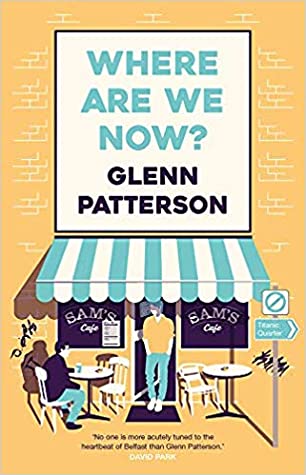
[READ: November 15, 2020] Where Are We Now?

Glenn Patterson is from Belfast, Northern Ireland.  This novel is a small (in scope) story about life in Belfast.  I don’t know that I’ve ever read a story that focused in such detail on the daily life in Belfast, post-Troubles.  The Troubles don’t really enter into the story–except that there are ever present reminders of them.

This is the story of Herbie.  Herbie is a middle-aged man.  I initially assumed he was older middle aged, then I thought he might be younger middle-aged.  I don’t believe it is ever stated.

I had a remarkably difficult time reading this book because there was so much I simply didn’t know.  Stuff that the average Belfastian person probably knows very well and with no problem.

It started pretty early on when someone says that a person had dumped a Portakabin on one of the roads running up to the hills on the far west of the city.

Okay so first, you have to find out what a Portakabin is (a mobile home of some sort). Then there’s a lengthy talk about who might do such a thing.  And I really didn’t understand much of what they were talking about.  Although I did like that they conclude that whoever did it could be summed up as The Ungivers of Fuck. (more…)

Read Full Post »

SOUNDTRACK: BEBEL GILBERTO-Tiny Desk Concert #96 (October 15, 2020).

Typically, I don’t know the international performers that Tiny Desk brings out.  Of course I’ve heard of Bebel Gilberto, although I don’t know all that much about her music.

Bebel Gilberto is, of course, the daughter of one of the creators of bossa nova, João Gilberto.

And while her music is lovely, as the blurb says, I’m more blown away by her view!

When we invited Brazilian vocalist Bebel Gilberto to do a Tiny Desk (home) concert, we had no idea her home would have a spectacular view of speed boats gliding across the lagoon in the heart of the picturesque Leblon neighborhood overlooking the iconic Dois Irmãos mountain in Rio de Janeiro.

Her first song, “Cliché,” is mellow and smooth.  There a ton of music going on behind her, but she only has one other player with her, Chico Brown.  Is it all samples?  What’s going on there?

During this concert, she is accompanied by Chico Brown, the son of famed musician Carlinhos Brown and grandson of the legendary Chico Buarque.

Between songs she sits with Ella her tiny dog and talks about her new album–her first in six years.

“Na Cara” opens with a very cool deep bass line.  Brown plays the keytar and sings backing vocals.

You can feel the presence of all of that Brazilian musical royalty in one of Bebel Gilberto’s most popular songs, the closing “Aganjú.”

“Aganjú” was written by Chico’s father and is her most popular song.  Chico plays the acoustic guitar.  The song has a slow beginning but a much bigger sexier chorus.

[READ: November 23, 2020] “Ghoul”

This George Saunders story reminded me a lot of another George Saunders story, “Pastoralia.”

In that story a man and a woman work as “cavemen” in a living diorama.  They are watched all the time and must alway be “acting” when there are visitors.

In this story, everyone seems to be working in a living diorama.  In fact, their entire world seems to be a theme park or museum and everyone must perform for the visitors.

This story takes the premise of the first story further in almost every way–their entire world s underground with only one way in.  Everything has been turned into this amusement area.  They eat at Vat of Lunch, and every area of their universe has a clever name like Beneath Our Mother the Sea and Wild Day Out West.  The people in each of these scenes act as their are name implies.

The main character, Brian, is a Squatting Ghoul.  He and his fellow Squatting Ghouls are with Feeding Ghouls and Li’l Demons.  It’s not clear exactly what Brian does, but it doesn’t sound pleasant. (more…)

Read Full Post »

  SOUNDTRACK: OZUNA-Tiny Desk (Home) Concert #97 (October 16, 2020).

Ozuna is described as a global superstar and is one of the most watched and listened-to artists on earth. [That link takes you to a Guiness Records page where he is recognized for how much he has been listened to].

Of course, I’ve never heard of him.

Ozuna is a crown jewel in the global crest of Latin pop, a movement whose modern success in reggaeton and Latin trap is indebted to the Caribbean genres Ozuna heard growing up in Puerto Rico, sounds like old-school reggaeton and reggae en español, dembow, dancehall and more.

This Home Concert apparently brings Ozuna’s sound to a more quiet place.

For someone whose work often operates at galactic proportions, this performance of five songs makes room for Ozuna’s sweet tenor to take center-desk in a love letter to the global communities that supported and streamed him to god tier status.

The Puerto Rican singer kicks it off with a breezy rendition of “Caramelo.”

Breezy is a great word for it.  It feels tropical with a reggae rhythm from Freddie “YoFred” Lugo on bass and Elí Bonilla on drums.  The two guitarists (Carlos Mercader and Benson Pagán) play reggae chords and some lead licks.

that leads into a solo version of the sun-drenched “Del Mar” from ENOC, his fourth album that he’s deemed a return to his roots.

It opens with a cool guitar lick and some pleasant keys (Edgardo Santiago).  But Ozuna’s delivery is much faster than the chill music.    I really like the way the backing singer José Aponte matches his voice so perfectly.

Dancing around in the back is the DJ Erick “Yonell” Pachecho.  I’m not really sure what he’s doing back there but he seems very busy.

This pared-down performance makes good on that promise, reworking star-studded collaborations, like the ballad “Despeinada,” as they should be sung: languorously and with intimacy.

“Despeinada” is a quiet ballad.  You can hear Hector Meléndez on the piano playing pretty fills as the rest of the band grooves.  It segues into the banger “Taki Taki” (which I can’t help but imagine is about those purple-bagged chips that I see at the Wawa).

Even the pop smash “Taki Taki” sounds brand new, buoyed by his alchemical flow and energy.

This is my favorite song of the set, from the bouncing rhythm, to the loopy keyboard melody to the fun of singing “taki taki.”  This song is quite short, so it’s clearly just an excerpt. The same is true for “Mamacita” which is barely 2 minutes.  But the flow of this song is great.

I guess the world is right about him.

[READ: November 24, 2020] Nano

I found this book in the hold of our library.  It’s from 2009, although I believe that we received it in 2012.  This means that it has been sitting in our storage area for 8 years and nobody has asked to see it.

This isn’t the only book in this situation–we have many, many books that are unlikely to be read–but most of them are nonfiction and not really timely anymore.  This book, however, is a cute little (40 page) book of cartoons.  And, best yet, they have no words.

There is an introduction (in Spanish) from Máximo, who I assume is the cartoonist Max.  I assume this because Máximo doesn’t come up in searches and because the introduction talks about how Nano is the tiny everyman.  So Máximo is a funny twist on a tiny person.  Or so I think. (more…)

Read Full Post »

SOUNDTRACK: BORIS-präparat (2013).

präparat is Boris’ 18th album.  It contains a huge variety of styles in its 40 some minutes.  It also features a couple of guests.  Michio Kurihara plays guitar on track 3 and 5 and Gisèle Vienne offers spoken word on track 6.

So this album starts with one of the band’s most beautiful instrumentals.  “december” is slow with a cool bassline and gentle drums. The lead guitar perfectly matches the strummed bass.  It’s a lovely post-rock instrumental complete with a section that manipulates the volume knob to bring in extra soft notes.

The pretty guitars continue to ring in on “哀歌 -elegy-” for about 20 seconds before the ominous distortion means an oncoming crash of chords.  But this is a slow crash of chords with some gentle singing (from Takeshi?) in the melodic verses.  About three minutes in the song jumps into a fast rocking section with a great guitar riff and heavy drumming. It’s excellent.

It segues into the 57 second noise fest that is “evil stack 3.”  It’s just distortion and wild soloing, a noisy interlude that is abruptly ended by the gentle “砂時計 -monologue-”  This song is four minutes long complete with gentle drums, and pretty guitars.  About halfway in, it takes off in another postrock spectacle of pretty guitars and a gentle melody.

“method of error” features Michio Kurihara on guitar and starts with some slow heavy thumping chords.  Church bells come echoing in followed by soaring guitars.  The drums interject crashing sounds from time to time.  Two guitars provide an extra wailing solo as the rest of the band jams a heavy chunky riff.  This song runs over 7 minutes.

“bataille sucre” starts off quietly but then brings in a loud ringing guitar.  Then an old school heavy metal riff begins with some screaming lead guitars.  The guest vocals are whispered (presumably in French) and add texture (if you don’t know what she’s saying).

Then comes two songs in under a minute.  “perforated line” is 34 seconds of fast heavy guitar (and synth) that feels like the beginning of song, but it abruptly ends and jumps into the oddball, almost dance stylings of “コップの内側 -castel in the air-” all SEVEN SECONDS of it.  It’s followed by “mirano” which is a warped, carnivalesque waltz with keys and possibly vibes.

“カンヴァス -canvas-” has the tone of a Kim Gordon Sonic Youth song with fuzzy guitars and an almost whispered vocal, although the chorus is pure shoegaze with layers of soft vocals.  About half way through the band add a noisy wall that sounds like it’s going to explode, but it just drops away for some clear crooning from Takeshi.

The disc ends with the eight and a half minute “maeve.”  It opens with skittery percussion and faraway gongs.  Then comes a distorted slow riff.  It’s a slow drone-like song that lumbers along for about six minutes.  The last two are a wave of distortion that sounds like a slow heavy train echoing through your head. 

I love the diversity of this record and the tracks that are not experimental are just dynamite.  I’m really glad this album is no longer hidden away.

[READ: November 12, 2020] The Proof

The Little Buddhist Monk (written 2005) has been bundled with The Proof (written 1989) together in one book.  Both stories were translated by Nick Caistor.

The Proof is about as different from The Little Buddhist Monk as you could get.  It’s also the most visceral story I’ve read by Aira, whose stories tend to be very “of the mind.”

Indeed, you can tell this story is quite different just from the way it starts.

“Wannafuck?”

This question is asked to Marcia (a senior in high school?–she’s “fourth year”) as she is walking down the street.  There are groups of teenagers hanging around,and this question comes from one of the girls.  (more…)

Read Full Post »

SOUNDTRACK: BORIS-Vein (2006/2013).

Boris continues to reissue their back catalog in streaming format.  Which is pretty amazing since so much of their work is so hard to find.  Possibly not great for collectors, but great for those of us who actually want to hear the music.

Vein is Boris’ thirteenth album.  Because they are Boris, the released two different albums under the same title in 2006.  The packaging was identical on both records and the only way to tell them apart was to check out the surface of the vinyl itself.

The “Hardcore version” had punk, hardcore, and drone.with vocals that are screamed rather than sung.  The  “Noise version” had drone and noise music as well as punk. This version of the album does not include any vocals.

In 2013, the band announced that the album would be released as a 2-CD set not as a reissue, but rather a re-arrangement of both albums combined.

Given all of this, it’s not even entirely clear to me what has been released her on bandcamp.  But it seems like the first two tracks (here labeled “v” and “e” are the hardcore version.  The third and fourth tracks “i” and “n” are a little harder to place.

“v” is 14 minutes long, broken up into several small pieces:

It starts with a wall of noise–static and low feedback swirling and manipulated until 4.01 when it segues into segues into ringing bells and effects that sound like a jet taking off and broken glass swirling and zipping around.   Then some drums and chords are introduced.   At 6:15, there’s a samples from the 1979 film Stalker, by Russian director Andrei Tarkovsky. A man says “И пусть посмеются над своими страстями” (Russian for “Let them laugh at their own passions”) followed by a blistering hardcore song  until 7:52.  After an abrupt halt comes the next screaming hardcore song which is more fuzz than chords with screams and feedback which at 9:06 segues into another super fast song which is distinguished from the others because of a riff where the chords go up and up higher and higher and faster as if they are going to explode, although it rumbles unto feedback at around 10:24 when a new tone of fuzzy nose feedback and a much slower introductory opens before before the pummeling hardcore resumes until 12:03.  This first song ends with a moment of silence and then a woman saying “unpleasant dreams” before a Wata fast high note solo is balanced by slow pummeling chords and drums and cymbals. After a minute or so, the hardcore returns this time with a solo all over the top of the song.  The song ends with a humming and what sounds like car keys jingling

“e” is over 15 minutes long and is one third hardcore punk and two thirds slow lengthy drone.  It starts with an Atsuo scream and hardcore drums. There’s a blistering hardcore song–fast riffage and screamed lyrics (which I assume are in Japanese).  Although the hardcore songs sound similar (and are unnamed) the riffs are distinctive enough to tell them apart.  Some backwards masked sounds come in at 1:05 and a similar riff at 1:15.  I have never seen them play this kind of set–it must be exhausting.  At 2.01 a loud bass comes in with a lot of cymbals and the song is buried under a blanket of distortion.  two minute song starts with.  At 3:04 a buzzsaw sound and a cool riff is coupled with some intense screaming.  At 4:45 it morphs into feedback that contains another sample from an Andrei Tarkovsky film, this time the 1986 film, The Sacrifice.  A man say “I hela mitt liv har jag väntat på det här. Hela mitt liv har varit en enda väntan på det här.” (Swedish for “All my life I’ve been waiting for this. My whole life has been a long wait for this.”)  The rest of the song feels like it might stay a lengthy drone, but at 5:46 after some cracks of the snare, a slow powerful Boris riff emerges.  But the riff dies away for some slow Wata soloing over droning chords.

Track 3 is probably the “noise version” (which is 17 minutes long) or the 2013 re-release (which is 17:25) but this track is 18:04.  Of course, if the “noise” version has no vocals, it can’t be this because it does have vocals.

It opens with a similar kind of noise that opens “v” but more staticky and with distant riffing going on.  At 1:58 a riff comes in.  The songs are like “v.”  A shorter version of the jet sounds are followed by some slow heavy chords.   At 3.22 there’s some chirping feedback that introduces the first hardcore song in “v.”  At 5.22 [#4 above] segues into a scream-filled hardcore song followed at 6:14 by the riff that goes higher and higher.  At 7:36, there’s slow thumping with noise and feedback (this might be new and not on “v”) then a sudden drop off of sound and near silence before the screeching feedback that starts at 8:39 with a blistering hardcore song that sounds unlike anything before. There’s heavy fast riffing with a pause and a big scream before resuming.  At 11:50, warping sounds and a thundering drum compete with a really fast riff which sounds like the first part of “e.”  At 13:05 song 2 from “e” begins–short, fast and loud.  Then at 13:51 comes track 4 from “e” (there’s no track 3) with the buzzsaw opening. At 15.21 there’s some backwards recording which eventually becomes the guitar solo that ended “v,” although this time it’s just under 3 minutes long.

Track 4 is “n.”  Perhaps it’s the “noise version” as there are no words.    It’s 17:59 and is a noisy composition of drone and feedback.  There’s some heavy chords and some quieter moments.  The high soaring notes seem to fit in very nicely with the sludgy bottom parts.  About half way through it turns into a fast, heavy hardcoreish track with a lot of drums, but buried under a wall of feedback and distortion.

[READ: November 12, 2020] The Little Buddhist Monk

The Little Buddhist Monk (written 2005) has been bundled with The Proof (written 1989) into one book.  Both stories were translated by Nick Caistor.

The Little Buddhist Monk is an absolutely bizarre, borderline stream of consciousness story.  It jumps from topic to topic like a fever dream and resolves itself in an even more unexpected way.

The story opens with us meeting the little monk who would very much like to leave Korea (where he was born and where he studied). But he has no money and no reasonable expectation for ever emigrating.  

Then one day a French photographer, Napoleon Chirac, and his wife Jacqueline Bloodymary (!) happened in his path.  They were on vacation and spoke French to each other.  The monk knew French and joined in the conversation.  They were delighted to meet a fellow French speaker in such a foreign land.  He imagined that they could be his ticket out of Korea.  So he decided to help them throughout the day.

They talk a lot about art.  Napoleon photographs empty rooms with a 360 degree camera and then splices it together as one image.  He has traveled the world filming places and he is looking to do a Korean monastery.  What luck, the monk can take them to a good one. (more…)

Read Full Post »

SOUNDTRACK: BORIS-“urban dance” (2015).

Back in 2015, Boris released three albums on the same day all under the “new noise literacy” banner: “urban dance” “warpath” and “asia” [according to their label numbers, this is the order they go in].

All three records are experiments in abrasive noise.  Despite the adorable child on the covers, these records will scare children.

This album has five songs, two of which actually take a break from the relentless noise that’s present on “asia.”

“Un, deux, trois” (French for “One, Two, Three”) starts out with a series of distortion bursts, a beat of distortion coupled with a wall of noise that follows up.  It’s harsh and unwelcoming.  But at just over 4 minutes it’s one of the shorter noise compositions on these three discs.  Around three minutes it sounds like distorted electronic balloons being manipulated and then the air let out.  The noise drops of for the last seven seconds before the next song starts.

“Surrender” is pretty much the only thing resembling a proper song on these discs.  It’s got bass, drums, guitar and vocals.  It’s also got a melody.  The overall feeling is one of shoegaze and the melodies, both guitar and vocal are really pretty.  Although this being an album of noise, it couldn’t help but add a hugely noisy field of distortion to the middle of the song almost as an instrumental break.  There’s a second distortion interruption in the song that lasts long enough to make it seem like maybe there’s no more music.  But the song returns, keeping that melody until the end.

“Choreographer” is nearly nine minutes long.  It starts with a rumble and electronic feedbacking.  There’s some soaring sounds buried in the rumble–some lead guitar notes (feedbacking) that add a little structure to the noise; at times it sounds like a guitar trying to fight its way out of a pile of noise.

“Endless” is a little different than the other songs.  It has a bit more of a drone feel than a noise and distortion feel.  It’s still a wall of sound, but rather than a low rumble of noise, it’s more like high notes feeding of of each other.  After three minutes it feels like a distant dreamy melody is soaring in from afar.  A couple minutes later some drums come in, a militant beat putting some tempo to the rest of the sounds.  With about four minutes left, a series of four drum hits with a cymbal add a nice regular pattern to the song–making the drums an almost catchy element because of its consistency.  The end of the song has a bit more notable percussion until it drops out and the song fades on its own.

“Game of Death” is even longer at over 11 minutes.  It starts with sharp feedback and low pulsing space sounds full of distortion and noise.  But after a minute it turns into a full on raging distortion fest.  It feels like maybe two or more different sources of distortion rumbling in and playing atop the other ones.  About midway through, a higher-pitched distortion comes in and swirls around.  But for the most part it’s a relentless barrage of noise, with some interesting new (but still noisy) sounds in the last minute.

The album is credited to: takeshi: guitar, bass & vocals / wata: guitar & echo / atsuo: drums & electronics.

[READ: November 1, 2020] “Hungry Self”

I’ve noted that I rather enjoyed Rebecca Curtis’ more recent stories, so I was disappointed by how much I didn’t really like this one.

As I think about it there was nothing bad about it, it just felt a little flat and mean-spirited without much more.

The narrator is working at a Vietnamese restaurant.  She is a waitress.  She likes the boss’s son; he thinks she is disgusting.  One of the chefs likes her.  He has no teeth and sells cocaine in the basement.  She snorts with him but nothing else.

She noticed that a customer who sat down was her former therapist. The woman gave “the smile you give a waitress if you’re the kind of person who is nice to a waitress.”

Her ex-psychiatrist was overweight and this issue had caused them all trouble.  Initially, the waitress’ whole family was seeing the psychiatrist together and the waitress’ father commented about her weight.  He asked the waitress how much she thought the psychiatrist weighed and the waitress replied 260.  The psychiatrist insisted that they be seen individually from then on.

The next time, when the waitress was alone, the psychiatrist told the waitress about Harry’s Diet Pretzels which she now ate all the time.

The psychiatrist was very nice, but the waitress didn’t want that.

I wante a shirtty tip so I could have a reason for hating the fat ugly lesbian, a reason other than that she had once seen me cry.

The psychiatrist and her lover ordered lo mein (noodles in oil–food that the fat woman definitely did not need) and egg drop soup (the soup most likely to have a roach at the bottom).

When the psychiatrist left, the tip was good, “so as to say ‘We like you’ but not too good so as to say, ‘We feel bad for you obviously.'”

I wanted more to happen here.  Oddly enough I couldn’t tell where the story was set.  I initially thought Vietnam, but that doesn’t make sense.

Read Full Post »

SOUNDTRACK: FRANCES CARROLL & HER COQUETTES featuring VIOLA SMITH-“Snake Charmer” (1939).

Drummer Viola Smith died a couple of days ago at the age of 107.  ONE HUNDRED AND SEVEN (a month shy of 108). That’s pretty fascinating in itself.  But even more fascinating is that she was an amazing drummer at a time when women didn’t play drums.  And not “amazing for a woman” or anything patronizing like that, check out the video of her playing “Snake Charmer.”

Check out her drum kit, check out the speed, check out the power.  Check out the arial toms and the way she hits them without it even seeming like she is. Wow, I wish I’d heard of her sooner.

Here’s some relevant quotes from an obituary in The Guardian

Smith took up drumming as a teenager in Wisconsin, when her father assembled the Schmitz Sisters Family Orchestra with his eight daughters. Her showcase was “The Snake Charmer,” a jazzy arabesque with explosive drum-fills.

Because she was the sixth daughter in the family, she said, her older sisters got the strings and brass.  “My dad said, ‘Now, we need a drummer!’ Thank God, I was it.”

In 1938, Smith formed another all-female orchestra, The Coquettes, with her bass playing sister Mildred. The band moved to New York in 1942, where Smith studied under the legendary snare-drum innovator Billy Gladstone.

In the same year, as men were being drafted to war and women taking their place in factories, Viola wrote a now-famous article for Down Beat magazine, arguing for the inclusion of women in the big bands of the day.

“Many of the star instrumentalists of the big name bands are being drafted,” she wrote, under the title Give Girl Musicians A Break! “Instead of replacing them with what may be mediocre talent, why not let some of the great girl musicians of the country take their places?

“We girls have as much stamina as men. There are many girl trumpet players, girl saxophonists and girl drummers who can stand the grind of long tours and exacting one-night stands. The girls of today are not the helpless creatures of an earlier generations.

Smith found it difficult to lead the orchestra from behind the drums, so she turned over those duties to Frances Carroll.  But at the height of her success, Smith performed with Ella Fitzgerald and Chick Webb, as well as at the second inauguration for the 33rd president, Harry Truman, in 1949.

I haven’t even mentioned how good The Coquettes are.  They swing big time and this song is really fun.  The only thing worse than hearing about a great musician after they have died is realizing that there are almost no recordings of her playing.

Here’s another page from The Future Heart with lots of videos and interviews with Viola.

[READ: October 26, 2020] “Nettle”

I really enjoyed the way this story opened.  It is about Willie, who, as the story opens, is a young boy.  Willie’s teacher told the class that she would be guarding them and that “not one of them would be lost, except the one who was destined to be lost.”

When the boy told his mother what Miss Rita said, his mother replied,

That happens to be from the Bible… When people take words from the Bible and repeat them to young children, or to anyone, for that matter, they’re nuts.  Don’t pay any attention to her.”

She says that maybe when he’s older he can leave that school and go to the one his daddy went to.

He would visit his daddy often in his room. His daddy was always playing the same piece to music.  He told his daddy about a book he was reading in class. His daddy replied that he had read that same book when he was younger: rewrite the whole thing. (more…)

Read Full Post »

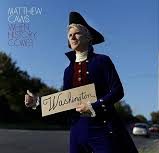
SOUNDTRACK: MATTHEW CAWS-“When History Comes” (2020).

Recently Rough Trade released an online album Talk – Action = Zero, Vol. 2.  It was a collection of songs with the intent of giving money to get out the vote organizations like Spread The Vote.  There were some 90 songs on it.  One of them was from Matthew Caws from Nada Surf.

On the most recent Nada Surf album, the song “So Much Love,” featured a lengthy spoken sort of rambling section.  Caws’ voice works quite well for that fast spoken section and when I saw them play it live, he was able to recite (or read, he had the lyric sheet in front of him) the whole thing while still playing which was pretty cool.

So this new song follows in that model.  The song is a simple riff that repeats.  And the lyrics are probably not spontaneous, but are pretty close.  There’s also a chorus.  It’s really catchy, just like all Nada Surf songs tend to be.

My contribution is a protest song; a get out the vote song. Will any Republicans hear this song outside of my liberal music bubble?  I don’t know.  I want them to.  Maybe there is a way.

What should a protest song say?

I protest the dismantling of the Postal Service which right now means the dismantling of democracy.

I protest the denial and protection of systemic racism.

I protest the dismantling of regulations that protect public land.

I protest the dismantling of the trust between a country and its media.

Am I naive enough to think that naively expressing these things can change anyone’s mind?  YES

I’m naive and a dreamer but also ambitious.  I believe in people.  I believe in change.

I’ll say this I vote Democrat but I don’t hate republicans.  I just hate this administration.

When history comes and sticks out its thumb / asking you for a ride / I hope that you see how fast it can be / it goes by in the blink of an eye.
We’re stuck in this boat / it’s barely afloat / we’re watching the water rise / History’s ill / it needs some good will / and we’re so tired of the lies

We’re all canaries in the coal mine.  We have to say what we see.  We’re all the band on the Titanic.  Don’t stop when the ship goes down.

Let’s be cheerleaders for postal workers.   Cheerleaders for voters for braving the long lines of the maskless.

We implore that you nurture your inner artist.  That you make something for yourself so that you have fulfillment.  So that you don’t seek satisfaction in the hot flame of mockery, the perversity of trolling, the thrill of baiting and phishing.

I believe that we’re all made out of love and good things.  We just get sick

When history comes and sticks out its thumb / asking you for a ride / I hope that you see how fast it can be / it goes by in the blink of an eye.
We’re stuck in this boat / it’s barely afloat / we’re watching the water rise / History’s ill / it needs some good will / and we’re so tired of the lies
Come out of your shell / the country’s unwell / we really need you to fight.

[instrumental break]

I’m an atheist and I had a friend in college who was Christian.  He belonged to a Christian group, I can’t remember which one but he wore a lapel pin with his name on it.  Anyway, really lovely guy.  We were both in film class and we’d get together once in a while to study.

Then one day we were saying goodby before winter break in front of the library.  The sky was dramatic, a whirlwind of leaves was nearby.  He gave me the hard sell. He said, “think about it… eternal life.”  It was moving.  I knew he wanted the best for me and in that spirit I’d like to say to you:

Imagine that the left don’t want to destroy America, because we don’t.  We just want it to be more fair. We want it to live up to its promise and that’s because we love it so much.  Don’t be afraid, we;re all right.  I’ll tell you what’s fake news… it’s that we’re bad people.   We’re not.   [It’s] that we want trump to fail.

I didn’t want him to fail. I wanted him to do great.  He didn’t.  But I wanted him to.

He makes me feel bad.  He makes other people feel bad too.  That doesn’t set a good example.  Sometimes it just comes down to that: don’t make people feel bad. And for every decision think about how it affects poor people the most.  Think about how it affects children.

You know…

Alright go register go vote.

So simply stated.  so true.  What a great song.  I hope people outside his bubble hear it.

[READ: October 21, 2020] “Suffocation Theory”

This story started out rather strange and I thought it was going to coalesce into something enjoyable.  But it never really did.

Out of the blue Amanda told the narrator they were moving.  He liked their apartment just fine and don’t want to move, but she told him the movers were already outside.

He watches a lot of news and everything is terrible.  Killings with guns, bombs and cars.  He is amazed that people have the irresistible idea “that killing a bunch of strangers would solve whatever problem they thought they couldn’t solve any other way.”

The new place is terrible.  It feels like a giant warehouse with rooms and lots of empty space. The bathroom doesn’t have a shower.  The neighborhood is terrible.  They also have a roommate.

The roommate is a jerk.  He jokingly points a gun at the narrator. (more…)

Read Full Post »

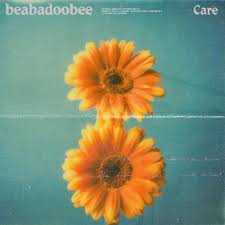
SOUNDTRACK: beabadoobie-“Care” (2020).

This song has been getting a bunch of airplay prior to the release of beabadoobie’s debut, album and holy cow is it catchy.

It’s got a terrific 90s alt rock sensibility (Belly, Juliana Hatfield, etc).  Slightly distorted guitars, big drums and perfect use of silence to lead to a crashing continuation.

Beatrice Laus’ voice is gentle and soft as she sings the jangly verses.  The bridge then builds to the super catchy, two-beats-and-a-pause “care” chorus.  Her voice doesn’t get harsh or anything bit it does get a lot more powerful.

This song is hooky and memorable and instantly sing alongable.

I’d heard her earlier EPs and liked them, but nothing stood out as memorably as this song.  I hope the rest of the album proves to be as full of great songs.

[READ: October 15, 2020] “Time to Destination”

This is an excerpt from DeLillo’s forthcoming novel The Silence.  I tend to think that DeLillo’s novels are rather long, so I was surprised that this excerpt was only three pages.  (I realize an excerpt is a tiny piece, but it still seemed rather short).

I normally really enjoy DeLillo’s attention to quotidian detail, but this excerpt fell flat for me.

It is a man and a woman on a plane.  He wants to sleep but he can’t stop looking at the display that shows where they are and when they will arrive.

He reads many of these details aloud, but the woman (his wife) ignores him.  she is busy writing down all of the things they have done so far on th etrip.

While the talk, they challenge each other on some facts–Fahrenheit’s first name, Celsius’ nationality.  He mocks her for writing down all the details, like the rainy days–she wants to see the precision, the details.  He says she can’t help herself, but she replies that she doesn’t want to help herself.

Their conversation felt like airflight itself–automatically generated because of the enclosed space. (more…)

Read Full Post »

« Newer Posts - Older Posts »