Feeds:
Posts
Comments

Archive for the ‘Huh?’ Category

#20SOUNDTRACK: SUGAR-File Under: Easy Listening (1994).

fuelI  always thought File Under: Easy Listening was a very funny title.  But it’s possible that people took it too literally as it didn’t sell all that well. And in Mould’s autobiography he says he didn’t have much time to write songs for this disc and he thinks it suffered.  Of the three Sugar discs, this is definitely the weakest, although there are some great moments on it.

The disc opens with “Gift” which has some ragged distorted guitars. It’s got some noises and grungy sounding solos showing that FU:EL was a joke.  Although, the overall sound is kind of a cleaner version of the angry songs on Beaster.  “Company Book” is kind of a pounder, until the voice comes in and you realize…it’s not Mould!  It’s got a catchy chorus, but after the kind of underwhelming opener, it’s a strange place for a song that’s also not so dynamic.  Especially when it’s followed by “Your Favorite Thing” another great pop song from Mould—not top tier but a really strong second tier (although that bright, simple guitar solo is a real winner).  “What You Want It To Be” is a another decent song (the addition of that extra guitar playing the melody line really makes the song shine.  “Gee Angel” is also a high point.  A catchy song, but which never quite reaches the heights of the previous albums.

“Panama City Hotel” has the same feel as the opening of Beaster: bright acoustic guitars and a similar riff.  But it never really goes anywhere, and the 4 minutes seem.  The “do do do do’s” that open “Can’t Help You Anymore” are certainly the brightest spot on the album, and a big pop song as well.  “Granny Cool” has a nicely abrasive riff although it seems kind of mean spirited.  It’s funny that he tucked “Believe What You’re Saying” at the end of the album.  It’s a minor song but it sounds so bright on this album after the other songs. It’s really quite pretty.

And the closer, “Explode and Make Up” is one of Mould’s great angry songs.  Unlike Beaster, this one has a happy acoustic field—bnright guitars with that raging distorted guitar underneath.  It’s a great slow burner of a song and at five minutes it ends a somewhat lackluster album in a great way.

[READ: March 31, 2013] McSweeney’s #20

McSweeney’s #20 is an issue that I have read before.  At least I think I have.  My recollection is that it was the last one I read before I started writing about them on this blog.  I was hesitant to read it soon again, which is why I waited until now.  And while I remember the issue itself (with all of the art), I didn’t remember the stories.  So who knows if I actually read it six years ago.

Anyhow, this issue comes jam-packed with art.  Every fourth page has full-color artwork on it–many of them are quite famous.  It makes for a very beautiful book.

In between these artworks are a number of stories–ranging in size from 2 pages to 30-some pages.  There are no letters, and the explanatory and copyright information is on the cover of the book–which would be fine, except that it is covered up by a kind of 3-D artwork.  I wonder if the whole text is available anywhere?

The book also comes with a separate pamphlet–an excerpt from Chris Adrian’s Children’s Hospital.  I intend to read the novel eventually so I didn’t read the excerpt–although maybe if I put off the novel for six years I should just read the excerpt now. (more…)

Read Full Post »

fivedials_no27b

SOUNDTRACK:  FREEGAL MUSIC (2013).

freegalNot only am I a librarian, I’m also a patron of libraries (we currently use four!).  I’m also a huge advocate of library usage.  Everyone knows you can get free books at the library.  And many people know (but many people don’t) that you can get free CDs and DVDs from the library.  Well, I’m advocating a new service that many libraries have implemented (both the library where I worked and my local library have it).

It’s called Freegal and it allows you to download (and keep) three songs a week.  The selection is quite impressive, as they have made agreements with 10,000 record labels.  That’s 10,000 LABELS, not artists, so huge numbers of songs are available. I did a few random searches and was delighted by how much was there.

Even their genre divisions are impressive.  Just check out this sample selection from the B’s: BeBop Big Band Black Metal Bluegrass Blues Bolero Bollywood Brasil Soul Brazilian Breakbeat BritPop Broadway.

So check out to see if your library subscribes.   You get three free songs every Monday morning!  Not bad for the price of a free library card.

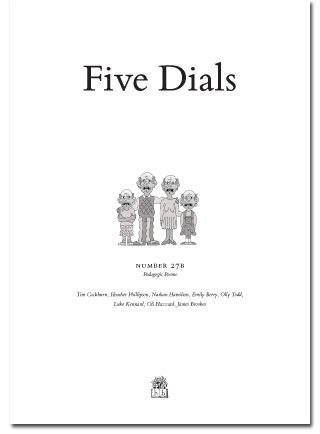
[READ: July 3, 3011] Five Dials Number 27B

I haven’t posted about a Five Dials in a couple of issues, primarily because I find writing about anthologies is very time consuming (I have recently read three McSweeney’s which I haven’t had the time to edit together into posts).  The good news is that I have only missed two issues, but I know that at least one of them is pretty large.  I was a little bummed to see another new one already, but then I saw that this issue was not only short, it was full of poetry.  And, since this is my poetry month, why not end the month with a little more poetry.

I enjoyed the offputting cartoon on the cover of this issue which is creepy and funny at the same time.  (Illustrations are by Sophia Augusta, Hannah Bagshaw, Kyle Platts, Tom Rees and Joe Prendergast.  I assume Augusta did the cover).

There was no letter from the editor or any of the usual suspects in this issue.  Rather this issue opens with a Letter from the Poetry Editor.  It is shaped like a poem but isn’t one.

SAM BUCHAN-WATTS-On Parenting Poems
Mentioning a 1954 parenting guide (from Elizabeth Longfellow), Buchan-Watts says that they asked eight young poets to choose a chapter heading from Longfellow’s book Points for Parents, and to make a poem starting from that title.

And it’s now that I admit that these poems have set me back terribly in my appreciation of poetry which I have been nurturing all month.  If ever there was a collection of seemingly random words, it is these. (more…)

Read Full Post »

chelotti SOUNDTRACK: PETER GABRIEL-“The Book of Love” (2010).

pg

This is a cover of the Magnetic Fields’ song (not the fifties song).  I have this strange relationship with the Magnetic Fields.  I love the songs that Stephin Merritt writes.  His melodies are simple but timeless.  And his lyrics are usually wonderful.  Like from this song:

The book of love has music in it
In fact that’s where music comes from
Some of it is just transcendental
Some of it is just really dumb

And then there’s Merritt’s voice.  It is deep.  Almost comically deep, especially when he sings slowly, it brings on a strange profundity to these words.  And it works pretty well.  Although sometimes I want the songs to be…more.  And that’s where the covers seem to come in.

Gabriel’s cover doesn’t change the song really at all.  But it has Gabriel’s voice, which soars and it has Gabriel’s sense of instrumentation, which also soars.  Perhaps it’s that Merritt’s songs deserve bigger and lusher treatments–they practically scream for Broadway.    And while Gabriel’s version is nowhere near Broadway over-the-topness, it fleshes things out nicely.

Of course, it may very well be that Merritt’s understatement (and oftentimes, just one instrument) provide a successful counterpoint to the spectacle that the song could be.  And maybe that’s why they are so successful.

But Gabriel’s version is really great, too.

[READ: April 20, 2013] X

One more book of poetry for April, this one by Dan Chelotti.  It is Chelotti’s debut, and Chelotti’s poetry is wild and weird and often quite funny.  It is also unapologetically modern.  As you can see from the first poem “Ball Lightning”

I am looking out over
one of the first real gray
days of autumn listening
to a podcast in which
these two men are talking about
the phenomenon of ball lightning.

Or, more sadly in “ Grieving in the Modern World” in which he compares the way people’s grief in the old days was so public, but now it seems so small and insignificant, oh and besides:

…the microwave is
almost finished heating
my dinner , and the newshour
is about to begin. (more…)

Read Full Post »

between heaven SOUNDTRACK: ALTAR OF PLAGUES-“Scald Scar of Water” (2013).

aopI never think of death metal coming from Ireland.  I think of punk and metal and obviously the Pogues, but noise metal?  Unlikely.   And yet here is some.  And why shouldn’t Ireland produce music like this?  There are fans everywhere.

I heard this from good old Lars at NPR.  I’ve come to expect the unexpected from Lars’ picks.  And this is no exception.  The song is six minutes long.  It has some traditional death metal stuff–growling vocals, incessant drumming and lots of noise.  But there’s a lot more going on here.  It opens with electronic noise and thudding drums.  The drums are punctuated by alternating abrasive guitar riffs.  The song meanders along until it settles down to some heavy heavy verses (I have no idea what the man is screaming about).  After returning to the buzzsaw riffs, and repeating the verse, the song suddenly stops.

At 4 minutes the whole thing stops.  There’s some scratchy noises and then some slow pulsing bass and suddenly the whole song turns into  kind of alternative metal song, complete with chanting.  It’s pretty unexpected.  I can’t imagine what the rest of the album is like.

[READ: April 17, 2013] Between Heaven and Here

This was another book that I did not like in the beginning. Well, that’s not exactly true, I enjoyed the beginning but I really didn’t like the middle and really wanted it to end soon.  Not a good way to feel about a book. The reason I didn’t stop is because it was so short.  It turns out that an excerpt from this book was in a McSweeney’s issue that I recently read (and which I haven’t posted yet).  I didn’t “get” the excerpt then, and while it makes more sense in context I still felt the section was really hard to follow.

And so was much of the book.

This is the story of Rio Seco, an area of California, and the citizens who live there.  As the story opens we learn that Glorette Picard is dead.  Glorette was a crack whore, the kind of girl who would get killed and no one would miss her.  Except that people would miss her.  She had a lot of friends and relatives who cared about her.  She even had a son, Victor, who is 17 and studying his ass off to be able to go to college.  When a boy in town finds Glorette’s body dumped in a shopping cart, he feels compelled to move her, to bring her to her Uncle Enrique because he knows that the police won’t care if some crack whore was killed.  So he moves the body and that sets in place the rest of the story.

What was confusing to me was that the novel was constructed like a series of short episodes–different people and how they knew Glorette and how Glorette affected them.  That’s not a problem, except that there’s very little indication that that’s what was happening.  It felt increasingly difficult to know who was the main character was in each section, especially since so many characters overlapped.  Which again wouldn’t have been a problem except that I really couldn’t tell which person was the narrator or at least focus of each section.  Sometimes they were never identified, other times only after several pages.  The chapter that was excerpted in McSweeney’s has virtually no names in it, it is just dialogue.  And sure the dialogue was interesting and with the novel’s context made some sense, but I’m still not sure who was in the conversation. (more…)

Read Full Post »

xxSOUNDTRACKQUEENS OF THE STONE AGE-“My God is the Sun” (2013)

qotsaAfter a six-year hiatus, QotSA is back with this slinky song.  It has the sleazy feel that Homme does so well (how does he do that?).  This song feels a little more guitar based (meaning it is a bit more trebly–with interesting echoes on the guitars).  It’s not as immediately catchy as their bigger hits, but it’s got all the elements you look for from QotSA.

It opens with some slashing sounds and then the riff kicks in.  The song is propulsive but somehow doesn’t feel as fast as some of their earlier tracks.  Which is not to say it’s mellow at all.  And once Homme starts singing, well, it’s like they never went away.  There’s a lengthy middle instrumental section which is quite interesting and otherworldly, but it never gives up the propulsion, especially as the end gets faster and faster.

[READ: April 8, 2013] The Mays XX

This is another book that I saw at work and wanted to read (this job is wrecking my already long list of books to read).  I had some difficulty cataloging it (for various reasons), which meant I had to pour over contents.  And the more I looked it over the more I realized that I wanted to read it.

So The Mays Anthology publishes the best new student writing and art from Cambridge and Oxford Universities.  Read more about it at their website.  I’d never heard of The Mays before, but when I saw that John Darnielle of the Mountain Goats was a guest editor, I thought it might be a fun collection tread through.

Issue 20 features poetry, a graphic novel, photography and prose.  The other editors are Andrew Griffin (general), Sebastiano Barassi (Visual Arts), Tao Lin and Toby Litt (Prose) and of course, Darnielle (Poetry).

I was really delighted with the prose in this issue.  None of the stories are more than 1,000 words, which I decided is a wonderful length for a story.  I’m going to talk about the stories, but not so much about the poetry or art.

Darnielle’s introduction to the poetry section was excellent and really resonated with me because of my ideas and fears about poetry (how we feel stupid if we don’t get poetry).  He then explained the things that he looked for in this poetry and I imagined that i would love every piece here.  I didn’t, but on the whole I really liked the poetry. (more…)

Read Full Post »

McSweeney’s #13 (2006)

13SOUNDTRACKPARTS & LABOR-Stay Afraid (2006).

partslaborParts & Labor have changed t heir style over the years going from noisemakers who have a melody to being melodious noisemakers.  This album is one of their earlier releases when noise dominated.  Right from the opening you know the album is going to be a challenge.  The first song has pounding drums (electronics that sound like bagpipes) and heavy distorted shouty vocals.  By the end of the songs there is squealing feedback, punk speed drums and screaming distorted vocals (complete with space sound effects).  It’s an aggressive opening for sure.  Song two opens with a long low rumbling and then “Drastic Measures” proves to be another fast-paced song.

“A Pleasant Stay” is 5 minutes long (most of the rest of the album’s songs are about 3 minutes).  It continues in this fast framework, although it has a bit more open moments of just drums or just vocals.  The way the band plays with feedback in the last minute or so of the song  very cool.

“New Buildings” has a hardcore beat with a guitar part that sounds sped up.  “Death” is a thumping song (the drums are very loud on this disc), while “Timeline” is two minutes of squealing guitars.  “Stay Afraid” has a false start (although who knows why–how do these guys know if the feedback sounds are what  they wanted anyhow?).  The song ends with 30 seconds of sheer noise).  The album ends with the 5 minute “Changing of the Guard” a song not unlike the rest of the album–noisy with loud drumming and more noise.

The album is certainly challenging, it’s abrasive and off putting, but there;s surprising pleasures and melodies amidst the chaos.   Indeed, after a listen or two you start to really look forward to the hooks.  If you like this sort of thing, this album s a joy.  It’s also quite brief, so it never overstays its welcome.

[READ: April 15, 2011] McSweeney’s #13

I have been looking forward to reading this issue for quite some time.  Indeed, as soon as I received it I wanted to put aside time for it.  It only took eight years.  For this is the fabled comics issue.  Or as the cover puts it: Included with this paper: a free 264 page hardcover.  Because the cover is a fold-out poster–a gorgeous broadside done by Chris Ware called “God.”  And as with all Chris Ware stories, this is about life, the universe and everything.  On the flip side of the (seriously, really beautiful with gold foil and everything) Ware comic are the contributors’ list and a large drawing that is credited to LHOOQ which is the name of Marcel Duchamp’s art piece in which he put a mustache on the Mona Lisa.  It’s a kind of composite of the history of famous faces in art all done in a series of concentric squares.  It’s quite cool.

So, yes, this issue is all about comics.  There are a couple of essays, a couple of biographical sketches by Ware of artists that I assume many people don’t know and there’s a few unpublished pieces by famous mainstream artists.  But the bulk of the book is comprised of underground (and some who are not so underground anymore) artists showing of their goods.  It’s amazing how divergent the styles are for subject matter that is (for the most part) pretty similar: woe is me!  Angst fills these pages.  Whether it is the biographical angst of famous artists by Brunetti or the angst of not getting the girl (most of the others) or the angst of life (the remaining ones), there’s not a lot of joy here. Although there is a lot of humor.  A couple of these comics made it into the Best American Comics 2006.

There’s no letters this issue, which makes sense as the whole thing is Chris Ware’s baby.  But there are two special tiny books that fit nearly into the fold that the oversized cover makes.  There’s also two introductions.  One by Ira Glass (and yes I’d rather hear him say it but what can you do).  And the other by Ware.  Ware has advocated for underground comics forever and it’s cool that he has a forum for his ideas here.  I’m not sure I’ve ever read prose from him before. (more…)

Read Full Post »

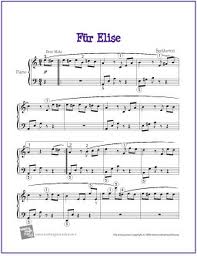
SOUNDTRACK: LUDWIG VAN BEETHOVEN-“Für Elise”

I didn’t know a lot of the music mentioned in this book, but like most people, I know and enjoy “Für Elise.”  It’s an interesting choice of music to end such a crazy chaotic story, although I suppose there are some less than peaceful moments ion the song too.  It’s a shame Bast never gets to play it.

I find the most engaging moments to be when the lone high note comes before the reintroduction of the initial melody.  The middle, minor key section that sounds kind of menacing is also neat–a big switch from the delicate opening.

Why not take 3 minutes and enjoy it now:

[READ: Week of August 20, 2012] JR Week 10

The end is here.  After endlessly interrupted conversations, the book has actually hit a period.

As the last week ended, Bast was being dropped off at the hospital by Coen.  And the bulk of the end of the book takes place in the hospital.  There are many similarities between this book and a big 60s/70s comedy romp, and here is another one–all the characters seems to pile into one location for a big finale.  (Technically the finale happens at Bast’s house, but you get the idea). (more…)

Read Full Post »

SOUNDTRACK: FRANK BLACK-“Headache” (1994).

Frank Black is Black Francis from the Pixies.  When the Pixies disbanded, Black set out on  a solo career.  He’s got some great songs under the Frank Black moniker and this is one of them.

This is an acoustic guitar rocker, that sounds perfectly nineties.  It builds over a series of verses, getting louder and faster with backing vocals added as the song goes along.  What’s interesting is that there’s no real chorus to the song.  The verses are more or less the choruses, although that doesn’t quite seem right either.  But after the verses, there are these quieter interlude pieces that are kind of bridges but not really.

But regardless of all of that, the song is catchy as anything (especially for a song that includes the word cranium–incorrectly used–“My heart’s crammed in my cranium”).

Wow, i thought that Black Francis has been quiet all these years, and yet I see that he has been releasing an album a year for a decade.  Talk about under the radar.

[READ: Week of August 20, 2012] JR Week 9

Holy cow, this week starts off with a lot of fun chaos in the Grynzspan apartment.  And there’s a return of lots of characters, too!  The long story arc seems to return to whence it started–the “Bast apartment,” although there are many changes afoot there.  And, for those keeping score at home, we finally get to return to the original Bast House–where kids have sex and shit in pianos.

But first the poor delivery man is back with his gross flowers.  [Simon’s comments from last week have some great ideas about the plastic flowers, too, by the way].  But before that goes anywhere, Eigen shows up to the apartment–the first time he’s been here in a while.  And as he’s coming in the door, he is given a summons for Mr Grynzspan (whom the police assume he is).  Eigen tries to control the crowd and his temper, but he’s fighting with everyone.  In particular, he’s fighting with Rhoda, who has some great lines here.  When asked if she is Mr Bast: “Man look at these I mean do I look like Mister anybody?”  When Eigen says her name “was Rhoda right,” she says “What do you mean was,” and every time Eigen puts his hands near or on her, “I said I can dry there myself.”  Things settle down and Rhoda regales Tom with the story of the shipwreck they had last night, and she’s glad that Chairman Meow isn’t drownded (610).

Then Amy calls looking for jack.  She’s back from Geneva but needs a few days to straighten out things before seeing him.  Rhoda says that Emily is someone Jack doesn’t want to see   Eigen says she’s the only think holding him together.  They repeat the same statements about Gibbs’ book.  Rhoda says that Tom is this “big important novelist” but he can’t see that Gibbs hates his own book and feels pressure from Emily/Amy. (more…)

Read Full Post »

SOUNDTRACK: THE BEAUTIFUL SOUTH-“Dumb” (1988).

About five years ago I mentioned all of The Beautiful South records in one post.  But I didn’t really talk about them all that much.

This comes from one of my favorite Beautiful South records–I like all the songs equally, but I often have this song in my head.  And the reason I picked it right now is because Paul Heaton sings about a bunch of things each one ending with “either you are simply beautiful or I am simply dumb.”

And these are: “It doesn’t take a mathematician to add a simple sum”; “It doesn’t take a labrador to show a blind man sun”; and this one: “It doesn’t take Robert The Bruce to see the web you’ve spun.”

I had no idea who Robert the Bruce was and I never bothered to look it up.  And yet, as you will see below in the post, Robert the Bruce is mentioned in JR!  I was flabbergasted.  And this song immediately popped into my head.

And that’s not a bad thing.  It’s a pretty piano ballad with a seemingly negative chorus (dumb, dumb, dumb) despite its positive message.  There’s also a beautiful ending: “The sun, the sky, the moon, the stars/Jupiter, Neptune and Mars/All these things I clearly see/It don’t take a telescope for you to love me.”  The songs ends with Jacqui Abbot’s lovely echo of this stanza.

The Beautiful South were a great band, they broke up a few years ago.  Paul Heaton has a number of solo albums out but they’re not available in the states, so…

[READ: Week of August 6, 2012] JR Week 8

This week’s read finds us primarily in the apartment.  We see bast return home and fool around with Rhoda before he goes off on his trip to the funeral.  We see Gibbs come in and try (in vain) to get work done.  We actually get to see Gibbs’ magnum opus (or parts of it), and we see him fall off the high that he felt with Emily.

There’s a lot of funny stuff in this week’s read.  It seems like the darker the story gets, the more childish jokes Gaddis throws in there.  Seeing Gibbs unable to work on his manuscript because of all of the (real and fake) distractions is simultaneously hilarious and spot on.  And also, the plotlines are really revving up now.  JR Corp is starting to see some pushback on their deals, and a number of outsiders are starting to get angry.  There’s bound to be a collapse of some sort soon.  I’m also starting to think that with all of the ellipses in the book that it will end with a dot dot dot.

As we resume, Davidoff and Bast are still talking.  Davidoff tells Bast “Don’t worry about” something [Thanks to Simon for pointing out this expression–I recognized that Davidoff always says “brush fires,” but not the don’t worry about it].  He is concerned that Bast’s hearing aid isn’t turned up (ha), but that the Boss [JR] wants Bast’s signature on any expenditures over $2,000 (It was originally $200, but Davidoff said Bast would get writer’s cramp).  He explains the title change in the magazine from Her to She–passive to active readership–will cost $14,000.  There’s also $27,000 for a new logo.  And the logos are awesomely cheesy–hard to believe they paid $27,000 for them.  They revolve around the dollar sign, with the least offensive one making a J and R out of the top and bottom of the S–the others have a snake, or breasts or thumbing your nose or even someone behind bars.  They pick the least offensive one that says Just Rite in a dollar sign (“something patriotic about the dollar sign”).  They’re going to put them on half a million matchbooks. (more…)

Read Full Post »

SOUNDTRACK: GEORGES BIZET-Overture/Habanera (1874), Nocturne in D major (1867).

Bizet is best known (to me anyway) as the creator of Carmen.  And the Overture is utterly recognizable while “Habanera” is probably one of  the more recognizable vocal operas (you know it).  But Bast and co. seem to known Bizet from his piano work, which I didn’t know at all.

I chose “Nocturne in D major” at random.  It’s very pretty, but nowhere near as memorable as say “Habanera.”

I don’t play piano and I’m not a huge classical music fan (although I do know many composers).  Listening to this piece anyhow, I find it hard to understand how people could recognize Bizet in Bast’s work.  Obviously there are dozens of other pieces that may be more representative of a signature sound, but this just sounds like a beautiful (and not overly challenging like Chopin) piano piece to me.  It’s also true that this piano piece was written ten years before Carmen, and maybe they are thinking of the music of Carmen as recognizably Bizet (can you even play Carmen on the piano?).

I forgot how much I enjoy this opera though, (or at least the highlights).

[READ: Week of July 30, 2012] JR Week 7

I enjoyed this week’s read very much.  It had some real emotional scenes–and a scene that stayed with just the same two people for a long time.  It was also interesting to see Gaddis handle sex–in his own detached mechanical way.  And I liked starting to see the pieces (Davidoff, the Waldorf) start falling into place (as they may also be falling apart).

But before we get to that we must look at a doctored photo.  The photo from Mrs Joubert’s class’ interaction with the folks at Diamond Cable has come back and they have added black to the class.  Mr Hyde notices immediately  that his son (“tell by his haircut” (461)) has been darkened, “Blackface in every one of them.”  “Looks like he’s about ready to get down on one knee and sing Mammy” (461).  While Hyde is outraged, the rest of the room is complementing Whiteback and the company for promoting racial diversity.  It’s even suggested that this will help the Major’s image on the other side of town.   Of course underneath all of this is some festering racism: (more…)

Read Full Post »

« Newer Posts - Older Posts »