Feeds:
Posts
Comments

Archive for the ‘Graphic Novel’ Category

zabimeSOUNDTRACK: ST. PAUL AND THE BROKEN BONES-Tiny Desk Concert #410 (December 6, 2014).

stpaulPaul Janeway stands on Bob Boilen’s desk wearing gold shoes  and singing his heart out.  Janeway is the lead singer of St. Paul and the Broken Bones, a seven-piece soul band based out of Alabama.

Janway has a powerful voice and sings in a very old-school soul style.  The Broken Bones consist of two guitarist, a keyboardist, a trombone, a trumpet and drums.

They play three songs, “Half the City,” and “Call Me” (in which he does some great shuffle dances on the desktop and seems to almost fall off the desk) are full throttle dancing soul music.  The final song is kind of a sad song, a story about how the band got together called “Broken Bones and Pocket Change.”

There’s a funny moment when Bob asks if he’s hot way up there and he Janeway replies, “Is it hot?  Naw man, we’re from Alabama.”

The band was fairly new back in 2014, but I see that as of this week, they have a  new album coming out. So good for them.

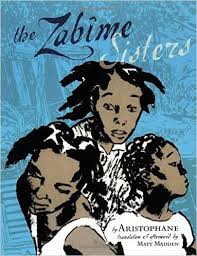
[READ: March 1, 2016] The Zabîme Sisters

When I read this book, back in March, I had been reading a lot of First Second graphic novels (I’m very close to having read them all!).  And reading this publishers entire catalog has led me to read amazingly detailed and interesting stories about real events.  And that’s pretty awesome.

This story is set in Guadeloupe, but unlike some of the other real-life stories of horror and degradation that I’ve read, this one is a simple story of childhood in a Caribbean island.

Not a lot happens, and yet the story is charming and enjoyable.

The story is told in 3 parts.  It is about three sisters, I’m not sure if they are triplets or just close on age.  I like how they have similar features but distinctive hair. (more…)

Read Full Post »

town-boy SOUNDTRACK: DUBLIN GUITAR QUARTET-Tiny Desk Concert #409 (May 15, 2015).

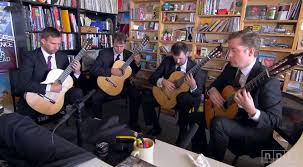
dgqWhen I first listened to this brief concert for some reason I didn’t realize that the quartet were playing Philip Glass.  Of course, once he stated that that’s who they were playing, it became quite obvious–but having Glass played on acoustic guitars instead of synths or violins, is quite an unusual experience.

The music is still rigidly repetitive, but there is a great deal of warmth added with the guitars (and the human element as well).

The Dublin Guitar Quarter has been around since 2002 and they play pretty much only contemporary and new pieces (despite being dressed in suits and playing on “classical” guitars).

They play two pieces, with two and three movements of each piece respectively.  They were originally recorded for strings, so these guitar transcriptions change things quite a lot (especially in Mishima).

The first piece is called “Company.”  They play Movements 2 and 3. What’s most impressive about the first piece is that you can hear all of the musical lines.  Glass often interweaves line up line of music ad you can see each guitarist playing these lines on high guitar notes and low notes while the other play accompaniment–transcribing these must have been a real challenge.

The loud chords are practically heavy metal chords on the guitar as opposed to what the strings might sound like.  And for all of the repetition, these two movements of clock in at less than four-minutes total.

It’s interesting to listen to the original after this and hear how it’s clearly the same piece but it sounds so very different.  From tone to drama, everything is changed.

The final pieces are three movements from Mishima.  In Mvt 3 there is some fast picking while the other three play chords.  It’s also fun to watch them all doing similar but distinct things through the middle of the movement.  This doesn’t have the fast lines that Glass is known for but it has a lot of loud repetitive notes.

What’s so interesting is that original is full of drums–and parts of only drums.  Obviously these aren’t present here, but the music resonates in a similar (but again, distinct) way.

Mt 2 is a slow meditative piece, and is far shorter than the original (which is also full of drums).

The final piece opens with some chords and then grows very beautiful as the Glass riff takes on an almost prog rock feel because of the guitar and the way the bass notes contrast so wonderfully with it.  It is short in this and the original and is great excerpt to listen to.

  • Glass: String Quartet No. 2, “Company,” Mvts. II & III
  • Glass: String Quartet No. 3, “Mishima,” Mvt. III, “1934: Grandmother & Kimitake”
  • Glass: String Quartet No. 3, “Mishima,” Mvt. II, “November 25: Ichigaya”
  • Glass: String Quartet No. 3, “Mishima,” Mvt. XI, “1962: Body Building”

[READ: March 24, 2015] Town Boy

This book was written (and drawn) in 1980.  First Second books had it translated and published in 2007.

I found Lat’s first book, Kampung Boy to be quite charming.  It was about a boy growing up in a small village in Malaysia in the 1950s.  This is the sequel and it is about moving from the village into the town and being a teenager.

This book is a little less episodic than the first.  Most of the story is laid out as text on one page and a drawing on the next.  But the drawings also have speech bubbles, so there’s a lot of different things going on. (more…)

Read Full Post »

west SOUNDTRACK: SAM AMIDON & BILL FRISELL-Tiny Desk Concert #408 (December 1, 2014).

amidonThe first time I listened to this Tiny Desk Concert, I didn’t like Sam Amidon’s voice at all–he sings with a strangely flat delivery–almost monotone–but never actually off pitch.  It’s rather unusual sounding.

But the second time I listened I found it kind of interesting–compelling in an unexpected way.  I was also able to really hear what Bill Frisell was adding to the songs.

“Blue Mountains” is a folk story-song.  It is played with a very simple acoustic guitar piece and then, of course, Frisell’s interesting leads and chords that dd more and more texture as the song progresses.  The whole things is grounded by Shahzad Ismaily’s delicate drumming.

After the song, Amidon says, “Good morning, welcome to Washington DC.”  For “Pat Do This, Pat Do That,” a song about he banjo, Amidon switches to banjo.  This was my favorite of the three songs.  He plays the banjo very high on his chest (without a strap) and he plays quite fast.  It’s hard to decide to listen to Frisell’s interesting chords or to Amidon’s great banjo playing  For this song Ismaily switches to bass, which gives it lovely low end.

For the final song, Amidon gives a very long introduction about falling asleep on a pillow but dreaming that it is a little fuzzy donkey.  It’s a very strange introduction that doesn’t really end satisfactorily.  The final song is him on guitar, Frissell on electric and Ismaily on bass for a time and the switching over to drums.  Midway through Amidon switches to violin and plays a wild solo that he accentuates with a screeching voice.

It’s a most unusual and somewhat unsettling Tiny Desk Concert.  And I know I won’t be seeking out any more music by Amidon.

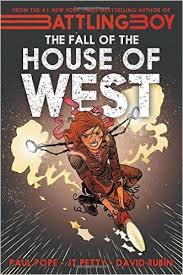
[READ: March 26, 2015] The Fall of  the House of West

This book follows The Rise of Aurora West with that cast involved.  I really enjoyed the resolution of the mystery of Aurora’s mom’s death, but otherwise I was kind of unimpressed by this book.

As with the previous book, I hate the way Rubin draws faces, especially Aurora’s–there’s too much face and not enough expression (conversely, his profiles are lovely).

Much of this story is fairly simple.  Aurora believes that she knows who killed her mother and she intends to get revenge.  But her father, the superhero Haggard West doesn’t want her to investigate on her own.  And her bodyguard/teacher is not going to let her do the work on her own, either. (more…)

Read Full Post »

1971 SOUNDTRACK: DAVÍD GARZA-Tiny Desk Concert #405 (November 15, 2014).

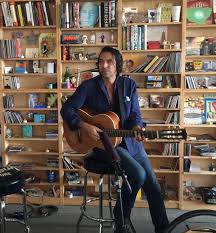
garzaI first heard of Garza back in 1998 with his minor hit “Discoball World.”  I really liked it.  And then I assumed he just went away.  But apparently he didn’t.

The first song, “Texas is My Hometown” is a slow jazzy song about how much he loves Texas.  He sounds like an old-timey crooner, except that he references all kinds of contemporary musicians.

And then he plays “Discoball World.”  It sounds quite different because it’s all acoustic guitar (although his strumming is pretty intense).  I prefer the original, but he’s really intense while singing this version.

He says he was walking around DC and he ran into his favorite singer in the whole world.  Then he invites Gaby Moreno to sing the final song, an old Spanish song their grandparents used to sing.  And indeed, with wonderful flair, he plays a beautiful Spanish guitar.  Gaby sings lead (in Spanish) on the whole song and her voice is really amazing.  She can hold a note for a really long time and then really powers through a loud note.  He does backing ooohss when needed, but Gaby is the star of this song.  Until, that is, he plays some great guitar at the end, very percussive, very powerful.

It’s a good set.

[READ: June 1, 2016] The Complete Peanuts 1971-1972

I took some time off from my Peanuts reading–I needed a break after fifteen years.  And it was fun to come back to the strip really looking forward to the 1970s.

There seem to be three big consistent ideas in these two years.  Woodstock becomes very prominent, Sally gets to complain about school a lot and Peppermint Patty comes into her own, with strips about her and Chuck, her and Franklin and her and Marcie (who is finally named!).

1971 starts off auspiciously with Charlie saying that this is going to be his year of decision–he’s going to start making changes.  But Lucy interrupts saying that she is going to spend the whole year regretting the past-“Forget the future!” (more…)

Read Full Post »

humanSOUNDTRACK: ROOMFUL OF TEETH-Tiny Desk Concert #404 (November 10, 2014).

teethRoomful of Teeth is an acapella group (with a drum on the first song).  The singers  all tend to sing notes (or words) in a rather unsettling style.  As the blurb says, “Mix a bit of yodeling with Tuvan throat singing, add in a pinch of Sardinian cantu a tenore, fold in compositions from cutting-edge composers and you have the vocal group Roomful of Teeth. This eight-voice ensemble, which includes the 2013 Pulitzer Prize-winning composer Caroline Shaw, is gleefully dismantling the traditional definition of ensemble singing right before our ears (and teeth!)…. The agility of the voices and multicolored blend they achieve are extraordinary.”

And that’s all so accurate.  Everything is kind of unsettling and strangely beautiful. But definitely unsettling.

The first song was written by Australian Wally Gunn and is called “The Fence Is Gone.”  There are so many different sections.  It reminds me a lot of the middle of Pink Floyd’s Atom Heart Mother.  With singers having an almost atonal operatic movement.  But in between lyrics, the vocalists are largely singing going “oh ha” or just “bah bah.”  It’s really fascinating.  And the more I listen to it the more I wonder how they know just what (somewhat unusual) note to sing.  The blurb adds: “verses emerge from an infrastructure of “oh-ha” syllables and a simple drum pulse, ending with women’s voices, tight in harmony, like a chord from a Casio keyboard.”  That Casio remark is pretty spot on.

Before the second song, one of the men says that the “women are going to so do a song.”  The men leave and Rinde Eckert’s “Cesca’s View”  begins with a kind of yodeling (really good yodeling). After which the three remaining women sing a beautify low melody very hymn-like.  Then the yodeling comes back (with some beautiful high notes at the end).  Then they all come together to do the the yodelling melody very pretty harmonies.  The blurb adds “In Rinde Eckert’s “Cesca’s View,” imagine a lonely cowgirl on some windswept plain. Estelí Gomez gets her yodel on, beautifully, while the three other women vocalize in close, barbershop-style harmony. It literally ends on a high note.”  When the four are singing together, it’s really pretty.

The final song was written by the founder of the group, Brad Wells.  “Otherwise” features some very intense bass notes from the men and high notes from the women.  The blurb says “Warm, rounded tones in male voices contrast with a steely sheen from the women and a high drone like a Tibetan singing bowl. The harmonies take a tangy, almost Bulgarian turn, then we get something truly otherworldly. A pulsing, slightly creepy Sardinian “bim-bom” vocalise buzzes like a gigantic cicada.”   The Bulgarian comment is really spot in as the women absolutely sound like the Bulgarian choirs.  And that “bim bim bom” section is so alien and otherworldly.  I love when they throw in some  little “hey ya” mixed in.  But the most amazing thing has to be “Dashon Burton’s operatic baritone [which] soars above it all.”  His voice is really intense.

At first I didn’t really like their music, but after a few listens I could really appreciate what they were doing.

[READ: May 1, 2016] Human Body Theater

Maris Wicks is the illustrator for another First Second non-fiction book I loved called Primates.  I thought her drawings were perfect (and also really cute).  And she has done it again. Never have brains and bowels and viruses and allergies been so adorable!

But despite the cuteness of the drawings (and the title), this is a real, genuine nonfiction book about the human body.

Wicks covers just about everything you might want to know about how our bodies work.  It is geared toward children (she does discuss reproduction, but in very basic terms), but it is full of so many details that I think many adults will find they learn things from this book.  I know I sure did. (more…)

Read Full Post »

gus makingSOUNDTRACK: MAKING MOVIES-Tiny Desk Concert #403 (November 8, 2014).

Making Movies is a multifaceted band.  The lead singer/guitarist (Enrique Chi) and bassist (Diego) are brothers from Panama who grew up in Kansas City.

In addition to these two, the band has a keyboardist who also plays the bongos, as well as a drummer/percussionist who busts out a guitar at the end.

Enrique, upon explain the band’s origins says “Our music is all messed up.  Sometimes it comes out in English, sometimes in Spanish.”  The rhythms are from Panama but are mixed in with the keyboardist’s Mexican heritage.  They even have some interesting instruments like the tiny acoustic bass guitar a Panamanian guitar and a donkey jawbone.

“Pendulum Swing” has a cool guitar riff (chords played very high on the neck, giving a distinctive alt 90s feel).  The vocals even do some simple “oh ohs.”  Enrique’s voice sounds strangely familiar (but I can’t figure out why and I know he’s not someone I’ve heard before because he also sings in Spanish).  I love that the keyboardist plays the bongos during the verses and then adds textures to the chorus.

“Cuna De Vida” starts with some more high-pitched guitars and looped voices before some dancey rhythms are added from the bongos and drums.  Enrique mostly plays very high chords on the guitar and there’s more “Oh oh ohs.”  The song is sung entirely in Spanish and sounds very different from the other two (but still with that alt 90s feel).  By the end of the song there are bongos, drums and cowbells as the song builds. It’s fun to her the chorus sung in Spanish as it ramps up at the end.

“Chase Your Tail” opens with looping high notes on the guitar.  It sounds much more alt rock–except that the drummer is playing the donkey jawbone and cowbells.  The song is really catchy and fun.  When it seems like the song is over, the drummer grabs his guitar and Enrique plays the tiny Panamanian guitar.  They play a very fast rhythm and he sings in Spanish with fun loping bass notes (and great Mexican style oh oh backing vocals).  And when you think it’s all over, the drummer steps up on the zapateado board and does a rhythmic tap dance.

Making Movies was putting out their debut album at this time.  I hope they had success with it.  I’d like to hear more.

[READ: May 15, 2016] Gus and His Gang

I’m fascinated by First Second’s relationship with French artists. It seems like half of their early releases were originally published in French.  And this one is no exception.

What’s also funny is that the French artists seems to have a very distinctive style.  Even if they don’t look alike, there’s something very “French” about the way they draw.  I did consider that this book might have been drawn by Joann Sfar, but it was all done by Blain,  And like many of those other book this was translated by Alexis Siegel.

This book has 13 chapters, although they may also be independent stories.  I’m unclear about that. In fact I’m unclear about a lot of this story.  Like why does Gus, the lead character have a nose that would be about 18 inches long?

It’s funny and makes him instantly recognizable, but it’s such a weird idea.  And why does the titular Gus disappear about half way though never to return?  Is this an excerpt?  Is it only part one?  The colophon is very uninformative. (more…)

Read Full Post »

dawnSOUNDTRACK: BANKS-Tiny Desk Concert #401 (October 30, 2014).

banksI’d never heard of Banks before this Tiny Desk Concert.  The blurb says that “Banks’ terrific full-length debut, Goddess, is constructed out of layer upon layer of electronics, beats, samples and other means of submerging the singer’s voice in swirling accoutrements…. On record, she’s placed at the center of lavish productions, each suitable for throbbing remixes and banks of swirling lights.”

In this version, it is just a keyboard and a drum box, so her voice is exposed.  But I actually found her voice was a little annoying.  Especially during the verses, where she uses too much vibrato.

On the first song, “Beggin For Thread,” I enjoyed the choruses where she sang loudly and with less affectation.  Although it was during “Alibi” that I particularly didn’t like her voice–too much yea yea yea with a ton of vibrato.

For “Brain,” the accompaniment is acoustic guitar rather than piano.  It has a very different feel although I liked it even less.  I’m curious to see what their record sounds like with her voice buried, but I’m not going to find out.

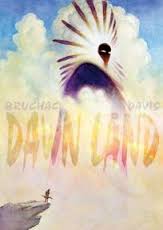
[READ: June 1, 2016] Dawn Land

Dawn Land was a novel that Joseph Bruchac wrote in 1993.  The novel (as explained in the afterword) details the oral traditions of his people as filtered through a fictional story that he was inspired to write over a burst of about six weeks.

I may have enjoyed this graphic novel more if I’d known the original story first (I also didn’t know that Bruchac was Abenaki Indian, so I wasn’t sure what to think about the story in the first place–appropriation is such a hot topic these days.  Of course having said that, I’d never heard of the Abenaki Indians before either (they lived in what is now New England).

I found the story a little confusing.  But before getting into the story, I loved the artwork.  In black and white, Will Davis conveyed so many amazing scenes and scenery–perfect depictions of people and animals and yes, giants. (more…)

Read Full Post »

newSOUNDTRACK: DANISH STRING QUARTET-Tiny Desk Concert #399 (October 25, 2014).

danishI always enjoy hearing a string quartet that I’m unlikely to hear anywhere other than a Tiny Desk Concert.  It’s fun to listen to them before reading anything about them to try to imagine where they’re coming from musically.   The opening notes of the first song made me think they were a modernist quartet playing music that was repetitive and mildly atonal.

But they quickly swing it around into what turns out to be the first of many traditional Danish wedding folk songs!

While the quartet does play classical pieces as well, for this Tiny Desk Concert, they focus only on songs from their then recent album Wood Works.  The blurb says “the group recently took a musical detour that landed them in the foggy inlets of the Faroe Islands (a Danish outpost halfway between Norway and Iceland) and various Nordic hamlets where folk tunes are played and passed on.”

The first piece is actually three melodies: “Traditional: Ye Honest Bridal Couple — Sønderho Bridal Trilogy Parts I & II”  The piece begins somewhat atonally, but about 2 and a half minutes in the somber tones give way to a spritely melody that sounds like a great lost Irish jig.  But soon enough with the addition of the other strings it sounds very romantic indeed.  In what I presume is part II, around 6 minutes, the cello plays a wonderfully upbeat and catchy rhythm. The violins play staccato notes that keep the rhythm going while the viola and cello continue the melody–it’s pretty awesome.  Especially as the song fades and each of the strings plays the riff in succession.

The second piece is in fact two pieces: Traditional: Sekstur from Vendsyssel — The Peat Dance.”  Once again the two melodies sound kind of like Irish dances (I guess it’s time to call them Danish dances).  The second half of the first part sound great as the full quartet plays a wonderful melody.  But when the second part of the set comes and the super fast fiddling begins, it s hard not to dance (you can even hear someone tapping his foot as he plays).  The big difference between this and Irish dance is the rather formal sounding and lovely ending melody.

The final piece is the third part of the Bridal Trilogy from the first piece: “Traditional (arr. Nikolaj Busk): Sønderho Bridal Trilogy Part III.”  He says that these melodies date back many 100 years and are still used today.  It begins very slowly and almost somberly.  It doesn’t feel very wedding-like to me and of the three this is my least favorite.

The quartet sounds amazing. The players are Violinists Rune Tonsgaard Sørensen and Frederik Øland, violist Asbjørn Nørgaard and cellist Fredrik Schøyen Sjölin.  It’s also kind of funny since three of the four have beards–not something you typically see on a string quartet. They acknowledge this on their website: “We are simply your friendly neighborhood string quartet with above average amounts of beard.”

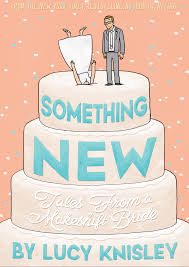
[READ: June 20, 2016] Something New

Knisley has made a rather successful career out of writing graphic novel memoirs.  She has covered food and travel.  And, in a somewhat surprising twist (if you have been following her books), she just got married.

This is surprising because the man she married is the man she broke up with in one of the previous books.  The story basically tells how they were on an off sorta kinda for years until they finally tied the knot.

So this book is the story of their relationship and their engagement. But beyond that it is also an interesting and helpful guide-book for those who want to get married but who may not be totally on board with all of the conventions and trapping of the wedding industry. (more…)

Read Full Post »

dirkSOUNDTRACK: ANTHONY D’AMATO-Tiny Desk Concert #398 (October 20, 2014).

damatoI’d never heard of Anthony D’Amato before this Tiny Desk Concert, and yet his music sounds vaguely familiar.  D’Amato sings fast, upbeat acoustic folk rock with a full band behind him.

“Was a Time” starts out with just him and his guitar.  But after the first verse the whole band kicks in and the song really takes off.  There’s some harmonica between verses and a big Whoo! before the end of the song.  The song is a fun romp, fun to sing along to until you realize the chorus: “there was a time that I loved you / I don’t love you any more.”

He introduces the second song “Good and Ready” and says “we’ll start whenever Derek is… good and ready.”  This song sounds very different as it opens with a cool soulful bassline.   After that opening the song proper begins with Amato’s acoustic guitar and the electric guitar playing a loud slide guitar riff.  This song is a bit more positive, despite the repeated line of I don’t wanna wake up,” the chorus is “I don’t wanna wake up if it ain’t next to you.”

All three of these songs use the same verse style with the first words of every line being repeated over and over.  In the first song, every libe starts, “There was a time….” In the second, each line begins “I don’t wanna wake up….”  The final song, “Ludlow,” changes things a little bit although each verse stats with the opening “First the…  then the….”

I felt a little  for his backing vocalist Katy Pinke, because while everyone else is doing things, she’s just standing there occasionally sinking a word or two.  Although for “Ludlow” he and Katy sing a quiet duet.

D’Amato writes catchy, rather pleasing songs.  I wonder why I haven’t heard of him before.

[READ: July 2, 2016] Delilah Dirk and the King’s Shilling

Much like I wrote about the first book: I enjoyed this story quite a lot.  Cliff’s drawing style which was peculiar but ultimately very satisfying.  And more importantly, he tells a great story.

But this book was even more satisfying than the first.  I have also changed my opinion of Cliff’s artistic style somewhat in that I think it is really fantastic.  It is definitely unusual–realistic but not exactly–and he has such amazing control of expressions.  Even moreso in this book in which Delilah goes into polite society and so much must be conveyed through expression.

Plus there’s a lot of action, too. (more…)

Read Full Post »

sweater SOUNDTRACK: ÁSGEIR-Tiny Desk Concert #397 (October 18, 2014).

asgeirÁsgeir Trausti Einarsson is an Icelandic singer songwriter.  He has a beautiful soft soaring voice.  He released his debut album Dýrð í dauðaþögn in Icelandic (it became the biggest-selling debit in Icelandic music history).  A year later he reissued it in English (with translation help from John Grant who was living in Iceland) as In the Silence and finally (the version I have, as a 3 disc set with the Icelandic and English discs as well as a selection of bonus songs.

“On That Day” is a pretty, guitar based song (Ásgeir plays the main melody line and has guitar accompaniment (and backing vocals) from his childhood friend Julius Róbertsson.

For the final two songs, Ásgeir switches to piano.  “Torrent” has gorgeous vocal harmonies. It’s interesting how much more deliberate this song feels–not quite staccato, but the piano chords don’t really ring out, letting each note stand on its own.

For this Tiny Desk, he stripped down the songs, getting to their core.  They’re not flashy, they’re just lovely.

The final song he plays, “Higher” is the first song on the record (interestingly “On that Day” is the final song on the record).  It has a very slow, delicate piano melody and is also soothing and beautiful.

And in a cool synchronicity at the end of the show Bob tells Ásgeir  that he’s playing at the same piano that John Grant played on a few months earlier.

[READ: July 2, 2016] Sweaterweather

Back in 2003, Sara Varon published her first book called Sweaterweather.  This collection includes all of the original 8 stories as well as a few more.  Each story gets a brief introduction from Varon which makes me like her even more (she’s quite funny).

Most of the stories are short(2-3 p[ages) and most don’t seem to have a title.  The contents page is actually thumbnails from each story.

When I first saw Varon’s style, I wasn’t sure what to make of it.  It is so innocent and childlike.  And I have really grown to love it–especially when these sweet animals characters (they’re pretty much all animals) tackle some intense feelings. (more…)

Read Full Post »

« Newer Posts - Older Posts »