Feeds:
Posts
Comments

Archive for the ‘Graphic Novel’ Category

peanuts-10991SOUNDTRACK: CHRIS STAPLETON-Tiny Desk Concert #484 (November 5, 2015).

chrisChris Stapleton is a big dude with a big beard and long hair.  He could be a heavy metal guy, but put a cowboy hat on him and you know exactly what his music is going to sound like–slow with an almost mumbling drawl (although his lyrics are quite clear).

The blurb says that his songs are timeless and in a way they are–I wouldn’t know if these songs were old country songs or new country songs, but that’s probably because I don’t much like country songs anyway.

“More of You” is a slow song in which he is joined by his wife Morgane on harmony vocals.  The song is fine.  But I was surprised by how funny he was when it was over and he asked, “When did DC turn into Louisiana?  It’s hot!”

“When The Stars Come Out” was cowritten with Dan Wilson but it doesn’t quite have Wilson’s super catchiness.

He is playing a beat up guitar that he says is 12 years old.  He doesn’t know where it came from, but he says he thinks someone has even used it as a canoe paddle and it has mud in it.  He says he has lots of guitars and his wife says Lots and Lots.

“Whiskey and You” is a song about, big surprise, drinking.  Lyrically it’s kind of funny, despite its intentional sadness.

[READ: September 14, 2016] The Complete Peanuts 1991-1992

I was trying to figure out when the last original Peanuts strip I’d ever read was written.  I stopped reading newspapers in college.  But I’m sure I came across Peanuts once in a while.  My dad also used to get the papers, and I might have browsed through the comics.  But I have to assume it was sometime around 1992 or 1993 that I stopped looking altogether.

I wonder if Sparky started golfing again as there are a lot of golfing comics this year, including one on April 21 1991 where Snoopy is trying to hit it over a tidal wave.  This is one of those rare Sunday comic that he started doing with what was basically a full-page comic as opposed to several panels.

I also felt that 1991 was not a particularly great year for Peanuts.  We all know that Snoopy loves to be in different characters–and has recently been a surgeon.  Well, in January 1991, Snoopy pretends to be a road flagman.  Not very aspirational.

I loved the Peggy Jean story line from last year.  She finally gets a mentions again in March, but she has moved away. Which means he’s back to pining for the red-haired girl.  I know that the red-haired girl is classic Peanuts, but I really liked Peggy Jean.

But there are some great strips and themes.

I did enjoy that Sally after being steady rebuffed by her sweet Babboo calls herself his Sweet Babbooette.  Later, Sally comes up with a new philosophy.  “I’ve decided to put everything off until the last-minute and to learn everything in life the hard way.”  When Charlie says, “Good luck,” Sally says, “That’s what my teacher said.”

Sally asks Linus what happens if she doesn’t go to school and he tells her the sheriff comes and throws you in a dungeon with no food or water for ten years.  She hates that idea, but then thinks, “if we go to school for 12 years….”

Harriet’s famous recipe for seven minute frosting makes a return in April 1991 with all the birds talking about it.  Man, I should find out what this is.

And there’s a lot of scenes with Snoopy wrangling with Linus’ blankets which I always like.

Joe Garagiola gets some more abuse in May when he makes it into the hall of fame and Lucy says, “It means there’s still hope for us all.”

One thing I have never mentioned is the amount of times Schulz draws or mentions zambonis (and even calls them zucchinis).  I assume someone has collected this information, but he must have really loved the zamboni because boy does it ever make a lot of appearances.  Often times once a week for several weeks.

For something new Sally and Charlie are asked to teach a Bible class to kids, which is kind of fun.  The boy wish they’d gotten a “cute chick” instead of an “old lady” like sally.  And one of the boys keeps talking about the Great Gatsby, “Gatsby stood by the sea of Galilee and picked out the green light at the end of day’s dock.”  The series ends with the kid waving goodbye to her and Snoopy saying “So long, old sport.”

Way back in a previous book Billie Jean King says that whenever Sparky put her name in a strip it meant she should call him.  So in August Snoopy says “I’ve always wanted to call Billie Jean King.”

I enjoy this attitude from Patty: “Hey Marcie its a beautiful summer day  C’mon out and we’ll waste it away doing nothing. Then we can look back upon it and regret it for the rest of our lives.”

When I was a kid I believe I had the same seasonal beliefs as Patty does in Sept 1991: “the four seasons are baseball, football basketball and hockey.”

The football gag in 1991 shows Lucy waving a book about holding the football.  But when she pulls the ball away she tells him that she wrote the book.

Later in the year, Lucy speculates that the Great Pumpkin might be a she  “Never occurred to you, did it?”

As the year ends, Marcie and Patty give Charlie an ultimatum to decide who he likes best.  Of course he hesitates and they walk away.

In January 1992, Spike says that if he had an earache his dad would blow cigar smoke in his ear.  I’d never heard of this, but it is indeed an old wives tale.

Schulz loved having his Peanuts‘ kids read really big books.  And sometimes they were used a lot as punchlines.  But I enjoyed Patty saying A  Tale of Two Cites was written by “Charlie Dickens.  Chuck  Chaz?”  And then when she gives here report she begins “St. Paul and Minneapolis are…” and then we see her sitting next to Marcie who says “One of the great tries of all time, sir.”

Sally continues to be one of my favorite snarky characters.  “Sometimes I worry about you big brother.  Often?  No not often, just sometimes.  Like maybe seldom.  That’s it, seldom!”

Charlie is still being very loving and missing Snoopy.  He tries to get out of school a lot so he can sit with the dog and even worries when it rains.  When he goes away he calls over to where Snoopy is staying and talks on the phone (he says “Woof”) and Snoopy says “Woof? what does that mean?”

Another full-page Sunday strip came on April 19, 1990.  This may be the weirdest, most context-free strip of them all.  Snoopy is looking at a map and the whole page is covered with a gorge and the caption says “Every year thousand of tourists visit Victoria Falls in Zambia.”  Huh?

There are still more Tiny Tots Concerts, Patty still hates to be called a Tiny Tot.  Although she gets excited in May of 1992 because she thinks the new song is called “Hey dude” when it is actually “Etude.”

Pop culture references: in August 1991 someone described being suspended from the bungee cord of life Fried Green Tomatoes is mentioned in April 1992.  Spike does Velcro jumping in July 1992.  After playing some football, Marcie says she could be another Joe Iowa (Montana).

And Sally changed her philosophy from “who cares?” to “what do I care?”

In Summer 1992, Charlie goes to camp and helps out a kid named Cormac, although we don’t see him much after that.

In 1992, Charlie believes that Lucy in sincere about holding the ball.  When he misses, Sally says “You’re not in love with Lucy, are you big brother?”  When he says No, she says, “I should Hope not,  I’ve discovered that love makes us do strange things.  So does stupidity.”

In 1992, Marcie decides to help spread the word about the Great Pumpkin but she calls it the Great Grape.  When she realizes her mistake she says, “I guess it would be hard to carve a scary face in a  grape, wouldn’t it?”

Over the years there have been hundred of jokes about Schroeder’s musical staff and Snoopy either sleeping on it or breaking it or so many other possibilities.  They’ve all been mildly amusing.  I liked in December 1992, when Snoopy takes the notes and uses them as the sound of his bell when he is Santa Claus ringing bells on the street.  Because yes, for the last two years Snoopy has dressed up like Santa Claus on a street corner ringing bells.   I like the one later when Charlie brings snoopy his dinner and a girl says “Hey look, Ma, Santa Claus is eating out of dog dish.”

There’s two Sundays in a row with Sally writing a letter to Samantha Claus.  In the first one, Charlie asks if she goes Ho Ho Ho or just smiles daintily, but the following week we find out that Sally talked about her in school and was roundly mocked.

Spikes Christmases have been pretty sad, but I did get a kick out of this one. “Last year I exchanged a gift with a rock, I think he liked what I bought him…he still wearing it.”  And there’ s funny sequence where Spike puts lights on his tree then walks all the way to Needles to plug it in at the chamber of commerce.  There’s even a news story the next say, “Someone sneaked into the chamber of commerce building last night and plugged in an extension cord.  The cord led out of town somewhere into the dessert.  Everyone is puzzled as to who or why someone would do such a thing.”

Although perhaps the best Christmas joke ever comes in 1992 when Sally is writing her thank you note: “Dear Grandma, Thank you for the money you sent me for Christmas.  I am going to save it for my college education.”  Then she says “It’s hard to write with a straight face.”  And Charlie says, “I never said a word.”

1992 ends with a New Years Eve party at Snoopy’s and he says “What do you mean we’re all out of hors d’oeuvres.

So overall, it’s not a bad two years, there’s just not a ton of noteworthy jokes.

The introduction is by Tom Tomorrow.  He says his influences were Mad magazine, Garry Trudeau and Matt Groening but his earliest inspiration was Charles Schulz.

He says that in the 1960s he hit the perfect sweet spot with Peanuts:  old enough to understand the humor, young enough to truly appreciate the whimsy. When he was a child, he loved the Christmas Special, and he was excited that his parents bought their first color TV in time for its annual airing.  He had also been given a Snoopy astronaut in the year he became the unofficial mascot of Apollo 10.

He describes Peanuts as “a strip that spun heartbreak into wry humor.  A cartoon about childhood anxiety that veered frequently into the realm of magical realism.”

He loves things like that the doghouse was bigger on the inside than the outside (although that aspect has been downplayed in recent years).

When he was a young cartoonist, he wrote to Charles Schulz.  And Schulz invited him over for lunch. Schulz was very generous with his time. “We ate at the cafe adjacent to the skating rink he’d built. The table was always reserved for him and on which you will still find a reserved sign to this day.”

Tomorrow says he wrote the only obituary comic he’d ever done for Schulz and he quotes Schulz: “If I were a better artist, I’d be a painter. And if I were a  better writer, I’d write books.  But I’m not so I draw cartoons.”

Tomorrow addresses his change from the strict four panel strips of his whole career, which I noted with concern and excitement.  Evidently, Schulz always wanted to experiment with the panels, but he was unsure if the Syndicate would allow it.  Tomorrow jokes that at this point in his career, he probably could have demanded a solid gold table and a full complement of chorus girls to entertain him while he worked.

He concludes his introduction by saying that Schulz gave him an original strip–which is the middle strip on page 71 in this book (dated June 14), and what a nice one it is:

“It’s nice to be able to do something for someone once in a while that’s appreciated.”

Read Full Post »

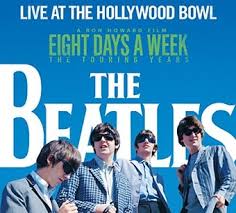
bibSOUNDTRACK: THE BEATLES-Live at the Hollywood Bowl (2016).

beatlesThis disc was released this year.  It is technically the soundtrack to the film Eight Days a Week: The Touring Years.  But regardless of the film, these are newly mastered recordings from two Beatles concerts at the Hollywood Bowl in 1964 and 1965 (which were released in 1977).  This disc has 7 songs from 1965 and 6 from 1964 (not including the four bonus songs).

The concerts were legendary for the shrill screams that the audience made during these shows–so loud that the recordings were practically inaudible and, apparently, even the band members had a hard time hearing each other.  Sounds like a nightmare, frankly.

Well, George Martin’s son has used some technology to make these recordings listenable.  They have reduced the shrill screams to a kind of low-level, high-pitched sound and, even better, they have fleshed out the band so they don’t sound like they are playing in a tin can.

Here’s some fascinating things about that Hollywood Bowl Concerts. Tickets cost $5.50 in 1964 and $3 in 1965.  WHAT?  In 1965, the band played for 33 minutes.  That’s it–not sure how long they played in 1964.

The band had no monitors on stage–those things that musician are always pointing at and asking the mixer to turn up.  So on many shows they couldn’t even hear themselves.  The fact that their harmonies are so good is really impressive.  The notes suggest that the open roof of this show meant that the shrill crowd noise was somewhat dissipated allowing them to hear each other a little better for these shows.

Evidently the track listing for this disc consists of the best original recordings from the two shows.  I’m not sure why they’re not played in sequential order, but whatever.  Perhaps the energy of the opening “Twist and Shout” (all 90 seconds of it) is a pretty great way to start.  While the band is spot on in their playing (sometimes it’s easy to forget that they are laying instruments as well as singing, since the voices are the big thing) you can hear Paul’s voice straining on “Can’t Buy Me Love” (which is cool).  Or John saying he thinks the next song “Things She Said Today” is on the new album over here.  This song–quieter and less dancey sounds pretty great and you can kind of hear the audience paying attention to it, so that when the band gets to the loud part the crowd really erupts.

I’m surprised at how many covers the band plays.  I realize these songs are picked from two set lists, but there are dozens of serious hits that they could have played instead of say “Roll Over Beethoven” or, and this is the most surprising thing to me, ending their 1964 set with “Long Tall Sally” rather than one of their huge hits.

It’s funny how crazy the crowd goes for Ringo when he sings lead on “Boys.”

I enjoy hearing them talk about their films–one we made in black and white, the other in color.  “Hard Days Night” sounds great but even more impressive is “Help!”.  John intros the song by saying, “we’d like to do another film song from a different film–coz we’ve made two.”  “Help!” is really impressive the way the band launches right into their harmonies on that first note–it sounds incredible all the way through the song.  Even when John strains hard at the end.

There’s not a lot of stage banter, but I did enjoy this one from 1964: “This next song is an oldie, some of you older people might remember it.  It’s from last year.  It’s called “She Loves you.”  I like hearing the rocking guitar line more prominently and the fact that they don’t go “ooooh” during the first time it’s supposed to appear, but when they do the next time, the crowd goes nuts.

As the disc ends, Paul asks, “We all hope you enjoyed the show.  Have you enjoyed the show?”  Apparently they have.

I’m not sure why the final four songs are listed as “bonus tracks.”  The inclusion of “I Want to Hold Your Hand” can’t be a bonus!  But the four songs (two from 1964 and two from 1965) also sound great.  The harmonies on “Baby’s in Black” are fantastic.

John Lennon said the fans didn’t come to listen, they came to love.  Regardless, the band played wonderfully and gave a great performance.  It’s nice to be able to hear it.

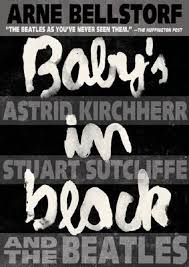
[READ: March 10, 2016] Baby’s in Black

This story is about The Beatles before they became THE BEATLES.

I didn’t know all that much about the early Beatles.  I knew that they were in Germany (although I don’t really know why, and I still don’t). But I didn’t know about all of the trials and excitements that happened to them there.

What I loved about this story is that while it is about The Beatles, it’s actually about Stuart Sutcliffe and his girlfriend Astrid Kirchherr and their impact on the nascent Beatles.

The story begins with Astrid’s ex boyfriend Klaus Voormann running to Astrid to tell her about this band that he just heard down at the Reeperbahn.  He said they all dressed the same and they really rocked (or whatever they would have called it back then).

The Reeperbahn was sketchy place at the best of times, so it was unlikely that anyone other than sailors and thugs would have seen this band iinitially.  But Klaus was so insistent that Astrid agreed to go.  And she was mesmerized by them.  She was especially taken with bassist Stuart Sutcliffe (although none of the fans knows their names at this point).  The band consisted of John, Paul, George, Pete Best on guitar and Stuart on bass. (more…)

Read Full Post »

klezmerSOUNDTRACK: COLIN STETSON [CST073] “The Righteous Wrath of an Honorable Man” (2010).

stet7This is a 7″ release from Constellation, a kind of single from New History Warfare 2.  It has two tracks, “The righteous wrath of an honorable man” is such a good song that it deserved to be singled out like this.  It’s also amazing how short it is.

Side 2 is called “Judges (Damian Taylor Concretification Mix).”  This is a fascinating track because Taylor has “grabbed samples from throughout the album to create a musique concrète roundup of the entire record!”

It’s a strange listen as he picks certain things and repeats them–sometimes very quickly (like a skip) other times in slow modulations.  And then it just jumps somewhere else–again, like a skip.  There’s some menace and some sirens like sound juxtaposed with thudding bass moments.  And the middle samples all the clicking and banging from the keys on his sax.

I did like how he throws in a few notable riffs into the song but more as a repeated refrain than as part of the overall song.

This track is more interesting than enjoyable.  It’s unlikely to convince anyone of the genius of Stetson, but it’s an interesting listen.

[READ: June 10, 2016] Klezmer

I have read a bunch of books by Sfar because of First Second publishes a lot of his books (although apparently only a small fraction of the hundreds that he has written).  The frustrating thing about this book is that thee are apparently five volumes of this original series but it appears that there is no intention of publishing the rest (it has been ten years since this one came out, after all).

This story is meant to be very loosely based on something, although I’m not exactly clear what.  As with so many other stories, it was translated by Alexis Siegel. (more…)

Read Full Post »

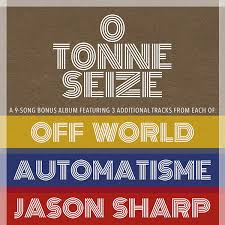
sardine6SOUNDTRACK0 Tonne Seize [CST bonus] (2016).

tonne0 Tonne Seize is a bonus compilation of three tracks each from Off World, Automatiste and Jason Sharp.  The collection is 41 minutes of music (not too shabby) and came with a pre-order of the three records (and is available on Soundcloud as well).

The first three songs are by Off World and the first two of those are remixes.  The original “Wonder Farm” is dominated by popping drum sounds.  There are some other sounds that go through the track but the base is mostly a kind of slow Asian melody.  The “Wonder Farm (Summer Crop)” mix removes those snaps and percussion entirely.  It focuses just on the music, which I have to say is far more enjoyable without the bangs.  “Primitive Streak” is a slow droning piece, while this compilation’s “Primitive Streak (Silver Mix)” doesn’t sound all that different.  It also removes the drums, and highlights the squeaky synth sounds and the overall drone tone.  It seems to emphasize and de-emphasize different instruments but otherwise sounds pretty similar. The final track  “Lost Meadow” is a pretty, delicate piano based piece with some twinkling of spacey synth notes.  It’s easily the prettiest piece.

The three Automatiste tracks do not quite follow the same naming convention as the actual disc, although the first track is called “Simultanéité 5.” It has slow beats and is basically two-note washes building on top of each other.  “Fragments continus” is a noisy piece with layered thudding drums (like heartbeats especially around the 1 minute mark) and drone noises that wash in and out.   About half way through what sounds like a melody appears amid the din, but it feels like it formed organically around the synths and drums which is pretty cool.   “Le Silence 3” opens with some jackhammer sounding drums and then almost easy listening synths.  The juxtaposition is interesting and by the end the song feels nicely dancey.

The final three songs are from Jason Sharp.  These three are quite different from his album because they really feature the saxophone to a larger degree.  “Plummeting Veins” opens with a heartbeat and some rumbling sax (that sounds like the opening of the Speed Racer TV show).   This track is under 2 minutes, the shortest he’s done by far, and the way the heartbeat speeds up as the sax plays some low rumbling notes is pretty cool. “Hear a Fading Cry” is a much longer number.  The heartbeat is quieter but the sax is much louder.  It sounds a lot like Colin Stetson in the low rumbling and noisy barking that the bass sax can produce.  It ends with some rather high-pitched squeaky sounds that I assume come from the sax, but which I can’t imagine coming from such a bass instrument.  It’s 7 minutes long although it takes almost 2 minutes to really get going.  And it swerves between loud and rumbling and then sort of menacing by the end,  “Ride On Into the Sweetening Dark” is perhaps the most conventional of Sharp’s songs.  It is a series of sax solo lines over a gentle tinkling backing drone.  Some of the solos lead to noisy wailing, but for the most part the line are pretty and jazzy.

It’s interesting how different these bonus tracks tend to be from the actual releases.  I enjoyed listening to these variants to see what else these artists are capable of.

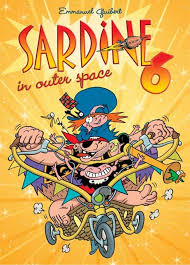
[READ: April 9, 2016] Sardine in Outer Space 6

Sardine is a children’s book published by First Second.  It was originally published in France (and in French) and was translated by Sasha Watson.  There are six Sardine books out.

The inner flap says “No Grownups Allowed (Unless they’re pirates or space adventurers).”  This is the final Sardine book.  And while I didn’t enjoy the first book much, by now I’m sorry to see the series end.

This book also has the fewest stories in it (only 9). (more…)

Read Full Post »

sardine5SOUNDTRACK: JASON SHARP-A Boat Upon Its Blood [CST119] (2016).

Layout 1Constellation records had been rather quiet this year in terms of new releases.  And then back in August they announced three new discs with this intriguing blurb:

Constellation’s three new fall releases by Off World, Automatisme and Jason Sharp are dropping on September 30th…  These new releases are wildly different yet satisfyingly leftfield albums that share an electric thread of sorts.  Electronic music strategies, technologies, histories and sensibilities come into play, in very diverse ways, with each of these debut records – making them stand out a little differently in the context of the Constellation catalogue perhaps, but also informing one another and making a lot of sense to our ears as an album trio (somewhat in the spirit of our Musique Fragile series).

This is the third of those three.

Jason Sharp has written this disc as “music written for amplified heart & breath,” and Sharp is credited with “playing” amplified heart, feedback, synthesizers and bass saxophone.  Other instruments listed are Pedal Steel Guitar, Violin and various percussive instruments.

From the Constellation site: “Using custom-built equipment to translate breath and heart rate into variegated sonic triggers, along with other modes of signal processing and in tandem with traditional instrumentation…[the album] deploys the human metronome of amplified pulse as a recurring undercurrent, with compositions that incorporate electro-acoustic and musique concrète strategies, drone, noise, electronics, methodical dissonance, tone poem, layered rhythmic and melodic figures, and improvisation.”

The disc opens with a trio of songs: “A Boat Upon Its Blood Pt.s 1, 2 & 3”  Part 1 begins with some quiet drones and pulses and what sounds (if you think about it) like water running through pipes or blood through veins.  It also like plectrum hitting strings or a musical rain stick.  The songs build in intensity until a pulse that sounds a lot like a heart beat (which it should) ends the track. This heart beat segues into Part 2 which is dominated by violins.  The violins seem to alternate between drones and dissonance with the pulses seeming to beat a bit faster in parts.  As this track ends, a martial beat takes over the drums, and that segues into Part 3 which has more drone sounds.   About midway through, new percussive sounds come in, changing the tone of the piece entirely.

Track 4 is “In the construction of the chest, there is a heart” is the most interesting of the bunch.  It has what I assume are several different heart beat sounds modified to create different percussion under various droning sounds. It really exemplifies the “heartbeat” aspect of the piece, which I thought would be more prominent in the disc overall.  The second half of the song is full of swishes and scratchy sounds which I certainly hope are the sounds of his blood pulsing through his veins.

“A blast at best” is a noise piece which sounds almost like the heart beats have been put through an autotune.  Midway through the song comes the bass sax playing some farting and pulsing sounds that add an interesting  melody to the sloshy noises.

Tracks 6 and 7 are another multi-part song “Still I sit
with you inside me Parts 1 and 2.”  Part 1 opens with a much more pleasant, albeit somber violin.  Slowly the heartbeats grow louder and more prominent.  The pulses increase and decrease although not necessarily with the intensity of the music.  The violins swirl and ebb, growing louder and more intense and then fading and seguing into the last track which opens with pretty guitars and accompanying violin.  About halfway through the song, the heartbeat resumes.  It come pulsing into the song louder and louder, dominating the whole thing.  And then with a few seconds left it builds a wall of feedback and noise that gives way to a cathartic echo.

This would be another string candidate for NPR’s Echoes.  Have you heard this, John Diliberto?

The disc notes that the piece was inspired by the Robert Creeley poem, “The Heart,” which I have included at the end of the post.

[READ: April 9, 2016] Sardine in Outer Space 5

Sardine is a children’s book published by First Second.  It was originally published in France (and in French) and was translated by Sasha Watson.  There are six Sardine books out.

The inner flap says “No Grownups Allowed (Unless they’re pirates or space adventurers).”  For the first time, Sardine was created without the help of Joann Sfar.  And I found this one to be my favorite one yet!

It seems like Sardine has really hits its stride with Book 5.  The author is having a ton of fun playing around with pop culture and with the idea that the characters know that there are books about them. It’s still a little weird that Supermuscleman is really the only bad guy and that he is always coincidentally where they show up, but that’s clearly not the point of the comic, right? (more…)

Read Full Post »

sardine4 SOUNDTRACK: AUTOMATISME-Momentform Accumulations [CST118] (2016).

Layout 1Constellation records had been rather quiet this year in terms of new releases.  And then back in August they announced three new discs with this intriguing blurb:

Constellation’s three new fall releases by Off World, Automatisme and Jason Sharp are dropping on September 30th…  These new releases are wildly different yet satisfyingly leftfield albums that share an electric thread of sorts.  Electronic music strategies, technologies, histories and sensibilities come into play, in very diverse ways, with each of these debut records – making them stand out a little differently in the context of the Constellation catalogue perhaps, but also informing one another and making a lot of sense to our ears as an album trio (somewhat in the spirit of our Musique Fragile series).

This is the second of those three.

From the Constellation site: “Automatisme is the electronic music project of Quebec-based producer William Jourdain, who has been self-releasing a brilliant series of albums and tracks under this moniker since 2013, exploring various intersections of drone, dub techno, electronica, ambient, electro-acoustic, and noise.”

This album is, indeed, very drone, dub techno, electronica, ambient, electro-acoustic, and noise.  There are six tracks: Transport 1, 2, and 3 and Simultanéité 3, 1, and 4.  The Transport tracks are all about 5 minutes and the Simultanéité tracks are all about 9 and they are interfiled on the record.

“Transport 1” seems to be all about the thumping drums. The synth lines are fairly simple and serve to propel the song along as almost an ambient dance track.  “Simultanéité 3” opens with some mechanical drone sounds and a beeping almost like a heart monitor.  The beeps change and then a new drum beat is added while fiddling synths tickle along the top of the song.  Things slow down and speed up and the track reminds me a lot of something you’d heard on NPRs awesome Echoes program.

“Transport 2” is more about drums. There are several different percussion themes going on–fat repeated drums, the main steady beat and then some low synth that runs through pretty much the whole thing.  “Simultanéité 1” is a drone song with a drum sound that is like a heart beat.  About a minute in the note changes and 30 second later the song takes on a different texture and pulse.  It remains largely ambient for most of the song.

“Transport 3” has more percussive sounds that make this track much faster than the others. The final track “Simultanéité 4” has what sounds like voices (although I assume they are not) echoing underneath the slow pulsing rhythms.

While the track listing alternates between drum heavy tracks and more mellow tracks, the whole disc has a very chill vibe.

[READ: December 5, 2014] Sardine in Outer Space 4

Sardine is a children’s book published by First Second.  It was originally published in France (and in French) and was translated by Sasha Watson.  There are six Sardine books out.

This time the inner flap says “No Grownups Allowed (Unless they’re pirates or space adventurers),” and this book had some of my favorite cartoons yet.

“Under the Bed” has the kids getting lost under Little Louie’s bed and finding all the monsters that hide there.  But Sardine’s adventures are so scary that the monsters don’t stand a chance trying to frighten him–they’re even a little afraid of Sardine, too.  Of course the kids have someone who they can go frighten. (more…)

Read Full Post »

sardine3SOUNDTRACK: OFF WORLD-1 [CST117] (2016).

Layout 1Constellation records had been rather quiet this year in terms of new releases.  And then back in August they announced three new discs with this intriguing blurb:

Constellation’s three new fall releases by Off World, Automatisme and Jason Sharp are dropping on September 30th…  These new releases are wildly different yet satisfyingly leftfield albums that share an electric thread of sorts.  Electronic music strategies, technologies, histories and sensibilities come into play, in very diverse ways, with each of these debut records – making them stand out a little differently in the context of the Constellation catalogue perhaps, but also informing one another and making a lot of sense to our ears as an album trio (somewhat in the spirit of our Musique Fragile series).

This is the first of those three.

Off World is a collaborative project featuring Sandro Perri. As the Constellation site reminds us:

Over the past couple of years, Perri has been letting us in on a fascinating treasure chest of strange and enchanting collaborative sound recordings – rich in deconstructed melody, interplay between acoustic and electronic instrumentation, and pointillist and aleatory composition techniques. … Off World 1 is alien electronics played humanly, with real-world accents throughout. 1 was conceived almost entirely during a 2-day session in London: a meeting orchestrated by producer Drew Brown between himself, Perri, Susumu Mukai and M J Silver after learning that Perri was a huge fan of both Mukai and Silver’s work. A bounty of raw material featuring mostly vintage synthesizers – EMS Synthi, Syntorchestra, Prophet 5 – was later abetted by violin, banjo, harpsichord, guitar and piano. The result is genuinely exploratory and peculiar sui generis instrumental electronic music that sounds like it could have issued from any time in the past 40-50 years. Off World resists easy categorization: not ambient “easy listening”, not strictly “improvised”, not “retro” – but eccentrically absorbing and soothingly mischievous as it charts its own sonic trails.

There are 7 songs on the disc and they are all variants on a kind of electronic/alien sound.  “Primitive Streak” has trippy synth lines and a slightly quavery “solo” over a simple drum beat.  “Old Brain” has a kind of staccato guitar part that plays through quickly.  It is later matched by “New Brain” which explores the same rhythms in a different way.

“No Host” is 80 seconds long  full of simple almost otherworldly synths (it reminds me of Close Encounters). “Extraction” has some loud ominous chords that surge and the recede.  “Choral Hatch” sounds both underwater and other worldly.

The final song, “Wonder Farm” sounds unlike the other songs because it is full of these snapping drum sounds–seemingly at odd intervals and not playing any rhythm (it sounds like fireworks going off).  The music also has hints of Japanese music but it seems overshadowed by the crashes.

Of the three I like this one best because of its varied sounds.

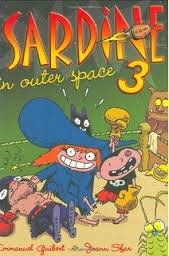
[READ: March 31, 2016] Sardine in Outer Space 3

Sardine is a children’s book published by First Second.  It was originally published in France (and in French) and was translated by Sasha Watson.  There are six Sardine books out.

This time the inner flap says “No Grownups Allowed (Unless they’re pirates or space adventurers),” and I found that I enjoyed book 3 quite a bit more than the first two books. Perhaps it is because I have read a few more First Second books by Sfar and have grown used to his style and humor.  Or perhaps the stories have just gotten better. (more…)

Read Full Post »

1989 SOUNDTRACK: THE SUFFERS-Tiny Desk Concert #482 (October 27, 2015).

suffersThe Suffers are a ten piece soul band fronted by the charismatic Kam Franklin.  I loved how at the start of this show each band member counted down 1-10 while Kam stood on the desk to sing.

“Giver” is a slow R&B type song with lots of lengthy horn solos.

“Midtown” has a funky sound with a cool bass line.  I though that song started to get interesting towards the end but then they stopped it.

“Gwan” is my favorite of the three because it is more uptempo and fun and allows the band (including Kam) to really rock out.

Everything about The Suffers is right on–the horns sound great, the band is tight, Kam’s voice is string and powerful.  But I just don;’t like this kind of music at all.  And I don’t really need to hear The Suffers again (although that last song is pretty good.

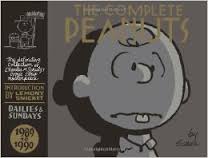
[READ: September 10, 2016] The Complete Peanuts 1989-1990

I had said that the previous book felt a little lightweight compared to previous years.  This book actually continued in that somewhat unsatisfying vein.  For point of reference, when I jot down strips that I really like, I usually fill two or three small pages of paper.  This book had only one page and a little over flow.

But, it also had one of the most exiting and emotionally satisfying sequences as 1990 drew to a close.

Schulz has also been having fun with the new fewer-panel style. It’s mostly three panels but he experiments with 2 panels and even one panel.  He seems to enjoy playing with the space afforded with one panel–its interesting to see.

The year starts off with an ugly dog contest and the introduction of yet another of Snoopy’s brothers, this one named Olaf.  Olaf is very ugly and wears a sack. When he takes it off he reveals himself to be a squat round version of snoopy with buck teeth or a tongue hanging out of his mouth.  In June of 1989 we actually see Snoopy’s Dad on Father’s Day. He looks like snoopy but with a big mustache (white), small glasses, and a cap.

Starting in the previous book and continuing through now, we often see Sally responding to things on the TV.  Most of them are pretty funny.  Later, Sally says that her school play is going to be Hansel and Grateful.

Marcie still has mixed feeling for Charles and tells Patty to throw a bean ball at him, but then takes it back.  In the summer of 1989 Patty goes to summer school and Marcie teases her that she (Marcie) and Charles area at camp togetehr.  Patty gets very jealous.

In July 1981 in a one panel; the kids are on line to buy tickets to the movie sand one of them says “Those two guys on TV hated it.”

Snoopy has another good food comment this year: “Do you want a cookie with nuts or a cookie with raisins?” “Neither, I prefer plain cookies.  I don’t like food in my food.”  But speaking of cookies, there are about 100 strips where the punchline is something about Snoopy eating cookies.  It gets a little out of hand.  There were always the jokes about the chocolate chip cookies calling him but soon all of the punchlines start to do with cookies.

Franklin is still talking about his grandpa with Charlie Brown.   And Pig-Pen returns for a little while.

In July of 1989 an “old friend” calls Charlie Brown.  She insists on coming over and says she hasn’t seem hm for a long time.  She seems to have red hair (but is not the red-haired girl) an upon seeing them, runs up to Snoopy, calls him Charlie Brown and takes him away.  She looks at Charlie and asks “who are you.”  She feeds Snoopy sundaes until he is nearly sick.

Over the summer Patty and Marcie are supposed to read four books, but Marcie reads an extra one: The Little Prince.  Patty says it’s so short what’s he big deal?  Marcie read it in French.

In August 1989 in the kids are lined up for autographs   $30 for Joe DiMaggio, $25 for Ted Williams.  Steve Garvey is $9 and Maury Wills is $5.  Charlie gets Joe Shlabotnick’s and the guys gives Charlie a dollar.  Joe Garagiola continues to pop up in the strip.  Charlie tells Schroeder he can have a career as a catcher and then after you retire you can go on TV like Joe Garagiola and Lucy says Who?

1989’s football gag has Lucy telling Charlie to think of the regrets he’ll have if he never risks anything.

Starting in 1989 and continuing for a few years it seems, Charlie has become very close to Snoopy–a relationship that was never really there before.  There’s a lot of pictures of Snoopy on Charlie’s lap (very cutely drawn, I must say.  It more or less starts in October with Charlie saying “All I seem to want to do lately is sit around holding my dog on my lap.”  This leads to Charlie quitting school and devoting his entire life to making Snoopy happy.  They eat a lot of food until Snoopy gets sick and he concludes ” I think I happied him to the vet.”  Charlie concludes that he was sorry making him happy didn’t work out and Snoopy replied “I was already happy.”

There’s also a  resurgence of the blanket battle between Linus and Snoopy which I always liked.

POP CULTURE: Lucy is listening to the radio and says she missed the ball because Michael Jackson hit a high note.  Later in the month Linus thinks to videotape the Great Pumpkin (although we never see him do it).  In August 1990, Snoopy calls himself “Joe Bungee” and in November, Snoopy is riding Rollerblades and then later Sally asks for them from Snoopy Claus.

In January 1989 Patty is watching her hero Donna Adamek bowl.

I really enjoy the wordless joke of the street sign pointing up and then a curve down.  One of the Woodstock birds stands on top of the sign, the other two where the arrow points.  Snoopy s says, “You’re right we should have had a picture of that.”

A lot of the Mother’s Day panels for the last few years have been about Woodstock trying to give a card to him mom, but in 1990 Charlie lets his mom pitch for Mother’s Day which is very sweet

For summer camp Sally refuses to go.  When Charlie describes on the phone that there will be canoeing, swimming, rock climbing, tennis hiking, soccer he turns to Sally  to sally and their Granma just signed up.

As I mentioned earlier, this book wasn’t that exciting for me.  I never really got into any of the story lines. Until summer camp of 1990 when things suddenly became awesome.  Charlie takes Snoopy to camp, which is kind of fun.  But then unexpectedly, on July 23, Charlie talks to a cute girl.  He says he always gets nervous around pretty girls.  But she says he shouldn’t be: pretty girls are human too.   Her name is Peggy Jean and he is so in love that he calls himself Brownie Charles, which she thinks is adorable.  She really likes him!  She even holds the ball for him to kick.  But he is so conditioned that he doubts her sincerity which just gets her mad.

But before camp is over, she tells him he’s the nicest boy she’s ever met and then she kisses him!  And a few weeks later when Charlie can’t figure out why she hasn’t written, it’s because Sally has been throwing out all the letters that came to Brownie Charles–if only he’d been waiting at the mailbox!

I also enjoyed the joke in August of 1990 where snoopy sells a raffle ticket and it say s “You don’t win anything but you’ll have the pleasure of owning your very own raffle tickets…  be the first on your block to start a collection.”

In Sept 1990 Pig Pen decides to run for class president.  Someone shouts that he has no dignity so he puts on a stove pipe hat.  Nobody votes for him anyhow.

And then in October, we get some real insight into Marcie.  She comes over to say that her parents are driving her crazy.  They want her to be perfect and get straight A’s.  Shes cracking up.  It’s a pretty intense moment for Peanuts.  And Charlie is in way over his head.  Marcie falls asleep at Charlie’s house.  When she wakes up she says “I don’t want to go home… can I stay here? If I go home I have to be perfect….  Sally shouts from the other room, “If she doesn’t want to be perfect she’s come to the right place!”  The sequence ends sadly open-ended with Marcie saying she’s going home so she can get straight A’s “just so I can go to some college they’ve already picked out for me.”  And Sally says “and end up marrying some nerd.”

In Dec 1990 Charlie goes to buy Peggy Jean some nice gloves. But they cost $25.  He sells all of his stuff to buy them for her only to find out that her parents just bought her gloves.    Sadly he gave them to Snoopy instead.

The book ends with one of the saddest Christmas strips ever.  It’s just Spike sitting alone with mistletoe stuck to a cactus and him saying “Rats.”

Apropos of this, the intro was written by Lemony Snicket.  Rather than raving about the strip, Snicket revels in how dark it is  He quotes all of the darkest lines in the book and says how odd it is that these sentences are found in the section marked Comics.

And then Snicket summarizes the strip:

The hero of this melodrama is a balding grammar school student paralyzed by fear and self-loathing.  Sadly, the psychiatrist he chooses is also a child, who not only offers him nothing but cruelty and scorn…One would be tempted to label her as the villain of this ongoing tale of terror, if she didn’t share the same unhappy hopelessness as her helpless patient.

Then there’s her young brother who shuffles around town clutching ragged bedclothes and trying to dissolve one of his own fingers in his mouth.  It’s no wonder the psychiatrist has fallen into a cycle of romantic obsession and violent argument with a temperamental musician.

Our hero, in the meantime, is not far from obsessive complication: two women compete for his attention, all the while maintaining a tense “friendship: with one another despite the fact that one of them, out of stupidity or malice, mistakes the gender of the other.

Even the neighborhood dog, who by all rights should remain clueless of the goings-on, is ravaged by the local madness.  When not talking to a bird who utters nothing but apostrophes, he fantasizes that he is fighting in one of the world’s mist horrific conflicts.

I am fascinated by the endless ghastly tale of these poor youngsters.

Make no mistake, Lemony Snicket is a huge fan.

Read Full Post »

SOUNDTRACK: action LIANNE LA HAVAS-Tiny Desk Concert #475 (October 2, 2015).

lianneLianne La Havas has a lovely, soulful voice. I didn’t think I knew her at all, although her song “What You Don’t Do” sounds really familiar. The chorus is a bouncy “It’s what you don’t do…it’s what you don’t say.”  But it’s the fast pre-chorus “I know what I got / and I know where were going / You don’t need to show it / I already know it all” that is really catchy.

I feel like the original is big and orchestrated.  But for this Tiny Desk it’s just her and a backing singer accompanied by a pianist who also sings backing vocals.

For song two “Unstoppable,” Lianne straps on a guitar and when she finally speaks–she has British accent!  “Unstoppable” is a gentle song with a cyclical guitar riff playing through the gentle pianos while all three voices soar.

It’s amazing how British she sounds after the second song–remarkable because of how unaccented her singing voice is.

On “Forget,” she plays guitar and there’s no other instrumentation.  This song sounds quite different from the others–the scratchy guitar isn’t really louder than the other songs, just much faster and more intense.  The real hook though comes in the chorus when all three sing a big loud “Forget!” in a memorable melody.

La Havas’ music veers towards R&B but never falls into the trappings of the genre.  She has some rock elements sand soul elements and her delivery is just charming.

[READ: July 8, 2016] Adventures in Cartooning Characters in Action

This is the fourth and (presumably) final book in the AIC series is called Characters in Action!  And as you see on the cover, the man screaming Action is a film director.  So this book is gong to take us on flights of (even more) fancy.

The book starts with the knight riding his faithful horse, Edward.  A fly goes by.  Sigh, it’s boring.

But as he rides off, he runs into a band of scoundrels–a viking, a wicked wizard an evil owl and an evil king and they are all there to do… evil!  And as they are talking about how evil they are, the real king (in rags) comes and says that he is the king.  The fake king says he looks like a beggar, then a real beggar says that the king is not a real beggar.  And then a big strong-looking knight looks at our favorite knight and says the he is no knight, either.  Egads, what is happening? (more…)

Read Full Post »

xmasSOUNDTRACK: OH PEP!-Tiny Desk Concert #479 (October 16, 2015).

ohpepOh Pep! is a four piece from Melbourne, Australia.  As My Bubba was named for its two members, Oh Pep! derives its Oh from Olivia Hally (vocals, guitar) and its Pep! from Pepita Emmerichs (violin, mandolin).

“The Race” is indeed about a race: “You started skipping in a running race.”  It’s a fast upbeat song–almost punky but for the fact that they are playing acoustic guitar and plucked violin (the violin really adds some great sound to this song).  I love her  fast delivery and that delivery that reminds me in some way of The Smiths.  I love the ending of four quick drum hits.

When the first song ends, they are adorably star struck.  They say that they saw Bob in front row of the crowd at the showcase and were glad “he was someone important.”  They’ve watched tons of Tiny Desk shows online an are excited to be there.

“Doctor Doctor” is pretty straightforward folky rock song, but the plucked violin (held like a guitar) works as a great accent.  The melody is familiar and you can almost hear it in the lyrics: “I went to the psychic and the psychic said he wanted to, but it’s up to you….”  I love the repeated refrain: “I know what I want and it’s not what I need.”  Even better is midway through the song when the unexpected bowed violin kicks in–and the fact that it is a little wavery and not a “clean, sharp” sounding solo really works as the song propels toward the end.

As Oh tunes her guitar she says it doesn’t know where it is: They were in Australia, then Halifax.  It was hot in Louisiana and now it’s raining–her guitar won’t stay in tune.

For the third song “Tea, Milk & Honey,” Pepe plays the mandolin.   The song starts with just guitar and voice and seems likes that’s all it will be because this section lasts pretty long–two and a half minutes of the total 5 and a half).  When the bass and mandolin eventually come in, the song really blossoms.  The chorus of “tea, milk and honey never satisfied me” is clever and fun.   Another surprising moment comes near the end when there’s a violin solo and the sound of the violin is almost like a flute-like.  It’s very cool.

Oh Pep! is a fun band that I’d like to hear more from.

[READ: July 7, 2016] Adventures in Cartooning Christmas Special

What series would be complete without a Christmas special?

This Christmas story is even told in rhyme!:  “Santa is grumbling that traditions are crumbling.” Quality toys are a thing of the past.  But the elf points out that kids don’t want old-fashioned gifts–all the elves do is “write code and upload.”

I rather enjoy that the premise of this books is that video games and TV are bad (but not really).  The point is that books and drawing are pretty awesome and great uses of your imagination.

Santa imagines a comic book which will be exciting for kids and then *poof* here comes the Magical Cartooning Elf.  He says they’ll make an exciting, outrageous comic. And *poof* here is the knight (who is mad that everyone is speaking n rhyme). (more…)

Read Full Post »

« Newer Posts - Older Posts »