Feeds:
Posts
Comments

Archive for the ‘Gangsters’ Category

SOUNDTRACK: MOGWAI-Music for a Forgotten Future (The Singing Mountain) (2011).

This track is a 23 minute instrumental that was used for an art installation by Douglas Gordon (who made the film Zidane, for which Mogwai provided the score) and Olaf Nicolai called “Monument for a Forgotten Future”.  The more I learn about  his installation, the more intrigued I am by it.  According to wikimedia, “Monument for a Forgotten Future” is a sculpture by Olaf Nicolai and Douglas Gordon on the so called “Wilde Insel” (wild island) in Gelsenkirchen-Horst, Germany. It is 1:1 replica of a rock formation in Joshua Tree National Park with a sound installation by Mogwai that can be heard from within the “rock.”  Someone has even posted a video of their trip to it.  In the video (which is literally of a rock), as the filmer approached you can hear the music only when he or she gets pretty close to the installation. It’s just barely audible.  Cool.

As for the music itself, it is very mellow an atmospheric, quite perfect for being on a Wild Island and sitting by/staring at a rock.  There are definitely hints of Mogwai’s sound in the music, although there are a lot more keyboards than guitars (which befits their more recent albums).  It’s very peaceful and quite beautiful.  At about 19 minutes it fades out and seems to being another string laden piece into the mix as well, but it more or less fades into static (which would be a lousy time to get to the installation!).

The music comes free with most editions of Hardcore Will Never Die But You Will.

[READ: August 2, 2012] “Without Blood”

After reading Baricco’s Emmaus, I wanted to see what else he had written.  I found this short story (which is also the name of one of his novels, although I’m not sure if this is an excerpt or the inspiration for the novel–Wikipedia says it is a “revised form” of the novel, whatever that means).

I was a little disconcerted by this story when it opened because it has a very violent introduction.  The farmhouse of Manuel Roca is the site of bloodshed.  Three men, Salinas, El Guerra, and Tito pull up in a Mercedes.  Manuel Roca is the man they are looking for.  He has two children a boy and a girl, Nina.  He tells Nina that she must hide when the men come.  Hide in the cellar and be absolutely still, no matter what happens.  And to not be afraid.  The son, slightly older, wants to help, he even has a gun, but Manuel tells him to hide in the woodshed.  And then the house was riddled with bullets.

Manuel survived that first round but when he looked up, Tito (who was described as a boy but was in fact 20) was standing there with a gun pointed at Manuel.  And he shouted to  Salinas “IT’S TITO.  I’VE GOT HIM.”  When the threesome get inside, they see that Tito has shot Roca in the arm because he had a gun.

When the two men come face to face we learn that this fight has to do with the war.  Roca says the war is over, although Salinas, says “Not yours, Not mine, Doctor.”  Salinas was known as the rat because he deciphered Roca’s men’s coded messages.   But despite the war, Salinas has only shot a gun twice.  The first one was at no one, the second was at his brother who was in the hospital when the war ended.  Salinas went to the hospital with the intent of killing Doctor Roca and his men, but they had fled, leaving all of the sick and dying unattended.  When Salinas’ brother asked him to kill him…please, he could only comply.

After this flashback, Roca’s son came into the room with a shotgun.  From here the scene gets really violent with both Roca and his son killed.  The men realize that Nina must be there as well, so they look all over for her.  It is the boy Tito who finds her in the cellar.  They stared at each other, but Tito let her live.  And the men left.  After they set the house on fire.

Three days later a man on horseback found Nina and took her away.

Wow. (more…)

Read Full Post »

SOUNDTRACK: MOGWAI-Special Moves (2010).

This is Mogwai’s first live album and it really captures the band in all of its intense glory.  This is a good year for a Mogwai live recording because they play some of their newer song which are a bit more melodic (and sometime have words) but they also revisit their older songs–which still sound intense.  It’s a great overview of their career so far and it’s a great testament to how different their music sounds over the course of so many years–even though they still sound like Mogwai

We get two songs from Their (then) latest The Hawk is Howling –“I’m Jim Morrison I’m Dead” and “I Love You I’m Going to Blow up Your School.” Two songs from Mr Beast “Friend of the Night” and the stunning set closer “Glasgow Mega Snake.” Two from Happy Music “Hunted by a Freak” and “I Know You Are But What am I.” Two from Rock Action “You Dont Know Jesus” and “2 Rights Make 1 Wrong.”  From Come On Die Young we get “Cody” and from their debut, two classics: “Like Herod” (which is amazing live) and “Mogwai Fear Satan” (also amazing)–each one over 10 minutes long and full of the emotional release that we’ve come to expect from Mogwai.

This is a great place to start if you want to hear what Mogwai is all about.

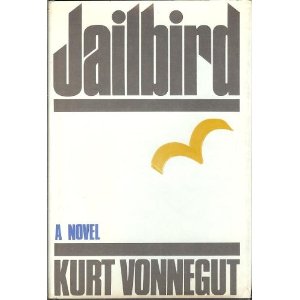
[READ: June 4, 2012] Jailbird

First off I want to say how neat it is that I took this book out of the library and that it’s from 1979.  Thirty-three years old!  Books are cool.

Anyhow, I have a stack of dozens of books I want to read, and yet somehow Vonnegut said, no, read me now.  In addition to Vonnegut books being relatively short, they are also very quick to read.  I read this in a couple of days, which is very satisfying.

My old boss at the library told me that she thought Vonnegut more or less stopped writing good books after Breakfast of Champions.  I disagree, but that has certainly colored the way I look at his later books before I read them–which one had she read that turned her off?  I kind of suspect it was this one.

In some ways this is a minor novel.  It’s fairly brief (240 pages, although there’s  30 page Prologue which I gather is from Vonnegut himself (you never know, he has so many layers going on)).  He explains some of the details that are in the book and several other interesting preface-type things.  I enjoyed the bit about the fan who wrote to Vonnegut and (Vonnegut claims) summed up all of his works in just seven words: “Love may fail, but courtesy will prevail.”  And that is the basic plot of this book. (more…)

Read Full Post »

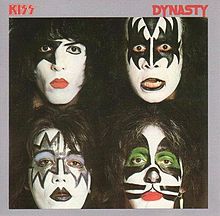
SOUNDTRACK: KISS-Dynasty (1979).

I was pretty excited to buy this album when it came out–a new Kiss album that wasn’t solo albums!  Woo hoo!  And the fact that it was disco?  Well, even though I said I “hated disco,” I didn’t really know what disco sounded like then (and really, aside from the middle “I Was Made for Lovin’ You” it’s not really a disco record) and plus my other favorite band was the Village People (and really, that makes a lot of sense–tw0 bands in over-the-top costumes talking about sexuality that I totally didn’t understand).

So, this album is hard for me to be critical about because it was such an essential part of my childhood, especially “I Was Made for Lovin’ You.”  I love it, and yet I can listen critically and appreciate that it’s really not that good.

But I’ll move on to the other songs.  “Sure Know Something” and “Magic Touch” really don’t seem that out of place chronologically with, say, the Kiss solo albums–they sound an awful lot like something off of Paul’s album.  So, despite the sort of slinky 70’s bass on “Sure Know Something”, they can’t have been that much of a surprise.  The guitar solos are short but have some interesting Ace sounds (I like the harmonics on “Magic Touch”).  It seems that while the other guys were embracing disco, Paul was keeping the Kiss sound alive.

Then there’s the Ace songs.  “2,000 Man” made total sense as an Ace song. I had no idea it was a Rolling Stones cover until fairly recently (and I like Ace’s version much better).  “Hard Times” feels like the sequel to “New York Groove.”  Not the music so much although maybe a little, but the lyrics–now that he’s in the city here’s what happened–the gritty reality. It’s one of Ace’s great, lost songs.  And check it out, Ace sings on three songs here!  (Guess having a #1 hit wasn’t lost on the Kiss powers).  “Save Your Love” has a cool descending chorus and a nice bass feel to it.  Ace certainly wins on this record.

Peter got only one song, “Dirty Livin'”.  In fact, this is the only song that Peter had anything to do with (his drums were re-recorded by Anton Fig).  It reminds me (in retrospect) of the Rolling Stones disco era even more than “2,000 Man,” the backing vocals remind me of something like “Shattered.”  I always liked this guitar solos on this (cool feedback).  Although I liked the song (along with the rest of the album), I don’t think it holds up very well.

Gene only gets two songs.  It amuses me how little he has to do with these late 70s albums even though he is always the leader of the band.  I always liked “Charisma” (I had to look the word up back then) even though it is, admittedly, rather discoey and really not very good.  It is fun to ask “What is my…charisma?”  But “X-Ray Eyes is the better Gene song on this record.  It harkens back to earlier Kiss songs and even has a bit of menace in it.

So, Dynasty was a huge hit for the band.  And they even got to mock it in Detroit Rock City the movie.  Cynical marketing ploy or genuine fondness for disco?  Who would ever know.

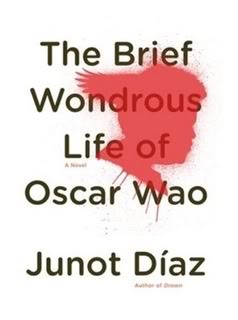
[READ: November 1, 2011] “The Brief Wondrous Life of Oscar Wao”

Readers of this blog know that after finding an author I like, I will try to read everything that he or she has written.  Close readers will know that if a writer is reasonably young and reasonably unpublished, I will try to read his or her uncollected work as well.  Well, I really enjoyed Oscar Wao the novel, so I decided to see what else Díaz had written. There’s really not a lot, to be perfectly frank.  There’s his short story collection Drown and a few fiction pieces published here and there (mostly in the New Yorker) and a few non-fiction pieces as well.

So this “short story” from the New Yorker (with the same title as the novel) is in fact an early, mostly the same, version of the Oscar story in the novel.  The thing here is to note the date: 2000(!).  The novel came out in 2007.  So, Junot had been working with this character for easily five years (giving time for the publishing industry to get a book out and all). The remarkable thing the is just how accomplished and polished this piece is and how much of it was used in the novel.

I’m curious to know whether this was written as a short story (it’s quite a long short story) or if it was always intended as a part of a novel.  Interestingly, when you read this story by itself and you realize that it is pretty much all of Oscar’s story in the novel, you realize just how little of Oscar is actually in the novel.  The novel is about Oscar, obviously, but it is really about his family and the fukú that was placed on them by the Trujillo clan.  Oscar is sort of the touchstone for the fukú, and the person whom the narrator knows most intimately but his story is also brief. (more…)

Read Full Post »

SOUNDTRACK: COLIN STETSON-Live at All Tomorrow’s Parties, October 4, 2011 (2011).

In addition to playing SXSW, Colin Stetson also played All Tomorrow’s Parties, and NPR was there.  Unlike with SXSW, this set appears to be full length (about 50 minutes–which is a pretty amazing amount of time for him to blow that horn).  Like SXSW (and the album) Stetston starts with “Awake on Foreign Shores” and “Judges.”  What I love about this recording is that after Stetson finishes “Judges” a guy in the audience shouts (in a voice of total amazement) “That shit was off the hook!”  And he is right.  It’s not even worth me going into how amazing Steston is once again (check previous posts for  that), but man, just look at the size of that horn he’s playing (seriously, click on the link to see it bigger).

Stetson plays a few more songs from New History Warfare, Vol. 2: Judges like “The Righteous Wrath of an Honorable Man” (which is outstanding) and “A Dream of Water” (which works without Laurie Anderson, although he does say he’s sorry she’s not there).  He also introduces two news songs “Hunted 1” and “Hunted 2” which show new levels and new styles that Stetson employs.

This is a remarkable set, and Steston is clearly in his element (and the crowd is rapt).  The only problem I have is the recording level.  It must be very difficult to maintain recording levels for Stetson’s brand of noise–his louds are really loud–but you can’t hear him talk at all.  And most of the time, the introductions to his songs are worth hearing.  I’m sure if they tried to get the speaking level a little louder the music would have sacrificed though, so I think they made the right choice–I only wish there was a transcript available.

[READ: October 31, 2011] The Brief Wondrous Life of Oscar Wao

Apparently it’s pronounced, “Wow”, by the way.

Because of my new job, I don’t have a  full hour of lunch-time reading like I used to.  And so this book took considerably longer than I intended.  However, once I set aside some time to read it, I flew through the book.

I’m going to get this part out of the way because I was thinking about it throughout the book and I want to mention it without having it bog down the post.  This story reminded me a lot of Roberto Bolaño.  On the surface, sure this is because they are both writers from “Central America” (Diaz is originally from the Dominican Republic but moved to the US, while Bolaño is originally from Chile but moved to Mexico and then Spain).   But I’m not really talking about their origins so much as the style of storytelling.

Without going into a lot of Bolaño here, I’ll just say that Bolaño tends to write very detailed character studies–stories that follow one person throughout his whole life on something of a fruitless quest.  And the details of that person’s life include information about family members and distant relatives.  Further, Bolaño has written about the brutalities of both Chile and Mexico and how a person can survive in such a place.  Similarly, Díaz follows the life of Oscar and his extended family and he talks about the brutalities of the Dominican Republic.

This is in no way to suggest that there is any connection between the two writers. I mean, The Savage Detectives came out in the States in 2007 (same years as Oscar Wao) and while he certainly could have read it in Spanish, I have no evidence that he did (and as I recently found out, the first draft of the Oscar story was written in 2000).  Again, the parallels are only from my reading and have nothing to do with Díaz himself.

Okay, now that that’s out of my system…

This is the story of Oscar de Leon.  But more than that, this is the story of a fukú–a curse that befalls the de Leon family and follows them through several generations.  Oscar is the youngest member of the family and the person whom the narrator knows best.  So we see this fukú as it impacts Oscar.  And although the book is ostensibly about Oscar, it is about much more.

Oscar was born in Paterson, NJ (the town next to where I grew up!) and went to Don Bosco Tech High School (where many of my friends went).  Oscar is Dominican (his mother is from the DR, but he and his sister were born in NJ), but unlike every other Dominican male, Oscar is totally uncool, into geeky sci-fi and D&D and is clearly destined to be a virgin because he is fat with terrible hair and no social skills.

And, (no spoiler), as the title states, his life will be short. (more…)

Read Full Post »

SOUNDTRACK: CIBO MATTO-“Sugar Water” (1996).

We have been rewatching Buffy the Vampire Slayer.  In episode one of season two the (then) hip band Cibo Matto appeared, playing “live” at the Bronze.  It was the first time they had a “real” band on the show.  In season one there was an occasional live band, Sprung Monkey (they were in the first episode pretty prominently) but Cibo Matto were the first “national” band–with a hit single or two–to be on the show (and look, there’s Sean Lennon in a dress!).  The song works pretty well here for the atmospherics and moodiness.

I really liked Cibo Matto when they came out.  Sure, they were kind of a novelty, (two Japanese singers with an Italian band name who sung a bunch about food) but then the late 90s were all about novelty.  Of course, even within the realm of the alt rock 90s, a song called “Know Your Chicken” was pretty unusual (noisy and weird) .  “Sugar Water” on the other hand, is a moody piece.  It’s slow with delicate keyboards and a (very mildly) spooky verse.  But the overall feel is a kind of “space age” one for notes and tones.  It also has a kind of Stereolab-vibe (especially in the la las).   It’s a catchy song and I enjoyed hearing it again after all thee years.

Not to mention the video is suitably curious.

[READ: April 8, 2011] “Goo Book”

This is a strangely sentimental story for one that starts out with the sentence: “It was fucking hot.”  In fact, the story is strangely sentimental for a story about a gangster’s apprentice (and one which has so much cursing!).

The protagonist is a young man who is a petty thief.  Mostly he steals from tourists (I was pleased that when he took he thought was a wallet but which turned out to be a notebook, he then gave the book to a kid to make sure the tourist got it back–stealing money is one thing but returning the notebook showed a decency that I approved of).

But he also worked for Mishazzo as his driver. (And I have to admit that perhaps the one flaw of the story is that I couldn’t follow the timeline at all).  Mishazzo is a gentleman who owns a lot of businesses.  And the driver was told explicitly that he didn’t know anything.  At all.  He just drove.  And the driver was fine with that.  He asked no questions.  And the driving was fine–usually to one of Mishazzo’s coffee shops for an undetermined  length of time.  So he started carrying a bottle with him in case he had to pee (he wasn’t allowed to leave the car), and started smoking like a fiend.  But the money was good, and he honestly didn’t know what Mishazzo was up to (he assumed it wasn’t good, but he also assumed it wasn’t that bad either). (more…)

Read Full Post »

SOUNDTRACK: WAVVES-“Post Acid” (2010).

Wavves’ King of the Beach CD made many Top Ten of 2010 lists.  I listened to a track somewhere and wasn’t all that impressed.  Right now there’s a live show on NPR, which I listened to a bit (and which made me investigate them further).

They have a few songs on their My Space page and I really like this one.  It is short and fuzzy and catchy and cool.  It’s a fast blast of punk nonsense.  I have no idea what it’s about (and I rather like the weird break in the song where the singer can barely get words out).

I’m not sure if I’d listen to a whole record of them (although I love their hair).  But this was sure a fun track.

[READ: February 17, 2011] Arkansas

John Brandon did a pretty amazing thing with this book.  He took two rather unlikable characters and made them sympathetic and, eventually, compelling.  The unlikability may have come from the detached style of their introduction.  Each of the main characters is introduced separately with a brief anecdote that seems to end abruptly.  In fact, I wondered if it was going to be a series of brief character sketches and nothing more.  I’m thankful that that wasn’t the case since, each character’s “section” could have been a complete (but very unsatisfying) story.  When I saw more of Swin, I was pleased, even though I didn’t really “like” him.

First we meet Swin Ruiz, a very intelligent guy who makes it to college.  While in college a foolish mistake (resubmitting an essay to a teacher) costs him his scholarship, which essentially means he’s out of school.  He scams some money from the rich students and then takes off, leaving his family and his beloved younger sisters with their jerk of a stepfather.  From there, he drifts aimlessly until he meets a bartender who sets him up with someone to help “break the laws of the land.”

Kyle Ribb is the other main character. He’s a harder man, something of a bastard.  He tries to go legit by working in a bike store.  When that doesn’t pan out (the story of that is pretty funny) he reverts back to his “no boss” ways.  He eventually meets a guy who introduces him to Colin, a man with criminal connections.

The third character we meet differs from these two.  First, a date is given as an introduction (1974).  Second, the whole section is written in second person (“You are Ken Hovan”).  We learn about his life and his background and how, eventually, he took the nickname Frog and became a shop owner, a dealer of unusual merchandise (which begins with bootleg tapes and, naturally, transforms into drugs).

The story of Frog’s life from 1974 to the present intersperses the main story (which is really about Swin and Kyle).  And each time frame jump ties together some of the mysteries of the book (Frog, being the boss, ties the thread together).  And there are many mysteries.

Kyle and Swin move up the ranks of the ne’er-do-well scale, until they land a job in an underused state park in Little Rock, Ark.  They get a “legit” job manning the booth, checking visitors in and out, and cleaning up the brush, but their “real” job is to deliver packages to random locations in different states.  They drive a car to a parking lot, wait for a person to get in and then drive off in a different car with a package for the other end.  And that’s pretty much it. It’s obvious they’re doing illegal work, but they don’t ask questions and don’t know too many details.

Their boss at the park is Bright, a man who seems to really enjoy the park and genuinely likes to take care of it.  He is a middleman for Frog, but a rather benevolent one.  There are some other characters as well.  The first is Her, (that’s the only name she gives out), she gives Bright the details about the packages.  Bright’s boss at the park is Wendy, she knows what they do and receives a cut.  She only wears pink and wishes to be a painter.  She recites a quotes from a different painter before she leaves. (more…)

Read Full Post »

SOUNDTRACK: RADIOHEAD-Hail to the Thief (2003).

After the claustrophobia of Amnesiac, Hail to the Thief was a nice compromise between their earlier guitar rock and the ambience and the technology of Kid A.  “2 + 2 =5” is one of their most satisfying songs, opening with a nice guitar lick and Thom Yorke’s keening vocals, it abruptly jumps into a full-fledged rocker.  “Sit Down Stand Up” has similar properties–it opens quietly with a distant guitar riff.  The song builds and builds into a manic intensity.  By the end, when the pace is much faster and the lyrics are repeating “the raindrops” over and over, it’s a glorious mess.

“Sail to the Moon” is a keening piano-based ballad.  Not one of their best, but with very nice melodies.  “Backdrifts” flashes back to the experimental side of Kid A, with lots of percussive noises tapping into the electronic groove.

The band surprises everyone with a very acoustic sounding song, “Go to Sleep.”  It’s a really wonderful track, especially placed amidst the electronica of the other tracks.  The bridge brings Yorke’s vocals into the stratosphere (and the guitars get noisier and noisier).  “Where I End and You Begin” is a noisy staccato piece of fun with effects and more effects trying to hide Yorke’s voice.

“We Suck Young Blood” is a spare, almost completely stripped song composed of pianos and handclaps.  It is eerie and not a little disturbing.  While “The Gloaming” is practically all electronics.  It’s one of those transitional songs, not terribly exciting in itself, but not throwaway either.  And it leads into the gorgeous quintessential Radiohead of “There There” which could be an OK Computer outtake.

“I Will” is mournful dirge with just guitar and multitracked voice that lasts only 2 minutes and leads into the experimental “A Punchup at a Wedding.”  “Punchup” opens with that rarest of Radiohead sounds: a solo bass.   But it is quickly swallowed by more electronica.

“Myxamytosis”  is a nother great rollicking track with a great slinky keyboard riff that propels the song through the murky depths.  “Scatterbrain” features a cool guitar motif that shows that they can still play pretty music and which leads to the album closer, “A Wolf at the Door.”  “Wolf” ends the disc wonderfully with a cool guitar song and awesome almost-spoken lyrics.  It is kind of sinister and kind of sad at the same time.

This is a disc that rewards repeated listens (and headphones). If OK Computer was difficult, Thief is much more so, but for very different reasons.  But it pays wonderful dividends.

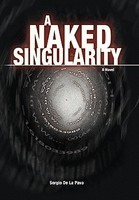
[READ: January 6, 2011] A Naked Singularity

I received a copy of this book about a year ago in March.  It is self-published and seems to have been sent to many folks who blogged during Infinite Summer (because it’s a big book, you see).  I was interested in reading it, but I had a lot of other things that I was reading first, so I put it aside until last month.  And I am really bummed that I waited this long.

A Naked Singularity is a wondrous, beautiful mess of a book that I was so absorbed in, I couldn’t put it down.  The writing style is great: funny, clever, funny, philosophical, funny, legal, funny and at times rather violent.

I’m torn when writing this how much of the “story” to give away.  I didn’t know anything about the book (the blurb on the back is just a quote from the book–there’s no summary or anything).  So I’m going to rob you a little of the “what the hell is going on in this story” aspect that I had, but I’m not going to give anything major away.

The story opens in a the middle of a conversation between a prisoner and a lawyer.  It’s a bit confusing until the story pulls back and we get the whole deal.  The story is about Casi.  He is a wunderkind lawyer who has never lost a trial (in 14 attempts).  He plays the system, but he’s also dedicated to getting his clients off (even though he–and everyone else on staff–knows they are guilty) mostly because he is undefeated.

The entire first Part of the book (320 pages) introduces us to Casi, to his workload, to his clients, to his coworkers and to his family.  His clients are mostly drug dealers. His coworkers are mostly jaded and are no longer excited by their jobs.  His family is wonderful, a group of Colombian immigrants who love each other and fight with each other loudly.  (The early scene at his family’s house is hilarious scene in which unattributed dialogue overlaps–it’s wonderful).

And yet for all of that, the first part never quite gives us a plot.  This might be a problem for some books, but the whole set up is so compelling that you just go with it, from one amusing (or hilarious) segment to the next.

In addition to introducing us to his cast of drug addicts and low level criminals, Casi also indicts the New York Justice system (in hilarious detail).  There are quite a few chapter spent talking about “bodies” (criminals) and how many of them sit in jail for 72 hours until they see a lawyer.

Of course, when he gets home, all is not normal there either.  His apartment is free (because his downstairs neighbor’s father owns the building and Casi squats there).  The neighbors are a curious bunch of college students.  One of them is a total TV junkie.  And, there’s a bizarre, wonderful subplot about him trying to bring Ralph Kramden from The Honeymooners to life in his room by watching the shows nonstop for weeks.  Yes.

Textually, the story also plays with lots of styles.  In addition to the dramatic scene with his family, we also see many court transcripts.  The second one with Mr McSlappahan is quite funny not least of which because the judge cannot get the poor man’s name right and the official transcript changes his name throughout the case.  There are also letters to and from one of the clients.   There’s a chapter-long epic poem (which was probably the hardest thing in the book for me to digest).  There’s even a recipe for empanadas (which sounds delicious).

In addition to some wonderful wordplay and punning there is also childish gross-out humor.  A scene with frozen burritos (pp. 150-158) had me laughing out loud for several pages.  But there’s also a lot of commentaries on society.  For instance Television is always capitalized and treated as a proper noun.  The mayor of New York is named Toad.  There are street vigilantes with cameras everywhere and, most amusingly, there’s an in-the-making TV show: Clerical Confessions.

By the time Part Two comes around a plot starts forming.  I was concerned that all of part two would follow this nascent plot, but it doesn’t. The book continues in a similar vein with the plot-instigator [coworker and lawyer, Dane, one of the most consistently amusing characters I’ve read in a long time] continually popping up on Casi’s periphery to try to get him to help him with…the perfect crime.

And that’s when boxing comes into play.  Casi is a fan of boxing, specifically a fan of Wilfred Benítez (who I didn’t know was a real boxer, but whenI looked him up I found this part of the story even more compelling).  And so, interspersed throughout the rest of the book is Benítez’ biography and fight history. It’s a rather lengthy character study of the man himself and boxing in general.  Now, I’m not a fan of boxing, I’ve never watched a fight, but I was totally engrossed by the storytelling.

Because he is setting up a whole story about muiddleweight champiosn, the novel follows many boxers who I had heard of and knew from pop culture (I checked and even Sarah knew who most of these boxers were, so they really must get into the pop culture world): Sugar Ray Leonard, Marvelous Marvin Hagler, Thomas Hearns (I didn’t know him, but De La Pava’s description of the 3 round Hearns-Hagler fight is so exciting that I’m going to watch them on You Tube) and Roberto Durán (she didn’t know him).  And so the story of these middleweight fighters trying to knock each other over for the title becomes something of a metaphor for the Casi’s life pre- and post- crime.  In fact, when they go to execute the perfect crime, the first half of that chapter is taken up with a story about Benítez…that’s quite unexpected.

While the crime is beign set up, Toom, one of Casi’s coworkers asks him to help with a case in Alabama.  A severely mentally retarded man is to be executed and Toom has taken on the case to rescue the man.  This plot adds a surprising amount of pathos to the story, especially when Casi flies to Alabama and meets the man.  But even that sequence is lightened by a wonderfully absurd hotel scene.  I totally want to stay at this hotel.

Part Three of the story is where the whole thing devolves into a crazy quilt of insanity.  The crime has happened, and it is messing with everything. There is a city-wide blackout, Casi has no heat, no cars are allowed on the streets so he can’t even escape to his mother’s house.  There’s also a strange guy in is building who looks and sounds suspiciously like Ralph Kramden.  And, Casi is accused of contempt (and is about to be ousted by his law office’s morals group, the childish but amusingly named Committee to Oust Casi Kwickly). Both trials are as absurd as a Marx brothers movie (Karl of Groucho?).

The lead up to the end is very satisfying will all kinds of loose ends tied together (things that I thought he’s never address were in fact cleared up!).  But with a story this all over the place, it’s hard to imagine how you would finally end it.  The ending goes in a direction that is supported by the title (and is a little overwhelming).  It’s a little unsatisfying, but aside from a tidy happy ending (which you knew you weren’t getting) I don’t know how else you could have ended the book.

Ending aside, this is a fantastic novel.  There is just so much going on in it (I didn’t even mention the discussion of Hume vs Descartes “I guessed there was nothing wrong with Hume provided it was acknowledged that Descartes was The Man” (510)) or the whole subplot about the two kids who kidnap a baby), and it is very well constructed and tied together.

Somebody please publish this book officially!  Yes it’s long, yes it’s multifaceted, yes it demands a lot of the reader,but the payoffs are wonderful and, frankly, this is the kind of unexpected story that could be embraced by, well, not the general public, but a niche market who enjoys clever books (and yes, probably fans of David Foster Wallace (and his progenitors)).

Give De La Pava a contract, huh!  You can read an excerpt here.

Read Full Post »

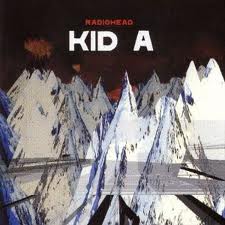
SOUNDTRACK: RADIOHEAD-Kid A (2000).

After the rocking brilliance of OK Computer, Radiohead released Kid A.  And the world hushed.  The opening song “Everything in Its Right Place” begins with keyboard notes and what-the-hell vocals by Thom Yorke.  Once the song proper starts, though, it turns into a cool, electronically detached Radiohead song.  And even though it never lifts beyond that state, the melody is captivating.  Next, the title track is downright bizarre, a quiet electronic ticking and bleeping song with distorted vocals and, eventually, electronic drums.  It’s a statement of purpose if nothing else and shows that you’ll not be hearing any guitar anthems here.

And then comes “The National Anthem,” one of my favorite Radiohead songs ever.  It reasserts them as songwriters (even if its a really weird song).  It features a great bass line and then–about 3 minutes in–it devolves into a noisy skronky horn filled mess.

After the moody near-instrumental “How to Disappear Completely” and the mellow actual- instrumental “Trefingers”, “Optimistic” comes back with some wonderfully clear moments amidst the beautiful murk of the song.  It is followed by “Idioteque,” which is probably the perfect encapsulation of the new Radiohead: full of disorienting electronic distorted noises and yet utterly catchy and captivating.  “Morning Bell” the next track is equally stunning.

It’s odd of course that the disc ends with two minutes of silence, but that’s surely not the oddest thing on this disc.  And yet for all my seeming criticism, the disc is genre-breaking and mind-bending.  It’s an extraordinary piece of music.   And it virtually smashed all communication with their earlier selves.

Oh, and I even managed to score the limited edition disc with the booklet behind the tray!

[READ: December 31, 2010] “Assimilation”

Although I have met E.L. Doctorow (and he signed his then latest book–which I have yet to read), I have not read a lot by him.  I’m not sure why exactly, as I regard him highly, he’s just another writer who has slipped through my fingers.

As such, I have no idea if this story is in any way representative of his work.

It is a fairly straightforward story.  A hispanic man, Ramon, who is an American citizen and has gone to college, finds himself busing tables in a restaurant owned by a Russian immigrant.

One day the boss asks him, basically, if he would marry a Russian woman so as to get her legally into America.  He agrees.  They do.  And she treats him like dirt, because really, she has no reason to be nice to him.

She is such an unlikable (almost unbelievably so) character that I considered not finishing the story.  I also felt that Ramon may have been to gullible.  And yet, Doctorow writes so wonderfully, that I kept reading even though I didn’t really care about them. (more…)

Read Full Post »

SOUNDTRACK: THE DEAD MILKMEN-Stoney’s Extra Stout (Pig) (1995).

Of course, I can’t forget the Milkmen’s final release!  But, in fact, I had forgotten about it, so much so that when I played it again, I was totally surprised to realize that I knew and liked a number of these songs quite a bit.

This disc was their return to Restless records, and it almost feels like their detour to Hollywood never happened.  Back is the dominace of Rodney Anonymous’ songs andthe more chaortic, frenetic guitar work of thier earlier discs.

It opens with “Peter Bazooka” a dark meandering song that features the one consistent thread on this disc: most of Rodney’s verses are spoken rather than sung.  Which is fine, except the songs somehow feel more noveltyish when they’re delivered this way.  So even if a song like the second track “Train I Ride” is just as silly as any DM song, because it’s sung it feels more like a proper song than a novelty.  “The Girl with the Strong Arm” is even more frenetic than “Joe Bazooka” and it’s another rant (although with a more singable chorus).

But a song like “Helicopter Interiors” sounds like classic DM: simple clever guitar line, raucous guitar, and it’s under 2 minutes long.  And, while the back half of the disc is less exciting than the front, the rocking “Chaos Theory” is good fun: “Study hard and you’ll have a future, oh yeah when the hell was that ever true?”

But Joe Jack Talcum’s songs are not absent from the disc.  He appears first on “I’m Flying Away” a slow, reggae tinged track that feels too anemic to have ever been a hit.  “The Man Who Rides the Bus” is a rocking, more catchy track although again it’s missing anything even resembling a hit.

A couple songs do overstay their welcome: “Blues Song,” a parody of the blues (yawn) is over 4 minutes long (yes, the solo section is pretty funny).  Although even a lesser song like “When I Get to Heaven” is enjoyable enough (the return of odd vocal effects is also welcome).  The only real failure is the horn-fueled pseudo funk of “Crystalline.”  At this point I’m not sure if it’s wise for the DM to bust so far out of their comfort zone.

Joe Jack sings the final three songs.  “Khrissy” is a trebly love song, “Like to be Alone” is a piano ballad that doesn’t really go anywhere, but the final song “Big Deal” is a another negative song package as a humorous uplift anthem.  It concludes the DM’s output on a high note.

I’m not sure if the band should have done more after this.  And of course, there is much sadness that bassist Dave Blood killed himself a few years ago.  But I understand they still tour and they keep their website active.  DM are a wonderful staple from my college days, and I thank them.

[READ: April 16, 2010] Monsieur Pain

It is not lost on me that while I was reading a book called Monsieur Pain, I was stricken with an abscess in my cheek.  It swelled as if there was a softball in my mouth and it hurt like a mother.  And, since this happened while I was on vacation, I had the delight of going to a Virginia Urgent Care center carrying this book around with me (and the medical services were excellent, thank you all).

Of course, the Pain in the title is not a man who inflicts pain or anything, it’s just his name.  I was wondering if, since he is French, if the Pain is to be translated as “bread.”  That is never addressed.

This story exemplifies the fascinating twists and turns that Bolaño puts in his books (this one was one of his first).  In the introductory note to the book, he states that he wrote this story in 1982 and then submitted it to two different fiction contests under different titles.  He won both contests.  (Ha!).  The other fascnating thing about this story is that most of the people are real.  And while yes, that is a conceit he uses in a lot of his stories, in this one the real people are the main people: César Vallejo was a real poet (and did have the hiccups) his wife was real, Pierre Pain was indeed a mesmerist, and of course Madame Curie is real, too.

The story itself was fascinating and sometimes difficult.  (I had to re-read the scene in the movie theater a few times to get the total picture).   It is written from the point of view of Monseuir Pain.  He is contacted by Madame Reynaud (a woman he is sort of in love with, especially now that she is widow) who urgently requests that he go to see someone “profesionally.”  The someone turns out to be the husband of her friend Mrs.Vallejo (who turns out to be the poet César Vallejo–although plotwise that is not important).  She says he is dying from the hiccups. (more…)

Read Full Post »

SOUNDTRACK: FUGAZI-13 Songs (1990).

I was so blown away by that first Fugazi disc that I immediately ran out and got this collection of their first two EPs.

The strange thing to me is that even though I enjoy the disc, nothing on it really stands out as all that memorable.  I feel like Repeater was such a strong release that these earlier tracks pale somewhat.

I’ve listened to this disc a number of times over the last few days and nothing really stands up and grabs me like Repeater still does.

I wound up buying two more Fugazi discs after this, but I’m pretty sure the reason I stopped buying their music was from this same feeling: the songs were all good, rocking, indie music, but there was nothing terribly memorable about them.

[READ: April 15, 2010] Stephen Fry in America

I first heard about this book when Stephen Fry appeared on The Late Late Show.  This book was very casually plugged as Fry’s attempt to visit every State in the U.S.  It turns out that this book is the companion piece to a six part BBC TV series of the same title (which I have not seen).  Although the TV series makes the existence of this document much more understandable.  Because although everyone wants to travel to every state in the union, the only way it would ever be accomplished in the fashion is for a TV show (even a book wouldn’t get quite this treatment if there were no TV show).

Stephen Fry was almost born in America (in New Jersey, in fact, where he believes he would have been Steve, rather than Stephen).  And he has always felt a connection to the States.  So, Stephen Fry, (in my head the quintessential Brit) brings a film crew and his classic British Big Black Taxi to see all of the States.  He begins in Maine and travels in an interesting manner, zig-zagging across the country.   He tends to visit the places/events/sites that each state is known for.  And, like any good TV show, he participates in the activities (he lobsters, he rides horses, his deals blackjack) and makes a tit of himself. (more…)

Read Full Post »

« Newer Posts - Older Posts »