Feeds:
Posts
Comments

Archive for the ‘Flash Fiction’ Category

SOUNDTRACK: DARLINGSIDE-EP1 (2010).

It’s amazing in retrospect how bland the first Darlingside song on their first EP is.

Darligside is a unique band, with gorgeous harmonies and unexpected instrumentation.  Their songs are gorgeous.

But this album is very different.  The first main difference is that there is a drummer–a real drummer named Sam Kapala.  Kapala is quite good, but wow does that change the entire tone of a Darlingside song.  Second, the band doesn’t sing everything in harmony.  Rather, there is one main singer (I think David) with the other guys singing fairly standard backing vocals.

The whole Ep has a kind of raspy-voiced-folk rock exploration feel.  The first song “Good Song” still has some mandolin, but only sparsely and the chorus melody sounds so much like another song or songs that I can’t get past it

“Surround” has a bit more of that Darlingside feel–the music is a bit more esoteric.  But the vocals are the same–that raspy-voiced lead singer.

But each song gets more interesting.  “Malea” has more of that cool violin and some really good drumming.  There’s definitely flashes of greatness on this EP, including in this song–although they need to bring in some of that cool vocal stuff.

“Catbird Seat” has some lovely violin and great whispered vocals.

“All That Wrong” starts almost a capella with some quiet guitar. It builds slowly until the middle section with the fast guitar and mandolin and the squeaky violin solo which is awesome.

“In the Morning” ends the disc with a quiet vocal melody but it eventually adds more singers and starts to sound more and more like the Darlingside we know.  In part because the drumming is left out almost entirely.  It feels like with three more songs they’d be on the verge of creating Birds Say.  But not yet.

[READ: January 22, 2018] “If Told Correctly”

I think the reason for William’s constantly publication is that it is so easy to fit at least one, or even more of them into a space in a magazine.  Got a small column to fill?  Grab 7 Williams stories.

This is a collection of five such stories

None of This Would Have Been Remotely Feasible
This story begin with the narrator admitting that she is smart and likes jokes.  So this is suitable for certain people.  The police found her in a pile of snow saying she didn’t want to live anymore.  Her mother saved her life. “This morning I was walking toward a tree… A woman was crying Melba! Melba!”  Perhaps it is a dog, that’s what we’re led to believe.  The last sentence is just a random jumble of words: “After a pause I looked into the world but I never found those.”  What? (more…)

Read Full Post »

SOUNDTRACK: THIRD COAST PERCUSSION-Tiny Desk Concert #747 (May 29, 2018).

I have always been taken with percussion.  I especially love vibes and marimba.  But I love it even more when bands make music using unusual items.  Third Coast Percussion does both of those.  And the songs are beautiful as well.

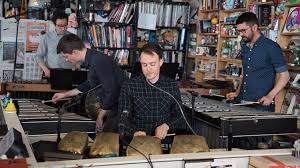
The quartet of gentlemen who form the Chicago-based Third Coast Percussion [will] play their sophisticated, modern marimbas and vibraphones, but be on the lookout for the subtleties of tuned cowbells and 3/4″ galvanized steel pipes, like those found at the local hardware store. Add to that a glockenspiel, a MIDI synth, a melodica, a drum kit, children’s deskbells, crotales, a Thai gong and a singing bowl, and you’ve got significant noise-making potential behind Bob Boilen’s desk.

They play three beautiful pieces.  And the blurb sums them up quite well:

The mesmerizing opening number, “Niagara,” written by the group, is from the band’s latest album, the aqua-centric Paddle to the Sea. This water is fast-moving, with pulsing, repeating patterns in the vibraphone, punctuated by drum beats and a bed of low synth.

David Skidmore behind the drum kit is also playing the synth while Sean Connors has the main up and down melody on the marimba. The other two (Robert Dillon and Peter Martin) are playing the same glockenspiel until Rob starts with some drum hits (while David behind the kit plays accents of that main drum beat).  There is just so much going on!

There’s a wonderful moment about half way in when the marimba starts playing a slightly different melody and it’s really quite enchanting.  I am quite taken with the song.

The Third Coasters follow with another from the album, their own arrangement of a slowly rippling ode to the Amazon River by Philip Glass. Beginning with droplets on the glockenspiel and evocative bowing of both vibraphone and crotales (small bronze discs), the music flows softly, taking its time to fan out in all its quiet beauty.

The group busts out the children’s desk bells on the second song, a cover pf Philip Glass’ “Amazon River.”  Sean plays them while also hitting the glockenspiel.  David is bowing the crotales (which he later hits with mallets) while also playing a melodica.  Rob plays a four mallet marimba while Peter plays a four mallet glockenspiel melody.  Sean gets to hit the Thai gong before it almost stops and then he goes behind the marimba to join Rob with three mallets.  Meanwhile for thee second half of the song, David is hitting some small bell-like instrument and Peter has the singing bowl.  As the song ends, David gets to conclude with the Thai gong.

The final song is completely intense.

Torched and Wrecked is, as David Skidmore mentions, something that once happened to his band mate Sean Connors’ automobile. It’s also a butt-kicking ride that includes those steel conduit pipes, which the band cuts to specific lengths to get the desired pitches. Skidmore wrote the piece, but it’s Connors who appears to achieve a kind of cathartic glee pounding on the metal tubes.

There’s no funky instruments om this, but the song is great.  David (2 mallets) goes behind the marimba with Rob (4 mallets).  Peter is at the glockenspiel (4 mallets) and yes Sean has the metal tubes.  The song is fast and intense and I get lost with just who is playing what sounds by the end.  It’s really cool.

It’s also fun to see them all pop up at the end when they all finish at the same time.

[READ: January 14, 2018] “Six More Considerations”

Lydia Davis writes short, short pieces.  Flash fiction, they call them. Sometimes I think they are great. Other times they just irritate me.

This group falls into the irritation camp.

Anyhow, the six stories are

(more…)

Read Full Post »

SOUNDTRACK: I’M WITH HER-Tiny Desk Concert #722 (March 28, 2018).

I’m with Her is a kind of a folk supergroup comprised of Aoife O’Donovan, Sarah Jarosz and Sara Watkins.  As the blurb notes:

The three singers who perform together as I’m With Her sound like sisters. It’s as if they’ve known each other all their lives and share common roots and musical memories… All three are brilliant players with an ever-shifting array of stringed instruments, guitars, ukulele, fiddle, mandolin and banjo. As I’m With Her, they know how to gather round a microphone and sing directly from their heart to yours. Purity is the brilliance behind I’m With Her.

They also share coming to the Tiny Desk:

Sara Watkins was here with Nickel Creek (2014), Watkins Family Hour (2015) and The Decemberists (2011). Sarah Jarosz was here in 2013 and Aoife O’Donovan came along with Yo Yo Ma and Chris Thile as part of the Goat Rodeo project back in 2011.

They play three songs from their debut album.

The first is “See You Around.” Sarah sings this first song.  Sarah and Aoife play guitar and Sara is playing an oversized ukulele.  At the end of each section their harmonies are wonderful.  It’s a really pretty song, with a great melody.  Then at around 2 minutes the song switches gears to the “shiny piece of my heart” section which changes the timbre and tone of the song.  Aoife takes over a bit and the song grows a bit darker and their voices sound more powerful.

For “Game to Lose” Sara switches to fiddle, Aoife plays Sarah’s guitar and Sarah is on mandolin.  I absolutely love the violin part and the way it plays off of the mandolin.  After a few measures, when they sing in three-part harmony from the get go….  Wow.  I love Aoife’s voice as she sings the end of the chorus, the mandolin is just fantastic and the fiddle trills are exquisite.

As they tune before the final song, Bob asks how many instruments they brought….  The answer is, a lot.  And they couldn’t leave without some banjo.  Then Aoife asks about the pink lemonade gummy bunny.  Bob says people leave random things.  You’re welcome to leave something too.  Aoife says, “I thought you were going to say I was welcome to eat it.”

Sarah says I feel like we’re just settling in, I wish we could play all day (and so do I!).

For the final song, “Overland” Sarah switches to banjo. Aoife has the same guitar and Sara is on guitar too.   Sara sniffs a few times and then deadpans, “Sorry I’ve got a coke problem, it keeps sneaking up on me.”  Everyone laughs and Sarah cracks up.  Bob says we’ll just have to loop that and Sara says, “we need some scandal.”

The song begins with Sara on lead vocals and Sarah’s banjo.  It is the most country sounding of the three (which surprises a bit since I don’t think of Sara’s voice as sounding like that).  But again, it’s the harmonies that are huge.

[READ: January 15, 2018] “Chicken Winchell”

This story was published in Vicky Swanky Is a Beauty, although as with most of William’s pieces I don’t remember it at all.

This story, which is half a page long, mentions three women characters and then uses “she” for the rest.  So I’m not sure which “she” is being spoken about.  There’s a waitress, a daughter and a mother.  The waitress wonders why the daughter never returned.  But apparently she did.

The mother confides in the waitress. (more…)

Read Full Post »

 SOUNDTRACK: JENNY AND THE MEXICATS-Tiny Desk Concert #721 (March 26, 2018).

I had never heard of Jenny and the Mexicats.   Interestingly, the blurb below doesn’t say anything about where they are from.  One assumes Mexico, but Jenny herself has a rather posh British accent when she speaks.  It also turns out that the band is based in Spain…so all preconceived notions are dashed.

Jenny and the Mexicats’ … high energy shows are unforgettable … Mixing flamenco, originally from southern Spain, with Jenny Ball’s jazz trumpet background and a little bit of cumbia has created their one-of-a-kind musical identity.

The grooves these musicians create can be frenetic (as in the first performance here, “Frenético Ritmo”)…

This song is sung in a mix of Spanish and English–the verses are predominantly Spanish but the ends of each verse seem to be in English.  Jenny’s trumpet works perfectly with the music they are playing.  And the electric guitar plays some interesting sounds throughout.  The song slows down to a pretty ballad with the flamenco guitar playing a solo before the song ratchets up again, cumbia all the way.

or slow and luxurious (“The Song for the UV Mouse House”).

Jenny sings in English on this song with a fascinating accent.  She has a diva’s R&B wavering vocal style, and yet she also seems to have some cockney on some of the words. The song is a ballad and the plentiful drums–hand, box, snare and percussion–keep the roots in Mexican music.   The whispered spoken word middle is a nice touch.

In both cases, the group presents the perfect cushion for Ball’s impassioned singing and engaging stage presence. There are no weak points in the instrumentation, and with Ball out front, the songs come to life as the short stories they are — like that of the young lady who appreciates a beer before taking on life’s challenges in “Verde Más Allá.”

Before the song Jenny tells a story about their favorite show: “We did a concert based on airlines.  We came out like pilots, there was a plane crash in the middle of the show, we came back as angels and devils, it was a lot of fun.”  The guy behind her helps out: “it was a Halloween show.”

“Verde Más Allá” is a mellow song about a Caguama (pronounced kawama).  The guitarist asks, “What is a caguama?”  It’s a liter-sized beer, and the song is about a girl who doesn’t like to work and loves her caguama.  It’s a fun song, “no le gusta trabaja!”  After the first verse, right on cue, the percussionist plays the office’s train whistle which makes everyone crack up.  The end of the song features some sing along, and the flamenco guitarist doing one of those high-pitched flamenco laughs.  At the end, Jenny (whose dress is dangerously short), holds down the ends of her dress so she can jump for the conclusion of the song.

Much good fun is had.  Caguama!

[READ: January 31, 2018] “Five Stories”

Here’s five more short short stories from Diane Williams.  And once again, she amazes me with her sentences and aggravates me with her stories.

“Girl with a Pencil”
The first two paragraphs seem like a different story, as the rest of the story seems to flow from paragraph number 3 in which a girl draws a picture of her future: two shoes, a pair of legs and the hem of a skirt on top.  Her mother was mad that there was no head.  I like that this is a formative experience but the resulting brute seems oddly out-sized.

“A Gray Pottery Head”
I enjoyed this story because of the way it ended.  “That night…something exciting a foot.  She has a quarter hour more to live.”  Except that that wasn’t the end of the story (it was the end of the page).  The next several paragraphs are about her death. It’s the first of her stories where I felt it was way too long. (more…)

Read Full Post »

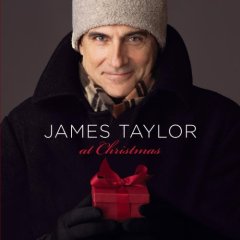
SOUNDTRACK: JAMES TAYLOR-At Christmas (2006).

James Taylor is a folk icon with a smooth voice.  It seems like it would be perfect for a chill Christmas album.

Well, since I last heard Taylor (1976’s Greatest Hits album) he has gotten a little away from that folk sound (imagine that) and more into a kind of bland(er) adult-contemporary sound.  This album has hints of light jazz in it too.  And, worse yet, he tries to lighten some of it up with humor.  Gasp.

When we got this disc we were so disappointed that I don’t think it has been listened to since.  Well, it wasn’t as bad as I remembered, but it’s a pretty long slog through the holidays (and it was nominated for a Grammy, of course).  Almost any one of these songs is a fine addition to any Christmas mix, but too many will put everyone to sleep.

This was originally released in 2004 and distributed by Hallmark Cards, which really does tell you all you need to know.  This was resequenced and a couple new songs were added.

“Winter Wonderland” has all the jazz trappings–muted trumpet, brushes on drums and Taylor’s voice which isn’t quite as comforting as it used to be.

“Go Tell It On the Mountain” sees him modifying this song somewhat and turning it far away from the gospel tradition.

“Santa Claus is Comin’ to Town” has him scatting and be-bopping a little…which is not really his forte I hate to say.

“Jingle Bells” has him making it jazzy.  It’s a bit too much frankly.  Especially when it’s followed by

“Baby It’s Cold Outside” a duet with Natalie Cole, which really tells you everything you need to know about this disc–safe, safe choices.  The “joking” in this song was meant to be cute, but it comes off a little creepy.

After getting annoyed by the first half, I felt like the rest of the album worked pretty well.  He lays off the jazzyness and focuses on his voice.

“River” open with a pretty “Good King Wenceslaus,” on the acoustic guitar.  It switches to a fine version of Joni Mitchell’s “River.”  This is my favorite song on here and it was not included on the original Christmas release of 2004.

“Have Yourself a Merry Little Christmas” sticks in my head because he changes the words from “from now on” to “in a year our troubles will be out of sight.”  Why so specific?  And why every time?

“The Christmas Song” In this nice version, he sings “some holly and some mistletoe” like Paul McCartney does.  Interesting, as I don’t think he’s a vegetarian.

“Some Children See Him.”  This is a song I was unfamiliar with until a couple of years ago.  It’s quite sweet and suits him well.

“Who Comes This Night” I didn’t know this song at all.  But again the piano and bells suit his voice better than the jazzy songs.

“In the Bleak Midwinter” is a slow song, but man he slows it down even more.  And the disc ends with “Auld Lang Syne” which is surprisingly long and would be much better served without the “wailing” guitar solo.

Not every Christmas CD can be a winner.

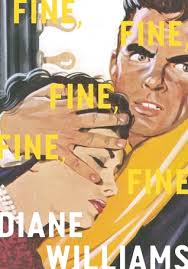
[READ: June 16, 2017] Fine, Fine, Fine, Fine, Fine

This is the third McSweeney’s book in a row (all read around the same time) that I really didn’t like.

It’s not surprising, as I tend to not like Diane Williams’ stories at all (looking back, I don’t think I’ve ever liked anything she’s written).  I only read this because McSweeney’s sent it to me.

The book jacket is just covered with hagiography about what great writer she is and how she upends convention and stuff like that.  But to me, these aren’t stories at all.  And most of them don’t even make sense as themselves.

Rather than saying much more, I’m just posting some stories in full, to show what I mean. (more…)

Read Full Post »

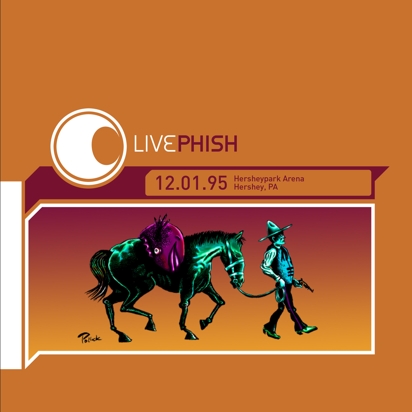
SOUNDTRACK: PHISH-LivePhish 12.01.95 Hersheypark Arnea, Hershey, PA (2006).

Speaking of 12.01.95 (see yesterday’s post), this show is the proper release from the soundchecks for the 11.14.95 disc set.

In addition to formal live releases and a series of 20 full show LivePhish releases (which were packaged in some horrible goo and have subsequently been ruined), Phish has also released some shows a but more formally as LivePhish archival “releases.”  I don’t know if there is any specific reason for the release of any of them, but they seem to out out two or so a year.

There’s a pretty thorough review and essay (with photos) by Kevin Shapiro about the show here.  And it provides a lot more context and Phish lore than I can, but I will quote him below.

The set opens with a fast rollicking version of “Buried Alive” (only 3 minutes long) which segues neatly into an intense “Down with Disease.” The seven minute song ends with Fish playing just high hats for a bit before seguing into “Theme form the Bottom” which is from Billy Breathes out the following year.

When that song ends they play into a fun fast version of “Poor Heart” which segues into “Wolfman’s Brother.”  The staccato ending sequences nicely into a 7 minute “Chalk Dust Torture.”

Then comes the wonderful surprise of “Colonel Forbin’s Ascent.”  As the song segues into “Fly Famous Mockingbird,” Trey takes some time to chat.  He tells the audience a brief history of the planet.  In the time of the ancient Greeks, philosophy, science and religion were all one thing.  Science and religion split off.  The Eastern style stated that everything is one.  Western style focused on matter vs spirit and gave rise to modern concepts of religion.  It seems like he’s getting very serious.  Then he talks about how eastern religious led to cows which led to milk which led to milk chocolate.  Chocolate.   The Mystical Land of Chocolate.  Then he says there is only one place where science religion and philosophy are one thing—Gamehendge.   And then he talks about the Rhombus which can be found in King of Prussia.  Find Wilson Dr.  (Although presumably this gives the truth behind the rhombus).  There’s parts near the end where the song fades in and out in a very cool way.

Then they play a fairly dark version of “Stash” and a rocking version of “Cavern” to end the set.  It’s interesting that “Chalk Dust,” “Stash” and “Cavern” were also on the 11.14.95 set).

Stash followed with a formidable jam that stretched out instrumentally, locking into a dissonant theme that ignited the highest improvisation of the set. The whole band linked up beautifully for this jam, evoking a Dave’s Energy Guide-ish vibe and at points recalling the expectation-smashing heights of the Orlando Stash weeks before. After Stash returned to terra firma, Cavern closed the set, leaving “15 minutes” of recovery and preparation before the even sweeter second set that defined this show.

Set two opens with a chess move from an 11-year-old boy (who is now in his thirties (!!!).  They begin the music with an a capella (doo-wop) version of “Halley s Comet.”  It ends with a cool segue into “Mike’s Song,” a 20 minute jam with a really long piano solo from Page ans a nice end that rumbles into “Weekapaug Groove.”  [Read Shapiro’s eloquent discussion about this transition].  There’s a quiet solo in the middle of the song with a brief clap-along.  But it pulls out of that to get noisy and chaotic by the end.  Things mellow out with “Mango Song” but the crowd erupts for a short (5 minute) fast version of “Wilson.”

Things get a little silly with Fish singing “Suspicious Minds.”  (I just found a video for this—Fish comes out weaving an Elvis Cape and a big glasses.  It ends with a fast “Hold Your Head Up” keyboard romp (with Trey on drums).

When things settle down Fish starts playing the high hats for “David Bowie,” but before the song begins, Trey sings “Catapult.”  And then before the song can begin again, in the trippy intro Trey starts moaning “Chocolate.”  There’s a brief Simpsons riff and a Do’h and then they launch into the song proper (about 2:30 into the song).  There is a long middle with lot so solos and then a fast, tidy ending.

The encore is a romping 7 minute “Suzy Greenberg.” It’s another great show.

Even if it is a bit shorter than the previous one–that personalized chocolate section and the Colonel Forbin’s is pretty great.

[READ: November 25, 2016] Eating Fish Alone/Country Cooking from Central France

I really enjoy Lydia Davis’ stories.  I always find them a little weird since most of the time they feel more like little diary entries rather than stories.  Each narrator seems to be pretty clearly her, and each story seems like a gripe she has about something that happened.

And yet, it is like the best diary entry you’ve ever read.   Most of her stories are a couple of paragraphs long.  I find I don’t really like the longer ones as much, which is kind of ironic given that the short ones seem so short.

So this is a collection of a few of her stories.

“The Mice” is a page and a half about how the mice in their house never go into their kitchen.  Their kitchen is sloppy and full of food–why wouldn’t the mice go there?

“Meat, My Husband” starts with the narrator saying that her husband really loves meat.  His favorite chidhood food was corned beef.  But she, being a healthy person (and perhaps a bit obsessive) hardly makes meat (or uses butter).  But her husband really enjoys a dessert–which he helps to make.

“Happiest Moment” is only one paragraph and is an interesting twist on happiness.

“Kafka Cooks Dinner” is much longer than the others and it gets a little repetitive.  It is told from the point of view of a man looking to make a meal for his dear Milena.  He puzzles over several different options.  He wonders if he should serve the same to her as he did to Felice.

“Eating Fish Alone” is a story all about the neurotic narrator trying to figure out when and what fish she can eat. She says she pretty much only eats it alone because of the smell  But she also a has a list of which fish she can eat–some is safe and others are not.  She often asks the waiters about the fish, even though they don’t know much about the food.  The end sees her eating a marlin steak.

Continuing with the food theme of this book, the other half of the book (flip it) is fully called Country Cooking from Central France Roast Boned Rolled Stuffed Shoulder of Lamb (Farce Double)

This is one of those stories that I never understand why they are written.  Lengthy and very detailed all creating something that is possibly funny, but I’m not sure if it is–making a story out of something that is just a goofy recipe.

It is a 24 page recipe for Farce Double–the specialty of La Tour Lambert.  It is an elaborate (beyond all reason) recipe that might make no sense to a foreigner.

You must marinade the giant lamb parts–in Paris they might use a bidet, you can use a bathtub.  After extensive details you get sentences like: at some previous moment, you will have made the stuffing for the quenelles.

There are clay pots and giant pits and marinating for days and all of that.

The only thing that interrupts the recipe is the song that is sung during a break in the roasting.  This song is about a blacksmith’s son who goes in search of his lost mother.  He finds several women who take care of him, making him believe that each is his mother until she “does for him what mother a never did for her son.”

The feast of farce double is a moment for friendships to be renewed, for enemies to forgive one another, for lovers to embrace.

Serves thirteen.

Uh huh.

Read Full Post »

SOUNDTRACK: RAVI COLTRANE QUARTET-Tiny Desk Concert #631 (June 26, 2017).

Ravi Coltrane is the son of John Coltrane–giant shoes to fill.  Indeed there’s quite a legacy in this band:

Yes, Ravi Coltrane is the son of the John Coltrane, one of the most famous and important jazz saxophonists and composers of all time. He’s also the son of multi-instrumentalist, composer and spiritual leader Alice Coltrane Turiyasangitananda. (In fact, all members of the band here are performing artists in their own right and come from artistically rich families; drummer E.J. Strickland is the brother of saxophonist Marcus Strickland; Adam Rogers parents performed on Broadway and Yunior Terry is Yosvany Terri’s brother, both heirs to Cuban music royalty.)

I don’t know anything else about Ravi Coltrane, so I’m going to let the blurb do the detailing:

The first song in the set, “Cobbs Hill,” was written by Coltrane’s good friend and colleague Ralph Alessi. Beginning with Yunior Terry’s funky and deliberate bass line, further enhanced by intentional drum rolls the 2/4 time signature, two beats per measure, captures a march-like proclamation. [Ravi plays the soprano sax on this one.  There’s a lengthy guitar solo in the middle of the song in which Ravi just relaxes, but it is primarily Ravi’s show].

The second song is Coltrane’s own composition, “Three For Thee”, a fan favorite from the 1998 Moving Pictures album; the original recording included Ralph Alessi on trumpet. Only 32 years old when that record was released, it could be taken as a sign of things to come: Ravi Coltrane, an old soul in a young body, mature and capable of creating work so robust and important. Almost 20 years later, hearing that music again here, even better, is affirming and a testament to Coltrane’s ever-evolving artistic journey. And E.J. Strickland’s opening drum intro couldn’t be more spunky; he teases the audience into the groove with effortless, intentional punctuations.  [Ravi is on tenor sax for this song.  There’s another lengthy guitar solo in the middle].

After this song, he thanks everyone and then points out that there is a two drink minimum.

Sadly there is no blurb for “Phrygia,” so it’s up to me.  I really like the main riff of this song.  And the middle has a groovy bass solo, which could be longer, frankly.  I like that the guitar plays some really delicate notes and phrases to accompany the bass solo.  After some good wailing, I like that they return to the main theme and then bring things down with some thumping bass and gentle guitars

[READ: August 20, 2016] “Four in Prose”

Back in 2009 Williams had 7 brief stories published in Harper’s.  My take away was: I would have not finished this work, except the whole thing was only two pages long.

These four pieces are also only 2 pages long.

The first is called “The Perverted Message” (more…)

Read Full Post »

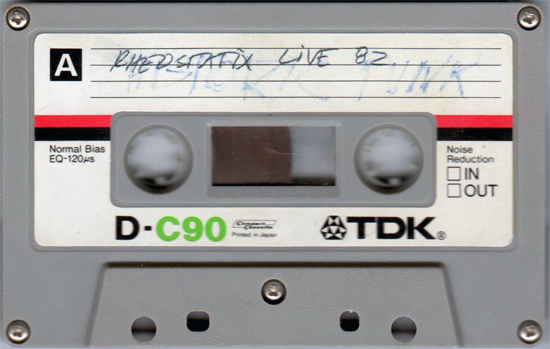
SOUNDTRACK: RHEOSTATICS-Mowat Collegiate, Scarborough, ON (1982).

This is (as of June 2017), the oldest Rheostatics show on Rheostatics Live.

And indeed, “Considering it is 34 years old it sounds remarkably good for a show probably taped off of a tape recorder”

This is in their very early days when they were a lot more funk and new wave.

There’s also a big distinction in that the guitar (or maybe keyboard, although I don’t hear any) is played by David Crosby (not that one) rather than Martin Tielli.  This was before Tielli joined the band.

There’s a note that this cassette may have been two sets on one night but it seems more likely that it was two different nights.  Same set list both sets.

The show opens with a recording of “O Canada” that seems to gets stuck as they launch into “National Pride.”  I can’t get over how many bootlegs there are of them playing this song and yet it never made it onto a release.  I feel like the ending using a twisted “Star Spangled Banner” is new (or I guess actually old).

This is one of the first occasion I’ve heard them play The Kinks song “Well-Respected Man.”  Their version is incredibly different and I wouldn’t have even recognized it except for the lyrics:

And he’s oh, so good,
And he’s oh, so fine,
And he’s oh, so healthy,
In his body and his mind

It’s all funk and slaps and a wholly different melody.  The guitar solo is very rudimentary as well–angular and noisy.  They also play Sly and the Family Stone’s “Thank You” with their own flavor to it–again nothing like the original.  It’s so far from the original that the subtitle is “(Falettinme Be Mice Elf Agin).”  It feels like every song is pretty much all slap bass –I can’t actually tell who is singing these songs Dave or Tim.

There’s an original “Satellite Dancing” and a cover of “Louie Louie” done in a new wave style with some really high angular guitar chords and a bass solo.

Clark describes “1984 For Those Who Believe” as a political song about “Poland and Russia and the Middle East an all of those fun things that happen in the world today.”

There’s a story that I can’t make out but the end is “We’re the Rheostatics and we’d like you to dance, okay” which segues into a seven minute “Shake Yer Body Thang,” which also has a lengthy funk bass section.

They introduce their “single released three months ago,” “My Generation.”  “It’s a dancing song, too.”  This song did get official release and it also sounds nothing like the original  “Girl in My Magazine” about Nancy Reagan–he keeps it under his bed at night.  It’s got a massive ska feel.  “Man of Action” funky bass and scratchy guitars (and maybe a keyboard?).  It gets cut off before the end.

The second set doesn’t have “O Canada,” but something else as an intro.  But they still open with National Pride and in this version you can really hear him sing,”Can’t live in the USA / too many enemies / can’t live in the USA / that place is not for me.”

“We’re the Rheostatics from Toronto, Ontario, this is a song dedicated to Russ Jones.” It’s called “Thank You (Falettinme Be Mice Elf Agin).”

“Satellite Dancing” from our single: dance and have fun which i hop you all will.  This set seems more fun than the previous one: chants of “dancing!” and a rowdier crowd.

“It’s called ‘Louie Louie’ and its a dance song.”

“1984 For Those Who Believe” is “dedicated to the National Guard, Mr Reagan and all his friends in blue.”  I wish I could hear the words better, I, curious what they’re singing about.

“This is called ‘Shake Your Body Thang’ it’s new and everybody dances, alright?”  There’s cowbell and other percussion during the funk breakdown.  They want to turn the whole building into one big rhythm section–“bang any two things together.”  “We’re going to keep doing this until you get it right…you shouldn’t smoke anyways, eh?”  It’s hard to tell from this recording if the crowd is into it.

A much shorter “My Generation” it feels like a bratty punk version of the song.  “Girl in My Magazine” it’s about Nancy Reagan–he keeps the dirty books in his closet so no one will find them.  And once again, “Man of Action” gets cut off.

It’s hard to believe that this band evolved into Rheostatics.  I wonder what they’d be doing now if they hadn’t morphed so much.

[READ: September 12, 2016] “Pet Seminary”

This piece is actually four excerpted sections from William’s Ninety-Nine Stories of God.

I have had a real problem with Williams’ stories–they just don’t do anything for me.  So having four even shorter ones is not the most exciting prospect.

#29 is a first person account of the narrators childhood in which his class was supposed to visit a slaughterhouse.  Cooler heads prevailed and they did not actually see into the abattoir, by the smell was unforgettable.  Later they learned of a pig who saved a man from drowning.  The owner said that pigs are more intelligent than dogs but are not omniscient. (more…)

Read Full Post »

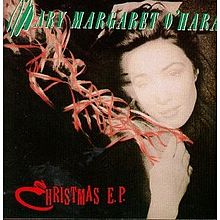
47_2_(1) SOUNDTRACK: MARY MARGARET O’HARA-Christmas E.P. (1991)

marymarMary Margaret O’Hara is a fascinating recluse.  She released a cool, weird  album in 1988 then did nothing for three years when she released this Christmas EP.  Since then she hasn’t really released anything (except for a soundtrack).

O’Hara’s voice is her most notable feature (she warbles and swoons and is almost otherworldly–sometimes crazily so).  She is the backing shrieker in Morrissey’s “November Spawned a Monster.”  So one expects a pretty weird Christmas album from her.

 But it’s actually fairly conventional and I have to admit a bit dull.  “Blue Christmas” is just too slow for me.  O Hara’s voice doesn’t have any oomph here.  The cheesy violin solo doesn’t help either.  “Silent Night” is, I feel, too pretty of a song for O’Hara’s voice which wobbles in weird ways for this track.  “What Are You Doing New Years Eve?” suffers from the same as everything else on this disc–it’s too slow and languid.  I know this song can be wistful, but I need this to be faster.  “Christmas Evermore” fares the best on this disc because it isn’t familiar (to me).  The music is a bit more uptempo (if still eccentric).  And you don’t have other version to compare it to.

So, overall this proves to be a somewhat disappointing EP.

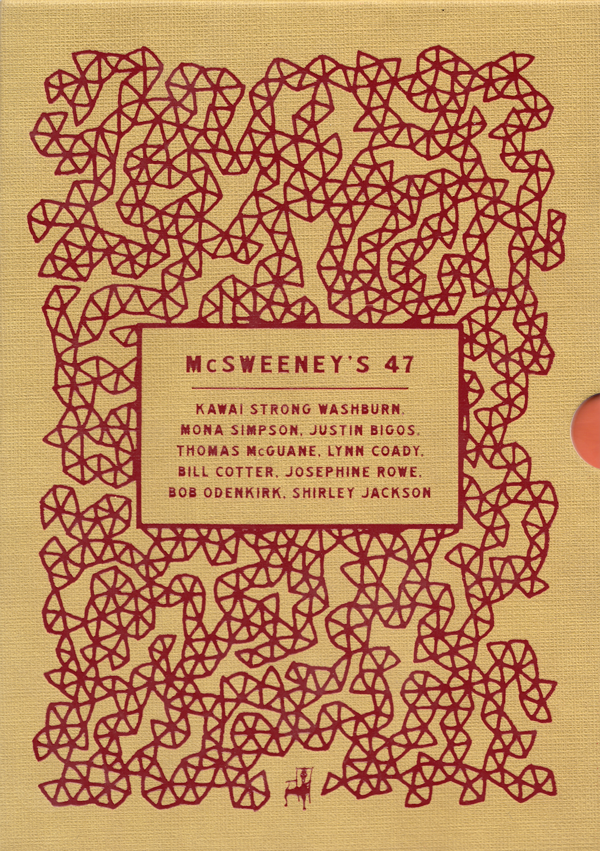
[READ: December 5, 2014] McSweeney’s 47

I love McSweeney’s issues that come in boxes with lots of little booklets.  It somehow makes it more fun to read the stories when they are in little booklets with individual covers.  In this instance, all of the booklets look basically the same–ten different cool pencil (and red) drawings on the cover done by Carson Murdach and a red back cover.  The outer slipcase art is by Jason Polan.

There are ten booklets.  One has a few letters and the rest are short stories.  There’s even a surprise in here–the very exciting discovery of two lost Shirley Jackson stories.  But there’s also the slightly disappointing realization that two of the books contain excerpts from McSweeney’s books (which I already own).

LETTERS: (more…)

Read Full Post »

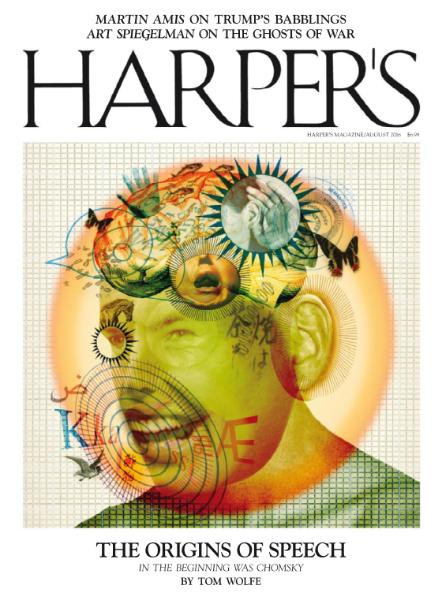
harperjanSOUNDTRACK: BECK-“Defriended” (2013).

defriendIn 2013, Beck released threes singles that are likely not going to be released on albums.  They were released as digital downloads and they are each very different.

“Defriended” opens with a slow, backwards sounding keyboards with purposefully electronic drums.  The riff is catchy and there are some nice clean vocals on it.

It is certainly catchy but doesn’t seem like a comeback single.  It’s doesn’t resonate as a big “hit.”  This feels more like a testing the waters single.

[READ: April 1, 2013] “How I Read as Quickly as Possible Through My Back Issues of the TLS”

I am once again confused by Lydia Davis.

I have enjoyed her short fiction, but when she releases something like this I just feel like it’s a list. Yes, we gain insights into her (or her narrator anyhow), and yes there is some humor involved, but the whole piece is just a series of things that she does and does not want to read in her issues.

I do not want to read about the life of Jerry Lewis

I do want to read about mammalian carnivores

I do not want to read about a portrait of a castrato

(more…)

Read Full Post »

« Newer Posts - Older Posts »