Feeds:
Posts
Comments

Archive for the ‘Film & TV’ Category

SOUNDTRACK: The 90’s Are Back, Or Whatever… NPR.  (2011).

This is a 90 minute podcast about the music of the 90s.  And, of course, it opens with “The Dream of the 90s” from Portlandia.

I don’t listen to too many full discussions on the All Songs Considered site, but since the 90s were definitely my favorite era of music, I thought it was worth a listen.  Incidentally, it’s funny that the 90s are so meaningful to me when, really I should be a child of the 80s.  But in reality, my 80s music was mostly heavy metal, because I hated all pop radio then.

This radio show (available for free download here) features four NPR music geeks talking about the music they loved during the 90s.  There are some obvious points (“Smells Like Teen Spirit,” “1979,” “Song 2,” “Loser”), but some unexpected songs as well: “Grace” (Jeff Buckley), “Long Snake Moan” (PJ Harvey).  And of course, probably the biggest surprise: Sebadoh’s “Soul and Fire as “song of the decade.”

The hosts have a lot of fun with bad songs (severe bashing on Collective Soul or hilariously cueing up “Can’t Touch This” to punk one of the speakers when they are talking about Missy Elliot–yup, it’s not all alt rock, Missy Elliott and Lauren Hill crop up along with Johnny Cash and Nusrat Fateh Ali Khan).

But let’s not forget my perennial favorite from Cornershop: “Brimful of Asha.”  And, yes, My Bloody Valentine.

These days, when I do listen to the radio, I find that the stations I prefer tend to play a lot of 90s songs, but it’s surprising to me how infrequently they play some of these really big artists (I hear a lot of Harvey Danger, but no My Bloody Valentine).  It’s funny that one of the songs they talk about, Len’s “Steal My Sunshine” I actually heard coming out of a radio at a pool while on vacation in Florida this past January (!?!).

It’s a fun segment and makes me think that although I do like a lot of new music, I’m a gonna hafta retire to Portland.

P.S. Stay till the end of the show for the hilarious impersonation of Trent Reznor.

[READ: February 17, 2011] 3 book reviews

Zadie Smith is an author whose output I fully intend to ingest one of these days.  So I figured why not read a few of her book reviews, too.

Smith reviews three new titles: Harlem is Nowhere: A Journey to the Mecca of Black America, by Sharifa Rhodes-Pitts; My Prizes by Thomas Bernhard; and While the Women are Sleeping by Javier Marías.

I’m intrigued by her review of Harlem is Nowhere.  She seemed to be rather critical of the author, especially of her mannerisms: like calling James Baldwin’s “habit of speaking to Harlem folk, having experiences, and deriving from these encounters “a metaphor about all of black existence”–“The Jimmy.”  (where others might have simply called it “writing”).  Or the fact that the author describes herself as a “single girl” as if that has anything to do with anything.

The second half of the review concedes that once you abandon wanting to known anything precise about historical Harlem, it’s a lovely book.  Smith revels in learning about James VanDerZee, Raven Chanticleer and Alexander Gumby (and her enthusiasm makes me want to investigate this book, if not their own works).

So, despite initial criticisms, she ends the review very positively and gives a thumbs up to the work. (more…)

Read Full Post »

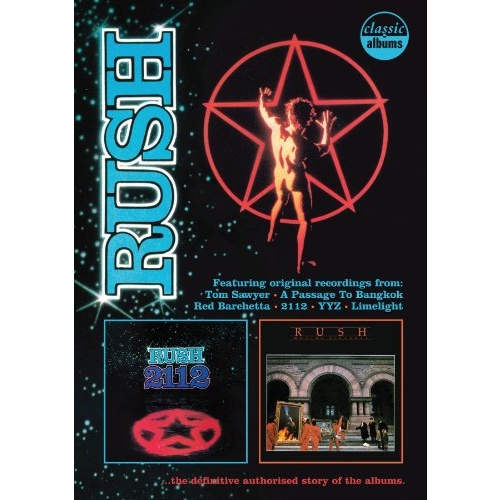
[WATCHED: January 3, 2011] Classic Albums: Rush–2112 • Moving Pictures

Sarah got me this disc for Christmas.  Thank you, Sarah!

This DVD is from the Classic Albums series.  The series is shown on VH1 in the states and BBC (and other places) elsewhere).  There’s been about 35 episodes of the series, with Rush being one of the few bands to have two albums for the show (which is an honor, but which also cuts down on the content for each album by half…boo!).

The show is an hour, and there’s almost an hour of bonus footage on the DVD  (which die-hard fans will enjoy more than the actual show).

The main show itself looks at the creation of these two classic albums.  There are interviews with the band members as well as many people associated with the band (and a couple completely random musicians).  We get their manager Ray Daniels and the producer for these albums Terry Brown (his segments are my favorite because he gets behind the mixing console and plays around with the songs).  We also get Cliff Burnstein (the guy with the crazy hair) who was instrumental in getting Rush publicity. (more…)

Read Full Post »

SOUNDTRACK : BLACK MOUNTAIN-Wilderness Heart (2010).

As the Tea Party showed, it’s never too late to pay tribute to Led Zeppelin.  Of course in 2010, it seems really uncool.  So, why not go whole hog?  The opener, “The Hair Song” sounds uncannily like Led Zeppelin, from chord structure to guitar sound.  And then just wait until after a verse or two and you get the guitar solo which comes straight from a Led Zep song.  And, amusingly enough, the duet vocals of Stephen McBean and Amber Webber combine to sound an awful lot like Robert Plant.

It may not be fair to compare them to their forebears, but they seem so intent upon referencing them.  “Old Fangs” sounds a ton like Buffalo Springfield’s “Mr. Soul” (at least they’re fellow Canadians).  But the wonderfully 70’s-style sound of the keyboards raise the track above any mere copycat.

“Radiant Hearts” is a gorgeous acoustic ballad where you can really appreciate the split vocals of McBean and Webber (and which should make you go back to the first two songs to really listen to how great they sound together.  This is that rare ballad that doesn’t feel like a kind of sell out track.

“Rollercoaster” returns to the 70’s-lovin’ with a monster riff (and a solo) that Tony Iommi would be proud of.  But rather than simply bludgeoning us, the riff stops in its tracks and then slowly builds itself back up.  “Let Spirits Ride” moves out of the 70s and sounds a bit like a Dio riff circa 1983.  But there’s some cool psychedelic vocal processing on the bridge (and a massive organ solo) to really mess with your retro time frame.

“Buried by the Blues” is followed by “The Way to Gone.”  They’re both folkie songs (although “Gone” features a re harder edge).  After the heaviness of the first half of the album , these tracks seem like a bit of surprise but they match the album’s retro feel very nicely.  “The Space of Your Mind” reminds me in many ways of Moxy Fruvous’ “The Drinking Song” (you won’t see that reference too much to this album).  Until the chorus comes in, when it turns into something else entirely.

But it’s not all mellow for the end. The title track has some heavy riffage (and great vocals by Webber–she reminds me of some of the guest vocalists on The Decemberists’ The Hazards of Love, although she really sounds like any number of great 70s rock vocalists).  I love the way the track ends.  The disc ends with “Sadie” another folk song (which makes the album half delicate folk tracks and half heavy rockers). It’s a fine song, but the album is kind of ballad heavy by the end, and the teasing drums and guitars just never bring forth the climax I was looking for.

Despite the obvious homages to classic rock bands, (if you can get past that, the album actually sounds fresh (or maybe preserved is a better word) and strangely original.  Like the preposterous cover, the album is preposterous–over the top and crazy.  Yet unlike the cover, the pieces all work together to form a compelling picture.  Obviously it helps if you like classic rock, but there’s nothing wrong with good classic rock, now is there.

[READ: February 14, 2011] Literary Lapses

Despite the cover picture above, I actually downloaded this book from Google Books (and the cover of that one was boring).

So, obviously, reading the biography of Stephen Leacock made me want to read some of his humorous fiction.  True, I also wanted to read Mordecai Richler, but his books are much longer and I wanted this done by the end of February!

So, according to Margaret MacMillan, it is this book, specifically the first story, “My Financial Career,” that solidified Leacock’s reputation as a humorist.  And I can totally understand what she means (without having read the other books, of course).  “My Financial Career” is indicative of the others stories: not laugh-out-loud funny, but clever, kind of silly and very smile-inducing.  The gist is that the narrator is very nervous about going into a bank with his large amount of cash ($56!).  He asks to speak to the manager who thinks he’s Very Important and then proceeds to embarrass himself further. And further. It’s quite amusing.

“A Christmas Letter” is one of my favorite in the book.  It’s a very snarky look at a friend’s Christmas Party, with a great punchline.  And stories like “How to Make a Million Dollars” or “How to be a Doctor” are wonderfully amusing tales in which the narrator mocks the wealthy and “professionals.”

There are 42 stories in this book, so there’s bound to be a few clunkers.  Some were mildly amusing, some were mere trifles, and some are crazily out of date for a 2011 audience.  This book turned 100 years old last year.  (Neat). (more…)

Read Full Post »


SOUNDTRACK
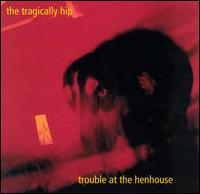
: THE TRAGICALLY HIP-Trouble at the Henhouse (1996).

After the major high of Day for Night, The Hip followed it up with Trouble in the Henhouse.

It opens with “Giftshop” which sounds like it could have come straight from Day for Night.  “Springtime in Vienna” is a marvel.  The opening is quiet with Downie’s almost whispered voice telling a compelling story until it blasts out with a wonderful chorus.  “Ahead by a Century” opens with a catchy acoustic intro.  Again, the harmony vocals add wonders to the verses.

But overall the album feels like the Hip exhausted their angst and anger on Day for Night and have chosen to go with a more mellow sound here.  It almost seems like Day for Lite.  Songs like the final track, “Put It Off” dabble with intensity, but have more atmospherics than powerful guitar and verses.  It’s like the come down after a big party.

The most peculiar song on the disc is “Butts Wigglin” which was used on the Kids in the Hall Brain Candy soundtrack.  It doesn’t really fit on this disc, but it’s such a great song that I understand them not leaving it off.  It’s very silly and musically groovy with  almost no guitars and all keyboards.  It’s a goof, but nice to see the lighter side of the band.

I find Trouble to be really enjoyable in itself, but it kind of pales in comparison to the previous two.  Nevertheless, these three albums are a wonderful trio of discs released by a great Canadian band.

They celebrated this era of the band with a live album the following year.

[READ: January 26, 2011] “An African Sermon”

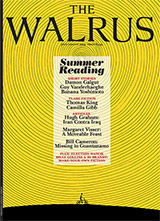
Of all the stories in this Summer Reading Issue of The Walrus, this one was the most powerful.  (It wasn’t my favorite because it was rather distrubing) but it had a strong impact on me.

The bulk of the stoiry is set on a train in Africa.  Two white men introduce themselves to each other; the older one confides that he hopes no Blacks come into thier car.  Of course a Black does come into thier car and the younger man, who is a preacher, tries to embarass the racist man but immediately shaking the black man’s hand.

The black man is hostile to the young man’s advances, more or less shutting him out entirely.  Indeed, when the young man follows him to the dining car to talk (he is genuinely sympathetic to people, but he’s also very curious about the man and wants to pry a bit) the black man (whose name is Leonard Sagatwa) listens briefly and then, claiming a headche, returns to the cabin  room and goes to sleep.

During the night, the train stops because of a malfunction and it will be some time before it is fixed.  The priest goes out to the landing to find something to occupy himself when Leonard comes down.  He says to the priest that he wants to tell his story.  He wants to tell it once, to a complete stranger so that he can unburden himself and then be done with it.  The priest is tickled to hear the story.

But the story is one of Rwandan genocide:  Hutu vs Tutsi, brothers who turn  against each other; Leonard’s brother turning on him and his family.  Killing family members slowly, cruelly, calling them cockroaches.  It is harrowing and the priest is taken aback by the brutality.

But at the end of the story, the priest is resilient and insists that Leonard can forgive his brother.  Never, says Leonard.

The priest is able to use this story for his very first sermon in Africa.  He pretties up the story somewhat and makes it moral, and it works.  The new congregation accepts him and he feels welcomed to Africa.

When, several months later, the priest sees Leonard again, everything has been turned upside down.  And I’ll just leave it at that.

It is a great story.  Wonderfully powerful.

Read Full Post »

SOUNDTRACK: THE TRAGICALLY HIP-Fully Completely (1993).

Even thought Road Apples was good, Fully Completely is amazing.  The band has traded in some rawness for textural complexity and yet they haven’t lost the rocking groove of their earlier sound.

This album has some of my favorite Hip songs: “Courage” (the Sarah Polley cover in The Sweet Hereafter is also beautiful in a very different way). “At the Hundredth Meridian” (a title which should tell you that the lyrics of the song aren’t going to be typical rock fodder), and “Fifty Mission Cap.”   “Fifty Mission Cap” is about the fascinating story of Toronto Maple Leaf Bill Barilko, another atypical lyrical concept and an amazing song from start to finish (although, honestly the opening chords make it sound like it’s going to be a lame 80′ metal anthem…maturation as a band made this song brilliant instead).

The duel guitar opening of “Pigeon Camera” is also gorgeous, as are the wonderful vocal harmonies on the bridge.  And the rawness isn’t all gone either.  “Locked in the Trunk of a Car” rocks as hard as anything on Road Apples.  There’s also a mellow folk song in “Wheat Kings.”  It slows the disc down a bit after the intensity of the amazing “Fully Completely,” and “Fifty Mission Cap,” but the last two songs are a string ending to an already great disc.

Even though I think that Fully is an amazing record, I think that mostly it’s preparation for the even more amazing Day for Night which came out two years later.

[READ: January 26, 2011] “Platanus”

Anyone playing along might have noticed that February is Canada month here.  All of the authors this month have been from the Great White North.  This story breaks with that, but I feel that it still counts because it came in a Canadian magazine.  But Banana Yoshimoto is Japanese (no, really!).  With a name like “Banana” (which is a pseudonym), it’s hard to forget this author.  I even bought Kitchen (her first translated book) when it came out (although I haven’t read it yet).

This story is translated from the Japanese by Michael Emmerich.  It is set in Mexico, specifically in the village of Mendoza.  The narrator (aged 35) and her husband (aged 60) enjoy escaping Tokyo and spending time in this sleepy village.

The story provides some interesting familial background of the two characters (both of their families disapprove of the marriage) and the kinds of things that they get up to in Mendoza.  And really that’s all there is to the story. (more…)

Read Full Post »

SOUNDTRACK: THE TRAGICALLY HIP-Up To Here (1989).

Up to Here is a pretty big leap from their first EP.  There’s more guitar soloing (not grandiose solos, just little guitar noodling in the songs “Blow at High Dough,” which was used wonderfully for the show Made in Canada (also known as The Industry).

Downie’s voice is more in keeping with what we’d come to know later, and lyrically the songs are esoteric and interesting.

“Blow at High Dough” opens the disc with a very cool guitar intro (“They shot a movie once, in my hometown”) “I Believe in You (Or I’ll Be Leaving You Tonight)” a not terribly good song has some proto-Downieisms: spoken passages, stories in a breakdown of the song, but the subject matter is not that exciting.  Of course, it’s hard to sound good when you’re followed by “New Orleans is Sinking” another fantastic song that still sounds great today (especially in their live versions).

“38 Years Old” is a surprisingly moving song with some slides guitars…a nod to their country/folk roots that they tend to bury under raw rock guitars.

But even some of the less memorable, less exciting songs have great aspects to them.  Songs like “She Didn’t Know” are pretty standard rock songs.  Better than average, but not exceptional.  But the band puts little things into them that bring them up from the mundane: the guitar licks, the backing vocals (slightly R.E.M.-ish).

Even “Boots to Hears” which sounds a bit too much like John Mellencamp in the intro really wins you over by the end (the lyrics are great).  For what really is a debut album, it’s solid and shows great songwriting skills and promise.

They still haven’t quite gotten the hang of cover art yet, though.

[READ: January 26, 2011] “You Go First”

This was the first of four flash fictions in this issue.  Flash fiction doesn’t really have a definition per se (except that it is very short).  There are some masters of flash fiction who can write very compelling stories with astonishing brevity.  These stories are all short (one magazine page a piece), but they feel kind of bloated compared to the writers like Lydia Davis.

Gibb’s story actually feels a lot longer than it is.  It opens with us meeting the narrator’s next door neighbors, Carl the cremator, his obese wife Brenda and their son Jason.  The narrator doesn’t really like Jason, but he’s the only person who will hang out her because he wasn’t around for her birthday party last year.  At that party, her hippie parents encouraged everyone to play a game called Getting to Know Our Bodies. (more…)

Read Full Post »

SOUNDTRACK: SARAH HARMER-Oh Little Fire (2010).

I found Sarah Harmer when she had a left field hit (“Basement Apt”) in the states.  I went back and discovered her band Weeping Tile (who are quite good and recorded a version of the song on their EP Eepee) and have been following her continued solo career.

Since that first record, she released a killer second disc, followed by a re-release of an intimate 1999 record she made for her dad which let her revel in her country roots.  She followed this up with I’m a Mountain, a very country, but very catchy album.  Finally, four years later, she put out Oh Little Fire.

Although she hasn’t lost her country roots, this album returns to more of the rock sound that first attracted me to her.  It’s not hard or heavy by any stretch, but it’s moved beyond the country of I’m a Mountain.

Sarah and I listened to this album a lot at night when it first came out, and it slowly seeped into my system.  I had kind of forgotten about it for a while, and upon rediscovering it I was delighted to hear that the melodies were fresh and still with me.  The album seems like a simple indie folk or the work of an adult alternative singer songwriter, but the thing with Harmer is that she has that wonderful background with Weeping Tile, a band that was always slightly off-center.  So, she writes beautiful melodies but puts little grace notes into them to keep them from being disposable.  And yet they are still super catchy.

The only hard thing about this disc is wondering which song will be stuck in your head after listening to it.

[READ: January 7, 2011] L. M. Montgomery

I’ve never read any L. M. Montgomery (although I’ve seen the miniseries of Anne of Green Gables) and I’ve never read any Jane Urquhart (but I love her name!).

This biography is so radically different from the other three I’ve read so far.  I wondered immediately if it was because Montgomery (and Urquhart) are women.  It deals with subjects that the other books didn’t at all: lost loves, mental incapacitation, family crises.  But it becomes clear through the book that these issues were THE issues that a woman at Montgomery’s time would have dealt with.  Unlike the men in the other books, Montgomery did not have a professional life (outside of being an author, which she did at home).  She was hardly a public figure, and since she was a woman, she was always in danger of losing what she had.

This biography is also vastly different from the others in the way it is constructed.  You can tell by some of the chapter headings: Her Death (the first chapter), Orphan, Sorrow, Madness.  You can also tell by these chapter titles that Montgomery did not have a happy life.

Indeed, between a husband who believed he was destined for Hell (he was a preacher!) and children whose life choices she disapproved of, not to mention terrible insomnia coupled with nightmares, her late adult life was nothing but torment.  But, sadly for her, her early life was nothing but torment either.  Her mother died when she was two, she was sent to live with her aunt and uncle (which was never a happy place).  But the most depressing of all of these events is when she lost her dearest friend at a terribly young age, a death she never really recovered from.

So how is it possible that Montgomery wrote such charming stories?

The answer to that (and the basis for most of this biography) is in her diaries.  Montgomery kept meticulous diaries (which she wrote and rewrote and then rewrote with posterity in mind).  She wrote about her childhood and her life as (sort of) an orphan.  She wrote about the places where she lived and the beautiful outdoors which impressed her.  She wrote about the sadness and the happiness.  Nothing was lost on her, and she saved it all (she also took photos of everything she loved, which are a beautiful and sometimes contradictory records of her diaries), and there are many published volumes that we can read to learn even more about her.

To me, the most fascinating (and horrible) part of the story was when she finally had Anne of Green Gables published.  The publishers took complete advantage of her.  They forced her to write sequels that she didn’t want to (although they are still quite good) and even compiled a final book from castoffs of the previous books (Return to Avonlea) that they published in her name.  Eventually the case was settled in her favor, phew, and she was able to write new characters that inspired her.

Montgomery had a rough life, and as her diaries come to an end, she stopped writing about things.   It’s hard to know exactly what she went through towards the end, but it doesn’t seem very positive.  And yet for all of her disappointments in life, she left us with some engaging and memorable stories.

The last chapter is a fascinating personal account of how Montgomery’s stories impacted Urquhart’s family.  It was incredibly touching and convinced me that Urquhart’s fiction would be enjoyable too.  Some day, some day.

This was a really enjoyable (but major downer) biography.  And, more than anything it has really inspired me to read Montgomery’s stories (and even one or two or Urquhart’s).

And, here’s a shameless plug to the folks at Penguin Canada–I will absolutely post about all of the books in this series if you want to send me the rest of them.  I don’t know how much attention these titles will get outside of Canada, but I am quite interested in a number of the subjects, and will happily read all of the books if you want to send them to me.  Just contact me here!

Read Full Post »

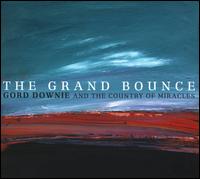
SOUNDTRACK: GORD DOWNIE AND THE COUNTRY OF MIRACLES-The Grand Bounce (2010).

I knew I was going to write about Canadian musicians for this series of Extraordinary Canadians, but I wasn’t sure who would get matched to whom. I figured I’d match Gord Downie to Mordecai Richler, but when I saw this in the liner notes to this disc, I knew I’d made the right choice:

Thank you to the Richler Family for the font you are presently reading.  The Richler font, not publicly available, was created and named for the great Mordecai Richler.  It was commissioned by Louise Dennys, designed by Nick Shinn and graciously made available by Florence Richler.  I am grateful for this honour.

So Gord Downie is the driving force behind The Tragically Hip.  I’m always curious when a guy who pretty much runs a band needs to do a solo album (or three).  And in this case, since the last Hip album was much more mellow and almost country, it seemed like he got some of his less rocky side out on that disc, so what’s the need?  Unless, of course, it’s just the need to play with some other folks once in a while.

Well, whatever the reason, this disc finds Downie in incredible form.  In fact, I think I like this disc better than the last Hip disc (which I did like, but which was a little too mellow overall).  The songs are all great, from the simple folk tracks to the more elaborate rockers.  And, yes, while the disc never rocks as hard as some Hip songs tend to, this is not a simple acoustic guitars and solo vocals record.

“The East Wind” is a wonderful starter.  It’s fairly simple with awesomely catchy lyrics.   I learned that the lyrics are from a quote by Todd Burley.  And they are an awesome way to describe a hostile and violent wind: it’s lazy, because “it doesn’t go around you, it goes right through you.”  Fantastic.

“Moon Over Glenora” sounds a lot like a Hip song.  Downie’s lyrics are almost mumbled and understated until he gets to the end of each verse when he raises his voice an octave for maximum effect.   The stops and starts in the bridge are also great.  “As a Mover” is also smoothly catchy with a wonderful rising chorus.

“The Dance and the Disappearance” is another great conceit.  This song is inspired by a quote from Crystal Pite: “Dance disappears almost at the moment of its manifestation.”  It is suitably dramatic with some great verses.  “The Hard Canadian” is a gentle acoustic number that would not be out of place on the more recent Hip records.  “Gone” feels like a continuation of “Heart,” almost like the slightly more rocking second half of it.

My favorite track is “The Drowning Machine” (I seem to like anything that Downie writes that’s about the sea).  It’s a minor chord wonder, dark and mysterious and wonderfully catchy.  The rock comes back on the rather simple “Night is For Getting.”  It’s probably the least essential track on the disc except that once again the chorus/bridge is really great and memorable.

The last three tracks bring on the mellow, which is a fitting ending for the disc, although since the three t racks take up about 12 minutes, it makes the end drag a bit.  “Retrace” is a country-tinged (steel guitar) mellow track (again, Downie’s voice brings out the excitement) .  “Broadcast” has an extended outro of gentle guitars and piano that for all the world sounds like the end of a disc, so I’m always surprised that there’s a final track after it.   And so the final track “Pinned” feels like filler.  It has a movie projector clicking sound and gentle piano with almost inaudible vocals.  It’s actually a pretty song, but it feels almost discarded here.

One of things I’ve always liked about Downie’s lyrics is that they are atypical of rock songs.  They’re not “about” sex or rock or drugs or swagger or anything like that.  In this case they are about locations and events.  And it really paints a picture.  And speaking of painting, Downie painted the cover art.  The beautiful simplicity of the painting is not unlike the beautiful simplicity of the music on the disc.

Oh and my copy is autographed too! (although I wasn’t there when he autographed it, so it could have been anyone who scribbled on the cover).

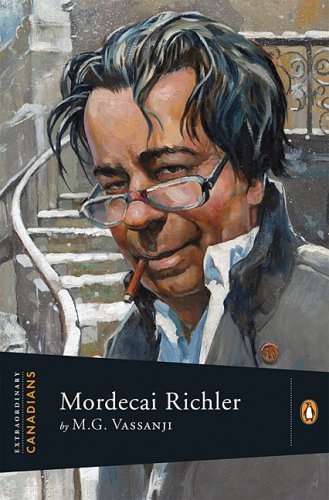
[READ: November 15, 2010] Mordecai Richler

I don’t know a lot about Mordecai Richler, although I feel like whenever I read about him it’s in hushed tones (a neat trick, that).  Nevertheless, for a number of reasons I have wanted to read him for many years but have just never done it.  Now, the stars are aligning with me for Richler.

There’s this book, there’s the cover of the October 2010 issue of The Walrus and the recent filming of his book Barney’s Version (the filming of which is discussed in the same issue).  And then a patron asked for the film of The Apprenticeship of Duddy Kravitz.  So, it’ about time to read one of his books.  But here’s the rub…do I start with the great books or do I start at the beginning and work my way through his career?  And, there’s also a huge new biography coming out (the review of which mentions a wonderfully offensive event in which Richler absolutely dismisses his Jewish audience).

This book was written by M.G. Vassanji.  I feel that I’ve heard of him but I’ve never read him.  And yet listen to this incredible biography:

M.G. Vassanji was born in Kenya and raised in Tanzania.  He attended University in the United States, where he trained as a nuclear physicist, before coming to Canada in 1978.  Vassanji is the author is six novels and two collections of short stories…and he has twice won the Giller Prize.

Damn.

Since I read this right after Coupland’s McLuhan it’s tempting to compare them.  And yet, as I said in that review, it seems quite apparent than Coupland’s book will be like no one else’s, so I won’t say much about that.  Instead, Vassanji opens the book by talking about the similarities between himself and Richler and their few awkward but pleasant meetings.  (In this respect yes, it is sort of like Coupland’s book in that the author puts himself into the text). (more…)

Read Full Post »

SOUNDTRACK: SHAD-TSOL (2010).

I first heard Shad on CBC Radio 3 online.  The track was “Yaa I Get It” and I really enjoyed it.  I haven’t listened to a lot of rap in the last few years; I’ve more or less grown bored by the genre, especially all the violence.  So, I was happy to hear this track, which was boastful but funny.

I decided to get the whole disc, and I wasn’t disappointed.  “Rose Garden” features a sample of “I Never Promised You a Rose Garden” which sets some of the tone of the disc.  But it’s on the next song “Keep Shining” that Shad’s uniqueness shines through.  This song is about women.  But not in any way that I’ve heard in rap before: “I can’t speak for women.  We need more women for that.”  And the inspiring final verse:

My mom taught me where to keep my heart.
My aunt taught me how to sing two parts.
My sis taught me how to parallel park,
and tried to teach me math but she way to too smart.
My grandma in the 80’s is still sharp.
My girl’s cousin is in activism in art.
They taught there’s no curls to tight, no mind too bright, no skin too dark to keep shining.

Later on the disc is “We Are the Ones” an oddball jam that sounds like one of those bizarre Atlanta rap tracks (funky vocals and all) and an amusing line about being Lost like Matthew Fox.  But his name checks aren’t all pop culture (Moredcai Richler gets a mention as does Glenn Beck (he “better duck like foie gras”).

And of course, there’s the wonderful “Yaa I Get It.”  With great horn blast samples and all kinds of noise competing for our attention.  Yet, throughout the lyrics stand out: “Maybe I’m not big cus I don’t blog or twitter…Dawg, I’m bitter.”  And there’s this wonderful couplet: The precision of my flows in terms of tone and diction/Is akin to that of the old masters of prose and fiction.”  Or take this lyrics from “Call Waiting,” “But what they say is hard for a pimp is harder for a man of faith.”

“Listen” has some great scratching on a heavy rocking track.  It’s followed by “At the Same Time.”  This is a mellow, sad song, which I don’t really like, yet which I find very affecting.  And lyrically, it’s great: “I never laughed and cried at the same time… Until, I heard a church pray for the death of Obama.  And wondered if they knew they share that prayer with Osama.”

The disc ends with “We, Myself and I” another noisy rocker and the one minute “Outro” an acapella rant.

Shad is a great rapper, doing interesting things and trying to make a difference.  He’s worth checking out.

[READ: November 1, 2010] “Marshall McLuhan”

I learned about this book because I’m a fan of Douglas Coupland.  And, as it turns out I’ve always had a vague interest in Marshall McLuhan, so it seemed like a sure thing. The problem was that the book was not readily available in the U.S.  So, I had to order it from Amazon.ca.  And, since you can’t get free shipping to a U.S. address from amazon.ca, I thought it would make sense to order 6 titles in the series, all of which I’ll post about this week.

So, here’s a shameless plug to the folks at Penguin Canada–I will absolutely post about all of the books in this series if you want to send me the rest of them.  I don’t know how much attention these titles will get outside of Canada, but I am quite interested in a number of the subjects, and will happily read all of the books if you want to send them to me.  Just contact me here!

Each book in the series has an introduction by John Ralston Saul, in which he explains the purpose of the series and states globally why these individuals were selected (“they produce a grand sweep of the creation of modern Canada, from our first steps as a democracy in 1848 to our questioning of modernity late in the twentieth century”).  It also mentions that a documentary is being filmed about each subject.

Perhaps the most compelling sentence in the intro is: “each of these stories is a revelation of the tough choices unusual people must make to find their way.”  And that’s what got me to read thee books.

This volume was probably a bad place to start in the Extraordinary Canadians series if only because it appears that Coupland’s volume is markedly different from the others.  Coupland being Coupland, he has all manner of textual fun wit the book.  The other authors seem to write pretty straightforward books, but you know something is up right away when you open the book and the first six pages comprise a list of anagrams of “Marshall McLuhan.”

On to Marshall McLuhan.  The Medium is the Message.  That’s about all anyone who has heard of McLuhan knows about him (and that he has a hilarious cameo in Annie Hall).

When I was a freshman in college, I took a class in Communications which focused an awful lot on Marshall McLuhan.  I didn’t like the teacher very much, but the message stayed with me all these years.   And so even though I’m not a student of McLuhan or anything, I was happy to relearn what I should have known about the man and his ideas.

(more…)

Read Full Post »

SOUNDTRACK: PORTLANDIA: “Dream of the 90’s” (2011).

This is song that I think of as the theme song for the show Portlandia. (I’ve only seen the one episode so far so I don’t know if it is or not, but if it isn’t, it should be!).  This song is so indicative of the show that, if you like the video, you’ll likely enjoy the show too.  Portlandia is written by and stars Fred Armisen and Carrie Brownstein (of Sleater-Kinney).

Although this song is meant to be evocative of the 90s (the chorus is “The dream of the 90s is alive in Portland”), musically, it’s not a 90s-era song (despite the comment that flannel still looks good in Portland).  It is actually a keyboard-only song, kind of discoey (dare I say Pet Shop Boysish?).  It’s a simple musical motif, with a catchy chorus and spoken verse, but really you listen for the lyrics:

Remember the 90s when they encouraged you to be weird?

Portland is the city where young people go to retire.

It’s like Gore won, the Bush administration never happened….  Portland’s almost an alternative universe.

It’s all tongue-in-cheek (with a surprisingly catchy chorus).  But, oh to dream.  Sleep ’til eleven…

Watch the video here.

[READ: January 24, 2011] “Always Raining, Somewhere, Said Jim Johnson”

This second Harper’s story suffered from a similar problem as the previous one.  This story felt like several snippets that never tied together.  In any way.

We see a student at the Iowa writer’s program (this sent up red flags immediately for me–not a story about being in  writing program).  And we read a lengthy section about rain.  Except it’s not really about rain, it’s about a pub in Iowa City.  And the concreteness of it is very cool.  You can really see and smell the bar.   The bartender’s routine is so exact you can win bets on when he’ll finish.   He ensues that everything is tidy and that everyone gets the hell out.  Cool, I’m with you.

Then there’s more rain and the narrator and a guy named Rich crash at Rich’s place.  Rich’s wife, Liz is also there and we learn a word or three about her.  And then the narrator starts really checking out Liz, who is completely naked on the bed with Rich.  And there’s some interesting intense moments where he thinks he’s caught.

Then we jump to another bar scene and some pretty funny comparisons between Liz and Gayle Sayers.  These come from the titular Jim Johnson who is apparently dead by the above scene.  (You don’t have to know who Gayle Sayers is to get the joke, I don’t think.  But if you don’t know who he is, he was a football player).

(more…)

Read Full Post »

« Newer Posts - Older Posts »