Feeds:
Posts
Comments

Archive for the ‘Film & TV’ Category

CV1_TNY_06_10_13Schossow.inddSOUNDTRACK: PAUL WILLIAMS-“The Hell of It” (1974).
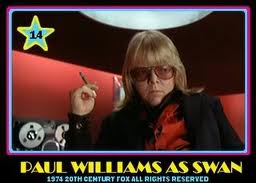
pwI learned of this song because the guys in Daft Punk said it was one of their favorite songs.  I don’t know all that much about Paul Williams except for a few things:

He wrote a bunch of songs that you don’t know he wrote, like: “Rainbow Connection,” “Rainy Days and Mondays,” “We’ve Only Just Begun,” and “An Old Fashioned Love Song.”  And, back in the 80s a random customer at the grocery store that I worked at said I looked like him (which I did not consider a complement).  I have since been told I look like Philip Seymour Hoffman, so I’ve got that going for me.

So this song starts with a rather dark and dramatic guitar riff.  When Williams starts singing, the lyrics are really dark and mean:

Winter comes and the winds blew colder
While some grew wiser, you just grew older
And you never listened anyway,
And that’s the hell of it.

But then the bridge comes in and it’s bright and uplifting (with chipper backing vocals and bouncy pianos). Although the lyrics remain dark dark dark:

Good for nothing, bad in bed
Nobody likes you and you’re better off dead
Goodbye, we’ve all come to say goodbye (goodbye)
Goodbye (goodbye)
Born defeated, died in vain
Super-destructive, you were hooked on pain
Though your music lingers on
All of us are glad you’re gone.

And then there’s another very short section section that is even more musically uplifting.  And yet the lyrics: are the most ruthless:

If I could live my life half as worthlessly as you
I’m convinced that I’d wind up burning too.

The music returns to that sinister guitar riff and the verses continue:

Love yourself as you loved no other
Be no man’s fool and be no man’s brother
We’re all born to die alone, you know, that’s the hell of it.

The last minute of the song  is all instrumental with that dark guitar sound underpinning a bright vaudevillian piano.  And since the song was from a  movie, I wonder if the end if all closing credits?

This song was written for the movie Phantom of the Paradise.  I have never heard of the film.  But I see that it was made by Brian DePalma, is a musical, starred Williams and was a mixture of of The Phantom of the Opera, The Picture of Dorian Gray and Faust, with hints of Frankenstein, Psycho and The Cabinet of Dr. Caligari.  Who would have guessed why it flopped (or why it now has a cult following).

Enjoy the strangeness:

[youtubehttp://www.youtube.com/watch?v=xuYdFYltUr0&feature=player_embedded#!]

[READ:June 17, 2013] “After Black Rock”

Joyce Carol Oates has the final True Crimes story in this weeks New Yorker.  And her story is quite different from the others.  Indeed, it was quite delightful how varied the topics of this special series were.

This piece concerns JCO’s historical family.  Back in 1917, her mother’s father was killed in a bar fight (he was Hungarian and prone to violence).  This devastated their family because he was the primary source of income.  Her mother’s mother had nine children.  Most of JCO’s siblings already worked (long hours for little pay, because immigrant kids didn’t go to school and there were no labor laws at the time).

And then came the shocking thing:  JCO’s mother’s mother gave JCO’s mother away.  She was none months old, they couldn’t afford to feed her, so they gave her to newlywed relatives who desperately wanted a child.  They were John and Lena Bush (the Americanized version of Bùs).  She was raised by them–given some school and some farm work and basically treated as their own. (more…)

Read Full Post »

hpl;oveSOUNDTRACK: PINKISH BLACK-“Razed to the Ground” (2013).

pinkishblackAfter playing No Age, Lars Gottrich came in to show what real heaviness is with a new song from Pinkish Black.  Unlike most of Lars’ songs, this was neither death- nor speed- metal.  Rather it has a very 80s goth sound.  But it’s more Birthday Party than Sisters of Mercy.

There’s no guitars, just loud drums (with a lot of cymbals), a pulsing bass keyboard riff and some spacey high keyboard notes thrown along the top of the song.  There are elements that I liked about the story.  However, the synths in the solo give it a very cheesy horror movie feel and I have to admit that although I like a lot of bands from the era, this feels like a pale imitation.

[READ: June 20, 2013] “The Call of Cthulhu” and “The Whisperer in Darkness”

Both of these stories appeared in Michel Houellebecq’s H.P. Lovecraft book, but I wanted to treat them separately for ease of searching and discovery.

After my long history with Lovecraft and after reading Houellebecq’s book, I anticipated being blown away by these stories.  And so, with my expectations so high, I was naturally disappointed.  I was especially disappointed with how normal these stories seemed.  Houellebecq made me think the stories were practically non-narrative in form—that they eschewed all manner of conventional storytelling.  That his writing was so weird that no one would publish it.  But in these two stories everything seems completely normal.  Psychologically these stories are different, but aside from content, they are fairly conventional stories.

Maybe they aren’t mind blowing because they were written nearly 100 years ago and the entire world has changed drastically since then.  It may also be because I have read all of the derivatives of Lovecraft enough that there’s nothing new in his work.  And it may also be that in the past 80 years, we have thought of things that are much scarier than these, in part because of Lovecraft himself.  Or maybe I would have been into them a lot more had I read them when I was a teenager.

“The Call of Cthulhu.” (more…)

Read Full Post »

CV1_TNY_06_10_13Schossow.inddSOUNDTRACK: NEKO CASE-“Man” (2013).

neko-case-the-worse-things-getIt was Neko Case who got me out of my NPR summer music doldrums. From her new,  wonderfully titled album The Worse Things Get, The Harder I Fight, The Harder I Fight, The More I Love You, comes this fast, rocking track.

It has everything that Neko does great—fast, clever lyrics over a simple but propulsive beat.  There’s a cool, unexpected guitar squiggle at the end of each verse that just makes the song seem that much faster.  But it is just an uptempo stomper from the great Case.

The song slows down in the middle with just a bass and drums and then as Case starts singing about her manliness, a harpsichord plays over the back giving it a nicely pompous air.  Which is quickly deflated by the buzzy guitar solo.  The song is clever and pointed and very well done.

The only thing missing is a great Neko Case wail, but the song (and the lyrics) are too fast for her to hold any notes for too long.  I’m really excited about this new album from her,.

[READ: June 18, 2013] “Scenes of the Crime”

The New Yorker doesn’t often tell you when something is an excerpt, but this time they tell us right up front.  This is an excerpt from an upcoming Ridley Scott film written by McCarthy called The Counselor.

Although I am told that I would love McCarthy, I have never read him with any seriousness.  And from what I have heard of his writing I don’t think I would like him.  This excerpt is more or less a useless attempt to try and get any sense for McCarthy as a writer.

There is no dialogue.  Rather, it is just a series of scenes–shot after shot, establishing the action of the movie.

I have no idea if there is dialogue in the movie or not.  I would be really impressed if there was no dialogue during these scenes and this whole sequence took twenty some minutes–with no dialogue at all.  That would be pretty cool. (more…)

Read Full Post »

speakSOUNDTRACK: STONE GOSSARD-“I Need Something Different” (2013).

stonegossardmoonlanderStone Gossard is the rhythm guitarist for Pearl jam.  He’s also one of their major songwriters.  He has one or two songs that he sings with the band.  This is a solo effort which indicates that he might be a heavier influence on the band.

Stone Gossard last released a solo album 12 years ago.  There’s a new Pearl Jam album in progress and Stone’s other band Brad put out an album not too long ago, so why not release a solo album?

I don’t know how much Gossard does on this song, but I rather imagine he plays everything (the solo is fine but not amazing and the drums are solid but don’t really standout).  And while that sounds dismissive, it’s not meant to be.  Gossard creates a solid sound of simple rock.

The guitars are loud and bouncy.  Stone’s voice is rough and workmanlike—there’s a reason he’s not a lead singer.  But his voice works great for this aggressive slice of rock.

The riff is continuous and non stop, while he sings I need something different.  And then at the mid way part the keyboards start—perhaps this is the something different.  The keys break the propulsion with a poppiness that you wouldn’t expect in the song.

Then the song returns to its original style.  It’s not a terribly original song, but it would be a fun bar anthem.

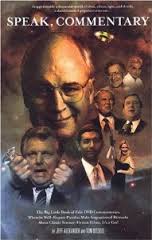
[READ: June 10, 2013] Speak, Commentary

When this book first came out I was pretty delighted.  What a funny concept—overblown writers and political pundits do DVD commentary about films they had nothing to do with.  It seemed like it would be very funny indeed.

And here’s the thing.  It is. For a few pages. But each one of these things feels as long as the actual movie they are commenting on.  Alexander and Bissell have done their research—they know what these figures will say.  And say.  And say.

As I said the premise is awesome, check out these wonderful combinations:

  • NOAM CHOMSKY & HOWARD ZINN on The Fellowship of the Ring
    ANN COULTER & DINESH D’SOUZA on Aliens
  • TERRY DWIBBLE & STEVEN McCRAY on Start Trek II: The Wrath of Khan
  • JERRY FALWELL & PAT ROBERTSON on Planet of the Apes (1968)
    WILLIAM BENNETT & DICK CHENEY on Star Wars Episode I: The Phantom Menace

[Terry Dwibble & Steven McCray are (presumably) fictional characters—die hard Trekkies who are thrilled to be able to add this commentary and, frankly, this is the best one of these pieces.]

I think part of the problem with the book is the sequencing.  The first piece is incredibly dry.  I recall reading this when I first got it.  I don’t know if I read all the way through Chomsky and Zinn.  And I know I didn’t make it through all of the second one (Coulter and D’Souza)—my d0g eared page failure still lingers to this day.

But I finished this time. (more…)

Read Full Post »

[LISTENED TO: June 7, 2013] Hard Magichardmagic

My sister-in-law Karen raved about this book and then gave it to me for Christmas.  And holy cow.  I.  LOVED.  IT.

And before I even get into the story I have to say that a major reason why I loved it is because of the reader–Bronson Pinchot.  Yes, Balki from Perfect Strangers.  Yes, that goofy “foreigner” from the show has an utterly mesmerizing speaking voice.  It is amazingly deep–when he first started speaking the menacing drawl of Jake Sullivan, I was blown away.  And then he pulled out a couple dozen more characters, women and men–German, Japanese, Okies, military men, New Yorkers.  He brought this story to absolutely real life.

I have made a point of looking for anything else that he reads (although I see that he mostly reads books about war (which is not my thing))–but I see a Flannery O’Connor in there and–YES–he reads book two of the Grimnoir series (called Spellbound) and it’s already out!

Okay enough about Pinchot.  No, not enough.  He was stellar!

Okay, now enough.  What’s the story about?  Well, the best thing is that the story itself is also amazing.  It is set in the 1930s, in an alternate reality Untied States.  And in this reality, random people have been gifted with magic.  And there’s all kinds of magic–fades (people who can walk through walls); torches (people who can make and stop fires), mouths (people who can put thoughts in your head); brutes (people who are crazy strong and who can actually bend gravity to their will) and movers (people who can jump from place to place).  There’s also healers and cursers and cogs–really smart people–and other with more mysterious powers.

Each chapter opens with a quote from a real (in our world) person talking about how the magic or the people with magic–the Actives–impacted society.  So Einstein was a cog, and military leaders used brutes to fight in wars, etc. (more…)

Read Full Post »

makegoodartSOUNDTRACK: AMANDA PALMER: The Art of Asking (TED Talk, February 2013).

palmerAmanda Palmer is Neil Gaiman’s wife.  She was the singer in The Dresden Dolls and has a solo career.  I actually don’t know that much about her music.

But I linked to this TED speech after reading Gaiman’s book.

In this talk, Palmer talks about asking for things and how it’s hard to ask, to beg., but how it makes for a real connection, especially between musicians and fans.

And she talks about crowdfunding–she’s going to give away all of her music but she’s asking for help from fans along the way.

It’s a pretty inspirational talk–how asking for things helps you connect with people.  It also made me feel a lot better about Palmer, who I’d heard negative things about.

Check it out here.

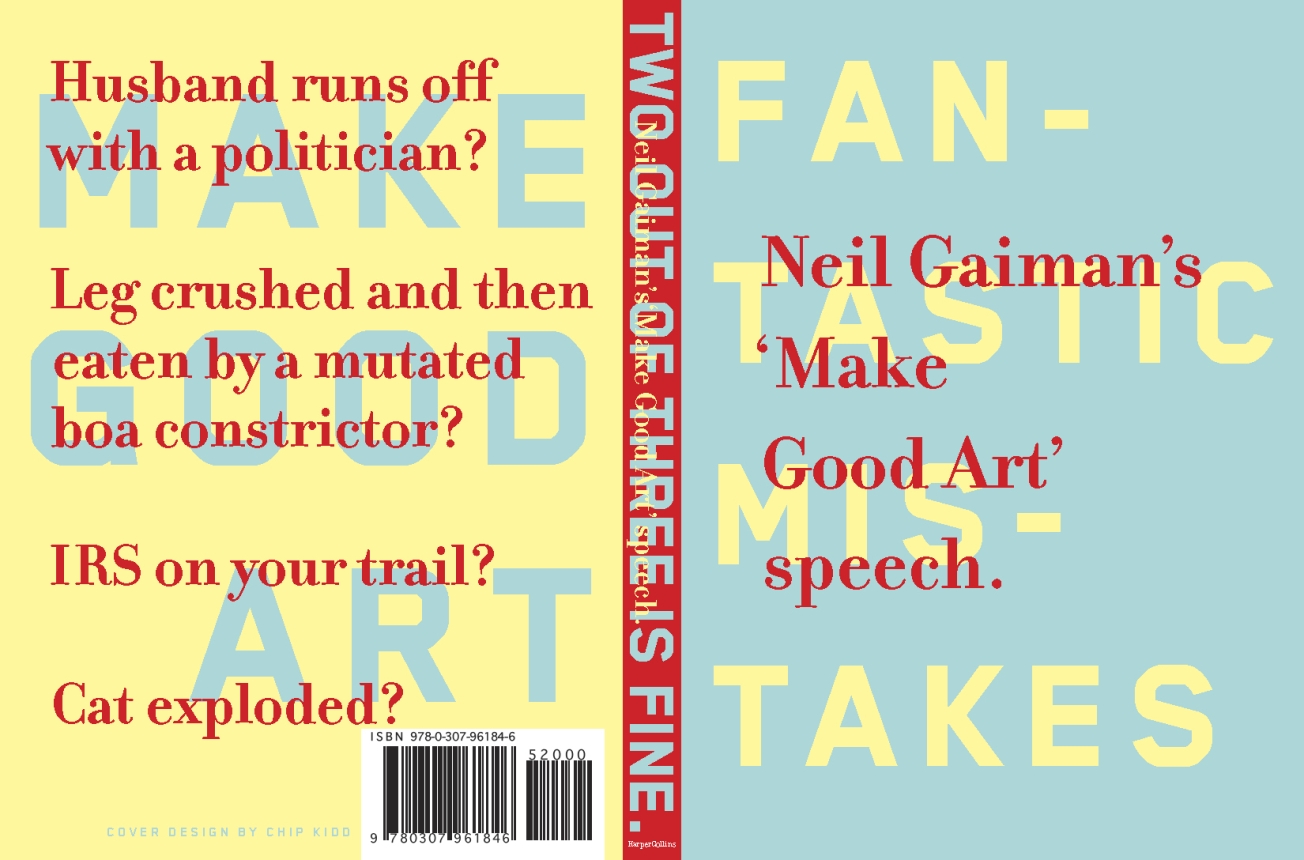
[READ: June 5, 2013] Make Good Art

As with David Foster Wallace’s This is Water, this book is a short speech padded out to 80 some pages. The difference is that while This is Water is a rather boring-looking book, this title was designed by Chip Kidd, fabulous designer extraordinaire.  So every page looks interesting.  It’s not so much illustration as design—with shapes and text twirling and twisting upside down and what have you.

As with most inspirational works, this book is indeed inspirational.  But it is especially so if you are an artist or an aspiring artist.  Because this speech was given to the graduating class of Philadelphia’s University of the Arts in May 2012.  You can watch the whole speech here as well.  http://vimeo.com/42372767

Gaiman explains how he never went to college and never even really had a career, he just had a list of  things that he wanted to do: write an adult novel, a children’s novel, a comic, a movie record an audiobook, write an episode of Doctor Who.  And how he set about achieving these things is pretty great.

So some advice from Gaiman:

1. It’s better not to know the rules so that you’re not afraid to go beyond them.  If you don’t know something is impossible, it’s easier to do. (more…)

Read Full Post »

220px-The_Invention_of_Morel_1940_Dust_JacketSOUNDTRACK: RODRIGUEZ-“Sugar Man” (1971).

RodriguezcoldfactThis song was played a lot on WXPN, and when I first heard it I couldn’t imagine what new artist was talking about “sweet Mary Jane.”  So it turned out that this song was over 40 years old but it had been resurrected for a movie called Searching for Sugar Man, which is a documentary about Sixto Rodriguez and how he released two albums and then disappeared.

There’s something extremely catchy about this song–the loud down strums that stand out over the quieter strumming, the crazy high frequency sound that sails throughout the song and that hint of horns that gives more depth to this simple folk song.   All of these elements make this song more complex than it might have been.  In fact, the song seems like it’s going to end after about two minutes but there’s the instrumental section full of crazy sounds and electronics.

And even though it seems over after that there’s one more verse and chorus to go.  And then the song just drifts away echoing into nothingness.  It’s quite a catchy little number.

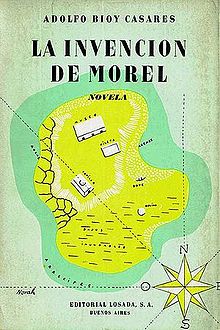
[READ: June 4, 2013] The Invention of Morel and Other Stories

Roberto Bolaño recommended this main story (the other ones as well, I assume).  He’s a big fan of Bioy Casaraes.  But also, Jorge Luis Borges has a prologue to the story in which he states of “The Invention of Morel”

“I have discussed with the author the details of his plot.  I have reread it.  To classify it as perfect is neither an imprecision nor a hyperbole.”

Holy crap.

I can’t say exactly that it I perfect although it is quite fine.  It deals with all kinds of interesting issues and is inspired by (maybe that’s not exactly the right word) The Island of Dr Moreau.  The funny thing is that Morel is neither the main character, nor even a major character for half the book.

The story starts on an island with the narrator writing this book down to leave a  record of “the adverse miracle.”   We learn that the narrator is a fugitive and he was told by an Italian rug seller in Calcutta that the only possible place for a fugitive like him is an uninhabited island.  And on this particular island in 1924 a group of white men built a museum, a chapel and a swimming pool.  But no one dares to go there—not Chinese pirates, not even the Rockefeller Institute because there is a fatal disease located on the island—anyone who has visited there has been found later dessicated. (more…)

Read Full Post »

200px-FatesWorseThanDeathSOUNDTRACK: THE STATLER BROTHERS-“Flowers on the Wall” (1965).

flowersonthe Vonnegut mentions this Statler Brothers song in Palm Sunday as well.  I know this from Pulp Fiction–a song that I found very amusing and never would have guessed was a classic country song.  Country music was very different in 1965 than it is now.  I don’t even know if there was a folk or bluegrass category back then, and this song, with its banjo and bouncey acoustic guitar is a great example of the kind of country music I like.  And those harmonies!

This song certainly seems to be about insanity–about a man counting flowers on the wall, playing solitaire with a deck of 51 cards, smoking cigarettes and watching Captain KAN Kangaroo.  Don’t tell him he’s nothing to do.  What a weird little song.  And man is it catchy.  No wonder it was a #1 hit.

[READ: May 31, 2013] Fates Worse Than Death

After reading Palm Sunday I learned that Fates Worse Than Death was a kind of autobiographical sequel to that non fiction book.  I also learned that the two essays that make up Nothing is Lost Save Honor which is impossible to find (and for which I can’t even find a cover) are available in FwtD.  However, since there is no real contents or index, you do have to read the whole thing to find out which chapters contain the essays.  Or you can just look here and see that “The Worst Addiction of Them All” (which was published in The Nation) is in Chapter XIV and “Fates Worse Than Death” appears in Chapter XV.

The last time I read a bunch of Vonnegut together I got a bit burnt out on him and the same thing happened here.  The problem with Vonnegut’s nonfiction is that he tends to repeat himself.  A lot.  And while this book is ostensibly about the 1980s, he talks an awful lot about his family and his friends from the war and his other literary acquaintances., like he did in Palm Sunday.  In a number of places, he says that he doesn’t like to read himself in English, and it would seem that he doesn’t proofread to see if he said something already either.

This is not to say that the book is not worth reading.  Indeed, if you read Palm Sunday in the 80s and then this one in the 90s, you might not remember all of the details that pop up again, but when you read them days apart…well. (more…)

Read Full Post »

PalmSundayFrontandBackSOUNDTRACK: THE STATLER BROTHERS-“Class of ’57” (1972).

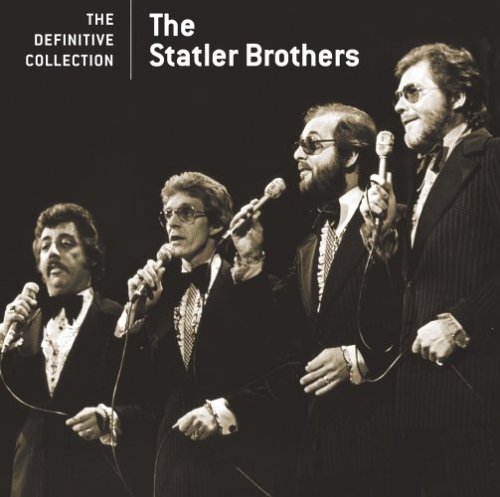
stalerI don’t know much about The Statler Brothers.  They are considered country, although this song is hardly country–it’s more folk with some bluegrass and, the real selling point–great harmonies (especially the bass singer with the big mustache).

The song is a wonderful coming of age song, sad and funny with a list of what happened to everyone in the class of ’57.  Like:

Betty runs a trailer park, Jan sells Tupperware,
Randy’s on an insane ward, Mary’s on welfare.
Charlie took a job with Ford, Joe took Freddie’s wife,
Charlotte took a millionaire, and Freddie took his life.

John is big in cattle, Ray is deep in debt,
Where Mavis finally wound up is anybody’s bet.

But the kicker comes at the chorus:

And the class of ’57 had its dreams,
Oh, we all thought we’d change the world with our great words and deeds.
Or maybe we just thought the world would change to fit our needs,
The class of ’57 had its dreams.

And then at the end:

And the class of ’57 had its dreams,
But living life from day to day is never like it seems.
Things get complicated when you get past eighteen,
But the class of ’57 had its dreams.

Vonnegut quotes the entirety of this song in the book and I’m glad he did, it’s a very moving song and really captures American life.

[READ: May 26, 2013] Palm Sunday

After writing several successful novels, Vonnegut paused to collect his thoughts.  And Palm Sunday begins: “This is a very great book by an American genius.”  It is also a “marvelous new literary form which combines the tidal power of a major novel with the bone-rattling immediacy of front-line journalism.”  After all the self praise, he decides that this collage–a collection of essays and speeches as well as a short story and a play which is all tied together with new pieces (in TV they would call this a clip show)–this new idea of a book should have a new name and he chooses: blivit (during his adolescence, this word was defined as “two pounds of shit in a one-pound bag.”  He proposes that all books combining facts and fiction be called blivits (which would even lead to a new category on the best seller list).  Until then, this great book should go on both lists.

This book is a collection of all manner of speeches and essays, but they are not arranged chronologically.  rather they are given a kind of narrative context.  What’s nice is that the table of contents lists what each of the items in the book is (or more specifically, what each small piece is when gathered under a certain topic).

Chapter 1 is The First Amendment in which he talks about Slaughterhouse Five being burned and how outraged he was by that–especially since the people so anxious to burn it hadn’t even read it (and the only “bad” thing is the word motherfucker).  The first speeches included are “Dear Mr. McCarthy” to the head of the school board where his books were burned and “Un-American Nonsense” an essay for the New York Times about his book being banned in New York State.  The next two are “God’s Law” for an A.C.L.U. fund raiser–it includes his confusion as to why people don’t support the A.C.L.U. which is working for all of our own civil liberties. (more…)

Read Full Post »

5.20SOUNDTRACK: IGGY AND THE STOOGES-“Job” (2013).

iggyNickelodeon’s favorite dad has just released a new album.  In the lead up to this song on NPR, Bob Boilen said that the live show that NPR streamed from Iggy and the Stooges was a matinée and there were kids as  well as adults there.  Who takes a kid to see Iggy Pop? Even if he was on The Adventures of Pete and Pete?

So this song is a dopey punk song and I love the guitars as the song starts–just classic punk sound and riffage. And then Iggy’s unmistakable voice “I gotta job…but it don’t pay shit.  I gotta job… and I’m sick of it.”  Is there any sentiment less authentic than Iggy Pop singing this?  Probably not.  And yet it’s a fun song for any working class guy to sing along to

And it’s frankly amazing that Iggy and the Stooges are still putting records out.

[READ: May 16, 2013] “Just Drive”

The five brief pieces in this week’s New Yorker are labeled as “Imagined Inventions.”  And in each one, the author is tasked with inventing something.

Shteyngart’s is clearly the most practical and is based on something the he knows already exists. He explains that he is unabashedly a terrible driver: “My greatest failure in life has been my inability to drive a car safely between two locations.”  This is despite the fact that he has always loved cars.  Right from the day that his father bought their first car and he saved up to buy a similar matchbox car (more similar when they painted it the same color), he has loved t he freedom that cars represented.  And I loved the idea that he and his family felt that although America was a large country, the road atlas made it seem like you could drive anywhere.

But Shteyngart’s driving problem seem to be more fundamental—an inability to tell left from right (the way his father tried to teach him is quite funny… if misguided).  And now that Shteyngart lives in the country, he needs to drive more than ever. (more…)

Read Full Post »

« Newer Posts - Older Posts »