Feeds:
Posts
Comments

Archive for the ‘Fantasy’ Category

SOUNDTRACK: DAN ZANES-“Wonderwheel” (2002).
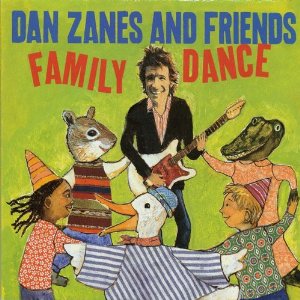
This track comes from Zanes’ Family Dance album and from the For The Kids compilation.

Dan Zanes is a wonderful troubadour of kid’s folk rock.  The funny thing about many of his songs, like this one, is that it’s not really a kid’s song–there’s nothing about the lyrics that says “only children will like this.”  It’s just a generally happy song that is safe for all ages.

The song opens with a simple accordion melody and is about riding a wonderwheel (I’m not sure what that is actually–a ferris wheel?).  The melody is great and there’s a nice female vocal harmony.  The song reminds me of a poppier, happier version of a Richard and Linda Thompson song.  It feels olde, like a classic song that people have been singing forever, and yet it’s brand new.

Dan Zanes is going to be playing a show around here in February and I’m pretty excited to go.  He’s one’s of my favorite kid’s music makers.  His songs are clever and catchy and never pander to the lowest common denominator.

[READ: November and December 2011 and January 2012] The Secrets of Droon, Books 1-12

Every night, my wife and I read picture books to my kids before bed.  Once in a while I would read chapter books to my son (they’re usually a little too much for my daughter to focus on). Clark is 6, Tabitha is 4.
We had been reading The Magic Tree House (which both kids love) and then I hit upon The Secrets of Droon.  I knew of the series from the library, but I didn’t know a thing about it.  I thought that Clark might read it himself, but he asked me to read that first book to him (it may indeed be too much for him to be able to read and fully enjoy).  I’m glad he did, because it has begun a special evening ritual for us.
We try to read three or four chapters of a Droon book a night.  And he really follows along well.  There are times when he guesses what will happen, and he certainly remembers more about what happened than I do.  Sure there are a few things he doesn’t quite get–some of the books in the teens are, if not intense, then certainly mind-boggling: I don’t think a 6-year-old can really grasp time travel or the apparition of a character who has disappeared, but he certainly likes the good vs evil story and he thinks that Neal, the comic relief, is really funny.

We started with Book 2 (Book 1 wasn’t at the library), and continued through Book 6 before going back and reading #1.  He thought #1 would be boring because we’d gotten so far beyond that already, but even that book was good–and filled in a few questions that I had.

There are 36 books in the series (as well as 6 Special Edition books (we haven’t read any of those yet so I don’t know what that means)).

The first twelve books form a kind of arc.  I suppose it’s official as an arc (at least it seems to be in all of the official info about the series), because a problem runs through all the books and is then solved.  However, there’s no real mention of it as an arc in the books, the kids “finish” that task, but simply continue to go back for a new adventure in Book 13.

So, just what is this series about? (more…)

Read Full Post »

SOUNDTRACK: THE DIVINE COMEDY-BANG goes the Knighthood (2010).

I’ve really enjoyed The Divine Comedy since their earliest Michael Nymanesque music.  I loved the orchestral pop that Neil Hannon seemed to effortlessly create.  His last few records have been less exciting to me.  He has toned down the orchestration and made his songs more subtle.  They’re still beautiful but they’re not always as immediately arresting.  I thought that was true of this album as well, although I found that when I sat down and really listen to the music and words together (what a novel idea) the music played so well with the lyrics that the album overall is easily one of his best.  Although I still prefer the pomp and full orchestration of the earlier music, this newer stuff is very interesting. An artist has got to grow, right?

The new sound is more Tin Pan Alley.  It’s piano with guitars and occasional horns–very limited strings are present at all.  And, as any fan knows, Neil writes wonderful songs about love, and the songs on here are some more great love songs.  The non-love songs span the gamut of ideas–from emotionally wrenching to downright silly.  Neil is definitely a “get to know him” kind of songwriter.  And it’s rewarding when you do.

“Down in the Street Below” is a piano based song that morphs into a jaunty little number after some quiet verses.  It features yet another of his great melodies.  “The Complete Banker” is a jaunty piano song that mercilessly mocks the banking industry.  Not terribly original but certainly fun and lyrically it’s quite clever.  “Neapolitan Girl” is a faster song (reminds me of a Broadway musical or movie instrumental) which is (as they all are) very fun to sing along to).  “Bang Goes the Knighthood” is a musical hall song that is really quite funny despite the somber sound of the music (it’s about a knighted man who indulges in certain proclivities that might cost him what he has).

“The Indie Disco” is the exact opposite, it’s bouncy and shuffly and yet understated as only an indie disco can be (this may be the softest, least excited “yea!” in any song ever.  Name checking Morrissey may not be original but it would be a less real picture without him.  The songs he mentions are kind of dated, but are probably pretty accurate to what gets played in an indie disco these days.  “Have You Ever Been in Love” could be used in any rom-com film montage.  Although maybe it’s too obvious?  Sweetly filled with strings (yes strings).

“Assume the Perpendicular” is a slightly faster song, as befits lyrics, “I can’t abide a horizontal life while “The Lost Art of Conversation” is another bouncy tune with a whistle for an ending!

“Island Life” is one of the first duets I can think of from the Divine Comedy–it sounds like something out of the movie Brazil.  “When a Man Cries” is an emotionally wrenching song.  It seems somewhat out of place for Hannon’s usual topic, but it’s quite beautiful.  The silly fun of “Can You Stand Up on One Leg” is the perfect antidote.  Each verse provides something that’s harder to do than you think.  The final verse offers, “can you hold a singing note for a stupidly long time…. Let’s see how long you can hoooooooooo….oooold on to a note.” For the record, Neil’s note is 29 seconds long….stupidly long!  Is that really him holding that high note for 29 seconds?

The final song “I Like” is a wonderful poppy ditty, in which the full band rocks out (more or less) to another great melody.  It’s a perfect love song (even modernized to include a kind of rhyme with sexy and texting).

Initially I was a little disappointed by this disc, but it really proved to be fantastic.  More, Neil, more!

[READ: December 28, 2011] Is Everyone Hanging Out Without Me?

Is Mindy Kaling a big enough celebrity to write a book (memoir or otherwise?).  To use her own in-book comparison, she’s nowhere near Tina Fey’s level of fame, right? (although I actually think she is funnier).  I mean, she’s a minor character on a popular show.  True, she’s also a writer and producer, but that’s not going to lead you to fame or anything.  The more I read about her in the book, the more I wondered exactly who would know her aside from fans of The Office.

None of that is to say that Kaling isn’t awesome.  She is.  She’s funny and talented and I am thrilled she wrote a book–sometimes within an ensemble your individual voice will get lost.  But I have to wonder how much name recognition she has.  And the book doesn’t do a lot to dispel this sense for me.  I mean, she tells about everything she’s done, and really all she had done was write Matt & Ben (which sounds awesome and which I remember hearing about back in the day) and work (a lot) for The Office.  Not minor accomplishments by any stretch, but not a fame-inducing resume.  Nevertheless, good for her that someone was interested in letting her write a book.  And good for us who read it.  If you are amused by the use of the subtitle of the book (which I am) you will like enjoy the humor here.

I had read some excerpts from the book so I assumed it was all funny essays and whatnot, but it’s not.  It’s actually a memoir with funny essays mixed in.   Of course, Mindy’s life before Matt & Ben isn’t really very “interesting” (the book is very funny during this time of her life, even if she really didn’t do much more than babysit for rich folks and watch Comedy Central).

In the Introduction, Mindy provides a FAQ about the book.  One of the questions is if she is going to offer advice and she says yes.  And here’s the thing, Mindy’s advice is outstanding.  She offers advice about many topics and I don’t think I disagreed with her about anything (except maybe pea coats).  She’s like the voice of reason in a world gone mad and an excellent role model for anyone. (more…)

Read Full Post »

SOUNDTRACK: MATES OF STATE-“Palomino” (2011).

I don’t know Mates of State, although I have heard about them a lot.  This is their new song and it is immediately infectious.  It starts out with a falsettoed “Whoo oo oo ooo oo oo” that is immediate and catchy as heck. 

I just read about them on the NPR page and it makes me want to like them even more:

Kori Gardner and Jason Hammel speak a shared language in Mates of State, the effervescent pop band they share as a married couple with children. Alternately sung and chanted, often in unison, their words represent the sound of infectious joy — the irony-free expression of a love that’s as true as it is hard-won.

Sometimes a good pop song can really make you day.  Even if you’re more into noise rock or heavy metal a pop song that’s neither cloying nor stupid just warms your heart. And this one sure does that. 

Looks like it’s time to check out their past releases.

[READ: November 10, 2011] Artemis Fowl: The Atlantis Complex

For some reason, it took me a long time to start reading this book.  I just recently learned that there will be only one more book in the series.  For some reason even if I like a series, I’m happy to see it come to a conclusion even if, as in this case, I don’t feel that the series has run its course yet.  But the strangest thing about this book is that the cover is completely different from the rest of the series.  I find this bizarre for a couple of reasons.  If you have established a cover style for a series of books, why suddenly change it in the 7th book?  And even weirder, if there is only one more book in the series, why change it now?  When it came out, I didn’t even realize it was an Artemis Fowl book.  Very strange.

The only reason I can imagine is because in the book Artemis himself is a very different person (but really, that’s pushing it, designwise).  For in this book, Artemis has contracted the deadly Atlantis Complex.  Essentially, since he has been feeling guilty for his past transgressions and because he has ingested a lot of magic, his system is trying to cope.  And it manifests in the Atlantis Complex. 

The Atlantis Complex begins with a sense of paranoia and crazy compulsions (in Artemis’ case, he trusts no one, not even his family, and he suddenly gets obsessive about numbers–5 is good, 4 is death).  And for Artemis, who is usually a steady, logical thinker, not only is superstition very noticeable (all of his sentences have words in multiples of 5), it is quite dangerous. (more…)

Read Full Post »

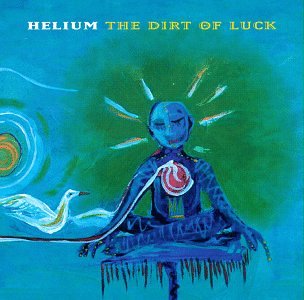
SOUNDTRACK: HELIUM-The Dirt of Luck (1995).

Mary Timony fronted Helium for a few years.  In that time she was recognized as something of a guitar wizard–not in her speed and flash, but in the weird sounds she conjured from the instrument.

She also had very peculiar musical sensibilities (these songs are quite odd) and a cool feminist attitude.  This album features the amazing song “Superball” (one of the best songs of the mid 90s–check out the video and watch the guitarist playing the strings with a screwdriver!  Man I miss the 90s) as well as a number of unpolished gems like “Medusa” and “Pat’s Trick” (the dual vocals are very cool and the dispassionate “oh oh oh” is very interesting, plus I love the lyric about “long-ass curly hair”).

Her singing style is often quite slacker-y, like in the opening of “Medusa”–she’s not always audible, and she often seems like a kind of buzzy sound more than a voice.   She sounds like she’s singing from very far away–seemingly powerful and yet quiet at the same time.

But combine that with the cool scratchy/noisy guitar sounds she gets and she’s pulling off a very cool combination (think Dino Jr without the hooks and killer solos).

Like “Baby’s Going Underground” features some crazy shoegazer guitar washes for most of its 6 minutes which really changes the pacing of the record.  There’s also the great “Skeleton,” a riff so cool that Sonic Youth used it for “Sunday.”

She also has a way with haunting melodies as on the piano  instrumental “Comet #9” and on “All the X’s Have Wings” which sounds very medieval. I think of Timony as a guitarist and yet there is there are lots of keyboards on the album too–mystical keyboards that are fascinating and seem out of character with the guitars, but actually work quite well.   But the prettiest song is “Honeycomb.’  It’s a sweet song with a wonderful melody.  It is followed by the ender “Flower of the Apocalypse” a guitar-based instrumental that is mostly feedback but is also surprisingly melodic.

Helium had mild accolades back in the 90s.  They released a couple of albums and then Mary Timony went solo.  It’s nice to have her playing now with Wild Flag.

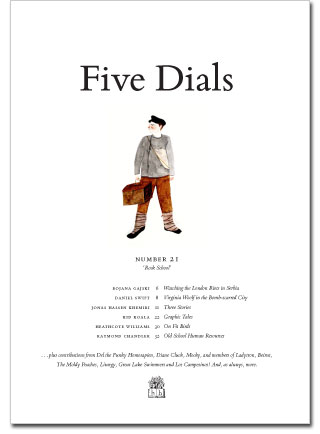
[READ: November 11, 2011] Five Dials Number 21

This is the first issue of Five Dials that I was ready to read when it was sent to me (I’ve been all caught up for a while now).  So that’s pretty exciting!

I was tempted to say that i enjoyed this issue more than other issues, but I have enjoyed most Five Dials issues equally.  But this one is definitely a favorite.

CRAIG TAYLOR–A Letter from the Editor: On Turning 21 and Thinking About Rock Stars and Greece.
The magazine introduction jokes about them now being legal to drink in the U.S. and also about now being old enough to run for M.P. in England.  He also tells us about their “new” section Our Town, which has vastly expanded in this issue.  He also explains that there are many rock stars on hand to give the magazine tutelage (authors that the rock stars enjoy) and three short stories.  He ends with a notice that they have gone to Greece where they are gathering material for Issue 22. (more…)

Read Full Post »

SOUNDTRACK: SEMISONIC-Pleasure EP (1995).

The Pleasure EP is an even more alterna version of what we’d get on The Great Divide.  Divide duplicates some songs from this earlier EP, and you can see them all polished up on the full length.

“The Prize” which has a great squeaky solo on Divide is even more raw and noisy here.  And “Brand New Baby” which was dumped near the end of Divide shines here in its more raw version (again, not really raw, just a little raw).

“In the Veins” has some fuzzy guitars (which show the band’s origins) and a bit of a punk feel.  And “Wishing Well” is more or less a typical ballad except instead of piano or acoustic guitar the music is a distorted electric guitar.  It mixes things up a bit, and while it doesn’t really have the hooks that Semisonic would later develop, it’s got a wicked guitar solo.

“Star” is a nice ballad, but “Sculpture Garden” is a good rocker to (sort of) end the album.

I say sort of because the band included seven 20-second ditties at the end of the disc, which they call “Shuffle Stuff.”  So when you put the disc on shuffle, you’ll get all kinds of funny little bits.  It’s nothing special, but it’s fun.  Kind of like this EP.

[READ: November 9, 2011] “Miracle Polish”

I’ve enjoyed Millhauser’s stories in the past, and I enjoyed this one very much as well.  It was a little obvious (I mean with this set up only one thing can happen) right from the get go but I thought he did a good job in changing my expectations and pointing the story in a slightly different direction.  And even though it was a little predictable, it was still enjoyable.

There was something wonderfully old-fashioned about the story.  It opens with a man walking door-to-door selling bottles out of his satchel.  The narrator feels sorry for him and, although he immediately regrets inviting him in, he decides to buy whatever he is selling and be done with it.  The salesman, painfully slow and meticulous, talks about his “miracle polish” which you just wipe on a mirror and…  The narrator says he’ll take one. 

The salesman is a bit shocked by the brusqueness and tries to get him to buy more than one, but the narrator basically tells him not to push his luck. 

He takes the medicine bottle of Miracle Polish and puts it away, more or less forgetting about it.  A few days later, however, while checking himself in the mirror, he notices a smudge in the corner of the glass.  He grabs the polish and rubs it on the mirror.  The smudged area now looks super clear, so he rubs it on the whole mirror.  And he is blown away. (more…)

Read Full Post »

SOUNDTRACKSUPERCHUNK-Superchunk (1990).

Some time ago, I reviewed all of the Superchunk EPs.  After progresing to their most current music, returning to their first album is a bit of a shock.  Superchunk’s first full length album is incredibly raw, with lots of screaming (two vocalists at once, even) and a very grungy attitude.  It has a DIY aestethic, in keeping with the undeground scene at the time.

The first four songs fly past in a pretty quick blur of adrenaline (the longest is just over 3 minutes).  The fifth song, the aptly named “Slow” slows things down and strecthes things out with a five minute track of slow distorted chords and a long solo.

Of course, the pinnacle comes with the next song “Slack Motherfucker” one of the best grunge anthems of all time. 

The last four tracks speed things up again with the bratty attitude that Superchunk is so good at (see especially “Down the Hall”).  But it’s not all just blistering speed.  The band has some dynamics down and there are a couple of tempo changes as well.

The album is a lot of fun to listen to, especially if you’re lookig for grunge before it became Grunge.  Although there’s very little indication that they would become the indie superstars that they eventually became you can clearly hear proto-Superchunk chunks–Mac’s voice is as it ever was and the noise is present but not overpowering.  There are even hints of melody (although nothing as catchy as later albums).  And yet for all that it sounds like a criticism, the album is really quite solid.

[READ: June 15, 2011] The Hollow Planet

Yes, THAT Scott Thompson, from The Kids in the Hall.  I found out about this comic book from my good friend Jessee Thorne at The Grid.

The backstory is that Scott Thompson had been working on this story for years and years.  He imagined it as a movie (starring him, of course).  When that didn’t pan out, he decided to sell it is a comic book.  And while he was recovering from cancer, he worked on it extensively with Kyle Morton–character likenesses and whatnot.  And now we have a cartoon rendering of Scott Thompson!

This story focuses on Scott’s character Danny Husk…

The book opens with Danny and his wife and kids at a carnival.  After a few moments, Danny’s son gets lost on the merry-go-round.  In the next scene we see just how much his wife is estranged from him (she may even be cheating on him), and how little his daughter thinks of him.  Soon after, Danny goes to work, inserts a disc into his laptop and more or less brings down his company.

So far nothing out of the oridnary for this type of  story–henpecked husband on a quest for revenge that he doesn’t know he wants yet.

Then Danny visits with his old friend Steve.  They talk, they bond over Danny’s concern about his wife.  And Danny feels better.  Until he gets home.  After a scene which I won’t spoil, the story suddenly takes off with a high speed car chase (no kidding) and with Danny entering the titular hollowness of the planet. (more…)

Read Full Post »

SOUNDTRACK: THE DECEMBERISTS-Tiny Desk Concert #135 (June 20, 2011).

NPR has loved the Decemberists for years, so it’s no surprise that they made it to Bob Boilen’s office for a Tiny Desk concert.  And yet they are probably one of the biggest bands to appear at the Tiny Desk, so I was quite excited to hear this show.  They play 3 songs, all from The King is Dead: “Down by the Water” (naturally), “Rox in the Box” and “The June Hymn.”

Colin is in good chatty form (after almost getting hit in the face by a violin bow) and makes a very funny comment about thinking that everyone would be working while they played.  He also—I think a first in Tiny Desk history—screws up a song (“The June Hymn”) and has to restart the whole thing—it’s a very minor flub, only noticeable if you listen a few times, but he noticed and clearly felt bad (and didn’t curse either).

The songs sound great even if they’re not radically different from the recorded version (the harmonica solos are the big “improv” moments).  And this set confirms what a solid bunch of songs The King is Dead is.

[READ: July 7, 2011] Wildwood

I had this book signed by Colin and Carson at BEA.  I was so psyched to see that they were signing there, that I got up super early, took the bus into Manhattan and got to the convention center before it opened (I thought they were signing at 7:30, but it was actually 8:30). Of course, I didn’t see the fine print that said I needed a ticket to meet the author and illustrator.  In fact, I didn’t even realize that people were holding tickets until I was next on line. I asked the nice BEA worker if I could still go.   She said they wouldn’t sign a book, but that I could say hello.

I told Colin and Carson that I loved their stuff and I gushed over them like a little fanboy (even mentioned having a Tarkus album) and they gave me a copy of the book anyway (signed by them both).  How cool!

So this book is an older children’s book (I would say on a level of The Mysterious Benedict Society–which the book reminded me of because Carson did the illustrations for that series as well, although the books are nothing alike in content).

I have always loved Colin’s lyrics (yeah, he signed my book, we’re on a first name basis now). They are fantastical and fantastic, and he has a great vocabulary, pulling out obscure words for rhymes.  There’s a generally accepted tenet in writing that poetry is more powerful than prose because poems are typically honed with perfect word choices, whereas prose tends to be a bit lazier because there’s so many more words to play with (ideally, prose should also be finely honed, but it’s much more noticable in poetry).  And so given this, I guess it’s no surprise that Wildwood is not as impactful as Colin’s songs.  There are couplets from Decemberists songs that run through my head all the time, but there weren’t any great phrases in the book that really stuck with me.  Of course, at 540 pages you wouldn’t expect too many phrases to jump out at you (images and scenes and chracters yes, but phrases, no).

All of this is a long way of saying that I really enjoyed the story, but I wasn’t blown away by the language of the book.

The story follows Prue McKeel, a young girl who is pretty ordinary.  She lives in Portland (the Wildwood of the title is in Oregon, not New Jersey, which isn’t surprising since they’re from Oregon, but a Jersey kid can hope), goes to school and has a pretty happy home life.  Her mom and dad are nice (I love that her parents are suffused with all the trappings of hippie Oregon–it’s like Portlandia in print!) and her baby brother, Mac, is pretty okay too.  The image that will stick with me is of Prue taking her brother for a bike ride: she transports him through the most peculiar (and reckless and dangerous) way I can imagine–she attaches a Radio Flyer wagon to her bike and plops him in the wagon.  I just have to ask–how did he not fall out??

The story immediately announces itself as fantastical when a murder of crows swoops down out of the sky and grabs Mac from the ground and flies away with him.  Now, Prue was supposed to be watching Mac, so although it’s not her fault a bunch of birds grabbed Mac and flew away with him, it is her fault, you know?  So Prue hops on her bike and follows the birds through the city (a very exciting scene of reckless bike riding).  She skids to a halt when she sees them fly into The Impassable Wilderness. (more…)

Read Full Post »

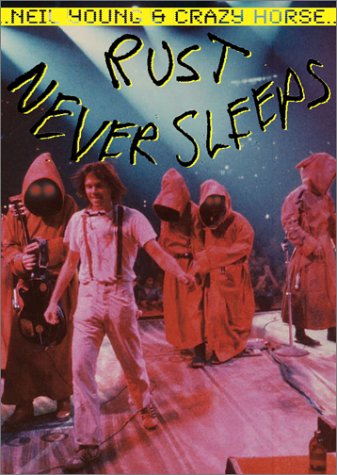
SOUNDTRACK: NEIL YOUNG AND CRAZY HORSE-Rust Never Sleeps (DVD) (1979).

Back in 1979, Neil Young had a huge hit on his hands with “Hey Hey My My” and the album Rust Never Sleeps.  This is a film of that concert (in the Cow Palace, San Francisco).

The set sounds great and the selection of songs is top notch.  On a technical note, some of the darks don’t hold up well and get terribly pixellated, but what do you expect from (what I assume is a) cheapie film from the 70s.

The weird thing about the film (and the concert as well) is the “extras” that he built into the show.  I’m curious what the audiences thought back then, because now, it’s kind of funny, but also more than a little weird.  Throughout the set he has his roadies (who he calls “road eyes”) “setting up” the stage.  The roadies are wearing robes and look an awful lot like the Jawas from Star Wars (which had just come out, so I assume they are meant to look like them).  The stage is a backdrop of oversized amplifiers and the road eyes are scrambling around carrying an oversized microphone and harmonica and other silly things.  The road eyes are having a great time dropping the mic (they even hit Neil in the head with it accidentally).   Another road eye comes out with an oversized tuning fork while the band is tuning.

There’s also some guys in lab coats and another professorial-looking guy who makes an announcement that everyone should put on their rust-o-vision glasses to see the band rust on stage (no idea what happened/how this worked/if there were even glasses, but during the song, they shine a rust colored light on the band).

These moments in the movie are weird.  They certainly break up the flow of the show.  But at the same time, at most concerts, the roadies setting up the show is dull or put behind a curtain so you don’t have to see it.  I think it was cool of Neil to give the audience something to watch during the transition stages (even of they do go on for a while). During all of the roadeye moments, he plays snippets of audio from Woodstock–we hear Hendrix’ “Star Spangled Banner”–and The Beatles (!) (Did they have to pay rights for things like that in 1979?).  We also hear a lot of the announcements from Woodstock (brown acid, no rain! no rain!–strangely, it appears that he has set up the stage to actually rain on the audience.  It’s not filmed very closely so it’s a little unclear, but it does appear that water is actually coming from the ceiling.

As for the arc of the movie (because it is a movie after all), the fist part of the show stars with Neil solo–he wakes up in a sleeping bag and wanders around in overalls singing and playing.   I gather there are wireless microphones attached to his harmonica (!)–I didn’t know they had wireless mics back in 1979).  After he plays a few songs, the roadeyes set up and Crazy Horse comes out (including what to me is an iconic outfit–Frank “Poncho” Sampedro in his Canadiens jersey (#19, Larry Robinson)).

The band bashes through a number of great songs and they all sound great (there’s a few flubbed notes so you know it’s all live but the harmonies are spot on).  It’s odd to me that the band leaves briefly and Neil does one or two more solo songs (none on piano though) before the band comes back again.

The major weird thing about the set is Neil’s almost total lack of interaction with the crowd.  At the end of the show he even seems a bit angry (although he does have a naturally scowly expression), so he doesn’t engage much with anyone.  This seems especially weird given the lightheartedness of the stage show (they lower an organ from the rafters and it has wings on it).  But then again, not everyone has to be nice, right?

The DVD is comprised mostly of songs that appear on the Young’s Live Rust album (confusingly, not the Rust Never Sleeps album) although the album has recordings from different shows.

It’s a strange artifact, definitely an item of the late 70s.  It doesn’t hold up especially well, but you can always fast forward over the slow bits.

[READ: April 11, 2011] “Big Ticket”

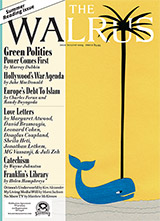
The Walrus has published two Two Act plays over its existence.  This is the second one.  Act one appeared in the magazine but you have to go online to see the end.  Unlike with the previous play, both Acts One and Two are online.

Act One of the play is terribly exciting. It starts out in a weird way with a woman looking to pay a man to abduct and terrify her husband.  The man (a garage mechanic) shows her the “cage” that he’s going to lock her husband in.  And then things start to get all Penthouse-y.  The woman (Annie) starts asking the mechanic (Dave) if he’s ever done anything, you know, naughty, in the cage (she’s obviously an unhappy wife).  Dave does the metaphorical look around the room and then climbs in the cage with her. (more…)

Read Full Post »

SOUNDTRACK: BEST COAST-Live at the 9:30 Club, Washington DC (2010).

Best Coast made Carrie Brownstein’s best album of the year accolades, but when I listened to the track she selected for the post, I wasn’t all that impressed.

But I have to say that live, Best Coast blew me away.  Bethany Cosentino, the lead singer and guitarist has an amazing stage presence.  She is charming and funny and very silly (and I guess she loves cats).  The band sounded tight and impressive and even though the songs are kind of dopey bubblegum pop, they are drenched in enough noise and rock to make them really wonderful

They seem like they should have come around during the 90s, when all those rocking female bands were all over the map.  And so this is like a wonderful blast from the past.  Best Coast is sort of like The Muffs (except they write love songs) and other bands that play really catchy pop but bury it under a layer of fuzz and rock.  This is a great set available on NPR, and will definitely get me to check out their album a little more.

[READ: March 28, 2011] “Seven Love Letters”

Six of the seven letters here were later collected in the book Four Letter Word which I reviewed in September 2009.  When I reviewed the book, I didn’t give very much in the way of detail, I just summarized the letters.  I’m going to copy what I wrote then (since my thoughts didn’t change all that much), and I’m going to include a few more lines about some of the pieces (original stuff is in italics).  I’m also including titles which (for some reason) were not given in the book.

I’m also not sure why Sheila Heti’s story did not appear in the book.  (It’s only 4 paragraphs and is, indeed, a letter so why not include it?)  If you enjoyed the book, think of this story as a Bonus Feature. (more…)

Read Full Post »

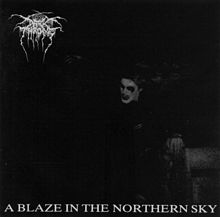
SOUNDTRACK: DARKTHRONE-“Kathaarian Life Code,” (1992), “Sacrificing to the God of Doubt” (2004), “Canadian Metal” (2007).

After watching Until the Light Takes Us, I wanted to check out some of Darkthrone’s music.  According to their Wikipedia page, over the years the band who pioneered black metal has morphed away from the sound.  They’ve added elements of punk and speed metal to their bludgeoning sound.  In the movie Fenriz says that he listens to all kinds of music and is very open-minded.

Kathaarian Life Code” is a ten minute dirge of black metal.  It opens the band’s second album (considered to be a black metal classic) with chanting and guttural spoken words.  Then it blasts forth with the jackhammer style of drums that is now standard in black metal.

It slows down from time to time, allowing for the really heavy parts to blast through the chaos of the fast parts.  It’s pretty intense and not for the faint of heart.  You can hear occasional guitars screaming through the din, but the production is intentionally murky, dark and noisy.  As they say in the movie, the bands intentionally recorded on the shittiest equipment they could find.

Sacrificing to the God of Doubt” is a later song, taken from what is considered their final album in the black metal style.  The band was turning away from the traditional black metal sound, and there are elements of punk (guitar riffs that are audible, and a sound that is less bass heavy) present.  And the production, while still mired by noise is relatively cleaner.

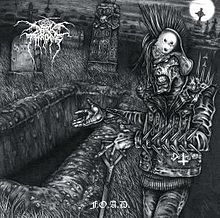
Canadian Metal” is from their third most recent album, after the shift from black metal was more or less official.  It sounds more like an early death metal song.  There’s low tuned notes, audible vocals (growled, but you can actually hear words) and a kind of headbanging aspect to it.  The album is called F.O.A.D. which was a song by Venom (and others, obviously), and this track reminds me of Venom somewhat.  I wouldn’t say that the band has sold out because there’s no way anyone is playing this on the radio, but it’s interesting to see how a band has managed to change things up and add new elements to its sound even though they were the forerunner and grandfather of a scene.

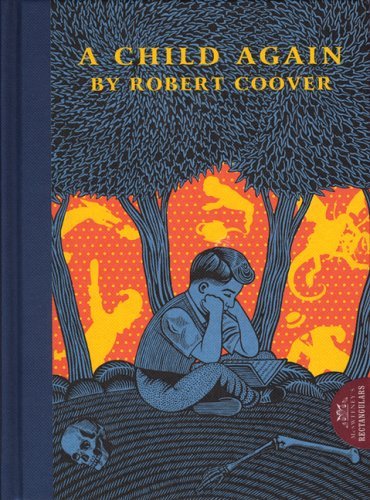
[READ: February and March 2011] A Child Again

This is a collection of short stories from Robert Coover.  There is a kind of theme throughout (most of) the stories about returning to childhood.  But the overall sense is one of despair, sadness, pointlessness and sex.  Lots and lots of sex.  And the sex is usually as vulgar and nasty as the tone of the book suggests it would be.  It’s a little off-putting, actually.

I was planning to say that I didn’t like this collection at all because I really didn’t enjoy the first half-dozen or so stories.  I continued because Coover has a great reputation that I didn’t want to give up after a few misfires.

The real disappointment came because the stories seem so promising: many of them are a kind of retelling of classic fairy tales that looks at “what happened afterward.”  However, and this was true for almost all of them, Coover tries to do two contradictory things with the stories.  He is playing with fairy tales but he is also writing stories that are completely unlike fairy tales.  By that I mean, Coover’s stories are long and very detailed, they bring far too much information to the story.  And a fairy tale is almost by definition short.  I mean, “Puff the Magic Dragon” is a song that’s about five paragraphs long.  But Coover’s “Sir John Paper Returns to Honah-Lee” is 26 pages long.  So instead of playing with the original, it feels like an original story that uses someone else’s characters.  It’s unsettling and unsatisfying.

It’s also not very funny.   And I’m not sure fit’s supposed to be.  But with a title like “Sir John Paper Returns to Honah-Lee” you expect the funny.  And there are funny moments.  I mean the whole premise is that little Jackie Paper has grown up into Sir John Paper.  He’s now an old Knight and he is sent to slay the dragon (Puff) who is plaguing the city.  Even though that is a tragic story, it is also inherently humorous.  And there are laughs when they reunite.  But it gets so bogged down in details, that the essence of the story seems to get lost.  Perhaps I’m just disappointed because it (they) turned out so unlike I wanted them to be. (more…)

Read Full Post »

« Newer Posts - Older Posts »