Feeds:
Posts
Comments

Archive for the ‘Excerpt’ Category

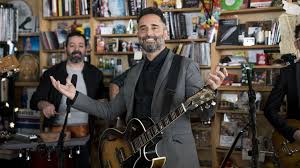
SOUNDTRACK: YISSY GARCÍA & BANDANCHA-Tiny Desk Concert #755 (June 15, 2018).

Yissy García & Bandancha from Cuba give jazz just what it needs–a wicked turntablist (and some amazing drumming from Yissy García herself).

The blurb tells us:

There is a sonic revolution happening in Cuba these days. A new generation of musicians are taking the training they received in Cuba’s fabled classical music academies to new heights by incorporating not just jazz, but hip-hop, funk and any manner of experimental music. Yissy García and Bandancha may be the best example of that vanguard.

I love that the opening song, “Última Noticia” (which runs about 7 and a half minutes) starts with static and a tuning of radio stations (in Spanish).  Then the jazz begins–piano, trumpet, bass, turntables and Yissy’s fast and complex drumming.

The compositions (all by García) are modern and reflect the cosmopolitan attitude that is common in big city life in Cuba. For example,

About 2 and a half minutes in, the song goes from smooth jazz to a really funky riff (with great scratching and a cool catchy trumpet solo (it is still jazz after all).  But it’s a lot of fun to see Yissy, with her Mohawk and somewhat shaves head playing cowbell and the rims of the drums.

After a lengthy piano solo, it’s Yissy’s turn to show off her chops:

“Ultima Noticia” is highlighted by the riffs thrown back and forth between drummer García and the turntablist, DJ Jigüe. The command of time and imagination García displays in her first drum solo of the set is simply astonishing.

It’s followed by “Universo” which features a rap in Spanish.

The rapping on “Universo” reminded me of Cuba in the early 1990s when hip-hop entered the national consciousness as the Soviet Union left the island to fend for itself economically. On this track, it’s a celebration of the universal goodness we all share.

The song is slower, more commercial with a grabbing riff by the trumpet and that smooth rap.  It’s also got a great 1970s sounding keyboard solo (very Stevie Wonder

The band winds up their time behind the desk by going back to Cuba’s African roots for a rumba-soaked jam “Te cogió lo que anda” which has sampled Afro-Cuban drums and rhythms. The complexity of the music meshes lockstep with passionate singing and dancing.

He plays lots of samples on the keyboards, including a repeat of “habla…”  But when the trumpeter sings in his rich voice, the whole song comes together.

[READ: February 2, 2018] “Wow, Fiction Works!

I’ve really enjoyed Colson Whitehead’s works and this essay makes me like him even more.

This is part of a talk given at the Tin House Writers Workshop, the whole thing was called “James Root on How to Read”

He starts by saying that in his writing classes he teaches people how to write but for this lecture he will teach them how to read.

“By returning to the beginning of the sentence to perform close reading, we unlock its essence. I learned this skill at university.”  I imagine the humor was evident more in the reading, but the deadpan is just wonderful.

He speaks of Raymond Carver and a line from Carver that has stick with him for years.  After a lengthy build up, he says: “As Carver put it, channeling the sublime: ‘He lifted the cup.’  This is minimalism at its well-marbled finest.” (more…)

Read Full Post »

SOUNDTRACK: JORJA SMITH-Tiny Desk Concert #753 (June 11, 2018).

I’s never heard of Jorja Smith before.  But the blurb really sets the scene for the R&B that followed.

It’s a good thing the weather was gloomy the day Jorja Smith rolled in for her Tiny Desk concert. Even though the skies threatened rain and thunder, the overcast light lingering in our dimmed office space allowed the teardrop pendant lights, hung from the ceiling by her lighting team, to cast the desk in a warm, honey-hued glow. And while the nimble guitar strings and double-time drums of her supporting band was enough to dizzy the focus in the room, it was the U.K. singer’s slow, silky cadence that anchored the performance in tranquility.

Smith sings three songs.

“On My Mind” starts out wonderfully with slick trippy drum beat (lots of double-time rim shots) and a great funky bassline.  The keys add nice touches on top of the songs.  But when Jorja sings, she sounds just like a soulful British pop singer, which I just don’t like all that much.  There’s some interesting and at the same time cheesy-sounding electric guitar that accents the ends of the verses.   In other words, there’s a lot to like but overall I just don’t.

It is followed by “Teenage Fantasy” (a ballad to love lost written when she was 16).  It’s a lot poppy and less funky.

When she closed her eyes to deliver the rap verse of “Blue Lights,” the anti-injustice song that first positioned her as a SoundCloud darling in 2016, a hush fell over the room in awe of her precision.

She ends with “Blue Lights” a more R&B poppy song.  Again I like the drums but don’t like the R&B keening.

After she finished, but before retreating to the comfort of Supreme sweats, Smith and her band bestowed the Tiny Desk with a blue lava lamp signed by every member. Keep an eye out for that Easter egg in future episodes.

[READ: February 4, 2018] “The Education of Mr. Bumby”

This was a previously unpublished sketch included in a new edition a A Movable Feast, which I’ve never read.

I’m not a huge fan of Hemingway, and this excerpt (even if it is a sketch) didn’t appeal to me much.

This is non-fiction.  The narrator and his son Bumby spent much time in cafes.  I know that Hemingway is known for his brevity so this long sentence was quite surprising.

Touton had a great part in the formative years of Bumby’s life and when there would be too many people at the Closerie des Lilas for us to work well or I thought he needed a change of scene I would wheel him in his carriage or later we would walk to the café on the Place Saint Michel where he would study the people and the busy life of that part of Paris where I did my writing over a café crème. Everyone had their private cafés there where they never invited anyone and would go to work or to read or to receive their mail. They had other cafés where they would meet their mistresses and almost everyone had another café, a neutral café, where they might invite you to meet their mistress and there were regular, convenient, cheap dining places where everyone might eat on neutral ground. It was nothing like the organization of the Montparnasse quarter centered about the Dôme, Rotonde, Select, and later the Coupole or the Dingo bar which you read about in the books of early Paris.  As Bumby grew to be a bigger boy he spoke excellent French and, while he was trained to keep absolutely quiet and only study and observe while I worked, when he saw that I was finished he would confide in me something that he had learned from Touton.

(more…)

Read Full Post »

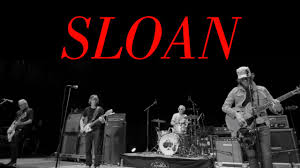
SOUNDTRACK: SLOAN-Live at Massey Hall (September 11, 2015).

Having now seen Sloan twice, it’s nice to compare this earlier show with mine.  And I get  to say that my shows were longer!  Much longer.

This edited for the web version leaves out 11 songs (including the ones which drummer Andrew Scott sings on–so there’s no switching instruments).  Having said that, the band sounds great and the set list is really strong.  I also had no idea that Gregory MacDonald had been touring with them for that long.

Jay Ferguson compares Massey Hall to Carnegie Hall and then regrets comparing something Canadian to something American).  Chris Murphy says “I don’t often use the word “hallowed,” but it is a “hallowed hall.”

He continues, “We are quite loud, we wondered, Do we try to tailor our set for Massey Hall–more like a theater set of songs?  We didn’t do that essentially because we’re incapable:   everybody turn down and then its like a volume war everybody turning up until we’re as loud as ever.”

They start with a great Jay song “You’ve Got a Lot on Your Mind.”  The band sounds great although the dominance of keyboards from Greg is surprising as the first song.

Introducing “The Rest of My Life,” Chris says, “You don’t have to stand but… sing along please.  Of course everyone sings “I know that I’ll be living it in Canada.”  As the song rings out, Chris starts a clap which segues into Patrick singing “Ill Placed Trust.”

Chris says, “We never got giant but we enjoy an audience that has followed us for a long time.  Thank you.”

The start the great guitar riff on the dark “The Other Man.”  There’s lots of sing-alongs in this one, too.

Jay is back with the super catchy “Who Taught You to Live Like That.”  And as the song fades out the siren roars the intro for “Money City Manis.”  Chris notes, “You actually have to stand up for this one.  You have to.”

Patrick and Chris take turns on lead vocals and then during the instrumental break Chris calls a six-year-old girl up on stage who dances, plays the tambourine and knows all the words.  Patrick says, “like I’m gonna be able to solo over that–that’s the solo right there.”  Chris wonders, “When you look at this stage, where does your eye go?”  She is amazingly self-possessed.

They end with the obvious–but a wonderful obviousness with “Underwhelmed.”  They (and the audience) have a ripping time of it.

It’s interesting just how long the band played in reality.  But yes, even after all this time, Sloan is a dynamic live act.  And this is great proof of that.

  1. O Canada
  2. Deeper Than Beauty
  3. If It Feels Good Do It
  4. C’mon C’mon (We’re Gonna Get It Started)
  5. Carried Away
  6. Keep Swinging (Downtown)
  7. Snowsuit Sound
  8. Fading Into Obscurity
  9. Forty-Eight Portraits
  10. Unkind
  11. You’ve Got a Lot on Your Mind
  12. The Rest of My Life
  13. Ill Placed Trust
  14. The Other Man
  15. Who Taught You to Live Like That
  16. Money City Maniacs
  17. encore
  18. People of the Sky
  19. Underwhelmed

[READ: May 10, 2018] “Dinner Party”

This is an excerpt from a novel Kudos.  It being an excerpt does explain some of the sparseness, but it feels like such a unique event that I can’t imagine even who the main character is supposed to be involved with in previous and future pages.

A writer enters a restaurant.  She is at a writing conference and she and the other delegates are to be treated to dinner.  I love this line “The delegates were reluctant to [sit], knowing their fate would thus be settled for the duration of the meal.”

The narrator recognized a woman from an all-female panel discussion who recognized her and instantly came over to talk to her.  The woman introduced herself “with the pragmatic directness of someone who accepts rather than fears the likelihood of such things being forgotten.” (more…)

Read Full Post »

SOUNDTRACK BELA FLECK & ABIGAIL WASHBURN-Tiny Desk Concert #741 (May 11, 2018).

I know and like Bela Fleck.  I know and like Abigail Washburn.  I had no idea they were married.

A very pregnant Abigail Washburn points to Bela Fleck at the Tiny Desk and says “and just so you know, this is his fault.” I won’t spoil the video by telling you his response.

Bela Fleck and Abigail Washburn are two American musical treasures. This husband-and-wife banjo duo write original tunes steeped in the roots of folk music. Their playing is sweetly paced with melodies interweaving through their intricate, percussive picking all while Abigail soars above it all with her discerning, yearning voice.

I also had no idea how political they are.

Their first tune, “Over the Divide,” was written at the height of the Syrian Refugee Crisis. They’d read a story about a Jewish, yodeling, Austrian sheep herder who helped Syrians out of Hungary, through the backroads that likely only sheep herders know.

Lyrical content aside, the music is just stunning.  The banjo is oft-mocked for its twang, but these two play such beautiful intertwining lines, it is just magical.   The opening melody is just jaw-droppingly lovely.

They each switch banjos to rather different-looking ones–deeper more resonating sounds

The second tune, “Bloomin’ Rose,” is a response to Standing Rock and the Dakota pipeline that is seen as a threat to water and ancient burial grounds. The intensity and thoughtfulness in Bela Fleck’s and Abigail Washburn’s music is why it will shine for a good long while, the way great folk tunes stay relevant over the ages.

But Abigail isn’t just banjo and vocals,

For the third tune, Abigail waddled over to a clogging board. And before she began her rhythmic patter, told us all that “my doctor said that what I’m about to do is ok! I have compression belts and tights on that you can’t see.” [Bela: so do I].  They then launched into “Take Me To Harlan,” another one of their songs from their 2017 album Echo In The Valley.

She says that they met at a square dance in Nashville, and she loves dancing and movement.  Bela plays and Abigail sings and taps for this jazzy number.  The middle of the song features a call and response with Bela on banjo and Abigail tapping [“Eight month?  No problem.”].

For the final song, “My Home’s Across the Blue Ridge Mountains,” Abigail says it’s usually done in a perky bluegrass country style but they listened to the lyrics and decided it was not perky at all.  So they turned it into a different thing.  It’s a somber song with Bela on a relatively slow banjo (with a slide that he sneaks on near the end) and Abigail singing mournfully (she can really belt out a tune).

Although as Steve Martin pointed out, with a banjo almost everything is upbeat.

The parties at their house must be a hoot.

[READ: January 21, 2018] “Active Metaphors” and “Death By Icicle”

“Active Metaphors” is one of Saunders’ funniest pieces that I’ve read.  And whats strange about that is that it was an essay published in the Guardian newspaper.

There are two headings: “Realistic Fiction” and “Experimental Fiction”

“Realistic Fiction” begins with the narrator in a biker bar.  He overheard two bikers, Duke and StudAss discussing these two types of fiction. –they’d purchased their “hogs” with royalties from their co-written book Feminine Desire in Jane Austen.  There was some verbal sparring during which they threw Saunders out a window “while asking questions about F. Scott Fitzgerald’s fallen American utopia.”

The narrator explained his theory of realism to them–everything happens the way it actually would and then suggests that maybe a central metaphor would help define things.  There’s an impotent farmer and every time he walks past the field, the corn droops.  An active metaphor like this helps the reader sense the deeper meaning of the story.

As they ride off with him on their hog, the bikers use some great professorial language–the end is hilarious. (more…)

Read Full Post »

SOUNDTRACK: JORGE DREXLER-Tiny Desk Concert #730 (April 13, 2018).

Jorege Drexler’s music is utterly arresting.  He has a kind of a storytelling delivery but with fascinating instrumental accents.

“Movimeinto” opens with so much percussion–the guitarist scratching at the guitar with drummer brushes, the drummer (Borja Barrueta – from Bilbao) and percussionist (Carles “Campi” Campon, Electronic beats, acoustic guitar and from Barcelona and Matías Cella from Argentina) tapping along–the drummer is even tapping a resonator guitar with his sticks.  The drummer also has a vast array of other sounds to make including some little metal hands drums and a small hollow guitar body (no strings).

Drexler sing/speaks hies beautiful poem, he is playing some very simple but arresting chords.  When the song starts in earnest, there is excellent use of electric guitar accents (by Javier Zarember from Argentina) and a fascinating acoustic bass (by Martín Leiton from Barcelona on either leona or guitarrón).  Midway through, he to an electric bass which changes the dynamic quite a bit. By the end of the song everyone is playing everything.

So who is Jorge Drexler?  He is

is a poet with a gift for song. The Uruguayan singer-songwriter, like the iconic Latin American lyricists of the past (Mercedes Sosa, Victor Jara and Silvio Rodriguez, to name just a few), has that rare ability to surround multi-layered prose with music that lends an even deeper resonance to the words.

Drexler has his share of fans here in the U.S., mostly Latin American expats and others whose grasp of the language allows them to appreciate the nuances of his storytelling. But, as if often the case with music performed in languages other than English, audiences here sometimes miss out on an emotional connection with artists they would otherwise celebrate if they only knew what they were singing.

So, we decided to do something about that with Jorge Drexler’s appearance at the Tiny Desk. With the cooperation of the artist, we translated Drexler’s thoughtful and playful ruminations on the human condition, and included them as subtitles.

That’s right, this is the first Tiny Desk Concert with subtitles!

Those clever lyrics wouldn’t hit as hard if not for Drexler’s backing band of magicians. The mix of guitarists and percussionists conjured a stunning cloud of sound that allowed Drexler to take flight, like the existential dreamer that he is.

The first song has this cool lyric:

we are a species in transit we don’t have belongings we have baggage
and
what I dream of is more intimate than what I touch / I’m not from here, but neither are you

For “Silencio” Jorge switches to  electric guitar.  He says, “I must warn you that it contains actual seconds of silence in it.”  As he is saying this a phone rings. “That shouldn’t happen.”  “Don’t be afraid of silence.”  The song opens with a very cool seven rhythm that includes some silence.  And the pauses before he says “Silencio” are long…sometimes six seconds–far longer than most songs allow.   detente!    the drummer is using what looks like fluffy paint brushes on a piece of cardboard to really muffle the sound.  During the final silence he does bird calls awhile and the guitar then winds up playing a really loud solo which is a great counterpoint to the music so far.

There’s a beautiful sentiment:

I can’t find anything more valuable to give you / nothing more elegant than an instant…..of silence

“Asilo” means asylum but this song is not about refugees, it is about seeking one night outside the problems of reality.  He asks, “Can you sing in Spanish?” and they play  a slow bluesy number.

“Telefonia” beautiful chords in a song about means of communication.   It has a kind of smooth rock feel, but with a nifty Latin twist especially when the backing singers all sing along in Spanish.

I found this lyric surprising probably because I associate this kind of music with older songs.  Even though it makes perfect sense as a modern song

Long live the phone system in all its variations / I thought you might be ghosting on me until I saw your name on the caller id.

I really enjoyed this set a lot.

[READ: January 30, 2018] “An Accidental Place”

This is an excerpt from The Sly Company of People Who Care.

The narrator has moved to Guyana and had to make fiends.  The first one was Mr. Bhombal who was, like the narrator, an Indian national.  He wore polyester trousers and his watch was palmside up.  He had the appearance that one was always on the verge of making a huge mistake

But this is an excerpt and the bulk of the excerpt does not have to do with Mr Bhombal (funny as his introduction was). (more…)

Read Full Post »

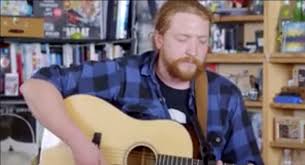
SOUNDTRACK: TYLER CHILDERS-Tiny Desk Concert #729 (April 11, 2018).

I didn’t expect to like this set–I’ve really had it with country music encroaching on my radio station.  So when Childers was described as having “a coarse and soulful Kentucky drawl,” I wasn’t interested.

Especially when the songs were “about hard lives and hard love with direct heart.”

But he surprised me because it’s the coarseness that comes to the fore more than the drawl.  At least on the first song “Nose on the Grindstone” a song about a miner and the consequences of addiction.  I like his delivery and the intensity of the song.

The second song “22nd Winter” is a little less aggressive and his drawl does comes out, but he keeps it on the side of folk, in fact I would say more like English ballads than American folk.  He describes:

“This is a song about the first time I got snowed in with my in-laws,” he says, expecting a laugh, and giving it a beat. “It’s not a blues song, it’s a love song”)  “I’m pretty partial to my in-laws.  If you see my in-laws tell ’em I was talking good about then.

The final song is about the love of his life, “Lady May.”  It also has the feel of an old English ballad with the interesting chords and melody that opens the song.  I won’t be a huge fan or anything but I’d take him over many of the alt-country artists that I hear these days.

[READ: February 26, 2018] “Whites”

This is an excerpt from The Buddha in the Attic.

This excerpt is written entirely in the second person plural and it is about Japanese women coming to America–the first wave of migrant workers

It tells all of their stories in a sort of continuous forward motion.

The women settled at the edges of “their” towns. Unless “they” wouldn’t let them.  They moved from labor camp to labor camp.  They learned the word for water or they died from heatstroke.

In the beginning they wondered about the white men–why did they mount their horses from the left, why were the always shouting, why did they drink cows milk?

We were told to stay away from them to say yes sir no sir or nothing at all.

Some worked quickly, to impress, and they were admired for their tiny fingers and stature.

Even if their husbands were layabouts

Sometimes the bosses would proposition them with money or threats

Other times they shot holes at their shacks.

Some went to the suburbs and worked as maids, “we sang their children to sleep ever night in a language not their own.  Nemure. Nemure.”

We were taught how to light a stove, use a faucet, light a cigarette.

Some were inept and easily dismissed. Some made stupid errors and may have been fired or not

Some were seduced by the husbands.

Some went to J-Town which was more like Japan than Japan.

We promised ourselves we would leave and go to some other place.  Argentina or Mexico.  But eventually we’d go back home.

But for now we stayed.  What would they do without us?

This was an interesting excerpt–a realistic look at an overlooked subject.

Read Full Post »

SOUNDTRACK: RHEOSTATICS-Massey Hall, Toronto, ON (March 30 2007).

This was the very last Rheostatics show ever.   Well, for eight years.  But it was supposed to be the very last one.  They had been a band for nigh on 20 years and they needed to call it quits.  So they managed to get a final gig at Massey Hall which sold out pretty quickly.

And we’re lucky enough to have a recording (or several) of it.

The show opened with a tribute song by Dave Bookman/Steve Stanley.  Throughout the song there is consistently off rhyming–the word Rheostatic does not actually rhyme with things like attack it.  I also absolutely don’t get the line about thinking The Bends is better than OK Computer (which it isn’t, but what does that have to do with anything).

So after their folk song, the band comes out.  Martin’s voice hasn’t been fixed yet (that is such a bummer–what a disappointment for him and the show that his voice couldn’t soar–although his guitar sure can).

26 Songs were played (27 including Alomar)
From the poll that was taken here are the top 26 songs as voted.   Those in bold were played (17 of the 26 played were in the top 26 voted):
1. Saskatchewan (51) 
2. California Dreamline (50) 
3. Northern Wish (48) 
4. Dope Fiends and Boozehounds (48) 
5. Self-Serve Gas Station (47) 
6. A Mid Winter Night’s Dream (46)
7. Record Body Count (45) 
8. Horses (39) 
9. P.I.N. (37) 
10. King of the Past (36) 
11. Aliens (31) 
12. Shaved Head (29) 
13. Claire (27)
14. Satan Is the Whistler (27)
15. Legal Age Life at Variety Store (25) 
16. Four Little Songs (23)
17. In This Town (21)
18. Christopher (21) 
19. Jesus Was Once a Teenager Too (20)
20. Take Me In Your Hand (19)
21. Junction Foil Ball (18)
22. Feed Yourself (18) 
23. Bad Time To Be Poor (17)
24. Queer (17) [surprised they didn’t play this]
25. Making Progress (17)
26. Introducing Happiness (16) [surprised they didn’t play this]

I want to interject that I am shocked that Stolen Car, Michael Jackson, RDA and Bad Time to Be Poor weren’t in the Top 25. Songs that weren’t voted on but were played were:

Me & Stupid; Mumbletypeg; It; Easy To Be With You; My First Rock Show; We Went West; When Winter Comes; Stolen Car; RDA

They open with “Saskatchewan.” Martin sound rough but is pretty game to sing what he can.  “Me and Stupid” absolutely rocks.

They don’t talk much (yet) although Tim says that “Bad Time to Be Poor” is from the dark days of Ontario about ten years ago.  He also says that they were going to put an intermission in between two sets but we wanted to play as much as possible so we nixed it.

Martin confesses, “I’ve got a little bit of a bug so I don’t have the high stuff in my voice.  Doctors can’t fix it.  So sing along with it, especially the falsetto.”  They start “P.I.N.” and there’s a terrible guitar moment where someone is way off but it’s quickly fixed.”

Dave introduces “Mumbletypeg,” I’d like to send this out to my parents.”  Martin: “Me too.”  Tim: “Me three.”  Once again, the opening guitar or bass if way off but again fixed quickly.

“It” is kind of a surprise.  It sounds good as does “Christopher,” which Martin says was written for his friend Chris Hamilton.

When they play “King of the Past” Dave tells Martin to “do an extra long one” for the solo.

They call up Don Kerr and Dave Clark (our old friends) to the stage for “Northern Wish.”  Dave Clark on drums (and maybe percussion) and Don Kerr on a prominent and excellent cello.  Martin sounds pretty good on this song and the whole thing si really lovely. So lovely that Dave has them do the end section one extra time.  Thanks to “Clarkie and Kerr.”

Clark mentions Dave’s dad who signed the form when they were 15 to allow us to play in bars–I think there was a two-four in it for him (which we couldn’t buy).  We should thank Dave Clark’s mom Maude because they played at her house every day.  We were really loud and uh…bad.  During mellow time.  “My mom certainly knew it was mellow time for some of us.”

Ford Pier gets introduced for “Easy to Be with You,” which sounds great.  “You aren’t leaving are you, Ford?  Last time we were on stage together, some D.O.A. broke out.”

Dave sings “My First Rock Show” and The Imponderables act out the story of Dave getting rescued by Joe Jackson (I can’t believe there is no video for that!).  Tim Vesley was on drums.  Dave jokes, it was like a dream and you were there and you were there.   When Dave gets to the “Massey Hall” line, he repeats it over and over, letting the fact that they are there really sink in.

Timmy’s gonna tell a story about us touring back and forth across this country.  Tim sings a wonderful “We Went West” with some great guitar accompaniment.  Tim says there’s lot of great places we’ve played.  This place isn’t bad.

Dave: “Hats off to everyone who came from out of town.  Thanks very much.”

Ford gets to be profound  Massey Hall– hallowed cathedral.  The birthplace of music. Where the first note was sounded out.  The dawn of creation….  I grew up in Edmonton.  This place is okay. Now, if  we were playing at the Jubilee Auditorium….

Then Dave talks about some of the history of Massey Hall

Dave: Massey Hall, a long time ago, soldiers sat in these seats and waited to be shipped out to WWI.  Hitler’s cousin came her and warned people about the Nazis.  Charlie Parker played here and Bon Scott.

Tim: We played the Walker Theater in Winnipeg opening for Barenaked Ladies and our van broke in Brandon.  The taxi cost $220 and we made it just in time to get to the side of the stage.  We’d never placed a place that big (not as nice as this though).

Dave: So general recap: it’s going okay?

Martin makes a joke about Dave “writing books about how I smell.”  Dave: People love that shit.

Martin says that Ford is gonna help me with this tune.  It wasn’t intentional that the intro should sound anything like Bob & Doug McKenzie’s Great White North call (it does and doesn’t).  Martin tries it but can’t hit the notes.  The audience does it for him.  Martin: I’ve never done rock stage shit before.  Dave: last change, Martin, go for it.  Martin: I might as well enjoy it.  Ford is going to sing it because this is what it sounds like when i do it (bad).  Martin has some guitar fun in the middle of the song

“Feed Yourself” is suitably intense–Dave really gets into that middle section: “look inside his head!”

Then some humor:

Dave:  I plan to take Rheostatics Revisited on the road–with a bunch of younger guys.
Tim: I got Rheostatics We Hardly Knew Ye on the casino circuit.
Mike: I’ll be work shopping some young boy bands.
Martin: I’m taking up pet massage (Mike: receiving or giving) Martin laughs: giving, I train pets to massage people.
Dave: We’ve been playing with Ford for 2 years now.  I think Ford’s been studying us very deeply learning all of four secrets.
Ford: Yes, in 20 years I’m going break up.

There’s a really pretty “Making Progress” with some lovely accompaniment.  It’s followed by a terrific moody “Shaved Head,” but it sucks when he can’t hit the “it’s such a happy thing to cry.”

Dave: “we’re entering the shank part of the evening as Levon Helm used to say–never knew what it meant, but it seems appropriate.”
Martin: “I’ve carefully maintained not getting to know hoe to play our own songs for about 20 years it’s a delicate process: you want to know it enough but not too much.”

They talk about Martin’s hat. Martin does not wear a hat to cover male pattern baldness.   Martin: my hat is my good luck charm.  I keep fiddling with it so I try not to think about things.   Dave: “If you’re thinking about your hat you’re not thinking about bad stuff.”

martin says that they planned to name their third album Rheostatics Cut Their heads Off and Go Swimming.  They made a pact that when we play for the last time, I would cut off Tim’s hand and he would cut off mine.  But how does the last guy do the last hand?

Someone shouts “50 bucks for your hand.”  Dave: “How much if he autographs it? … oh wait.”

So Dave, you wrote this frankenmonster [When Winter Comes] so talk about it.  I’m looking forward to playing it personally and Dave’s going to explain it to you.  Dave doesn;t explain it but he says the first part was written in  the interior of British Columbia.  The middle was written at King and Parliament intersection.  The final part was written at the Isaac Hostel in Dublin Ireland coz I missed my girlfriend.  Tim: That’s where we broke up the first time.

As they start the song, Martin says, “this is the fake ending of the show, lets rock.”

Evidently there was snow falling during the song as one person wrote: “Also, the fake snow falling in ‘When Winter Comes‘ was gorgeous and will be imprinted in my brain forever.”

They come back for the encore.  Tim says, “This song is in the key of D, it’s one of our favorites.  (Dave: can we get those police back?).  Martin: “I’ll dedicate this song [“Self Serve Gas Station”] to my parents.  This song isn’t all that true.  And to my sister who is seeing us for the first time tonight.  (Save: so it’s her fault).

Martin sings his heart out on “California Dreamline” but just can’t get the notes.

They invite Wolf Island’s Chris Brown to the stage.  We’re going to dedicate this song to Claire who is siting in the balcony.  She’s 7 years old.  “Claire” runs to almost 9 minutes with some great solos from all parties, including a great keyboard solo from I assume Chris Brown.

They play a ripping, intense version of “Horses.”  Despite acknowledging the kids in the audience, Dave doesn’t hold back.  Send this out to Stephen Harper and his minority government behaving like a majority government:

 theft and lies and deceit and pain and crime and hate and intolerance and cheating.  And he hasn’t even done anything yet.  But were gonna be ready and strong.  We’re gonna be mighty, small, and fierce.  Teeth bared, eyes open fists clenched, feet rooted to the ground.  This is our ground.  These are our roots

“Stolen Car” ends with Martin repeating the first line and Dave asking and then what happened?  So Martin speed reads the plot of the song to a blur as it segues into “RDA” with a chanted chorus of Super Furry Animals, “They don’t give a fuck about anybody else.”  As they near the end, Dave asks, “Are you ready Timmy?  Are you ready Marty?  Are you ready Fordy?  Are your ready Michael?” before they conclude… in America!

The final song of the encore is “Dope Fiends and Boozehounds.”  We’d like to invite the ensemble up for this next number.  Don and Dave and Chris…  let’s all do it together.  The drummers get a special drum solo with some fun keys from Ford.  The percussion solo segues seamlessly into “Alomar” before returning to “Dope Fiends.”  This song featured Chris Brown on keys and Dave Clark and Don Kerr on hand drums.

They leave but it’s not over yet.  They come out for a final encore, where they apparently sit down on the edge of the stage and joke with each other “how come you’re not famous?”  “How much money do you have?”  They plays some acoustic guitars (can you hear us alright?).

Dave: Ford, what can we do to get the top balcony singing?
Ford: This is Dave Clark’s thing, he’ll have good advice.
Clark directs the audience.  Top balcony, this half goes “oom” the other half goes “oom oom.  Middle balcony, hum through the nose–that’s not loud enough so hum out loud.  The bottom group, half goes ahhh and the other half goes whoooo.  They do a pretty decent participation throughout the whole of “Legal Age Life.”

And then there’s one last song.  Dave gets a little choked up.

I don’t get emotional about this until I start talking to people who are into the band.  People coming with old friends who grew up singing Rheos’ songs; people forming bands, lost in the wilderness and singing Uncle Henry to themselves….

And then they play a sweet acoustic version of “Record Body Count,” a sweet send off to Martin, for sure.  And as one person commenting on the show wrote:

Martin’s expression at the end of ‘Record Body Count‘ when he realized that there was a human pyramid behind him was priceless.

There is a clip of the human pyramid online, and it’s really pretty impressive.

The final word goes to Darrin Cappe, who runs the Rheostatics Live site

This show was the biggest they have played on their own to date, and the fans have flown from all over North America, from Florida to San Diego and from Halifax to Victoria to see them. What a pleasure and a treasure it was to have been there. I truly feel that those lucky enough to have been there were witness to a significant piece of Canadian Music History. One of those events where years from now when people talk about it you can say in the words of Dave Bidini “Oh Yeah, I Was There!” ” Darrin Cappe, Toronto ON

Shortly after the concert CBC Radio aired an edited one-hour version of the show.  The sound is excellent.  They play havoc with the set list, having it rather our of order, and having it end with the main body of the show.  But it’s a nice, clean-sounding, digestible one hour highlight reel.

01. Introduction   1:27
02. Interview with Andy Craig   1:44
03. Saskatchewan   8:04
04. Me and Stupid   4:02
05. DJ   0:11
06. Bad Time To Be Poor   4:17
07. King Of The Past   6:27
08. Northern Wish   6:34
09. We Went West   5:24
10. banter   1:09
11. Making Progress   5:18
12. Claire   7:09
13. DJ   0:22
14. When Winter Comes   10:05
15. Outro   0:49

There’s a slideshow of pictures at the bottom of this post.  And Pete Nema has some photos from the show online.   There’s also a couple of non soundboard recordings.  The one from Desmond Howl is especially interesting because you can hear a lot more of the crowd reactions–they were really into the show (which doesn’t quite come across in the soundboard version).

It was great run from a great band.  I was pretty psyched to be able to see them when they reunited seven years later.  My bucket list now includes seeing them play a proper show–two hours plus, with Martin’s voice in great form.  We’ll see what the summer allows!

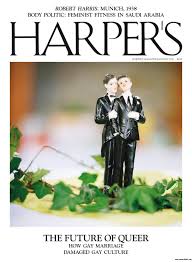
[READ: January 13, 2018] “Munich, 1938”

I saw this longish story and the title and thought I would not like it at all.  I was pleasant surprised at how engrossed I became in this story.

It started out as I feared with the British Prime Minister and his delegation heading to a conference with Hitler and Mussolini.  We are focused on Hugh Legat, Chamberlain’s private secretary (but apparently not a very high ranking one).  He was asked to stay at the hotel to get an office running for the Prime Minister when he returned. We learn that Legat has an ulterior motive for being in Munich, although I’m not entirely certain that this excerpt reveals what that is.  It might, but I’m not sure.

The story is a bit bogged in details, but that’s as befits a novel, which this is and excerpt from.  So the early part is a little tough going with so many characters–most of whom we will not meet in this excerpt.

Then we meet Paul Hartmann. Hartmann is also at the conference.  We know even less about him except that he has a gun in one pocket and a letter in the other.  He has a message for the British delegation, but there is no way he can get it to them without being spotted.

The conference ends for lunch.  The delegates do not look pleased.  This made Hartmann happy that maybe the conference would fail. (more…)

Read Full Post »

SOUNDTRACK: RAUL MIDÓN-Tiny Desk Concert #718 (March 15, 2018).

I had never heard of Raul Midón before this Tiny Desk.  So I’ll use the blurb for an explanation of who he is.

Raul Midón lives in a world of sound — blind since birth, Midón’s interpretation of his surroundings is borderless. He sings with the passion of the best classic soul singers, and his instrumental chops stand along side the most accomplished jazz musicians.

Normally backed by a band that straddles styles just as well as he does, for his turn behind Bob Boilen’s desk Midón stripped it down to just voice and guitar, the musical equivalent of tightrope walking without a net.

You could choose any of the songs he performed, listen on repeat and continuously discover layers of musicality — the nuance of a bent note in his vocals, a burst of perfectly placed guitar notes.

Midón played five songs.

For “Gotta Gotta Give” he primarily uses a kind of slapping guitar style for his chords–he slaps all of the strings with his palm making a kind of gentle but loud sound.  But he also does some great picking on the descending chords.  I love the little harmonics he throws in a the end of the verses.  For this song he plays a trumpet solo with his mouth which is pretty cool.  Later he does a solo duet with his mouth-trumpet and the guitar.  His voice is powerful and soulful.  It’s a great song.

He says that he wondered how to address the fact that he was blind. He wanted people to talk about the issue but no one every would, so he called his new album Badass and Blind and people talk about it now.

“Sound Shadow” has a more abrasive picking style–almost like a slap bass but on all of the strings.  It’s a very different sound form the first song.  The solo is a mixture between very fast picked notes and some really fast pick-less strumming.  Vocally he really mixes things up as well, with some nice falsetto at the end.

“If Only” was inspired by Tin Pan Alley stylings which you can hear in the chords.  “Bad Ass and Blind” has a bluesy sound with some more cool harmonics and some dramatic minor chords.  I like the way the chorus is very different from the staggered melody of the verses.  The second verse is all rapped while he plays that guitar.  And his delivery is solid.  It’s got an even better sounding trumpet solo.

For “Mi Amigo Cubano” he switches to a nylon stringed guitar.  He says he wrote this song with Bill Withers, who wanted a song written sin Spanish–basically Raul translated what Bill wanted He asked how do you say “Hows your wife?” “Como esta tu esposa?”  “Well put that in there!”  This song has Spanish soul.

I really enjoyed this set a lot.

[READ: March 20, 2018] “The State”

I didn’t really enjoy this story.  It felt kind of slow and meandering and the ending was really bland.

But I have learned though, that if I don’t like a New Yorker ending because it doesn’t feel like an ending, it is probably an excerpt–which this was.  Knowing that now changes my opinion of the whole thing.  And reading a bit about the novel it sounds multifaceted and really quite interesting.  Now I feel badly for judging it harshly at first.

It begins “before you were born, you were a head and tail in a milky pool.”  Your history goes back further and further, but then returns to your birth when your heartbeat was arrhythmic.

Your dad said “maybe he as a drummer.”  And in the womb, you did begin to kick to any beat offered.  Your dad is 100 per cent Indian–a recovering alcoholic medicine man from Oklahoma.  Your mom is white but there is too much and not enough whiteness to know what to do with it.  You were raised Christian although you enjoyed your father’s powwows more–but your mother became more and more opposed to them as she got older. (more…)

Read Full Post »

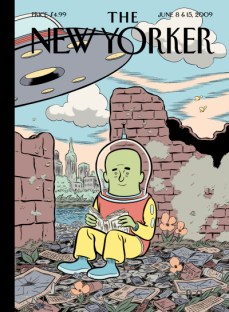
CV1_TNY_06_08_15_09.indd

SOUNDTRACK: MAX RICHTER-“Dream 3 (In The Midst Of My Life)” from Sleep– NPR’S SOUTH X LULLABY (March 17, 2018).

This piece is remarkable.  And the except provided here (all 8 minutes of it) is but a teeny fraction of the entire 8 hour work.

I had heard about this piece on Echoes a few months ago and was very interested in it, but figured there was no way I’d hear it.  I never imagined anyone would hear it quite like this:

Right at the start of the 2018 SXSW Music Festival, Max Richter’s eight-hour composition Sleep was performed overnight to an audience tucked into 150 beds. They — the audience, not the tireless group of musicians who performed the piece — slept, dreamed and sometimes snored through this trance-inducing experience.

Richter has described this piece: “Really, what I wanted to do is provide a landscape or a musical place where people could fall asleep.”

In the video here, you’ll see Richter himself on keyboards and electronics, along with the ACME string ensemble and soprano vocalist Grace Davidson.

What I loved about the story of this piece is not that it is a piece to sleep to exactly but that it is based around the neuroscience of sleep.  He says, “Sleep is an attempt to see how that space when your conscious mind is on holiday can be a place for music to live.”

It’s wonderful and I would love to sleep to it some night.

[READ: April 13, 2016] “Old Wounds”

I thought that I had read more by Edna O’Brien but it appears that I’ve read hardly anything by her.

This story was an interesting look at Irish stubborness and the way families can hate each other over small things (or even big things).

The narrator explains that her family had a falling out and for several years there was no communication at all between them.  Even when they attended funerals they did not acknowledge each other.

Finally all of the older people had died off and it was just her and her cousin Edward (both past middle age) they met and put aside the hostilities. They even visited the family graveyard together.  The graveyard was on an island a short boat ride from Edward’s house. (more…)

Read Full Post »

SOUNDTRACK: BECCA MANCARI-“Dirty Dishes” NPR’S SOUTH X LULLABY (March 15, 2018).

Becca Mancari plays a pretty acosutic guitar melody while Blake’s effects-laden pedal steel guitar soars and echoes around her.

I don’t know the original, but according to the blurb, “Mancari removes the clicking pulse of the studio version to underline the song’s lonely atmospherics.”

The song is simple–one that speaks to a relationship: “‘I can’t face myself,’ Mancari repeats the line like a broken admission spoken through a pinhole camera, a whispered truth so potent it can’t be looked right in the eye. “

At 2:41, the guitarist hits a great effect that turns the soaring pedal steel guitar into a buzzy rocking guitar solo while Becca strums on.  It’s a great interlude that really sells this song.

I also love that the final 30 seconds is just the sound of the guitar(s) fading out.

There are moments in this video where the Nashville-based singer-songwriter turns away from the many faces of the Life Underground installation by Hervé Cohen, which is part of the SXSW Art Program and supported by the Cultural Services of the French Embassy in the United States. What’s being projected onto the screens in the room are interviews with subway passengers from around the world who share their stories and dreams. The installation’s notion is that empathy often comes by just asking a few questions, which, maybe for “Dirty Dishes,” is just too damn hard right now.

[READ: April 12, 2016] “The Tiger’s Wife”

Téa Obreht took the literary world by storm with her debut novel The Tiger’s Wife.  I’ve had a copy of it on my bedside I guess now for 8 years.  I’ve been meaning to read it but other things always jump in first.

So finally I got around to reading this excerpt from the novel.

The excerpt is, I assume, the first few sections of the novel since they are numbered and begin with 1.

The first part is called The Tiger and it talks all about the titular tiger.  The tiger was in a zoo (or a circus) in 1941 when the Germans began bombing the city for three straight days.

The tiger should have died in the concussion and rubble, but he managed to escape and wandered to the village. (more…)

Read Full Post »

« Newer Posts - Older Posts »