Feeds:
Posts
Comments

Archive for the ‘Essays’ Category

SOUNDTRACK: R.E.M.- Fables of the Reconstruction of the Fables of the  (1985).

I’m willing to go on record saying that I like the title of this disc to be elliptical, even if the band has a definitive answer for what it should be called.

So, I’ve learned that I’m a bit of a fair-weather R.E.M. fan.  I’ve always felt that they were the bedrock of any alt music collection.  But recently (with the re-release of this album, which I did not buy) I decided to go back and listen to the full albums (I listen to Eponymous a lot, but I wanted to hear some deeper cuts, as they say).

This album has a lot of quintessential R.E.M.-sounding songs, and yet it’s also not a very poppy album, so it doesn’t feature too much of that jangly guitar–the other trademarked R.E.M. sound.  Rather, we get a lot of picked guitar bits, some great bass (a very underappreciated aspect of the band) and a lot of one of my favorite things: Peter Buck’s backing vocals.

There are a  few “hits” on this disc, songs that I love very much, but this disc also features a bunch of songs that don’t really excite me.  In fact, the back end of the disc is kind of ho hum. “Green Grow the Rushes” is a nice enough song.  “Kohoutek” just never really grabs me.  “Auctioneer (Another Engine)” is a pretty interesting experiment: the minor chord vocals section in the middle are rather creepy (and the guitar sounds a bit like an early-80s Cure song).  It’s my favorite track in the back of the disc.  The last two songs are gentle folk songs that are, again, nice, but not mind blowing.

Of course the front half of the disc is full of weird gems. “Feeling Gravity’s Pull” is a bizarre, off kilter delight.  And that weird string section at the end is only part of the oddity of it. “Maps and Legends” is a fascinating song that just seems chock full of noises (like an acoustic Public Enemy track) that keeps you guessing what will happen next.

“Driver 8” begins my favorite section of the disc.  “8” is one of the major highlights of this disc.  It’s dark and mysterious without being swamped under by murk.  And while I have no idea what it’s about it never stops me from singing along.  “Life and How t o Live It” features some great bass work (and an interesting guitar riff).  “Old Man Kensey” starts out really promising with a cool bass and peculiar guitar line, but it kind of drifts a little after that.  But the final track of this section, “Can’t Get There From Here” is an ebullient song, that feels really out of place here.  It’s one of my all time favorite R.E.M. tracks, and it adds some much needed adrenaline here.

I admit that I am more of a fan of R.E.M.’s louder songs (Document is a highlight).  So this disc is a little too tame for me.  I’m lead to believe that the new edition of the disc features some live tracks that really bring these songs to life, but I think I may just stick with Eponymous.

[READ: September 19, 2010] “Mr. Difficult”

I am planning on reading The Corrections soon (and one of these days Freedom, too).  Somehow I missed all of the controversy surrounding Franzen (I am blissfully ignorant of Oprah) when it was all over the place, but I recently learned that he and David Foster Wallace were friends and respected each other, so I thought I’d give him a read.  But before I get to the big book I decided to read some of his nonfiction (I had read about this Franzen article in which he talks about William Gaddis and wanted to read this right away).

So this article is a lengthy discussion about William Gaddis.  It is inspired by a letter writer (whom he calls “Mrs. M—-“) who accused Franzen of being an elitist–for using big words like “diurnality” and “antipodes”–and for not writing for the “average person who just enjoys a good read.”  So Franzen talks about two types of writers.  First is the Status Writer (like Flaubert) where the best novels “are great works of art…and if the average reader rejects the work it’s because the average reader is a philistine.”  And then there is the Contract Writer where a novel represents a compact between the reader and the writer “with the writer providing words out of which the reader creates a pleasurable experience.”

Franzen never says what camp he himself falls into, but rather, he explains that when he was in school, he wanted to be a Status Writer, he wanted to love difficult books.  However, when his screenplay was described as, basically, a knock off, he was despondent.  So, he decided to sit down and read Gaddis’ The Recognitions, a 900 page Difficult Book.

And he loved it.  He was engrossed and couldn’t stop.   (more…)

Read Full Post »

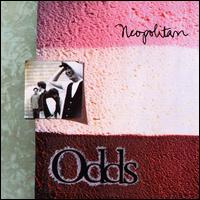
SOUNDTRACK: ODDS-Neopolitan (1991).

This was the first Odds album.  For such a quirky name, Odds played some pretty standard music. I’m not even sure if the first song qualifies as “alternative” as it sounds not unlike an early Phish song, only less quirky (and much shorter).

The disc offers a pretty nice range of poppy tracks, from acoustic based songs like “Are You Listening?” to louder guitar rockers liked “Evolution Time” (probably the most interesting track here).

Another notable song is “Wendy Under the Stars” a surprisingly explicit song about the day Elvis died.  The other track that stands out is “Love is the Subject” which has a harder more abrupt sound that is actually a bit premature for that style and sounds quite funky for this album.

Lyrically, the cleverest song (and one that seems to foreshadow their future songs is “Domesticated Blind” “Making babies, buying houses.  A French guy’s name is on our trousers.  We used to be such rabble rousers.  Before the world revolved around us; I’ve been domesticated blind”

I like this album, but I admit that it’s not the kind of disc that makes people go, “Ooh, who is this?  I want to get it!”

[READ: September 12, 2010] “Vogalooooonga”

This is the last of the Outside pieces that Tower wrote (not chronologically, just for my reading schedule).  And I’m really pleased that I saved it for last.

It does what Tower does best: tell a story while relating an event.  In fact, if he just changed a few details, this would make a great short story.

Wells and his brother have apparently been on many “assignments” together, and it transpires that when they travel together they often end up at each others throats.  So the piece opens with them agreeing to never do another story together again.  Then they get a call to go to Venice together to ride in the Vogalonga, “a 19-mile noncompetitive rowing regatta, held in late May, that promises a breathtaking tour of the old republic’s lagoon and outer islands” and that is traversed only in vehicles that can be paddled.  Wells’ brother says that they can’t pass up a trip to Venice, so he agrees to go along.

Based on the other stories that Wells has written, he is an athletic guy (and his brother is evidently bigger and stronger than he is).  Nevertheless, a 19 mile canoe trip in the canals of Venice can only lead to trouble.

And so this piece reads a bit like a David Sedaris story of familial in-fighting (although it’s a lot more manly than any of Sedaris’ pieces).  They fight from the get go (including his brother’s suggestion that they assemble their 17-foot canoe in their 10-foot hotel room.  And aggressive hilarity ensues. (more…)

Read Full Post »

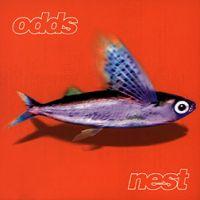
SOUNDTRACK: Odds-nest (1996).

My friend Amber from Vancouver copied this disc onto cassette for me sometime around when it came out.   I had heard “Heterosexual Man” when it was a minor novelty hit in the early 90s, but Amber wanted me to hear more from this Vancouver band.

Since the Odds dissolved, Craig Northey has become a proficient soundtrack man (Corner Gas, Kids in the Hall, and much more). But back in the 90s, Northey was simply put, a great pop songwriter (his bandmate Steven Drake was no slouch either).

“Someone Who’s Cool” is a fantastic song that should have been huge: powerful pop with a hint of 90’s rock added to keep it from being treacly.  And, of course, Northey’s voice is great.  There’s nothing particularly notable about it: it’s not whiny or deep or twangy or anything, it’s just a good singing voice (which is kind of unusual these days).

“Make You Mad” and “Hurt Me” have really catchy opening guitar riffs (and are a bit heavier than “Cool,” and yet they feature choruses that are full of harmonies and sing alongs.

“Tears & Laughter” has a jagged, wild guitar sound that, while not overtly heavy or anything, really rocks on this disc. “Nothing Beautiful” should have been a huge indie rock hit, but maybe it was too polished for indie cred.  It’s a great minor key song with, yes, a very catchy chorus.

This was the final Odds record.  It’s a solid collection of songs.  Of course, the band has recently sort of reunited as the New Odds, so we’ve not heard the last from them.

[READ: September 11, 2010] “My Kushy New Job”

This article sees Wells Tower heading off to Amsterdam for a crash course in learning to sell drugs.  He is assigned a two-week job as a dealer in a Dutch coffeeshop.

I’ve been to Amsterdam and I checked out a coffeeshop while I was there, but this article provides more information than I ever knew about them (and suggests that they are trying to spruce up their image since then). It seems that the selling of pot in Amsterdam is still a nebulous area, legally.

Shops can only have a certain amount of supply on hand (which means that most stores have offsite premises where they keep their extra stash; they house more than the legal amount and are therefore illegal.  And, technically, the people who transport the stash from offsite to onsite can be arrested up until the moment they enter the shop.  Customers can only by a small amount at time and, strangely enough, coffeshops cannot advertise (more on this later).

Tower finds the whole experience to be far less “woah, cool man” than everyone who hears about the job thinks it will be.  First, he finds that the buyers are really intense (and don’t appreciate how long it takes him to measure a gram of hash).  But by the end, he finds most of them to be simply rude and a little dead inside. (more…)

Read Full Post »

SOUNDTRACK: THE MOMMYHEADS-“Needmore, PA” (2010).

This is the first single from The Mommyheads’ new Dromedary release Finest Specimens.  The album (which is sort of a greatest hits, but not) comes out next month, but until then you can hear th is new track at a number of places, including the blog largehearted boy (which has all kinds of cool free listens on it).

This is a 7 minute (live) track.  It opens with some cool keyboards.  They feature what I’ve come to think of as Mommyheads style, in which the bass and guitars (or in this case keyboards) play different things that seem unrelated but which work together.  A great chorus pulls it all together.

This live song has about 3 minutes of instrumental jamminess at the end.  It doesn’t really help the memorableness of the song (as you’ve long forgotten the catchy “That’s right” hook by the end of it), but man they sound great jamming together like that: a tight, psychedelic freakout that just builds in coolness.  It’s almost like two songs in one.

[READ: September 11, 2010] “The Tuber”

This essay is about Wells Tower riding the rivers of Southern Florida in a tube.  It’s also about John Cheever’s “The Swimmer.”

One of the things that I like about Wells Tower is that even in his non-fiction, he ties things together with literary substance.  And so, he sets up this adventure as a twisted take on Cheever’s Neddy Merrill swimming the 8 miles of swimming pools in suburban New York: Tower wants to try to tube the rivers of Florida all the way down to the Gulf of Mexico. (more…)

Read Full Post »

SOUNDTRACK: THE MOMMYHEADS-“Day Job” (2010).

This is the final bonus track on Dromedary‘s recently reissued Mommyheads album Flying Suit.

This is probably the most conventional Mommyheads song that I know of.  It reminds me a lot of the music from Late Night with David Letterman.  It swings, it’s jaunty, it’s kind of funny and it has some almost zany guitar work on it.

It is probably the ideal “bonus track” for a band that usually writes quirky, off -kilter songs as it doesn’t sound like it should be on the album, but it is still in the spirit of the rest of the songs.  The jazziness if reminiscent of their other work, but there’s something oddly rocking about this track.  It’s a real treat.

Check the songs out (and buy them) here.

[READ: September 10, 2010] “The Thing with Feathers”

Wells Tower week continues with this article about the thought to be extinct Ivory-Billed Woodpecker.  He mentions humorously in the article that NPR went crazy about the woodpecker when one was seen in Arkansas, and I remember that very well.  There were several pieces about the woodpecker and I was really excited about it.

Hairy Woodpecker

I’m not a serious birdwatcher, but ever since I saw my first hairy woodpecker at my apartment in Boston, I’ve been a huge fan of having birds around. The hairy woodpecker is tiny (and very cute).  Since we moved to a wooded area of New Jersey, I’ve been lucky enough to see a red-bellied woodpecker and, I believe, the even more elusive pileated woodpecker.  We’ve even had flickers in our yard.

So this article sees Wells Tower heading down to Arkansas to talk to the man who claims to have seen the first Ivory-Billed Woodpecker, Gene Sparling.  The man who caused all the fuss to begin with back in 2005.

And this is a great piece of non-fiction.  Tower brings his excellent storytelling skills and describes a trip into the Arkansas woods looking for this possibly extinct bird. (more…)

Read Full Post »

SOUNDTRACKMOMMYHEADS-“Over” (2010).

Dromedary has recently reissued The Mommyheads’ Flying Suit CD.  And there are three bonus tracks available on it now.

I mentioned Flying Suitlittle while ago.  What I really liked about that disc was that it was all over the place and yet remained comfortably within its genre of jangle pop-rock.

This first of three new tracks is just under 2 minutes long.  It has a watery guitar and a propulsive bass, and yet it is still a sort of delicate song.  The vocals, as with the rest of the disc, are soft, with nice harmonies.  It’s hard to get overly excited about the song (as it’s not like a sonic blast of 2 minutes), but it’s nice to have even more Mommyheads.

Bonus track number 2 tomorrow.  Check the songs out (and buy them) here.

[READ: September 9, 2010] “Cannery Woe”

Since I recently read the Wells Tower story in the New Yorker, I remembered that I was going to read his other travel stories from Outside.  I started with this one because it is shortest (1 page).

Tower has a wonderful grasp of storytelling. So even a fairly simple story like this (where really nothing terrible happens) is made quite exciting. And the twist, such as it was, is totally unexpected. (more…)

Read Full Post »

SOUNDTRACK: THE MOMMYHEADS-“Box” (2010).

After the two minute bonus track of “Over” comes the lengthy (very lengthy for The Mommyheads) “Box”.

I’m not sure what the song is about, but it’s got some great licks within it.  It opens with a twisted guitar opening, one that never sems to settle.  In fact, the entire first verse seems like the song doesn’t quite know where it’s going (which is deliberate, of course).

Because by the end of the second verse we get a very lengthy instrumental break that is ferocious in its coolness.  It begins softly and then morphs into a psychedelic workout: harmonized guitar notes, funky drumming, and yet all within a mellow styling.  It’s very clever.

Its a strange song and it may be my favorite Mommyheads song of all.  It’s an excellent bonus track.  Check the songs out (and buy them) here.

[READ: September 9, 2008] “New Orleans, LA”

This is probably the most straightforward “reporting” piece that I’ve read by Tower.  As such, it doesn’t have a lot of flair to it.

It’s an interesting look at the rebuilding of New Orleans, into what appears to be a greener, stronger and better city than ever before.  It almost seems like you need a terrible catastrophe and the goodwill of citizens to make a place even better than it was before.

He mentions a few individuals who were (and maybe still are) doing extra work to rebuild the city, and they are quite inspirational.

It’s available here.

Because it was so brief, I’m pairing it with another brief but much more entertaining article: “Extract a Tick from Your Junk” from the “How to Do Everything (Well Almost)” piece from the July 2007 issue.  (more…)

Read Full Post »

SOUNDTRACK: DAVE BIDINI-The Upstairs, Sydney Nova Scotia July 26 2007 (2007).

Dave Bidini recorded three shows in 2007 in eastern Canada which are all available on the Rheostatics Live website.  They were acoustic shows and featured a reading from his then new book called Around the World in 57½ Gigs.

On this particular venue, he gives two readings (and the readings are very good.  His writing has grown even more engaging since this first book).

The songs he plays are a couple from the Rheostatics: “My First Rock Show” which sounds good in this format.  “Me and Stupid” which is almost made for this format and “Horses.”  Now “Horses” is a wild and raucous song, typically full of Martin Tielli’s amazing guitar pyrotechnics.  The acoustic version is much more mellow, but no less affecting.

He’s got a number of what I assume are new songs (I haven’t heard any BidiniBand songs yet, so I don’t know from whence they come).  “Song Ain’t Good” is a kind of jokey song about how the song itself isn’t any good.  Lyrically, the song grows on you as it progresses.   “The List” is indeed a list of people and things that are killing us now: Tim Hortons, Chad Kroeger, Stephen Harper etc.  It’s a protest song and is kind of catchy.

“The Land is Wild” is a more interesting song, musically.  Lyrically it’s about Bryan Fogarty, a dead hockey player.  And the final track is “The Ballad of Zeke Roberts” the story of a Liberian singer.

The other shows feature essentially the same songs (one of them includes “Fat” instead of “Horses”).

The difference with these new songs as opposed to the Rheos songs is that these are more pointedly about something.  They are quite message driven.  And one needs to care about the message I suppose.  Bidini does not have a great voice. Or, more to the point, he has a limited voice that works great for certain things, but it’s not always at its strongest in this acoustic setting.  Nevertheless, he has great rapport with the audience, and is a very charming performer.

I’m rather interested in hearing what the BidiniBand have to offer.  There’s an interesting interview with the Bidini here.

[READ: September 1, 2010] On a Cold Road

So Dave Bidini was in the Rheostatics.  This book is a chronicle of their tour as the opening act for The Tragically Hip on their tour across Canada.

The book offers lots of insights into the ins and outs of touring–the frustration, the loneliness, the elation, the confusion, the shattering disappointments, everything.  As a fan of the Rheos and the Hip, I found this to be a really interesting chronicle of a cross-country tour.

And what I found interesting about the book itself is that the main guys aren’t a small band struggling, nor are they a headlining megaband.  They’re a reasonably small band but they are successful, and are certainly well looked after on this  tour.  So it gives the feeling of being the underdog without actually working too much about pathos.

The Rheos are simultaneously jealous of the Hip, but also very grateful to them.   It makes for an interesting read. (more…)

Read Full Post »

SOUNDTRACK: PETE SEEGER-Greatest Hits (2002).

Like Woody Guthrie, Pete Seeger has been singing for the common man since forever.  Unlike Woody Guthrie, Pete Seeger is alive and well and still kicking up a fuss.

This collection of his songs is fascinating in that it shows a certain aspect of Pete’s music: his songs are designed for “folks.”  His songs almost demand audience participation.  And so, he has albums for kids (that are weird but wonderful) and other, grown up songs that kids also know, which people have been singing for generations.

And so this disc features more than “studio tracks.”  It opens with “Little Boxes” a wonderful song which features some awesome lyrics including this verse:

And the people in the houses
All went to the university,
Where they were put in boxes
And they came out all the same,
And there’s doctors and lawyers,
And business executives,
And they’re all made out of ticky tacky
And they all look just the same.

But in addition, you get some classic tracks that define rebellious folk: “Which Side Are You On?” “We Shall Overcome” and “Waist Deep in the Big Muddy.”   It also has songs like “Wimoweh (The Lion Sleeps Tonight)” and “Abiyoyo.”

And of course, it features, “Where Have All the Flowers Gone” and “Turn Turn Turn” songs which I’ve known since I was a little kid, but whose lyrics never meant anything to me until I became an adult.  There’s even “If I Had a Hammer” with the final verse:

It’s the hammer of justice;
It’s the bell of freedom;
It’s the song about love between my brothers and my sisters;
All over this land

For a really comprehensive collection of his “studio work” the ideal disc is If I Had a Hammer: Songs of Hope and Struggle (where he sets the tune of “Battle Hymn of the Republic” to a song called “Solidarity Forever” (Solidarity forever, Solidarity forever, Solidarity forever, For the union makes us strong.)

Pete Seeger is indeed a national treasure, and a man who fights in his own way for each of us.

[READ: August 23, 2010] Social Anarchism or Lifestyle Anarchism: An Unbridgeable Chasm

After reading Letters of Insurgents, I felt the need for a palate cleanser.  Melissa suggested this title.  And it really did wonders for me.

All along while I was reading Insurgents, I felt like everyone in the book was misguided about their role in society and, frankly about their ability to undermine the world.  I never understood the idea that people were “making” them work.  They didn’t have to work.  They could have lived off the grid somewhere and eaten berries.  What else is the point of a strike than to improve working conditions, not to abolish work altogether (that whole apart about the plants’ foreign offices plugging along despite their big lockdown was particularly hilariously naive).

In many ways I felt like their opinions were on par with what I thought anarchism was, and yet their opinions were nothing I wanted to be a part of.  Bookchin argues that their attitudes are examples of Lifestyle Anarchism (this article does not address the book at all, but you can see the characters in what he’s describing.) (more…)

Read Full Post »

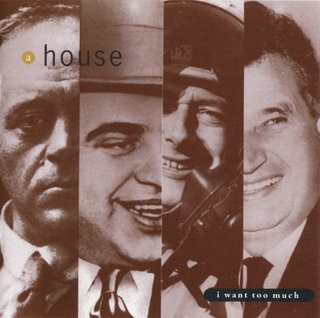
SOUNDTRACK: A HOUSE-I Want Too Much (1990).

I Want Too Much saw a bit of a stylistic shift from the sort of generic indie rock of the first album.  Dave Couse’s voice begins to really come into its own with a lot of yelping and higher notes.

The album overall is more experimental, a good stepping stone towards I Am the Greatest.  This is probably the last A House record I bought (from Amoeba Records!).  And again, had I bought it in 1990, I think I would have loved it.

As it is, it reminds me, once again, of the era (in fact, this album reminds me a lot of James circa 1990).  The lyrics are slightly more deep than on the first disc, but I honestly can’t say that the songs really stick out for me.

I may have come to the party too late for this one.

[READ: August 20, 2010] “Los Malos”

This was something of a banner issue of Harper’s for me.  I’d been kind of down on the magazine over the last several months as I felt the really good stuff just hadn’t been here.  But this issue was packed with great articles.

I was keenly interested in this article because I have recently read Roberto Bolaños’ 2666.  That novel is concerned with the senseless and random killings of so many women around Juarez, Mexico.  That news story seemed to be just catching on in the mainstream press when it was supplanted by this new horror story that border cities in Mexico are hotbeds of drug-related murders (of men and women).  Strangely, I don’t know if the Juarez situation has calmed down or if this is a concurrent mass murder scenario along the border. (more…)

Read Full Post »

« Newer Posts - Older Posts »