Feeds:
Posts
Comments

Archive for the ‘Essays’ Category

44SOUNDTRACK: WNYC SOUNDCHECK GIG ALERTS (2009-).

soundcheck There are so many places to listen to free music.  But i prefer places where you can (legally) download free music.  So here’s a place I’ve just discovered: WNYC Radio’s website which features a section called “Gig Alerts.”  The feature talks about a different interesting band playing that night (in New York).  After a small blurb, there is (almost always) a free downloadable track.   There’s twenty listings per page and 86 pages.  Do the math and that’s a lot of songs.

The feature covers virtually every genre, although there is a preponderance of alt- and indie- rock (mostly lesser known bands).  If you are interested in new (to you) music and in exploring different artists, this is a great resource for a ton of free music.  So, check out Gig Alerts here.

[READ: May 20, 2014] McSweeney’s #44

I was pretty pleased with myself when I got caught up on the McSweeney’s issues.  But I remember wanting to take a break when this one came in.  I now see it has been almost a year since I read the last issue.  So the break was too long and now I have three issues to catch up on again.  Sigh.  But this one proved to be a great issue to return on.

This is a pretty quintessential issue of McSweeney’s.  It’s got letters, some fiction, a special section dedicated to Lawrence Weschler (which includes a lot of art), and a cool, interesting section of plates with full color art.  It’s also got an interestingly designed hardcover with a kind of raw cardboard in the back, a slightly raised colorful section for the spine and then a further raised section for the giant 44 on the front cover.

LETTERS (more…)

Read Full Post »

may20014SOUNDTRACK: CRYPTOPSY-“Slit Your Guts” (1996).

cryptI had never heard of this band until I saw the song mentioned in the article.  The song is impossibly fast with speeding guitars, super fast (inhuman) drums and an indecipherable growl as vocal.  In other words, a typical cookie monster metal song.  And yet, there is a lot more to it and, indeed it took me several listens before I could even figure out what was happening here, by which time I had really fallen for the song.

There’s a middle section which is just as punishing and fast but which is basically an instrumental break–not for showing off exactly but for showcasing more than the bands pummel.  It has a short guitar solo followed by a faster more traditional solo (each for one measure, each in a different ear). Then the tempo picks up for an extended instrumental section.  The melody is slightly more sinister, but it sounds great.  There’s even a (very short) bass solo that sticks out as a totally unexpected (and fun) surprise.

Then the growls come back in, staying with the new melody.  The vocals are so low and growly that they are almost another distorted instrument rather than a voice.

After that there’s a lengthy proper guitar solo.  As the song comes to a close,  it repeats some previous sections before suddenly halting.  It’s quite a trip. And it definitely makes me want to hear more from them (whatever their name means).

[READ: April 14, 2014] “Destroy Your Safe and Happy Lives”

Robbins, who is a poet, but about whom I know little else, takes us on a sort of literary tour of heavy metal.  His tone is interesting–he is clearly into metal, like in a big way (at the end of the article he talks about taking his writing students to see Converge (although he doesn’t exactly say why)), but he’s also not afraid to make fun of the preposterousness of, well, most of the bands–even the ones he likes.  It’s a kind of warts and all appreciation for what metal is and isn’t.  many people have written about metal from many different angles, so there’s not a lot “new” here, but it is interesting to hear the different bands discussed in such a thoughtful (and not just in a fanboy) way.

His first footnote is interesting both for metal followers and metal disdainers: “Genre classification doesn’t interest me.  Listen to Poison Idea’s Feel the Darkness followed by Repulsion’s Horrified and tell me the main difference between hardcore punk and metal isn’t that one has a bullshit positive message and one has a bullshit negative message.”

But since Robbins is a poet, he is interested in metal’s connection to poetry.  And in the article he cites William Blake (of course), but also Rilke and John Ashbery and (naturally) Milton’s Paradise Lost, as well as Shelley, Lord Byron and Charles Baudelaire.  He talks about them not because they are cool poets, but because they have also talked about because of metal’s “most familiar trope…duh, Satanism, which might be silly–okay, its’ definitely silly, but has a distinguished literary pedigree”.  Besides, he notes that Satan has the best lines in Paradise Lost (and I note that just as Judas has the best songs in Jesus Christ Superstar).

But sometimes this Satanism turns into a  form of paganism which then turns into nature worship.  From Voivod’s “Killing Technology” to black metal’s romanticism of nature (sometimes to crazy extremes–but that’s what a band needs to do to stand out sometimes).  Metal is all about the dark and primordial, a”rebuke to our soft lives.”

And yet, as a poet, Robbins has some quibbles with metal: (more…)

Read Full Post »

  9SOUNDTRACK: UNIVORE-“Vampire” (2013).

univoreI never watch the ads that come before Youtube videos.  But this came on as an ad and I was utterly mesmerized by it.

I didn’t even know what it was for.  Turns out that Univore is a band and “Vampire” is one of their songs.  The 1 minute ad video was actually the whole thing.

It’s got a simple buzzy synthesized riff, backing vocalists singing “Oh yea” when appropriate and an occasional deep voiced man saying “vampire.”  The video is of an older gentleman (who a little research suggests is Marco Casale) dressed like a vampire running around a small green space on a campus.  The whole video looks like it took 15 minutes to film.  It is weird and wonderful.

I still know nothing about Univore, which may be for the better, but I did enjoy this video.

[READ: April 6, 2014] Grantland #9

I’m surprised that there aren’t better cover images online for these books.  For #8 i had to use one with a big flash in the middle of it and this one is the illustration from the Grantland website.  The books are quite pretty so why uses these pale imitations?

So this issue proved to be a lot better about weird typos and “we just took this from the web and pasted it and never bothered to check to see if there was anything weird” problems.  So thanks for at least running it through Spellcheck.  The only other thing left is to either remove the lines that talk about attached links/images if they are not there or to include the url or make up a tiny url (but that would be actual work!).  Oh, and please make sure all of the footnotes are included.

I have given up on ever finding out how these things turned out several months after the fact–I’ll just happily live in ignorance of reality there.

This issue was taken from during basketball’s downtime which was a nice change (even though the still managed to talk about basketball).  There was more pop culture and some wonderful articles about team nicknames and mascots–something I absolutely love.  So this is one of my favorite issues overall.  (more…)

Read Full Post »

march2014SOUNDTRACK: VALENTINA LISITSA-Chasing Pianos: The Piano Music of Michael Nyman (2014).

Inym,an don’t listen to a lot of classical music, but I do like it. I also enjoy some modern composers, in particular I have a strong fondness for Michael Nyman. Yes, yes, he’s a soundtrack composer, blah blah, but I find his music to be very pretty and often delightfully eccentric.   His music reminds me of Phillip Glass, in its repetitive nature, but he goes beyond the minimalism that Glass was trying to create by implementing inventive melodies and expansive sounds.

 Valentina Lisitsa is a 44 year old Ukrainian pianist and she tackles music from throughout Nymans’ soundtrack career.  Nyman came to prominence with The Piano, which is a beautiful score.  And this is where this album starts out.

I’m not going to talk about each piece.  Rather, the album overall has a consistent feel–piano versions of Nyman’s music.  Nyman isn’t the most difficult composer, but he has his own style and so the entire album has a nice flow (although it does get a little slow by the end).

She plays songs from eleven of his soundtracks (which I’ve listed at the end).  Many of them get only one track, but Wonderland gets two and The Diary of Anne Frank gets 5 cuts.  I actually don’t know either of those two scores.  The bulk of the disc is, unsurprisingly, from The Piano which has ten cuts here.

I actually know his older soundtracks a lot better, so it was interesting to hear these piano versions of many of these familiar tracks.  Like “Time Lapse” from A Zed & Two Naughts and “Chasing Sheep is Best Left to Shepherds” (ne of my favorite pieces by him) from The Draughtman’s Contract.

Stripping down Nyman has an interesting effect because you can really hear how pretty the melodies are.  Although the real pleasure I get from his songs is the weird embellishments he puts on them, like the interesting sounds (horn and didgeridoo?) in “Here to There” from the Piano (which are absent here).

Although it has the feeling of a piano concerto the end (with several songs from The Piano in a row) is a bit samey.  It was smart to end the disc with a reprise of the opening.

There’s also songs from Drowning By Numbers, Carrington, The End of The, Man with a Movie Camera, The Claim and Gattaca

[READ: April 3, 2014] “On Nudity” and “The Trees Step Out of the Forest”

I am linking these two essays because I read them very close to each other and they are almost diametrically opposed in their content. And I thought it would be an interesting contrast.

“On Nudity” is a very simple essay about nudity. When Norman Rush was a kid–9 or 10–his father was really into nudism. He always wanted to go to nude beaches, he was very lax with nudity around the house and he tried to get his wife to join him. She was reluctant. Indeed, she didn’t really seem to like her husband very much and it seems they only got married because she was pregnant (and he may not have thought that was a good enough reason, to be honest).  She tried her best to make him unhappy because of this, and that seemed to involve declining his nudity bug.

So there were copies of Sunshine and Health (the premiere nudist magazine) hidden in the house (although Norman knew where they were), and yet, despite this access, he couldn’t get enough.  Rather than sating his needs, he was more obsessed than ever.  He wanted the real thing, whether it was getting his cousin to play strip poker or trying to spy on women in changing rooms.  He talks about the various hings he did just to get a peek of flesh.  And as the essay comes to close he apologizes to the two women whose privacy he invaded by spying on them.  The guilt about what he did to these women made him stop, although the women likely never knew what had happened to them. (more…)

Read Full Post »

shoppingSOUNDTRACK: BECK-Modern Guilt (2008).

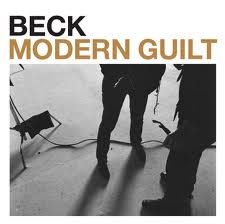
modern guil;As I mentioned, I missed Modern Guilt when it came out.  I guess I had burnt out on Beck after The Information.  But man, I have recently gotten into it big time.  It may be my favorite Beck album of all.  It is brief and simple but with enough going on to keep iot more than just interesting.  The feel is consistently retro by Beck but Danger Mouse throws in enough modern elements to keep it totally fresh (at least six years after the fact).

“Orphans” opens with a hyper drum beat and keyboards, but once the chords and Beck’s vocals come in it has a very sixties folk/psychedelic vibe.  But those drums keep coming it, making it sound very modern.  This has one of the catchiest verses that Beck has sung in addition to a great unexpectedly poppy bridge.  The song is unmistakably Beck, but the flourishes are very Danger Mouse.  “Gamma Ray” opens with a surf rock sound and backwards backing vocals.  It sounds very “future”, but future from the 60s.  This song ends abruptly just under 3 minutes, it’s especially abrupt after the length of some of his more recent albums.  “Chemtrails” opens like mid 70s Pink Floyd–synths and falsetto vocals.  But when the drums come crashing in it totally changes the song to a more modern sound–and yet that bass is still very Pink Floyd.  “Modern Guilt” has a very simple beat and seems like a simple catchy song.  Then the keyboards come along top and it feels kind of spacey.  Then the second guitar riff comes in underneath the song and it’s grounded again.  There’s so much going on in this little poppy gem.

“Youthless” is another straight ahead simple rocker, this one has disco synth lines over the top.  It reminds me of “Cellphone’s Dead” from The Information (I keep waiting to hear “One by One, gonna knock you out”).  It’s the only song on here that reminds me of another of his songs. “Walls” has a cool vocal melody that plays off of the music very well.  It also ends abruptly–a very cool two and a half-minute song.  “Replica” has very contemporary chaotic drumming that pins this floating song.  “Soul of a Man” makes me think of Deep Purple’s “Hush” for some reason.  But I love the way the guitars and noises just seems to come and go leaving the classic rock rhythm pulsing underneath it all.  “Profanity Prayers” has a very punk feel–buzzy guitars and a fast beat, and yet it’s also smoothed over somewhat with an interesting backing vocal line.  “Volcano” is a slow song that anchors the album nicely.  It runs a little long, but this brief album earns a longer coda like that.

I just can’t stop playing this.

[READ: April 2, 2014] “Shopping in Jail”

Just when I thought I had caught up with everything that Douglas Coupland had published, I came across this book, a collection of his recent essays.  I enjoy the very unartistic cover that Sternberg Press has put on this.  It looks extremely slapdash–look at the size of the print and that the contents are on the inside front cover.  But the essays contained within are pure Coupland and are really enjoyable.

I have read a number of his older essays in recent years.  And here’s the thing: reading old Coupland essays just makes you think, ho hum, he knew some things.  But you don’t really think that he was on the forefront of whatever he was thinking.  So to read these essays almost concurrently is really fascinating.

His thoughts are science fiction, but just on the cusp of being very possible, even probable.  He also looks at things in ways that the average person does not–he notices that on 9/11 people didn’t have picture phones–imagine how more highly documented it would have been.  These essays are largely about technology, but they’re also about the maturation and development of people and how they relate to things.  Coupland can often seem very ponderous, and yet with these essays he seems prescient without actually trying to predict anything.  I enjoyed this collection very much. (more…)

Read Full Post »

hiltonSOUNDTRACK: BECK/RECORD CLUB-SKIP SPENCE: Oar (2010).

skipOf the four Record Club discs, this is the only one I don’t own.  Although I do have a different covers collection called More Oar (which Beck also appears on). I may have never heard any of the original songs on this disc, so I can’t even compare them.

For those who don’t know (as I didn’t), Skip Spence was one of the founders of Moby Grape, a band who was vaguely successful in the late 60s and then sort of fell apart (especially when Spence tried to kill his bandmates and was put in an asylum for a year).

Beck doesn’t have anything special to say about why they picked this album.  But he must have been very excited that Wilco and Feist were around to play on it.  He says

This one took place last June when Wilco was in town for the release of their new eponymous album. They came by after a long day filming a TV appearance and still managed to put down 8 songs with us. Jamie Lidell was in the studio with me working on his new record. Leslie Feist happened to be in town editing her documentary and heard we were all getting together. Recording took place at Sunset Sound Studios in the room where the Stones did a lot of Exile On Main Street (and looking at the records on the walls it appeared that the Doobie Brothers recorded most of their output there too). Sitting in on drums, we had James Gadson, who’s played on most of the Bill Withers records and on songs like ‘Express Yourself’ and ‘I Will Survive.’ Jeff Tweedy’s son Spencer played played additional drums. Also, Brian Lebarton, from the last two Record Club sessions is back.

And if you don’t know what Record Club is, see the summary on yesterday’s post.

Wilco plays on 8 tracks (of 12) and they sound great.  Indeed, overall this is the most “professional” sounding recording.  Which is not to say that they don’t have fun. It sure sounds like they do.

Little Hands (2:59).  This has a traditional folk band sound.  It’s a great recording.
Cripple Creek (4:14).  This is not THAT “Cripple Creek,” by the way.  “Jamie takes the lead and Gadson gets behind the kit, while Beck and Brian back them.”  There’s a funky drum breakdown in the middle.
Diana (3:48).  Another good sounding song.
Margaret/Tiger Rug (2:27). This song is a little boppy and slightly silly sounding, but not really that silly.
Weighted Down (The Prison Song) (4:58) “Feist takes the lead this week with Nels Cline arpeggiating some ridiculous 64th notes on a toy guitar.”  Feist adds some beautiful vocals to this song.
War In Peace (5:04).  This begins a little slow and shambolic but it soon builds into a full band that gets even crazier when they start playing “Sunshine of Your Love.”  It was fun to hear them let loose.
Broken Heart (3:39).  This sounds like a traditional song.  A little drunken and fun–a nice duet with Feist.
All Come To Meet Her (2:02).  This is a simply beautiful harmonized a capella rendition.
Books Of Moses (7:21) “Gadson lays down the heaviest RC beat ever, while Jamie loops his voice into a voice army and Brian plays some kind of octagon shaped synth.”  This had a kind of Primus-y weird synth opening.  But as Jamie loops his voice over and over it sounds really good, although it is too long.
Dixie Peach Promenade (Yin For Yang) (3:56).  This is a synthy bouncy song.  It’s a little silly, especially with th Ace of Base coda at the end.  But it sounds good.
Lawrence of Euphoria (5:17).  The lyrics of this song are very silly. This version has a fake cowbell and  funky bass but is otherwise just electronic drums and vocals.
Grey/Afro (7:35).  This has echoed vocals and noisy bass.  It’s hard to figure out what’s going on here, especially at the chaotic ending. But it’s nice to hear them all let loose a bit.

As I said, I don’t know how this compares to the original, but I really enjoyed it.

[READ: March 23, 2014] White Girls

This book was madly hyped and I was pretty excited to read it (even though to be honest I didn’t know if it was fiction or non-fiction–and wasn’t even entirely sure as much as half way through the first piece).  I knew Als’ name from the New Yorker, although I wasn’t really conscious of having read anything by him.  It turns out I read one of these essays in McSweeney’s 35 about four years ago.  The fact that I didn’t remember reading that essay does not speak all that well about it.  But overall I enjoyed most of the essays in the book quite a lot; however, the two longest ones I found, well, way too long.  And I honestly don’t understand the title.

Overall the book is a collection of essays (often told from an interesting perspective, like from the dead person’s first point of view).  The problem with pretty much every essay in the book at least for me was that Als presupposes a base knowledge of these people.  Without that, the essays can be frustratingly vague and unclear.  But again, these people are all famous enough that it seems likely that one would have that base knowledge (even if I don’t).  I do wish there was a small bio or even a photo with these essays (as there was with the Truman Capote one) as I feel that grounded me nicely.

I was a lot more confused by his essays that were more personal.  I didn’t really understand the context for what he was talking about, since i know very little about him.  And as you’ll see from the first essay, he covered a lot in a very un-straight way. (more…)

Read Full Post »

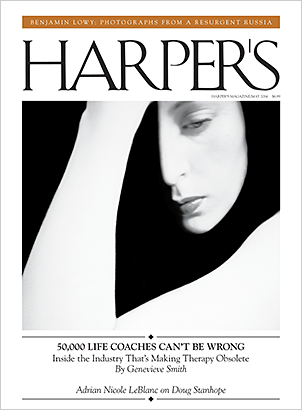
Harpers-1404-302x410SOUNDTRACK: BECK-Sea Change (2002).

Aseachnagefter the wild dance of Midnight Vultures, Beck entered the 2000s with Sea Change, a very mellow album.  It is highly regarded by many, although it’s too mellow for my liking, which is unsurprising give my tastes.  (Of course, if you’re in a mellow/sad mood, it’s perfect).  Even though I feel like it is quite samey, a closer listen shows as much diversity within these songs as any of his thematic albums.  And there are some great sounds that he throws on top of these tracks.  Like the Radiohead vibe in “The Golden Age”

“Paper Tiger” has a kind of sleekness to it, with the strings and the bassline that keeps the track interesting.  “Guess I’m Doing Fine” is a mopey song that has the potential to be too much ,but never goes that far.  It winds up being quite beautiful.  “Lonesome Tears” has strings that make it sound a bit like Air (the band).  “Lost Cause” is the poppy side of this mellow album—it’s got a super catchy chorus (although is clearly not a happy song) and would be a great ballad on any other album—here it comes across as the peppiest number.  “End of the Day” introduces sitar, but it falls a little flat in the middle of the disc.

“It’s All in Your Mind” is a pretty and short song.  “Round the Bend” is easily the most depressing song that Beck has ever done.  It’s also quite beautiful but, man what a downer.  Oh wait, that “most depressing” award would go to “Already Dead” a very sad acoustic song which has Beck singing in an aching falsetto.   The darkness is lightened somewhat with the sitar flavored “Sunday Sun” but it still has that aching vocal.  And yet it ends with a total musical freak out at the end—noise and feedback and chaos which makes sense in the song but seems so out of place on the record—and yet it’s kind of a welcome relief.  “Little One” has a more upbeat vibe (with big drums even).  Although it seems to get lost by the end of the disc.  As does “side of the Road” which doesn’t really have a lot going for it.

 Any one of these songs would be a perfect mellow beck song.  But at 52 minutes, the album is a bit relentless.   I think what weighs down a lot of these songs is their length.  The lengthy strings at the end of “Tears” is very pretty but with several songs pushing 5 minutes, overall it gets to be a bit much.   There’s no “bonus” track on this one.

 [READ: March 17, 2014] “Diagnose This”

This article by Heidi Julavits (whose novels I keep intending to read but have yet to so far), really appeared to me because of the conceit of self diagnosis.  Whenever you go to a doctor, if you have searched your symptoms online (which everyone has) you always feel guilty about bringing it up—like you’re not supposed to investigate these free resources.  Now it’s entirely true that looking up your symptoms online is madness—everything leads to cancer.  Everything.  If you are a hypochondriac, you should never ever do this, but if you are a reasonable person, you can use online medical diagnoses and, more importantly, message boards to see what other people have said about similar symptoms.

In this essay, Julavits talks about her own symptoms for what her doctor diagnoses as possible Ménière’s Disease, a rather rare disease that is more or less worst case scenario.  And the doctor tells her not to look it up when she gets home (she looks it up in the parking lot).   She doubts that this is an accurate diagnosis.  But as she learns when she interviews several doctors and medical school teachers—doctors are not taught to learn gray area thinking.  They have to save lives so they may jump to the most serious situation in order to prevent serious damage—even if that conclusion may involve tons of unnecessary and expensive tests. (more…)

Read Full Post »

  grantland8SOUNDTRACK: RALPH STANLEY-Tiny Desk Concert #31 (October 13, 2009).

ralpRalph Stanley is apparently a living bluegrass legend, although I’ve never heard of him.  He plays a clawhammer banjo (and apparently has for 63 years).

The concert lasted only 6 minutes, but in that time he sang three a capella songs: “Gloryland,” “Turn Back, Turn Back” and “Amazing Grace.”

It’s hard to assess a legend based on this performance.  I’ve no idea how good his voice was back in the day.  He sounds fine here, albeit understandably quite old.  I’d have liked to hear his banjo.

[READ: January 3, 2014] Grantland #8

It is becoming apparent to me that Grantland loves basketball.  Like, a lot more than any other sport.  This issue had a ton of basketball in it.  And, I have to admit I was a little tired of it by the end–there was a lot less pop culture stuff, too.  So, it felt especially basketball heavy.  I realize of course that the time frame covered was the playoffs, but still.

BILL SIMMONS-“Searching for a Superman”
A lengthy article about Dwight Howard, discussing the pros and cons of signing him again.

MARK TITUS-“How Did He Get So Good?”
A look at Paul George and Danny Green doing better than expected in the NCAA playoffs.

CHARLES P. PIERCE-“A Dark Day in Boston
Pierce wonders about Boston after the Boston Marathon bombing–he says the city will come back stronger. (more…)

Read Full Post »

Pete Seeger [1919-2014]

seegerPete Seeger died last night at the age of 94.  I love his anti-war quote: “Sometimes I think [about] that old saying,’The pen is mightier than the sword.’ Well, my one hope is the guitar is gonna be mightier than the bomb.”

When I was a kid, I knew a few of his songs (and didn’t really like them) because of an organ songbook we had (did everyone have an organ in the 70s?).  I can remember pounding on the wheezing organ and making up silly lyrics to “If I Had a Hammer” and “Where Have All the Flowers Gone?”  It’s amazing to think that these songs, which were written in the sixties, are often seen as eternal classics.  It’s also amazing to think that Seeger wrote “Turn! Turn! Turn!” which I never associated with him.  Indeed, like Woody Guthrie, much of American folk music can be traced to Pete Seeger (even if he adapted much of it himself).

I really started getting into Seeger when I had kids, as I found his music was fun to teach the kids to sing along to–it was designed for singing along to.  In fact, he wrote a ton of children’s music as well. (He released FIFTY-TWO studio albums, along with 22 live albums and 23 compilations).  His first solo album was a collection of traditional folk songs for children (he didn’t write them, which may be why it’s confusing to know which songs were actually his).  And I don’t even know anything about his first band The Weavers, who had hits with “Goodnight Irene,” “On Top of Old Smokey,” “So Long (It’s Been Good to Know You)” and “Wimoweh.”

(more…)

Read Full Post »

CV1_TNY_10_14_13McCall.inddSOUNDTRACK: JASON VIEAUX-Tiny Desk Concert #17 (June 15, 2009).

viaeuxJason Vieaux is the first to break the mold of folk singers playing the Tiny Desk.  Vieaux is a classical guitarist.  I don’t know a lot about classical guitar, but when it’s good I know it’s gorgeous.  And man, is this gorgeous.

I don’t know anything about Vieaux, but in the little blurb, they say that in 2002 they invited him to spend a week as a young-artist-in-residence on their classical-music program Performance Today.

I would have been grossed out by his long fingernail if they hadn’t pointed out that he glues a slice of a ping-pong ball to the underside of his right thumbnail as a kind of extended, “press-on nail” guitar pick.

He plays 3 songs and they are all simply stunning.

Bach: Prelude (from Prelude, Fugue and Allegro, BWV 998)

Maximo Diego Pujol: Candombe en Mi

Francisco Tarrega: Capricho Arabe

You can visit the NPR site to hear about the ping pong ball thing, and you can watch the video below.

[READ: January 7, 2014] “Pure Bleach”

This New Yorker has several small essays about work.  They are primarily from people who I wasn’t familiar with–only Amy Poehler saved the five from being unread.  When after reading all of them I enjoyed them enough to include them all here.

The pieces are labelled under “Work for Hire” and each talks about a humiliating job.

This final installment was the shortest.  Ruscha is an artist, whose name sounds familiar to me–he worked in pop art. His lame job was working in a laundromat “mixing bleach and water together in brown glass bottles for the customers to use”  If you didn’t know better you would say, that sounds like an old job, and you’d be right–that job existed in 1951.  Geez.  He made 50 cents an hour. (more…)

Read Full Post »

« Newer Posts - Older Posts »