Feeds:
Posts
Comments

Archive for the ‘Essays’ Category

CV1_TNY_06_08_15_09.inddSOUNDTRACK: SOUNDTRACKSTELLA DONNELLY-“Talking” NPR’S SOUTH X LULLABY (March 19, 2018).

The South X Lullaby is a really fun way to get to know a new (or familiar, but mostly new) artist in an intimate live setting.  I had heard one of Stella Donnelly’s songs before, but this Lullaby presented her by herself (with a very cool backdrop) with an amazingly clear recording of her voice and guitar.

Stella Donnelly has only one EP to her name, but that’s been enough to make her sharp wit come through in sweet, quiet songs that rage loudly. The Australian singer-songwriter’s Thrush Metal EP was recently reissued in the U.S. with a bonus track, “Talking,” which she performs here surrounded by video of wires, a weaving machine and woolen yarns.

Her voice is clear with big open vowels (you can kind of hear the Australian accent, but it’s somewhat indeterminate).  Despite it being just her electric guitar, she plays a in a couple of slightly different styles throughout the song which adds a lot of texture to the piece.

For the end of the song she really unleashes her voice even as the guitar doesn’t alter all that much.  It’s pretty intense.

I wish you could see the art installation a bit more (I realize this is a video for her, but the installation is pretty neat).  At least they hold the pull-back screen at the end a little long so you can see what’s going on.

Donnelly played “Talking” in Conductors and Resistance, an art installation by the Israeli artist Ronen Sharabani that’s on display as part of the SXSW Art Program. Like Donnelly’s direct and feminist folk songs, Sharabani confronts the viewer to increase action in areas of high resistance, the only way to ensure a strong reaction.

[READ: April 13, 2016] “A Soldier Home”

Back in June of 2009, The New Yorker had their annual summer fiction issue.  Included in that issue were three short essays under the heading of “Summer Reading.”  I knew all three authors, so I decided to include them here.

This essay was about Yiyun Li’s growing up in China.

And I was astonished by the first line: “The summer after my year of involuntary service in the Chinese army….”  I didn’t know that women were made to be in it.  She says that after that summer, she read Hemingway compulsively. (more…)

Read Full Post »

SOUNDTRACK: JOHN PRINE-Tiny Desk Concert #717 (March 12, 2018).

For all of the legendary status of John Prine, I don’t really know that much about him.  I also think I don’t really know much of his music.  I didn’t know any of the four songs he played here.

I enjoyed all four songs.  The melodies were great, the lyrics were thoughtful and his voice, although wizened, convey the sentiments perfectly.

The blurb sums up things really well

An American treasure came to the Tiny Desk and even premiered a new song. John Prine is a truly legendary songwriter. For more than 45 years the 71-year-old artist has written some of the most powerful lyrics in the American music canon, including “Sam Stone,” “Angel From Montgomery,” “Hello In There” and countless others.

John Prine’s new songs are equally powerful and he opens this Tiny Desk concert with “Caravan of Fools,” a track he wrote with Pat McLaughlin and Dan Auerbach. Prine adds a disclaimer to the song saying, “any likeness to the current administration is purely accidental.”

I thought the song was great (albeit short) with these pointed lyrics:

The dark and distant drumming
The pounding of the hooves
The silence of everything that moves
Late in night you see them
Decked out in shiny jewels
The coming of the caravan of fools

That song, and his second tune, the sweet tearjerker “Summer’s End,” are from John Prine’s first album of new songs in 13 years, The Tree of Forgiveness.

He introduces this song by saying that.  This one is a pretty song.  It might drive you to tears.  He wrote this with Pat McLaughlin.  We usually write on Tuesdays in Nashville because that’s the day they serve meatloaf.  I love meatloaf.  We try to write a song before they serve the meatloaf.  And then eat it and record it.

For this Tiny Desk Concert John Prine also reaches back to his great “kiss-off” song from 1991 [“an old song from the 90s (whoo)…  a song from the school of kiss off 101”] called “All the Best,” and then plays “Souvenirs,” a song intended for his debut full-length but released the following year on his 1972 album Diamonds in the Rough. It’s just one of the many sentimental ballads Prine has gifted us.

He says he wrote it in 1968…when he was about 3.

Over the years, his voice has become gruffer and deeper, due in part to his battle with squamous cell cancer on the right side of his neck, all of which makes this song about memories slipping by feel all the more powerful and sad.

“Broken hearts and dirty windows
Make life difficult to see
That’s why last night and this mornin’
Always look the same to me
I hate reading old love letters
For they always bring me tears
I can’t forgive the way they rob me
Of my sweetheart’s souvenirs”

The musicians include John Prine, Jason Wilber, David Jacques and Kenneth Blevins.


[READ: December 11, 2017] X

I really enjoyed Klosterman’s last essay book, although I found pretty much every section was a little too long.  So this book, which is a collection of essays is perfect because the pieces have already been edited for length.

I wasn’t even aware of this book when my brother-in-law Ben sent it to me with a comment about how much he enjoyed the Nickelback essay.

Because I had been reading Grantland and a few other sources, I have actually read a number of these pieces already, but most of them were far off enough that I enjoyed reading them again.

This book is primarily a look at popular culture.  But narrowly defined by sports and music (and some movies).  I have never read any of Klosterman’s fiction, but I love his entertainment essays. (more…)

Read Full Post »

SOUNDTRACK: NEIL YOUNG-Harvest (1971).

I like loud rocking songs and I dislike most country.  So really I shouldn’t like Neil Young’s Harvest (at least compared to his more rocking albums).

But Neil is Neil and while I would never say he can do no wrong (he definitely can), I give him the benefit of the doubt.  And on this album he delivers.  Plus, it’s really not a country album at all.

I think what I particularly like about Harvest is the looseness of it, which I see signified primarily by Neil’s harmonica which is never off, but which is never perfect either.  Plus, and I’m sure this has a lot to do with it–I’ve heard these songs a lot and they have really sunk in.

“Out on the Weekend” is the opening track and it was one of the songs I knew least well–which is odd certainly for an opening song.  There’s slide guitar and harmonica.  But it’s followed by “Harvest,” which is so simple and so notable–bass, a gentle acoustic guitar and basically a snare drum play that simple up and down melody as Neil sings “dream up, dream up, let me fill your cup with the promise of a man.”  It’s those steel guitar lines that seems to fade in from nowhere that really rather make the song.

“A Man Needs a Maid” is one of those weird songs that is so odd to me–the song is literally about him getting a maid (but much more): “keep my house clean fix my meals and go away.”  Neil sounds like he is singing from a mile away as he plays the melody on the piano.  And then after the first verse all kind of orchestration fills in–bells and strings and the song gets really really big.  By the time the song comes around again, the chorus is swallowed by the strings and bells.  It feels much longer than its 4 minutes.  I sort of hate it but kind of like its oddness at the same time.

And then comes the wonder that is “Heart of Gold,” another simple melody with soft bass notes and that harmonica.  Incredibly catchy and undeniably great.

Harvest is more of a folk album with slide guitar (and orchestration), but a song like “Ready for the Country” certainly leans toward country (or is it mocking country?).  It’s got a good beat and is kind of fun, with a lighthearted joshing about the country.

“Old Man” is a another slow classic.  When the harmony vocals come in later in the song it’s really wonderful.  I never knew that James Taylor and Linda Ronstadt sang backing vocals on this song and that that’s Taylor on the banjo.  “There’s a World” is a ponderous song from the get go–almost as if it left off from “Maid,” with strings and kettle drums.  After a verse a harp swipes away the song and plays a delicate melody which is just as quickly wiped away as this song which seems so big comes to a rather quick ending–only 3 minutes in total.

“Alabama” introduces a fuzzy electric guitar with what seems like it should be a classic riff but which …isn’t.  It doesn’t quite resolve into anything and the chorus is almost satisfying–it starts really big with a chorus of “Alabama!” but it also doesn’t exactly resolve into anything.  I think I keep thinking it’s other songs, and yet it is distinctly its own.

“Needle and Damage Done” is just great.  A terrific riff and a poignant song simple and brief (2 minutes!) but really powerful.

“Words (Between the Lines of Age)” is nearly 7 minutes it’s the longest by far on the record.  It builds slowly with a big chorus.   There’s a great instrumental section with a nice piano melody.  The song ends with a very Neil Young guitar solo as well.  Pretty great stuff.

I’m not gushing about the album only because it is a classic and all classics have flaws.  But I could listen to this any day, even “Man Needs a Maid.”

[READ: July 1, 2016] Harvest

I have often thought I should read this series.  Of course, the last time I thought about it, there were 50-some books in the series and that seemed like way too many.  Well as of June 2017, there are 120 books in the series, which is an insane series to jump into.  But at work, four of the books came across my desk and if that’s not an invitation to read something, I don’t now what is.  So I’ve decided to read these four and we’ll see if that leads to more.

This story gives a lot of history of Neil himself and a lot of context of the albums surrounding this one.

Inglis starts by talking about how when Harvest Moon came out in 1992, it was a call-back to Harvest and it was highly regarded, even though Harvest itself wasn’t at the time.  Even Neil himself seemed to recoil from the unexpected success of Harvest by playing every kind of music but folk/country for decades.

In fact, Harvest was panned when it came out–described as superficial and without meaning.  It was deemed pleasant rather than passionate.  It also worked to define Neil Young as a melancholy songwriter full of catchy tunes, smiling with prairie straw n his mouth.  Meanwhile other fans dismiss this picture entirely, preferring the gritty songwriter from Tonight’s the Night. (more…)

Read Full Post »

SOUNDTRACK: JETHRO TULL-Aqualung (1971).

I loved Jethro Tull.  I have all of their records up until Crest of a Knave when I must guess I decided that they were uncool (as if they were ever cool).  But man are they ever cool and this book reminded me just how cool they are.

The whole record is solid from start to finish with string rockers, string riffs and then mellow folkie songs in between.  And the dynamic nature of Anderson;s voice–he could be five different characters.

How great is “Aqualung,” the song?  A terrific riff, a gentle middle section, a rocking section, some great bass lines all with some wild acoustic guitar and those lyrics–so graphic, so descriptive.  I am always taken with the drums–little thumps and a cymbal throughout the rocking verse.

It’s followed by the flute intro of “Cross-Eyed Mary.”  There’s rocking guitars and another complex riff with Anderson’s snarling vocals (echos on everything).  “Cheap Day Return” opens with a pretty classical-esque acoustic guitar intro and then Anderson’s more gentle vocals.  It’s a 90 second song that segues into the fairy tale melody of the flute for “Mother Goose.”  There’s some very nice harmonies on this song.

“Wond’ring Aloud” is all folk and the laughing that bounces around the headphones before the great riff of “Up to Me” on both guitar and piano.  And how neat that the lead guitar is circling around in one ear while the flute and vocals are down the middle of the song.

“My God” opens with a lengthy acoustic guitar display.  It’s quite pretty until the minor chords come in.  It’s followed by the piano and that distinctive voice.  Two minutes in, the guitar joins and the vocals get louder and more sneering.  There’s a terrific flute solo (complete with him giving a “yea” in the middle of it) and then a choral accompaniment that adds a whole new level of pious and impiety.

“Hymn 43” has a great heavy riff, chugging guitars and Anderson’s snarling lyrics (and so many whirling guitars solos and even a flute solo throughout).

It’s followed by the minute-long “Slipstream,” a pretty acoustic guitar song with gentle strings and more lyrics obliquely about god.  The song ends with some woozy up and down sliding on the strings which segue into the lengthy classical sounding piano intro of “Locomotive Breath.”

There’s a distant guitar solo under the piano before the guitars get louder and louder for the great chugging riff of the song.

The disc ends with “Wind Up,” a quiet intro on acoustic guitar and vocals that gets slowly louder;  and then the song rocks a swinging beat as he sings of excommunication and being packed off to school.  There’s a wild solo (different in each ear) in the middle of the song, which

and then the end where a jaunty piano accompanies these straightforward lyrics:

When I was young and they packed me off to school
And taught me how not to play the game
I didn’t mind if they groomed me for success
Or if they said that I was just a fool
So to my old headmaster and to anyone who cares
Before I’m through I’d like to say my prayers
Well, you can excommunicate me on my way to Sunday school
And have all the bishops harmonize these lines
I don’t believe you
You had the whole damn thing all wrong
He’s not the kind you have to wind up on Sundays

[READ: July 1, 2016] Aqualung

I have often thought I should read this series.  Of course, the last time I thought about it, there were 50-some books in the series and that seemed like way too many.  Well as of June 2017, there are 120 books in the series, which is an insane series to jump into.

But at work, four of the books came across my desk and if that’s not an invitation to read something, I don’t now what is.  So I’ve decided to read these four and we’ll see if that leads to more.

This was the third book in the series that I’d read.  The first (Colin Meloy’s) was a personal take on one of his favorite records, The Replacement’s Let It Be.  The second (Steve Matteo’s) was a detailed look at the recording sessions of The Beatles’ Let It Be.  This book is all about interpretation–Allan Moore’s take on an album that has fascinated him since his brother bought it over 30 years ago.  He is quick to point out that right and wrong interpretations of art are kinda impossible, but that won’t stop him.  Ian Anderson has written “What listeners get from the lyrics is theirs, what the lyrics are for me is mine.”

Moore breaks the book up into sections–the first situates the album at the time of its release, the rest looks at various songs (including bonus tracks on new releases). (more…)

Read Full Post »

815SOUNDTRACK: BORIS-Heavy Rocks (2011).

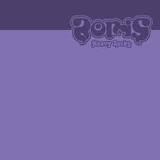
Heavy Rocks, also known as Heavy Rocks 2011, was released at the same time as Attention Please and New Album.   The album has the same name and cover style and font as their 2002 album Heavy Rocks, although this one is purple and the 2002 release was orange.

Heavy Rocks shares the tracks “Jackson Head” and “Tu, La La” with New Album.
Heavy Rocks
shares the tracks “Aileron” with Attention Please, although it is radically different.
New Album shares the songs “Hope,” “Party Boy” and “Spoon” with Attention Please. 

The vinyl edition features extended versions of “Missing Pieces” and “Czechoslovakia.”

Unlike the other two albums, this one is largely heavier, exploring their more metal urges.

“Riot Sugar” (“甘い暴動”, lit. “Sweet Riot”) 3:56  has a raw sound with a soaring solo and a chugging, heavy tone.  It abruptly ends mid guitar solo and segues into “Leak-Truth,yesnoyesnoyes-” (“Leak-本当の反対の反対の反対の反対-“, “Leak (The Opposite of the Opposite of the Opposite of a Real Opposition)”) 4:11  which opens with a quiet unprocessed guitar and then the song starts rocking out–a kind of grungy alt-rock sound.  The vocals are whispered with a kind of throbbing bass line throughout.

“Galaxians” 4:09 opens with pummeling drums and all kinds of (80s) arcade sounds–including a bomb dropping and Atsuo screaming and shouting.  It is heavy and raw and pure punk.

“Jackson Head” (“ジャクソンヘッド”) 3:00 The version of this song is less synthy than that on New Album.  It’s got those punky distorted vocals right up font a shouted chorus of Jackson Head repeated over and over.

“Missing Pieces” (14:27 on vinyl release) 12:22  starts slowly with a pretty guitar melody and muted vocals.  After 6 minutes the song rocks but doesn’t get too noisy.  But after two more minutes it turns into complete and utter noise for another 2 minutes.  Then it all drops away and goes back to the quiet intro guitars.  The last two minutes just rock out.

“Key” (“扉”, lit. “A Door”) 1:46 This is a quiet brief instrumental with twinkly keys and a soaring solo.  It segues into “Window Shopping” 3:57 which opens with a woman speaking Japanese and then some heavy riffage.  There’s a shoegaze echo on the whole thing, especially the doo doo/ doo doo chorus.

“Tu, la la” 4:21 Such a great riff they had to play it twice.  This is a heavier and more guitar based version than on New Album.  It’s my favorite Boris song.

“Aileron” (“エルロン”) 12:45  The version on Attention Please is 2 minutes of acoustic guitar.  This one is nearly 13 minutes, and it begins with a slow echoing guitar notes but it soon gets heavy.  It’s a long, slow, heavy piece with drones and echoed vocal for nearly the whole song, although after 12 minutes there is a delicate piano coda.

“Czechoslovakia” (“チェコスロバキア”, 5:46 on vinyl release) 1:35 Not sure what happens in the vinyl version, but this short rocker has loud guitars and thunderous drums.  Just as it’s about to take off it fades after 90 seconds and ends the album.  Always leave them wanting more.

[READ: February 8, 2016] “Package Tour”

This was the 2015 New Yorker fiction issue.  It featured several stories and several one-page essays from writers I like.  The subject this time was “Time Travel.”

For the final time travel essay Sam Lipsyte balks at a couple’s genuine desire to use a time machine to go back to Brooklyn a few decades to buy a cheaper brownstone.  People in Brooklyn apparently constantly bemoan who cheap places were in their youth, but this one, well:

I pictured the couple hunched in some rattling claptrap wormhole-traverser–because all time machines are built with scrap iron and held fast with duct tape and cut-rate rivets, even those designed for hunting down investment lofts.  Their lips would be peeled back by G-Forces as their ship shredded along the seam of the space-time continuum until they landed in Cobble Hill, 1974.  There they’d hop out, buy a building, and head back. (more…)

Read Full Post »

815SOUNDTRACK: BORIS-New Album (2011).

In 2011, Boris released three albums at roughly the same time.  The three albums are linked because they share tracks (usually very different versions, sometimes radically different).  And, of course, the CD and LP feature different versions of several tracks (but none seem to have a different cover).

New Album shares the songs “Hope,” “Party Boy” and “Spoon” with Attention Please. 
New Album shares the tracks “Jackson Head” and “Tu, La La” with Heavy Rocks.
Heavy Rocks
shares the tracks “Aileron” with Attention Please, although it is radically different.

Sargent House CD (Total length: 50:10).  Interestingly, this American release is longer than the other two.  It is quite poppy with some heavier elements.  There’s a lot of songs that could even be considered dancey (!).

“Flare” 5:04 opens with sirens blaring and a gentle electronic introduction a song bursts forth that feels like total J-pop.  A little heavy (in parts) but this is really dancey.  There’s a great Wata solo in the middle and a rather heavy ending.  The percussion throughout is very mechanical sounding like ea car engine sputtering.  It’s a remarkable sound for Boris.

“Hope” 3:43 is a poppy / shoegazey song sung by Wata. It’s synthy (with trippy synth sound effects  throughout).  It’s slick and catchy.  The version of Attention Please is a more organic, with strings instead of electronics.

“Party Boy” 3:48 opens with a synthy riff and thumping bass drums.  It is the catchiest thing they’re released with a really poppy chorus and interesting swirling synths around the vocals.  There’s even a harp in the middle of the song.  The version on Attention Please is much heavier with a buzzy bass guitar and almost no synths.

“Luna” 8:29 has fast electronic drums and processed Wata backing vocals.  It is super techno sounding.  The middle section is an instrumental with electronics that sound very Eastern (sped up, but that kind of scale).  It’s followed by some heavy guitars and pounding drums.  A ripping staccato guitar solo follows.  There’s even a few moments that sound like Sigur Rós.  Why the song “Black Original” didn’t make this album but is on the Japanese versions is a mystery to me.

“Spoon” 4:29 Opening with single keyboard notes over a pounding drums and distorted guitars, this song sung by Wata is fluid and catchy.  It’s the most shoegazey thing they’ve done so far.  There’s a total Stereolab vibe in this song.  The ending features a series of intense ascending chords.  The version on Attention Please has no synths, just shoegaze guitars.

“Pardon?” 6:00 The song opens with woozy electronic but soon changes to very gentle guitars and an almost jazzy bassline.  The whispered vocals are downright soothing.  There’s a trippy almost delicate guitar solo that runs through until the end.

“Jackson Head” 3:11 This is the most punk song on the record, but it’s electronic punk with very dark synths.  The lyrics are shouted with a repeated chant of “Jackson Head.”  The solo sounds like single, distorted snyth notes under the pulsing of the rhythm.  The version on Heavy Rocks is less synth menace, although it does sprinkle trippy synths throughout the song.

“Les Paul Custom ’86” 4:10 A whispered vocal over a thumping potential dance beat.  When Wata takes over vocals the song changes style, but only slightly.  Distant synths enter the song and try to install a melody on it, but it seems to be fighting everything else.  Wata’s spoken “echo” echos around your heads in a cool swirl (if you wear headphones).

“Tu, La La” 4:15 “Tu La La” has the best riff of any Boris song, It is fast and catchy and really interesting.  This version has strings that kind of overwhelm the greatness of the riff. (I prefer the version on Heavy Rocks)  The end of this version has an intense buildup of staccato strings.

“Looprider” 7:01 is a quiet song with a slow bassline and interesting guitar lines.   The last minute or so is fast synths, building and building with a siren effect that echoes the start of the album.

This is a pretty unexpected release from the band who created Heavy Rocks and Amplifier Worship, but I think it’s a great addition to their catalog.

For comparison sake:

Daymare LP Total length:       45:40

  1. “フレア (Vinyl Version)” (“Flare”; features introduction quoting the end of “Looprider”) 5:02
  2. “希望 -Hope-” 3:40
  3. “Party Boy (Vinyl Version)” 3:43
  4. “Black Original (Vinyl Version)” 4:33
  5. “Pardon?” 5:54
  6. “Spoon” 4:23
  7. “ジャクソンヘッド” (“Jackson Head”) 3:09
  8. “黒っぽいギター (Vinyl Version)” (“Dark Guitar”; English title “Les Paul Custom ’86”) 4:06
  9. “Tu, la la” 4:11
  10. “Looprider (Vinyl Version)” 6:59

Tearbridge CD Total length:       45:39

  1. “Party Boy” 3:49
  2. “希望 -Hope-” 3:43
  3. “フレア” (“Flare”) 4:21
  4. “Black Original” 4:27
  5. “Pardon?” 5:59
  6. “Spoon” 4:28
  7. “ジャクソンヘッド” (“Jackson Head”) 3:12
  8. “黒っぽいギター” (“Dark Guitar”; English title “Les Paul Custom ’86”) 4:09
  9. “Tu, la la” 4:15
  10. “Looprider” 7:13

[READ: February 5, 2016] “Fall River”

This was the 2015 New Yorker fiction issue.  It featured several stories and several one-page essays from writers I like.  The subject this time was “Time Travel.”

For this essay McGuane travels back to 1955 to his grandmother’s house in Fall River section of Boston.

He says there is little compassion between the duchies of this town.  The Irish Catholics dominate every neighborhood, with each having its own church.  But eventually Irish Catholic men like his uncles started showing interest in the Italian, French Canadian and Jewish girls–going so far as to marry some of them.

He wants to go back there to 1955 when there were half as many people and each town had its own personality.  The ragman is known as “the sheeny” and he imagines that the sheeny is a soon-to-be-famous sculptor.  He brings up a lot of other single incidents, like the “Portagee” boy who came to exact revenge on the author;s brother for breaking his arm.  Or how Emeril Lagasse comes from “up the Flint.”  There’s Cockney immigrants Down Almy Street who are known as “jicks” (a one-size-fits-all Irish insult). (more…)

Read Full Post »

815SOUNDTRACK: BORIS-Pink (2005/2016).

You never know exactly what you’re going to get with an experimental band like Boris.  Well, you sort of know what you’re going to get–it will be loud and heavy (mostly).

Boris is and pretty much always has been a trio from Japan: Takeshi on vocals, and double neck bass/ guitar;  Atsuo on drums and some vocals and Wata – with guitars effects and vocals.

.  Their first album came out in 1996 and was a 60 minute continuous piece of drone metal.  It is considered ground breaking (and ground shaking) and is completely influential.  It (along with half of their catalog) is currently out of print, at least in the U.S.  Boris is also nigh impossible to collect all of their music, if you like that sort of thing.  Their Japanese releases are inevitably different from any American release (and sometimes vinyl differs from CD).  Either by track order or length of song or even the mix of particular songs

A decade and eight (plus) releases later with names like Amplifier Worship and Heavy Rocks, they put out Pink.

Pink is a landmark album for Boris (two years ago they toured the album),  because even though it was still incredibly heavy, it also experimented.  Most notably with shoegaze.

.

Pink has a specific track listing on both American and Japanese releases, but the vinyl mixes things up.

The CD releases open with “決別” (“Farewell”) a beautiful soaring 7 minute slow song with a catchy chord sequence and lovely ringing guitars.  Although the beauty is interrupted by Wata’s wailing guitar solos.  She plays some wonderful soaring notes although at times they are rather piercing.  But it’s still kind of soothing and dreamy

Until track 2, when “Pink” scorches forth with a  super fast super heavy super guitar blast.  Four minutes of all out metal with soaring guitars, heavy drums and some appropriate screams from drummer/singer Atsuo.  And if you listen with headphones, there may be two or three guitars echoing in there (in addition to Wata, Tetsuo exclsuivly plays a doubleneck bass/guitar so you never really know what you’re going to get form him next.

The two and a half-minute “スクリーンの女” (“Woman on the Screen”) continues the thrash while the two-minute “別になんでもない” (“Nothing Special”) only increases it with a guitar so fuzzed out as to be almost recognizable.

“ブラックアウト” (“Blackout”) shows another side of the band.   Still loud, still heavy, but grindingly slow and sludgy (those shoegaze days are long gone).  The song ends with nearly a minute of ringing feedback before abruptly cutting off and switching to a more standard heavy metal sound in the 75 second instrumental “Electric.”

“偽ブレッド” (“Pseudo-Bread”) stomps along with fast drums and all kinds of distortion.  It’s even got a kind of mumbly sing-along chorus.  In the second half of these song there’s a great riff and even some “ooh oohs” to sing along to.  It’s really catchy until the ten seconds of noise tacked on at the end (the vinyl version extends this sheer brutal wall of noise to six minutes!).

“ぬるい炎” (“Afterburner”) changes tempo a lot.  It sounds like a big old 1970s rock song with chanted vocals and hand claps.  Wata’s solo is pure old school classic rock.  Prominent drums and highly distorted guitars split headphones as the vocals sit in the middle of the three-minute “6を3つ” (“Six, Three Times”).

“My Machine” is only two minutes on the CD, but it is eleven on the vinyl.  The Cd version taken from the middle of the song–where there’s more bass and echoed guitars underneath, while the eleven minute version has soaring guitars and washes of waves moving back and forth.  It’s dreamy and lovely until the ending feedback, of course.  But that fades out and then it’s just relaxing washes of waves until the main melody pokes it head back up briefly and then fades once more.  There’s a kind of rumble for the last minute or so of the extended version which leads into “Farewell” on the vinyl.  But the CD continues with “俺を捨てたところ” (“Just Abandoned Myself”).  On the American release, it’s eighteen minutes long, although it’s only ten minutes on the Japanese version.

The song is a favorite of many fans.  It’s got a totally catchy riff with distant vocals singing a catchy melody.  It’s like 7 minutes of a super catchy metal song with great vocals, a catchy melody and a terrific baseline riff.  There’s some very cool sounds that bounce around the song too.  Around eight minutes the heaviness goes away and soaring guitars take over, but with a low rumble to keep it grounded.  The next six or so minutes are pretty much classic metal drone–two chords repeated slowly while a feebacking guitar wails over the top.  The only difference is the kind of quieter guitar that;s sort of soloing throughout–almost plucking out notes amid the noise.

Pink was reissued in 2016 as a deluxe two disc package.  The second disc is called Forbidden Songs with nine well-produced and great-sounding tracks.

“Your Name Part 2” is dreamy and melodic.  It opens quietly almost like a spaghetti western with some bass notes, soaring guitar notes, and quietly echoed vocals.  “Heavy Rock Industry” starts with some loud droning chords and then about a minute an a half in there’s just drums and Atsuo whooping until the song takes off again.  “SOFUN” is four minutes of a heavy pummeling riff and scorching solos.

“non/sha/lant” is like a heavy short jam with bass riffage and soloing followed by some guitar work.  “Room Noise” is catchy with a cool bassline and soaring guitars.  “Talisman” is slow and heavy with loud distortion.  There’s a shouted chorus with heavy downtuned guitars that makes it almost singalongy.

“N.F. Sorrow” is nearly eight minutes long.  starts off slow with echoed vocals and a shaker.  It’s a quiet moody piece that builds to a heavy chorus with rumbling slow bass.  When the song really gets moving around 6 minutes there’s some great driving bass under Wata’s solo.

“Are You Ready?” is a simple two note riff on the guitar with a chorus of loudly whispered menace.  The song fades on a wild solo.  And the bonus disc ends with the 2 minute “Tiptoe” a quiet piece of gently plucked guitars and echoed notes that resolves into a really catchy melody.

Boris has dozens of records out but this is certainly the place to start–you get to experience pretty much all phases of the band.

[READ: July 21, 2015] “Lost Luggage”

This was the 2015 New Yorker fiction issue.  It featured several stories and several one-page essays from writers I like.  The subject this time was “Time Travel.”

Mueenudin imagines travelling back in time to the 1930s when India was still unified, to visit his father when he was young.

His father was a lawyer and when he studied at Oxford, the girls nicknamed him The Shiek. (more…)

Read Full Post »

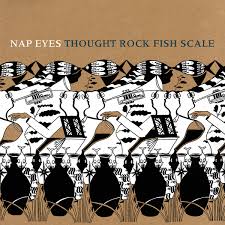
815SOUNDTRACK: NAP EYES-Thought Rock Fish Scale (2016).

Nap Eyes’ second full album doesn’t deviate too much from their first, although the songwriting has gotten stronger and the band branches out in small ways.

I love the simple but effective bass throb that runs though “Mixer.”  The lead guitar isn’t quite as noisy as on the previous, but the song doesn’t suffer from the lack.  Overall the song, and the album, feels more immediate, which is a good thing.

“Stargazer” is catchy right from the get go–a simple but cool guitar riff and some nice rumbling bass.  And after the first verse, the second guitar plays a nice harmony of that immediately catchy riff.  Plus, the lyrics feel even more pointed:

I have seen people go by me with such
Determination that it’s sick
I’d like to go the places they don’t know how to get to
But I can’t remember the trick
So I wait around and venomously crown myself
Serpent king of my sins
But if I go down I’m not taking you with me
It’s only myself in the end

“Lion in Chains” has a very Velvet Underground feel, in the best way–Nigel’s voice is closer and clearer and the it’s great the way deadpan chorus soars as he tries to keep it tethered.  I also love the interesting/mundane way he songs about things: “here at the arcade I spent about 45,000 dimes.”

“Don’t Be Right” changes the tone quite a bit–a loud plucked guitar and smooth bass push the song along quite briskly until the chorus slows things down with the wry observation: “Don’t be right – it isn’t good for you / You may not realize it, but it’s not / When you’re right, you barely know what to do / Just sit around thinking and cry a lot.”

“Click Clack” has a smooth opening which shifts after two verses into a loud jangling chord with a Lou Reed via Morrissey delivery:

Sometimes drinking I feel so happy / but then I can’t remember why / I feel sad all over again // sometimes drinking I don’t know my best friend for my best friend

and then it resumes with the most Lou Reed delivery yet

The longest song on the album is “Alaskan Shake.”  It has an almost country feel–a one-two bass line and a lead guitar played with a slide.  Around four minutes the song shifts directions briefly with some loud chords but then it shifts back with that loud slide guitar.

“Roll It” is a faster song, although the tempo slow down half way through is really striking.  It’s even more so when it seems to double down on that tempo change after another verse.  You almost don’t want the song to resume the fats tempo, but I like that way it wraps back up on itself to end.

The album (shorter than the first) ends with the two and a half-minute “Trust.”  Even though this album is shorter, it explores a lot more terrain and is a wonderful step from the first.

The band has a new album coming out next month.  I’m really curious to see what direction they go in especially since the new album cover looks very different from these first two.

[READ: July 21, 2015] “The Course of Happiness”

This was the 2015 New Yorker fiction issue.  It featured several stories and several one-page essays from writers I like.  The subject this time was “Time Travel.”

Erdrich takes time travel in an entirely unexpected way.  She says that being from the midwest she should probably  imagine all the good she could do if she could time travel–vaccinating people against old-world diseases or killing a young Hitler, but she says that all of that is too much to consider. (more…)

Read Full Post »

SOUNDTRACK: ENDON-Through the Mirror (2017).

Endon’s Through the Mirror is one of the most punishing musical experiences I’ve ever had.  They opened for Boris a few months ago and their live show was incredibly intense.  It’s no surprise that their album is, too.

When I was looking at their merch, this guy came up behind me and said, that their debut album, MAMA made him want to kill himself.  But this album was different, more enjoyable.  I thanked him for saving my life.

Endon hail from Japan and call their music “catastrophic noise-metal.”

The first song is the five and a half-minute “Nerve Rain.”  It is, simply put, a wave of noise.  The guitarist plays a loud distorted guitar–very quickly.  Non-stop for 2 and a half minutes.  It is accompanied by fast pounding drums.  In the background there are all kinds of warbling electronic noises.  After two and a half minutes the noise ends abruptly.  It starts again exactly the same after a few seconds.  This continues for the rest of the song, stopping and starting at more frequent intervals.  It is relentless.  Somebody please put the entire Republican party into a room and play this at them for 24 hours.

The second song, “Your Ghost is Dead” introduces a singer, Taichi Nagura.  The drums are twice as fast, the guitar is also incredibly fast and when the singer comes in, he uses a complicated mix of cookie monster vocals, screams, wails and desperate lashing out.  I have no idea if there are any words to these songs or if he’s just making noise.  Sometimes he’s buried under the rest of the noise.  Interestingly there’s even a cool somewhat mellow guitar riff in the middle of this song–if you removed it from the noise surrounding it, it would be very catchy.  About half way through the song, the noise stops, the riff comes through clean and then Taichi Nagura can be heard crying.   And then it all takes off again.

“Born in Limbo” slows things down with an interesting drum beat.  But the bulk of the song is manipulated sounds and effects–primarily screams, from both tapes and the lead singer.  In fact Taichi Nagura’s screams are rhythmic and strangely catchy.  There’s a Mike Patton component to this song for sure.  The middle of the song even has a somewhat traditional (wailing) guitar solo.

“Pensum” is only 90 seconds long and it is 90 seconds of pummeling noise.  It’s followed by “Postsex” which is more of the same with extra focus placed on Taichi Nagura ‘s vocals which are varied and run through a gamut of pain.

“Perversion Til Death” is 10 minutes long.  It opens with some crazy fast drumming and a slow melodic guitar melody that’s more or less buried under a wall of noise.  This song is a lot slower and more ponderous than the others, with some heavy drums, squalling guitars and screamed vocals just done at a different pace.  Until the final two minutes which are just heavy pounding.

“Through the Mirror” has some interesting guitar ideas buried under a wall of squealing feedback.  Just before the song turns into a breakneck hardcore pace there’s a ten second respite with an interesting riff and nothing else.  And then pummel.  Around three minutes the noise drops away and you get super fast drums with some electronic sounds and Taichi Nagura all-out screaming but in that strangely melodic way again.  It lasts for about 30 seconds before ethe breakneck noise (and growling takes over).  The song slows down with him weeping as pleasant guitars take over.  While these pleasant chords continue playing through, he starts screaming at the top of his lungs in mortal pain.

“Torch Your House” ends this disc with a 9 minute epic.  The song begins quietly, with some pretty guitars and gentle washes of sounds.  They explore chords for about 2 and a half minutes before the drums and noise take over,  but the guitar solo is able to pierce through the wall of noise.  Taichi Nagura screams throughout in bursts, but the guitars stay largely guitar-sounding not noise-making.  Around five-minute the whole things turns into a rocking metal song.  For the last minute or so, it all mellows out with an acoustic guitar playing the melody.  Until the last 30 seconds when the noise returns over and a five-beat drum pattern as the song crashes to an end.

Musical endurance.

[READ: September 23, 2017] “Who’s Laughing Now?”

I have enjoyed most of Tom Bissell’s writing in Harper’s  He writes about a wide array of things, including entertainment.  A while back I read a lot of his older articles and it was enjoyable to read things hat were not current anymore.  And that may be why I didn’t enjoy this article as much.  It is too current.  Too painful.  I can’t believe he hasn’t been impeached yet.

Bissell suggests that trump and SNL were made for each other.  He was the rare novelty guest to have hosted twice.  Once in 2004 to promote The Apprentice and again in late 2015 to soften perception of a presidential campaign widely seen as alarming.  Some would accuse SNL of normalizing him after this (although his being a celebrity of three decades certainly had something to do with it).

Both Times he was on ratings were great so… who used whom? (more…)

Read Full Post »

SOUNDTRACK: WOLF ALICE-Visions of a Life (2017).

Wolf Alice’s second album explores a great deal of diversity.  Nearly every song is in a different style–and yet none of them sound out of place.  It just sounds like Wolf Alice pushing their sound in many different directions and seeing what sticks (and most of hit sticks quite nicely).

It opens a lot noisier than the first album, but the shoegaze element is still prominent.  “Heavenward” is all distorted guitars and soaring melodies before settling down into a quieter verse and then a really catchy, bouncy chorus.  It’s followed by the loudest craziest song they’ve recorded thus far.  The 2 minute “Yuk Foo” is a solid blast of aggressive punk with a thumping bassline, squealing feedbacking guitars and Ellie Roswell screaming and cursing like a fiend.   Catharsis in 2 minutes.

It’s followed by “Beautifully Unconventional,” yet another terrific and, for them, a rather different style of song.  A staggered guitar phrase and a cool staccato chorus.  It’s wonderfully catchy.

“Don’t Delete The Kisses” is a surprisingly sweet pop song. The hook of the shouted singular words is undeniable.  “What if it’s not meant for me? love” with a happy ending “Me and you were meant to be in love”  “Planet Hunter” slows things down a bit with a quiet guitar and Roswell’s voice out front, but it leads into a full and really catchy chorus and a great ending section with a loud bass that takes the song to the end.

A lot of the band’s songs feature Roswell whispering the lyrics. “Sky Musings” is one of those songs.  It’s propulsive with Roswell’s vocals slightly obscured as she speaks out.  If she were a tad louder in the mix, the song would feel incredibly intimate.

“Formidable Cool” shifts things again, with an almost Beatlesqsue guitar riff that turns very loud for the chorus.  The lyrics get really angry and the song grows pretty intense.  “Space & Time” is a bouncing song that lets up in the middle until the second half roars to the end.  Live, this song was amazing with guitarist Jeff Oddie just banging the crap out of his old guitar and making all kinds of sounds.

“Sadboy” is a bit of slower song but it’s got some great noises and sounds on it.  The hook is one that will stay with you.  The second half, with the “waiting for love” refrain features a whole chorus of backing singers (or Ellie)–quite a surprise–as well as some deep, processed vocals and what I assume is Roswell screaming in the background.

“St. Purple & Green” opens with a similar chorused vocal effect before roaring out with some loud crashing guitars. The band plays especially wonderfully with loud/quiet dynamic because during the quiet sections, Roswell’s voice is so delicate and soothing.  The contrasts are tremendous.

“After the Zero Hour” is a pretty folk song with acoustic guitars and Roswell’s layered soaring vocals.  It’s quite a lovely piece.

The disc ends with the title track “Visions of a Life,” an 8 minute epic of heaviness with multiple parts and time signatures.  It’s a fanatic conclusion to the disc–even if 8 minutes is nowhere near long enough.

I feel pretty lucky to have seen them in a small venue as I can imagine them really taking off.

[READ: January 29, 2018] “The Recipe for Life”

This is an essay about Chabon’s father and his own childhood.

His father was a doctor–an excellent doctor, by all accounts.  He worked all day as a hospital pediatrician and then at night he did house calls for U.S. Public Health Service for insurance claims.

He often took Michael with him.  And Michael often had his own doctor bag (made of plastic) and his own stethoscope (made of plastic) and a needle (made of plastic).

He recalls one night when the patient asked him if he wanted to be a doctor like his father.  He felt, even then, that he could never live up to his father’s work.  He saw (and still sees) his father as an excellent diagnostician (he gets every diagnosis correct very early on while watching Marcus Welby).  But Michael is more impressed at his father’s ability to reassurance patients.  he is warm and thoughtful and consoling.

Except toward Michael: “Unless I am gravely ill or seriously injured–and I am almost never either of those things–I don’t even rate the bedside manner.  My father’s response when I cut a finger, stub my toe, twist an ankle or fall of my bicycle never varies: ‘We’ll have to amputate.'” (more…)

Read Full Post »

« Newer Posts - Older Posts »