Feeds:
Posts
Comments

Archive for the ‘Essays’ Category

SOUNDTRACK: SAINT SISTER-Tiny Desk Concert #863 (July 3, 2019).

The first surprise from Saint Sister is the harp.  The second surprise comes when you realize that Saint Sister’s music isn’t going to be traditional harp-centric folk songs.

The third is when Morgan Macintyr speaks after the first song and she has a pretty heavy Irish accent.

It’s a surprise because their voices are angelic and accent-free while they sing their pretty songs.

Saint Sister makes the sort of music I’ve been fascinated with for much of my life, music that mixes the organic with the electronic. In this case, the organic sounds come from that Dusty Strings harp and the harmonies of Gemma Doherty and Morgan Macintyre, with electronics performed on keyboards by Morgan and Dek Hynes, and the mostly digital drums of Shane Gough.

So, yes, even if the harp is the centerpiece (“[when] Gemma Doherty pulled her 34-string lever harp from the band’s vehicle; it seemed bigger than all of us”) the rest of the band fleshes out the harp with waves of synths and percussion.

Causing Trouble” opens with single harp notes and echoing drums.  Then Gemma and Morgan start singing and their voices blend beautifully.

You can tell the Irish connection in the lyrics of this song:

We danced from Belfast to the Basin
When you sang, “And it stoned me”
Well it stoned me

“Shape of Silence” is a short instrumental made up of unearthly sounds and voices as Gemma plays a lovely harp melody.  It’s about a minute long and segues into “Is It Too Early? (Kilmainham).”  They sing in a kind of staccato style (and remind me a bit of Lily & Madeleine here).  There’s no much harp in the verses–it’s almost a dance song, but when the synths fade off, the harp returns and sounds even lovelier somehow.

For “The Mater” Dek and Shane leave so it is only Gemma and Morgan.  This song is quieter with just the harp and their voices.

Although the melding of harp and electronics is cool, they sound beautiful with just harp and voices.

[READ: July 1, 2019] “The Not-Okay Corral”

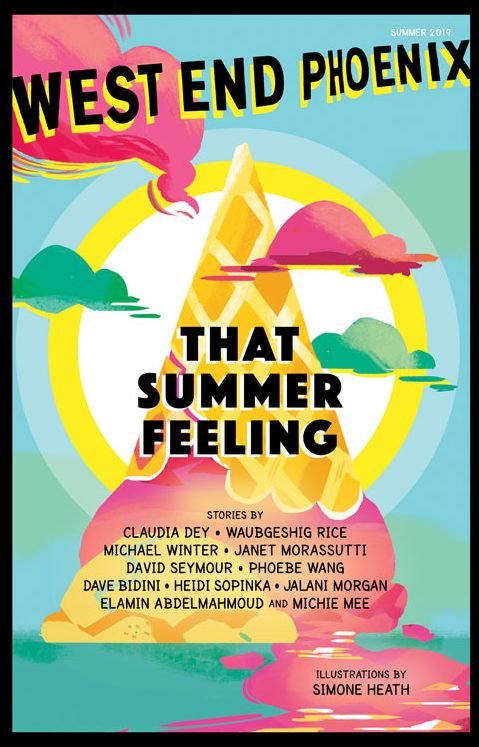
The Summer 2019 issue of The West End Phoenix was a special all comics issue with illustrations by Simone Heath.  Each story either has one central illustration or is broken up with many pictures (or even done like a comic strip).

Each story is headed by the year that the story takes place–a story from that particular summer.

This story is told in comic book style with panels.

1976: If you are Janet, when you are ten years old, the worst thing about horseback riding camp is the horses.  They are massive and muscular and totally in charge.

Much of the camp seemed to be about teaching the horse who was boss. When the kids were told to walk the horses around the ring, that was okay, even if Janet was clearly letting the horse lead.  But when they left the ring to return to the paddock, the horse let Janet know who was actually in charge.  It stopped following the horse in front of it and stopped to eat some grass. (more…)

Read Full Post »

SOUNDTRACK: LARAAJI-Tiny Desk Concert #846 (May 2, 2019).

Who is Laraaji?

I had no idea, and yet, it seems like I should.

40 years ago … Brian Eno produced an ambient album of his music called Ambient 3: Day of Radiance as part of a series of ambient records from Eno that began with 1978’s Ambient 1: Music for Airports. Edward Larry Gordon, now known as Laraaji, was a comedian as well as a musician. I suppose that explains the laughter as part of his meditative and therapeutic music. Laraaji is now in his mid-70s, has released over 50 recordings as well as an abundance of sound-healing sessions.

Laraaji and his musical partner Arji “OceAnanda” Cakouros (“draped in loose-fitted, saffron-tinted clothes, with a table draped in a similar orange fabric — almost the tones of a setting sun”) play an uninterrupted 15 minutes of chillout, which they call “12345678…”

It begins with a small bell, a set of tiny wind chimes and a plucked, angelic zither sounding much like a harp.

Laraaji plays the electric autoharp/zither and has a cool swirling echoing effect on it.  Meanwhile OceAnanda has all manner of percussion at her disposal, including, chimes, shakers, and most surprising, and iPad synth (but that comes later).

The opening is incredibly soothing with just chimes and the autoharp  Laraaji uses a pick and his fingers to create notes and chords.  With the delay on it, it is incredibly chill.

After about two minutes OceAnanda plays some notes on the iPad.  Then around 3 and a half minutes Laraaji picks up drum stick brushes and begins gentle tapping the autoharp.  OceAnanda plays the kalimba, which is a little too loud, but still works nicely.

Then Laraaji began to laugh. I smiled. (His laugh is infectious). Then more of us in the office smiled as he brushed rhythms on his zither and processed the sounds to add delay and intensify the hypnotic pulse.

I agree that his laugh is infectious, but I found it so jarring that his laughter turned into him singing.  Rather than it being fifteen minutes of blissful chill out, it was now a song with words–even if the words were meaningless, or very familiar.  He sang “12345678” and “lum lum lum lum lumalum la”

But since the majority of the song has him singing over it, I soon got used to it and allowed it to wash over me as well.  But, really his voice definitely brings you out of the headspace you’ve created for yourself.  Even if his laugh is indeed infectious.

At seven and a half minutes OceAnanda starts playing a violin melody on the iPad and it works very nicely–slow and pretty with a melody that works, even if it is random.  After a couple minutes she changes the sound of the violin to a more synthy sound, which fits in even better.

With a few minutes left, OceAnanda switches to a shaker which works its own hypnotizing momentum.  And then for the end, she plays a bit more of  that violin iPad while Laraaji sings the words from “this little light of mine.”

And then it all fades and you come back to reality.

[READ: July 1, 2019] “Bacon Fat”

The Summer 2019 issue of The West End Phoenix was a special all comics issue with illustrations by Simone Heath.  Each story either has one central illustration or is broken up with many pictures (or even done like a comic strip).

Each story is headed by the year that the story takes place–a story from that particular summer.

1974: This is a short story about the summer that Michael’s family wanted to build a log cabin on a piece of land in Newfoundland.  It was a popular place and they had next door neighbors at the lake who built a log cabin in what seemed like a weekend.

His parents were from England. But his dad always wanted to be a cowboy and his mom always wanted to live in New York City.  So they settled on Newfoundland. (more…)

Read Full Post »

SOUNDTRACK: AIMEE MANN-Bachelor No. 2 or, the Last Remains of the Dodo (2000).

Aimee Mann writes really pretty (often sad) songs.  From seeing her play live (in person and on video), she is very upright when she plays.  And I feel like this uprightness comes forth in her music.  She is very serious–not that she isn’t funny, because she can be–but that she is serious about songcraft.  Her songs, even when they are catchy, are very proper songs.  I don’t know if that makes sense exactly.

It also means to me that most of her music sounds similar.  She has a style of songwriting and she is very good at it.  For me, it means that a full album can start to sound the same, but a few songs are fantastic.

“How Am I Different” opens up with a super catchy melody and a guitar hook that repeats throughout.  “Nothing is Good Enough” is a bit slower and less bouncy.  But “Red Vines” brings that bounce back with a super catchy chorus (and backing vocalists to punch it up).  The piano coda is a nice touch.

“The Fall of the World’s Own Optimist” starts slow but adds a cool guitar riff as the bridge leads to a catchy, full chorus.  “Satellite” slows things down as if to cleanse the palette for “Deathly.”

Now that I’ve met you
Would you object to
Never seeing each other again

The chorus is low key but the verses have a great melody.  It stretches out to nearly six minutes, growing bigger as it goes with a soaring guitar solo and better and better rhymes.

“Ghost World” has some wonderful soaring choruses while “Calling It Quits” changes the tone of the album a bit with a slightly more jazzy feel.  It also adds a bunch of sounds that are unexpected from Mann–horns, snapping drums and in the middle of the song, the sound of a record slowing down before the song resumes again.  It’s probably the most fun song on the record–unexpected for a song with this title.

“Driving Sideways” seems like it will be a slower downer of a song but once again, she pulls out a super catchy intro to the chorus (with harmonies) as the rest of the chorus trails on in Mann’s solo voice as we hang on every word.  It ends with a tidy, pretty guitar solo.

“Just Like Anyone” is a quiet guitar song, just over a minute long.  It’s a surprisingly complete song and shows that not only can she pack a lot into less than 90 seconds, she should do it more often.

“Susan” is a surprisingly boppy little number that bounces along nicely on the two-syllable rhythm of the title character.  “It Takes All Kinds” slows things down with piano and gentle guitars and “You Do” ends the album with Mann showing off a bit of her falsetto.

This is in no way a party album, it’s more of a quiet autumn day album.  And it’s quite lovely.  Thanks, Nick, for reminding me of it.

[READ: May 20, 2019] “It’s a Mann’s World”

Nick Hornby wrote High Fidelity and became something of a musical expert because of it.  As such, he wrote a half a dozen or so musical review sections for the New Yorker.

This was his first and, as one might guess from the title, it is about Aimee Mann.

He begins by talking about the British magazine Mojo and how every month they ask a musician what he or she is listening to.  He says that many musicians of a Certain Age seem to have abandoned rock and roll and are listening more to jazz or classical.  They are doing this “for reasons I can only guess as: Prokofiev! Ellington! Take that Hanson and Wu-Tang Clans fans! ”

These performers seem to suggest that pop music is dead.  Much in the way that people say fiction is dead.  Meanwhile good, talented musicians continue to make albums that people continue to listen to and good talented authors continue to write novels that people continue to read. (more…)

Read Full Post »

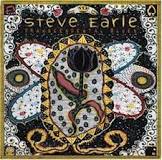
SOUNDTRACK: STEVE EARLE-Transcendental Blues (2000).

I’ve never really liked Steve Earle’s music.  For some reason I always thought of him as a kind of outlaw country.  But the review of this album from Hornby made me want to check it out.  And while there are certainly country music trappings, this is a solid fun rock record.

Earle’s voice isn’t what I thought it was (or wasn’t was it is now)–it’s much softer and much higher than I imagined.  So what’s going on on this record?

“Transcendental Blues” has a great distorted guitar riff running opposite the throbbing bassline.  Earle’s voice sounds like a cross between Dylan, Petty and (anachronistically) Kevin Devine.  “Everyone’s in Love with You” sounds like a rocking R.E.M. song with a very 90s vocal style and even a reverse guitar solo.

“Another Town” sounds like a song that I’ve heard a million times (but I haven’t).  It’s a simple pop song with a crazy catchy melody and it’s barely 2 minutes long.  “I Can’t Wait” slows things down a bit with a real poppy Matthew Sweet-vibe.

“The Boy Who Never Cried” is a dirgey song, slow and story telling.  It has strings with a slightly Middle Eastern feel.

“Steve’s Last Ramble” is a stompin’ song with full on harmonica introduction (which makes it seem even more Dylan).  “The Galway Girl” is a mandolin-based stomper while “Lonelier Than This” is a quiet, sad song.

“Wherever I Go” is only two minutes ling and has a country feel, even though it’s not that different from the other songs.  The guitar solo is totally early Beatles, but the lyrics are pure country:

I could drink corn whisky ’til my brain goes soft
I could run this highway ’til my wheels come off

The harmonica returns on “When I Fall” the start of a trifecta of country songs.  His drawl really comes out here, possibly because of his duet partner (Steve Earle’s sister, Stacey Earle, a country singer in her own right).  It’s a shame this song is so long as it’s my least favorite.

“I Don’t Want to Lose You Yet” is a simple country pop song (the twang remains).  Although “Halo ‘Round the Moon” is a softer song with a gentle shuffle beat.  “Until the Day I Die” continues with the old school country/bluegrass style with a big ol’ banjo intro, close harmonies, and a fiddle solo.  You can imagine a jug solo, hand clappin’ and a hoedown in a live version.

“All of My Life” rocks out again, with some loud bass and distorted guitar, which I desperately needed after those last few songs.

The disc ends with “Over Yonder (Jonathan’ Song).”  From songfacts:

This song is about the execution-by injection of Jonathan Nobles, which Steve Earle witnessed. The alt-country star told Mojo magazine May 2008 about it: “I don’t recommend it. I befriended Jonathan for several months beforehand. Then I saw the execution and later brought his remains to England for burial according to his wishes. But the execution was incredibly toxic to me. It’s hard. You can’t believe it’s really happening. I remember afterwards I thought, ‘did I black out and miss it? I let Jonathan down.’ Then the blank filled in… it was the shock… I realized exactly what I’d seen. I can’t see myself doing it again. I’ve absorbed enough death. And I still work hard against the death penalty.”

So I’m still on the fence about Earle, but I did enjoy this record much more than I thought I would.  Thanks, Nick.

[READ: June 15, 2019] “Alternative Earle”

I am aware of Steve Earle and I really like his lyrics.  I don’t love his music though–too much country in the alt-country.  Although Hornby describes it as Nashville folk and rock n roll hybrid.  But man, his lyrics are great.  I wish I liked him a bit more especially after reading this review.

Hornby is a passionate music lover and anything he likes sounds great when he describes it.

The album in question is Transcendental Blues (and in the photo Earle’s beard is much shorter than it is now).  As of 2000, Earle has been married and divorced six times (to five women–4 and 6 were the same person). In 1994 he was imprisoned for possessing narcotics.  This sentence ending years of heroin addiction. (more…)

Read Full Post »

SOUNDTRACK: TOMBERLIN-Tiny Desk Concert #855 (June 6, 2019).

I rather like when we see a glimpse at the workings of things.  Like how a Tiny Desk Concert typically happens:

Before I bring an artist to the Tiny Desk, I try to see them perform live. It helps me get a handle on what they’ll be capable of doing at my desk, minus all the artful tinkering of a studio. But I never saw Tomberlin before she came to my desk. My desire to see Mitski and Overcoats when Tomberlin was last in town had me at another venue and another opportunity failed to happen. But I was simply in love with Tomberlin’s ethereal debut album At Weddings and took a chance.

I didn’t know how her fragile songs would translate; all I knew was that Tomberlin was coming to the Tiny Desk to play acoustic guitar and sing, along with her musical partner Andrew Boylan. The eerie production that felt like the backbone to the fragile songs on At Weddings would be gone.

I haven’t heard this album, so I don’t know about the eerie production.  I wonder if that would set her apart from other similar women-with-acoustic-guitars.   This is not dismissive of Tomberlin–it is genuinely hard to distinguish yourself when all you have is a guitar and your voice.

On the first song, “Any Other Way” she sounds like a couple of other recent quiet(er) female singers.  The addition of Boylan helps a bit because he able to add some delightful harmonies and some simple guitar riffs to accompany her strums.

I think her perspective also sets her apart a bit

Tomberlin is the daughter of a Baptist pastor, grew up singing in the church and, since her teens, has questioned her own beliefs in God and faith. And as you listen to her sing these delicate, vulnerable songs, you may find your way to a new songwriter, capable of distilling doubt and isolation while forming a community around her music and expressing assurance.

So lyrics like this are quite unusual

Feeling bad for saying
Oh my god
No I’m not kidding

They say that even the most seasoned performers get nervous at the Tiny Desk.  Those nerves are apparent a bit between songs as she asks, “How’s work going today?  Anything happening? I don’t keep up with the things when I’m doing this thing.”  She continues, “I tried to mute trump’s name on Twitter but it doesn’t work.”  After trying to banter some more she says, “I’m going to stop talking and we’ll play another song.”

The combined guitars and harmony vocals on “Self-Help” are really wonderful. And this verse is terrific

I used the self-help book
To kill a fly
I think it worked mom
I think I’m fine

The final song, “Untitled-1” plays nicely with the harmony guitars.

When Tomberlin began to sing at her Tiny Desk Concert, wearing a bit of Tiny Desk nervousness on her sleeve while singing “I know I’m not eternal, I’m just a young girl,” these songs questioning her religious beliefs, felt deep and personal.

This song was the most interesting of the three for the guitars and for the way she really puts some power in her voice as the song progresses.

[READ: June 4, 2019] “Poorly Mapped”

The June 10th issue of the New Yorker features five essays by authors whom I have enjoyed.  They were gathered under the headline “Another Country.”

Dinaw Mengestu was born in Ethiopia but had not been back for many years.  His family left when he was two years old, in 1978.  When he returned, twenty-five years later (the only one in his immediate family to do so during that time) his aunt Aster asked him not to leave the house while she was out.

She had told him that nothing had changed in those years” even your mother’s shoes are still there.”  Further, everything he would need was available in their house–satellite television, internet and American food.  So he should stay put.

He assumed her concern as because of the protests and mass arrests dating back to 2005, but she shrugged all of that off saying that Western news made it seem worse than it was, “We’re fine, we go to work we live our lives.” (more…)

Read Full Post »

SOUNDTRACK: JAMBINAI-Différance (2012).

I am fairly stunned that I never posted about Jambinai at the Olympics in Korea in 2018.  Their performance of “Time of Extinction” blew me away and before the song was even over I was looking them up to find out more about them.

Jambinai blend traditional Korean instruments with rock instruments.  But not in a “we rock and want to bring in a flute” way.   The three main members met at Korea’s National University of Arts while studying traditioanl Korean music.  They wanted to play traditional music in an innovative way but in a way  that was very different from K-pop.  So their band consists of
Kim Bo-mi– haegeum;
Lee Il-woo – electric guitar, piri, taepyeongso, vocals
Sim Eun-yong – geomungo.

I had to look up what some of these instruments were, and here’s what I’ve got:

Geomungo (also spelled komungo or kŏmun’go) or hyeongeum (literally “black zither”) is a traditional Korean stringed musical instrument of the zither family of instruments with both bridges and frets.   It is generally played while seated on the floor. The strings are plucked with a short bamboo stick called suldae, which is held between the index and middle fingers of the right hand, while the left-hand presses on the strings. The most typical tuning of the open strings for the traditional Korean music is D#/Eb, G#/Ab, C, A#/Bb, A#/Bb, and A#/Bb an octave lower than the central tone.

In the video from the Olympics, the band is surrounded by dozens of geomungo players.

Haegeum (Hangul: 해금) is a traditional Korean string instrument, resembling a fiddle. It has a rodlike neck, a hollow wooden soundbox, and two silk strings, and is held vertically on the knee of the performer and played with a bow. It is one of the most widely used instruments in Korean music. Its range of expression is various despite having only two strings, with sounds ranging from sorrowful and sad to humorous.

Taepyeongso (lit. “big peace wind instrument”; also called hojokhojeok 호적 號笛/胡笛, nallari, or saenap, 嗩吶) is a Korean double reed wind instrument in the shawm or oboe family, probably descended from the Persian zurna and closely related to the Chinese suona. It has a conical wooden body with a metal mouthpiece and cup-shaped metal bell. It originated during the Goryeo period (918 – 1392).   The loud and piercing sound it produces has kept it confined mostly to Korean folk music (especially “farmer’s band music”) and to marching bands, the latter performed for royalty in the genre known as daechwita. It is, however, also used sparingly in other genres, including Confucian, Buddhist and Shamanist ritual musics and neo-traditional/fusion music.

Piri is a Korean double reed instrument, used in both the folk and classical (court) music of Korea. It is made of bamboo. Its large reed and cylindrical bore gives it a sound mellower than that of many other types of oboe.

Jambinai released this album in 2012 but reissued it in 2016 when they released their second album a Hermitage.

This nine-song (mostly) instrumental post-rock album is just astounding with the sounds they produce.

1. Time Of Extinction (2:56) opens with some quick riffage on the Geomungo.  After 20 second the roaring guitars and drums crash in.  Before a minute is up, the guitar falls back and a wondrous haegeum solo takes over amid the background rumbling.  It’s followed by some staccato thumps and full-on blasts of noise.  The taepyeongso mixes with feedback to create a wall of discord before it all crashes to a close.

2. Grace Kelly (3:20) opens with some fast acoustic sounding guitars before the whole song barrels forth with crashing noises and a taepyeongso solo.  That’s all in the first minute.  After which a quiet guitar and a vocal melody takes over.  I love that the vocal is buried under some effects so you can’t even really tell what language she’s singing in.  After a minute or so of this “rest,” the song just takes off again–forcing its way to the end with vocals moans that sound a bit like Robert Plant.  The ending crashing chords are pretty spectacular.
3. Glow Upon Closed Eyes (6:26) A quieter song, it starts with fading in and out noises and what may be reversed guitar sounds.  After a minute or so the geomungo comes in with some big notes that give the noises some context.  It stays relatively quiet for 5 minutes and then the end of the song bursts firth with martial drums and big guitars.
4. Paramita Pt. 1 (4:15)  The first part opens with rumbling noises and a slow riff on the geomungo.  Nearly the whole song works at this sort of tension building exercise with a brief moment of splashing cymbals and faster notes that slow once again.
5. Paramita Pt. 2 (4:21)  Part 2 slows things down a lot–just a geomungo thump and some sporadic notes on the haegeum.  It feels menacing and suspenseful–punctuated by deep bass notes that resound and linger.   The song unexpectedly explodes about two minutes in with a wall of noise punctuated by cymbals.
6. Hand Of Redemption (4:34) is a sonic blast of hardcore.  Screamed vocals are buried amid a wall of fast thumping drums and guitars.  After two minutes the taepyeongso and piri start adding noise and the thumping grows more mechanical.  The final minute takes away the industriaial sound but leaves all the high squealing notes punctuated by walls of bass and drums.   The end of the song thumps and feedback in to the next track.
7. Empty Pupil Pt. 1 (5:10) Continues with that feedback.  The feedback goes through several iterations as quiet chords are played and then allowed to feedback some more.  The rest of the song is full of other mechanical sounds–who even knows what–that fill in to a kind of noise drone.  The song ends with quiet guitar lines (I wonder if the song endings deliberate segue or if they were just stopped at the wrong time)
8. Empty Pupil Pt. 2 (4:39)  Part 2 further explores the quiet guitar with some cool creaking sounds from the geomungo before it starts playing a riff that ends with a big crash each time.   It picks up the tempo as the haegeum is introduced along with some acoustic guitar strumming but there is no climax to this song it just ends and fades.
9. Connection (9:37)  The final song is the one epic track on the disc.  It opens with a haegeum playing a quiet two note melody before some deep slow bass notes accompany it.  There’s also I think a vocal line (it’s hard to tell).  About four minutes in the haegeum starts playing a riff that is reminiscent of Sigur Rós.  It builds in beauty an intensity until the final notes fade out.
It’s a great way to end a great album.

Stream it on their bandcamp site.

[READ: June 4, 2019] “Stonehenge”

The June 10th issue of the New Yorker features five essays by authors whom I have enjoyed.  They were gathered under the headline “Another Country.”

I enjoyed Min jin Lee’s Free Food for Millionaires quite a lot.  I had no idea that she was not born in America.  She came to New York from Seoul when she was seven, and her essay is fascinating for a couple of reasons.

First, she says that every day in the 1970s and 1980s it took her two hours to get from her home in Queens to the Bronx High School of Science.  She spent most of that commuter time reading Sinclair Lewis novels about America: Main Street, Babbitt, Dodsworth, Arrowsmith.

On weekends she worked with her family in their father’s store in Manhattan’ Koreatown.  The store was burgled several times and everyone in their family had been mugged at some point.

She notes that Sinclair Lewis wrote about white Midwesterners who struggled against materialism, corporate greed, fascism and narrow thinking.  She found it calming to read about these big ideas since her family life was so hectic.   The books also made her feel like she’d traveled even though she never did. (more…)

Read Full Post »

SOUNDTRACK: PITCH BLACK PROCESS feat. HAYKO CEPKIN-“Zahid Bizi Tan Eyleme” (2019).

Pitch Black Process is a Turkish heavy metal band.   All of the members played in a band called Affliction in the 90s and 2000s.  As PBP they have released an EP and two albums and have a new EP on the way from which this song comes.  And I found it because of the Hayko Cepkin connection.  Interestingly, some of the songs on their albums are in English, but this song is in Turkish.

Metal Shock Finland says of the song

In “Zahid Bizi Tan Eyleme”, Pitch Black Process interpret a poem from the 16th century, of which melody is anonymous. With this significant work by “Muhyî”, their aim is to contribute to bring the culture of this land to the world scene, via building a bridge between east and west. It is a modern but also a folkloric song which blends traditional and authentic instruments with rock/metal elements; it is emotional, touching and sombre, but at the same time it’s moving, encourages individuality and gives a sense of fight and battle.

This song opens with traditional instrument–drums, flute and oud (I believe).

After 45 second the band kicks in with heavy guitars sludging through a traditional-sounding melody.    I really love the way the heavy guitars produce the djent sound along with traditional riffs.  Midway though an instrumental break highlights the zurna, I believe.

The end of the song features Cepkin and PBP singer Emrah Demirel singing in harmony over a quiet musical interlude that builds to a crushing end.  It’s a short song but it’s a terrific mix of the traditional and the modern.

The video is pretty outstanding.

[READ: June 4, 2019] “Hard Seat”

The June 10th issue of the New Yorker features five essays by authors whom I have enjoyed.  They were gathered under the headline “Another Country.”

Jennifer Egan is the only writer born in America writing in this series of essays and her perspective is as an America in another country.

In 1986 she turned twenty-four while travelling with a friend in China.  Her friend wasn’t quite as excited by this journey as the night before in Hong Kong rats had gnawed through her satchel at the youth hostel.

But they took a ferry to China (Guangzhou), a city full of tea shops and sunny gardens.  They stayed in a dormitory style hotel designed for travelers. (“this was practically a job description for most of our bunkmates, who’d been travelling in Asia for months.”  She felt silly around them–she was a grad student studying in England.  Hong King was still under British rule at the time and felt barely exotic). (more…)

Read Full Post »

SOUNDTRACK: HAYKO CEPKIN-“Kabul Olur” (“Accepted”) (2018).

Hayko Cepkin is a Turkish singer of Armenian descent.  He was born on March 11, 1978 in Istanbul.

It’s hard to find out anything about him that’s not in Turkish.  So I’m including what I find interesting

In June 2005, he released his first album “a collection of compositions he recorded at home and all lyrics, music and arrangements of his own.”

He left Istanbul in 2014 and moved to Selçuk, İzmir.  He bought 9 acres of land from Şirince, and created a place where the lovers of Varil / Barrel Camping will enjoy and relax. The artist continues his music studies here.

He even had a festival there some years ago.

This song is from his latest album which is a great example of Anatolian rock–a fusion of Turkish folk and rock music.  He has taken it to some heavier levels than other bands with heavy electronics.

“Kabul Olur” starts with some electronic sounds and a flute before Cepkin starts singing in his rather lovely, powerful voice.

A minute it the drums kick in and the song starts to rock.  And then comes the power chorus at 1:20 (the second time through is even more powerful).  The post-chorus–the repeated title–is like a decompression after the intensity of the chorus.

The pounding middle section is a great combination of his growls and a traditional flute.

The denoument is him repeating “tamam” which means okay.  Its an ntense ending to a song that totally rocks.   Here’s the translated and original lyrics and the video below.

“Accepted”

My path is long, slow
Yolum uzun, ağır ağır geçer 
Life is tired I lean a little, see me
Ömür yoruldum eğilin biraz, beni görün 
The road is not this life desperation
Yol değil bu ömür biçaresizlik 
Stop, this is the final final way to death.
Durdurun, kesin final bu yol ölüm. 
Hear my voice, my voice is a little choked.
Duy duy sesim sesim biraz biraz kısık kısık buruk. 
He sees the end, walks, crazy heart.
Sonunu görür, yürür, deli gönül. Why isn’t my day in the season. 
Neden mevsim olupta günüm geçmiyor. 
Why is it born in my hands and dying? 
Ellerime doğupta neden ölüyor 
Even after all life goes by 
Bile bile sonuçta ömür geçiyor 
Heavy heavy heavy heavy heavy …
Ağır ağır ağır ağır ağır…Acceptance?
Kabul mu olur? 
Yeah, okay.
Evet, tamam.
Why isn’t my day in the season. 
Neden mevsim olupta günüm geçmiyor. 
Why is it born in my hands and dying? 
Ellerime doğupta neden ölüyor 
Even after all life goes by 
Bile bile sonuçta ömür geçiyor 
Heavy heavy heavy heavy heavy … 
Ağır ağır ağır ağır ağır… It’s okay.
Kabul olur. 
Yeah, okay.
Evet, tamam.


[READ: June 4, 2019] “Geneva, 1959”

The June 10th issue of the New Yorker features five essays by authors whom I have enjoyed.  They were gathered under the headline “Another Country.”

I do love a story which features lots of diacritics, and this one sure does.  Orhan talks about his brother Şevket and their mother Şekure and how they left Turkey because their father had gotten an good job with IBM in Switzerland.  The boys were seven and nine and their mother wanted them to learn French.  She had learned French in Istanbul and believed she could teach them at home.

But the boys were willful and she gave up, assuming the children would learn the language on the shore of Lake Geneva, in the parks, on the streets, or even at school.

But Orhan resisted the French language.  All of school was in French and Orhan seized up.  Mostly he hated being separated from his brother and he felt at sea. (more…)

Read Full Post »

SOUNDTRACK: YIM YAMES-Tribute To (2009).

I really like My Morning Jacket, but I find that Jim James’ solo work is a little too slow for me.  This album is a collection of six coves of George Harrison songs.  I’m not a particularly big fan of George Harrison’s solo work, so really this just doesn’t work for me all that way.

This record is incredibly languid.  Although after several listens I finally found a way in and have begun to enjoy the melodies.  Also, reading this quote makes me like the album more

James recorded the album in December 2001 on a relative’s eight-track reel-to-reel tape recorder, just days after Harrison’s passing. Of the recording, James told Billboard magazine that “I felt like I was in the weirdest head space when I did that EP … I felt really confused a lot of the time. I wanted to just do it and let it come out even if I messed stuff up. It’s definitely not the tightest or most professional recording you’re ever going to hear in your life but I like that. I think it lends it a more childish atmosphere.”

“Long, Long, Long” has a nice melody in the chorus.  While “Behind the Locked Door” has a nice melody in the verse.

“Love to You” introduces a banjo, which adds a nice texture to the EP.  “If Not for You” is the most uptempo song on the record and is quite lovely.

The first time I listened through this album the only song I knew was “My Sweet Lord,” which was never a particular favorite.  Although I like the way Yames multitracks himself.

“Ballad of Sir Frankie Crisp” has piano in it and it is also fairly upbeat, although boy does it go one for a long time.
the final song is “All Things Must Pass.”  This track is also quite pretty but also slow and long.

The whole EP definitely sets a mood, and if you are in the mood for pretty, slow acoustic songs, this is the place to be.

[READ: June 4, 2019] “Hereafter, Faraway”

The June 10th issue of the New Yorker features five essays by authors whom I have enjoyed.  They were gathered under the headline “Another Country.”

This essay is about the author’s mother’s death and the author’s subsequent return to Vietnam.

Her mother believed that another world awaited her and was not concerned.  The author imagines this other world was was like those found in Hirokazu Kore-eda’s film After Life.  In the film the newly dead pass through a halfway house run by angels.  The travelers must pick one even from their life that the angels will make into a movie, starring the travelers themselves. Heaven is this short film played on an endless loop. (more…)

Read Full Post »

SOUNDTRACK: JAY FARRAR-NonComm (May 17, 2019).

I didn’t like Uncle Tupelo back in the day. So when they broke up I didn’t really care.  I was supposed to care about the alt-country movement, but I didn’t. So I wasn’t interested in Sun Volt or Wilco.

Years later I have really gotten into Wilco and I feel like I’m supposed to dislike Jay Farrar because of the acrimonous split back in the day. But heck without the split, there’d be no Wilco.

I’ve never given Jay Farrar or Son Volt much thought.  So here’s my first real listen to him.

In this setting I find that he sounds a lot like John Doe, a deep soulful voice with acoustic guitar and electric accompaniment.

Jay Farrar‘s soulful folk sound graced the NPR Music stage Friday afternoon for the last day of NonCOMM. While he softly strummed his acoustic guitar, his Son Volt bandmate Mark Spencer backed him up on electric.

This set was made up of Son Volt songs.

He started with “The Reason” a thoughtful song and an indicator of what the rest of the set would sound like.  Calm music, lovely harmonies and pretty backing guitars.

Up next was “Reality Winner” which he introduced as saying “she was put in jail for sharing the truth.”  It’s a powerful song about a real incident that made news at the time but, like so many other things, it was eclipsed by the daily insanity of our government.  From The Boot:

Reality Winner, born in the South Texas town of Alice, is a veteran of the United States Air Force. On June 3, 2017, Winner was arrested after leaking a confidential document to an online news site, The Intercept.  “It’s a really unjust situation where Reality Winner leaked information for the right reason,” Farrar tells The Boot. “She proved that there was Russian interference in the 2016 [presidential] election.”

The lyrics:

What have you done, Reality Winner?
Reality Winner, what have you done?
This jail is a stone-cold answer
The biggest mistake of a Texas lifetime
In this ballad of the commander-in-chief
Is there any mercy for this standing belief?
Felt like gaslighting, not something to just accept
Proud to serve, just not this president
Those that seek the truth will find the answers

Up next was “Devil May Care”

Spencer harmonized with Farrar on a few songs; their vocals joined beautifully together for the chorus of “Devil May Care.”

There isn’t a lot of diversity in these songs.  Farrar’s voice is great but doesn’t change all that much.  They are good folk/country songs.  But I think it might be his presence that makes these song work so well:

The crowd was singing along to Farrar’s set and there was a feeling of mutual respect flowing between the performer and his audience. He has a stage presence that’s just plain cool. Not everyone can wear sunglasses inside without looking like a total jerk.

He introduced the next song saying that these songs are on the new Son Volt album of protest songs.  You may say “What is there to protest and I’d say Just about everything.”

Before singing “Union,” Farrar made a statement about there being protests about everything lately. He continued to tell this story through song while Spencer killed it on steel guitar.

This is a simple song that lays out our country’s divide and recounts Farrar’s father’s belief about the need for something to bind the country together: “He said national service/ Will keep the union together.”

“The 99” is also straightforward.  It may not be timely in the title (I don’t think people use that phrase as much anymore), but the sentiment is spot on:

Journalists in jail covering the scenes
The profit columns rise for the corporate machines
Take the stand now, protest and holler
Desecration of the land for the almighty dollar
Ninety-nine percent
Ninety-nine percent
It’s a trickle-down world
Like you’re stuck in cement

All of the songs were from the new album Union, but he ends the set with an old song.

The mood was brought back up as the set concluded with “Windfall”, a two-decade-old Son Volt song [from Trace].

It is certainly more positive, I guess from back when things were a bit better (the 90s).

[READ: June 3, 2019] “A Dream of Glorious Return”

It’s not often that people intentionally read twenty-year old news.  Maybe for historical reasons or, in my case, because you want to read a piece by a particular author.

So here is a twenty-year old essay from Salman Rushdie about the first time he returned to India after the fatwa had been put on his head twelve years earlier.

He returned to India in April 2000 (I guess the 90s weren’t great for Rushdie).

But first he talks about the many times he left India.  First when he was thirteen and went to boarding school in Rugby, England.  While he was away his father sold their family home in Bombay.  Salman was devastated and is still angry about it.  He believes he would be living there today if they still owned it. (more…)

Read Full Post »

« Newer Posts - Older Posts »